Torrential rain, flooding and landslides has left more than 100 people dead or missing in Vietnam.The Latest News from the UK and Around the World | Sky News












Torrential rain, flooding and landslides has left more than 100 people dead or missing in Vietnam.The Latest News from the UK and Around the World | Sky News
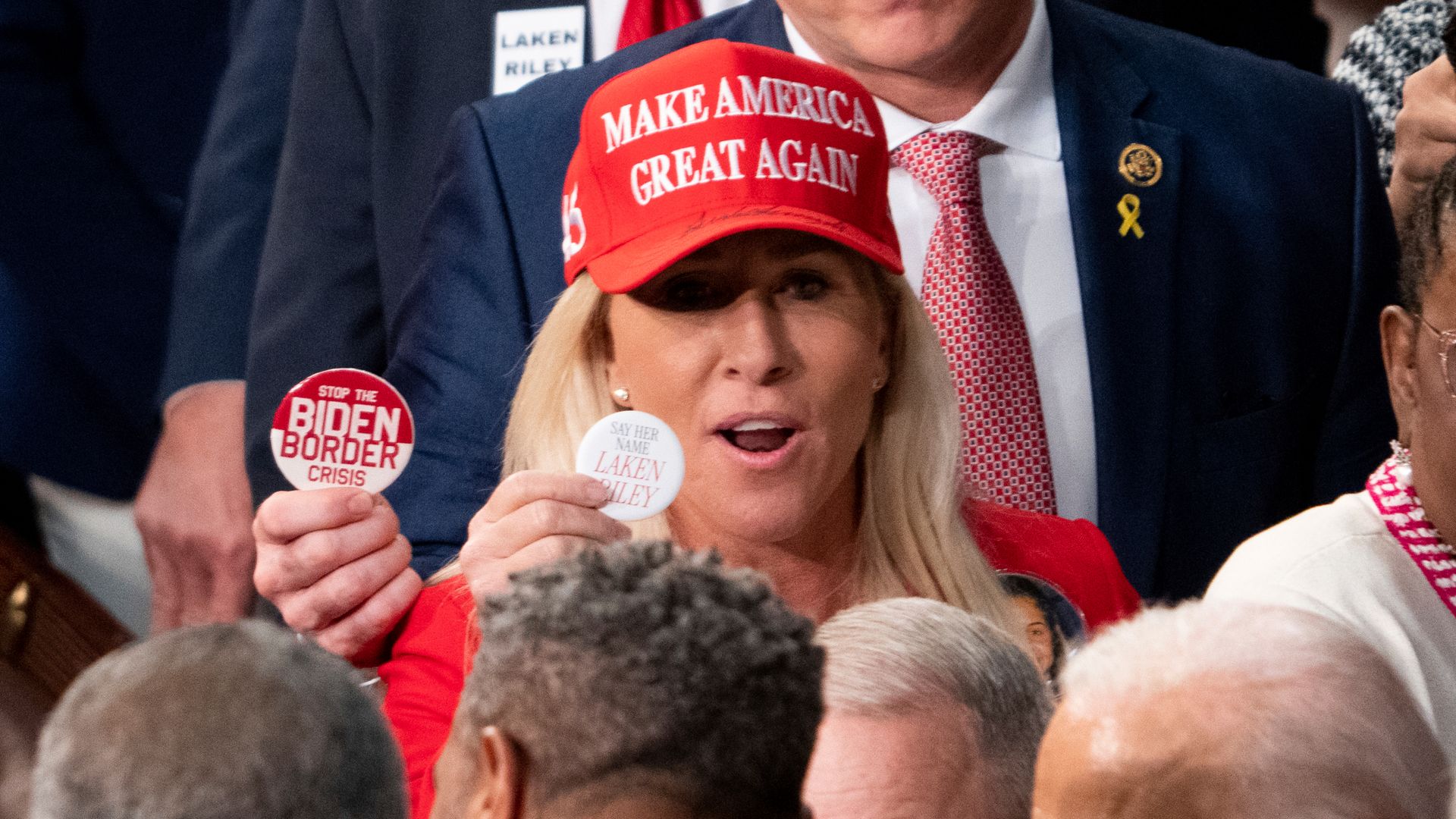
President Donald Trump says he would “love to see” one-time ally Marjorie Taylor Greene return to politics one day – as the fiery congresswoman reportedly considers a White House run in 2028.The Latest News from the UK and Around the World | Sky News
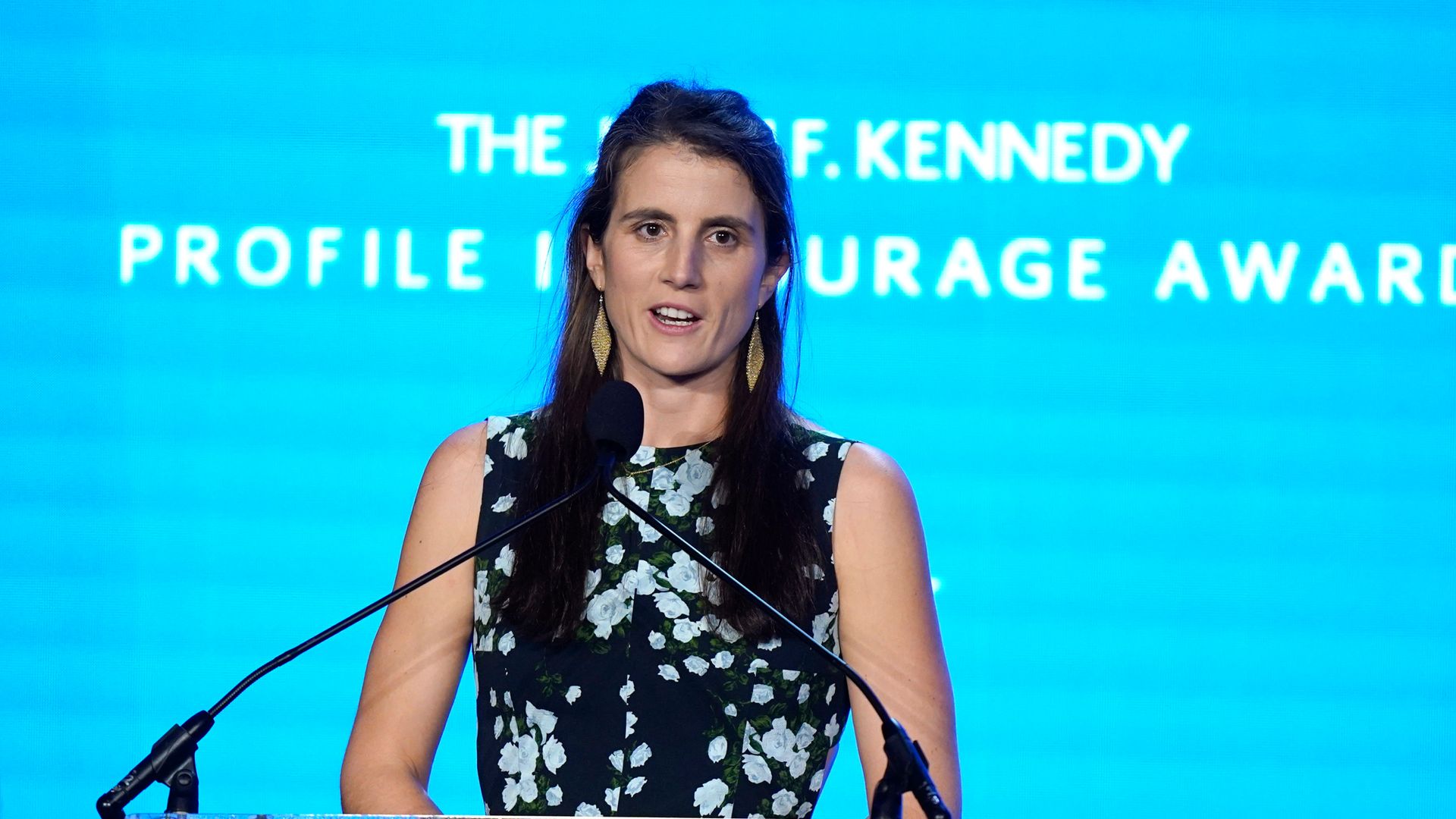
John F Kennedy’s granddaughter has revealed she has terminal cancer, making the announcement on the anniversary of the ex-US president’s assassination.The Latest News from the UK and Around the World | Sky News

Imagine moving to a country you’ve never been to before, with a culture you have no knowledge of and with a language you’re unable to speak. You’re with your whole family, including three children. And your new home, not your old one, is at war with its neighbour.The Latest News from the UK and Around the World | Sky News

Footage geolocated by Sky News showed Russian soldiers walking through the Shakhtarskyi neighbourhood on the outskirts of Pokrovsk on Thursday.The Latest News from the UK and Around the World | Sky News

When the center of protests against immigration enforcement switched recently to Charlotte, North Carolina, so did the frogs.
Back in October 2025, an agent with Immigration and Customs Enforcement, the agency popularly known as ICE, deployed pepper spray into the air vent of a peaceful protester’s inflatable frog costume. Video of the incident in Portland, Oregon, quickly went viral. Frogs and other inflatable costumes became a fixture of protests against Trump administration actions everywhere.
As a sociologist who studies social movements and political discourse, I knew when I saw the video that we’d soon see frogs everywhere at protests.
And indeed, the costumes have visually distinguished recent events from earlier anti-Trump demonstrations, softening their public image at a time when Republican officials were calling protesters “violent” and “Antifa people.”
It’s hard to be violent in a frog suit.
Humor is subversive. When used strategically, it can help undermine the legitimacy of even the most powerful opponents.

Portland activist Seth Todd began protesting in an inflatable frog costume as a way of “looking ridiculous” when federal law enforcement ramped up repressive tactics against his fellow protesters at ICE facilities in October 2025.
“Nothing about this screams extremist and violent,” he told The Oregonian newspaper.
Such costumes are interactive, playful, physically unwieldy and potentially protective. They can help activists appear less threatening to police, evade facial recognition systems and even deflect the blows of police batons or rubber bullets.
Wearing inflatable costumes at demonstrations checks all the boxes for tactics that can be widely imitated: cultural relevance, symbolic power, accessibility and easy participation. My interviews with activists who used glitter bombing in past protests revealed that light-hearted tactics can expand participation by attracting newcomers who are wary of more confrontational forms of protest. This is especially true when the tactics are easy to adopt – notably, wearing inflatable costumes in the weeks leading up to Halloween.
“Protest costumes” are now a category on Amazon.
Unlike the seasoned activists who were early adopters, protesters who wore inflatable animal and character costumes – sometimes because frog costumes had sold out – at No Kings protests on Oct. 18 represented a range of experiences and affiliations, including many first-timers.
“We are middle of the road,” explained one protesting frog in Chicago, “we’re just regular folks who have had enough.”

Activists continue to don frog costumes in solidarity. One group calling itself the Portland Frog Brigade says its goal is “artfully exercising our First Amendment right to free speech.”
Others created Operation Inflation to collect and distribute inflatable costumes to Portland protesters.
Just days after the pepper spray incident, a video circulated showing people outside the Portland ICE facility wearing inflatable bear, unicorn, dinosaur and raccoon costumes, dancing to raucous music in front of a line of law enforcement officers clad in riot gear.
Despite the almost literal novelty value of frog costumes, there’s nothing new about any of this.
Inflatables have long played an important role in outlandish protest tactics. A large inflatable “Trump chicken” was installed outside the White House back in 2017, while a “Trump baby” blimp hovered over Parliament in London during a 2018 state visit by Trump.
During the 1960s, the Bread and Puppet Theater used towering puppets and satirical street performances to protest the Vietnam War and social inequality.
Carnivalesque tactics and clown costumes have been popular responses to police repression at anti-globalization protests.
The Raging Grannies were a mainstay at antiwar and antinuclear demonstrations in the early 2000s, easily recognizable with their colorful costumes and witty songs.
And LGBTQ+ rights advocates have thrown pies and glitter-bombed right-wing politicians, while also staging costumed flash mobs and dance parties outside the offices and homes of prominent public figures.
Absurdist performances and playful public displays are powerful tools of political dissent, especially when they stand in contrast to state violence, authoritarianism and human rights abuses.

Anya M. Galli Robertson does not work for, consult, own shares in or receive funding from any company or organization that would benefit from this article, and has disclosed no relevant affiliations beyond their academic appointment.
Politics + Society – The Conversation

When the Colorado Artificial Intelligence Act passed in May 2024, it made national headlines. The law was the first of its kind in the U.S. It was a comprehensive attempt to govern “high-risk” artificial intelligence systems across various industries before they could cause real-world harm.
Gov. Jared Polis signed it reluctantly – but now, less than a year later, the governor is supporting a federal pause on state-level AI laws. Colorado lawmakers have delayed the law’s enactment to June 2026 and are seeking to repeal and replace portions of it.
Lawmakers face pressure from the tech industry, lobbyists and the practicalities related to the cost of implementation.
What Colorado does next will shape whether its early move becomes a model for other states or a lesson in the challenges of regulating emerging technologies.
I study how AI and data science are reshaping policymaking and democratic accountability. I’m interested in what Colorado’s pioneering efforts to regulate AI can teach other state and federal legislators.
In 2024, Colorado legislators decided not to wait for the U.S. Congress to act on nationwide AI policy. As Congress passes fewer laws due to polarization stalling the legislative process, states have increasingly taken the lead on shaping AI governance.
The Colorado AI Act defined “high-risk” AI systems as those influencing consequential decisions in employment, housing, health care and other areas of daily life. The law’s goal was straightforward but ambitious: Create preventive protections for consumers from algorithmic discrimination while encouraging innovation.
Colorado’s leadership on this is not surprising. The state has a climate that embraces technological innovation and a rapidly growing AI sector. The state positioned itself at the frontier of AI governance, drawing from international models such as the EU AI Act and from privacy frameworks such as the 2018 California Consumer Privacy Act. With an initial effective date of Feb. 1, 2026, lawmakers gave themselves ample time to refine definitions, establish oversight mechanisms and build capacity for compliance.
When the law passed in May 2024, policy analysts and advocacy groups hailed it as a breakthrough. Other states, including Georgia and Illinois, introduced bills closely modeled after Colorado’s AI bill, though those proposals did not advance to final enactment. The law was described by the Future of Privacy Forum as the “first comprehensive and risk-based approach” to AI accountability. The forum is a nonprofit research and advocacy organization that develops guidance and policy analysis on data privacy and emerging technologies.
Legal commentators, including attorneys general across the nation, noted that Colorado created robust AI legislation that other states could emulate in the absence of federal legislation.
Praise aside, passing a bill is one thing, but putting it into action is another.
Immediately after the bill was signed, tech companies and trade associations warned that the act could create heavy administrative burdens for startups and deter innovation. Polis, in his signing statement, cautioned that “a complex compliance regime” might slow economic growth. He urged legislators to revisit portions of the bill.
Polis convened a special legislative session to reconsider portions of the law. Multiple bills were introduced to amend or delay its implementation. Industry advocates pressed for narrower definitions and longer timelines. All the while, consumer groups fought to preserve the act’s protections.
Meanwhile, other states watched closely and changed course on sweeping AI policy. Gov. Gavin Newsom slowed California’s own ambitious AI bill after facing similar concerns. Meanwhile Connecticut failed to pass its AI legislation amid a veto threat from Gov. Ned Lamont.
Colorado’s early lead turned precarious. The same boldness that made it first also made the law vulnerable – particularly because, as seen in other states, governors can veto, delay or narrow AI legislation as political dynamics shift.
In my opinion, Colorado can remain a leader in AI policy by pivoting toward “small ball,” or incremental, policymaking, characterized by gradual improvements, monitoring and iteration.
This means focusing not just on lofty goals but on the practical architecture of implementation. That would include defining what counts as high-risk applications and clarifying compliance duties. It could also include launching pilot programs to test regulatory mechanisms before full enforcement and building impact assessments to measure the effects on innovation and equity. And finally, it could engage developers and community stakeholders in shaping norms and standards.
This incrementalism is not a retreat from the initial goal but rather realism. Most durable policy emerges from gradual refinement, not sweeping reform. For example, the EU’s AI Act is actually being implemented in stages rather than all at once, according to legal scholar Nita Farahany.
Effective governance of complex technologies requires iteration and adjustment. The same was true for data privacy, environmental regulation and social media oversight.
In the early 2010s, social media platforms grew unchecked, generating public benefits but also new harms. Only after extensive research and public pressure did governments begin regulating content and data practices.
Colorado’s AI law may represent the start of a similar trajectory: an early, imperfect step that prompts learning, revision and eventual standardization across states.
The core challenge is striking a workable balance. Regulations need to protect people from unfair or unclear AI decisions without creating such heavy burdens that businesses hesitate to build or deploy new tools. With its thriving tech sector and pragmatic policy culture, Colorado is well positioned to model that balance by embracing incremental, accountable policymaking. In doing so, the state can turn a stalled start into a blueprint for how states nationwide might govern AI responsibly.

Stefani Langehennig receives funding from the American Political Science Association’s (APSA) Centennial Center Research Center.
Politics + Society – The Conversation
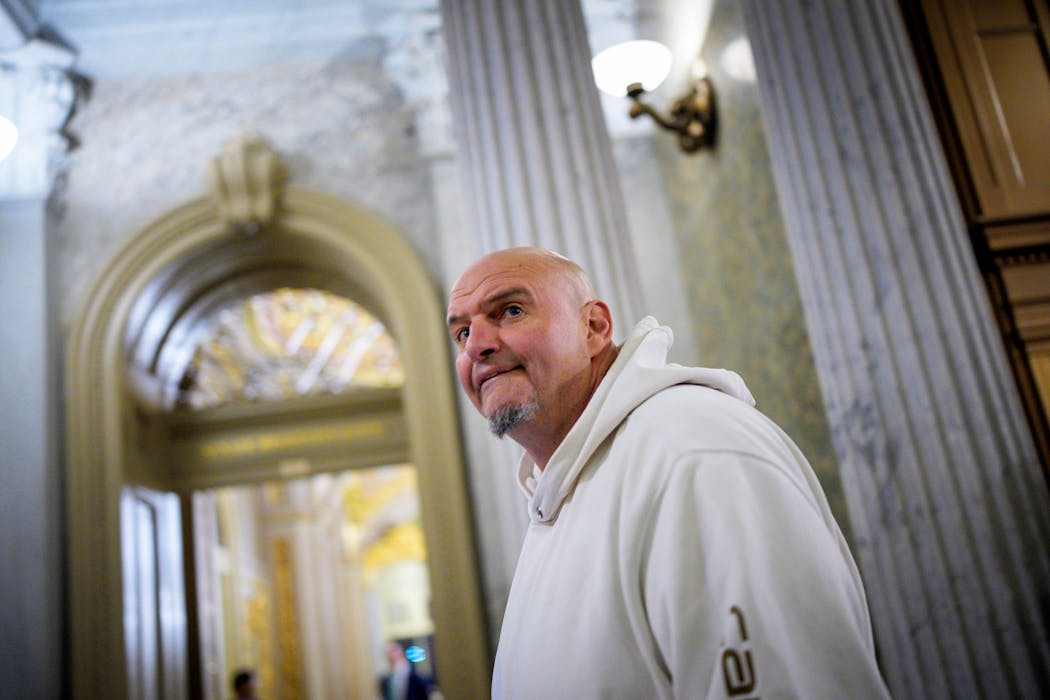
Pennsylvania Sen. John Fetterman – among the eight Democrats who voted to end the federal government shutdown – has always been a unique character and a sly self-promoter.
His political brand is that of an anti-politician. It’s reflected in his ultracasual wardrobe, his willingness – and even eagerness – to vote and express opinions across party lines, and his stated inability to socialize or glad-hand.

Even his new book, “Unfettered,” is not your typical political memoir, and thus is entirely on-brand for Fetterman. Most political memoirs are written to advance the politician’s career. Fetterman’s, however, discusses his dissatisfaction with Congress and spends far more time on his battles with depression than his role as a senator.
As a politics professor who studies Philadelphia and Pennsylvania, I find that one of the most unique things about Fetterman is his political rise from mayor of Braddock, Pennsylvania – a small borough outside Pittsburgh with fewer than 2,000 residents – to the U.S. Senate.
And yet, while this sort of political leap is highly unusual, it also reflects a recent trend in American politics. Over the past five years, more mayors of small and midsized cities have developed national political profiles in a way they hadn’t before.
It’s a phenomenon that has roots in suburbanization and 1990s-era political trends, and it’s one we will likely see again in 2028, at least among Democrats.

Boroughs are the smallest form of municipality in Pennsylvania, and there are more than 950 of them in the state. The office of borough mayor is so insignificant that in Braddock, it came with a small stipend instead of a salary.
Yet after holding that obscure position for a decade, Fetterman mounted a credible campaign to be the Democratic candidate for a U.S. Senate seat in 2016. He fell short but captured nearly 20% of the primary vote against three other candidates.
In 2018, Fetterman was elected Pennsylvania lieutenant governor, and then in 2022, he ran again for the Senate. He beat Conor Lamb by a landslide in the Democratic primary and then squeaked out a victory against Republican candidate Dr. Mehmet Oz.
It may seem incredible that someone could jump from being a borough mayor to lieutenant governor and then U.S. senator. But other politicians over the past decade have used their positions as mayors of small-to-midsized cities to run for national office, including the U.S. presidency.
Cory Booker, for instance, was elected mayor of Newark, New Jersey, in 2006; U.S. senator in 2013; and briefly ran for the Democratic presidential nomination in 2020.
Booker was joined in the early race to be the Democratic presidential nominee by Pete Buttigieg, who was elected mayor of South Bend, Indiana, in 2011; and Wayne Messam, who was elected mayor of Miramar, Florida, in 2015.
The 2020 presidential primaries also included some big-city mayors like then-New York Mayor Bill DeBlasio and his immediate predecessor, Mike Bloomberg. Eric Garcetti, mayor of Los Angeles at the time, was apparently also considering a presidential run in 2020.

By contrast, before 2020, a grand total of 13 people who had ever served as a mayor later ran for president. Only Grover Cleveland and Calvin Coolidge were successful.
Of course, Fetterman has never run for president, but then, few mayors ever run for U.S. Senate either. As Booker noted in his 2017 memoir, “United,” he was, in 2013, the 1,949th person to ever be sworn in as a U.S. senator, but “only the 21st person since 1789 to ascend directly from mayor to Senator.”
How did this trend start? I trace it back to the eight years of the Clinton presidency, from 1993 to 2001, and more specifically, the North American Free Trade Agreement that went into effect in 1994 and the Clinton administration’s focus on community and civil society.
NAFTA was a treaty signed by the U.S., Mexico and Canada agreeing to lift tariffs and other barriers to trade. It had bipartisan support, but it was also politically divisive, especially with labor unions, historically a key pillar of the Democratic Party, which did not want to see manufacturers move their operations to Mexico to take advantage of lower labor costs.
NAFTA is often blamed for, among other things, the “hollowing out” of U.S. communities in the Rust Belt that stretches from the Northeast to the Upper Midwest states that surround the Great Lakes. In this vast area, there are thousands of small and midsized towns and cities, many of which depended on single industries like paper milling or auto parts manufacturing. Once those businesses relocated, residents found themselves unemployed, underemployed and stranded in increasingly poorer towns.
At the same time, President Bill Clinton convened a series of seminars on American democracy and community at Camp David and the White House. He invited some of the country’s most prominent “communitarian” intellectuals to glean policy and speech ideas from them. He also established the AmeriCorps program, which expanded and provided support for various civic-oriented volunteer opportunities.
Of the mayors who developed national political profiles in the 2010s, arguably the most successful were Booker, Buttigieg and Fetterman. All three came from Rust Belt communities that had suffered severely from the deindustrialization that many residents and analysts of various stripes blamed on NAFTA, and all three spoke effectively about their personal experience with it in their communities.
Each mayor was also able to tell stories about personal interactions and interventions in their cities that spoke to the sense of a lost community that came to define the turn of the 21st century. The hardest evidence for this lost community came from the book “Bowling Alone” by American political scientist Robert Putnam, who participated in the White House seminars on community and American democracy.
It’s also notable that, prior to running for mayor of Braddock, Fetterman worked at an AmeriCorps program in a poor Pittsburgh neighborhood.

Immediately after World War II, federal mortgage guarantees and massive investment in highways fueled suburban housing construction, for which the returning GIs and the baby boom created huge demand.
Along with suburbanization has come political polarization. Urban areas are increasingly composed of people with liberal ideologies, while rural areas are increasingly more conservative. Suburban areas fall somewhere in between – often serving as key battlegrounds in statewide elections.
Midsized cities like South Bend or Miramar are often suburban in nature and design. They typically don’t carry the Democratic ideological baggage of large cities, but they are often also dealing with so-called urban problems such as poverty and crime. This is especially true of Braddock, a suburb with uniquely high levels of poverty and unemployment.
A mayor like Fetterman can therefore show how he’s able to address fundamental and widespread problems while at the same time being relatively nonpartisan about it. Among his better-known accomplishments as Braddock mayor were building a new community center, rehabbing properties, establishing an urban farm and running a youth program.
No doubt, Fetterman is a unique politician. But he is also the product of a specific moment in American political development and culture when mayors became viable actors on the national stage. My guess is that this trend will continue in what will most likely be a crowded Democratic presidential primary race in 2028.
Read more of our stories about Philadelphia and Pennsylvania, or sign up for our Philadelphia newsletter on Substack.

Richardson Dilworth does not work for, consult, own shares in or receive funding from any company or organization that would benefit from this article, and has disclosed no relevant affiliations beyond their academic appointment.
Politics + Society – The Conversation
Reading Time: 3 minutes
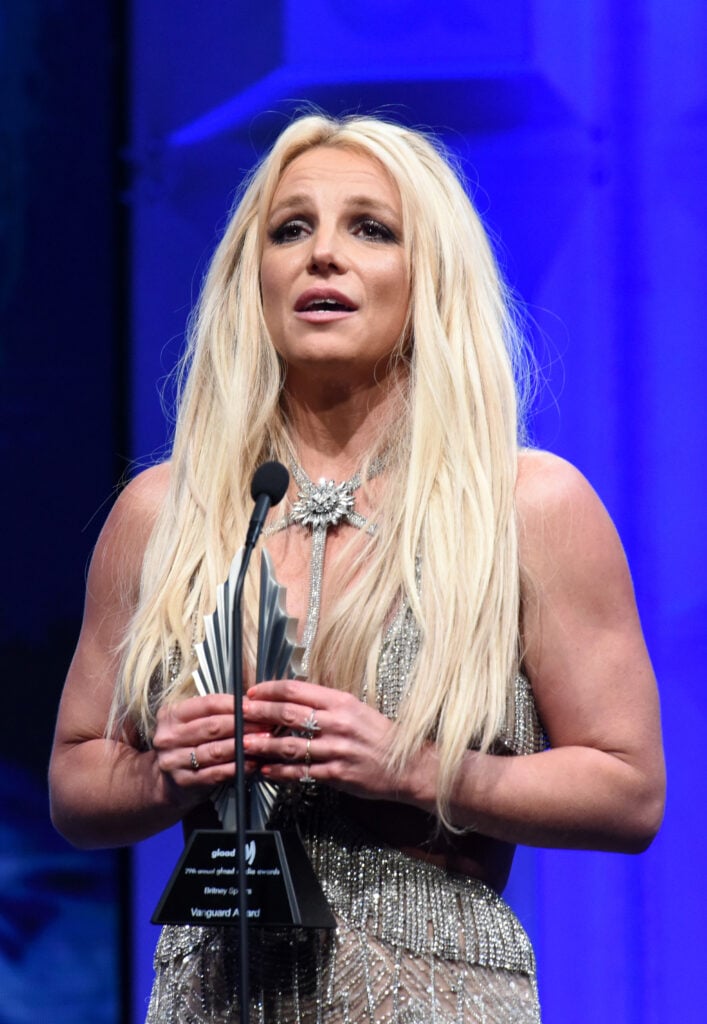
Recent photos showed Britney Spears in an unflattering light.
In her words, paparazzi took the “worst photos in the whole world” of her while she was trying to remain incognito.
Some critics have lamented that Britney is too much of a recluse. But with photographers lying in wait, can you blame her?
It sounds like she’s even considering moving to a country with better privacy restrictions. No one should have to move to protect their peace.
On Thursday, November 20, Britney Spears took to Instagram to share her dismay after paparazzi photos have once again fueled “concerns” about her well being.
“I just don’t like the way paparazzi always take the worst photos in the whole world,” she lamented in the video.
Britney expressed, with regret: “I can’t go anywhere.”
Even when she makes an effort to obscure her appearance (she even wore a scarf over part of her hair), someone too often spots her.
Britney added that her appearance in random paparazzi snaps is “astoundingly different from” her day-to-day appearance.
“It’s so offensive and so incredibly mean,” Britney reflected, describing the experience.
This isn’t just about unflattering photos.
Paparazzi have been hounding Britney for decades — showing up where she shops, where she eats.
Embarrassing pics contributed to the public sentiment that let her father put her in the (thankfully now gone) conservatorship all of those years ago.
And, just a few weeks ago, Britney’s scary car chase video happened because a photographer was pursuing her on the road, forcing her to make a U-turn to escape.
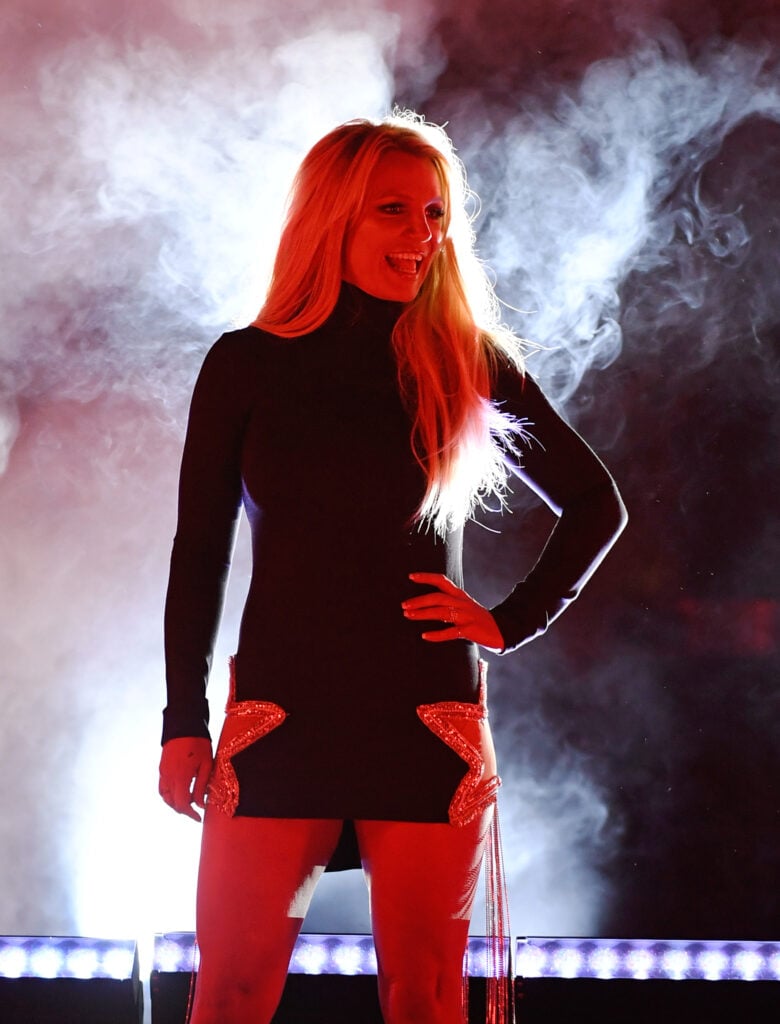
Understandably unhappy, Britney Spears griped: “And it’s like, they get paid a lot, a lot of money for that bad shot, you know?”
The financial system arguably does encourage a paparazzo to risk their safety and even to risk getting into legal trouble in the pursuit of the perfect photo that could essentially function like a lottery ticket.
And our legal system does not adequately protect even everyday people, let alone public figures, from extremely invasive photos.
(There is a difference between filming someone stealing packages from your porch or harassing a cashier and taking pictures of someone minding their own business leaving a restaurant)
With that in mind, Britney donned a phony accent vented her frustrations with how America throws public figures to the wolves.
Britney Spears enjoys a day out at a spa & winery at The Westlake Village Inn on Tuesday. https://t.co/rqUrPdV5Cb pic.twitter.com/MFlG4eLL7F
— TMZ (@TMZ) November 21, 2025
Britney adopted a faux British accent: “That’s why I don’t like America. I never have, never will.”
She added apologetically: “Sorry folks, I’m sorry.”
But, on perhaps a more serious note, Britney observed that there are “so many beautiful places in the world.”
And yet, Britney commented, she feels “stuck in this dips–t place right now.”
In the hellscape of 2025, millions feel that way. The best solution, however, might be to make our country better — but we can understand the impulse to flee to a place that already has its act together.
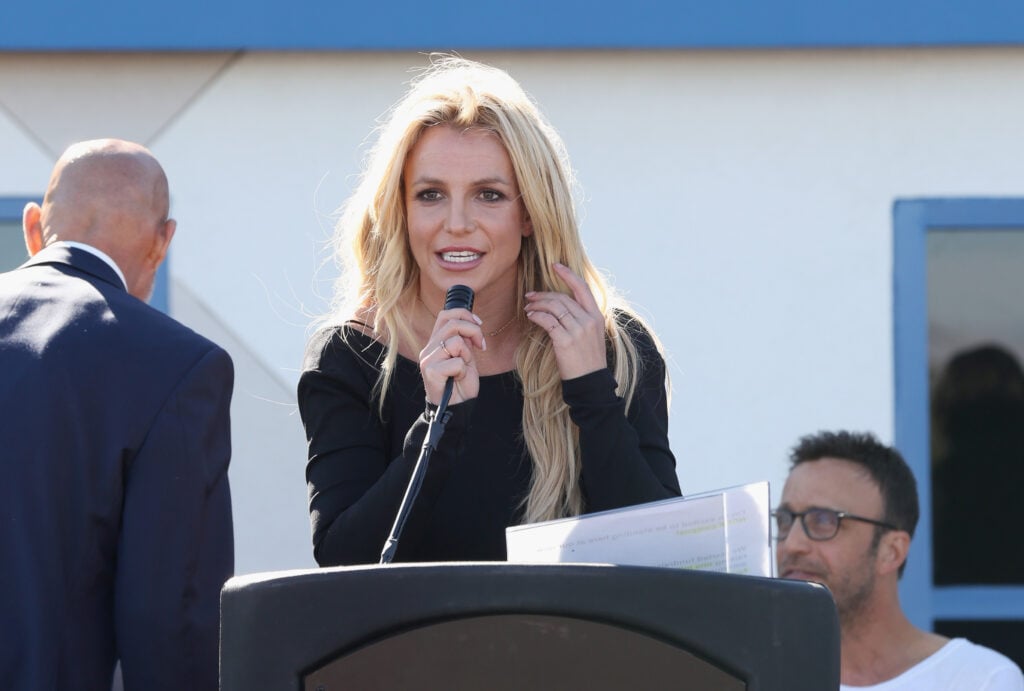
The “incident” that paparazzi captured in photos, to the distress of Britney Spears, was her departing Stonehaus wine bar in Westlake on Tuesday, November 18.
The singer had a champagne flute in her hand. (We of course cannot verify what she was drinking; not that it matters or is our business)
She wore sunglasses and a white scarf in an attempt to remain anonymous. Unfortunately, it was not enough to shield her identity.
Fortunately, there are no indications of a vehicular pursuit this time.
Britney has many talents. Having to shake off a tail in a car chase should never be her job. She’s a singer, not a superspy.
Britney Spears Appears to Be Drinking From Champagne Flute While Walking Toward Car In … was originally published on The Hollywood Gossip.
The Hollywood Gossip
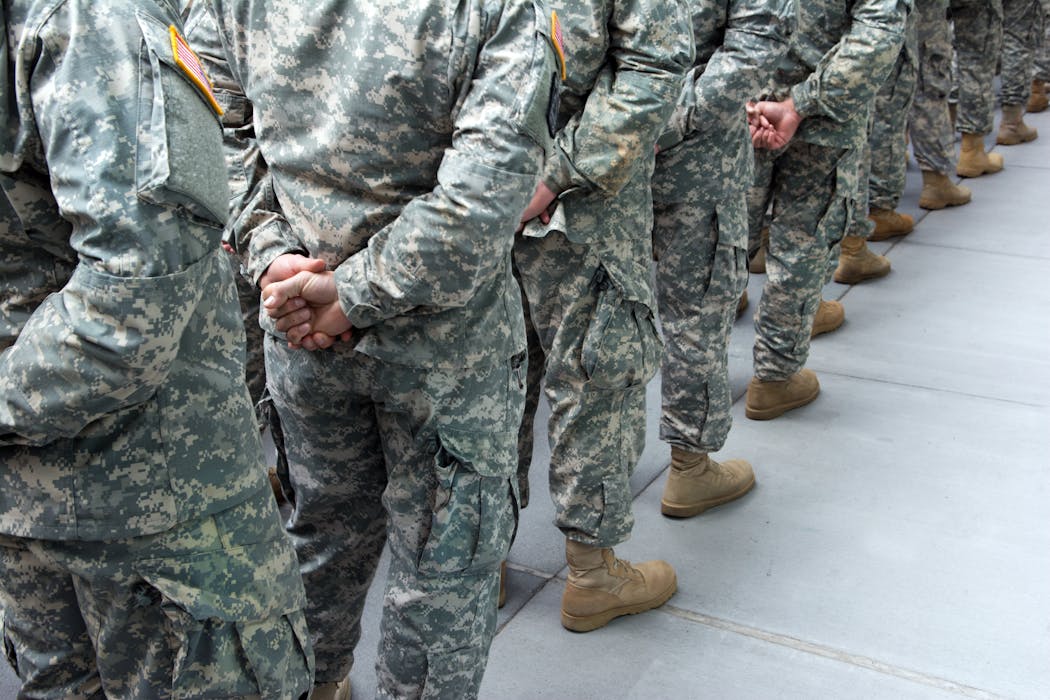
As the Trump administration carries out what many observers say are illegal military strikes against vessels in the Caribbean allegedly smuggling drugs, six Democratic members of Congress issued a video on Nov. 18, 2025, telling the military “You can refuse illegal orders” and “You must refuse illegal orders.”
The lawmakers have all served either in the military or the intelligence community. Their message sparked a furious response on social media from President Donald Trump, who called the legislators’ action “seditious behavior, punishable by death.”
One of the lawmakers, Sen. Elissa Slotkin, told The New York Times that she had heard from troops currently serving that they were worried about their own liability in actions such as the ones in the Caribbean.
This is not the first time Trump has put members of the military in situations whose legality has been questioned. But a large percentage of service members understand their duty to follow the law in such a difficult moment.
We are scholars of international relations and international law. We conducted survey research at the University of Massachusetts Amherst’s Human Security Lab and discovered that many service members do understand the distinction between legal and illegal orders, the duty to disobey certain orders, and when they should do so.
With his Aug. 11, 2025, announcement that he was sending the National Guard – along with federal law enforcement – into Washington, D.C. to fight crime, Trump edged U.S. troops closer to the kind of military-civilian confrontations that can cross ethical and legal lines.
Indeed, since Trump returned to office, many of his actions have alarmed international human rights observers. His administration has deported immigrants without due process, held detainees in inhumane conditions, threatened the forcible removal of Palestinians from the Gaza Strip and deployed both the National Guard and federal military troops to Los Angeles, Portland, Oregon, Chicago and other cities to quell largely peaceful protests or enforce immigration laws.
When a sitting commander in chief authorizes acts like these, which many assert are clear violations of the law, men and women in uniform face an ethical dilemma: How should they respond to an order they believe is illegal?
The question may already be affecting troop morale. “The moral injuries of this operation, I think, will be enduring,” a National Guard member who had been deployed to quell public unrest over immigration arrests in Los Angeles told The New York Times. “This is not what the military of our country was designed to do, at all.”
Troops who are ordered to do something illegal are put in a bind – so much so that some argue that troops themselves are harmed when given such orders. They are not trained in legal nuances, and they are conditioned to obey. Yet if they obey “manifestly unlawful” orders, they can be prosecuted. Some analysts fear that U.S. troops are ill-equipped to recognize this threshold.

U.S. service members take an oath to uphold the Constitution. In addition, under Article 92 of the Uniform Code of Military Justice and the U.S. Manual for Courts-Martial, service members must obey lawful orders and disobey unlawful orders. Unlawful orders are those that clearly violate the U.S. Constitution, international human rights standards or the Geneva Conventions.
Service members who follow an illegal order can be held liable and court-martialed or subject to prosecution by international tribunals. Following orders from a superior is no defense.
Our poll, fielded between June 13 and June 30, 2025, shows that service members understand these rules. Of the 818 active-duty troops we surveyed, just 9% stated that they would “obey any order.” Only 9% “didn’t know,” and only 2% had “no comment.”
When asked to describe unlawful orders in their own words, about 25% of respondents wrote about their duty to disobey orders that were “obviously wrong,” “obviously criminal” or “obviously unconstitutional.”
Another 8% spoke of immoral orders. One respondent wrote that “orders that clearly break international law, such as targeting non-combatants, are not just illegal — they’re immoral. As military personnel, we have a duty to uphold the law and refuse commands that betray that duty.”
Just over 40% of respondents listed specific examples of orders they would feel compelled to disobey.
The most common unprompted response, cited by 26% of those surveyed, was “harming civilians,” while another 15% of respondents gave a variety of other examples of violations of duty and law, such as “torturing prisoners” and “harming U.S. troops.”
One wrote that “an order would be obviously unlawful if it involved harming civilians, using torture, targeting people based on identity, or punishing others without legal process.”

But the open-ended answers pointed to another struggle troops face: Some no longer trust U.S. law as useful guidance.
Writing in their own words about how they would know an illegal order when they saw it, more troops emphasized international law as a standard of illegality than emphasized U.S. law.
Others implied that acts that are illegal under international law might become legal in the U.S.
“Trump will issue illegal orders,” wrote one respondent. “The new laws will allow it,” wrote another. A third wrote, “We are not required to obey such laws.”
Several emphasized the U.S. political situation directly in their remarks, stating they’d disobey “oppression or harming U.S. civilians that clearly goes against the Constitution” or an order for “use of the military to carry out deportations.”
Still, the percentage of respondents who said they would disobey specific orders – such as torture – is lower than the percentage of respondents who recognized the responsibility to disobey in general.
This is not surprising: Troops are trained to obey and face numerous social, psychological and institutional pressures to do so. By contrast, most troops receive relatively little training in the laws of war or human rights law.
Political scientists have found, however, that having information on international law affects attitudes about the use of force among the general public. It can also affect decision-making by military personnel.
This finding was also borne out in our survey.
When we explicitly reminded troops that shooting civilians was a violation of international law, their willingness to disobey increased 8 percentage points.
As my research with another scholar showed in 2020, even thinking about law and morality can make a difference in opposition to certain war crimes.
The preliminary results from our survey led to a similar conclusion. Troops who answered questions on “manifestly unlawful orders” before they were asked questions on specific scenarios were much more likely to say they would refuse those specific illegal orders.
When asked if they would follow an order to drop a nuclear bomb on a civilian city, for example, 69% of troops who received that question first said they would obey the order.
But when the respondents were asked to think about and comment on the duty to disobey unlawful orders before being asked if they would follow the order to bomb, the percentage who would obey the order dropped 13 points to 56%.
While many troops said they might obey questionable orders, the large number who would not is remarkable.
Military culture makes disobedience difficult: Soldiers can be court-martialed for obeying an unlawful order, or for disobeying a lawful one.
Yet between one-third to half of the U.S. troops we surveyed would be willing to disobey if ordered to shoot or starve civilians, torture prisoners or drop a nuclear bomb on a city.
The service members described the methods they would use. Some would confront their superiors directly. Others imagined indirect methods: asking questions, creating diversions, going AWOL, “becoming violently ill.”
Criminologist Eva Whitehead researched actual cases of troop disobedience of illegal orders and found that when some troops disobey – even indirectly – others can more easily find the courage to do the same.
Whitehead’s research showed that those who refuse to follow illegal or immoral orders are most effective when they stand up for their actions openly.
The initial results of our survey – coupled with a recent spike in calls to the GI Rights Hotline – suggest American men and women in uniform don’t want to obey unlawful orders.
Some are standing up loudly. Many are thinking ahead to what they might do if confronted with unlawful orders. And those we surveyed are looking for guidance from the Constitution and international law to determine where they may have to draw that line.
This story, initially published on Aug. 13, 2025, has been updated to include a reference to a video issued by Democratic members of Congress.
Zahra Marashi, an undergraduate research assistant at the University of Massachusetts Amherst, contributed to the research for this article.

Charli Carpenter directs Human Security Lab which has received funding from University of Massachusetts College of Social and Behavioral Sciences, the National Science Foundation, and the Lex International Fund of the Swiss Philanthropy Foundation.
Geraldine Santoso does not work for, consult, own shares in or receive funding from any company or organization that would benefit from this article, and has disclosed no relevant affiliations beyond their academic appointment.
Politics + Society – The Conversation