Categories
Uncategorized

Why ICE’s body camera policies make the videos unlikely to improve accountability and transparency

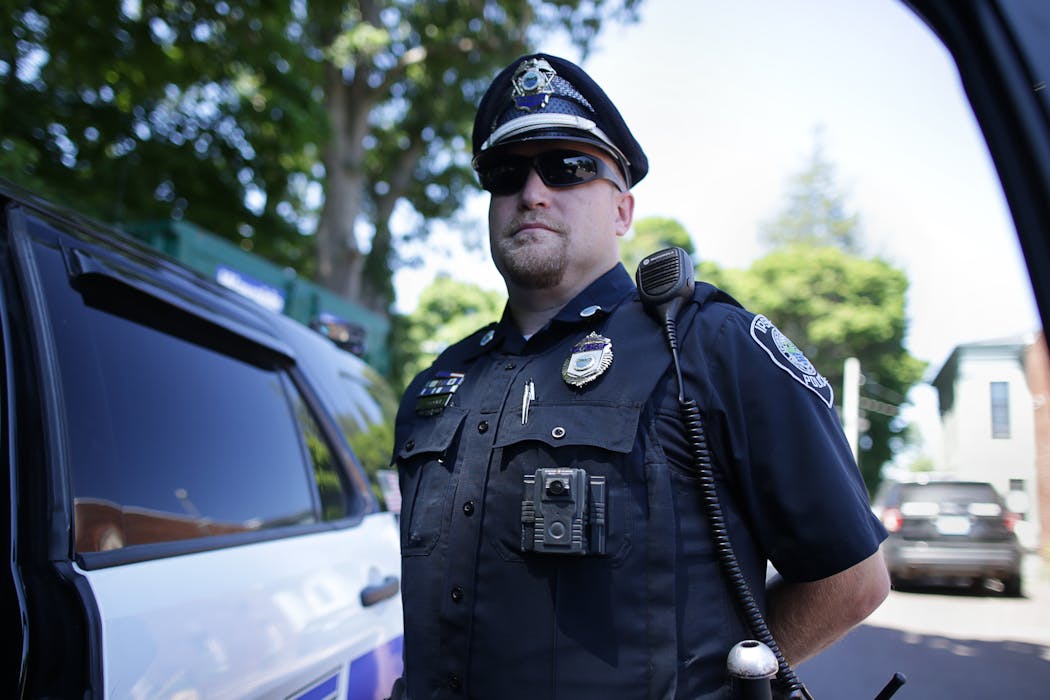
A police officer in Ipswich, Mass., wears a WatchGuard body camera on July 29, 2020. Jonathan Wiggs/The Boston Globe via Getty Images

Amid growing demands by Democrats to overhaul U.S. Immigration and Customs Enforcement after federal immigration officials killed two U.S. citizens in Minnesota, Secretary of Homeland Security Kristi Noem said in early February 2026 that agents in Minneapolis will be issued body-worn cameras.

But can body cameras on federal officials provide the transparency and accountability the public is demanding from agents with ICE and U.S. Customs and Border Protection?

As a public policy scholar, I have analyzed the existing body-worn camera policy for ICE agents. And I’ve compared this policy to dozens of other state and local body camera policies, in an effort to investigate the rationales for their use.

Whether ICE’s body camera policy can provide transparency and accountability depends, I believe, on the policy itself and the enforcement of that policy. ICE’s use of body cameras could improve the agency’s legitimacy in the eyes of the public.

But as I’ve seen with other police body camera policies, there’s a risk that camera footage may obscure actual events. It’s also possible that the strategic release of footage may undermine transparency.

Various body camera policies

Police body cameras were first used in the United States in 2012 by the Rialto Police Department in California. By 2020, their use had expanded to over 62% of local law enforcement agencies, covering 79% of local police officers nationwide.

That expansion was, in part, a response to growing criticism over stop-and-frisk tactics – in which police temporarily detain people for weapons searches when a crime is suspected – and police-involved shootings of people of color.

Body camera policies vary greatly between municipalities. Some policies make body cameras useful accountability tools, like those of Parker, Colorado, which uses cameras for evidence collection and ensuring officer adherence to policy rather than as surveillance technology.

Others, meanwhile, provide broad discretion for officers to choose when to activate their body cameras, such as Colorado Springs’ policy. Allowing officers to decide when to use their cameras can limit the availability of evidence.

I believe there are four crucial elements of a body camera policy that can ensure that ICE agents properly use the technology.

Activation requirements

Body camera quality has improved over the past decade. But the battery life of many models prevents continuous recording throughout a 10-hour shift.

Instead, law enforcement officials often manually activate their body cameras. Thus, to effectively promote accountability, a strong policy would require ICE agents to activate their body cameras before they interact with the public.

Several people hold candles at a vigil.
People attend a vigil for Alex Pretti, who was fatally shot by a federal immigration agent on Feb. 1, 2026, in Minneapolis.
AP Photo/Ryan Murphy

A 2016 study found that, without mandatory camera-activation policies, officers often fail to activate their cameras.

The current ICE body-worn camera policy, issued in February 2025, lists enforcement activities that require recording. They include executing arrest warrants, frisks of individuals and “responding to public, unlawful/violent disturbances at ICE facilities.”

But the list does not include mandatory activation during vehicle pursuits or the transportation of people to detention facilities. Recording inside detention facilities is strictly prohibited by the policy.

Deactivation requirements

As proposed by the Police Executive Research Forum, a nonprofit that promotes policing professionalism, body cameras must continue to record until an encounter with a member of the public has concluded and agents have left the scene.

The current ICE body-worn camera policy states that agents “should only deactivate the BWC when the scene is secure as determined by the supervisor or team leader.”

While robust policies, such as that of the Chicago Police Department, require continued recording during the transportation of detained people, the ICE body camera policy does not. This creates the potential for critical moments to go unrecorded.

Facial recognition

Many body camera models come equipped with facial recognition technology. But many local police department policies prohibit its use due to privacy and surveillance concerns.

ICE uses facial recognition technology during immigration enforcement operations, but in 2020 lawmakers raised concerns that body camera facial recognition could dissuade citizens from protesting out of fear of retribution.

A protester speaks into a megaphone.
People gather outside Akron City Hall in Ohio on July 3, 2022, to protest after the release of body camera footage showed police fatally shooting Jayland Walker with several dozen rounds of bullets.
Matthew Hatcher/AFP via Getty Images

As protests against ICE immigration enforcement continue, it’s known that the agency uses facial recognition technology on peaceful protesters and observers. Existing ICE policy prevents the use of facial recognition on “live BWC recordings,” meaning while the interaction is taking place. Facial recognition is permitted on body camera footage after the interaction has concluded.

In early February 2026, Democratic lawmakers introduced a measure that would prohibit the use of facial recognition by ICE and CBP agents. That ban would extend to facial recognition features on body cameras.

Policy compliance

Policy is only as strong as its enforcement.

Policymakers could consider strengthening submission forms for ICE use-of-force and civil rights violation complaints.

Thorough investigation of complaints and reviews of body camera footage could be handled by an external review board. The Office of the Inspector General, responsible for investigating allegations of excessive force by ICE agents, could also conduct reviews.

Body cameras will not deter violence committed by ICE agents unless policies clearly dictate their use. For body cameras to function as transparency and accountability tools, I believe wrongdoing would have to be swiftly and consistently penalized. This would highlight the consequences of noncompliance with body-worn camera policies.

The Conversation

Stephanie Lessing does not work for, consult, own shares in or receive funding from any company or organization that would benefit from this article, and has disclosed no relevant affiliations beyond their academic appointment.

​Politics + Society – The Conversation
Categories
Uncategorized

Honoring Colorado’s Black History requires taking the time to tell stories that make us think twice

The Colorado Springs City Council took weeks to pass a symbolic gesture recognizing February as Black History Month. Claire Oberon-Garcia

For the past eight years, the Colorado Springs City Council has issued proclamations and recognitions paying homage to the achievements of its African American citizens.

In 2005, the Colorado Springs City Council and Mayor Yemi Mobolade jointly issued a Black History Month proclamation.

This year, the mayor’s office issued its own statement alluding to Mobolade’s identity as the city’s first Black and first immigrant mayor. It also praises the positive effects of past and present African American achievement in Colorado Springs.

A group sits around tan school tables, looking and talking with each other.
Colorado Springs Mayor Yemi Mobolade answers students’ questions during an after-school art program at Adams Elementary School in Colorado Springs.
Rachel Woolf/The Washington Post via Getty Images

The City Council was slower to act, finally succumbing to pressure to approve their own proclamation two weeks later.

Why did a routine symbolic gesture — one performed by public and private institutions across the nation — become questionable in Colorado Springs?

I’m a Black Studies scholar. I’ve been personally and professionally affected over the years by the changing attitudes and policies surrounding the preservation and sharing of African American history.

Currently, I serve on the State Historian’s Council with History Colorado. I also sit on the Black Coloradan Racial Equity Study Committee, which oversees research required by SB-24-053. This bill seeks to examine how state and local policies in areas such as education, health, housing, the criminal justice system and business have affected Black Coloradans past and present.

I wondered if this local controversy was symptomatic of recent pressure from the current White House administration to erase, misrepresent or repurpose the experiences of Black Americans. What I found behind the controversy is more complicated.

The Colorado Springs City Council controversy

The controversy was sparked when City Councilman Dave Donelson walked out of the City Council meeting. He did so after several local faith leaders made critical comments about Immigration and Customs Enforcement actions across the country on Martin Luther King Jr. Day.

Rev. Josh Rumple, who leads the First Congregational Church in Colorado Springs, was one of the speakers. He said King’s messages have been whitewashed over time to appease people who disagree with him, according to public radio station KRCC.

Donelson refused to participate in the rest of the proclamation program because he was “offended” by criticism of ICE. “I find what was said here offensive” he said.

Angela Stevens, president of the Colorado Springs chapter of the NAACP, the nation’s oldest civil rights organization, was angry that the proclamation could not get enough support at that meeting.

“We see you as a body playing it safe,” she said. She added that the inaction of City Council was part of a “national pattern of de-emphasizing Black history.”

Rev. Candace Woods organized the anti-ICE comments at the meeting. She saw the comments as consistent with King’s values and constitutional issues regarding civil rights. “I don’t know how you cannot see the connections,” she said. “Dr. King called us to stand up for our neighbors in the face of incorrect, immoral laws.”

Local opinion columnist Rachel Stovall regarded the protest as “hijacking” a “special moment.” She believes that the protest drew attention away from Black history.

She claims: “There is a difference between principled protest that seeks to highlight injustice and disruptive antics that undermine the very institutions meant to serve the community. The line between the two is always clear.” However, the tactics of the civil rights protests of the 1960s often received the same criticism.

For me, this local controversy highlights a central question: What is the meaning of Black history to broader communities? What good is sharing knowledge about what African Americans have accomplished against the odds?

Colorado’s Black history

Living in a state where Black people have been a small minority with only a few concentrations in a handful of cities and towns, Black history at first glance may seem a simple acknowledgment of barrier-breakers and proof that democratic values — though won with much suffering and blood — can ultimately come to fruition.

Taking the time to learn more about the different perspectives expressed by this seemingly simple action by Colorado Springs City Council reminded me to think about the history of Black Coloradans with more nuance.

This year, as the United States marks its 250th birthday, Colorado is marking 150 years as the “Centennial State.”

The Centennial State’s birthday programming and activities, such as the America 250 – Colorado 150 Commission, offer an opportunity to examine how Colorado’s Black history relates to other debates about freedom, harm, rights and social justice.

One of the commission’s goals for Colorado’s birthday year is to create and share a more inclusive history of the state through the Heritage for All program. The program will add 150 new historic signs and markers representing the histories of usually underrepresented groups.

Phillip Gover III of History Colorado took on legislatively mandated work to research and assess the harm done by Indian boarding schools in Colorado. He has asserted that the most fundamental question of the project is to clarify “who owns the story” of minority communities’ oppression and resistance.

A story about all of us

Knowledge must be centered on the affected groups’ experiences, perspectives and histories, but these are shaped by and entangled with larger stories and conflicting perspectives. Ultimately, these stories are about all of us, not just the oppressed groups.

Colorado’s own Black history is full of examples of the influence of Black Coloradans in making the state what it is today in ways that are more interesting than simple narratives of oppression and triumph. The stories are as individual as the people and the Colorado communities that experienced them.

African American men in army uniforms lead horses around the bend of a jagged cliffside.
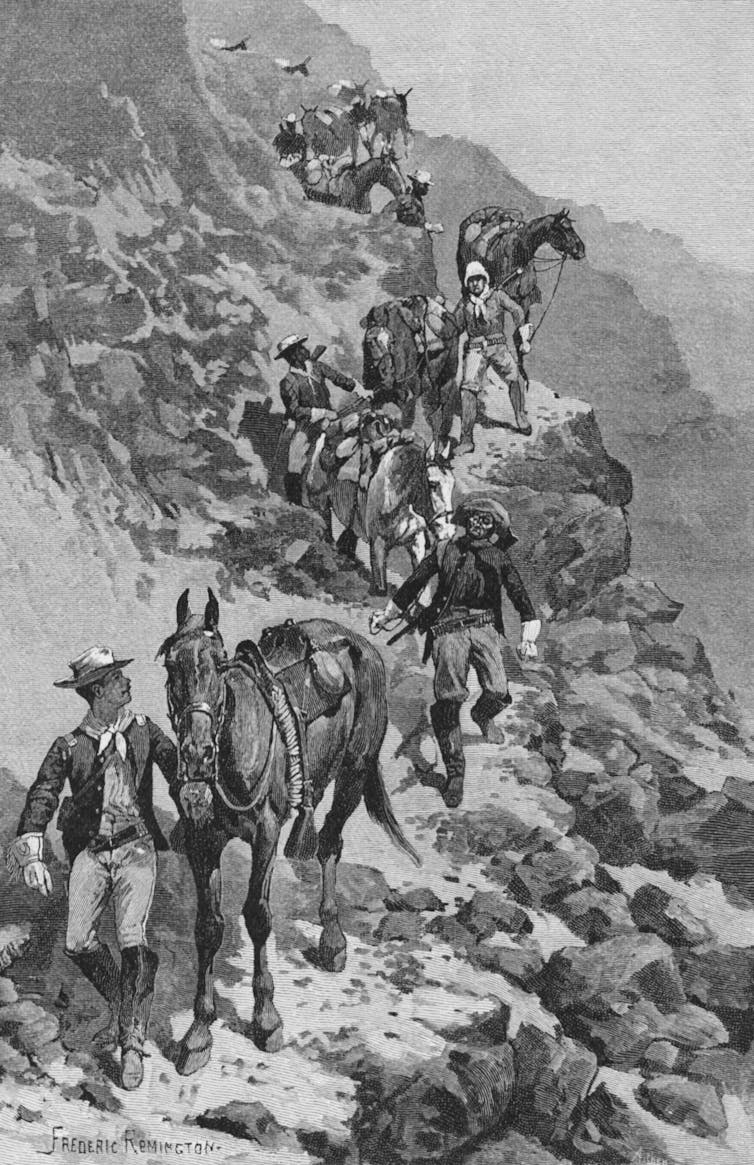
Engraved scene depicting Buffalo Soldiers of the United States Army, or ‘Negro Cavalry,’ marching on the mountains, circa 1870.
Archive Photos/via Getty Images

Consider the case of Black frontiersman John Taylor, who was dubbed “the first white man in Pine River Valley.” A formerly enslaved man who served in the Union Army, Taylor settled in the Ute Borderlands, which is where he married an Indigenous woman. According to the scholar Louis Gregory McAllister, in this area of southern Colorado at the time, the only racial categories were “white” or “Indian,” so Taylor was accepted and treated as white by both communities.

The Buffalo Soldiers were among the first African Americans to have their stories included in Colorado history. They have been honored as heroes for their military service at Fort Garland and as proof of Black presence in the familiar mythologizing of Western expansion. Established in 1866, they were commissioned to patrol federal lands.

Recent scholarship has complicated the heroic picture, showing how they were underpaid and mistreated by the army they served. They themselves played a troubling role in the suppression and inhumane treatment of Colorado’s Native peoples.

An anniversary reckoning

So what does Black Colorado history have to say to all Coloradans – and the nation?

Increasing our knowledge of Colorado’s Black history involves confronting complicated truths, dismantling easy binaries between the oppressors and the oppressed, and understanding how the experiences and suffering of particular communities are meaningful to us all.

Coloradans can celebrate hard-won achievements and contributions to the betterment of Colorado society, but we must also acknowledge and commemorate the inhumane, shameful and ambiguous parts of our shared stories.

Is Black Colorado history useful for recognizing and addressing current injustices and what some see as similar moral dilemmas? Or is the recognition of Black History Month more appropriately seen as a “thank you” card from institutions and organizations?

The Conversation

Claire Oberon Garcia does not work for, consult, own shares in or receive funding from any company or organization that would benefit from this article, and has disclosed no relevant affiliations beyond their academic appointment.

​Politics + Society – The Conversation

Categories
Uncategorized

50 years ago, the Supreme Court broke campaign finance regulation

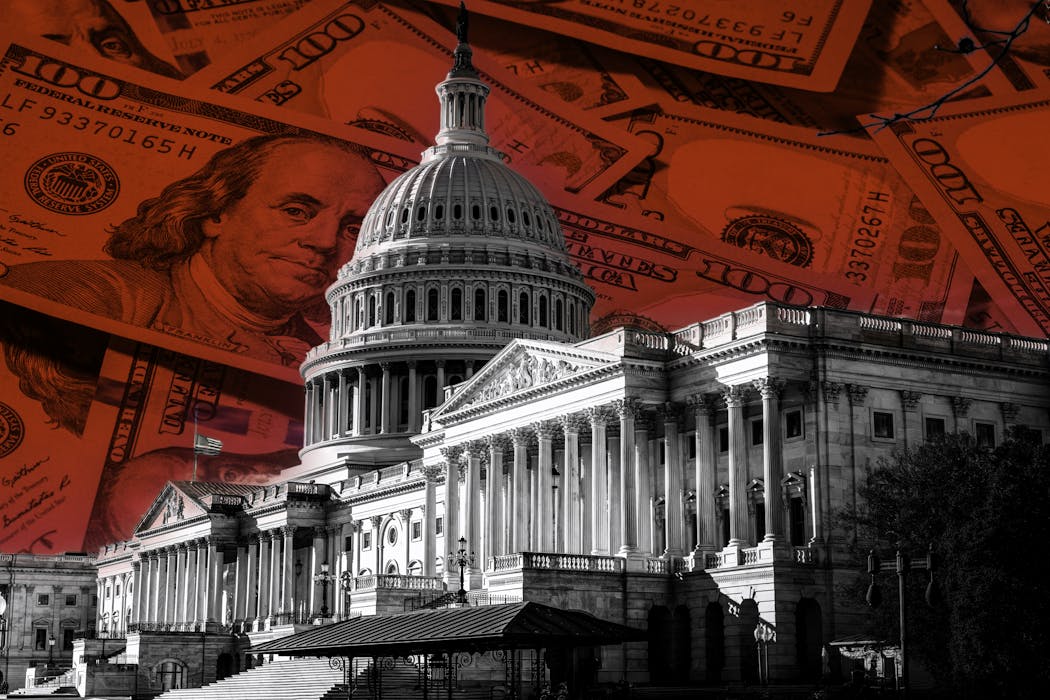
Most other democratic countries spend only a fraction of what the U.S. does on elections. Greggory DiSalvo, iStock/Getty Images Plus

In 2024, spending on federal elections totaled almost US$15 billion in the United States. The United Kingdom, in contrast, spent approximately $129 million on its 2024 parliamentary elections – less than 1% of 2024 U.S. spending – despite having a population one-fifth the size of the U.S.

Indeed, most other democratic countries spend only a fraction of what the U.S. does on their respective elections.

Why do U.S. elections cost so much?

Many people may attribute the blame to Citizens United v. FEC, the 2010 U.S. Supreme Court case that struck down corporate spending limits in elections.

Yet the source runs much deeper, to a case that marked its 50th anniversary in early 2026: Buckley v. Valeo, a landmark case that established the modern framework for U.S. campaign finance regulation.

Big money’s political influence

For most of U.S. history, political spending was an unregulated practice. In turn, big-moneyed interests wielded major influence over elections without any legal impediments.

In the early 20th century, however, Congress began implementing small measures to rein in unfettered campaign finance. In 1907, for instance, Congress passed the Tillman Act, which banned corporations from donating directly to candidates. By 1971, Congress had implemented the modern Federal Election Campaign Act, or FECA, which initially just included disclosure and disclaimer requirements for candidates.

Nevertheless, following the Watergate scandal – which included bags of cash and campaign dirty tricks – Congress enacted the more comprehensive 1974 FECA Amendments to more effectively restrain big money in American politics.

The FECA Amendments instituted, among other things, dollar limits on the amount of money individuals and political committees could contribute to federal candidates. Similarly, it limited the amount of money individuals could independently expend to support the election or defeat of a federal candidate.

Almost immediately, a number of politicians and other parties filed suit – including U.S. Sen. James Buckley, a New York conservative; former U.S. senator and 1968 presidential candidate Eugene McCarthy, a Minnesota Democrat; and the New York Civil Liberties Union – to challenge the amendments’ constitutionality.

They argued that the new laws restricted First Amendment freedoms of political speech and expression. Their argument was straightforward: If I can’t spend as much as I want to support a candidate, I am unable to fully express my political views. The lawsuit ultimately ended up before the U.S. Supreme Court.

On Jan. 30, 1976, the Supreme Court issued its opinion. One of the lengthiest in U.S. history – 294 pages in total – the opinion took an axe to the FECA and effectively reduced federal campaign finance law to a patchwork of laws and rules resembling regulatory Swiss cheese.

In doing so, the court laid the groundwork for the development of the modern campaign finance system in the U.S.

Money is speech

What did Buckley v. Valeo do?

For one, the court declared that limits on political contributions and expenditures, in fact, affect First Amendment interests. The court found limits on contributions to indirectly impact donors’ right of expression, the idea being that a contribution to a candidate acts as an expression of support for them.

Contribution limits can furthermore directly infringe on candidates’ speech rights if they are so low as to prevent the candidate from effectively campaigning, the court decided.

The court, meanwhile, found limits on political expenditures, such as spending money on a TV ad, to impose an even more direct constraint on speech rights. In the court’s words, such limits reduce “the quantity of expression by restricting the number of issues discussed, the depth of their exploration, and the size of the audience reached.” With this, the court embraced what its critics have dubbed the “money is speech” principle.

So whenever a law constrains political speech, the government must justify it via a “compelling” state interest. Thus came the court’s second major move via the Buckley decision: narrowly defining the government’s interest in regulating money in politics.

Specifically, the court recognized only one compelling state interest in restricting political spending: preventing quid pro quo corruption – the exchange of money for political favors. With this, the court outright rejected that the government had a serious, broader interest in promoting political equality, one of the driving forces behind the passage of the 1974 FECA Amendments.

Applying this framework, the court upheld federal limits on contributions to candidates because directly giving money to politicians carries a risk of quid pro quo.

In contrast, the court invalidated FECA’s limits on independently made political expenditures – expenditures made on a candidate’s behalf but not in coordination with the candidate. In the court’s view, if somebody spends money to support a candidate without coordinating with that candidate, no corruption concern exists – an assumption that remains widely disputed. Thus, Congress had no compelling interest to limit political advocacy via expenditures.

A man in a sports jacket and tie, gives thumbs up as he stands behind a lectern featuring microphones.
Conservative James L. Buckley, whose name is on the crucial Supreme Court case Buckley v. Valeo, claims victory in the 1970 race for Senate from New York.
Bettman/Getty Images

Unlimited sums

While a product of 1970s lawmaking, the Buckley decision has played a major role in shaping modern U.S. politics. Its impact on how lawmakers can – and cannot – regulate money in politics endures today.

The most pronounced effect of Buckley has been the proliferation of spending by outside groups making those independent expenditures.

Buckley’s invalidation of independent-expenditure limits applied only to limits on individuals. But the Supreme Court has since extended Buckley’s logic to spending by organizations. In Citizens United in 2010, the court held that the government had no compelling interest in limiting independent expenditures made by entities such as corporations, unions or political action committees – PACs – that do not coordinate with candidates, known today as super PACs.

Shortly following the Citizens United decision, a federal appellate court applied Citizens United to strike down limits on contributions to super PACs, the idea being they could not engage in corruption if they were not coordinating with candidates.

Donors were now free to give unlimited sums of money to super PACs, which were free to spend unlimited sums of money to influence elections. Each passing election since then has seen untold super PAC spending, peaking at over $2.6 billion in 2024.

Enter dark money

Super PACs are only one part of the modern political landscape, though.

Following Citizens United, donors realized that if they were to donate money to a super PAC, federal law would mandate the disclosure of that donation. Yet, federal law contained a loophole: shell companies – companies formed purely to preserve the anonymity of their makers – and 501(c)(4) nonprofits could donate money to super PACs without having to disclose who their money came from. Collectively, these became known as “dark money” groups.

Wealthy donors thus started giving money to these dark money groups as a vehicle to fund super PACs without detection. These groups have become a major force in election spending, accounting for an estimated $1.9 billion in 2024.

The Buckley decision has also led to the proliferation of self-funded candidates. The Supreme Court held that the government cannot limit self-funding because the risk of quid pro quo is nonexistent – again, a disputed assumption.

U.S. campaigns now feature multimillionaires and billionaires propelling themselves into electoral contention each election cycle simply by virtue of having a well-funded bank account. In 2024, 65 federal candidates spent at least $1 million of their own dollars on their campaign.

Small limits, big spending

One area that still remains open to regulation post-Buckley is contributions to candidates, political parties or PACs.

Thus, contribution limits exist federally and in most states in some form.

Still, the government’s authority to cap contributions is not infinite. The Supreme Court has occasionally struck down certain states’ limits when they are deemed “too low.”

The court, moreover, invalidated in 2014 an aggregate limit on the amount a donor could contribute overall to candidates per election, reasoning that Buckley’s anti-corruption rationale could apply only to direct, one-to-one exchanges. Wealthy donors were thus free to donate to hundreds of candidates in an election cycle.

In 2025, the court heard a challenge to a federal law limiting how much political parties can spend in coordination with their nominees. Intended to prevent individuals from using parties as a means of circumventing individual-to-candidate contribution limits, the law has been on shaky ground for decades.

The court will issue a ruling on that challenge in the coming months. Whether the law is upheld or struck down, Buckley is guaranteed to play a major role in the decision.

The Conversation

John J. Martin does not work for, consult, own shares in or receive funding from any company or organization that would benefit from this article, and has disclosed no relevant affiliations beyond their academic appointment.

​Politics + Society – The Conversation
Categories
Uncategorized

When civil rights protesters are killed, some deaths – generally those of white people – resonate more

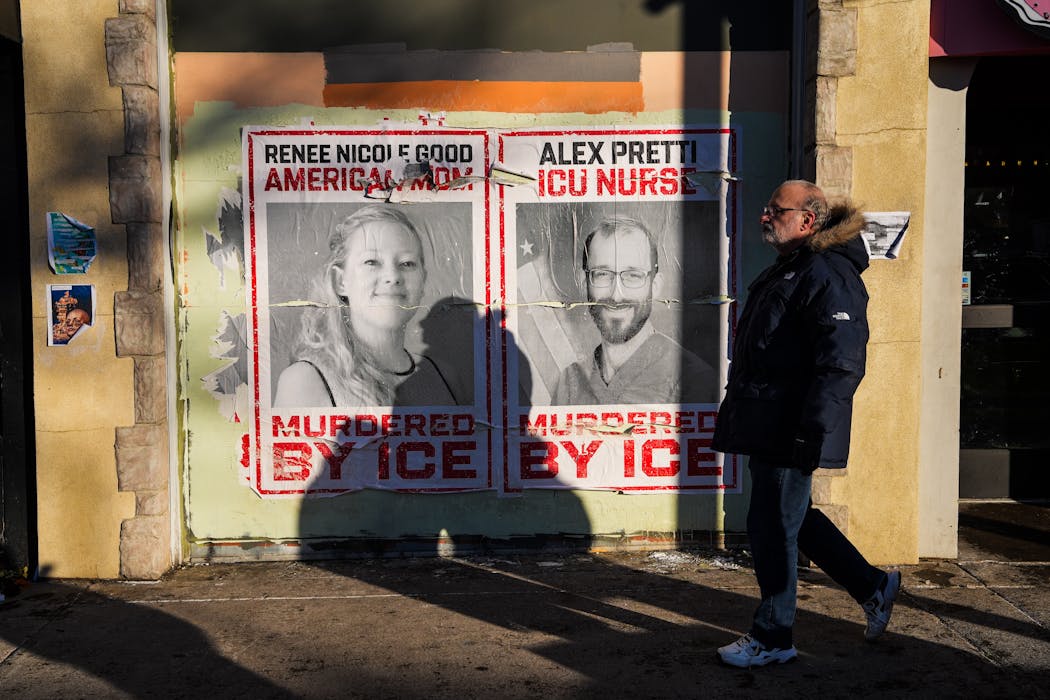
Posters memorialize Renee Good and Alex Pretti, two white Minneapolis residents killed by federal agents. AP Photo/Ryan Murphy

Renee Good and Alex Pretti, two white Minneapolis residents killed in January 2026 by federal agents while protesting the Trump administration’s immigration policy, have become household names. National media outlets continue to focus on their deaths and the circumstances around them.

Neither of them was the first person to be shot and killed by immigration enforcement officials over the past year. There have been numerous shootings and some deaths.

In September 2025, Silverio Villegas González was killed in Chicago under circumstances similar to Good’s death. Ruben Ray Martinez was shot multiple times by Immigration and Customs Enforcement agents in Texas in March 2025, but their involvement was not revealed until nearly a year later. Neither Martinez nor Villegas González has become a household name, and their deadly encounters with federal agents have not drawn nearly the same level of media attention as Good’s or Pretti’s.

As a media historian, I’ve been struck by the similarities between the media’s coverage of Minneapolis and its coverage of Selma, Alabama, in 1965, when voting rights protests led to violence that left three people dead, including two white victims.

I’ve written about the Selma campaign, as well as the media’s treatment of white female activists killed during racial justice protests, in my books “Equal Time: Television and the Civil Rights Movement” and “Making #Charlottesville: Media from Civil Rights to Unite the Right.”

These two events reveal that the deaths of white activists often draw and sustain far more attention than the deaths of Black or Latino people in similar contexts. But the Selma and Minneapolis events also show that male and female white activist victims aren’t necessarily treated the same way.

Remembering Selma

Video footage of law enforcement beating and gassing marchers on Selma’s Edmund Pettus Bridge remains an iconic visual document of the Civil Rights Movement. John Lewis, who later became a congressman, was an activist at the head of the march on March 7, 1965, and was beaten in the head at the base of the bridge by Alabama state troopers. But he was not a household name in 1965, and media coverage at the time did not identify him.

Reporters also didn’t pay much attention to what had motivated the march: the killing of Black voting rights activist Jimmie Lee Jackson by an Alabama state trooper during a nighttime march a week earlier.

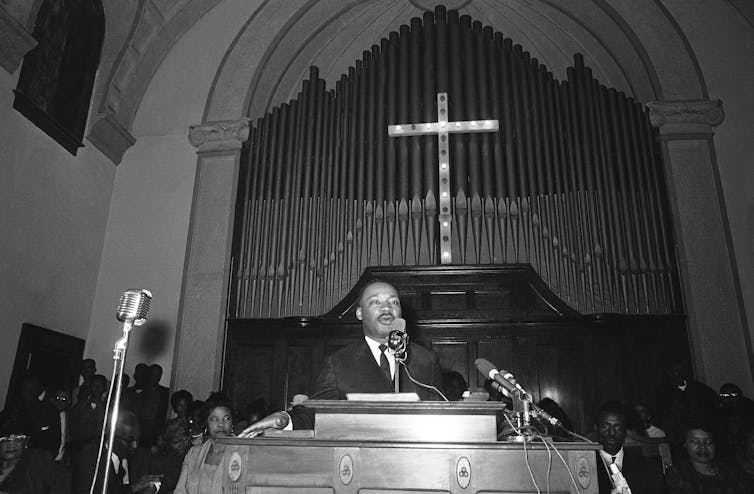
Martin Luther King stands at the pulpit of a church in front of a large crucifix.
Martin Luther King Jr. delivers a eulogy in Selma, Ala., for James Reeb, a fellow minister who was beaten to death.
AP Photo

Still, the prime-time television broadcast of footage from “Bloody Sunday” at the Pettus Bridge shocked Americans, just as footage from Minneapolis has similarly distressed and disturbed many people today.

In 1965, a small number of white Americans from around the country, including numerous members of the clergy, descended on Selma to stand with the brutalized voting rights activists. They included James Reeb, a Unitarian minister from Massachusetts, and Viola Liuzzo, a wife and mother of five from Michigan.

Reeb, following a second aborted march across the Pettus Bridge two days after Bloody Sunday, was viciously beaten by a group of white racists and left lying on the ground, mortally wounded. His beating and subsequent death received plentiful media attention.

President Lyndon B. Johnson contacted Reeb’s widow. She gave media interviews about her husband. Johnson also extolled Reeb at the beginning of his joint address to Congress calling for robust voting rights legislation, four days after Reeb’s death. Johnson never mentioned Jackson’s death.

Liuzzo was ferrying people back to Selma from Montgomery on March 25 after the conclusion of the final, successful march to the state capital when a carload of Ku Klux Klansmen, one an FBI informant, chased her down and shot her through her car window. Her death received even more coverage than Reeb’s, keeping Selma in the news.

The Voting Rights Act passed five months later.

Smearing the victim

So how does coverage of Reeb and Liuzzo echo the portrayals of Pretti and Good? And why does it matter?

Initial media treatment of Liuzzo focused on her status as a wife and mother. She was characterized as brave, putting the rights of others above her own. “Mrs. Liuzzo ‘Felt She Had to Help,’” was the headline of a New York Times profile.

Good’s status as a devoted mother and wife also characterized initial media reporting following her death. This kind of framing can often shield “nice white ladies,” as scholar Jessie Daniels has termed them, from the derogatory treatment that women of color have often endured in the public arena.

But in both cases, although separated by six decades, condemnation, disparagement and misogyny soon followed. Government officials, commentators and far-right forces framed these women and their activism in darker terms. Liuzzo was smeared by a KKK grand wizard who blamed her for her own death, saying, “If this woman was at home with her children where she belonged she wouldn’t have been in any jeopardy.” Liuzzo was falsely accused of having sexual relations with a Black man, thereby being characterized as a traitor to the white race.

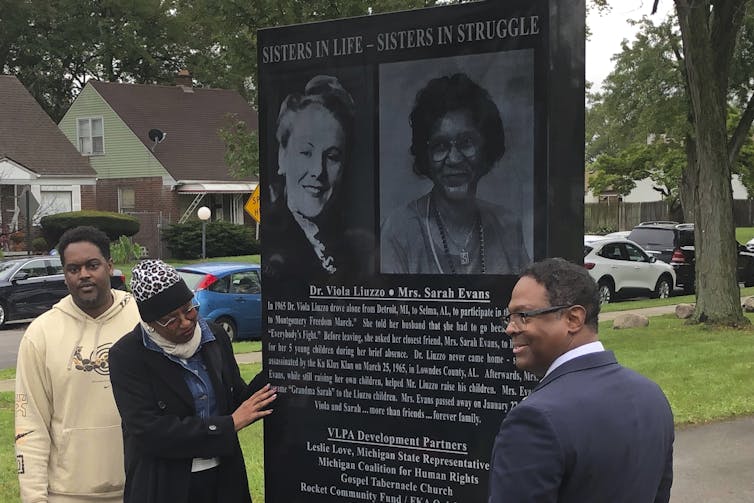
Three people pose for pictures on either side of a black, granite memorial.
In 2023, a Detroit monument honoring Viola Liuzzo, who was killed by the Klan, and Sarah Evans, who raised Liuzzo’s children, was unveiled.
AP Photo/Corey Williams

This kind of racist vitriol might have stayed on the fringes, but FBI Director J. Edgar Hoover amplified the stories, while a Detroit police officer’s file on Liuzzo, which included highly personal information and speculation about her mental health, was shared with segregationist Sheriff Jim Clark of Selma.

The material ended up in The New York Times, and Liuzzo’s posthumous reputation was marred. When Ladies’ Home Journal polled its readers about Liuzzo, 55% responded that she should have stayed home with her children.

Echoes of the past

Official government and law enforcement responses to Good’s death echo the Liuzzo case; in fact, the responses have arguably been magnified. Vice President JD Vance blamed Good for her own death, claiming it was a “tragedy of her own making.” President Donald Trump characterized her as “disorderly” and vicious. Homeland Security Secretary Kristi Noem and other administration officials labeled Good a domestic terrorist.

This attempt to influence the media’s framing of Renee Good clearly had an impact, since much of the early media coverage focused on questions about her actions and motives, with the New York Post derisively labeling her an “‘ICE Watch’ ‘warrior’ who trained to resist feds before shooting,” before attention shifted to Pretti’s killing.

Good, like Liuzzo, was also derided as a race traitor, somehow betraying white Americans by supporting nonwhites. Podcaster Matt Walsh disparaged her for giving her life “to protect 68 IQ Somali scammers,” a smear that made its way into mainstream media, including its appearance in an opinion piece by The New York Times’ columnist David French that criticized inflammatory MAGA rhetoric.

Walsh and other right-wing commentators, along with comedian Ben Bankas, underscored Good’s sexuality to further demean her.

It’s different for men

Men have been treated differently in both press coverage and political response. Reeb, a father of four, never faced the level of condemnation heaped on Liuzzo. Southern white segregationists certainly questioned the motives of the many clergy members who descended on Selma. Those sentiments, however, did not circulate much outside of segregationist press. Reeb’s status as a minister, along with being a white man, may have shielded his reputation.

Here’s where there are some similarities to the response to Pretti’s death. Initially, Trump administration officials brought out the same playbook they’d used with Good. Noem and Stephen Miller, the White House homeland security adviser, called Pretti a domestic terrorist. Greg Bovino, the leader of Operation Metro Surge in Minneapolis, along with a Homeland Security spokeswoman, claimed Pretti intended to “massacre law enforcement.”

Such charges quickly unraveled as media outlets questioned them. It helped that the video footage of Pretti’s killing was clearer than that of Good’s.

Like Good, Pretti became the target of vitriol in far-right media platforms. But little of that has gotten much purchase in mainstream media, just as the segregationist contempt for activist clergy members in Selma was not amplified.

Pretti’s status as a licensed gun owner who was exercising his Second Amendment right to bear arms, as well as his First Amendment rights to protest, may also have assisted his posthumous reputation. Right-wing critics who condemned a lesbian who was not adhering to a set of standards regarding femininity had a much harder time condemning a man licensed to carry a gun.

Liuzzo, Reeb, Good and Pretti all put their bodies on the line and made the ultimate sacrifice on behalf of vulnerable nonwhite people. Liuzzo and Good suffered significant character assassination that their male partners-in-protest avoided.

Whiteness may help bring massive media attention, but being a dead white woman doesn’t necessarily bring respectful treatment. For some, especially those who put their bodies on the line for nonwhite communities, they are just “AWFL,” the current right-wing acronym for “affluent, white, liberal women” who step out of bounds.

The Conversation

Aniko Bodroghkozy does not work for, consult, own shares in or receive funding from any company or organization that would benefit from this article, and has disclosed no relevant affiliations beyond their academic appointment.

​Politics + Society – The Conversation

Categories
Food

Protein-Maxxing: How Much Protein Is ‘Too Much?’

One of the trendiest food fads around right now (and for the last few years) is something called protein maxing, but how much do you really need?

​Food Republic – Restaurants, Reviews, Recipes, Cooking Tips

Categories
Politics

‘A really really big decision’: The court cases looming over the midterms

The fight over this year’s House map is barreling through the nation’s courtrooms.

High-stakes legal cases that could determine the majority loom in nearly a dozen states, with just months to go until the November election. The wave of court cases follows a 2025 that was marked by fiercely political showdowns, with high-profile walkouts, rare Republican defections from President Donald Trump and a hugely expensive ballot initiative in California.

And in addition to the state-by-state fights, one case before the Supreme Court — Louisiana v. Callais — has the ability to blow up the entire map.

“There was a lot of political action in ’25, and that’s turning to the courthouse now, this year,” said Justin Levitt, a former adviser to President Joe Biden on democracy and voting rights and a law professor at Loyola Marymount University. “It’s not just the Supreme Court. These are fights about individual state practices all over the place.”

In Missouri, for example, there are multiple lawsuits — and a ballot measure effort — to try and halt the GOP-led redraw there. In Florida, Democrats are already trying to get ahead of Gov. Ron DeSantis’ planned April redraw with a lawsuit that argues he lacks the authority to call for it. Cases in Utah, New York and Wisconsin that could shift seats are still playing out even as voters gear up for primaries.

In Maryland, the National Republican Congressional Committee has retained a lawyer to handle any potential redistricting challenges there, according to two people familiar with the hiring granted anonymity to discuss it. In Virginia, the state Supreme Court is expected to decide whether the Democratic remapping effort — which still needs to go before voters — is legal, with state Democratic officials vowing to challenge decisions from lower state courts that freeze the gerrymandering push.

Waiting for the court process to play out means organizations dedicated to redistricting are navigating both political and legal challenges simultaneously — and that voters and election officials have no real idea what district lines they may be asked to use, in some cases, in a manner of weeks.

“That’s something we’re used to at this point,” said John Bisognano, president of the National Democratic Redistricting Committee. “Running full steam on the political side or campaign side while waiting for court rulings or engaging court processes has been an ever-present reality for us.”

That isn’t to say there weren’t any major court decisions in 2025, nor that there will be no political fighting this year. Already, Maryland Gov. Wes Moore and House Minority Leader Hakeem Jeffries have been ramping up pressure on state Senate Leader Bill Ferguson, a fellow Democrat who opposes the effort. Florida lawmakers have squabbled over what timing is best to take up the issue, and Virginia may see an expensive ballot measure fight play out over its map.

By far the biggest legal fight is Louisiana v. Callais, the Supreme Court case which centers around Section 2 of the Voting Rights Act. That case could upend the House map by eliminating a legal interpretation of Section 2 — which broadly outlaws discrimination based on race in elections — that has resulted in states drawing districts where minority voters make up at least half the population.

The end of Section 2 would give red states, especially in the South, the ability to draw out more than a dozen Democratic-held seats, an analysis from liberal groups last year found.

While many legal scholars, including Levitt, expect the decision to come at the end of the term in June — which could prevent any redraws from taking place before the midterms — the Supreme Court could hand down its ruling whenever it wants, and some states are prepared to quickly redraw.

A June decision would likely “radically reshape, not just congressional, but local and state maps for ’27 and ’28,” Levitt said.

“A really really big decision upends every map across the country,” he said, cautioning that he doesn’t expect a ruling to go there. “I think it’s entirely possible that the court here says, ‘you know what, never mind,’ it looks over the edge of the cliff and says, ‘oh, that’s really scary.’”

The court’s next scheduled opinion days are Tuesday and Wednesday of this week.

There are several other major decisions pending in other courts. In Virginia, Republicans have won victories in two cases in front of the same Tazewell County judge, although many in the state expect the state Supreme Court to have the final word on if the voter referendum on April 21 will go ahead.

In Utah, a federal panel ruled on Monday that it would not block the new court-ordered map, which gave one blue-leaning seat to Democrats last year. Republicans may appeal, but the decision — and a recent state Supreme Court ruling rejecting another GOP appeal — could lock the lines in place for 2026. And in New York, two state courts have sided with Democrats hoping to draw one more blue-leaning seat in a surprise win, but Republicans have vowed to appeal to the U.S. Supreme Court.

It’s not uncommon for redistricting to end up before judges, but the unusual mid-cycle battle has added fuel to a fire that was already burning.

“Redistricting cycles have phases. Map drawing, then litigation, then sometimes more mapdrawing. This mid-decade cycle is no different,” said Adam Kincaid, the president of the National Republican Redistricting Trust, who redrew the Texas map last year that was ultimately upheld by the Supreme Court. “There will be several legal fights in the months ahead.”

But with the map still uncertain just months away from November — and as primary season begins — the lengthy legal process complicates how election workers can prepare ballots, and can lead to confusion for voters.

“These things take a real toll on election officials and voters,” David Becker, founder of the Center for Election Innovation and Research, said of mid-decade redistricting. “These things make it very difficult for election officials to manage the workload with less resources than they’ve ever had.”

A version of this article first appeared in POLITICO Pro’s Morning Score. Want to receive the newsletter every weekday? Subscribe to POLITICO Pro. You’ll also receive daily policy news and other intelligence you need to act on the day’s biggest stories.

​Politics

Categories
Music

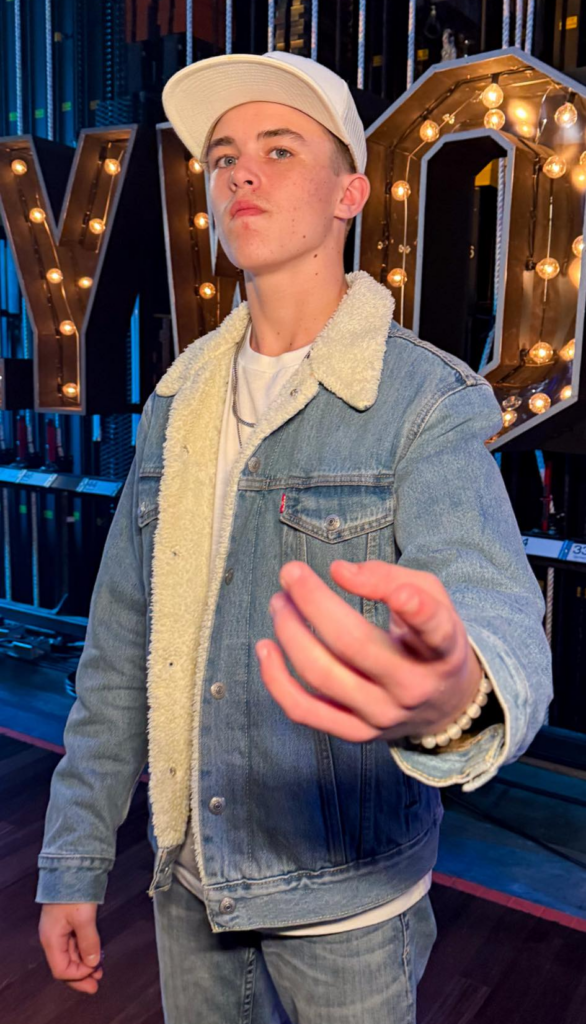
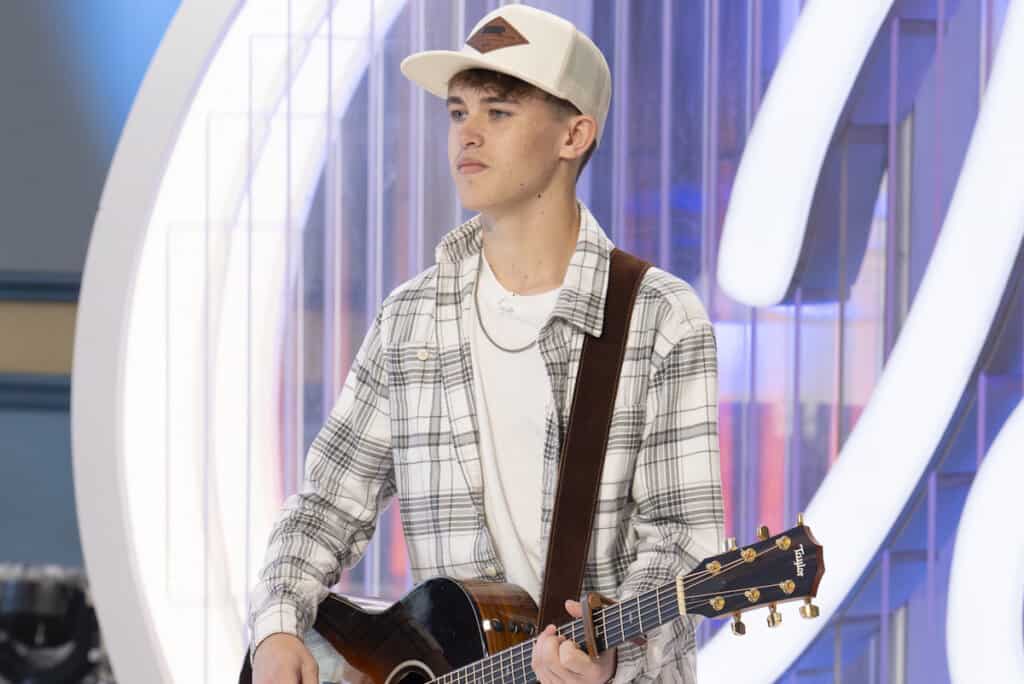
Michael Garner Proves Age Is No Barrier With Standout Hollywood Week Performance On ‘American Idol’

Sixteen-year-old American Idol contestant Michael Garner understands that he is up against some fierce competition this season, but he isn’t letting his young age get in the way of his chance at claiming the title of the next American Idol.

He first introduced himself to the judges with a performance of “I’m Still Fine” by the Red Clay Strays and won over their votes despite the hesitation surrounding his age. This time around, the Forrest City, AR, decided to stick to what worked originally, and chose to sing another song by the rising country band.

Watching his fellow contestants give their all to their performances, he says he quickly realized the high level of talent around him.

Photo Courtesy of Michael Garner

“I’m surprised by all the people my age. Honestly, I never thought people my age had those type of pipes,” Michael admitted.

However, he tuned all the noise out around him and owned the stage with his rendition of the group’s “Wanna Be Loved.” From the judging panel, Bryan’s hesitation immediately returned, but the country superstar appeared to be curious to see how he would do on a bigger stage performing in front of a full room of people.

“Let’s see how he does in the bright lights,” Bryan commented.

The camera flashed to an interview with Michael, during which he acknowledged, “Im16 years old. I understand this competition can be a stressful thing to go through, but I think I have what it takes for sure.”

He brought that confidence to the spotlight, strumming his guitar and letting his vocals take center stage. Michael tapped into his country roots, blending grit and authenticity with smooth, controlled notes, as he embraced the energy track. Every chord showed off his range as well as his ability to connect with the audience.

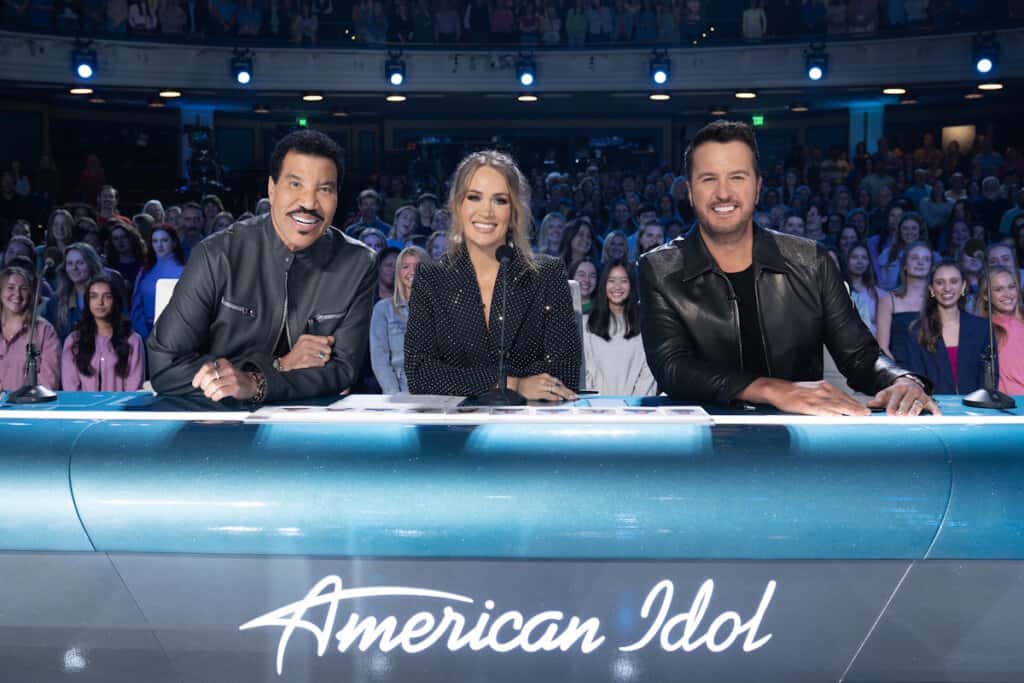
Luke Bryan was the only member of the judging panel who’s feedback was shown on camera, but from the looks of Carrie Underwood and Lionel Richie’s reaction throughout the delivery, it’s evident they were happy with what they had just heard on stage.

Luke Bryan; Photo by Disney/Connie Chornuk

The “Mind of a Country Boy” singer applauded the young contestant for delivering a performance that was, overall, impressive for his age.

“We’re not expecting you to be anything other than what you are, a 16-year-old kid, but you’re just doing impressive stuff. You should be very, very proud. Good job,” he commented.

Later in the episode, viewers heard Michael Garner’s name get called to step forward. A look of shock washed over his face as he heard Lionel Richie reveal that he would be heading into the Golden room to join his other contestants that made it through the night.

Michael Garner; Photo by Disney/Eric McCandless

Reflecting on that moment, he shared, “Feeling great, man, for real. I’m so excited right now. Me only being 16, I really thought I was out for the count, but I guess it’s just proves it’s not just about the age. It’s about what you got inside.”

All the hopeful contestants who made it through the week will have one more chance to impress the judges next week before the Top 30 is determined.

Watch the journey continue to unfold Monday nights when American Idol airs at 8:00 p.m. ET/PT on ABC and on streaming the following day on Hulu. 

The post Michael Garner Proves Age Is No Barrier With Standout Hollywood Week Performance On ‘American Idol’ appeared first on Country Now.

​Country Now

Categories
Music

15-Year-Old Khloe Grace’s ‘American Idol’ Journey Ends After Sugarland Cover In Hollywood Week

Khloe Grace has made it clear from the start that she has been willing to fight for a spot in the Season 24 competition of American Idol. But was her talent at just 15 years old enough to get her through Hollywood week?

The young singer left judges and the viewers on a very emotional note during her audition when she performed an original song called “Forever 13,” that she wrote after seeing another young girl lose her life too early to suicide. Khloe explained that while she didn’t know 13-year-old Aubreigh Wyatt, she felt connected to her story and wanted to help bring awareness to the consequences of bullying.

“I’d went through some of the things that Aubrey had went through, and it was really hard, so I was like, if I could write something that could just very small help someone, then it’s totally worth me writing this song.”

Photo Courtesy of Khloe Grace

The panel of judges were deeply touched by her ability as both a singer and a songwriter and sent her home with a golden ticket. Tonight, Khloe made her way to Nashville for Hollywood Week, which is taking place in Music City for the first time in the show’s history.

She then got to see the magnitude of talent she was up against this year. But even as just one of two 15-year-olds in the competition, she still managed to remain confident and without nerves as she prepared to take the stage.

“I have to step it up and show that I can hold my own, even being so young,” Khloe acknowledged. “I’ve been working for this moment my entire life.”

When a producer asked if she was feeling the nerves creep in, she calmly stated, “No.”

“I mean, I’ve been doing this since I was so young and I remember performing in front of people on a stage since I was 10 years old.”

Taking the spotlight, the Jacksonville, FL native confidently told the audience, “Hi, my name is Kloe Grace. I’m 15 years old and I want to be the youngest competitor to ever win this show.”

She proceeded to deliver a heartfelt rendition of Sugarland’s “Stay” that found her pouring every ounce of emotion into her performance. Her steady voice carried both vulnerability and strength as she navigated the song’s highs and lows with ease. Her family was seen cheering her on with excitement and pride, right along with those in audience who gave her a standing ovation.

When it was time to hear from the judging panel, Bryan was first to share his thoughts. He called attention to the difficulty of her song choice, and insinuated that due to her age, her voice lacked a certain level of maturity. Nonetheless, the country star praised her for giving it her best effort.

He said, “In the front part it seemed like you were pretty nervous but toward the end you really started locking in and hitting your stride, you should be really proud of yourself. Good job.”

Lionel Richie, Carrie Underwood, Luke Bryan; Photo by Disney/Connie Chornuk

Later, reflecting on Khloe Grace’s performance, Luke Bryan explained how he and fellow judges Lionel Richie and Carrie Underwood try to approach every contestant with care, especially the younger artists, ensuring they’re guided thoughtfully through the grueling competition.

“Anytime you’re dealing with a 15, 16-year-old kid, it becomes really, really delicate. This could be a life altering moment for them, and we want it to alter them in a positive way.”

Unfortunately, Khloe Grace’s name was not called in her group, meaning her time on this season of American Idol has come to an end. She understandably expressed disappointment over this news, but revealed she is not giving up on her dreams just yet.

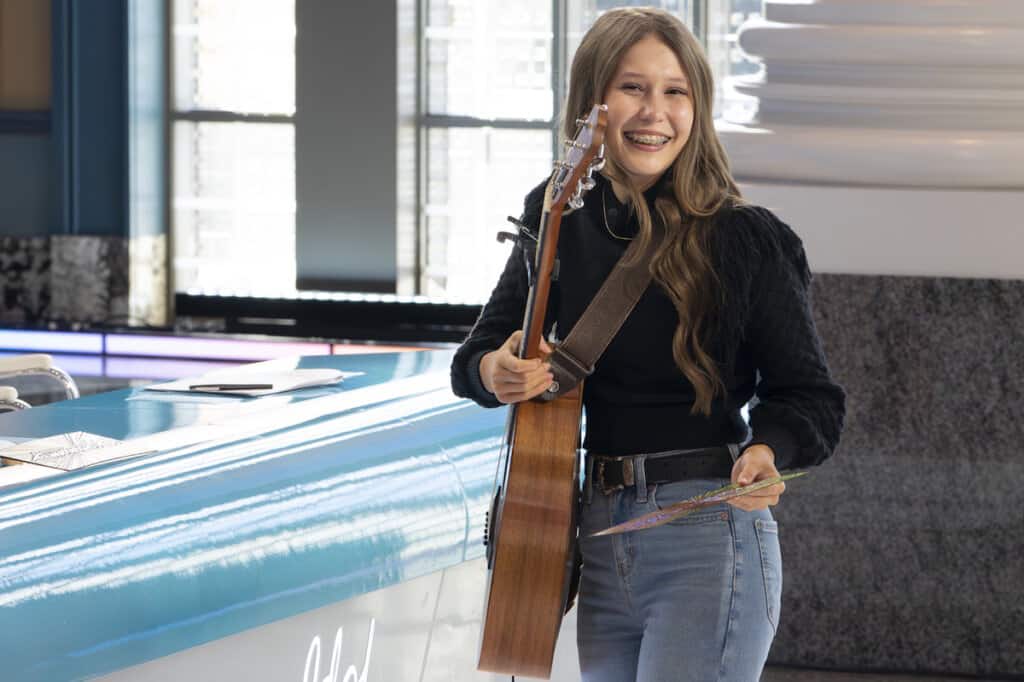
Khloe Grace; Photo by Disney/Eric McCandless

“It’s hard to go home,” she shared. “I would’ve loved to move forward, but they felt like it was best for me to go home and work hard and maybe come back one day. This is just the beginning.”

The American Idol journey continues next Monday night on March 2 when the contestants who made it into the “Golden Room” take the stage for their final chance to perform before the Top 30 is announced.

Tune into ABC at 8:00 p.m. ET/PT or stream it the following day on Hulu. 

The post 15-Year-Old Khloe Grace’s ‘American Idol’ Journey Ends After Sugarland Cover In Hollywood Week appeared first on Country Now.

​Country Now

Categories
Uncategorized

Violent aftermath of Mexico’s ‘El Mencho’ killing follows pattern of other high-profile cartel hits

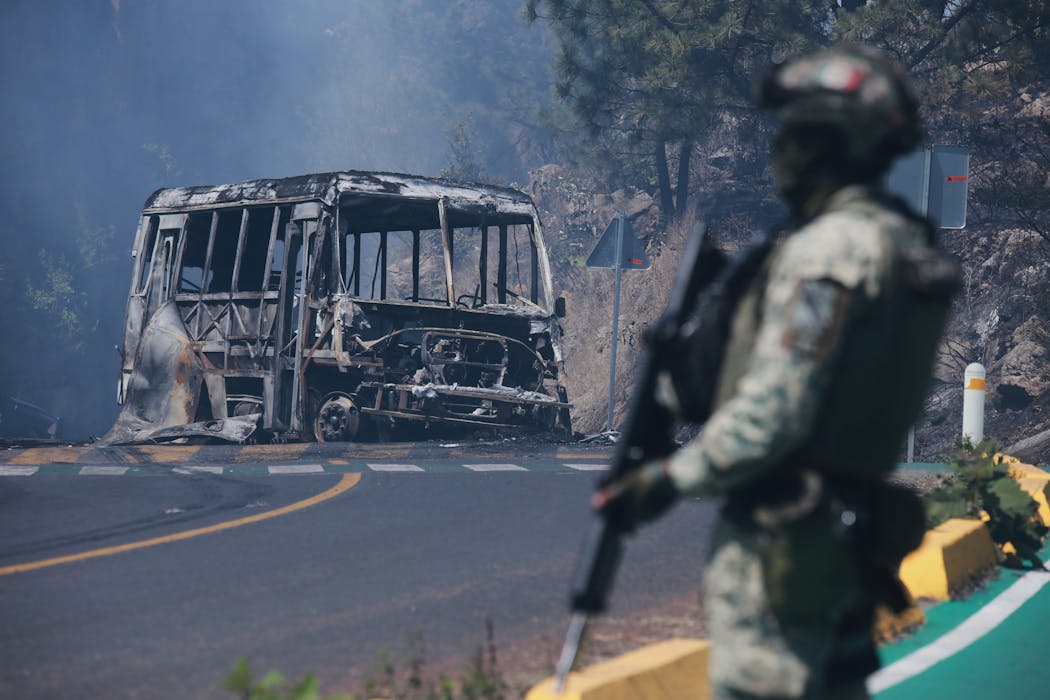
A soldier stands guard by a charred vehicle in Michoacán state, Mexico, on Feb. 22, 2026. AP Photo/Armando Solis

The death of a major cartel boss in Mexico has unleashed a violent backlash in which members of the criminal group have paralyzed some cities through blockades and attacks on property and security forces.

At least 73 people have died as a result of the operation to capture Nemesio Oseguera Cervantes, or “El Mencho.” The head of the Jalisco New Generation Cartel was seriously wounded during a firefight with authorities on Feb. 22, 2026. He later died in custody.

As an expert in criminal groups and drug trafficking in Latin America who has been studying Mexico’s cartels for two decades, I see the violent aftermath of the operation as part of a pattern in which Mexican governments have opted for high-profile hits that often lead only to more violence without addressing the broader security problems that plague huge swaths of the country.

Who was ‘El Mencho’?

Like many other figures involved in Mexico’s drug trafficking, Oseguera Cervantes started at the bottom and made his way up the ranks. He spent some time in prison in the U.S., where he may have forged alliances with criminal gangs before being deported back to Mexico in 1997. There, he connected with the Milenio Cartel, an organization that first allied, and then fought with, the powerful Sinaloa Cartel.

A red and white poster shows a man's face.
A wanted poster for ‘El Mencho.’
United States Department of State/Wikimedia Commons

Most of the information available points to the Jalisco New Generation Cartel forming under El Mencho around 2010, following the killing of Ignacio “Nacho” Coronel Villarreal, a Sinaloa Cartel leader and main link with the Milenio Cartel.

Since 2015, Jalisco New Generation Cartel has been known for its blatant attacks against security forces in Mexico – such as gunning down a helicopter in that year. And it has expanded its presence both across Mexico and internationally.

In Mexico, it is said to have a presence in all states. In some, the cartel has a direct presence and very strong local networks. In others, it has cultivated alliances with other trafficking organizations.

Besides drug trafficking, the Jalisco New Generation Cartel is also engaged in oil theft, people smuggling and extortion. As a result, it has become one of the most powerful cartels in Mexico.

What impact will his death have on the cartel?

There are a few potential scenarios, and a lot will depend on what succession plans Jalisco New Generation had in the event of Oseguera Cervantes’ capture or killing.

In general, these types of operations – in which security forces take out a cartel leader – lead to more violence, for a variety of reasons.

Mexicans have already experienced the immediate aftermath of Oseguera Cervantes’ death: retaliation attacks, blockades and official attempts to prevent civilians from going out. This is similar to what occurred after the capture of drug lord Ovidio Guzmán López in Sinaloa in 2019 and his second capture in 2023.

Violence flares in two ways following such high-profile captures and killings of cartel leaders.

In the short term, there is retaliation. At the moment, members of the Jalisco New Generation Cartel are seeking revenge against Mexico’s security forces and are also trying to assert their regional authority despite El Mencho’s death.

These retaliatory campaigns tend to be violent and flashy. They include blockades as well as attacks against security forces and civilians.

Then there is the longer-term violence associated with any succession. This can take the form of those who are below Oseguera Cervantes in rank fighting for control. But it can also result from rival groups trying to take advantage of any leadership vacuum.

The level and duration of violence depend on a few factors, such as whether there was a succession plan and what kind of alliances are in place with other cartels. But generally, operations in which a cartel boss is removed lead to more violence and fragmentation of criminal groups.

Of course, people like Oseguera Cervantes who have violated laws and engaged in violence need to be captured. But in the long run, that doesn’t do anything to dismantle networks of criminality or reduce the size of their operations.

What is the current state of security in Mexico?

The upsurge in violence after Oseguera Cervantes’ killing occurs as some indicators in Mexico’s security situation seemed to be improving.

For example, homicide rates declined in 2025 – which is an important indicator of security.

But other measures are appalling. Disappearances are still unsettlingly high. The reality that many Mexicans experience on the ground is one where criminal organizations remain powerful and embedded in the local ecosystems that connect state agents, politicians and criminals in complex networks.

Criminal organizations are engaged in what we academics call “criminal governance.” They engage in a wide range of activities and regulate life in communities – sometimes coercively, but sometimes also with some degree of legitimacy from the population.

In some states like Sinaloa, despite the operations to take out cartel’s leaders, the illicit economies are still extensive and profitable. But what’s more important is that levels of violence remain high and the population is still suffering deeply.

The day-to-day reality for people in some of these regions is still one of fear.

And in the greater scheme of things, criminal networks are still very powerful – they are embedded in the country’s economy and politics, and connect to communities in complex ways.

How does the El Mencho operation fit Mexico’s strategy on cartels?

The past two governments vowed to reduce the militarization of security forces. But the power of the military in Mexico has actually expanded.

The government of President Claudia Sheinbaum wanted a big, visible hit at a time when the U.S. is pushing for more militarized policies to counter Mexico’s trafficking organizations.

But this dynamic is not new. Most U.S. and Mexican policy regarding drug trafficking organizations has historically emphasized these high-profile captures – even if it is just for short-term gains.

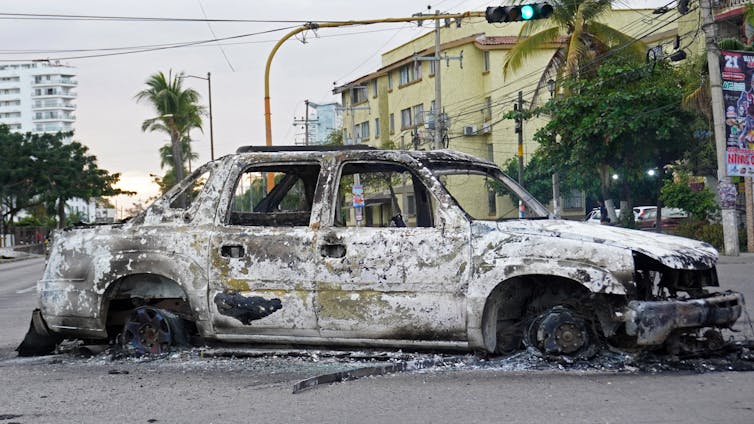
A burned car is seen on a street.
Violence has flared in Mexico’s Jalisco state since the death of Nemesio ‘El Mencho’ Oseguera Cervantes.
Arturo Montero/AFP via Getty Images

It’s easier to say “we captured a drug lord” than address broader issues of corruption or impunity. Most of the time when these cartel leaders are captured or killed, there is generally no broader justice. It isn’t accompanied with authorities investigating disappearances, murders, corruption or even necessarily halting the flow of drugs.

Captures and killings of cartel leaders serve a strategic purpose of showing that something is being done, but the effectiveness of such policies in the long run is very limited.

Of course, taking out a drug lord is not a bad thing. But if it does not come with a broader dismantling of criminal networks and an accompanying focus on justice, then the main crimes that these groups commit – homicides, disappearances and extortion – will continue to affect the daily life of people. And the effect on illicit flows is, at best, meager.

The Conversation

Angélica Durán-Martínez has received funding from the Harry Frank Guggenheim Foundation, the Social Science Research Funding and the United States Institute of Peace.

​Politics + Society – The Conversation

Categories
Sports Fox

World Baseball Classic Preview: Team Breakdowns, Top Players, Predictions

Rowdy fans, superstars, late-inning drama and a competitive vibe that feels more like October than March.  The 2026 World Baseball Classic will have it all. Played across two continents and composed of 20 nations, the WBC begins on March 3 and culminates with the Championship Game on March 17 in Miami. Will we see Team USA led by Aaron Judge get revenge on Shohei Ohtani and Japan after that 2023 championship classic? Or, can a talented squad like Mexico, Dominican Republic or Venezuela make a deep run? Let’s start by getting familiar with the stacked rosters in Pool A and B and break down each side. And check back each day this week as we dive into the other pools.Pool A: Canada, Colombia, Cuba, Panama, Puerto RicoPool B: Tuesday (Brazil, Great Britain, Italy, Mexico, USA)Pool C: Wednesday (Australia, Chinese Taipei, Czechia, Japan, Korea)Pool D: Thursday (Dominican Republic, Israel, Netherlands, Nicaragua, Venezuela) POOL A This pool is set to take over Hiram Bithorn Stadium in San Juan, Puerto Rico, from March 6–11. The hosts are the favorites to top the group, bringing its championship pedigree into a loaded five-team clash that will feature perennial contender Cuba, rising force Canada, gritty Panama and underdog Colombia. Passion, pride and powerhouse talent are sure to collide and make for an electric atmosphere. Canada Why This Team Can Make Noise: Turning down big-league talent? Too much depth? These are good problems to have for Team Canada manager Ernie Whitt, who has led the country in every WBC tournament from its inception in 2006. He’s seen Canada struggle to roster major-leaguers (and defeat Team USA, anyway, in the group stage in ‘06). This year, he’s received an all-time high interest from players with proven MLB experience to suit up for Team Canada, resulting in limited roster space and major-league talent at nearly every position. Team Canada, feeling confident about its talent depth, is on a mission to break into the quarterfinals in Miami for the first time — and it has a path to get there. Canada is competing in a Pool that, for the first time, doesn’t include the United States or Mexico, a pair of persistent adversaries that impeded its advancement in the previous five tournaments. And Team Puerto Rico is weaker than ever this year, missing a few familiar faces due to insurance issues. If Canada is going to break past the group stage for the first time ever, this is the year to do it. The Top Player(s): Brothers Josh and Bo Naylor will team up to play first base and catcher, respectively, for Team Canada. Josh Naylor, who has slugged 51 home runs over the past two seasons, is essentially replacing Freddie Freeman, who opted out from the WBC this year. Though Bo played for his native country in the last WBC, Josh is making his return to the tournament for the first time since 2017. He’s fresh off signing a five-year, $92.5 million contract with the Seattle Mariners — and his customary edge and energy will be terrific assets for Canada. Also dangerous for Team Canada: outfielder Tyler O’Neill, top prospect Owen Caissie, and pitcher Jameson Taillon. Colombia Why This Team Can Make Noise: This year marks just the third time Colombia has qualified for the tournament, and it could finally be the year Colombia sneaks past the pool stage. Colombia enjoyed just one win in the 2023 WBC — a jaw-dropping upset — when it defeated a heavily-favored Team Mexico, 5-4, in the group round. But even that result doesn’t tell the whole story. Team Colombia came mighty close to a couple more victories last time, eventually losing a nail-biter to the USA and again to Great Britain in heartbreaking fashion. Colombia is expected to fare better this year thanks to a blend of veterans and young talent on the roster. The Top Player(s): Jose Quintana. The 37-year-old southpaw has a career ERA of 3.76 pitching for eight teams since his major-league debut for the White Sox in 2012. As he gets ready to suit up for his ninth club, the Colorado Rockies, Quintana will start by leading Colombia’s rotation. He is returning to the tournament for the first time since the country’s WBC debut in 2017, when he held the USA to just one run in 5.2 innings pitched. Behind Quintana, veteran right-hander Julio Teheran will help round out Colombia’s starting staff. Cuba Why This Team Can Make Noise: The pressure is on for Team Cuba to continue its impressive streak. Cuba has advanced out of the Pool Stage in all five previous WBC tournaments, making it one of the most successful countries in the field. In order to complete this feat for a sixth time, and try to build on last time’s successful run to the semifinals before falling to the United States, Cuba will need strong pitching from its proven arms. It has a weapon in reliever Livan Moinelo, who is the reigning MVP of Japan’s Pacific League after recording a 1.46 ERA for the Fukuoka Softbank Hawks in 2025. The Top Player(s): Alfredo Despaigne. Cuba’s 39-year-old slugger is the WBC’s all-time leader in home runs with seven. Despaigne still held onto that mark after failing to clear the fences in 2023, which was the final year of his decade-plus run playing in Japan’s Western League. He returns to the international stage looking to lead Cuba’s offense, which will be without familiar faces in Yoenis Cespedes and Luis Robert Jr. Alongside Despaigne, Angels infielder Yoan Moncada will return to Cuba’s lineup after coming off a trio of injury-riddled seasons in the major leagues. Panama Why This Team Can Make Noise: Even though Panama is a baseball country, it has surprisingly struggled to place any better than 11th in the WBC’s history, and that includes failing to qualify for the tournament in consecutive tries in 2013 and ‘17. Last time, Panama was excellent in a tough Pool, going 2-2, but it didn’t advance after coming out on the losing side of an unprecedented five-way tie that was decided by fewest runs allowed per defensive out recorded. To avoid a similar fate, Panama is looking to leave no doubt about its dominance and aiming to qualify for the quarterfinals for the first time. It will roster a slew of experienced major-leaguers, including a terrific defensive infield alignment, making for an advantage in the tournament. The Top Player(s): There’s more than one standout big leaguer bringing excitement to Panama’s roster. The rotation will be led by Cleveland Guardians southpaw Logan Allen. The 27-year-old Allen, whose mother was born and raised in Panama and still has a ton of extended family in her native country, will get the nod in a huge Game 1 against Cuba. Yankees shortstop Jose Caballero will make his return to the WBC, leading the infield alongside Edmundo Soda. Johan Camargo, veteran Ruben Tejada, and catcher Miguel Amaya. Puerto Rico Why This Team Can Make Noise: Sure, Puerto Rico is weaker this WBC than in previous years without star infielders Francisco Lindor, Carlos Correa and Javy Baez. But it’s still stacked with familiar MLB talents, and Puerto Rico should not be underestimated. Led by manager Yadier Molina, Puerto Rico gained another veteran in eight-time All-Star third baseman Nolan Arenado, who previously played for Team USA in the 2017 and 2023 tournaments, but switched it up this year to honor his Puerto Rican-Cuban mother. While the rest of Pool A might be feeling more confident in light of Puerto Rico’s debilitated squad, the power of Bad Bunny’s support and the high-level talent from the rest of its blonde-haired roster might just be tougher to take down than anyone thinks. The Top Player(s): The proven major-league flair on Team Puerto Rico is worth highlighting. The pitching staff features Seth Lugo, Fernando Cruz, Jorge Lopez, and of course, new Dodgers closer Edwin Diaz, who is returning to the tournament after his fluke knee injury while celebrating on the mound during the 2023 WBC. Veteran catchers Martin Maldonado and Christian Vazquez will represent half of the battery. Reds shortstop prospect Edwin Arroyo will take over for Lindor in the dirt, while Arenado holds down the hot corner. Outfielders Willi Castro, Heliot Ramos, Eddie Rosario, and MJ Melendez lengthen Puerto Rico’s lineup. What Will Be The Best Game of Pool A? Every game in this pool is expected to be intense, but due to home-field advantage in front of what will definitely be a raucous crowd, Cuba vs. Puerto Rico on March 9 looks like one of the marquee matchups. Which Pool A Teams Advance To The Quarterfinals? In a bit of an upset, Canada will win Pool A. This is Canada’s best chance at advancing to the quarterfinals, and they have the star power and talent to do it. Puerto Rico, as the host country, will come close to winning the Pool Stage, but it will ultimately place as runner-up. POOL B Three years after the USA and Mexico advanced out of their pool in Phoenix at the 2023 World Baseball Classic, the teams find themselves again in the same group as the favorites in Pool B, which will take place in Houston from March 6-11. Team Italy, led by Vinnie Pasquantino and top arm Aaron Nola, will be the biggest threat to the two powerhouses of the group. Jazz Chisholm Jr. will look to help Great Britain build on its first ever WBC victory in the last tournament, while Brazil has qualified for the competition for the first time since 2013. United States Why This Team Can Make Noise: Even with Corbin Carroll injured and Tarik Skubal only expected to make one start, this is still the best team that USA has ever assembled, and it’s a group on a mission after losing to Japan in the 2023 WBC finals. Four of the top five finishers in 2025 AL MVP voting (including MVP Aaron Judge), the 2025 AL and NL home run leaders (Cal Raleigh and Kyle Schwarber), both of the reigning Cy Young Award winners (Skubal and Paul Skenes) and All-Star closer Mason Miller are among the members of the roster. The lineup is loaded at every spot, but it’s the elite rotation (Skubal, Skenes, plus 2025 All-Stars Joe Ryan, Logan Webb, Matthew Boyd and more) that really sets this year’s group apart from previous iterations and could have Team USA back on top after winning it all in 2017. The Top Player(s): It has to be the captain, Judge, who’s preparing to play in his first WBC coming off his third MVP season in the last four years. But you can take your pick here on a roster that includes 21 former All-Stars. Raleigh just blasted 60 home runs in a record season for a catcher, while Schwarber launched 56. Bobby Witt Jr. led the majors in hits each of the last two years. Skenes followed up a Rookie of the Year campaign in 2024 with a Cy Young season in 2025. Skubal is coming off back-to-back Cy Young campaigns. Webb was an All-Star and Gold Glove Award winner who finished fourth in NL Cy Young voting last season. Two-time MVP Bryce Harper, a member of Team USA’s 16U and 18U teams who was unable to suit up in the 2023 tournament due to injury, will finally make his WBC debut. On, and on and on… Mexico Why This Team Can Make Noise: It took a Munetaka Murakami walk-off double in the ninth inning for eventual champion Japan to advance past Mexico in the 2023 WBC semifinals. Mexico’s third-place finish was its best in WBC history, and much of that group will be returning in an effort to reach its first finals. Plus, Jonathan Aranda and Jarren Duran are much more accomplished hitters now than they were at the last tournament. The rotation could be this group’s Achilles’ heel, but the top half of the lineup is stellar, and the injection of new talents — All-Star closer Andrés Muñoz, All-Star backstop Alejandro Kirk, slick-fielding shortstop Joey Ortiz and former top pitching prospect Taj Bradley among them — could be enough to get this Mexico team where it hasn’t gone before. The Top Player(s): You could certainly make the case for Duran or 2025 All-Stars Kirk, Muñoz or Aranda here, but fellow 2025 All-Star Randy Arozarena will be the heartbeat of this group. He tends to find a different gear with these kinds of events, and his swagger rubs off on everyone around him. At the 2023 WBC, Arozarena mesmerized with his glove and excelled with his bat. He was arguably the best hitter in the tournament, registering a 1.507 OPS while roping six doubles and a home run in six games. Italy Why This Team Can Make Noise: Team Italy has made it to the quarterfinals of the WBC twice, including at the 2023 tournament after beating Cuba and the Netherlands in pool play. Going 2-2 probably won’t be good enough to advance this time in a pool that includes USA and Mexico, but the additions of MLB veterans Aaron Nola and Michael Lorenzen in the rotation to go with a lineup filled with promising big-league talent and recent top prospects — a group that includes Royals teammates Vinnie Pasquantino and Jac Caglianone, White Sox catcher Kyle Teel, Marlins outfielder Jakob Marsee and Mariners outfielder Dominic Canzone — gives the Italians a chance to make a run. They could be riding the momentum of wins against Brazil and Great Britain before having to face the top teams in the group, at which point an upset could be brewing. The Top Player(s): Nola’s coming off his worst year as a big-leaguer, but he’s the best starting pitcher that Italy has taken into the tournament. Pasquantino, who slugged 32 homers last year, is the most accomplished hitter in a young lineup that offers tremendous upside.  Marsee (24), Teel (24) and Canzone (28) each hit better than 20% above league average last season, and Caglianone — the No. 6 overall pick in 2024 — offers prodigious power potential. He struggled in his first taste of the majors last year, but he hit 20 home runs in 66 minor-league games before the call-up. Great Britain Why This Team Can Make Noise: This was one of the most entertaining teams to watch in the last tournament, as Great Britain’s players fully leaned into the joy of the competition by celebrating every clutch hit by pretending to sip tea on the basepaths. There were many reasons to celebrate, not only because Great Britain upset Colombia to win its first ever WBC game but also because the Brits scored eight runs against Canada and took a tie game into the seventh against Mexico. The arrow is pointing up on this group, which, even beyond star Jazz Chisholm Jr., is full of players who are either in affiliated baseball now or have MLB experience. One interesting side note: Beck brothers Tristan (a Giants reliever) and Brendan (a Yankees minor leaguer starter), whose mother is from Great Britain, will be playing together for the first time since they were college teammates at Stanford in 2018. “I think we can surprise some people,” Tristan told me. The Top Player(s): Chisholm, one of multiple Bahamian talents on the Great Britain roster — a group that also includes D-backs outfield prospect Kristian Robinson, who had an .862 OPS at Triple-A Reno last year — is coming off a 30-30 season with the Yankees and is the best player that the Brits will have ever taken into the tournament. He’ll be co-captain with Nationals prospect Harry Ford, who homered twice in the 2023 tournament and has a chance to be Washington’s catcher in 2026 after making his MLB debut with the Mariners last season. Ford had an .868 OPS at Triple-A Tacoma in 2025. Brazil Why This Team Can Make Noise: Making their second trip ever to the WBC, Brazil lacks the MLB talent of other teams in this pool; however, it does not lack the MLB bloodlines. Team Brazil has three players who are the sons of accomplished MLB veterans in Dante Bichette Jr., Lucas Ramirez (Manny Ramirez’s son) and 17-year-old Joseph Contreras (Jose Contreras’ son). Of that trio, Ramirez, a 17th-round pick of the Angels in 2024, is an intriguing name to watch after going 5-for-13 in last year’s qualifier. Brazil won the qualifier in Tucson last March to make the tournament for the first time since 2013, when it went winless but nearly stunned Japan in Tokyo in a 5-3 defeat. Perhaps they have one upset in them. The Top Player(s): In that 2013 loss to Japan, Leonardo Reginatto went 3-for-4 and knocked in two runs. Fast-forward 12 years, and the Brazilian infielder hit .385 with four RBI in the Tucson Qualifier last year to help get Brazil back to the WBC. The 35-year-old, who made it to Triple-A in the Twins’ organization in 2018 and has appeared in every WBC and qualifying game that Brazil has ever played in, had an .862 OPS in the Mexican League in 2025. What Will Be The Best Game of Pool B? USA vs. Mexico. In pool play three years ago, Mexico jumped out to a 7-1 lead on the United States after four innings behind two Joey Meneses home runs and never looked back while cruising to an 11-5 win. Both teams ultimately advanced out of the pool, which is the likeliest outcome again, but that will surely be on USA’s mind this time around. Which Pool B Teams Advance To The Quarterfinals? This pool should end with a flourish, as it’s likely that the last two games on the docket — USA vs. Mexico on March 10 followed by Mexico vs. Italy on March 11 — decide which teams move forward. Team USA sweeps to win Pool A, while Mexico and Italy enter the final game of pool play in a win-or-go-home matchup. For the second straight tournament, the U.S. and Mexico move forward.​Latest Sports News from FOX Sports