There’s no doubt that the modern food environment needs to be healthier. But are ultraprocessed foods as evil as their reputation suggests?









There’s no doubt that the modern food environment needs to be healthier. But are ultraprocessed foods as evil as their reputation suggests?
Post Content

If you notice rusty spots on your Blackstone griddle, don’t despair. The marks aren’t permanent, and removing them is actually pretty simple.

Mashed – Fast Food, Celebrity Chefs, Grocery, Reviews

There are a lot of candy stores that have been around in America for a long time, but these are some of the oldest among them, all over 100 years old.

Food Republic – Restaurants, Reviews, Recipes, Cooking Tips

 Miranda Kerr isn’t ready to wear her angel wings again.
Two decades after the supermodel made her debut at the Victoria’s Secret Fashion Show, she shared insight into why she didn’t hit the…
E! Online (US) – Top Stories
Reading Time: 2 minutes
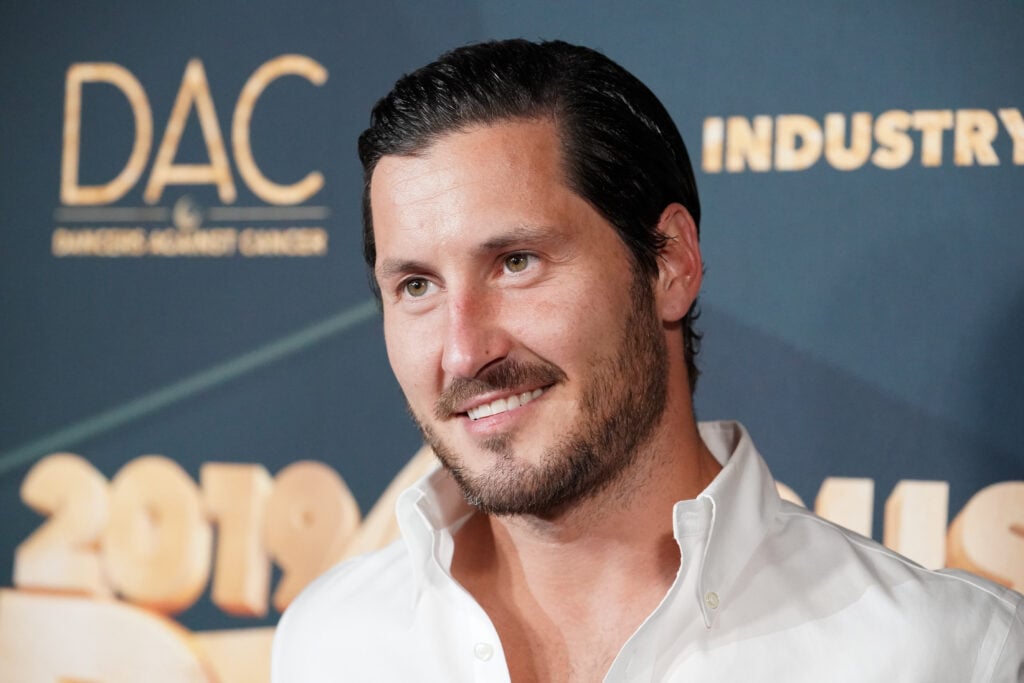
Val Chmerkovskiy is learning that defending your wife on social media can come with some pretty serious consequences.
The professional dancer has been suspended from Dancing With the Stars for one week after posting a controversial message seemingly aimed at judge Carrie Ann Inaba.
And while Val has since apologized, the show’s producers apparently aren’t ready to let this one slide.
The drama began during the October 13 episode of DWTS, when Carrie Ann criticized a samba performed by Val’s wife, fellow professional dancer Jenna Johnson, and her celebrity partner, Harry Shum Jr.
Carrie Ann questioned a lift included in the routine and even read the definition of a lift to explain her critique. Jenna later defended the choreography, explaining that she hadn’t realized two other dancers were lifting Harry during the performance.
Val, meanwhile, was apparently not thrilled with the judge’s assessment.
After initially defending Jenna online, Val escalated the situation with a TikTok post that read, “You almost saw Fresh Prince enter the ballroom last night.”
Val was alluding to Will Smith slapping Chris Rock at the 2022 Oscars after the comedian made a joke about Smith’s wife, Jada Pinkett Smith.
In other words, Val’s attempt to defend his wife came across as suggesting he nearly resorted to violence against Carrie Ann for criticizing her dancing. Not exactly the most diplomatic response to a judge doing her job!
Carrie Ann subsequently addressed the post, sharing a screenshot of a report about the controversy and asking, “So this is what we are doing now?”
Val issued an apology on Instagram on October 15, acknowledging that he regretted the reference and had contacted Carrie Ann directly.
“I should have never made the reference that I did, and I deeply regret it,” he wrote, also apologizing to everyone affected by his “careless post.”
Unfortunately for Val, that apology apparently wasn’t enough to keep him in the ballroom.
BBC Studios, which produces Dancing With the Stars, confirmed on October 17 that the dancer would sit out the following week’s episode.
“The well-being of everyone who works on ‘Dancing with the Stars’ is non-negotiable,” the company said in a statement. It added that Val’s post was “inappropriate and does not reflect the values or standards expected of anyone connected with the show.”
Val subsequently addressed his suspension, reiterating that he had made a poor decision while trying to defend his wife. He also stressed that he didn’t want the controversy to distract from the competition or his celebrity partner, Jenna Dewan.
With Val sidelined, Jenna will perform with professional dancer Alan Bersten during the show’s upcoming Dedication Night.
As for Carrie Ann, she had not publicly commented on Val’s suspension as of the latest reports.
Val may have intended to stand up for his wife, but his social media reaction has now cost him a week on the show. That’s one way to turn a judges’ critique into a much bigger production!
Val Chmerkovskiy Suspended From ‘DWTS’ For Threatening ‘Joke’ … was originally published on The Hollywood Gossip.
The Hollywood Gossip

 You’re doing amazing, Kylie Jenner.
Indeed, the Kardashians star gave fans an intimate behind-the-scenes look at the 2026 Victoria’s Secret Fashion Show, which she closed with a surprise…
E! Online (US) – Top Stories

 Jenna Dewan and Alan Bersten are putting their best foot forward.
While Jenna’s partner Val Chmerkovskiy faces a one-week suspension from Dancing With the Stars, Dewan and Bersten shared an update…
E! Online (US) – Top Stories
Amid wars, inflation, emerging risks from artificial intelligence and threats to democracy, Americans have a lot to be worried about these days. But polls show the majority of voters in 2026 are also concerned about climate change as temperatures and disaster risks rise.
So why are fewer candidates talking openly about climate change in their midterm election campaigns than just a few years ago?
At the University of Michigan’s School for Environment and Sustainability, we study climate communication and are following how Democratic candidates are discussing climate change in their campaigns.
Democratic candidates seem to agree on one strategy: campaign centrally on affordability, emphasizing how ordinary people are struggling to afford to fill up their cars, pay their electric bills and insure their homes against hurricanes and wildfires. It’s part of a concerted effort to make the election a referendum on Republicans’ support for the Trump administration’s contributions to inflation, such as tariffs and the Iran war.

Fossil fuel industry interests have long sought to polarize the public over the phrase “climate change.” As one of us, Geoffrey Henderson, discusses in his new book, “Getting to Work on Climate Policy: The Strategy of Labor-Environmental Coalitions,” campaigns pitting economic concerns against environmental ones have made it harder to build support for policies meant to slow climate change.
When it comes to talking about climate change today, three distinct camps of Democratic candidates and officeholders reveal three different strategies.
The energy populists talk a lot about lowering energy prices for consumers but very little about either climate change or fossil fuels.
Many have been painting data centers, rather than fossil fuel producers, as villains. Candidates often use messages focused on how utilities and data centers are raising voters’ electric rates. They propose measures to lower these costs, like requiring data centers to bring their own energy sources onto the grid.
In North Carolina, former governor Roy Cooper, now running for U.S. Senate, emphasizes lowering energy and utility costs. Sherrod Brown of Ohio, campaigning to return to the Senate, argues that his opponent’s votes in favor of data centers have led to “higher electric rates.”

Discussing energy affordability, without directly calling out the risks to the climate from burning fossil fuels or advocating for more renewable energy, aligns with the argument that climate change messages can alienate swing voters, who prioritize affordability.
If energy populists are elected, they could become silent backers of climate policies to reduce greenhouse gas emissions – both Brown and Cooper have a record of supporting renewable energy – or obstacles to climate policies.
Not all Democrats, even in battleground states, think climate change should fade into the background this election. However, few are as outspoken today as they were in the past.
In Massachusetts, Sen. Ed Markey’s website pledges that he will champion “bold action to invest in clean energy” if reelected in November. In Maine, Senate candidate Troy Jackson asserts that politicians should not pit working-class people against renewable energy, casting the climate-versus-affordability debate as a false choice.
Rhode Island’s Sheldon Whitehouse, one of the Senate’s most outspoken supporters of pro-climate policies, contends that candidates should link higher costs to climate change, such as increased home insurance costs due to hurricane risk. He also points to President Donald Trump’s blockade of the cheapest energy sources – namely, solar and wind power – which he attributes to fossil fuel industry influence.
If elected, these candidates’ messages suggest they will pursue policies that help reduce U.S. contributions to climate change. However, they may need to convince independent voters that their focus on climate change will not overshadow their attention to other challenges.
Another group of candidates wants to have it both ways. They call for actions that can respond to climate change and rapidly build out renewable energy, while also promising cheaper gasoline and more fossil fuel jobs. Scientists warn that more fossil fuel use cuts against global climate goals.
Unlike the other camps, this group does not identify villains in their narrative. These candidates are following the script from the Obama administration, whose “all of the above” energy strategy espoused continued fossil fuel use alongside policies to reduce planet-warming emissions.
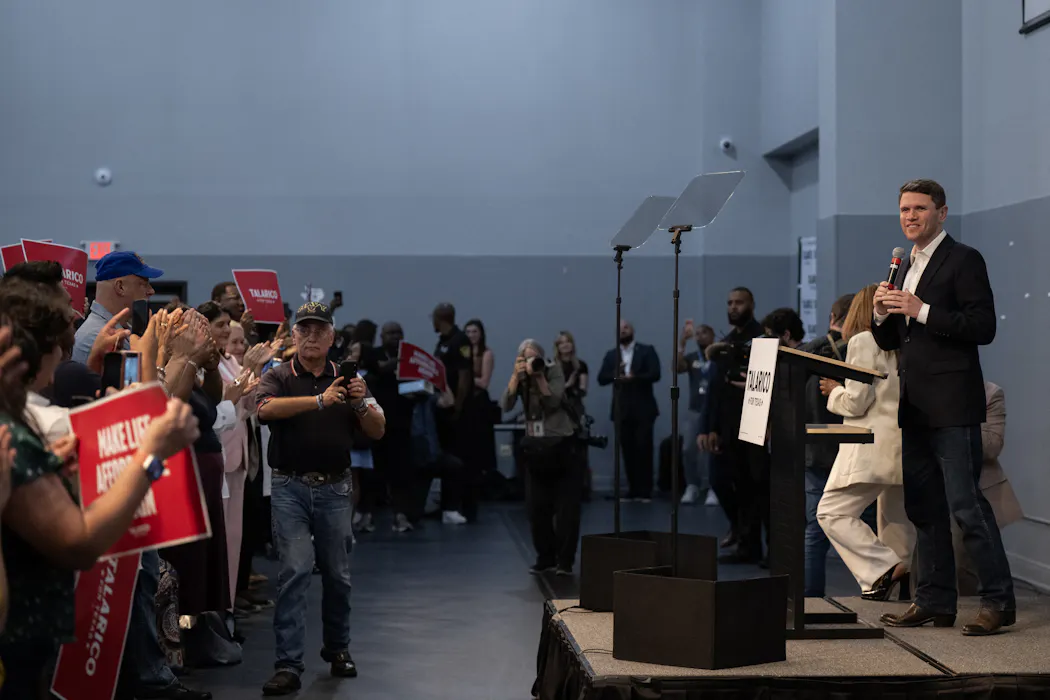
In Iowa, U.S. Senate candidate Josh Turek hosted a roundtable in April 2026 on how climate-fueled extreme weather is raising insurance costs. But he has also focused on lowering the cost of gasoline and diesel. James Talarico, campaigning for the Senate in Texas, has similarly promised to fight climate change by boosting renewable energy while lowering costs by promoting all energy sources.
These candidates may be trying to signal their potential to support climate policies while respecting their states’ cultural connections to fossil fuels. Turek and Talarico are both running in states with abundant wind power.
Studies from the U.S. and Germany find that politicians usually underestimate public support for efforts to address climate change.
So how well do candidates’ platforms represent today’s voters?
Yale’s spring 2026 survey found that 49% of voters believe global warming should be a high priority for Congress and the president. But 70% of moderate or conservative Democrats share this view, alongside 84% of liberal Democrats. Even 1 in 3 liberal-to-moderate Republicans considers the climate a high priority.
Yet polling also suggests that other issues, such as the increasing cost of living, are even more important to many voters. This data suggests that pro-climate messages could appeal to swing voters most strongly if climate policies are seen as complementary to affordability.
Still, a recent survey shows that voters open to Democratic candidates are more likely to support a candidate who prioritizes climate change. Climate messaging may especially resonate with young voters. Over a third of those ages 18 to 29 in a recent Harvard Youth Poll considered climate change an urgent national crisis. Young Republicans are more supportive of addressing climate change than their older counterparts.
While many shifts in the way candidates talk about climate policy have little impact on people’s willingness to participate in collective efforts to address it, messages emphasizing cost savings durably increase support for renewable energy across party lines. Voters’ current concerns about inflation could make climate messages involving affordability especially effective in 2026, though the impact of these messages may vary from state to state.
These different approaches reflect the Democratic Party’s efforts to build a “big tent” that can attract voters with a wide range of views and priorities. Yet Democrats are generally coalescing around a message designed to appeal to working-class voters: that Trump and the Republicans are raising your cost of living.
November’s midterm elections will offer some insight into whether Democrats’ energy affordability message will resonate in the 2028 presidential election.

Geoffrey Henderson has worked on a project that received funding from the National Science Foundation.
Nathaniel Geiger has received funding from the National Science Foundation.
Politics + Society – The Conversation
Give politicians the power to decide who gets a government contract, and people will naturally want to get on their good side. After all, the power to hand out something valuable is itself something valuable.
Consider the recent ProPublica investigation involving Sen. Susan Collins of Maine. Martin Kao, the former head of a Hawaii defense contractor called Navatek, told the FBI that his donations to the Republican senator’s campaign and an allied super PAC were part of a deal for help winning federal funding and contracts for his company.
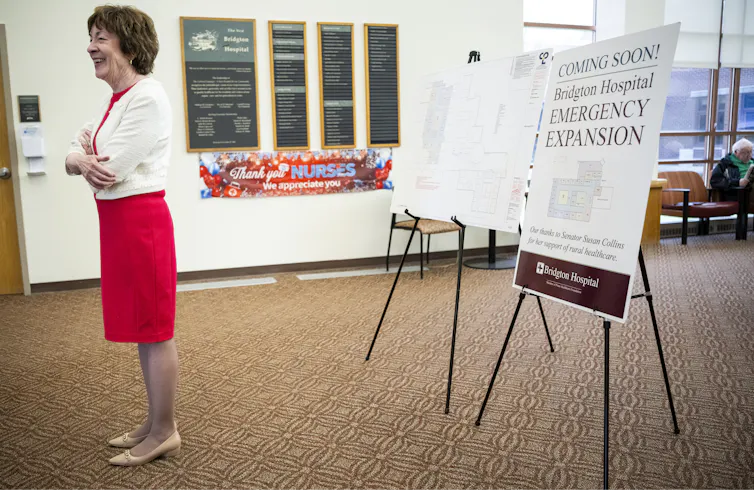
That money padded Navatek’s bottom line, but it was also pitched as an investment in Maine: well-paying jobs from Navy contracts, university research and a new facility on Portland’s harbor.
Trading campaign contributions for official acts, or concealing illegal donations through relatives and shell companies, violate existing law – and it is part of why Kao now sits behind bars. Whether Collins or her official staff knew of an alleged bargain remains a legitimate question the public deserves answered.
But as a scholar of American politics, I argue that the question of criminal corruption obscures a larger problem: The line between political favoritism and effective representation is remarkably thin.
Instead, I wonder why a Hawaii defense contractor concluded that the surest route to federal money ran through a senator from Maine – and why his bet paid off.
Why is access to public money so dependent on the political influence of individual legislators?
Earmarks – spending directed by a lawmaker to a specific local project – account for only about 1% of discretionary federal spending, but they offer an unusually clear window into a much larger competition for public money.
Congress revived the practice in 2021, allowing lawmakers to request funding for particular projects in their states and districts. Navatek’s funding came through the Pentagon budget in 2019, when earmarks were banned. But legislative disclosures make it possible to see who asks for money, who gets it and which politicians are best at delivering.
According to Senate Appropriations Committee disclosures, senators submitted 8,071 requests worth US$26.9 billion for fiscal year 2022. By 2026, that grew to 13,997 requests totaling $50.4 billion.
As these requests have grown, however, the share receiving such funding has fallen.
I matched nearly 55,000 Senate requests from fiscal years 2022 through 2026 against the projects Congress ultimately funded. For every senator, I calculated how many projects they requested independently and how many received funding.
Two things stand out.
The first is the seat: About 30 senators serve on the Appropriations Committee, which writes the bills funding federal agencies. They requested about one-third of the money but secured nearly half of the dollars approved and allocated. A dollar requested by an appropriator was almost twice as likely to become law.
The advantage isn’t partisan: Near the top of the chart, alongside Collins, sit a Vermont Democrat, Patrick Leahy, and a Kansas Republican, Jerry Moran. Leahy retired in 2023, while Moran is still on the panel.
The second is skill: Volume usually costs success – the more a senator asks for, the less of it lands. The median senator won 41% of the money they requested. But Collins is the exception. She requested 496 projects on her own over those five years and won 92% of them – the highest sustained rate in the Senate.
When Republicans regained the Senate majority in 2024, the rate only improved. In fiscal year 2026, her first year as chair, Congress funded 95% of her solo requests, while the median senator’s rate fell to 35%.
When Collins calls her chairmanship a “once in a century” opportunity, she has the evidence. The last Mainer to lead the appropriations committee was GOP Sen. Frederick Hale, who held the chair for four months in the 1930s.
Collins’ chairmanship explains her most recent advantage, but not her entire record. Even before taking the gavel, she secured funding at nearly twice the Senate median. Even in Washington, 30 years of showing up and working across the aisle still gets results.
Now, put yourself in the position of a hospital, a business or a town seeking those dollars. Whose political career would you want to support?
In that respect, Collins is doing what senators are elected to do, and she’s doing it exceptionally well. When access to public resources depends on political influence, those who benefit have reasons to support the politicians most capable of delivering.
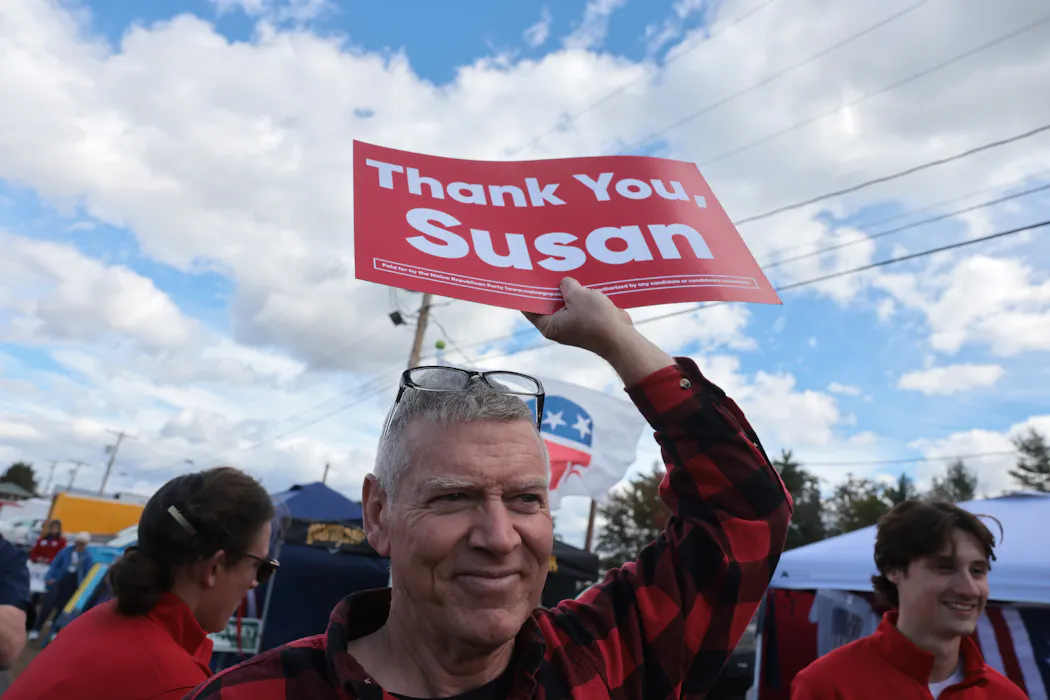
Voters call it delivering for Maine. It is why it is a core message of her reelection campaign. You cannot turn on a television in Maine without hearing about some project “Susan” delivered. It has helped get her reelected four times, because people support candidates who promise results; candidates then run on having delivered on that promise.
The same kind of political exchange happens when businesses contribute to super PACs supporting politicians who deliver. It happens when unions organize turnout for candidates promising favorable policies or when nonprofits support politicians who might fund their programs. These are all different forms of political exchange.
Political scientists call this “rent-seeking”: getting ahead by winning government favors rather than creating something of value. And the more government decides who gets what, the harder it becomes to distinguish representation from favoritism.
The Supreme Court confronted this problem in McCormick v. United States, a 1991 case involving campaign contributions and extortion. To violate the law, the court said, payment had to be made in return for explicit, official action.
Otherwise, the court recognized, ordinary campaign finance would become nearly impossible to distinguish from criminal conduct.
The same relationships that make effective representation possible also make political favoritism difficult to distinguish from legitimate government. A company wins a contract after supporting a senator. A nonprofit receives a grant after helping elect an ally.
The problem is systemic.
Even if every senator were ethical, conscientious and committed to the public good, the incentives would remain the same. A senator who refused to compete wouldn’t make their state’s sewers less leaky. They would leave them unfunded while other states secured the money. The problem doesn’t require bad people.
Nor can it be resolved by declaring one set of political interests more virtuous than another.

Collins’ Democratic challenger, Troy Jackson, for example, says he isn’t backed by corporate PACs or billionaire donors but by working people. Such a claim implies a distinction between self-interested corporate influence and supposedly public-spirited political support that motivates his donor base – even if that donor base includes a multimillion-dollar “dark money” super PAC.
But when a union invests substantial resources to elect politicians who promise favorable labor legislation, or if a nonprofit mobilizes its members to elect someone who promises to expand grants for its programs, the same client-patron relationship persists.
Corporate entities have particular interests; so do noncorporate entities. Both can expect benefits from government. Patronage exists even when the profits don’t go to shareholders.
To call one form of influence corrupt and the other well intentioned is to paper over the business model of reelection: Have they delivered? Will they continue to deliver? Changing the source of campaign support doesn’t change the powers the winner will exercise.
Restricting earmarks didn’t eliminate the underlying incentives. Nor can campaign finance laws, however necessary, eliminate the value of having a powerful political friend.
If Americans want less rent-seeking, it requires reducing how much government spending depends on discretionary political decisions in the first place. General funding rules, established in advance and responsive to differing local needs, offer one alternative. Such rules wouldn’t remove politics from public spending. But they could shift the political contest away from who gets a particular favor and toward the rules under which everyone receives funding.
Until then, voters face a choice between two kinds of political patrons. Each is asking to hold the pen and write checks. Neither is offering to put it down.

Nicholas Jacobs does not work for, consult, own shares in or receive funding from any company or organization that would benefit from this article, and has disclosed no relevant affiliations beyond their academic appointment.
Politics + Society – The Conversation