Categories
Uncategorized

Election officials are fighting wavering voter trust by making mundane processes visible and recruiting citizens to help

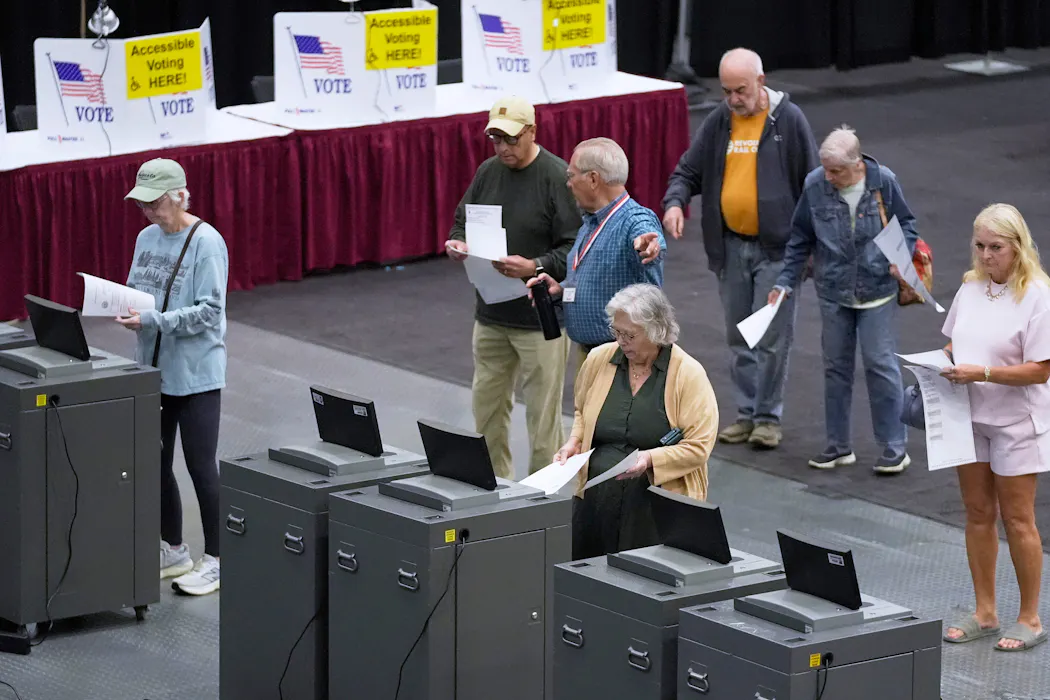
Voters cast their primary ballots in Augusta, Maine, on June 9, 2026, AP Photo/Robert F. Bukaty

Recently, I moderated a national event that had college students speaking with election officials, something I often find myself doing this time of year. This year, a new question kept coming up: “If I’m voting by mail, can I trust my ballot will actually show up?”

For college students, such considerations have urgency. Many are voting in their first major election, often while living away from home. They may be deciding whether to register where they attend college or request an absentee ballot from home. This year, many are weighing whether they trust the process that will bring their vote from the mailbox to the ballot box to be counted.

This uncertainty comes after a monthslong legal fight over the U.S. Postal Service’s role in mail voting, sparked by President Donald Trump’s attempts to dramatically limit mail voting. On Sept. 14, 2026, the Supreme Court barred new Postal Service restrictions on election mail from taking effect.

The court’s decision resolved the immediate question of whether the restrictions would stand. But it did not settle the larger question that now hangs over this election: Can voters trust the machinery of elections in the first place?

I’m a political scientist, and I study elections and voting. For more than a decade, I’ve helped lead nonpartisan student voter engagement efforts at the University of Maine and helped recruit and train student poll workers. I also serve alongside them, administering elections.

That dual role has given me an unusual view of elections – both as a researcher studying public attitudes and as someone who has spent many long days watching the wheels of American democracy turn firsthand.

Why voters trust elections

Research on confidence in elections points to several factors that play a role in whether voters trust outcomes at the polls.

The most obvious factor is their experience. Voters who encounter problems casting a ballot are likely to have less confidence in the election process.

But the people they encounter matter as well.

Research shows that competent, well-trained poll workers increase voter confidence and that voters’ perceptions of election legitimacy can be affected by whether the people administering the election reflect the racial and ethnic identities represented in the communities they serve.

Familiarity is also critical. If voters are familiar with the processes that translate voter will into outcomes – such as how access to ballots is kept secure and how they are tabulated – they’re likely to have higher confidence in elections. When individuals lack that familiarity, conspiracy theories and misinformation may fill in the gaps.

And then there is one factor that election administrators do not and cannot control: who wins. What political scientists call the “winner-loser” effect can be striking. Pew Research Center reported after the 2024 election, which Trump won, that 93% of Trump voters felt the 2024 elections were administered at least somewhat well, compared with just 21% of Trump’s supporters after the 2020 election, which Trump lost.

So in the face of wavering voter trust – some of it driven by forces outside their control – what can election officials actually do?

‘Come look!’

One response from election officials has been simple: Mundane processes that most voters once had little reason to think about are increasingly being made visible to the public.

In Maricopa County, Arizona, voters can watch livestreams of signature verification, early-ballot processing, ballot tabulation and more. The county opens testing of its voting equipment for public observation and even offers tours of its election center.

In Maine, where I live, the secretary of state’s office uses live feeds to invite viewers into recounts and ranked-choice voting tabulations. The process can run for days. Much of it consists of watching election officials sit quietly at tables until someone approaches the camera to say something like, “We’re going to reconcile the ballots from Sagadahoc County.” Then it’s back to watching people work.

What voters see is almost comically mundane: checklists, sealed containers, bipartisan teams of observers, rigorous procedures to track who has had access to ballots, and individuals doing repetitive administrative work.

And that’s the point. Election officials cannot control whether voters like the outcome, but they can make the processes that produce it visible and comprehensible.

People in a large room standing around a machine.
Election officials in Philadelphia demonstrated ballot counting at the Philadelphia Election Warehouse ahead of the 2024 general election.
Matthew Hatcher/Getty Images

Democratic inoculation

There is an even more immersive way to make elections understood and thus credible: invite the public to help run them.

American elections require an extraordinary amount of community labor. Researchers have estimated that a presidential election requires roughly 1.4 million poll workers – a temporary civilian workforce about the size of the active-duty U.S. military.

Yet until recently, researchers have paid surprisingly little attention to what happens when people move from voting in an election to actually administering one.

My colleagues and I have been studying that question in Maine. We surveyed poll workers before and after they served in the 2022 and 2024 elections. After working an election, their concerns about voter fraud and voter or poll worker intimidation declined. And those changes weren’t confined to one political party.

Interestingly, serving didn’t necessarily change what people believed about whether fraud or intimidation happens. Instead, firsthand experience seemed to change how threatening those possibilities felt.

We call this process “democratic inoculation.”

Spending a day checking voters in, accounting for ballots and watching election safeguards operate doesn’t make someone completely immune to doubts about elections. But it may make sweeping claims about a chaotic or easily manipulated system harder to square with what they witnessed with their own eyes.

Maintaining faith

None of this means that transparency or firsthand experience can eliminate distrust in elections.

The harder question is whether seeing how elections actually work can help people maintain faith in the system even when their candidate loses.

With another national election just weeks away, we may soon find out how far that confidence can stretch.

The Conversation

Robert Glover has received funding for election-related research from the Scholars Strategy Network.

​Politics + Society – The Conversation

Categories
Uncategorized

2 midterm elections that brought on new eras in US politics

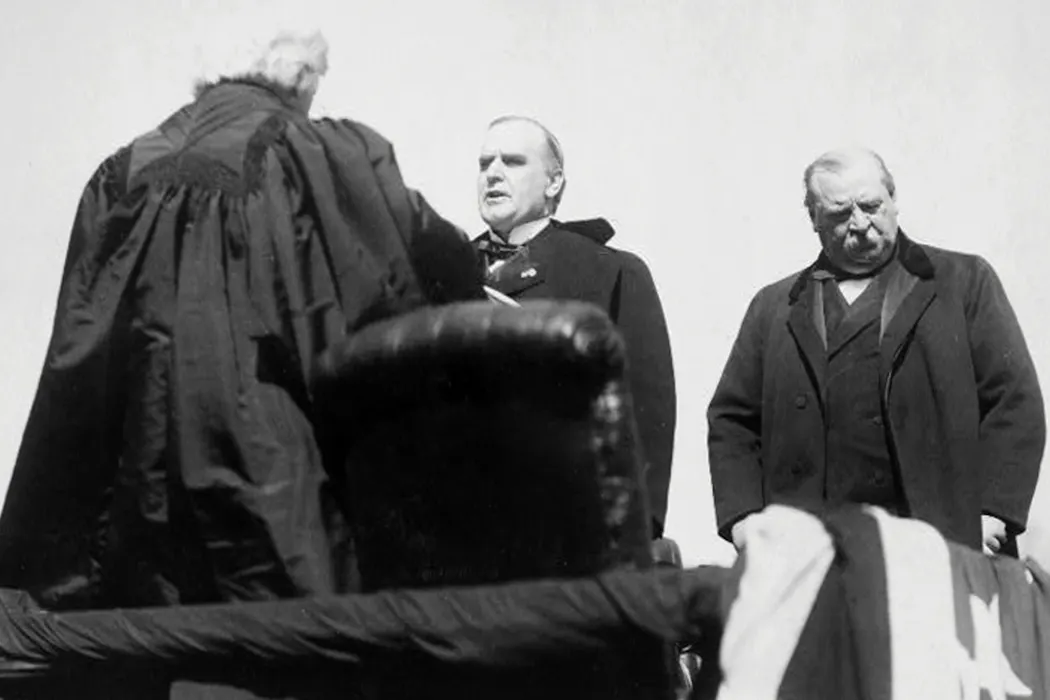
President Grover Cleveland, right, looks down during William McKinley’s presidential inauguration in 1897. Two years earlier, Cleveland’s political party suffered the biggest defeat in U.S. history during the 1894 midterms. Library of Congress via AP

The conventional wisdom is that the Democratic Party has the advantage in the 2026 midterm elections and could become the majority party in one, or both, chambers of Congress. The margin of that anticipated victory is harder to predict.

And the size of a party’s majority makes a difference. To see why, it’s worth looking back to the second half of the 19th century, when two dramatic midterm election results marked the beginning of important eras in the nation’s history.

1874: A nation changing course

Most American college students, including the ones I taught for over 40 years, learn that the era of Reconstruction following the Civil War came to an end when the contested presidential election of 1876 led to a deal that combined support for a Republican president with a commitment to withdraw federal troops from Southern states.

The Republican candidate in 1876, Rutherford B. Hayes, did not win the popular vote, but after an Electoral Commission established by Congress resolved disputed electoral college issues, Hayes won a one-vote victory. The White House had a Republican president, but the South was free to block enforcement of the post–Civil War constitutional amendments that protected the civil and voting rights of Black people.

That simple version of the story is not wrong, but it is incomplete. The 1874 midterms set things up for the controversies that would follow.

In the middle of his second presidential term, Republican Ulysses S. Grant was in trouble. There were scandals in Washington and economic hardships from a financial panic in 1873. The Democrats in 1874, amid accusations of fraud and voting irregularities in the South, won over 90 new seats in the House of Representatives and ended the era of Republican dominance on Capitol Hill that began with the election of Abraham Lincoln in 1860.

Before and after the 1874 midterm elections, white Southerners regained control of state governments and used violence and intimidation to suppress Black voter turnout.

Reconstruction was undone by a resurgent Democratic Party that after the 1874 midterms controlled both Southern states and the House. The compromise that removed federal troops from the South and put Hayes in the White House was icing on a cake that was baked in 1874.

1894: The Republican recovery

For two decades following the 1874 midterm elections, America’s two political parties were in constant and close competition for power.

Between the Grant administration and William McKinley’s election in 1896, no president won a majority of the popular vote. Between Grant and McKinley, no president had unified government – a single party in control of the House, the Senate and the White House – for more than two years. Not much got done.

McKinley’s 1896 election was the beginning of a new era of Republican Party dominance in national politics. It would last for decades, and McKinley’s successor, Teddy Roosevelt, would invent the modern presidency, with expanded executive powers and more direct communications with the American people. Political scientists call that kind of change a “realignment,” but it did not begin in 1896. Once again, the previous midterms made a difference.

In the fall of 1894, President Grover Cleveland, the former Democratic governor of New York, was in the middle of his second, nonconsecutive term. It was not going well. Another financial panic, bigger than the one in 1873, accompanied his second inauguration and set in motion a series of economic disasters that produced the largest economic downturn in American history before the Great Depression of the 1930s.

When voters went to the polls in the 1894 midterms, they gave the president’s political party the biggest defeat in U.S. history. Over 100 seats in the House were lost to Republican or third-party candidates. The realignment had begun.

A ‘wake-up call’ election

Huge seat shifts in midterm elections, like those in 1874 and 1894, are extremely rare. Smaller midterm shifts, which occur more often, can be a “wake-up call” that forces a sitting president to recalibrate political strategies.

That’s what happened to many modern presidents: Harry Truman in 1946, Dwight Eisenhower in 1958, Lyndon Johnson in 1966, Gerald Ford in 1974, Bill Clinton in 1994, Barack Obama in 2010 and Donald Trump in 2018. Their midterm losses in the House involved 40 or more seats, losses large enough to put the president’s party on notice that something had to change.

A black-and-white image shows the sun shining on a domed building.
The U.S. Capitol as seen on midterm election day in November 2006. The Republican Party would go on to win majorities in both chambers for the first time in decades.
Nicholas Kamm/AFP via Getty Images

Change came in different forms. Truman, Clinton and Obama fought back against a Congress with an opposition majority in the House and won reelection.

Eisenhower could not run again, and a weakened Johnson chose not to. Ford lost to Jimmy Carter; Trump lost to Joe Biden. All four turned the keys to the White House over to a successful candidate from the other political party.

What about 2026?

The 2026 midterm elections are unlikely to produce the kind of dramatic political changes that occurred in 1874 or 1894.

“Wake-up call” elections are much more common and are more reasonable to expect. That result is more likely in a closely divided nation, with heavily gerrymandered congressional districts, because even a small shift in House seats matters.

Democrats don’t need a 40-seat swing to retake the House. If they flip a handful of districts, they become the majority party. In the betting markets, that appears to be the likely 2026 outcome.

Every president in the last 80 years who was underwater in presidential approval polling – as President Trump now is – lost seats in midterm elections. The smallest number of seats that flipped in those eight decades was five. A five-seat shift to Democrats in 2026 could make Hakeem Jeffries the Speaker of the House.

A 2026 midterm election in which Republicans hold their slim majority in the House would be a monumental achievement, even if it looked like nothing had changed. It would break a pattern that has been in place since Harry Truman was president in the 1940s and 1950s.

Most Americans pay more attention to presidential elections than they do to midterms. That might be a mistake.

A sizable midterm shift can signal large and long-lasting changes in American politics. A smaller shift can pull a president in a new direction or set the stage on which the next presidential campaign plays out.

The 2026 midterm elections will almost certainly produce significant consequences for American politics. The scale of those consequences and their longevity remain open questions that only American voters are able to answer.

The Conversation

Robert A. Strong does not work for, consult, own shares in or receive funding from any company or organization that would benefit from this article, and has disclosed no relevant affiliations beyond their academic appointment.

​Politics + Society – The Conversation
Categories
Entertainment

Jacob Roloff ‘Asked to Leave’ Roloff Farms as Matt Puts Property Up for Sale …

Reading Time: 3 minutes

Why does Jacob Roloff have to leave Roloff Farms?

Matt has been playing hot-and-cold with the family farm for years, igniting multiple family feuds and ultimately heralding the end of Little People, Big World.

Now, it seems that he is driving off yet another son and once again putting part of the sprawling property on the market.

Jacob’s giving an inside look at the farm’s troubles, his desire to change that, and how reality TV may have skewed his father’s ideas about how to make decisions.

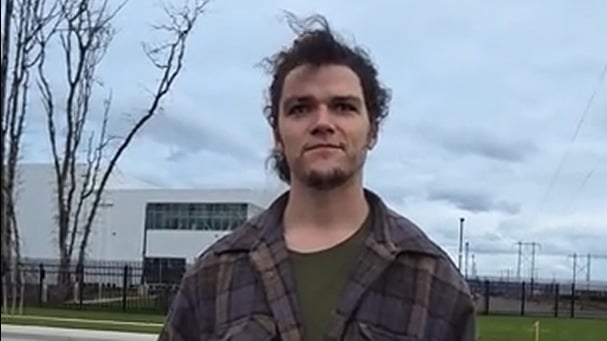
Jacob Roloff speaks outdoors in 2026.
Jacob Roloff advocates against AI datacenters for numerous good reasons. (Image Credit: The HIllsboro Herald)

After years working for his dad, Jacob Roloff is looking for a new job

Earlier this month, Jacob Roloff took to his Instagram Story to ask for help — or, at least, a helpful recommendation.

“Need a lead on jobs in Hillsboro,” he wrote.

Jacob and his wife, Isobel, have been primarily using their social media presence to advocate for positive causes — such as opposition to AI datacenters.

This — a request for work references in the general area of his family’s farm — came as a surprise.

What’s going on?

Wonder what’s going on with the farm 😦
by
u/BackgroundTea7014 in
LittlePeopleBigWorld

As denizens of Reddit began to discuss the post, Jacob himself chimed in to offer a fairly detailed answer.

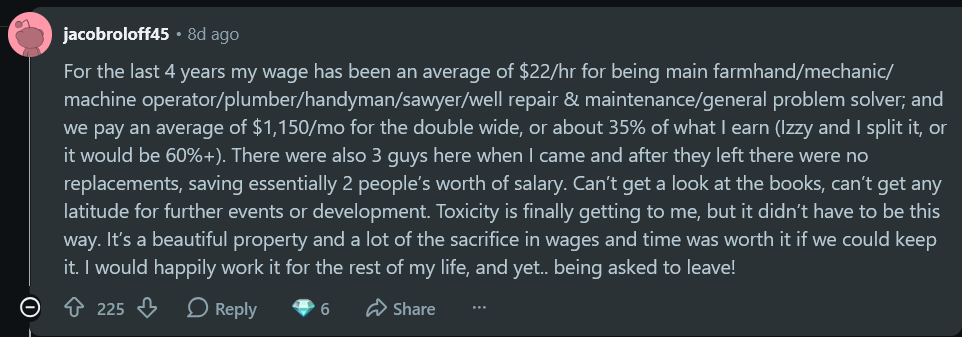
“Can’t get a look at the books, can’t get any latitude for further events or development,” Jacob wrote.

“Toxicity is finally getting to me,” he admitted. “But it didn’t have to be this way.”

Jacob praised: “It’s a beautiful property and a lot of the sacrifice in wages and time was worth it if we could keep it.”

With an air of regret, he added: “I would happily work it for the rest of my life, and yet … being asked to leave!.”

A dark mode Reddit screenshot of Jacob Roloff's comment.
In one of several Reddit comments, Jacob Roloff detailed his previous arrangement and how he wished that things were different with the family farm. (Image Credit: Reddit)

It sounds like the farm is (allegedly) being mismanaged

Elsewhere on Reddit, Jacob Roloff commented that Matt’s plan for the farm “just doesn’t make sense when neighbors are doing fine and we refuse to open more than 12 days a year.”

He added: “One wonders what 20 years of tv actually got us.”

In a follow-up comment, Jacob wrote: “I’ve been trying to explain how untenable this model is for years. Self-importance is a helluva drug that reality tv hands out freely.”

It sounds like he made numerous sacrifices, accepting a low wage for a tremendous amount of work, even paying out a third of what he was paid right back to his dad for rent on the double-wide where his family lives.

“My cousin and I took a deal to not get paid for pumpkin growing this year,” Jacob shared, “but we will get 50% of the sales.” With that note, he is encouraging people to stop by if they can.

Historically, Matt Roloff has been reluctant to accept other people’s ideas. In addition to his alleged adultery, it was part of the downfall of his marriage.

Remember the family’s pumpkin salsa? That was Amy’s idea. Matt dismissed it — but then praised it as a family success after it sold well.

With that in mind, it doesn’t sound personal that Matt has apparently ignored Jacob’s input. Some folks would rather retain control than see continued success.

Jacob has a lot of good ideas in the realm of politics, human rights, environmental justice, and beyond. Without being farmers ourselves, we’re inclined to believe that he has good ideas for Roloff Farms, too.

Matt could have sold the farm to any of his children. Instead, he is once again putting over 16 acres for sale and apparently trying to drive away yet another son. That’s his choice to make, one supposes.

Jacob Roloff ‘Asked to Leave’ Roloff Farms as Matt Puts Property Up for Sale … was originally published on The Hollywood Gossip.

​The Hollywood Gossip

Categories
Health

These Baby Boomer Celebrities Shared The Best Advice On Aging

Contrary to what some may expect, these Hollywood stars embraced aging, openly gushing about the satisfaction, gratitude, and purposefulness that come with it.

​Health Digest – Health News, Wellness, Expert Insights

Categories
Music

Ella Langley Says Her Record-Breaking Run ‘Doesn’t Feel Real’

Ella Langley’s ‘Choosin Texas’ just shattered records with 23 weeks at number one. She’s still trying to find words for how surreal it all feels. Continue reading…​Country Music News – Taste of Country

Categories
Music

Ella Langley Says Her Record-Breaking Run ‘Doesn’t Feel Real’

Ella Langley’s ‘Choosin Texas’ just shattered records with 23 weeks at number one. She’s still trying to find words for how surreal it all feels. Continue reading…​The Boot – Country Music News, Music Videos and Songs

Categories
Entertainment

6 Trader Joe’s Steaks, Ranked Worst To Best

Trader Joe’s steak selection may be limited compared to the local butcher, but we rounded up some cuts to see how they tasted with simple at-home preparation.

​Mashed – Fast Food, Celebrity Chefs, Grocery, Reviews

Categories
Entertainment

What Is The Difference Between Pinot Noir And Merlot?

Even the most casual wine fans know that the red category contains great variety, but how does a pinot noir differ from a merlot in flavor and body?

​Mashed – Fast Food, Celebrity Chefs, Grocery, Reviews

Categories
Entertainment

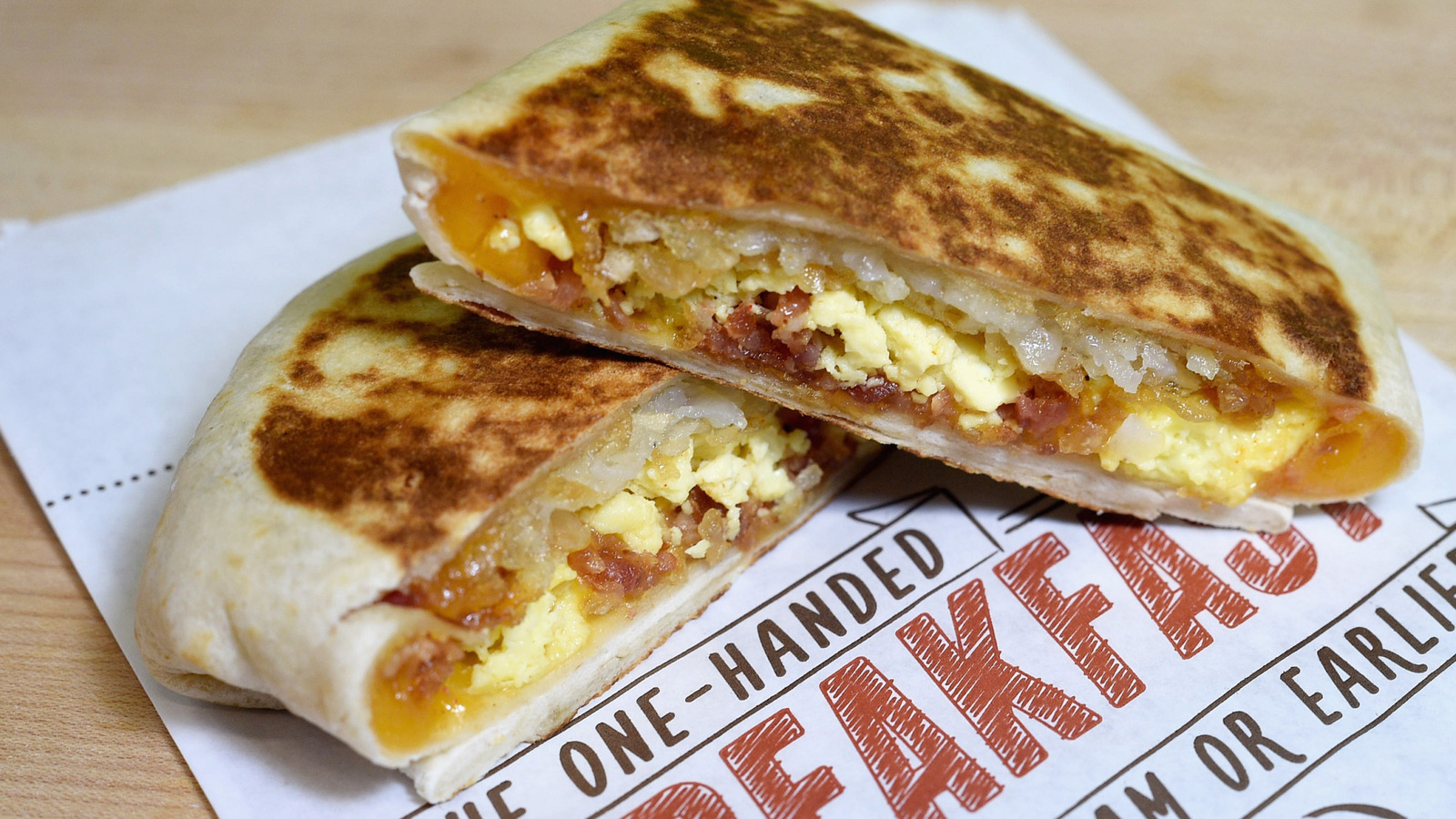
The Taco Chain That Sells A High-Quality Breakfast Sandwich

Fast food doesn’t naturally make you think of high quality, but this breakfast item is loved by customers for its taste, value, and uniqueness.

​Mashed – Fast Food, Celebrity Chefs, Grocery, Reviews

Categories
Entertainment

The Love Hypothesis Movie’s Biggest Changes From the Book Revealed

The Love Hypothesis, Lili Reinhart, Tom Bateman, ThumbWarning: This article contains spoilers for The Love Hypothesis book and movie.
Hypothesis: It’s possible to make a film adaptation of a bestselling romance novel that readers will love.
While the…
​E! Online (US) – Top Stories