Examining support systems behind open source, the open web, and everyday life, along with why sustaining these efforts is necessary.









Examining support systems behind open source, the open web, and everyday life, along with why sustaining these efforts is necessary.

 If your goal is bigger, plumper-looking lips without constantly touching up your liner, TikTok has a solution. The viral Sacheu Lip Liner STAY-N Peel Off Lip Stain combines the definition of a lip…
E! Online (US) – Top Stories

 There’s a new rockstar headed for the limelight.
During the finale of America’s Got Talent on Sept. 23, it was singer and guitarist Nene Royal whose heavy metal style ultimately won over the…
E! Online (US) – Top Stories

Most Americans know that in all criminal cases – those filed by the government against an accused individual – the defendant has a constitutional right to a lawyer. The Supreme Court established this right in 1963 in the landmark case Gideon v. Wainright.
What many people may not know is that no such right exists in civil cases. Civil cases are those filed by individuals or businesses against other individuals or businesses – for example, a landlord against a tenant, a bank against a borrower or an employee against an employer. These cases affect rights that many Americans take for granted, including housing, healthcare and education.
But calls for a civil right to counsel, or “civil Gideon,” have gone unanswered for years. Meanwhile, the United States ranks 112th of 143 countries on access and affordability to civil legal services. This is 40 spots lower than a decade ago, despite a 6% increase in the U.S. practicing lawyer population during the same period.
Studies show that low-income Americans receive insufficient or no legal help for 92% of their civil legal problems.
Nonprofit legal aid organizations fill some of this “justice gap.”
However, 49% of those whose income is low enough to qualify for services are turned away because legal services organizations lack resources. The number of people turned away does not include those who make too much money to qualify for legal aid, typically 125% of the federal poverty level, or US$37,878 for a family of four.
My scholarship, along with that of others, suggest that the U.S. cannot lawyer itself out of this crisis. The legal system has failed to provide the resources that these seniors, veterans, children, rural Americans and others need to defend their legal rights or even understand their legal problems.
I believe the proliferation of AI-powered chatbots and legal services offers a new means of addressing these unmet legal needs.
Since ChatGPT’s release in November 2022, concerns over lawyers’ sloppy AI use have dominated headlines, including instances where attorneys have cited fake legal cases in court filings.
Typically overlooked is how AI has changed the way ordinary people interact with the law. AI offers not only ready access to free legal information that was once hard to find, but also customized solutions to legal problems.
Two types of AI tools are relevant.

The first type is widely known and broadly available: the multipurpose AI platforms like ChatGPT and Claude. Built on massive datasets of information, these tools provide unrestricted, easy access to legal information and resources. They can also provide tailored answers to specific questions, including legal ones.
The second type is less well known. Niche AI tools are built on information relevant to a specific domain, like law. These types of tools are designed to understand the nuance of a field and assist with a narrow task. For example, Legal Aid of North Carolina offers a self-service AI tool that can answer users’ specific legal questions about child custody, domestic violence or consumer law.
Both multipurpose and niche tools can provide generic legal information as well as advice about a person’s legal problem. However, niche AIs are more accurate because they are trained on legal rather than generalized data and, therefore, they are more precise and relevant.
Nonetheless, multipurpose tools have proven skilled at helping litigants without access to lawyers. Early data indicate that these self-represented people are filing more cases as ChatGPT and similar tools became available.
Judges agree that the increase in self-represented litigants may be attributable to AI. However, access to the courts has not yet resulted in better chances of winning one’s lawsuit.
Opponents of self-represented litigants have complained about the proliferation of cases and improper filings created by multipurpose AI. Judges have expressed frustration with self-represented parties dumping “hundreds of pages of documents” on the court.
Furthermore, without individualized human interaction, algorithmic-driven legal advice could harm litigants who are most in need of help by providing erroneous or incomplete advice.
Both multipurpose and niche legal tools are plagued by the legal profession’s self-imposed limits on who can deliver legal services. When individuals other than lawyers provide legal advice or otherwise engage in the practice of law, it is known as the unauthorized practice of law, or UPL. UPL restrictions are designed to ensure the public receives competent and ethical legal representation.
However, AI offers those who may not even understand they have a legal problem an opportunity to access information and assistance. AI can help people without counsel better understand the merits of their case and perhaps even understand the court procedure necessary to successfully represent themselves.
These tools are not without risk. But, without them, we may continue to meet only 8% percent of the civil legal needs of Americans. Everyone else will continue to do without.

Ellen Murphy does not work for, consult, own shares in or receive funding from any company or organization that would benefit from this article, and has disclosed no relevant affiliations beyond their academic appointment.
Politics + Society – The Conversation
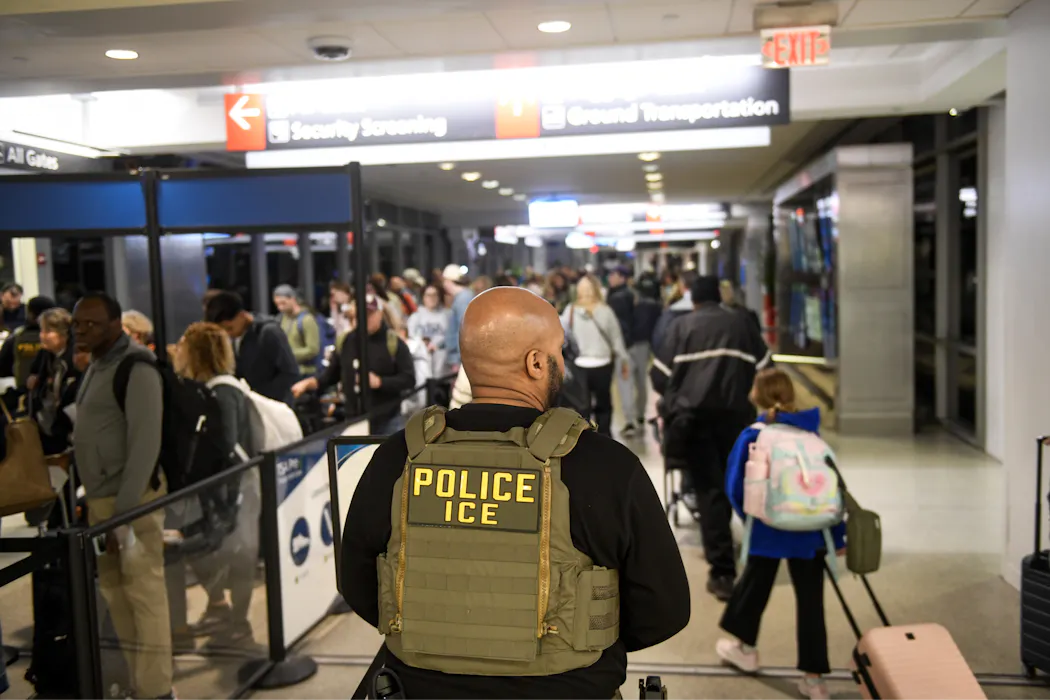
ICE ramped up its arrests of immigrants at major airports over the summer of 2026, including in Philadelphia, to help meet the Trump administration’s reported goal of apprehending 1,100 people daily.
The agency is collaborating with the Transportation Security Administration, its sister agency in the Department of Homeland Security. However, decades before TSA existed, local police were used in a similar fashion to help the military catch AWOL Vietnam War soldiers.
I’m a historian of race and policing in Philadelphia after the Civil Rights Movement and I spend a lot of time digging through the city’s archives. I recently combed through a 1967 collection of police incident reports from the 77th district, also known as the airport police, which patrols Philadelphia International Airport.
Most of the cases involved plane crashes and unruly passengers, rental car thefts, larceny of luggage and freight packages, bomb scares and drug smuggling.
But the airport police at times detained drafted soldiers who didn’t want to complete their tours of duty.

The Vietnam War was unpopular because the goals of America’s fight against communism were unclear and village massacres like My Lai exposed it as unjust.
Approximately 80% of American soldiers drafted were working-class men. The odds of facing injury, amputation, post-traumatic stress disorder and death in this war were higher than that of World War II and the Korean War.
Nearly 60,000 U.S. military personnel lost their lives during the Vietnam War. The death toll was at its highest between 1967 and 1969, when at least 11,000 U.S. troops died each year.
One in five Pennsylvanians who died in the war were from Philadelphia. Edison High School in North Philadelphia had the greatest number of high school students killed in Vietnam nationwide: 64.
In 1967, Philadelphia’s local police functioned as the federal government’s eyes and ears to report anti-war behavior at the airport.
That February, and questioned Fred Batchelder, the president of Ridley Park’s Veterans for Peace in Vietnam, for distributing anti-war pamphlets to servicemen without getting authorization from the Division of Aviation. The pamphlets aimed to bust myths about the war and were written by
Green Beret Master Sgt. Donald Duncan, an early critic of the war.
Four hours later, Batchelder was released and permitted to distribute pamphlets outside the terminal and in the baggage room. But to Philadelphia’s Civil Disobedience Squad and the FBI so those agencies could further investigate him.
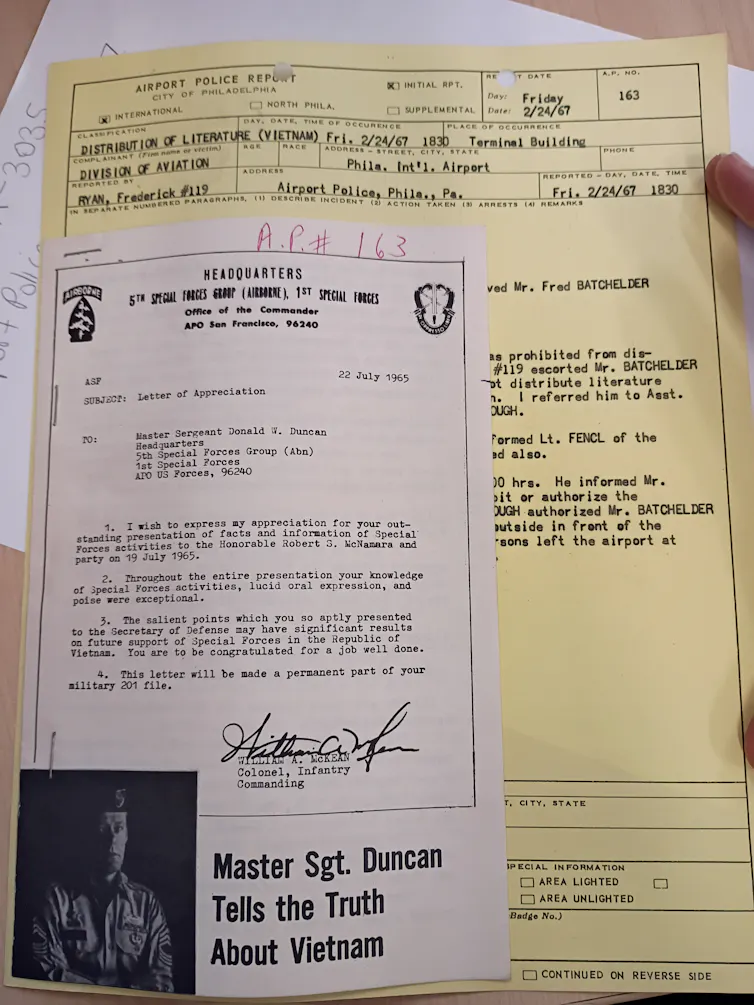
As Batchelder protested with literature, AWOL soldiers took advantage of the airport’s busy environment to escape from the military police.
The same month that Batchelder was detained, serviceman D. Green, a sailor already under disciplinary action who was being escorted to his ship in San Diego, ran through the main terminal while a shore patrolman from the Navy Yard pursued him.
Airport police joined the chase that led to an undeveloped section of highway nearby. Both law enforcement agencies hailed taxis to follow Green until he was eventually caught, handcuffed and detained.
A few weeks later, Pvt. T.J. Kee escaped the custody of military police escorting him to Baltimore. Once Kee fled from the Delta Airlines ticket counter, Philadelphia and Tinicum township police were alerted to patrol the airport and the surrounding area, but Kee got away. He enjoyed nearly five months of freedom until Delaware state police caught him in Wilmington.
Servicemen also used medical emergencies to avoid active duty.
In May 1967, Navy officer P. Nahmens fell ill in the baggage claim area of Philadelphia’s airport and asked police to take him to the Naval Hospital. Nahmens complained that for two months he had severe chest pains and an upset stomach before his return to duty aboard the USS Newman K. Perry in Newport, Rhode Island.
Nahmens also said that he did not want to report to his superiors, which I believe made the police suspicious because they used the uncommon classification, “ill sailor” in their files to document the incident.
That same month, Pvt. Wishler had a seizure in the airport’s baggage room after he arrived from Phoenix on a TWA flight. Wishler was scheduled to report to Fort Dix in New Jersey within seven hours of landing in Philadelphia. Airport police attended to him, but it appears from their report that they weren’t fully convinced he was actually unconscious and having convulsions.
Skycap Ben Austin, who assisted passengers with picking up their luggage, reported the emergency and another soldier told the police he witnessed Wishler shaking and saw saliva dripping from his mouth. However, after Officer R.A. D’Ambrosio saw Wishler, he stated in his signed incident report that the serviceman only “appeared” to be unconscious and convulsing.
Wishler was transported to the Naval Hospital, and the police later called the hospital to investigate his medical condition. They closed the case after they learned Wishler had fractured his skull in a prior accident that made him prone to seizures.
Dying by suicide was another option servicemen considered.
In July 1967, Army Officer J. Fries told his sergeant that he was “afraid to go to Viet Nam and was going to end it all.” He later survived an overdose of aspirin in a Philadelphia airport restroom. Airport attendant Marie Jones found the unconscious soldier and informed the police, who later transported him to the Naval Hospital for a stomach pump.
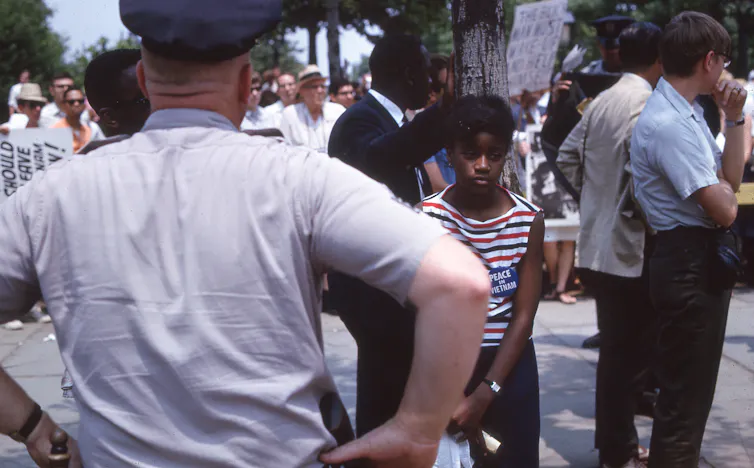
In the decades that followed, local police continued to assist the federal government with national security and surveillance at Philadelphia’s airport until TSA was established in 2001 in the wake of the September 11 attacks by the militant group al-Qaida.
During the spring and summer of 2026, peaceful protesters often gathered outside terminals at Philadelphia International to demand that ICE stop intimidating travelers and leave the airport. Immigration advocates from Asian Americans United have documented at least 10 immigrants arrested by ICE at Philadelphia International Airport since July 2026.
Nationwide, ICE has encouraged immigrants to self-deport with stipends, free travel and fine forgiveness, or face third country deportation and possible incarceration in Latin America or Africa.
Philadelphia’s airport – and airports in cities around the country – remains a frontier for both freedom and apprehension.
Read more of our stories about Philadelphia and Pennsylvania, or sign up for our Philadelphia newsletter on Substack.

Menika Dirkson does not work for, consult, own shares in or receive funding from any company or organization that would benefit from this article, and has disclosed no relevant affiliations beyond their academic appointment.
Politics + Society – The Conversation
The crypto industry has just suffered a paradoxical defeat: Its biggest backer, President Donald Trump, inadvertently helped scuttle chances for a major legislative win thanks to revelations of the riches he and his family have made off of their crypto ventures.
The industry is now scrambling to advance its agenda through crypto-friendly regulation instead of legislation. But the prospect of Democratic control of one or both chambers of Congress after the November 2026 midterm elections, as well as potentially winning the White House in 2028, leaves the long-term durability of those gains uncertain.
At stake was legislation that would have provided light-touch regulation over crypto assets. The industry, which had enjoyed a series of wins since Trump started his second term, had secured bipartisan support for the measure, dubbed the Clarity Act, and poured hundreds of millions into lobbying.
But the steady drip of news in the spring and summer of 2026 about the Trump family’s lucrative crypto businesses ultimately undermined those efforts. Democratic support in the Senate faltered, and after several attempts at a compromise, the bill died on a procedural vote on Sept. 15, 2026, falling short of the required 60-vote majority.
As a scholar of financial regulation, I believe the growing backlash against Trump’s conflicts of interest surrounding his crypto wealth changed the political calculus. The Senate Democrats who had initially supported the measure increasingly feared they would be seen as voting to further enrich Trump. While the final bill contained some ethics provisions, they didn’t suffice to keep those Democrats on board.
This outcome leaves the industry in limbo and unsure of how to spend its considerable campaign war chest ahead of the midterms. If it decides to invest heavily to defeat crypto-skeptical Democrats, I believe it could risk a backlash should Democrats retake the House, the Senate, or both.
Under that scenario, Democrats could launch congressional investigations or introduce legislation to impose stringent oversight over the industry. Furthermore, if voters see the industry as overly partisan, that perception could further erode trust in a sector that has desperately tried to repair its image since the collapse of crypto exchange FTX in 2022.
The Clarity Act was designed to answer a long-standing question: Should crypto assets be regulated as securities, like stocks, or commodities, like gold?
Companies that sell securities face more scrutiny, as they’re required to
register with the Securities and Exchange Commission and disclose detailed information to investors. But commodity trading follows looser rules. There’s another agency, the Commodity Futures Trading Commission, that oversees markets for commodity derivatives. But it doesn’t supervise the markets where people buy and sell commodities directly, known as “spot” markets.
Under President Joe Biden, SEC Chairman Gary Gensler took a stringent approach. He treated most crypto tokens as securities and brought dozens of enforcement cases against crypto issuers and exchanges. Many of those cases involved charges of fraud or unregistered offering of securities.
The industry fought back, arguing that many tokens were decentralized, meaning that no single company controlled them. The implication, in turn, was that there was no one who could make the required disclosures to regulators.
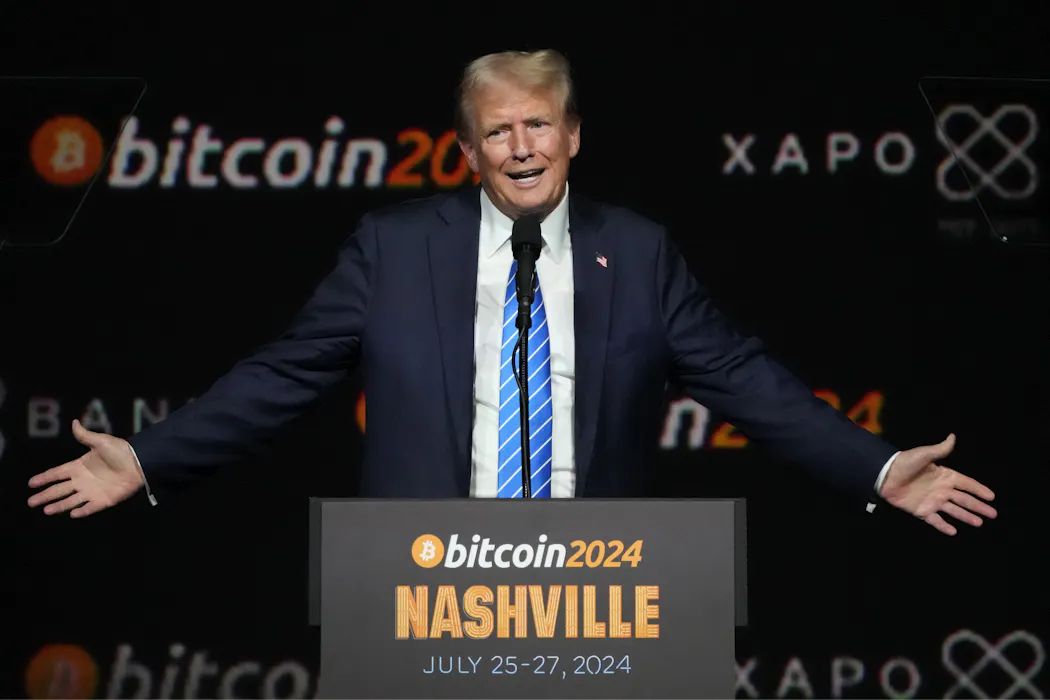
The industry saw a major opening with the 2024 election, prompting hopes of a more crypto-friendly administration and Congress. It spent unprecedented sums – over US$119 million – to back pro-crypto candidates in both parties. Trump also sensed an opportunity, reversing earlier criticism. At one bitcoin conference, he told the crowd that he would fire Gensler “on day one” of his administration and make the United States “the crypto capital of the planet.”
But Trump’s victory didn’t end the industry’s political spending. The crypto exchange Coinbase sponsored the U.S. Army’s 250th anniversary parade and joined several other crypto companies and executives in donating funds to the White House ballroom.
That lobbying blitz secured some immediate wins for the industry. In July 2025, Trump signed the GENIUS Act, establishing a federal regulatory framework for stablecoins – digital tokens designed to hold a steady value of one dollar and backed by liquid reserves like Treasury bills.
The biggest prize for the crypto industry was the prospect of legislation that would permanently impose light-touch regulation over crypto trading. That framework, in my view, would also have legalized a business model laden with conflicts of interest.
The Clarity Act was the vehicle for this push. It would have permanently placed most crypto trading under the Commodity Futures Trading Commission and no longer treat most tokens as securities. This means investors in cryptocurrencies wouldn’t have had the same rights and protections that exist in securities markets.
At first, the bill’s prospects looked good. In the summer of 2025, the House of Representatives passed its version 294-134, with 78 Democrats, including former Speaker Nancy Pelosi, voting in favor.
The bill’s chances in the Senate, while less certain, still seemed likely at that point, with multiple Senate Democrats expressing support. But just before the Senate Banking Committee was set to vote on its draft in January 2026, Coinbase CEO Brian Armstrong posted on the social media platform X that his company wouldn’t support the measure.
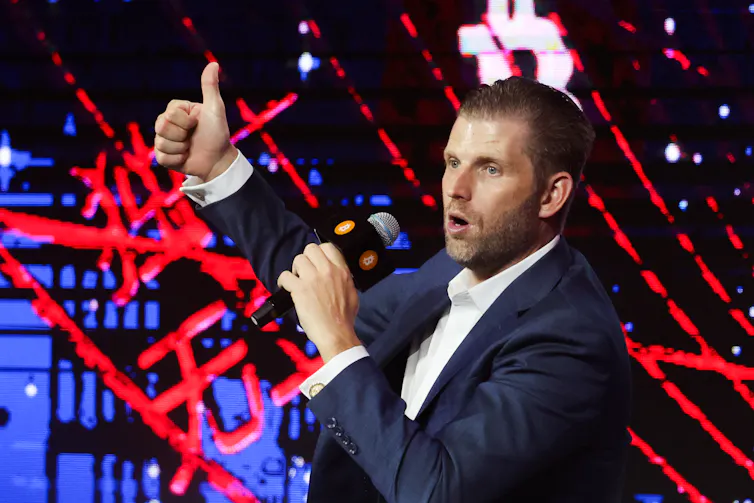
Coming from the chief of the largest U.S. crypto exchange, that opposition would have doomed the bill. That unexpected wrinkle forced a postponement of the vote, followed by more rounds of revisions.
The panel finally approved the rewrite in May, but the delay proved costly. In those intervening months, new reports shed light on the Trump family’s crypto businesses, including World Liberty Financial and its stablecoin USD1, the $TRUMP memecoin and a bitcoin mining company, among others.
Then came Trump’s own financial disclosures in June, which reported more than $1.4 billion in crypto-related income for 2025. Separately, a Reuters investigation put the Trump family’s take from four crypto ventures at about $2.3 billion since the 2024 election.
The growing backlash against Trump’s crypto conflicts quickly changed the political calculus. Once-supportive Senate Democrats insisted that the final bill contain ethics provisions barring the president and other government officials from profiting off crypto while in office.
The new draft required officials to either sell significant crypto interests or place them in a qualified blind trust. It also barred them from issuing cryptocurrencies while in office. But those protections fell short of Senate Democratic demands, in part because Trump’s sons would be excluded from those requirements.
Meanwhile, the crypto lobby also ran into strong opposition from banks. At issue was the fact that the crypto exchanges were paying customers interest, or what they called “rewards,” on their stablecoin balances. That loophole came through the GENIUS Act, which prohibits stablecoin issuers from paying interest to stablecoin holders but doesn’t expressly extend that prohibition to crypto exchanges. That’s why Coinbase offers rewards on customers’ stablecoin balances and receives a share of the reserve income from stablecoin issuer Circle.
Banks wanted Congress to close this loophole, fearing customers would move savings into stablecoins in search of higher yields and leave banks with less deposit funding. In response, the final text of the Clarity Act included a compromise, letting the Treasury Department restrict stablecoin rewards – but only if significant deposit flight had already occurred. Banking groups vehemently rejected that language.
In the end, the compromise on ethics language failed to win over any Democrats, while the opposition from banks prompted an additional defection of three Republicans, dooming the bill.

Lee Reiners does not work for, consult, own shares in or receive funding from any company or organization that would benefit from this article, and has disclosed no relevant affiliations beyond their academic appointment.
Politics + Society – The Conversation
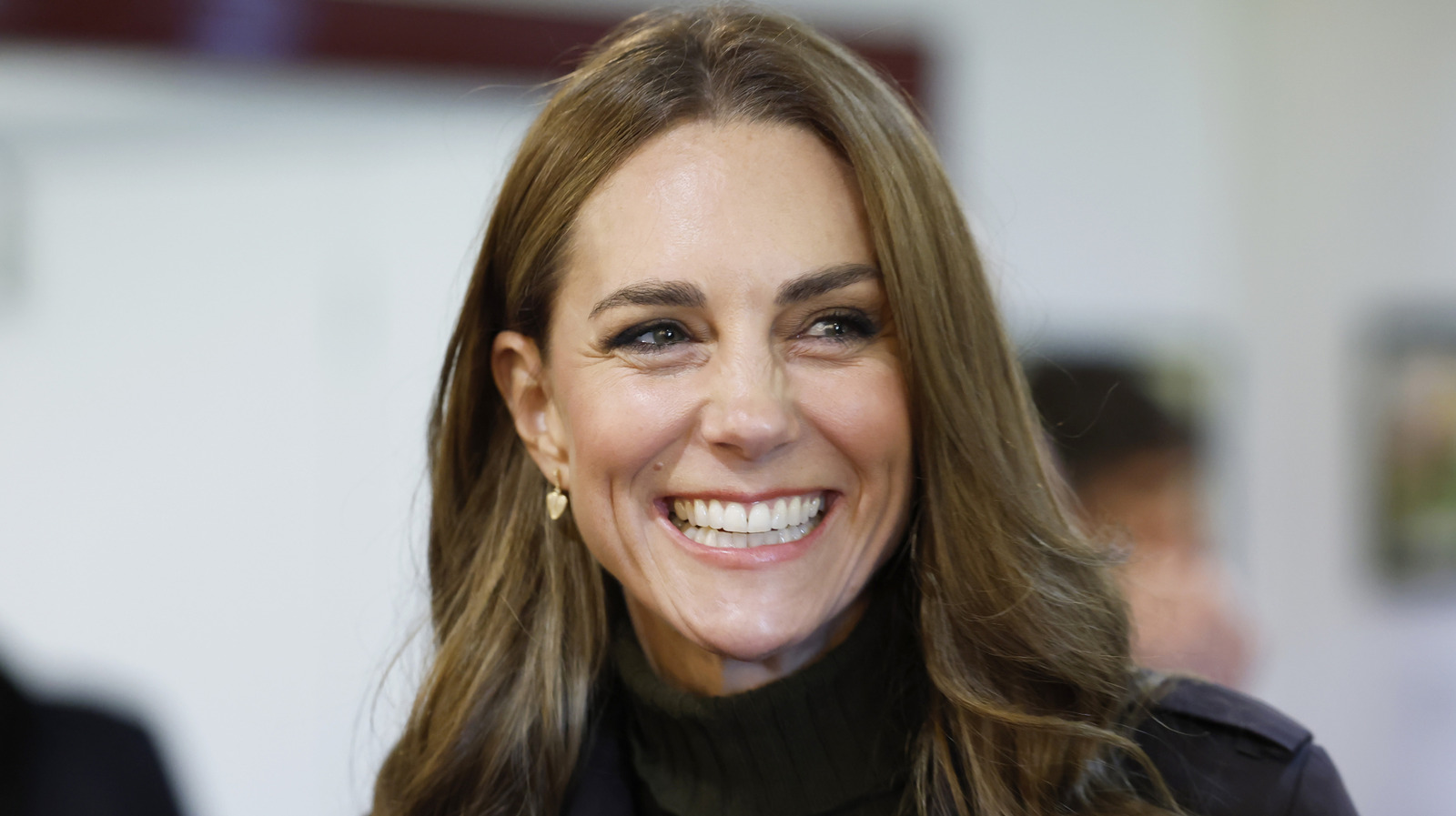
During a visit to Royal Marsden Hospital, Kate Middleton spoke about the benefits of holistic treatments for cancer, providing us with hints at what helped her.
Health Digest – Health News, Wellness, Expert Insights
Reading Time: 3 minutes
Collin Gosselin doesn’t feel anxious about releasing his memoir.
Ahead of the premiere of Special Forces: World’s Toughest Test, he’s taking time to promote his book.
Someone should feel nervous, he says. It just isn’t him.
It’s not difficult to guess that he means his awful mother, Kate.
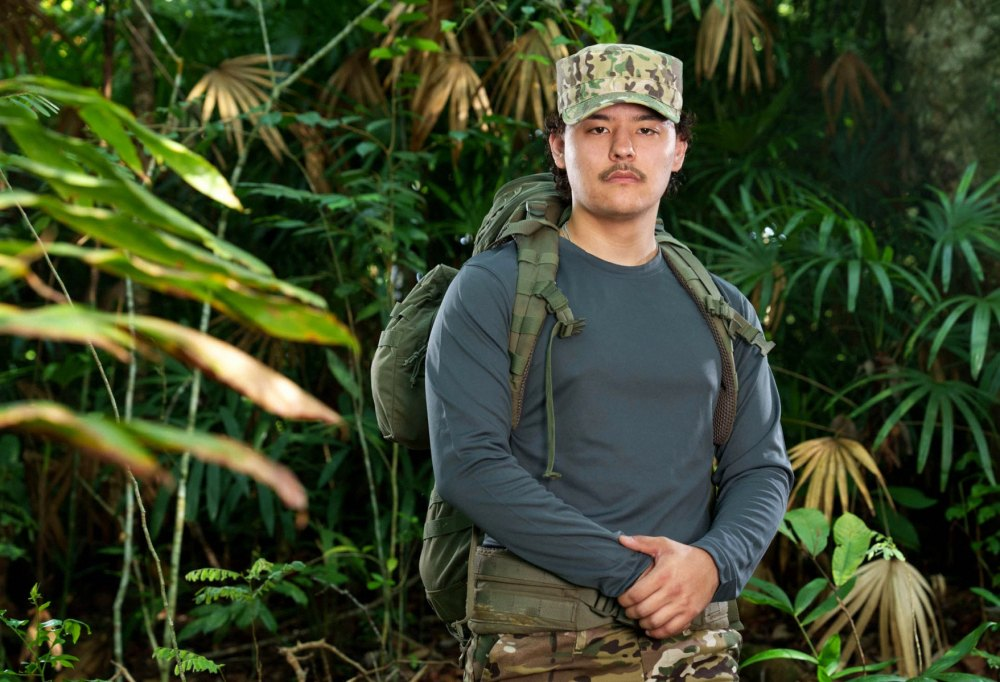
Collin Gosselin is one of the stars of Season 5 of Special Forces: World’s Toughest Test.
Yes, his infamous mother, Kate, previously appeared on the 2000s-cringe-vibes reality star mashup series in Season 1.
His memoir, In the Shadow of Eight: Surviving the Reality of My Childhood, releases mere weeks from now.
While promoting the Season 5 premiere, he was asked if he feels “nervous” for people to read it.
Collin replied: “I mean, I’m just going to say this: I’m not the one that should be nervous.”
From context of everything from his book to the sad story of his life, it is clear that Collin is referring to his mother.
Indeed, there are reports that Kate Gosselin has been “spiraling” upon hearing that her estranged son has a memoir coming out.
The psychology of bad parents is complex and varies from ideological villains to extreme mental illness to people who have simply chosen to be monsters.
The final group — often people who may earnestly believe that they or good or that they did their best (or who truly did their best, but it was not good enough) — sometimes react especially poorly to criticism.
There are certain types of bad parents whose abuse is largely prompted by an obsession with image, especially to the public. To such a person, a child coming out with a memoir must be their greatest fear made manifest.
To be clear, Collin Gosselin has spoken publicly about many topics, from growing up on reality TV to the aspects of his childhood that were never caught on camera.
(Long ago, a video surfaced of Kate hitting him, but his descriptions make it sound like this was only one small part of growing up.)
In 2024, Collin described Kate allegedly zip-tying his hands and feet together and locking him away in the basement.
(At the time at which he spoke up, Kate declined to comment on the allegations.)
Then, when he was 12, Kate locked Collin away — no “allegedly” required — in an institution. He says that it was to cover up her abuse. She claims that it was due to alleged behavioral issues.
After two years locked away, Jon was able to finally get custody of Hannah and Collin, rescuing him from the institution and taking him home.
(Many have observed that abuse and institutionalization might both encourage someone to seek out a structured environment such as the military, though Collin’s dream of joining the Marines fell through.)
For the record, Jon’s ex, Colleen, a woman with no real incentive to speak out at all, has repeatedly shown up for Collin, defended him publicly, and expressed how proud she is of him after he spent years living in her home.
Special Forces: World’s Toughest Test Season 5 premieres on Thursday, September 24. Disgraced former congressman George Santos is on this season. Truly, a 30 Rock joke of a show.
Meanwhile, In the Shadow of Eight: Surviving the Reality of My Childhood goes on sale on October 13.
It’s available for preorder. Society categorically failed to protect Collin when he was a child. It is our sincere hope that people will at least read his story.
Collin Gosselin Says Kate Should ‘Be Nervous’ About His Memoir was originally published on The Hollywood Gossip.
The Hollywood Gossip
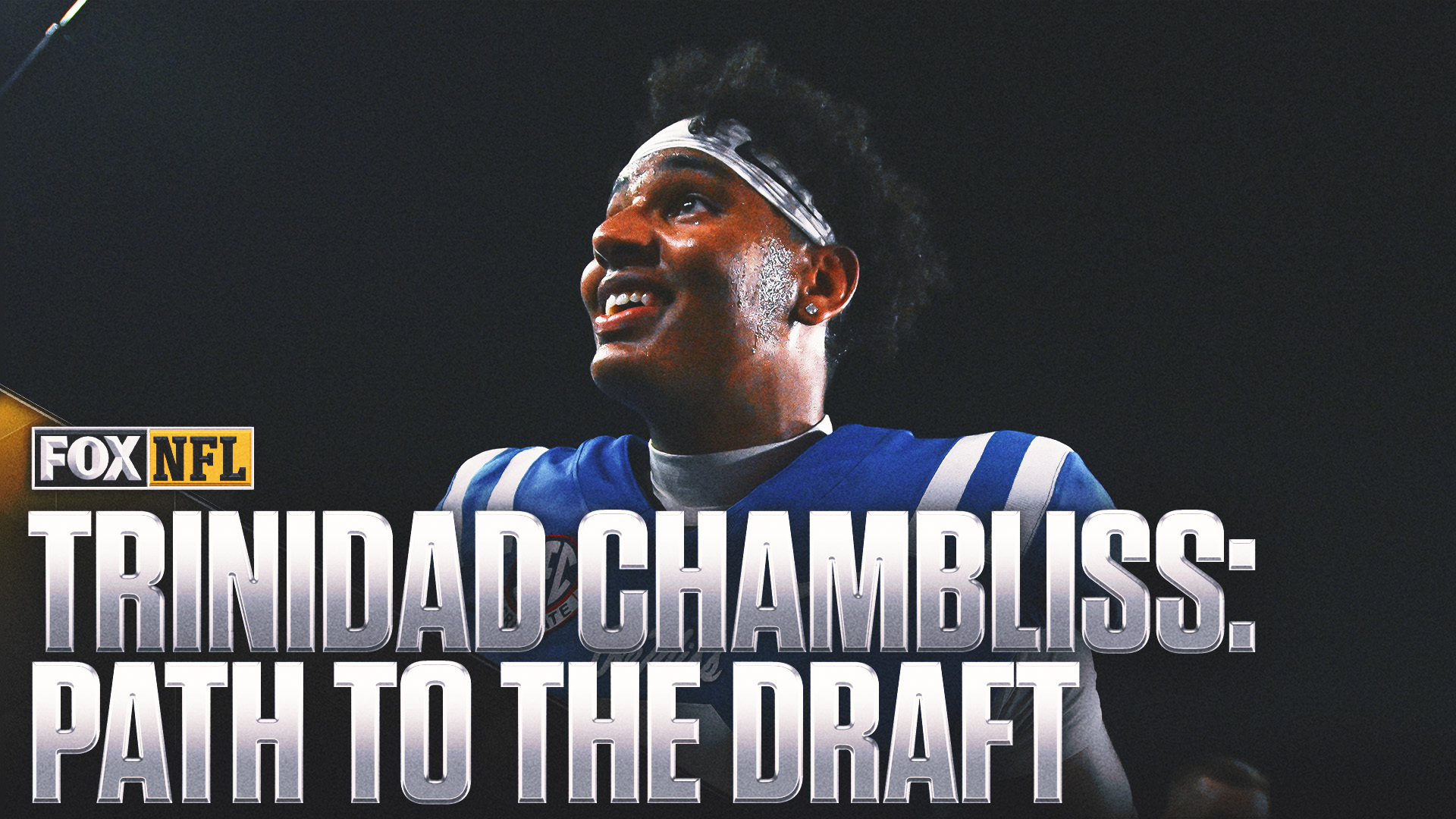
With all due respect to Arch Manning, Dante Moore and so many other celebrated quarterbacks throughout the college football landscape, the most impressive player at the position through the first month of the season has been Ole Miss’ Trinidad Chambliss. In guiding the Rebels to a 3-0 start while completing 70% of his passes for 924 yards and seven touchdowns (as well as rushing for 64 yards and two more scores), Chambliss has catapulted ahead of his peers to emerge as the current favorite to win the Heisman Trophy. While some of the other QBs of the 2027 class have fizzled under the brightest lights, Chambliss has consistently excelled, turning skeptics of his pro prospects into believers. But there are undoubtedly still doubters. And it boils down to two factors: His size (he’s listed at 6-foot-0) and his age (he recently turned 24). There are five categories I’ve long used to scout quarterbacks: accuracy, anticipation, arm talent, athleticism and attitude. I call them the five A’s of quarterback evaluation. After diving into the 2026 tape, I broke down and graded Chambliss in each category. Whether it be analysts, NFL scouts, coaches or fans, it never ceases to amaze me how often folks fall for a quarterback with brilliant athletic tools but subpar accuracy. Plain and simple, accuracy is the single most important element when evaluating a QB. The ball needs to hit receivers in stride to help them create after the catch. Spin rate, velocity and touch are also important, but not as critical as being able to thread the needle from various distances and trajectories. Fortunately for Chambliss, this is one of his many strengths. The super senior routinely fires lasers while flat-footed in the pocket. Even better, he might be even more accurate on the move, as this strike shows. This isn’t to suggest that Chambliss is automatic. During the early part of last season, his first at Ole Miss following four at Division II Ferris State, too many of his deep balls had a tendency to float. Chambliss is good but not great at layering passes between the second and third levels of the defense. Throwing the ball with enough loft to lift it over linebackers and drop it in front of the safeties is critical in today’s NFL, and it will be a departure from the relatively simple offense he’s running with the Rebels. Grade: B+ Pardon the cliché, but the game just seems to come so easily for Chambliss. He’s a natural with impressive instincts and poise and he can improvise. He has enough arm strength (more on this later) to zip the ball past defenders after his receivers have gained clearance, but he’s at his best when anticipating their breaks and starting his delivery before they’ve made their final cut to get open. I think this is clearest when Chambliss surveys the field from a clean pocket. He shows impressive field vision — especially for a shorter quarterback — efficiently working through his progressions and speeding up his release when needed. Again, there were some worrisome throws early in his time at Ole Miss in which he either stared down his primary read or failed to account for multiple defenders. And while he was not intercepted by Miami in the Fiesta Bowl last season, he got away with some questionable decisions. Grade: B+ There is no getting around it: At the highest level, quarterbacks sometimes just have to sling it past defenders. The openings can be so minuscule that big-time velocity is required. Chambliss has that type of arm strength. While the breakaway speed by his teammate, Deuce Alexander, is also worth noting on the play below, the throw is an absolute dart. Or this touchdown strike last weekend against LSU. As mentioned earlier, Chambliss put a little too much air under some of his previous deep balls at Ole Miss but this year he’s throwing the ball with greater touch and accuracy. This throw travels nearly 40 yards in the air and is perfectly placed where only his receiver can get it. Grade: A- This is a tricky category when evaluating quarterbacks because scouts are prioritizing pocket mobility, flexibility and the strength to fight through arm tackles rather than the pure explosive athleticism indicated in 40-yard dash times or vertical jumps. Chambliss has agility and creativity as a scrambler, but he’s not a dynamic runner warranting comparisons to Lamar Jackson or Kyler Murray. He’s posted impressive rushing totals in his 16 starts at Ole Miss, including 591 yards and 10 scores, but I don’t expect him to wow in pre-draft workouts and wouldn’t be surprised at all if he opts not to run prior to the draft. Given his statistics, I was actually a bit disappointed in Chambliss’ pure athleticism. He’s alert and will take yardage when given to him, but I was surprised by how many times he struggled to escape the pocket with backside pursuit often getting home. He’s more elusive than explosive. Granted, some of the best scrambling quarterbacks in the NFL aren’t necessarily elite athletes. No one would call Brock Purdy as athletic as Jackson, for example, but opponents rarely get a clean hit on him, and he’s run for 12 touchdowns over 51 NFL games. Over that same span, Jackson has 13 rushing touchdowns. While Chambliss isn’t the most explosive dual-threat quarterback of the 2027 draft, he’s very effective. Grade: B- Certain leadership qualities are expected at the quarterback position. Ideally, quarterbacks have the confident demeanor that can lift the spirits of teammates without becoming an egomaniac. As a former under-recruited prospect who began his college career as a backup at Ferris State, Chambliss should have perspective. Since that time, of course, Chambliss won a national championship at Ferris State before transferring to Mississippi, where he’s become a household name while winning 14 of his 16 starts and turning the Rebels into a top-10 program. For all of his impressive physical skills, what scouts appreciate most about Chambliss is the fact that the moment doesn’t ever seem too big for him. His championship pedigree and clutch play late in ball games have scouts excited about the impact that he might have on their own NFL teams. Grade: A Like with most young quarterbacks, Chambliss can improve his throwing mechanics and decision-making, but he obviously cannot do anything about his height or age. He is undeniably older than scouts would prefer, and his below-average height does show up on tape with Chambliss occasionally missing reads. While short, the 210-pound Chambliss has a muscular, compact frame and is similar in stature to former No. 1 overall pick Baker Mayfield and 10-time Pro Bowler Russell Wilson. Because of their size, some questioned if they would remain healthy in the NFL, despite proving durable at the high school and collegiate levels, as Chambliss has to this point. It’s perhaps worth noting that Mayfield and Wilson have combined to miss a grand total of five games to injury over their respective NFL careers — a span that includes 23 seasons and more than 300 contests. Unless medical testing at the Scouting Combine unearths some previously unknown issue with Chambliss, I see no reason why NFL teams should worry about his durability. And given how long quarterbacks are playing in today’s NFL, his age also shouldn’t be a huge concern. In fact, I think it should be viewed as a positive: He’ll enter the NFL with more perspective and maturity than most quarterbacks. Now, is Chambliss a surefire first-round selection? A lot can change between September and April. But if the NFL draft were today, he wouldn’t just be a first-round pick. Chambliss might be the first quarterback to come off the board.Latest Sports News from FOX Sports
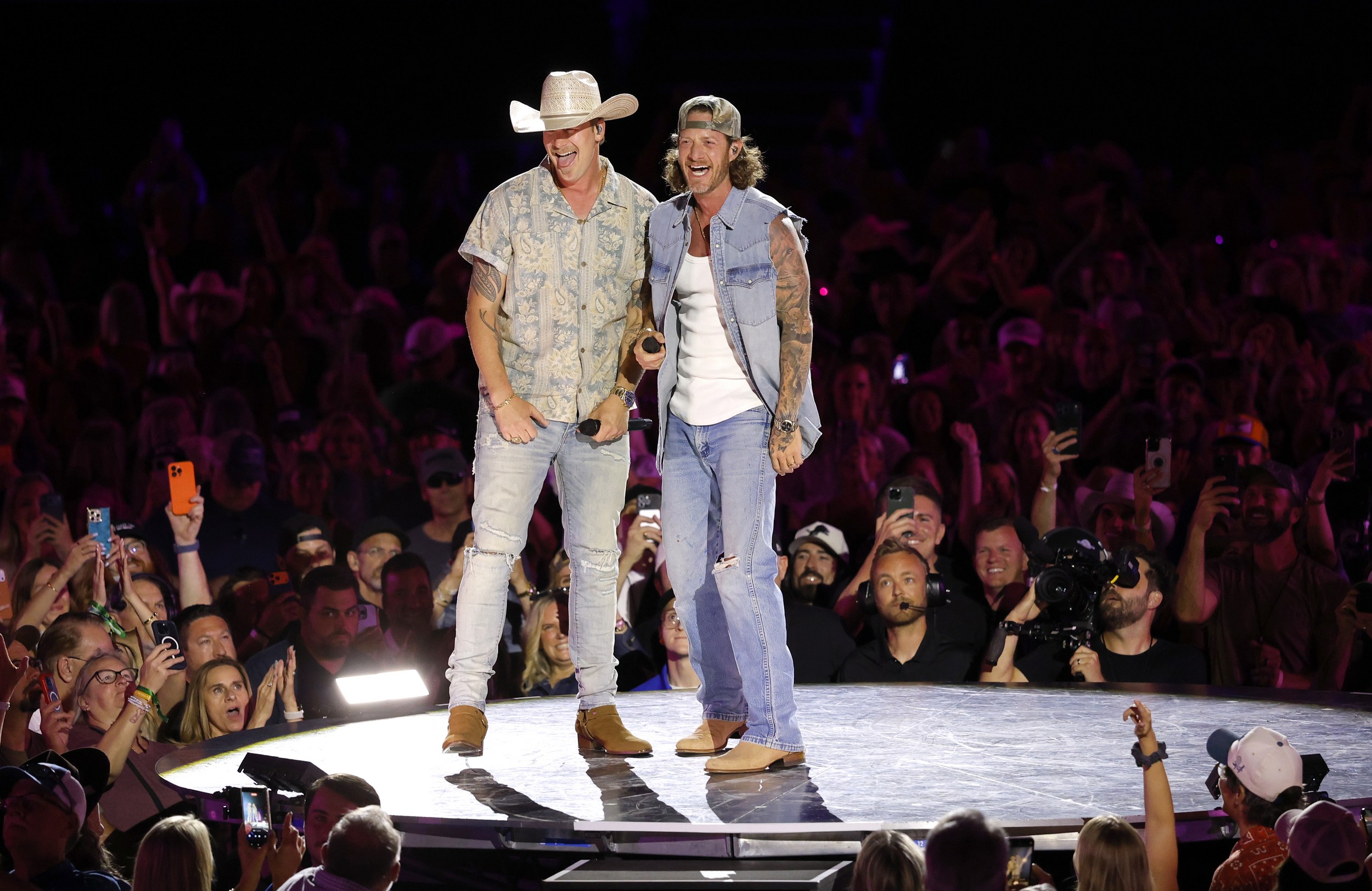
Florida Georgia Line just reunited, and the songwriting machine is already spinning up behind the scenes. Continue reading…Country Music News – Taste of Country