It’s generally not a good idea to criticize Taylor Swift.
That’s not because she never deserves it — everyone needs to be taken down a peg now and then — rather, it’s because her legion of rabid fans will stop at nothing to destroy anyone who speaks ill of their queen.
But Todd Rundgren is a member of the Rock and Roll Hall of Fame with an honorary doctorate from the Berklee College of Music, so he has reason to be confident in his opinions.
And the man is not a fan of Taylor’s.
Taylor Swift attends the 2026 Songwriters Hall Of Fame Induction Ceremony at The New York Marriott Marquis on June 11, 2026 in New York City. (Photo by Theo Wargo/Getty Images for for Songwriters Hall Of Fame)
In fact, Rundgren believes that Swift might have single-handedly “ruined music.”
Those are his words, people! Don’t shoot the messengers!
“There’s an argument to be made that she ruined music,” Rundgren told Vulture in a recent interview.
“It’s an understandable phenomenon. It’s just that, to me, Taylor Swift is the apotheosis of mediocrity.”
Rundgren went on to argue that women control the music industry these days because young men spend all their money on video games.
That argument doesn’t make a ton of sense, as no one really buys music these days, but the man was on a roll:
“That left the music market with, ‘Well, where do we go here?’” said Rundgren.
“And they said, ‘Well, there’s all these young girls and they’ve got their allowances, too.’”
He concluded his rant by listing the many ways in which Taylor is not great.
“Taylor Swift doesn’t do anything particularly great except grow hair,” he added.
‘“She’s not a great singer. She’s not a great songwriter. She’s not a great dancer. She’s a role model for what was a very young generation of women, and now for those women’s daughters as well, because it’s mothers and daughters going to Taylor Swift shows.”
Rundgren’s comments come on the heels of four new songs from Taylor that haven’t been terribly well-received.
Even diehard Swfities have been critical or indifferent regarding the tracks on The Life of a Showgirl: Encore.
But that doesn’t mean that they’ll be forgiving of Rundgren’s comments.
In fact, dude might want to enter some sort of protection program before it’s too late.
Like many parents, Arielle Roth has concerns about her children’s screen time at school. But unlike her peers, she’s in a position to influence the issue at nearly every school in America.
Roth heads an obscure federal agency within the Commerce Department that serves as the president’s top policy adviser on telecommunications issues. In that role, she’s called for more scrutiny of federal policies that support technology in the classroom, convened listening sessions with screen-skeptic parents, and coordinated between federal agencies. She calls the struggle “deeply personal.”
Now the Federal Communications Commission — citing Roth’s work and riding a broader backlash to education technology — is conducting a wide-ranging review of federal school internet subsidies that could lead to their elimination, or new requirements for schools to restrict screen time or allow parents to opt out in order to receive the money.
The changes under consideration could be financially devastating and deeply disruptive to classrooms and daily school operations, district leaders and education advocates say.
FCC Chair Brendan Carr asked whether E-Rate has served its purpose. He said the FCC’s review will consider “educational opportunity,” as well as whether “additional safeguards, refinements, or updates are needed to better protect kids online.”
In an interview, Roth, administrator of the National Telecommunications and Information Administration, said it’s time to ask “what E-Rate has meaningfully accomplished and how it has affected behavior.”
“Subsidies are not neutral,” she said. “Subsidies can encourage greater consumption. Understanding how the program has changed educational practice is really important.”
But E-Rate first and foremost supports schools’ access to a modern utility, said Noelle Ellerson Ng, chief advocacy and governance officer at the School Superintendents Association.
“Screen time is a curriculum and a content question,” she said. “The FCC is not the body to regulate those things.”
Schools use E-Rate for security, finances, and instruction
When Congress approved E-rate in 1996, just 14% of U.S. schools had internet access. Then-FCC chair Reed Hundt hailed the program as “the biggest single national effort to change education in classrooms K-12 in the history of our country.”
Still, school district leaders say that access really has been transformative.
Thanks to E-Rate, high school students in the Alaska Gateway School District, where many schools can’t be reached by road for most of the school year, can take virtual career-technical courses to prepare for apprenticeships, Superintendent Patrick Mayer said. The internet also allows Indigenous language teachers to tap online Athabaskan language resources.
“Connectivity is very important for us because it is our lifeline to the outside world,” he said.
It’s not just instruction. Schools use the internet for everything from school security and HVAC systems to attendance and payroll.
“Facilitating screen time is effectively the choice to harm our kids,” said Peter Ryan, a parent activist and co-founder of the Center for Responsible Technology. “To do so is to give them a digital drug.”
That same week, the Education Department hosted a convening called “From Screentime to Screen Value,” put on by an educator group that supports tech in the classroom. The Education Department and the FCC did not respond to questions about its role in the E-Rate review.
Among the more vocal critics is U.S. Sen. Ted Cruz, a Texas Republican who chairs the Senate Commerce Committee, where Roth previously worked on telecommunications policy. Cruz sponsored legislation that would have conditioned E-Rate on screen-time policies, but it stalled in Congress.
“Good policy occasionally takes the scenic route,” Cruz wrote in a post on the social media site X praising the FCC E-Rate review.
FCC puts parental opt-out policies on the table
The FCC’s E-Rate review sets the stage for commissioners to vote on major changes to the program. Without published draft rules, advocates are left reading between the lines as to what those might be.
The issues that concern school districts the most are the FCC’s views on whether E-Rate should end, whether E-Rate should be limited to rural communities, and whether schools should have to adopt technology limits and opt-out policies to participate.
Ending E-Rate — a possibility the FCC downplayed this summer and which many advocates don’t believe is within the FCC’s authority — would be catastrophic, district leaders said.
E-Rate provides more than $700,000 a year for Alaska Gateway, about 7% of the district’s budget, Mayer said. In larger districts, it can be worth many millions. Because schools can’t go without internet, they’d have to find that money elsewhere in their budgets.
“The school districts that are more affluent would continue to have modern schools, and those that serve less affluent areas would be the ones making the toughest choices,” said LaTonya Goffney, president of the School Superintendents Association and superintendent of the Aldine Independent School District, a high-poverty district in Houston.
But mandatory opt-out policies would also be disruptive, district leaders said, because they would require teachers to develop alternative lesson plans and potentially single out students with disabilities who rely on technology for accommodations.
Parents know what’s best for their own child, Ellerson Ng said, but “superintendents are responsible for every child in their district and all of their diverse needs.”
Roth, though, said robust opt-out provisions could encourage a bigger conversation about school internet use and would be consistent with the Trump administration’s focus on parental rights.
“The same conditions that give parents an escape valve could also serve as a check on the subsidy to make sure school districts aren’t using more than they need,” she said.
But with E-Rate on the line, even some advocates for stricter screen time limits are nervous.
“All of these questions they’re asking about screen time and the education efficacy of technology and family’s input on what happens in schools are the right questions,” said Haley Hinkle, policy counsel at Fairplay, a group that fights the influence of tech in children’s lives. “We’re concerned about tying these questions to the provision of internet.
“In the modern world, schools need internet, and kids need internet.”
Erica Meltzer is Chalkbeat’s national editor based in Colorado. Contact Erica at emeltzer@chalkbeat.org.
Chalkbeat is a nonprofit news site covering educational change in public schools.
Ella Langley got candid with fans about one of the biggest challenges that has come with living out her dreams during a recent stop on her Dandelion Tour.
The powerhouse singer/songwriter has been making it a habit to open up with fans more before introducing certain songs on the set list of the headline run, and her sold-out show at the Schottenstein Center in Columbus, OH, was no different. During the show, she slowed things down, sat on stool and opened up about the amount of criticism that has come with her massive rise in success over the past year.
“Growing up in a small town, this is saying a lot. I don’t think I’ve ever had more opinions on myself in my life than I have in this last year,” Langley admitted to the packed crowd.
Photo Courtesy of Ella Langley
She goes on to say that everything, from the way she looks and speaks to the clothes she wears, the way she moves, and even the way she sings and writes her music has been picked apart by the public.
“At first it bothered me. I won’t even lie. At first I was like, what am I going to do about this? I don’t know, if this is what I’m signing up to do, I don’t know about this. I signed up to sing music and I love to do what I do, but if this is what it’s going to be the whole entire time, I mean, s**t, I don’t know if I’m strong enough for this, Lord. I don’t know.”
When those moments of doubt and fear start to creep in, Langley thinks about her younger self and imagines that those harsh words are being directed to that girl who worked so hard to get her to this point in her life and career. This reminds her just how strong she has been and how far she has come.
“That’s the girl that rode in the 15 passenger van night after night after night. She rode in a Honda Accord night after night after night, chasing her dream, living on bar food, living on tip jar money. She didn’t have anything but a dream and the ability to get up and do it every single day. So I’m going to tell you right now, I am proud of that girl that everybody seems to be picking on a little bit,” Langley stated with confidence as she closed out her moment of reflection.
This vulnerability came as the “Be Her” singer continues The Dandelion Tour, which is set to wrap up on October 31 with a final show at Grand Casino Arena in Saint Paul, Minnesota.
Despite any criticism that lies ahead, Ella Langley’s career continues to move forward at a rapid pace. She has plenty to look forward to in the coming months, including her tour, along with the 2026 CMA Awards in November. She is headed into the star-studded night a top-nominee with nine nominations, adding another major milestone to what has already been a massive year for her.
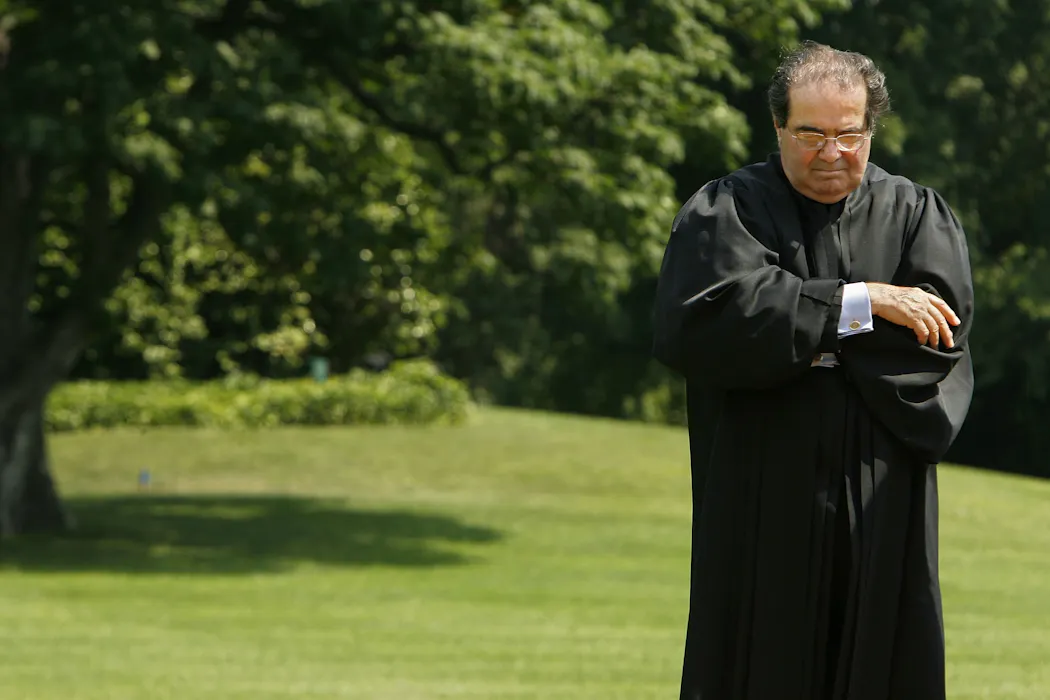
Supreme Court Justice Antonin Scalia, seen here in 2006, was the court’s most prominent originalist.Chip Somodevilla/Getty Images
The U.S. Supreme Court returns from summer break Oct. 5, 2026, and begins hearing a new year of cases.
Soon after what’s known as the “first Monday in October” among court watchers, we will start to see stories in the media about something called “originalism.”
The opposing view is known as “living constitutionalism.” It holds that the Constitution’s meaning can be reinterpreted by judges to keep up with the needs of the times.
Among the originalists on the current Supreme Court is Justice Amy Coney Barrett, a former law clerk to Antonin Scalia. Olivier Douliery AFP/Getty Images
Myths about originalism
Perhaps the most common myth about originalism is that it holds that the Constitution can never change.
For example, some people accuse originalists of “trapping the law in amber.” But originalists think the Constitution can change; they just disagree with who can do the changing.
For example, Scalia famously cast the deciding vote in 1989 to hold unconstitutional a law criminalizing burning the American flag despite being a big patriot and despising such activities.
Clarence Thomas wrote in 2003 that he thought laws criminalizing sodomy were “silly” but could not rule that they were unconstitutional; like abortion, they had coexisted with the Constitution for hundreds of years.
Barrett recently said that she is morally opposed to the death penalty but has no choice but to go along with it: Not only has it been around since the beginning of the country, but the Constitution explicitly says that “life” can be taken.
Arguments for and against
Yet originalism has many detractors.
Perhaps the most common criticism is that it is often difficult to glean what people thought the Constitution meant when it was written. Most of its provisions were written a long time ago, and the language is often vague.
In order to understand what people thought it meant, judges need to consult history. But judges are not trained as historians, and history is often ambiguous.
For example, sometimes we do not have a tradition of laws back to the founding of the country like we do with abortion, sodomy and the death penalty. Laws prohibiting the possession of assault weapons, for example, are of recent vintage.
How do you know what people hundreds of years ago would have thought about a law they didn’t have? It isn’t easy, and originalists disagree among themselves on how to figure that out.
But originalists say everything is relative: Even if originalism relies on history that will sometimes be ambiguous, what do living constitutionalists rely upon? As originalists see it, living constitutionalists rely on whatever outcome they think is a good idea. But originalists say this is undemocratic because judges are unelected and have life tenure: If the Constitution is to change, we, the people, should decide how. This is why they think history is “the lesser evil.”
This is probably the criticism of originalism that most resonates with my own students.
One response given by originalists is that we have now expanded the electorate and it has since altered very little of the Constitution. Doesn’t that mean what is left is democratically legitimate?
Not necessarily. Because it takes a supermajority of the electorate to change the Constitution, it is possible that there are still provisions in place that would have never commanded majority support but fall short of supermajority opposition.
Again, however, originalists respond that everything is relative. Even if the Constitution is democratically tainted, what is the alternative? To let nine unelected judges do whatever they think is best? How is that more democratic?
Moreover, originalists say, even if it is possible that there are some provisions still in the Constitution that would have never been adopted with an expanded electorate, what are they? It may be impossible to identify them.
Who’s right?
There is little doubt that originalism is on the rise – and not only on the Supreme Court. It is increasingly popular among lower court judges, lawyers and even law professors.
But as more and more people practice originalism, more and more people disagree about how to do it right.
In other words, originalism may be more complicated than Scalia made it sound. Moreover, even Scalia admitted the amendment process is a burdensome way to incorporate change.
But what’s the alternative? Originalism still may be “the lesser evil.”
Ella Langley and Tucker Wetmore are country music’s newest singing couple. What can they learn from these 11 famous relationshps? Continue reading…Country Music News – Taste of Country
Ella Langley and Tucker Wetmore are country music’s newest singing couple. What can they learn from these 11 famous relationshps? Continue reading…The Boot – Country Music News, Music Videos and Songs
According to a new biography about Brady, his supermodel ex delivered a particularly blunt assessment before walking away from their relationship.
The revelation comes from Lars Anderson’s upcoming book, Brady: An American Story and the Price of Greatness, which details the final months of Brady and Gisele’s relationship.
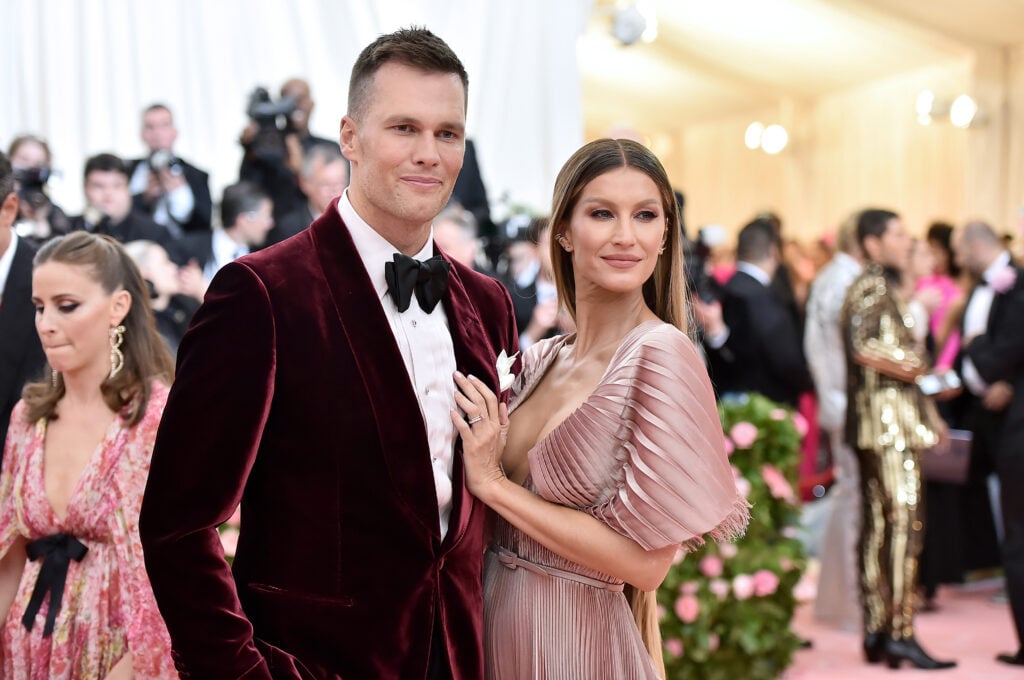
Tom Brady and Gisele Bündchen attend The 2019 Met Gala Celebrating Camp: Notes on Fashion at Metropolitan Museum of Art on May 06, 2019 in New York City. (Photo by Theo Wargo/WireImage)
And apparently, astrology played a role.
“One day, Gisele, who is really into astrology, basically looked into the stars and told Tom, ‘We’re not compatible,’” Anderson writes in an excerpt published by the Daily Mail.
“And just like that, she was done.”
Well, that certainly sounds final.
The book reportedly paints Brady’s decision to continue playing football as a major source of tension in the marriage. After initially announcing his retirement in February 2022, Brady reversed course just weeks later and returned to the Tampa Bay Buccaneers.
“I’ve realized my place is still on the field and not in the stands,” Brady wrote at the time. “That time will come. But it’s not now.”
Things reportedly became so difficult that Gisele traveled to Costa Rica while Brady remained focused on football. The book describes the trip as a final attempt to repair their relationship.
Meanwhile, people around Brady noticed a change in him.
Former Buccaneers coach Bruce Arians reportedly observed that Brady had lost weight and appeared to be struggling with personal issues. Another coach, Clyde Christensen, recalled that Brady returned from his family vacation looking like an “empty shell.”
“There was no joy. Everything was hard work,” Christensen said, according to the book.
By October 2022, the writing was apparently on the wall.
Brady and Gisele announced their divorce on October 28, confirming that they had finalized the end of their marriage after 13 years together.
“We have grown apart,” Gisele wrote at the time, adding that she felt “blessed for the time we had together.”
The former couple shares two children, Benjamin and Vivian. Brady is also father to son Jack, whom he shares with Bridget Moynahan.
As for Brady? He has remained busy with his post-NFL career and has been linked to several women since the divorce.
But apparently, according to this new account, the end of his marriage was ultimately boiled down to three very uncomfortable words: “We’re not compatible.”
Lauren Alaina is coming to Stella Lefty’s defense after the rising star was flooded with criticism over an Instagram post showing off her elegant look for the 2026 MTV Video Music Awards.
Lefty stepped onto the VMAs red carpet for the first time dressed to the nines in honor of being nominated for Best New Artist and Best Country Song for her top-charting hit, “Boston.”
Stella Lefty at The 2026 MTV Video Music Awards (VMAs); Photo: Christopher Polk/CBS
With her boyfriend and fellow country act Vincent Mason by her side, the Illinois native strutted down the red carpet in a wedding dress from Claire Pettibone’s fall 2015 bridal collection. The stunning gown featured a fitted silhouette that flowed into a long flowy skirt and a back that offered a striking mesh design with layers of long, delicate detailing. Lefty completed the look with her hair styled in an updo, leaving a few loose waves framing her face.
While plenty of online users admired her look and complimented Lefty on her appearance, the comment section also drew a slew of negative remarks, something that Lauren Alaina took notice of and instantly made an effort to call out. Knowing what it feels like to face criticism while living life in the public eye, Alaina urged people to think twice before tearing someone down online.
“The comment section is not passing the vibe check,” she wrote.
Stella Lefty at The 2026 MTV Video Music Awards (VMAs); Photo: Christopher Polk/CBS
The “All My Exes” singer went on to look at the situation from a mother’s perspective, imagining how she would feel if people were speaking about her own daughter that way.
“It makes me sad we live in a world where strangers feel it is okay to talk about someone else this way. My heart breaks thinking someone would ever talk about my daughter like this. Do better everyone,” she added.
This online moment comes amid a wave of recent criticism being aimed at the rising country artist. Alaina isn’t the only one who has come to Lefty’s defense lately. Kelsea Ballerini also recently spoke up for the singer following her Grand Ole Opry debut on September 2.
Ballerini, who is an Opry member herself, took to social media to defend Lefty after the comment section filled with negative messages from people claiming she had not earned her place on the coveted stage.
“…It’s about celebration of all kinds of country music…new, old, traditional, current, however you wanna say it. it’s all important, and it should all be able to be shared in our safest and most sacred stage in country music. celebrate music like the opry does. ❤️,” Ballerini wrote at the time.
This year’s VMAs returned to LA for the first time since 2017, taking over the Peacock Theater with Snoop Dogg as host. Before heading inside to watch the star-studded show and see who would take home this year’s awards, the “I Know I Know” singer took a moment to describe how it felt to be attending the VMAs for the first time.
“Me and my friends last year we actually watched, all of us together, sitting together with a huge bowl of popcorn and all the snacks,” Lefty told Entertainment Tonight. “I’m just thinking about my friends now watching me here and it’s really crazy…I love you guys, wish you all were here,” she added, giving a shoutout to her friends back home.
Lefty has yet to publicly address the criticism. Instead, she has continued to celebrate her recent milestones and the success that has come with her rapid rise in country music.