 You don’t have to set your alarm for 5 a.m. to row with Crew Girl, but you’re going want to get onboard early with Netflix’s new YA romance series.
Even if you don’t know a sweep from a scull,…
E! Online (US) – Top Stories









You don’t have to set your alarm for 5 a.m. to row with Crew Girl, but you’re going want to get onboard early with Netflix’s new YA romance series.
Even if you don’t know a sweep from a scull,…
E! Online (US) – Top Stories

It’s been a bad year to be an incumbent.
Rhode Island Gov. Dan McKee’s ouster on Wednesday, the first primary defeat for an incumbent governor in eight years, caps off a primary season that’s seen longtime leaders fall across the map and politicians across both parties struggle to make the leap to higher office.
Thirteen members of Congress have lost their reelection bids: seven Democrats and six Republicans, including two GOP senators. At least 16 more who were trying to move from the House to the Senate or take on statewide office have lost primaries: nine Republicans and seven Democrats, including Colorado Sen. Michael Bennet who unsuccessfully ran for governor.
The upheaval has been driven by a confluence of factors that will continue to dog incumbents through November. Voters are frustrated with both parties’ leadership in Washington. President Donald Trump has targeted some GOP foes as he looks to cement his legacy; Democrats are in the midst of pitched generational and ideological battles. Some members in both parties faced daunting new district lines. Others faced scandals that sank them.
In some races, those factors converged. Rep. Haley Stevens (D-Mich.) didn’t benefit much from her years in Washington in her Senate bid — and lost her primary to a left-flank rival who yoked her to the party establishment.
Caitlin Legacki, who advised Stevens’ bid, said incumbents’ losses this year show voters are simply fed up.
“It speaks to the high level of dissatisfaction that voters have with everyone,” said Legacki, who noted the anti-incumbent climate contributed to Stevens’ loss. “It’s a major ‘throw the bums out’ moment.”
DEMS KICK INCUMBENTS TO THE CURB
Democrats disillusioned with their leadership in Washington are taking it out on the party’s rank and file.
Progressives picked off more-moderate House members from New York to Colorado. Younger challengers ousted older incumbents from Texas to Connecticut. Local elected officials outran Washington incumbents. And voters have spurned lawmakers seeking higher office from Michigan to Minnesota.
Sometimes age was the biggest factor, sometimes it was ideology and sometimes both played a role. Democratic socialists defeated decades-older Reps. Diana DeGette of Colorado and Rep. Adriano Espaillat of New York. Former Hartford Mayor Luke Bronin relied on generational change to topple longtime Rep. John Larson in Connecticut.
THE TRUMP FACTOR
For Republicans, Trump played a major role in directing voters against his longstanding Washington foes.
Trump-backed challengers wiped MAGA irritants Sen. Bill Cassidy (R-Louisiana) and Rep. Thomas Massie (R-Ky.) off the map. And the president’s late-stage endorsement of Texas Attorney General Ken Paxton in the Senate runoff helped sink Sen. John Cornyn (R-Texas).
REDISTRICTING RIPPLE EFFECTS
The unusual mid-decade gerrymandering war took out members of both parties, who lost competitive races in less favorable districts, ran for other offices or switched parties to avoid similar fates.
Texas Democratic Rep. Al Green was ousted by Rep. Christian Menefee in a member-on-member primary forced by gerrymandering that played on their generational divide.
Democratic Rep. Julie Johnson lost her redrawn Dallas-area district to former Rep. Colin Allred, while Rep. Dan Crenshaw’s right-flank challenger leveraged the redraw (as well as some of Crenshaw’s breaks with Trump) to oust the Republican.
Others chose to retire rather than keep fighting uphill battles. Democratic Reps. Steve Cohen of Tennessee (who had already been facing a generational primary challenge before the redraw), Lloyd Doggett of Texas and Cleo Fields of Louisiana hung it up after Republicans dismantled their districts. So did GOP Reps. Darrell Issa of California and Burgess Owens of Utah after their districts were redrawn. California Rep. Kevin Kiley, who opposed the mid-decade gerrymanders and switched from GOP to independent after his district was redrawn, said the new maps have unleashed “chaos” on the House and “reduced the quality of representation in Congress.”
SWEPT OUT BY SCANDAL
Call it the midterms of controversy: Incumbents in both parties have succumbed to the political pressures of their scandals this year.
Democratic Rep. Eric Swalwell ended his run for California governor and exited Congress amid sexual assault and misconduct allegations. Rep. Tony Gonzales (R-Texas) dropped his reelection bid and resigned after admitting to having an affair with a staffer who later killed herself.
Tennessee GOP Rep. Andy Ogles, despite his Trump endorsement, couldn’t overcome his past controversies, a newly redrawn district and outside spending. Republican Florida Rep. Cory Mills faced attacks over probes of his conduct from primary winner Ryan Elijah. Elijah told POLITICO this week that he believed Mills’ controversies collided with voters’ anti-incumbent angst.
“We ran on our merits, but trust was a factor,” Elijah said. “I think trust was the biggest factor.”
HIGHER OFFICE FLAMEOUTS
Several congressional Democrats struggled to outmatch opponents without Washington ties in Senate primaries. Bennet, Stevens and Reps. Angie Craig (D-Minn.), Jasmine Crockett (D-Texas), Raja Krishnamoorthi (D-Ill.) and Robin Kelly (D-Ill.) all lost statewide primaries to rivals who hadn’t served in D.C.
Voters haven’t been kind to GOP representatives seeking higher office either. Reps. Randy Feenstra of Iowa, Dusty Johnson of South Dakota and Nancy Mace and Ralph Norman of South Carolina all lost their gubernatorial bids. Voters rejected Norman twice: He also lost the snap primary for Lindsey Graham’s seat to the late senator’s sister — a total political newcomer. Texas Rep. Chip Roy also lost a runoff for state attorney general.
Politics

Legal and technical systems struggle to keep pace with AI and open source development.

Changelog updated for version 5.0

 Mike Sisco and Karen Harkness were shot to death in their bed on July 7, 2002.
A decade later, Sisco’s ex-wife Dana Chandler was convicted of killing the Topeka, Kan., couple. But that verdict was…
E! Online (US) – Top Stories

Stop copying designs between client sites by hand. Compare three ways to reuse WordPress templates, from pattern export to cloud libraries.
The post WordPress Agency Workflow: Reuse Templates Across Client Sites Without Copy-Paste appeared first on Themeisle Blog.
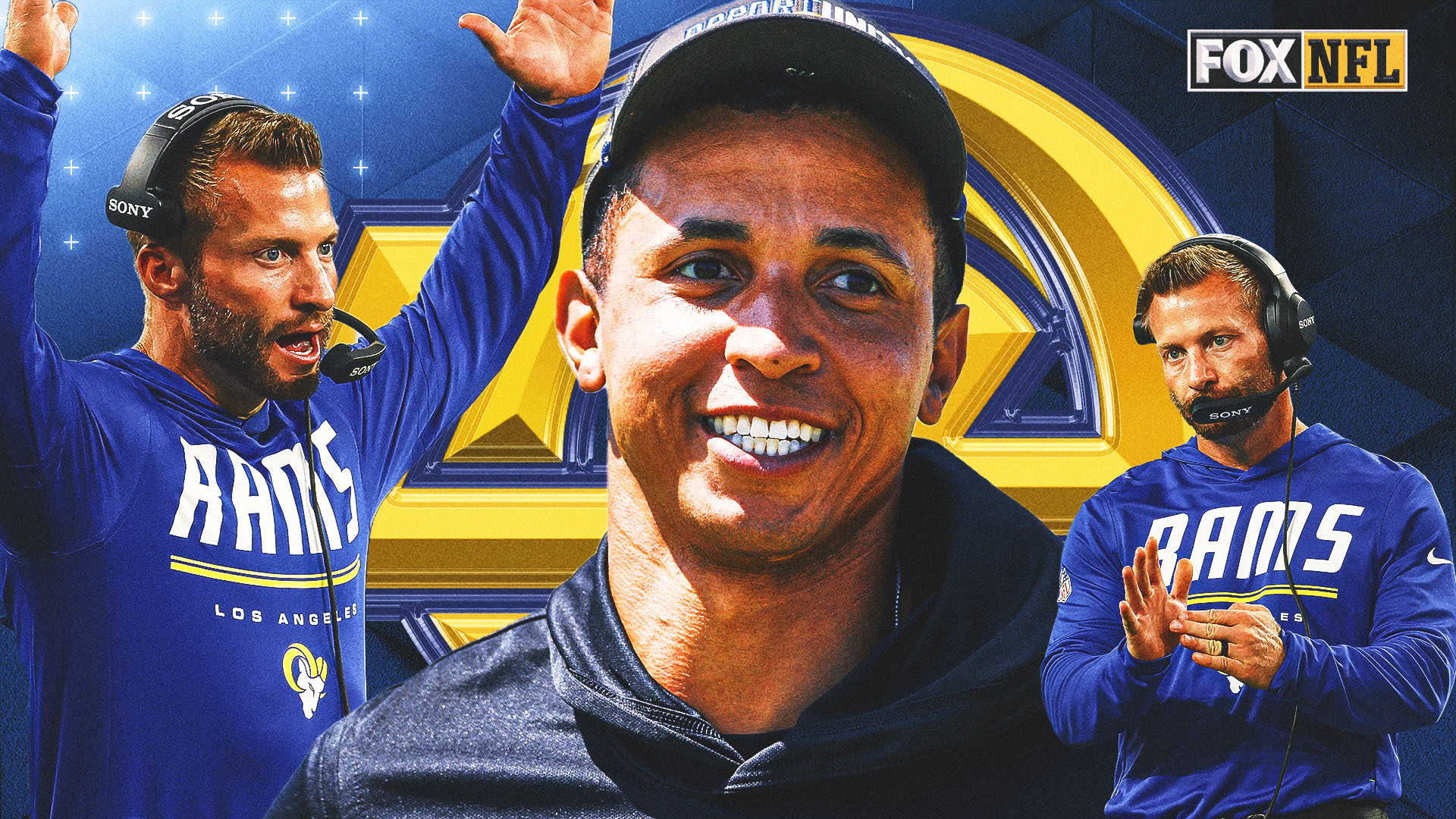
LOS ANGELES — It’s the start of practice, and Nate Scheelhaase has some pep in his step. Scheelhaase, the new Los Angeles Rams offensive coordinator, is bouncing around the field. The 35-year-old pedals back into coverage, simulating a defensive back to give his tight ends a good look as they run routes with the quarterbacks, stopping a player to correct footwork or offer a word of encouragement. Scheelhaase’s energy and enthusiasm are something that doesn’t go unnoticed by his boss, Los Angeles head coach Sean McVay. “He’s done a great job,” McVay told me. “He’s got great organizational skills, great communication skills. He shows great leadership to be able to bring people together. He’s got a great capacity for the game, and he’s continuing to learn the foundation of some of the things we’ve been doing. But he’s been awesome. And I’ve been really pleased with the job he’s done.” The former University of Illinois quarterback is the latest offensive assistant of the McVay coaching tree expected to springboard to stardom as an NFL head coach. Zac Taylor (Cincinnati Bengals), Liam Coen (Jacksonville Jaguars), Matt LaFleur (Green Bay Packers), Mike LaFleur (Arizona Cardinals) and Kevin O’Connell (Minnesota Vikings) are all current head coaches who served as offensive coordinators for McVay, while Brandon Staley (ex-Los Angeles Chargers head coach) and Raheem Morris (ex-Atlanta Falcons head coach) are defensive coordinators who moved on to earn head coaching jobs in the league. “You just learn how to communicate with people on a clear and concise level,” Coen told me when asked what he learned from McVay. “Obviously, you learn the schematics and techniques of all three phases. But honestly, I think what makes Sean different is just the way he can connect with people — white, black, purple, green, rich, poor, from here or there — it doesn’t matter. Sean can connect, and I think that’s something you always appreciate about learning from him.” Scheelhaase interviewed for head coaching jobs in Baltimore, Buffalo, Cleveland, Pittsburgh and Las Vegas during the last hiring cycle. But he returned to take on the offensive coordinator role in Los Angeles, replacing Mike LaFleur. Scheelhaase understands he’s a work in progress, as he looks to add value to a loaded roster considered to be a heavy favorite to win the Super Bowl. “What doesn’t change in this game and being involved in it is you feel like you’re one piece of the puzzle, and your contribution can make an impact,” Scheelhaase told me. “That was one of the things that excited you as a player to be in the locker room. And a lot of guys stepped into coaching for that reason — to be a part of something bigger than themselves. That’s what I love about coaching, being able to make an impact. And it looks different based on the role that you have or based on the position you play. But it matters. “It matters from our head coach to our backup left guard, to our athletic trainers and to the people that are making our food in the morning. So, being able to own my role and make meaningful contributions is a huge deal to me.” How Scheelhaase’s Coaching Journey Began As A Player Tony Severino, a recently retired legendary head coach at Rockhurst High School in Kansas City, Missouri, told me he saw something in Scheelhaase as an aspiring player at his football camp. “I saw something special in him back then,” Severino said. “He’s one of the first freshmen we ever started. He started in the secondary and at slot receiver because we had a senior at quarterback. Midway through his sophomore year, we put him at quarterback, and he was special, and then whenever we needed him on defense at safety. He was always a great football player.” Scheelhaase told me he got his foundation from playing for Severino. Along with Severino, Scheelhaase said he also got his first football education from his parents, former University of Iowa defensive back Nate Creer and LouAnn Scheelhaase. “My dad was my coach, and my mom was the head video coordinator,” Scheelhaase told me. “She had the video recorder in the crowd. We’d play on Saturday and watch on Sunday after the game. “I learned the behind-the-scenes parts after games could make a huge impact on what you were trying to do on the field. You could learn and become a better player from the behind-the-scenes stuff. So, I think somewhere inside me, it created an appreciation for everything that happened before the snap, and so that carried on. He coached me all the way through eighth grade.” Scheelhaase describes his father as a survivor. Creer grew up in Brooklyn, New York, and was raised by an older sister after losing both parents at 10 years old. From that, Scheelhaase said he learned how to grind and battle through adversity from his parents, who sold their house and moved to Illinois to be closer to him when he played football in college. “He knows how to work,” Scheelhaase told me about his father. “He’s worked warehouse jobs his whole life, freaking third shift. And knowing a little bit of where he comes from, I have a lot of gratitude for where I’m at and what I get to do here. So, I think you learn a lot, not only from the football side but how to work. “My mom is the same way. My mom is a stud. I was able to go to private school that was out of our budget because she freaking took a job that was not her favorite, but she knew she could make enough money to get me through high school at the place that I wanted to go to school. She is meaningful in probably every character piece that I have and still is to this day. I’ve got awesome parents. And certainly, on the human side, but also on the football side, I’m super grateful for them.” A Natural Leader Scheelhaase, who was a four-year starter at Illinois, holds the program record for total yards with 10,634, and while things didn’t always go as he would like, Scheelhaase played his best when the game mattered the most, according to Louisville head coach Jeff Brohm, who served as one of the four offensive coordinators he worked with at Illinois. “Nathan was intelligent, very bright,” Brohm told me. “He was a very good teammate, supportive of everybody — even the guys he was going against. To be quite honest, he performed better on game day than he did at practice. He was a guy who always came through in the game, had a lot of grit, toughness and character – and those things always showed up in the game and helped us win.” Brohm pointed to two performances in bowl games by Scheelhaase that were key moments in his rise. He led Illinois to wins over Robert Griffin III in the Texas Bowl in 2010 before a victory over UCLA in the Kraft Fight Hunger Bowl a year later, earning MVP honors in the latter. As Scheelhaase had a strong college career, he credited his playing days for helping him succeed so far as a coach. Scheelhaase said playing quarterback from youth football to college helped him see and coach the game through a quarterback lens. “Obviously, the quarterback is the trigger man; he’s going to make a meaningful impact on the offense and the team at large,” Scheelhaase told me. “I think anytime you can view things through his lens as a starting point, it’s going to just give you a good barometer of where to go and what to do as far as what should we put into the install? How should we schedule our offseason programming? And what’s going to ultimately be on the third-down game plan? “So, if you’re always viewing things through his lens — as far as are we providing clarity for him and are we putting him in the best position to be successful – it’s the lens in which I view the game.” Severino echoed Scheelhaase’s sentiment, believing the player he once coached in camp was ready to take on the challenge of coaching due to his playing background. “Quarterback is kind of like a catcher,” Severino told me. “A catcher sees the whole game out in front of them, and they make great Major League managers. Quarterbacks, a lot of times, if they’re good people, they make great leaders. And they become good head coaches.” How Scheelhaase Found His Coaching Voice After his playing career was over, Scheelhaase said he earned his first full-time job as a running backs coach for head coach Matt Campbell at Iowa State in 2018 after a few years on Illinois’ coaching staff. Scheelhaase spent six seasons with the Cyclones, coaching running backs and receivers before ultimately being promoted to offensive coordinator and quarterbacks coach, where he helped to groom Brock Purdy and Rocco Becht. Campbell, who is now the head coach at Penn State, remembers how infectious Scheelhaase’s personality was when he was at Iowa State. “No. 1, he galvanizes the players, galvanizes the people around him,” Campbell told me. “There’s a humility and curiosity with how he comes in and really tries to grow himself and the people around him in football. And then I think the second thing I really appreciate about him is he just has a sense of trust and leadership. “He just had this ability to lead in a positive way, and I think everyone around him felt that.” That personality allowed Scheelhaase to form a close bond with Campbell. In fact, Scheelhaase, his wife Morgan and his family went on a vacation with Campbell’s family to Hawaii once. It was moments like those that Scheelhaase shared with Campbell that the new Rams offensive coordinator credited with helping build his foundation as a coach. “He helped to form a lot of who I’ve become as a coach,” Scheelhaase told me about Campbell. “The way to do it, the way to treat people, the way to come to work every day, the way to go about it with the right mindset — which is how you can put players and people in the best position to be successful. And pouring everything you’ve got to help that happen. I learned a whole lot and will forever be indebted to him. He’s the man.” Scheelhaase has continued that building process with the Rams. McVay allowed him to call plays during preseason games the last two years, and he’s constantly working to help Los Angeles find an edge that will help them on game day. An example of that last season included daily work with receiver Konata Mumpfield, which led to the rookie contributing to L.A.’s NFC Championship run last season.”Mumpfield was a rookie receiver who is really talented and has continued to make a great impact for us,” Scheelhaase told me. “But we started utilizing him on third down, and he was really our third receiver on third down. I can remember behind the scenes working with him in walk-through practice just so he had a great idea of the concepts we were running and how he fit in the puzzle before he was even playing. This was probably seven, eight or nine weeks before he may have been out there in those situations, but behind the scenes he was working. “And then seeing him get into a Sunday night game against Tampa and Matthew [Stafford] hit him on a backside in-cut, and you feel like you were able to contribute to help create clarity for him, which is obviously our job as coaches.” Now, Scheelhaase should have even more say in the Rams’ offense in 2026. He’s quickly risen through the ranks of McVay’s staff, going from offensive assistant and passing game specialist in 2024 to pass game coordinator in 2025 before his promotion to offensive coordinator over the offseason. But Scheelhaase said he has already had the freedom to find his role and voice as a coach, crediting McVay as he said that’s one of the Rams head coach’s secret sauces. “There’s so much more to it than the X and Os,” Scheelhaase told me. “The way he builds a culture in the NFL where people matter, and connection matters, is one of our secret sauces, for sure. And the way he brings up leaders and allows them to see behind the curtain, be able to see behind the scenes and learn, to hear his thoughts and how he’s thinking. “How he moves and how he operates throughout the course of a year, I’ve been fortunate enough to just be a sponge and be able to soak up a ton of insight in those situations. That’s a part of it.” McVay still remains the offensive playcaller for the Rams in 2026. That shouldn’t deter teams from pursuing Scheelhaase as a head coach candidate next offseason, though, if everything goes right this year. It certainly hasn’t stopped teams from pursuing McVay disciples in the past, either, as the likes of Kevin O’Connell and Mike LaFleur didn’t call plays under the Rams head coach before getting head coach opportunities themselves. And while McVay still holds onto playcalling duties, it’s the way he leads that Scheelhaase is taking note of as he potentially becomes the next McVay disciple to become a head coach. “He knows what the foundational pieces in this game are always going to be, and he’s willing to double down on those things time and time again,” Scheelhaase told me. “I don’t think he’s trying to chase a different identity. I don’t think he’s trying to chase what maybe somebody else is doing. “But I think he has a great belief in what it looks like to be a successful organization, and what that emphasis looks like throughout the year. It’s not just in the fall, but it’s a 365-day-a-year job, and I think he’s got that mapped out pretty darn well for what’s important.”Latest Sports News from FOX Sports

A beloved ’90s DIY fashion trend is making a major comeback, with Americans searching for it by the millions and buying it again. Continue reading…The Boot – Country Music News, Music Videos and Songs
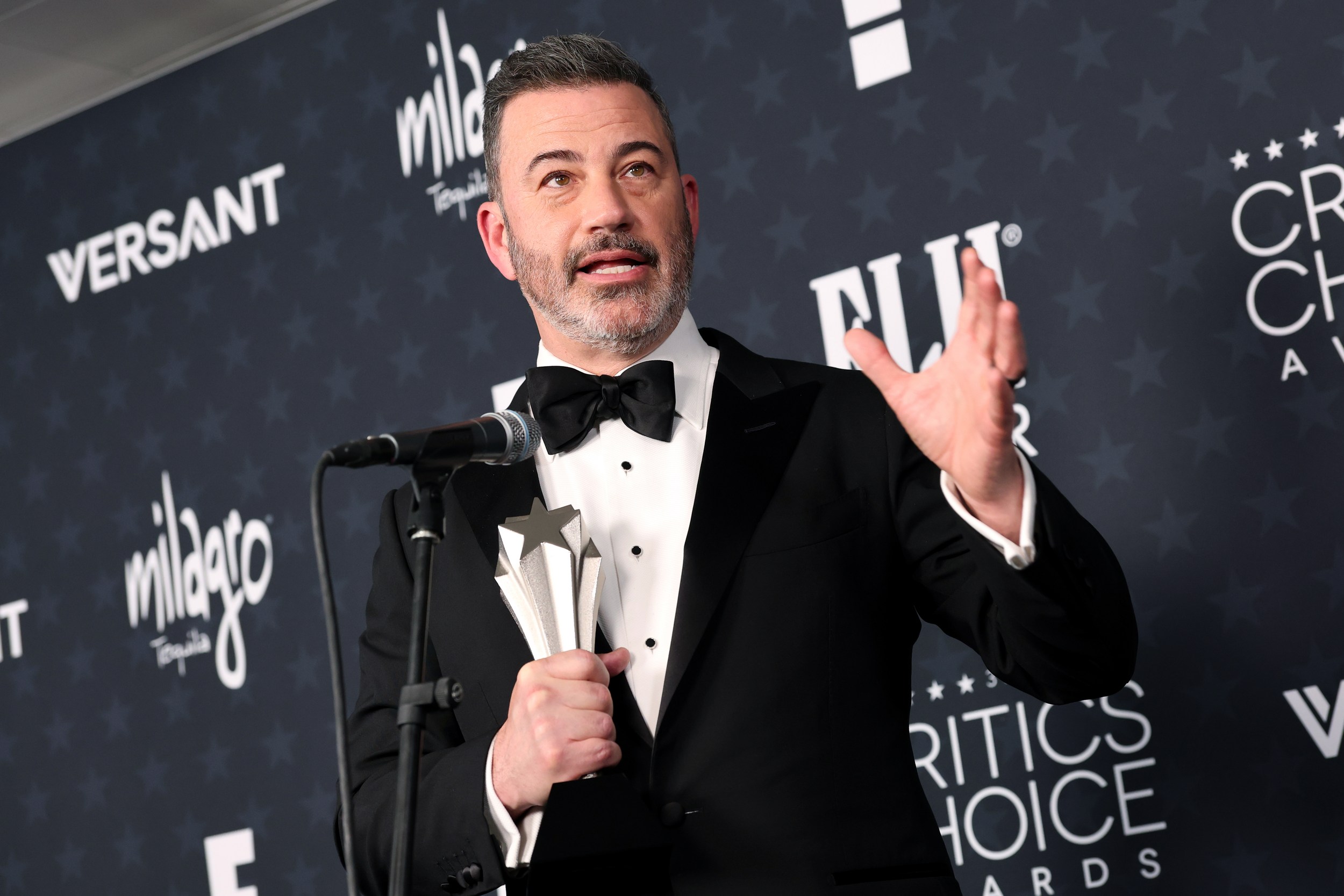
Reports have suggested Jimmy Kimmel could leave late night in 2027, but sources say ABC wants him to stay. Continue reading…The Boot – Country Music News, Music Videos and Songs

Two of the companies vying for management of Haines’ cruise ship dock have consolidated proposals and will partner, rather than compete.
Survey Point Holdings and Huna Totem Corporation, along with Viking Cruise Line, propose to manage the dock as a joint partnership, the companies wrote in a July 27 letter to borough manager Alekka Fullerton.
The borough currently has an open call for dock management proposals, and so far the only respondent outside of the Survey Point-Huna Totem partnership is Global Ports Holding, Fullerton said Tuesday.

Global Ports Holding initiated the current conversation around dock management in Haines when it approached the borough out of the blue this spring. After that became public information, Huna Totem and Survey Point separately expressed competing interest in a management deal.
The deadline for proposals was extended this week to Sept. 30 due to a high volume of questions from the two applicants, Fullerton said.
“We’re extending the RFP response date to September 30th so that we can compile all the questions, answer all the questions, and we will be posting all of those questions with their answers so that everybody has equal opportunity to that information,” she said.
Leadership from the new joint proposal group said this week the companies are still finalizing the nature of the arrangement, and would avoid, for competitive reasons, revealing details until the proposal period was closed.
Survey Point president Ethan Berto said this week that the company was “very excited about the partnership and think we have a great story to tell but would like to wait until after the (request for proposal) submission before speaking too much.”
Huna Totem vice president Susan Bell said Viking Cruise Lines would be less involved than the other two companies in the day to day management, things like dock operations, marketing and community relations.
Bell described Viking’s role as a “strategic partner,” but would not say how the cruise line’s operations in Haines might differ from the current port calls it makes.
Survey Point and Huna Totem are both large regional players in the regional cruise industry, each with a web of interconnected relationships on cruise infrastructure management and financing.
Survey Point owns a wide portfolio of cruise-ship related infrastructure and services, including cruise ship docks in Ketchikan, Juneau and Skagway. The company, in partnership with Carnival Cruise Line, owns the White Pass Railroad in Skagway. It owns a host of stevedoring, security, tugboat, and helicopter companies.
Perhaps most significantly, it owns Cruise Line Agencies of Alaska, or CLAA, which schedules cruise ships at nearly every cruise port in the state. That includes Haines’ dock. CLAA currently schedules ships, ties them up, delivers ship supplies, and owns infrastructure like gangways and dock fenders.
Huna Totem, the Alaska Native Village Corporation for Hoonah, has more recently expansion into the cruise industry. The company first opened a cruise port at Icy Straight Point, just north of Hoonah, in 2004. The port’s facilities have been funded in partnership with Celebrity Cruises, a subsidiary of Royal Caribbean Cruise Lines, and Norwegian Cruise Lines.
In 2024, the company opened the Chugach Glacier Gateway cruise terminal in Whittier, and a cruise port in Klawock. The latter was built in partnership with Doyon Ltd., an Alaska Native Regional Corporation.
The company is currently building a new cruise ship dock in downtown Juneau on a tract of land purchased for $20 million by Norwegian Cruise Lines and then donated to Huna Totem Corporation. The dock facility, Áak’w Landing, is scheduled to be completed in 2028.
As for Viking, the cruise line operated two ships this summer in Alaska, the Viking Venus and the Viking Orion. Much of the global cruise industry is dominated by large conglomerates, namely Carnival Cruise Lines and Royal Caribbean Cruise Lines, which each own a host of sub-brands — familiar names like Holland America and Princess Cruise Lines. Viking, however, remains independently owned and comparatively small. And its Alaska ships themselves are relatively small, carrying up to 930 passengers, priced at the higher end of the market. Next season’s Viking cruises in Alaska currently start at between $6,500 and $7,000.
Bell said she believed Viking was a fit for Haines due to its mid-size ships, higher price point, and “emphasis on destination.”
The post Partnership forming opposite Global Ports in dock competition appeared first on Chilkat Valley News.