 *This article contains spoilers for Netflix’s Earle Meets World.
As cameras rolled on Earle Meets World, the family was navigating more than just relationship rumors and feud speculation.
Months…
E! Online (US) – Top Stories









*This article contains spoilers for Netflix’s Earle Meets World.
As cameras rolled on Earle Meets World, the family was navigating more than just relationship rumors and feud speculation.
Months…
E! Online (US) – Top Stories
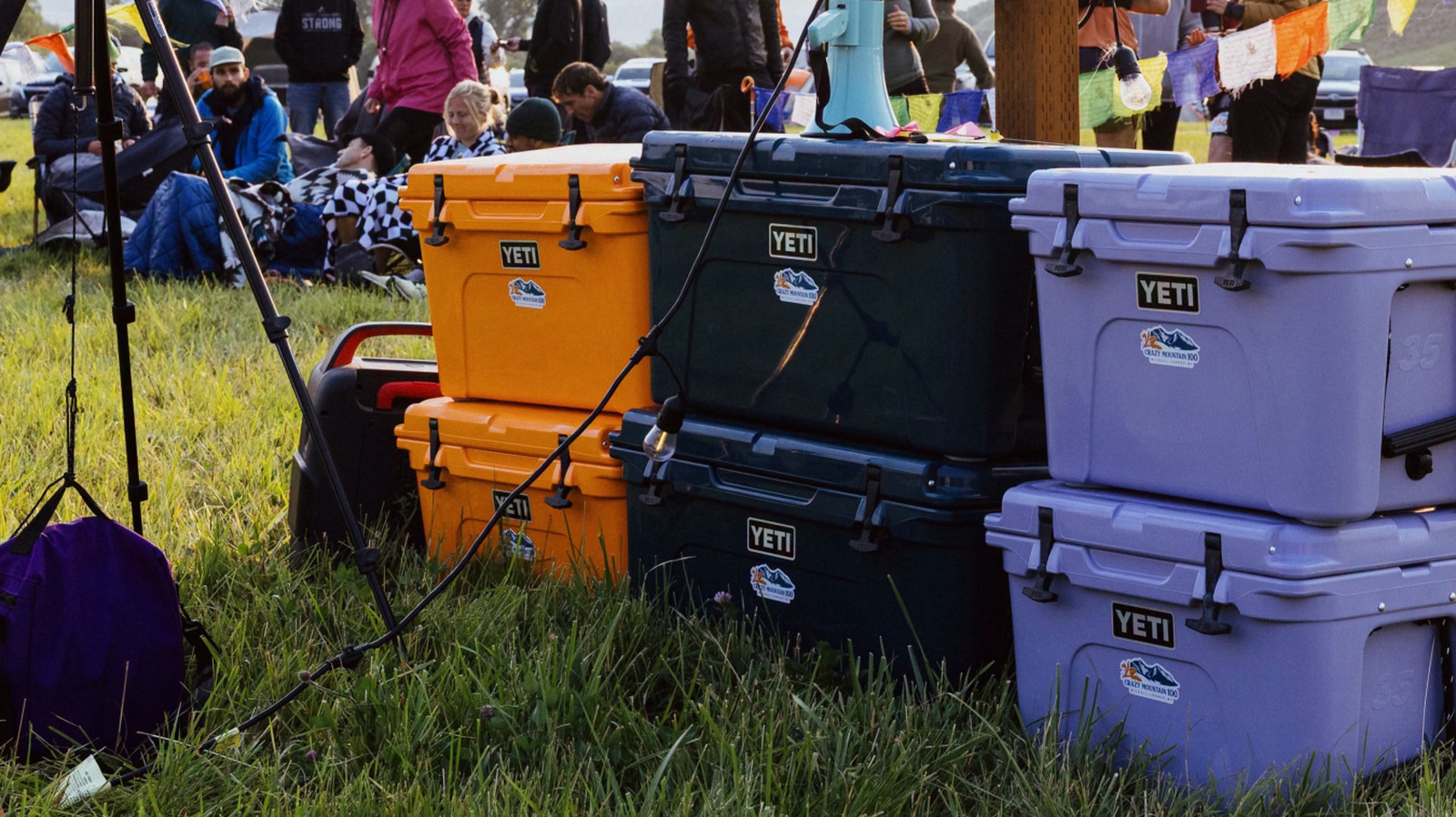
Yeti might be known for its water bottles, but the outdoors company carries so much more. Here are the best and newest releases for this September.
Food Republic – Restaurants, Reviews, Recipes, Cooking Tips

Alan Jackson went out with a massive Nashville farewell, and the final box-office number has now put his last concert in the record books. Continue reading…The Boot – Country Music News, Music Videos and Songs

At long last, the NFL season is right around the corner. We are less than a week away from kickoff, and as initial 53-man depth charts take shape, final roster moves and tactical shifts are making noise across the league. The Los Angeles Rams officially revealed their Week 1 depth chart, listing rookie Ty Simpson as the third-string quarterback. Meanwhile, the NFC West news gets even more intriguing with the Arizona Cardinals agreeing to a massive multi-year extension with wide receiver Michael Wilson. Staying in the NFC, the Chicago Bears are managing practice injuries with wide receiver Rome Odunze and running back D’Andre Swift. Following that, it turns out New York Giants running back Cam Skattebo briefly considered retirement while recovering from last year’s season-ending ankle injury. Here’s the latest NFL news around the league on Thursday. After a strong preseason showing, the Los Angeles Rams have released their depth chart for the start of the 2026 season. With Week 1 on the way, head coach Sean McVay has opted for Stetson Bennett as Matthew Stafford’s backup quarterback. That means Ty Simpson, who the team took with the 13th overall pick in April’s draft, will be the third-string quarterback. The Rams had been adamant about Simpson sitting and learning this season, especially as Stafford nears the end of his career. Stafford’s timeline remains uncertain, but he has been at the center of retirement rumors over the last couple of years. Simpson and Bennett were in lockstep all camp, but Bennett ultimately took the edge. After watching both get extensive preseason reps, McVay appears to agree, favoring Bennett for the backup job. “Stetson Bennett being named the No. 2 QB by the Rams over Ty Simpson should not be surprising,” our Eric D. Williams noted. “He was clearly the better player during training camp. But Simpson showed steady improvement.” The Rams are set to head to Australia to face off against the NFC West division rival San Francisco 49ers for Week 1. The Arizona Cardinals reached an agreement Thursday on a three-year contract extension with wide receiver Michael Wilson, according to reports from ESPN and NFL Network. The deal keeps the 26-year-old receiver under contract with the franchise through the 2029 season. Originally selected by Arizona in the third round of the 2023 NFL Draft out of Stanford, Wilson has established himself as a primary target in the Cardinals’ offense alongside Trey McBride. Wilson is expected to officially sign the contract on Thursday ahead of Arizona’s regular-season opener against the Los Angeles Chargers on Sept. 13. New York Giants running back Cam Skattebo shared that he briefly considered retiring from the NFL after suffering a severe ankle injury last year. Skattebo, who suffered a dislocated ankle, open tibia fracture, and ruptured deltoid ligament in Week 8, shared during an appearance on “Up & Adams” that he contemplated stepping away about a month into his rehabilitation. “The first month was kind of like, ‘Damn, do I really want to do this?’” Skattebo said. “I think [the injury] gave me an extra step of finding that deep place and coming out of a hole that I didn’t know I could come out of. I’m appreciative of it, and I’m excited to see what I can build on it.” Skattebo noted he had a personal rule in college to retire if he suffered a major injury, but ultimately decided to return after showing promise over seven full games as a rookie. Before the injury, he compiled 410 rushing yards, 207 receiving yards, and seven total touchdowns. The second-year back returned to the field during the preseason on Aug. 15 and is projected to lead a Giants backfield rotation that features Najee Harris, Tyrone Tracy Jr., and Devin Singletary. The Chicago Bears had a pair of injury scares right before Week 1. Wide receiver Rome Odunze and running back D’Andre Swift were both reportedly sidelined during practice Thursday. According to reports, Odunze exited with a member of the training staff near the beginning of practice and appeared to be dealing with a right leg or foot injury. Odunze, who missed five games last season with a foot fracture, enters the 2026 campaign expected to serve as Chicago’s top receiver alongside Luther Burden III following the offseason trade of DJ Moore. Swift’s injury reportedly occurred near the end of practice during a full-team drill. With backup Kyle Monangai currently sidelined with a hyperextended knee, Swift’s exit leaves Chicago’s running back room rather thin heading into the holiday weekend.Latest Sports News from FOX Sports

 Bath & Body Works’ Labor Day Weekend sale is kicking off with a deal you won’t want to miss: their 3-wick candles are $13.95 right now!
Nearly every delicious fall scent they offer is included,…
E! Online (US) – Top Stories

 Birkenstock fans have plenty to shop this Labor Day weekend, with some of the brand’s most popular styles marked down to under $100 and select pairs even dropping below $50. From the iconic Boston…
E! Online (US) – Top Stories
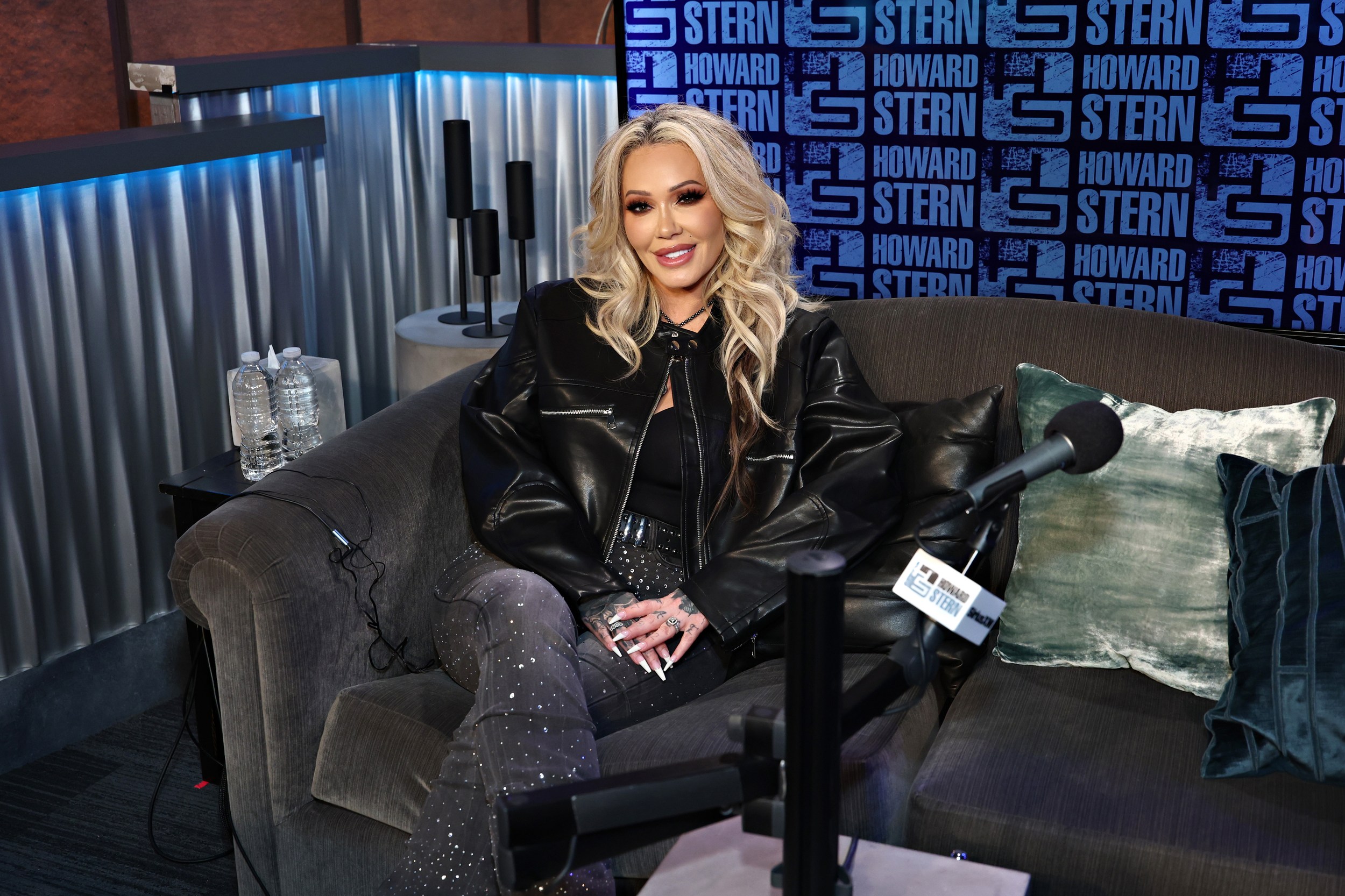
Bunnie Xo is opening up about what happened to her physically after the end of her nearly 10-year marriage to Jelly Roll. Continue reading…The Boot – Country Music News, Music Videos and Songs

Rep. Andrew Gray, D-Anchorage, speaks in favor of House Bill 62 on Friday, May 16, 2025. (Photo by James Brooks/Alaska Beacon)
Anchorage Democrat Rep. Andrew Gray has asked acting attorney general Cori Mills to prosecute former attorney general Treg Taylor and his wife, Republican lieutenant governor candidate Jodi Taylor, for allegedly failing to file required financial reports.
Gray, chair of the House Judiciary Committee, made the request in a letter sent Tuesday and shared with reporters.
In the letter and speaking by phone, Gray said he was inspired to write the letter because the Alaska Department of Law is criminally prosecuting 11 Whittier residents from American Samoa for allegedly voting illegally.
Gray said those defendants were misinformed about the law, and it makes no sense to prosecute them while not prosecuting an attorney general who knowingly violated an election law.
“I just feel like it’s a no-brainer,” he said.
Treg Taylor had been a Republican candidate for governor until last week, when Lt. Gov. Nancy Dahlstrom ruled him ineligible because he failed to follow a state law mandating the disclosure of his personal financial information.
The Alaska Public Offices Commission, which regulates candidates’ campaigns, had recommended that he be disqualified for failing to disclose the full names of people renting apartments that he owns.
Taylor’s lieutenant governor candidate, Candi English, took his spot as a governor candidate, and Jodi Taylor filed to run as English’s lieutenant governor candidate.
Together, the two make up one of four governor-lieutenant governor tickets in Alaska’s November general election.
Jodi Taylor’s financial disclosure form, filed last week, contains a partial list of renters that is similar to the one flagged as problematic by the commission.
Under state law, Jodi Taylor has 30 days to amend that disclosure. If she does not, she could be ruled ineligible, just as Treg Taylor was.
But federal law requires the state to mail ballots to military and overseas voters no later than 45 days before Election Day.
To meet that deadline, the Alaska Division of Elections is planning to send out ballots starting Sept. 18, a week and a half before the deadline for changes to Taylor’s financial disclosure form.
If Dahlstrom rules Jodi Taylor ineligible as a candidate after that, Alaskans would end up using ballots containing an ineligible candidate.
For the moment, that remains a hypothetical scenario that depends on how Jodi Taylor, APOC and Lt. Gov. Nancy Dahlstrom may act.
Treg Taylor’s previous campaign spokesperson no longer works for the English-Taylor campaign, and the Taylors’ daughter Quincy Azimi-Tabrizi — who spoke for the campaign last week — did not return phone calls seeking comment on Thursday.
A spokesman for the Alaska Department of Law also did not return phone calls or emails asking whether the attorney general had received the letter and if so, whether she had a response.
Gray said on Thursday that he has not received any response either but is preparing a public letter about the issue.
He said he has been particularly taken aback by the idea that Treg Taylor, as attorney general, directed the criminal prosecution of voters in Whittier for allegedly breaking state elections law but isn’t being held to the same standard.
“It makes my head explode,” Gray said.

Some people will gladly empty their wallets to get their hands on aged Scotch, but it might be premature to conclude that older bottles are always better.

Mashed – Fast Food, Celebrity Chefs, Grocery, Reviews

Jonathan Kreiss-Tomkins, a Democratic former state House member, won the state’s gubernatorial primary last month. (Nathaniel Herz/Anchorage Press)
This story was originally published by the Anchorage Press.
The improbable rise of a long-shot Democratic candidate now has the party positioned to capture the Alaska governor’s mansion for the first time in more than two decades, veteran political observers from across the ideological spectrum said this week.
Jonathan Kreiss-Tomkins, a 37-year-old former state House member from Sitka who’s never run for statewide office, won Alaska’s open primary with 22.5% of votes, according to official results released Monday.
The second-place finisher and the only other Democrat in the field, former state Sen. Tom Begich, dropped out of the race last week — leaving Kreiss-Tomkins, known as JKT, with what insiders say is a clear path to victory amid a splintered Republican field and voter disaffection with incumbent GOP Gov. Mike Dunleavy, who’s term-limited and can’t run again.
Last month, Begich’s campaign had touted analysis by political and polling forecaster Nate Silver that gave his campaign a 71% chance of winning the primary — and Kreiss-Tomkins a 0.0% chance. Prediction markets similarly gave Kreiss-Tomkins long odds.
Now, after a primary campaign that blanketed voters with text messages and sent him to far corners of the state, Kreiss-Tomkins’ political stock is booming and those markets show him as the favorite.

“Jonathan carved 20 points out of thin f—n’ air,” said Joelle Hall, president of the Alaska AFL-CIO, the state’s largest organized labor group, which has endorsed Kreiss-Tomkins. “Everyone else is stuck in another century. JKT is the only one running communications and a campaign that exists in 2026. Everyone else is running a 1990s playbook, and it’s not working.”
Lest you think that’s an opinion held only by his allies, even some of Kreiss-Tomkins’ political adversaries agree.
“He is running a campaign unlike any that has ever been seen in Alaska history,” said Suzanne Downing, the prominent conservative blogger and former spokesperson for the Alaska Republican Party. “He’s running circles around people, because they don’t even know the questions to ask.”
With the Democratic field clear, Kreiss-Tomkins is now poised to also draw support from national groups. The chair of the Democratic Governors Association, which boosts the party’s candidates across the country, issued a statement Tuesday saying the organization “looks forward to working alongside Jonathan to deliver the change Alaskans deserve.”
The Republican Governors Association, meanwhile, has not issued a statement on the Alaska gubernatorial race since primary voting took place last month. Officials there did not respond to a request for comment this week.
Alaska’s last Democratic governor was Tony Knowles, who left office in 2002. The state has twice as many Republicans as Democrats — some 24% of registered voters to 12% — but nearly 65% of voters are independent, meaning that Democrats can occasionally make competitive runs for statewide office.
Of 17 primary election candidates in the governor’s race, 12 were Republicans, who collectively won some 49.5% of the vote — more than the combined total of 43.3% for Kreiss-Tomkins and Begich.
But many observers say they expect the conservative vote to be split between the three Republicans who advanced to the general election.
Those Republicans include conservative activist Bernadette Wilson, who won 10% of votes in the primary; former Anchorage mayor Dave Bronson, who won 8%; and businesswoman Candi English, who was on the ballot as the running mate to a former Alaska attorney general, Treg Taylor, who was ultimately disqualified from the general election due to violation of the state’s financial disclosure law.

Alaska has a ranked choice voting system that theoretically should allow the top GOP candidate to consolidate the second- and third-choiced votes from supporters of the two lower-finishing Republicans. Supporters of the system say it works best when party candidates cooperate.
But political insiders say that they expect infighting among the Republican campaigns to cause a significant fraction of conservative voters to rank only their favorite candidate and not the others — meaning that some of the votes for the lower-placed Republicans may not help the top GOP candidate in a final tally against Kreiss-Tomkins.
Downing, who’s a friend and supporter of Wilson, is one example. She described Bronson as “pugnacious” and “pigheaded” and said his campaign has been attacking Wilson for weeks through third-party surrogates.
“There’s nothing you could do today to get me to rank Dave Bronson,” Downing said in a phone interview.
Downing and other Republicans noted that if Kreiss-Tomkins is elected, he’s likely to get legislative cooperation from the same type of ruling coalitions that have led the state House and Senate for the past two years — which have tilted Democratic. Primary results suggest those coalitions are likely to persist into next year.
One veteran GOP operative, who spoke anonymously to share frank opinions about the party’s odds in November, also said he was deeply pessimistic about the chances that conservative voters will rank more than one Republican gubernatorial candidate.
He cited the 2022 U.S. House race, in which Republicans Sarah Palin and Nick Begich III traded attacks on each other leading up to the general election. The pair together won more than 50% in the early ranked choice vote count — but ultimately lost to a Democrat in part because nearly 14,000 people who ranked Begich declined to rank Palin, meaning their ballots were “exhausted.”
“I don’t think there’s any way conservatives rank the red,” the operative said. “Dave and Bernadette are going to be Sarah and Nick all over again.”
A spokesperson for Bronson’s campaign, Jesse McCarty, said Bronson was unavailable for an interview but added that “we have made it very clear that we will not speak poorly of Republican candidates publicly.”
“Dave and this campaign will be asking the voters to rank the conservatives,” McCarty said in a text message.
The Alaska Republican Party’s chair, Carmela Warfield, did not respond to requests for comment Tuesday. Wilson did not respond to requests for comment, and a spokesperson for English declined to make her available for an interview.
Kreiss-Tomkins, meanwhile, was busy campaigning Tuesday. He said he started the morning with an 8 a.m. coffee with a state legislator after working until 2:30 a.m. the night before, then spent the rest of the day on calls and meetings with other donors, business and labor leaders and campaign staff.
“We’re just going to be super heads-down, a heat-seeking missile toward Nov. 3,” Kreiss-Tomkins said in an interview, referring to the general election date. “We just want to focus on the fundamentals and outwork every other campaign, out-raise every other campaign, out-travel every other campaign.”
Kreiss-Tomkins’ primary campaign took him far across the state, from boating down the Yukon River to driving a snowmachine in Alaska’s Northwest Arctic. He also raised more money than any other candidate — though not without drawing criticism for taking hundreds of thousands of dollars from California-based employees of an AI company, Anthropic.
He has been using a texting service that’s allowed him to directly exchange messages with hundreds of voters, he said in an interview last month.

Now that the primary election is over, Kreiss-Tomkins said, he’s planning more outreach to moderate Republicans who are “disillusioned with the Dunleavy era and want change.”
Kreiss-Tomkins has hired national campaign consultants who have supported strident progressives like former U.S. Senate candidate Graham Platner in Maine and New York City Mayor Zohran Mamdani. But he noted that one of those consultants has also worked with centrist candidates like independent Nebraska U.S. Senate candidate Dan Osborn, who’s volunteered to help Trump build a border wall.
“I’m not an ideological zealot — I never have been,” Kreiss-Tomkins said.
Underscoring Kreiss-Tomkins’ bid to consolidate support among moderates, he spent part of last week in conversations about taking on a new running mate: Click Bishop, a moderate Republican former state senator who also ran in the gubernatorial primary but finished outside the top four.
Kreiss-Tomkins declined to comment directly on those discussions, but a spokesperson for Bishop, Shannon Mason, confirmed that they took place.
Hall, the labor leader, said she expects Kreiss-Tomkins to make inroads with conservative leaning voters who assume the candidate is more liberal than he actually is because of his relative youth.
“Just because he’s young, they believe that he is less moderate than Tom Begich,” Hall said. “He’s 100% a negotiator. He’s the kind of guy who’s going to bring everybody in a room.”
Downing, the blogger and Wilson supporter, said she hasn’t totally given up hope that her preferred candidate could still come out of the race as the winner.
She’s hoping Bronson can still be convinced to suspend his campaign and consolidate support for Wilson. And she said she also thinks that English, the third GOP candidate, may have to drop out: Her current running mate is Jodi Taylor, the wife of the former attorney general who was disqualified for financial disclosure violations. Jodi Taylor made the same omissions on her financial disclosure — some of the details of her sources of income — that her husband did.
“I see a path,” Downing said. “But it’s a narrower path with Bronson in.”
Disclosure: Kreiss-Tomkins facilitated some early-stage meetings around the revitalization of the Anchorage Press. He has no involvement with the organization today.
This story was originally published by the Anchorage Press, the revived urban alt-weekly.