Nearly 30 years after Tupac Shakur was gunned down in Las Vegas, the rapper’s family has finally received some long-awaited justice.
On Monday, a Nevada jury found Duane “Keffe D” Davis guilty of first-degree murder in connection with Shakur’s 1996 killing.
Davis, 63, was the only person ever criminally charged in the death of the hip-hop icon, whose murder had long been one of the most infamous unsolved cases in US history.
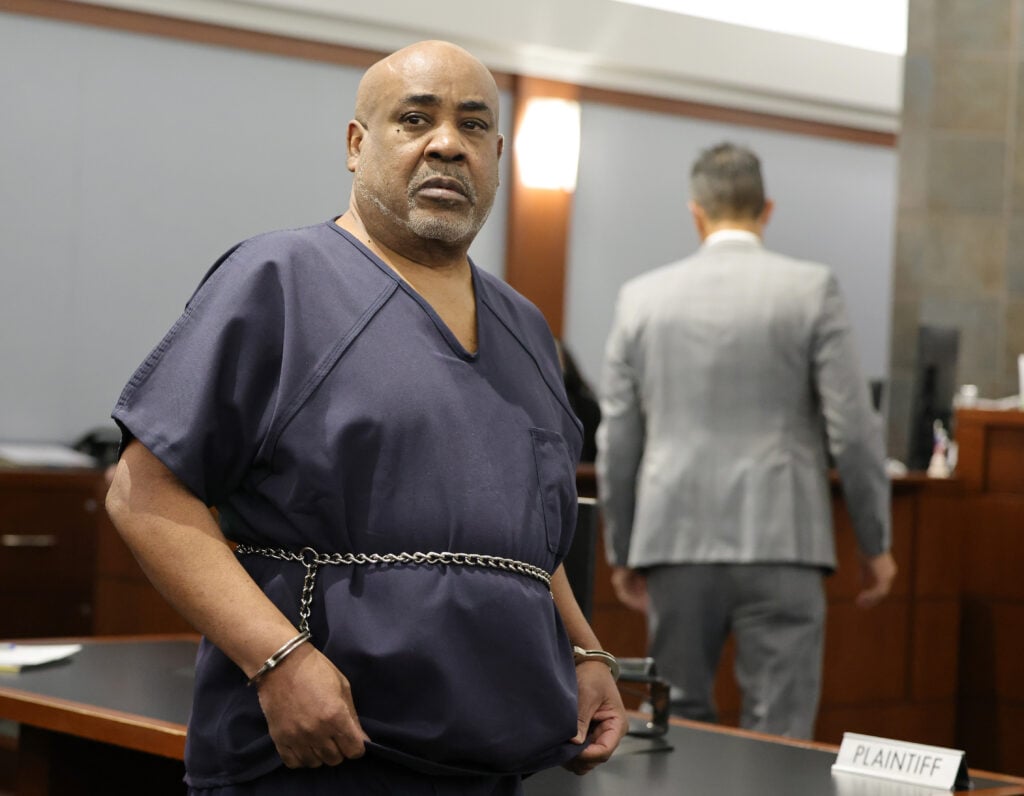
Duane Davis arrives at Clark County District Court for a hearing on a motion to dismiss all charges in his case filed by his attorney Carl E.G. Arnold at the Regional Justice Center on January 21, 2025 in Las Vegas, Nevada. (Photo by Ethan Miller/Getty Images)
The verdict came after a roughly two-week trial and just a few hours of deliberation.
Prosecutors argued that Davis orchestrated the deadly shooting as retaliation after Shakur and members of his entourage were involved in a physical altercation with Davis’ nephew, Orlando “Baby Lane” Anderson, at the MGM Grand earlier that night.
Shakur was riding in a BMW with Death Row Records co-founder Marion “Suge” Knight when a white Cadillac pulled alongside them at a Las Vegas intersection on September 7, 1996.
Shakur was struck by multiple bullets and died from his injuries six days later at the age of 25. Knight was also injured but survived.
Anderson was long suspected of being the shooter, but he was killed in 1998 and was never charged in Shakur’s death.
That left Davis as the lone surviving member of the group prosecutors say was involved in the attack.
And, unfortunately for Davis, he had spent years talking about it.
Prosecutors placed significant emphasis on Davis’ own statements, including comments he made during police interviews and accounts published in his 2019 memoir.
According to prosecutors, Davis admitted that he was in the Cadillac and provided the gun used in the shooting.
“Let’s be clear, Duane Davis did not pull the trigger,” Chief Deputy District Attorney Binu Palal told jurors. “But he did plan the shooting in retaliation of the beating of his nephew.”
Davis’ defense team attempted to poke holes in those statements, arguing that he had exaggerated or fabricated his involvement over the years.
They also maintained there was no independent evidence placing Davis in Las Vegas or inside the Cadillac on the night of Shakur’s murder.
But the jury ultimately wasn’t buying it. Davis now faces the possibility of life in prison.
For Tupac’s fans, the verdict closes a chapter that has remained open for nearly three decades.
The rapper’s death sparked endless speculation, conspiracy theories, and competing accounts of what happened that night.
Now, for the first time, someone has been held criminally responsible for the killing of one of the most influential artists of his generation.
On a Thursday evening in Fort Collins, Colorado, community members gathered around tables to discuss whether the city should allow marijuana dispensaries within city limits.
Rather than take turns for two minutes at a microphone, the participants considered various viewpoints, engaged with quality information and focused on exploring solutions that worked to mitigate the concerns of the critics but still supported the goals of the advocates.
Gatherings like this one have happened more than 500 times in and around the northern Colorado town over the past 20 years. Each was facilitated by college students. While outrage and polarization dominate many political discussions, these events provide compelling evidence that when offered a more nuanced way of engaging, the public recognizes the value and calls for more.
I’m a communication studies professor with a background in argumentation and debate. I founded the Colorado State University Center for Public Deliberation in 2006 based on the theory that democracy requires high-quality communication and engagement to thrive. Existing political, journalistic and social media systems rarely provide such opportunities, but a growing number of organizations like the center are learning more about how to provide them.
The story behind the experiment
Initially, my research centered on national politics. As I learned how issues like poverty, race and the environment were discussed, I became frustrated.
I came to understand that social issues are best understood as “wicked problems” that involve competing underlying values that are inherently in tension with each other. These tensions stand in the way of “solving” the problem long term. In a diverse society where people reasonably prioritize values differently, it is clear that addressing wicked problems requires a more collaborative style of communication.
The installment of security cameras exemplifies a wicked problem because there is a clear tension between the underlying values of privacy and security. Issues like this need deeper reflection. Norbert Bordas/500px via Getty Images
Research in social psychology and brain science, however, shows humans are simply not wired for these conversations.
Scholarship reveals that humans are motivated reasoners susceptible to numerous unconscious biases that undermine their ability to engage complex issues. Humans are prone to confirmation bias and my-side bias, so we tend to cherry-pick the facts that support our preconceived ideas and reject those that challenge them. We often suffer from an inflated sense of certainty.
Humans are also narrative creatures who prefer simple stories with clear heroes, victims and villains. We have a natural attraction to divisive, identity-based appeals that too often see the world through us-them frames that lead to divisiveness and contempt.
In other words, when given a choice, humans strongly prefer to assume that problems are caused by wicked people, rather that engage the inherent wickedness of problems.
By the end of graduate school, I understood that a highly partisan two-party system makes a problematic situation worse by rewarding the exploitation of these human tendencies. As a result, adversarial politics lead to an exaggerated sense of polarization that breeds divisiveness and misunderstanding. They can also fuel information chaos, an overwhelming swirl of misinformation and disinformation that the researchers with RAND aptly named Truth Decay. Information chaos is also directly related to the erosion of trust in journalism and academia, two institutions that traditionally helped elevate quality information.
This adversarial environment is also a ripe breeding ground for bad faith actors who undermine our civic culture. There is a growing recognition among civic engagement scholars and practitioners that conflict profiteers, merchants of doubt and polarizers actively work to take advantage of human biases for their own benefit.
Above all, I recognized that how people engage each other matters. I decided to explore alternative models of engagement better suited to how our brains worked as well as the problems our communities were facing.
Experimenting in the classroom
The practice of deliberation is a form of structured interactive communication designed to help people engage with complex issues and come to more reasoned judgments. I began experimenting with this new tool in my classroom starting in around 2000. At first I adopted material from the National Issues Forums Institute, a nonpartisan organization that has been developing deliberative discussion guides for educational purposes since 1981.
I was hired at Colorado State University in 2003 to take over the argumentation and debate class, and I shifted the class’s focus from debate to deliberation.
The course challenged students to frame an issue from a deliberative perspective by asking, “What should we do about X?” with X being a shared wicked problem, such as the increasing number of mental health issues on campus.
The assignment shifted students from being advocates of a particular viewpoint to serving as impartial analysts. Many assignments in K-12 and college education ask students to start with a conclusion and then do research to support it, encouraging motivated reasoning. This assignment was designed to force their brains to see different sides of an issue by adopting what author Julia Galef describes as a “scout mindset.”
Students developed a well-researched discussion guide that outlined at least three distinct approaches to address their problem. These guides served as useful tools for others to overcome my-side bias and exaggerated polarization and to be more likely to, as psychologist Adam Grant has encouraged, think again.
Taking the conversations outside the classroom
In 2006, the Center for Public Deliberation launched.
To support it, I designed a course that trains students to facilitate small-group discussions. Our first major project involved running six nights of forums for the local school district that engaged over 600 participants in a discussion about reorganizing schools. My students and I worked with them to and successfully debuted a deliberative form of engagement.
Soon we were designing and running events for the city, county, university and community organizations on issues such as housing affordability and decarbonization. College students facilitated every event.
Similar centers for civic life have developed on other campuses. The Center for Public Deliberation is currently a part of a Department of Education grant to further expand the network to 40 campuses across the country.
The challenges our communities face are significant. But every day more people are realizing that how we engage each other matters and are making space for the conversations that must be sparked for democracy to thrive.
Martin Carcasson works for the Colorado State University Center for Public Deliberation, serves as the co-chair of the Braver Angels Civic Scholars Council, and partners with organizations such at National Issues Forum, the Interactivty Foundation, and the National Coalition for Dialogue and Deliberation.
Dolly never cut the line at her own theme park. She waited like everyone else because fairness mattered more than fame. Continue reading…Country Music News – Taste of Country
Dolly never cut the line at her own theme park. She waited like everyone else because fairness mattered more than fame. Continue reading…The Boot – Country Music News, Music Videos and Songs
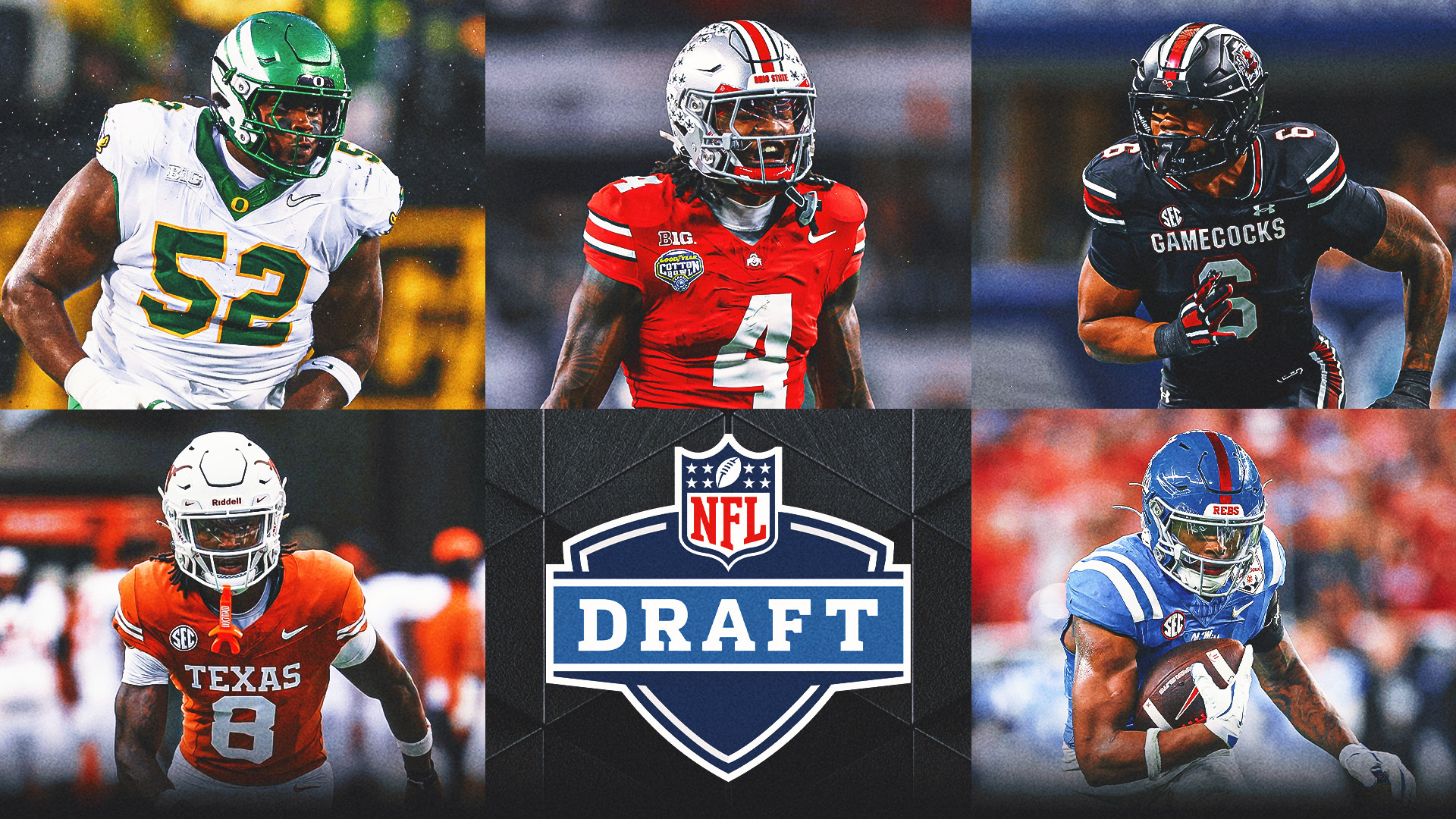
No one knows for sure how things might change during the upcoming college football season, but early indications are that the 2027 NFL Draft will be the strongest in years. Quarterbacks — such as Texas’ Arch Manning, Oregon’s Dante Moore and Ohio State’s Julian Sayin — have dominated the early buzz because, well, they’re quarterbacks brimming with talent and potential. But the beauty of next year’s draft class is that it could offer several franchise-altering prospects at other positions, as well. I’ve ranked the top 10 non-QBs heading into the season and, as you’d expect, all of them have a realistic chance at being a first-round pick next spring. Frankly, the top seven players would have been selected on Day 1 this year. As a bonus, I’ve included a pro comparison for each prospect. Grading offensive linemen is more about fit and grit than analytics, but Green checks in with the numbers that even a stat geek can appreciate. The 6-foot-5, 324-pounder is a three-year starter dating back to his true freshman season at Oklahoma. He allowed just two sacks in 751 pass drops last year, his first at the premium left tackle position after spending his first two seasons inside at left guard, where he routinely delivered pancake blocks. Green is a talented pass blocker, as well as a spark plug in the running game. He gains impressive depth in his kick-slide and has the lateral agility and core strength to handle counters. I’m eager to see if he is even smoother in Year 2 at tackle. Between his girth, grip-strength, competitiveness and previous experience at guard, Green should offer his future NFL team plenty of roster flexibility. Pro comp: Dion Dawkins, Buffalo Bills Lacy went from a backup at Missouri to leading the entire country with 24 rushing touchdowns at Ole Miss last year. He is sudden and slippery, consistently zipping around and past would-be tacklers. His elusiveness generates plenty of highlight-reel worthy plays, but Lacy is also quite effective in short yardage, showing impressive leg drive, balance through contact and sheer determination to grind out the tough yards, too. Along with his frequent trips to the end zone, the 5-foot-11, 205-pounder led the nation with 335 touches in 2025. There is no denying that Lacy was aided by the creative playcalling of former Ole Miss head coach Lane Kiffin. With Kiffin now in Baton Rouge, scouts are curious to see if Lacy can duplicate his remarkable sophomore campaign. Pro comp: TreVeyon Henderson, New England Patriots Robinson wasn’t quite as flashy as the aforementioned Lacy last year, but he was close, earning FWAA Freshman Defensive Player of the Year honors with four interceptions, tying for tops in the talent-rich SEC. Robinson is every bit the athletic phenom you’d expect as a former five-star recruit out of IMG Academy. He has a tight, low backpedal and easy hip turn to track receivers downfield, showing impressive balance and burst out of his breaks and legitimate recovery speed when necessary. He’s also a surprisingly scrappy tackler. A rarity for a young cornerback, Robinson’s hands might be even better than his feet. Robinson can get a bit grabby downfield, but refs often let him compete because he locates the ball well, showing impressive hand-eye coordination to either catch it himself or rake it out of the hands of the intended receiver at the final moment. Interceptions against state rival Georgia Tech and this one versus Charlotte show Robinson’s rare body control and extension to make tough grabs look easy. Pro comp: Trent McDuffie, Los Angeles Rams With all due respect to star quarterback Dante Moore, Washington is both literally and figuratively the biggest reason why Oregon has a chance to match Indiana from a year ago and win its first national championship in program history. He is the centerpiece of arguably the best defensive line in college football. Washington would have been a first-round pick last year but was one of several Ducks who chose to stay north for one more winter rather than migrate to the NFL. He is surprisingly quick and agile for someone listed at 6-foot-4, 330 pounds, and he already possesses NFL power, stacking and discarding would-be blockers like paper plates at a summer barbeque. And just ask No. 1 overall pick Fernando Mendoza about Washington’s bull rush. Pro comp: Kenny Clark, Dallas Cowboys If you thought the hype built up around Arch Manning last year was intense, just wait until this season, with the Longhorns set to stampede for a national title and dominate the first round of the 2027 draft. Coleman — the first of three Longhorns in this article — was lured to Austin from Auburn, where he caught a combined 93 receptions for 1,306 yards and 13 touchdowns over his first two seasons, despite a limited supporting cast. The stats on Coleman are good, but the tape is even better. He is already an established playmaker whose film screams first-round pick. His star could shine from another galaxy, however, now that he’s working with Manning and Texas head coach Steve Sarkisian, one of the best offensive minds in the sport at any level. The 6-foot-3, 200-pound Coleman has the size and athleticism of a future No. 1 NFL receiver. He is an effortless mover who accelerates in a flash and changes directions fluidly. Better yet, he offers exceptional body control and sticky hands to make acrobatic catches even with defenders draped over him. Pro comp: George Pickens, Dallas Cowboys Cornerback is not universally regarded as one of the premium positions by NFL teams. Otherwise, Moore might rank even higher on this list, as his profile is spectacular. He is coming off of a unanimous All-American campaign as a true sophomore in which he recorded five interceptions and was a finalist for not only the Jim Thorpe Award as the nation’s top defensive back, but the Bronko Nagurski Award as the best overall defender in college football. Listed at 6-foot-2, 197 pounds, Moore has intimidating size for a cornerback. He has a smooth turning motion, seamlessly transitioning out of his backpedal into full gallop. He locates the ball well for a young player, instantly reading underneath routes and showing impressive downhill quickness to trigger back toward the quarterback. Moore has broken up and/or intercepted more passes (25) than he has allowed first downs (23) over his first two seasons of college football, and he’s also a physical hitter, having forced three fumbles. These numbers are all the more impressive when considering Notre Dame often asked him to travel with the opponents’ top receiver, including playing out of the nickel. Pro comp: Christian Gonzalez, New England Patriots No disrespect to former Texas OT Kelvin Banks Jr. — the No. 9 overall pick by the New Orleans Saints in 2025 — but the Longhorns might have upgraded with the 6-foot-7, 325-pound Goosby succeeding Banks at left tackle. Pro Football Focus pinned three sacks (out of 492 reps in pass protection) on Goosby last year, but I don’t know that he was truly at fault for any of them. His tape was as clean as any blocker in the 2026 draft, and remember, there were nine blockers drafted in the first round this past spring. Goosby is still just growing into his body, but he already moves with such an exciting combination of grace and force that it is easy to project him as a future Pro Bowler, if not All-Pro. He eases off the snap in pass protection, sliding laterally and keeping himself square to the rusher. Goosby surges low and hard as a run blocker, as well, showing impressive bend, balance and power to move defenders in the running game. Pro comp: Laremy Tunsil, Washington Commanders Stewart promises to be one of the most scrutinized non-quarterbacks of this draft class because he is remarkably gifted yet has not generated the eye-popping production his talent portends. He checks in at a prototypical 6-foot-5, 250 pounds, with long arms, which he already effectively uses to lock out and shed would-be blockers, as well as lasso ballcarriers from behind. As a pass-rusher, Stewart is sudden off the snap and has excellent core flexibility to dip under the reach of offensive tackles, greasing the edge and closing in a flash. He’s recorded 11.5 sacks over his first two seasons of SEC football, but his frequent pressures suggest his production could be twice that. Stewart’s blend of size and athleticism are exciting build blocks. He’s already quite strong and is technically sound with some refined pass rush techniques. He’s just growing into his frame and game, projecting as a future All-Pro caliber edge. Pro comp: Robert Quinn (retired) Similar in many ways to 2026 No. 5 overall selection Arvel Reese, Simmons is a malleable monster capable of starring off the edge or as an off-ball linebacker. He is as swift on the perimeter as any rusher in this class, accelerating off the ball like a receiver getting into his route. He isn’t just explosive, he’s flexible, slithering his way through waves of blockers. Watch his anticipation on this snap. The quarterback (and left tackle) had no chance. Moreover, Simmons is shockingly strong at 6-foot-3, 240 pounds. Like all great speed rushers, Simmons generates impressive power with the momentum he gains off his rush, often bulldozing through blockers nearly 100 pounds larger. He has recorded 21 sacks over his first two seasons — despite starting just 13 games. Simmons’ physical gifts are undeniable and will almost certainly earn him a top-five selection whenever he chooses to enter the draft. He isn’t a prospect without flaws, however. He’s been penalized a dozen times in just two collegiate seasons, with most of his penalties coming from mental errors, such as lining up in the neutral zone or unnecessary late hits on the quarterback. Even with the occasional hiccup, Simmons has the look of a future franchise cornerstone. Pro comp: Von Miller, Dallas Cowboys It is difficult to discuss Smith and not venture into hyperbole. Ohio State’s track record for producing superstar NFL wide receivers has been well documented and Smith’s production over his first two years in Columbus is unprecedented even among them. His 2,558 receiving yards and 27 touchdowns during his first two seasons on campus aren’t just records for an Ohio State receiver; they top all pass-catchers in Big Ten history. Along with current and future Hall of Famers Calvin Johnson, Julio Jones, Derrick Henry, Myles Garrett and Penei Sewell, Smith is one of a handful of players I’ve evaluated over my career who I believe were capable of playing in the NFL as true freshmen. At a rocked up 6-foot-3, 223 pounds, Smith can simply bully most defensive backs at the college level. His size and strength make him an ideal weapon in the red zone, where he shows good timing and hand-eye coordination to play above the rim. And he’s a legitimate vertical threat who accelerates smoothly and tracks the ball well over his shoulder. Smith is also excellent on slants and crossing routes, utilizing his frame to keep himself between the defender and the ball and showing good vision to rack up yardage after the catch. It is remarkable how many times he outruns pursuit angles or slips between defenders seemingly in position to stop him. We’ve often heard the expression “runaway freight train” used to describe running backs, but the characterization also applies to Smith at receiver. Comparisons to past size-speed phenoms such as the aforementioned Johnson, Jones and DK Metcalf will be common throughout the draft process. The scary part about Smith is that he’s already further along as a route-runner than any of these receivers were coming out of college. Pro comp: Julio Jones (retired)Latest Sports News from FOX Sports
Remember when Raygun triggered the world?
For roughly three minutes during the 2024 Paris Olympics, viewers of the Summer Games’ inaugural women’s breaking competition were quick to conclude that… E! Online (US) – Top Stories
The best Labor Day sales have already begun, and Madewell’s is one you’ll want to shop ASAP. Right now, you can get up to 50% off with code LONGWEEKEND, including some of the brand’s most popular… E! Online (US) – Top Stories
Rebecca Gayheart-Dane knows there isn’t a perfect prescription to navigating Hollywood.
But as her daughters—16-year-old Billie and 14-year-old Georgia—with the late Eric Dane turn their sights… E! Online (US) – Top Stories
It seems pretty clear that Tom Holland has had Zendaya’s heart since not long after they met doing a chemistry read for 2017’s Spider-Man: Homecoming.
“Sometimes people can get nervous around… E! Online (US) – Top Stories














 Remember when Raygun triggered the world?

 The best Labor Day sales have already begun, and Madewell’s is one you’ll want to shop ASAP. Right now, you can get up to 50% off with code LONGWEEKEND, including some of the brand’s most popular…

 Rebecca Gayheart-Dane knows there isn’t a perfect prescription to navigating Hollywood.

 It seems pretty clear that Tom Holland has had Zendaya’s heart since not long after they met doing a chemistry read for 2017’s Spider-Man: Homecoming.