Lutak Dock engineers have released cost estimates showing some iterations of the design nearly doubling the borough’s available project funds.
The engineering firm Moffatt & Nichol has been tasked with doing the first round of designs on the dock rebuild, and assured the Haines Borough assembly in recent months it could do so within the roughly $24 million left in funding for the project.
Over the last two weeks, the firm has revealed to borough…
Along with Napster, Harry Potter and Y2K panic, teen rom-coms were all the rage in 1999.
It’s unclear if a certain sect of screenwriters got together and agreed that the waning years of the… E! Online (US) – Top Stories
Haines Borough Police officers Max Marty and Max Jusi and Alaska State Trooper Josh Whitby killed a bear on Mt. Riley Road late Monday evening.
It’s not clear if it’s the bear that attacked Toni Smith Saturday morning. Whitby said they collected DNA from the bear and will send it up to Anchorage, where the Alaska Department of Fish and Game will compare the DNA with the DNA from Smith’s clothing.
Police have been monitoring a cache of food near the site of the attack. Whitby said Marty was at the attack site, when a young male bear came out of the woods.
According to Whitby, Marty tried to haze it away using a cracker round from a shotgun, or an explosive meant to scare off the bear without injuring it.
“Just like when using, in riot control and stuff – a rubber round – where you shoot matters. You can actually cause damage that’s going to create a wounded bear rather than essentially a really bad Charlie Horse, which is essentially what you’re looking for when you hit a bear with it,” Whitby said.
The bear charged Marty, prompting him to shoot it, Whitby said. Then, it ran into the woods and police and Whitby followed it.
Haines police sent a Nixle alert at about 7:17 p.m. warning of a wounded bear, asking residents to avoid Mt. Riley Road.
“[We]can’t just let an injured bear run around,” Whitby said.
Two additional shots were fired, killing the bear. Whitby did not specify who fired them.
Police sent another alert and reopened the road by 8:17 p.m.
LAS VEGAS — Vice President JD Vance has faced skepticism from some in the Jewish Republican community. He waded directly into the fray Monday — and was met with raucous applause.
In a closed-door appearance at the Republican Jewish Coalition leadership summit, Vance addressed what he called the “elephant in the room”: Israel’s plummeting favorability among young Americans, according to one person in the room for Vance’s speech, granted anonymity to describe an off-record conversation, and audio of the event obtained by POLITICO. Vance also discussed rising antisemitism.
“There is a growing suspicion among, I would call it, under-40s of the U.S.-Israel relationship,” Vance said in a moderated conversation with former Sen. Norm Coleman (R-Minn.), chair of the RJC board. “I think my view is, what we have to do is articulate why this is in the best interest of the United States of America, and actually get out there and talk about the ways in which it is in the best interest of the United States of America.”
Vance noted that Republicans must “talk about the concrete alignment of interest and to hook a relationship on that, rather than something that may have made a lot of sense rhetorically 30 or 40 years ago, but just doesn’t have … the same purchase as it did 30 or 40 years ago because the country is different and because young people are looking at this in a different way.”
Vance’s appearance at the annual RJC confab — hosted at the Venetian Resort, developed by the late GOP megadonor Sheldon Adelson — came as a surprise to many in the pro-Israel community, with which Vance has shared a sometimes tumultuous relationship. Vance, the current frontrunner for the Republican presidential nomination in 2028, will likely need to shore up support from the community to succeed Trump.
Some pro-Israel megadonors, like billionaire hedge fund manager Ken Griffin, have already signaled they’d support Secretary of State Marco Rubio in 2028 over Vance. (Neither Vance nor Rubio have announced whether they’ll seek the presidential nomination, though Rubio has stated he will not run if Vance does.)
But Vance’s speech was met with applause inside the cavernous convention hall where it was delivered, and praise outside of it.
“He hit a home run with the crowd,” Sen. Jim Banks (R-Ind.) told reporters after the speech, noting Vance received “several standing ovations.”
The Jewish community has “a great ‘bullshit detector,’ to understand when they’re being pandered to,” said Matt Brooks, CEO of the RJC. “And I don’t believe that anybody will come away from this meeting thinking that they were pandered to. I think they will come away from this conversation with a sense that the vice president really gets it and gets us.”
Last year, the RJC’s leadership summit was centered on combatting antisemitism within the Republican Party, and leaders took aim at Carlson and others. Vance has been an ally of Carlson’s, and when Coleman asked Vance about podcasters like Carlson, Vance gave a winding answer.
“I recognize a lot of people in this room may disagree with things that Tucker Carlson or Megyn Kelly or Joe Rogan have said,” Vance said, before focusing on Rogan and Fuentes, saying they are “two very, very different categories of people.”
“I think it’s a mistake to sort of say we’re going to write Joe Rogan off because he said something that we don’t like,” he said. “I think the best approach is to actually go in there and talk to him and make the argument as best as you can.”
Vance directly condemned some antisemitic theories like blood libel, saying it is the exact opposite of the Christian gospel. He said that Jew-hatred is “corrosive to the soul.”
And echoing other speakers at the two-day RJC summit, Vance declared that former Rep. Mike Rogers (R-Mich.) is the most important Senate candidate this cycle, and urged those in attendance to support him in his race against Democratic nominee Abdul El-Sayed.
Earlier Monday, Vance rallied alongside Rogers at a Michigan event hosted by MAGA Inc., Trump’s super PAC, before flying to Nevada. His cross-country itinerary signaled his seriousness in courting the Jewish donor community, suggested Robert Schostak, an RJC board member.
“I think it’s great that he’s here. This is not easy,” said Schostak, the former Michigan GOP chair. “He cares about the fight of antisemitism, and the support for Israel. If this was secondary to him, he wouldn’t be here.”
Ari Fleischer, an RJC board member and a former White House press secretary, agreed. “Today is not primary day,” he said. “But I think today was progress day for JD Vance with the Jewish community.”
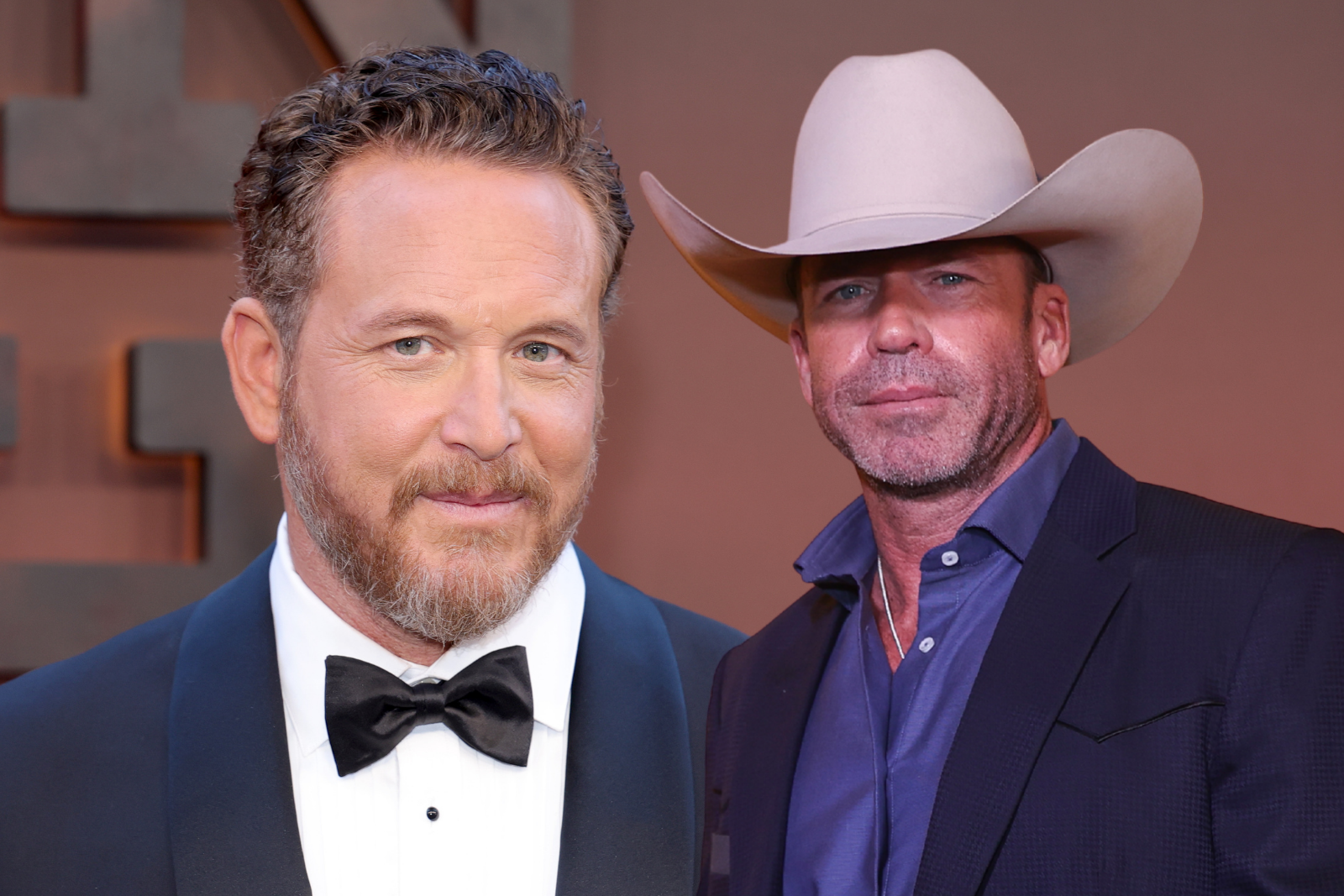
Taylor Sheridan and Cole Hauser have reportedly been butting heads behind the scenes, with new claims suggesting their long-running tension is getting worse. Continue reading…The Boot – Country Music News, Music Videos and Songs
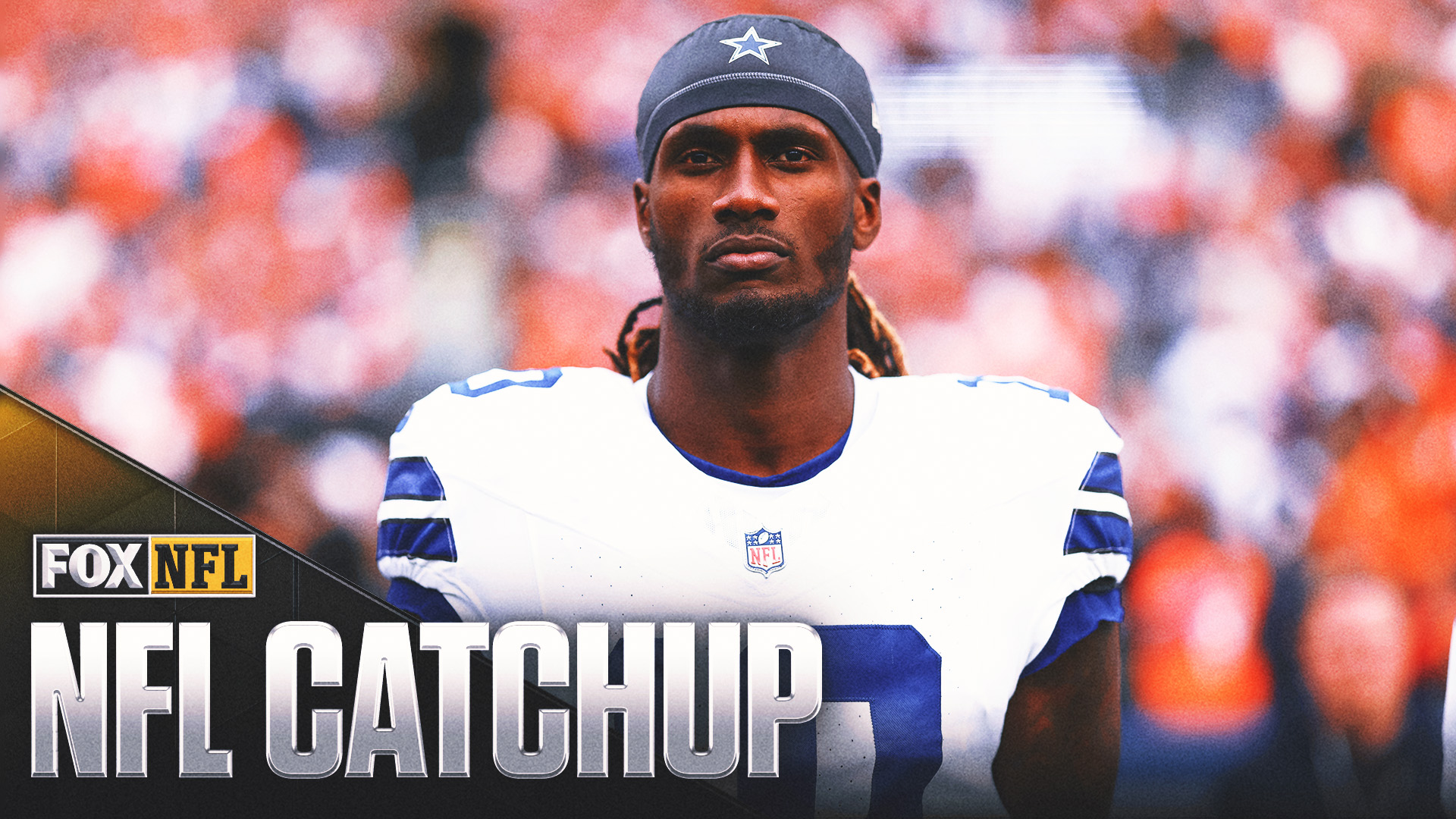
Following initial 53-man roster cutdowns, NFL teams continued adjusting their active rosters through waiver claims, injury designations and more Monday. The Dallas Cowboys made a surprise roster move in their quarterback room by waiving Joe Milton, leaving Sam Howell as the backup to Dak Prescott despite Milton’s preseason performances. Meanwhile, the Washington Commanders placed left tackle Laremy Tunsil on injured reserve Monday. More NFC East news dropped as New York Giants wide receiver Malik Nabers stayed noncommittal about his Week 1 availability. And the Los Angeles Chargers made headlines by reuniting the Herbert brothers. Here is the latest from around the league on Monday: With Week 1 right around the corner, the Dallas Cowboys made a surprising roster move on Monday morning. The Cowboys are waiving quarterback Joe Milton to make room for running back Emari Demercado, according to ESPN. The decision clears the path for Sam Howell to serve as Dak Prescott’s backup quarterback to start the season. Milton was drafted in the sixth round of the 2024 NFL Draft by the New England Patriots out of Tennessee. Milton spent six years in college playing for both Michigan and Tennessee, but only started one full season during his redshirt senior year. With the Volunteers, Milton completed 64.5% of his passes for 2,813 yards with 20 touchdowns and five interceptions. Now with Milton’s NFL future up in the air, it will be worth keeping an eye on whether another team claims him off waivers. A player with his physical tools might not stay a free agent long and could find his way into a quarterback competition sooner rather than later. The Washington Commanders took a major roster hit on Monday afternoon. They’re placing five-time Pro Bowl offensive tackle Laremy Tunsil and defensive lineman Jer’Zhan Newton on injured reserve, according to ESPN. Both players could return later this season, but Tunsil faces a long recovery after tearing his triceps early in training camp. Newton faces a similar uphill battle after suffering a torn pectoral muscle during a preseason game against the Miami Dolphins. Tunsil played in 14 games last season for the Commanders after an offseason trade with the Houston Texans that brought in a true pass protector for quarterback Jayden Daniels. For a team repeatedly plagued by injuries, this season doesn’t appear to be any different. Missing Tunsil and Newton for most or even all of the 2026 season puts head coach Dan Quinn in a tough spot in a crowded and competitive NFC East. The Commanders are set to kick off their season on the road in Week 1 against the Philadelphia Eagles. New York Giants wide receiver Malik Nabers progressed from individual drills to full-contact team sessions at practice on Monday, shedding his no-contact jersey. However, with New York set to open its regular season against the Dallas Cowboys on Sept. 13, the wideout remains uncertain if he will be cleared in time as he recovers from a torn ACL in his right knee. “My mind is focused on playing the regular season: playing whenever that is,” Nabers said after practice Monday. “There’s still some things that you still have to check off the box for you to participate. I’m still going through that, still listening to the trainers, still listening to doctors and sharing everything with them.” Nabers added that he feels “real good” physically, but emphasized that final clearance remains a process between himself, doctors, and the coaching staff. “That’ll be a decision that will be made when that time comes,” Nabers said regarding Week 1. “There’s certain things that, as a football player, you’ve got to mentally prepare (for) before you go into a game… I want to be able to come out there and make no mistakes and just be able to fly around and do what I do. I’m getting there, for sure.” The Los Angeles Chargers signed tight end Patrick Herbert to their practice squad Monday, joining his brother, starting quarterback Justin Herbert, according to NFL Network. Patrick Herbert was waived by the Jacksonville Jaguars ahead of Sunday’s 53-man roster deadline and chose Los Angeles after receiving interest from multiple teams. The Herbert brothers previously played together at Oregon during the 2019 season, helping lead the Ducks to a Rose Bowl victory. Patrick, who recorded two catches for 12 yards during Jacksonville’s 2026 preseason action, joins a Chargers tight end group featuring Charlie Kolar, Oronde Gadsden, and David Njoku. The Chargers open the regular season on Sept. 13 against the Arizona Cardinals.Latest Sports News from FOX Sports
The doors of the governor’s office in the Alaska State Capitol is seen on Apr. 10, 2026. (Photo by Corinne Smith/Alaska Beacon)
Alaska’s November election for governor will include one Democrat and three Republicans after a final-days shakeup that included a wild last-hour substitution on Monday, the deadline to make changes after August’s primary election.
Under Alaska’s unique elections system, all candidates for an office run against each other in the primary election. The top four candidates, regardless of political party, advance to the general election in November.
Former state Rep. Jonathan Kreiss-Tomkins, a Democrat from Sitka, finished August’s primary election with 22.5% of the vote, the most out of 16 candidates seeking to replace incumbent Republican Gov. Mike Dunleavy.
The second-place finisher, Democratic candidate Tom Begich, withdrew from the race officially on Monday despite earning 20.8% of the vote.
That promoted Anchorage businesswoman Bernadette Wilson, a Republican, to the second spot on the November ballot. Wilson had 10.1% of the vote in the primary.
Begich’s withdrawal put former Anchorage Mayor Dave Bronson, a Republican, into the third spot for November. Bronson earned 8.1% of the primary vote.
The withdrawal would also have promoted Republican candidate and former Attorney General Treg Taylor into the fourth spot, but on Monday, Lt. Gov. Nancy Dahlstrom disqualified Taylor because of gaps in a legally required financial report.
Alaska Attorney General Treg Taylor speaks at a news conference on Thursday, Dec. 15, 2022, at the Alaska State Capitol in Juneau. (Photo by James Brooks/Alaska Beacon)
That left Taylor’s lieutenant governor candidate, Republican businesswoman Candice English, to decide by 5 p.m. whether to withdraw or continue with another running mate.
English found one — Taylor’s wife, Jodi Taylor, who became English’s lieutenant governor candidate in a form filed less than an hour before the 5 p.m. deadline.
According to the Anchorage Press, which was on the scene in Anchorage, English told election workers, “I’m stepping up to governor.” She also told another visitor to the office: “It’s all for the good of the state. The state needs the right people in place. We can’t get it wrong.”
It was not immediately clear on Monday evening whether the substitution is legal. Jodi Taylor’s required personal financial disclosure form contains the same information as Treg Taylor’s, and state regulators found it inadequate.
State law gives Jodi Taylor 30 days to amend her report before a final determination on her candidacy.
In Alaska’s November general election, voters will rank the four candidates (and any write-in candidates) in order of preference.
When ballots are counted, the candidate with the fewest top rankings is eliminated, and any votes for them are redistributed to their voters’ second choices.
The process continues until only two candidates are left, and the person with the most votes wins.
Ranked choice voting reduces the chances that candidates from the same party will split available voters and improve the odds for a candidate from a different party, but the system does not eliminate that chance entirely.
Since 2022, when Alaska began using the current system, a significant number of voters have continued to rank just one candidate.
As a result, political parties have pressured lower-finishing primary candidates to withdraw ahead of the general election in order to consolidate support.
In the case of Alaska’s governor race, where governor and lieutenant governor run as a single ticket, that led to talks around consolidation, where a lower-finishing governor candidate takes the place of a lieutenant governor on a higher-finishing ticket.
That didn’t happen on the Republican side, but it did on the Democratic one.
Second-place finisher Tom Begich confirms withdrawal
Hours before the 5 p.m. deadline to withdraw, second-place finisher Tom Begich, a Democrat and former state senator, officially filed his paperwork to quit the race.
Begich had announced his intentions on Friday, saying he is now supporting the first-place finisher, former state Rep. Jonathan Kreiss-Tomkins, a fellow Democrat.
In a written statement, prerecorded video and interviews after the announcement, Begich said that withdrawing means Democratic support is consolidated around a single candidate.
That means more money for the Kreiss-Tomkins’ campaign and less chance of a split vote in November.
While Alaska uses ranked choice voting, which would allow voters to pick both Kreiss-Tomkins and Begich, results over the past four years show a significant number of voters decline to rank multiple candidates.
Lieutenant governor rejects fourth-place finisher Treg Taylor
Lt. Gov. Nancy Dahlstrom on Monday declined to certify former Attorney General Treg Taylor as one of the four finalists in Alaska’s top-four primary election for governor.
Taylor, who finished fifth in the primary, was promoted to fourth after the withdrawal of the second-place finisher, Democratic candidate Tom Begich.
Nick Begich III announces endorsement of Bernadette Wilson
Alaska’s incumbent U.S. Representative, Republican Nick Begich III, said he is endorsing Republican businesswoman Bernadette Wilson as his preference for Alaska’s next governor.
Begich is running for re-election this year; Wilson worked on his prior campaigns for U.S. House, and Begich had previously vowed to support the top-finishing Republican candidate.
Arkansas Gov. Sarah Huckabee Sanders endorsed Wilson on Saturday, as did U.S. Rep. Byron Donalds, the leading Republican candidate to become Florida’s next governor.
Turnout is highest for regular primary election since 2014
According to Monday’s certified results, 166,992 voters participated in the August primary election, the most since the 2022 primary, which coincided with a special general election following the death of U.S. Rep. Don Young, R-Alaska, earlier that year.
Excluding that race, turnout this year was the highest for a primary since 2014, when voters decided a high-profile referendum on whether or not to repeal an oilindustry tax cut.
In terms of the number of votes cast, the 2026 primary was the fourth-largest in state history; in terms of percentage turnout, it was the 18th largest since 1974.
The revamped Chase has 16 drivers in a 10-race mini-season after the points reset following the regular season. There are no eliminations. It all comes down to who has the most points after these 10 races. That driver will be the champion. There are just 100 points separating the top-16 drivers. The Chase tracks: Darlington, St. Louis, Bristol, Kansas, Las Vegas, Charlotte, Phoenix, Talladega, Martinsville and Homestead. Here are the 16 drivers who will compete for the 2026 championship: Points: First with 2,100 (+25 ahead of second)2026 Wins: Las Vegas, Nashville, Michigan, Pocono Why He Will Win Title: Hamlin has the experience of competing for a title and has won at all 10 Chase tracks at some point in his career. And if it comes down to Homestead, he has the third-best average finish there of any driver, including seven top fives in 21 starts. Why He Won’t Win Title: He’s Denny Hamlin. He’s not supposed to win the title. And when he gets to Homestead, he’ll be older than every champion in NASCAR history. Points: Second with 2,075 (-25 behind leader)2026 Wins: Phoenix, Atlanta, New Hampshire Why He Will Win Title: This could come down to stage points, and he and Ty Gibbs have earned the most this year. Plus, he should be good at Phoenix and Martinsville, two of the final four races. Why He Won’t Win Title: The Penske intermediate program is just not strong enough for Blaney to compete with the Toyotas. Points: Third with 2,065 (-35 behind leader)2026 Wins: Daytona, Atlanta (1), Austin, Darlington, Kansas Why He Will Win Title: He’s been known to go on a roll. And both Darlington and Kansas are in The Chase and those are tracks where he’s won. Why He Won’t Win Title: After an incredible start to the season, he’s lost momentum. Does anyone even remember that he had more than a 100-point lead in the standings earlier this year? Points: Fourth with 2,060 (-40)2026 Wins: Bristol, Iowa Why He Will Win Title: He earns lots of stage points so he should be in the hunt. And he now knows how to win Cup races. Why He Won’t Win Title: He’s just a little too young. He’d be the youngest champ ever. And can he really beat Denny Hamlin — his teammate — straight up over 10 races? Points: Fifth with 2,055 (-55)2026 Wins: Chicagoland Why He Will Win Title: Briscoe and the JGR No. 19 team tend to hang within striking distance. He has won the last two Southern 500s so he very well could open the race strong. Why He Won’t Win Title: Inconsistency could plague this team. Points: Sixth with 2,050 (-5)2026 Wins: None Why He Will Win Title: He’s had the most top-five finishes than in any season in his career. That should continue and will be key in this new format. Why He Won’t Win Title: He most likely will have to win a race. There’s no doubt he can. But many doubt he will. Points: Seventh with 2,045 (-55)2026 Wins: None Why He Will Win Title: Larson won the 2025 title without a win in The Chase. So why not? Granted, it’s a different system, but he could rack up the points. Why He Won’t Win Title: He just hasn’t had as consistent speed as he has in the past. And he needs to have that speed to compensate for the occasional mistake that results from his aggressive driving style. Points: Eighth with 2,040 (-60)2026 Wins: Martinsville, Texas Why He Will Win Title: Never count out Elliott, who can sneakily put together solid finishes. Why He Won’t Win Title: Like Larson, he just hasn’t had consistent speed. Points: Ninth with 2,035 (-65)2026 Wins: North Wilkesboro, Richmond Why He Will Win Title: It’s an even year, and Logano seems to perform when he needs it the most. Why He Won’t Win Title: It’s going to take a much better performance on the intermediates for him to have a shot. Points: 10th with 2,030 (-70)2026 Wins: None Why He Will Win Title: The guy rarely gets rattled and rarely makes mistakes. Why He Won’t Win Title: He and his team haven’t had the speed to overcome any mistakes or misfortunes. Points: 11th with 2,025 (-75)2026 Wins: Charlotte Why He Will Win Title: This is his best regular-season points position of the last four years, and he has confidence. Why He Won’t Win Title: He has rattled off top 10s and won Charlotte, but he hasn’t been up front enough to challenge. Points: 12th with 2,020 (-80)2026 Wins: Talladega Why He Will Win Title: He seems to have an attitude that he’s going to take it from the field. Why He Won’t Win Title: The field is determined not to let him take it. Points: 13th with 2,015 (-85)2026 Wins; None Why He Will Win Title: For the most part, Byron appears unflappable. But this certainly has been a trying year. Why He Won’t Win Title: He has led only 31 laps this season. That isn’t going to get it done. Points: 14th with 2,010 (-90)2026 Wins: None Why He Will Win Title: He has a Toyota in his hands and will be strong at most tracks. Why He Won’t Win Title: He just hasn’t put together consistent solid results for much of the year, and The Chase will reward consistency. Points: 15th with 2,005 (-95)2026 Wins: None Why He Will Win Title: He is relatively good at staying out of trouble and if others have misfortune, he could capitalize. Why He Won’t Win Title: He didn’t clinch a spot in The Chase until Daytona, a clear sign that he doesn’t have the week-in, week-out speed to win the title. Points: 16th with 2,000 (-100)2026 Wins: Daytona Why He Will Win Title: After Daytona, he probably feels he can do anything, and there’s something to be said for that confidence. Why He Won’t Win Title: He was a bubble driver because, until Daytona, Preece has been good and not great. Drivers typically don’t make that big of a jump in the final 10 races.Latest Sports News from FOX Sports
A demonstrator holds a protest sign in support of Dan J. Sullivan of Petersburg after the Alaska Division of Elections issued a preliminary decision to remove the candidate from the ballot on June 12, 2026. (Photo by James Brooks/Alaska Beacon)
Republican U.S. Senate candidate Dan J. Sullivan is staying in the race for U.S. Senate, he said Monday, hours before the deadline to withdraw from November’s election.
The Petersburg Republican finished third in August’s primary election, with just 2.5% of the vote statewide. He’s come under intense scrutiny because he shares a party affiliation and a first and last name with incumbent U.S. Sen. Dan S. Sullivan, who is seeking re-election.
The state disqualified him from the ballot but the decision was overturned by the Alaska Supreme Court in June.
The incumbent senator finished second in the August primary with 41.4% of the vote.
Democratic candidate Mary Peltola finished first in the primary with 49.5% of the vote.
Fourth-place finisher David Leslie, a Democratic candidate running to the left of Peltola, withdrew from the race late Monday, putting fifth-place finisher Gerald Heikes, a Republican running to the right of Dan S. Sullivan, on the ballot for November with just 1.1% of the vote.
Dan J. Sullivan Jr. is running for U.S. Senate in the 2026 election. (Photo courtesy of Dan J. Sullivan Jr.)
Dan J. Sullivan and Peltola have denied working together, but Dan S. Sullivan has repeatedly accused Dan J. Sullivan of running a “sham” campaign intended to confuse voters.
In an emailed statement, Dan J. Sullivan said, “in the 3 months that I have been in this campaign, I have encountered obstacles that no other candidate in any of the other races has faced. Every time I took one step forward, roadblocks put me three steps back. It has been a time of extreme highs and lows. But with the support of family, friends and donors, I have persevered to this point. So, I am going to keep going and amplify the message that we need a different path forward.”
Dan J. Sullivan has previously said he was motivated by unhappiness with Sen. Dan Sullivan’s performance in office, and he reiterated that in Monday’s statement.
“The politics of division as practiced by the Senator have not solved the problems we face today, in Alaska and as a nation. Are you better off now than you were 12 years ago when the Senator was first elected?” he said.
Sen. Sullivan has been a vocal supporter of America’s war with Iran, something that Dan J. Sullivan calls “ill-conceived.”
“Gasoline, food, housing and medical costs seem to increase daily. No matter how many times Washington tells us all is well in America, most of us see that as an absurd fallacy. These issues are the daily decisions and hardships that Alaskans really care about and I want to make their voices heard between now and November,” Dan J. Sullivan said.
Under Alaska’s open primary system, all candidates for an office run against each other in the primary election. The top four candidates, regardless of political party, advance to the general election in November. There, voters rank the candidates in order of preference.
The candidate with the fewest top rankings is eliminated, and any votes for them are redistributed to their voters’ second choices.
The process continues until only two candidates are left, and the person with the most votes wins.
Ranked choice voting reduces the chances that candidates from the same party will split available voters and improve the odds for a candidate from a different party, but the system does not eliminate that chance entirely.
Since 2022, when Alaska began using the current system, a significant number of voters have continued to rank just one candidate.
As a result, political parties have pressured lower-finishing primary candidates to withdraw ahead of the general election in order to consolidate support.










 Along with Napster, Harry Potter and Y2K panic, teen rom-coms were all the rage in 1999.