Syria was among the first nations to be added to the State Department’s proscribed list. It has been removed under the rule of a former al-Qaida-affiliated militant.
Post Content
Carly Pearce’s real training ground wasn’t a recording studio. It was six shows a day at Dollywood, where she learned what it actually takes to perform for a living. Continue reading…Country Music News – Taste of Country
Carly Pearce’s real training ground wasn’t a recording studio. It was six shows a day at Dollywood, where she learned what it actually takes to perform for a living. Continue reading…The Boot – Country Music News, Music Videos and Songs
Holly Marie Combs just wasn’t charmed by the acting life anymore.
Nearly seven years after the Charmed actress last appeared in an on-screen role, she confirmed she has “retired” from acting and…
E! Online (US) – Top Stories
Reading Time: 3 minutes
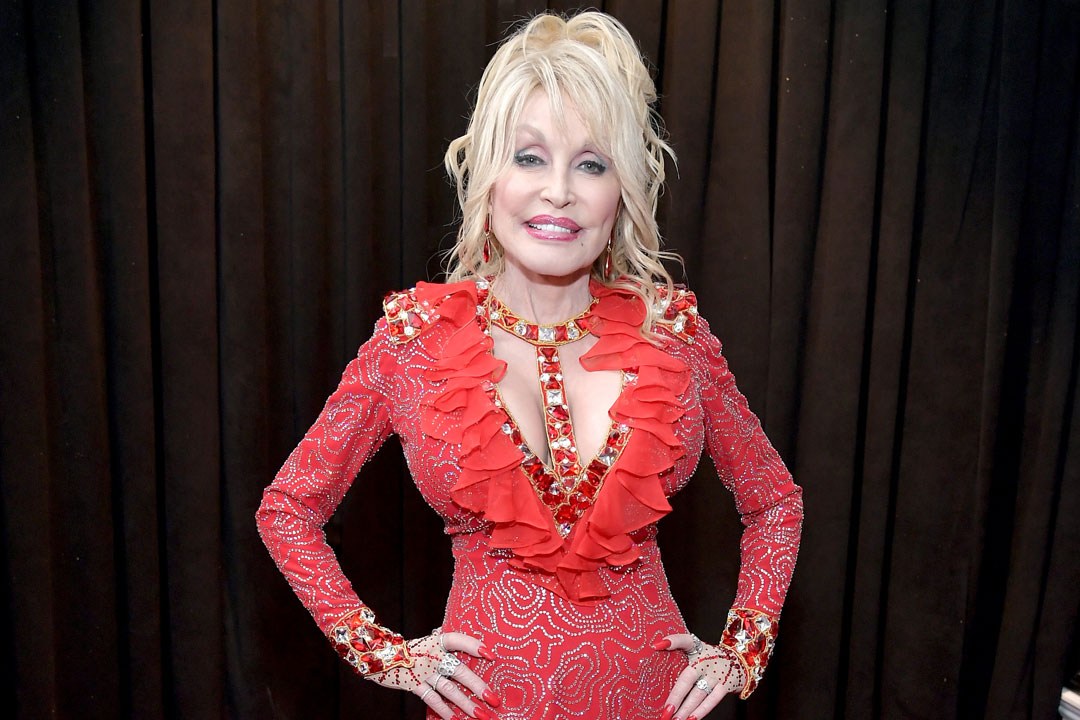
The world is in shock at the loss of Dolly Parton and Tim Curry.
Both of these talented, widely beloved icons entertained generations. Both were 80.
And, though the news came at different times, they both died on the same day.
Because both were also LGBTQ+ icons, some communities are taking these losses extra hard.

In addition to being a talented entertainer, Dolly Parton was a staunch supporter of workers and unions.
Her Imagination Library helped boost child literacy — which extended to mailing braille books to blind children.
Dolly’s financial support for her hometown saw the high school dropout rate plummet from 30% to 6%.
She built up a 9-figure fortune. She could have become a billionaire if she’d cared more about numbers than she did about people, but she chose to make the world a better place instead of pointlessly hoarding wealth.
There are millions of people who love Dolly for all of this and more. But, for the LGBTQ+ community, there are still more reasons to mourn the loss of this national treasure.
For decades, Dolly Parton spoke very openly about her love for gay friends — particularly Lily Tomlin, with whom she worked multiple times.
In the 2010s, many public figures and organizations did this — either because it was safe to do, or to farm for positive PR, or both. Dolly was doing this amidst the rank homophobia of the ’80s and ’90s.
Following her tragic passing on Tuesday, the world has also seen a series of anecdotes in which transgender folks — especially women — share stories of Dolly directly or indirectly helping to pay for their top surgeries.
(And yes, some have made the obvious joke that it seems appropriate for the famously busty musician to be helping other women to fill out their shirts.)
People also uncovered an article about Jason, the trans man who was Dolly’s limo driver in Los Angeles back in the 1980s. Or, more recently, when Dolly defended trans folks’ right to use the bathrooms and generally exist in public during that first failed wave of concocting a bigoted narrative to win elections.
Didn’t know this until today but Dolly Parton had a transsexual man named Jason Pirro work as her Hollywood chauffeur in the 1980s, per an interview he gave to The Sun in 1990. “Dolly has been good to me…Dolly knows all about me.”
— Gillian Branstetter (@gbbranstetter.bsky.social) August 25, 2026 at 6:30 PM
The same day that the world lost Dolly Parton, we also lost pop culture icon Tim Curry.
An actor of television and film, who lent his voice to animation and video games for decades, he left an indelible imprint upon arts and culture.
Whether our first exposure to him was as Nigel Thornberry or Captain Hook or in Muppet’s Treasure Island or Dragon Age: Origins or Legend or It, we have all seen him. We have all heard his voice.
His most iconic role is indisputably that of Dr. Frank-N-Furter in The Rocky Horror Picture Show. As such, he has been an LGBTQ+ icon since the 1970s.
Tim Curry didn’t have a theme park with inclusive bathrooms or a famous pansexual goddaughter. His most legendary role (yes, more iconic than in Legend) was a symbol for generations. A symbol and a bit of a right of passage.
My friend said its “Gay 9/11” in a group chat to which my other friend responded with this image. pic.twitter.com/vBzqw7rCBA
— Undead Media VHS (@undeadmedia_) August 26, 2026
Following Dolly Parton’s passing, some have tried to brand her as “neutral” in America’s various culture wars.
That is sort of true. She never fired an opening salvo or attempted to pick fights. She also turned down the Presidential Medal of Freedom multiple times — in an effort to avoid appearing partisan.
When it comes to Dolly’s own choices, sure, she avoided fights. But when she had gay, bi, and trans folks in her life and loved and supported them, including when they were attacked by malicious cultural forces. That’s not neutral.
Whether she was redirecting “I Will Always Love You” royalties to the Black community or proudly supporting unions or helping hundreds of thousands of children learn to read, Dolly prioritized kindness and doing the right thing. Now, she and Tim Curry are both gone.
Without saying that we’re superstitious, we will spend the rest of the week deeply anxious about other LGBTQ+ icons in the entertainment industry. Particularly those who are precisely 80 years old, it seems.
Dolly Parton & Tim Curry Mourned as LGBTQ+ Icons was originally published on The Hollywood Gossip.
The Hollywood Gossip
The legendary country singer was open about her complicated relationship with food, and talked about her balanced approach to eating in numerous interviews.

Health Digest – Health News, Wellness, Expert Insights

If you have seen campaign ads for the midterm elections, you have likely noticed that a major theme this year is corruption.
New Hampshire congressman and Senate candidate Chris Pappas has framed his campaign around his anti-corruption efforts in Congress, claiming that his anti-corruption record includes the fact that he “doesn’t take a dime of corporate PAC money,” opposes congressional stock trading, and wants to ban companies from using AI to set prices based on Americans’ personal data.
A super PAC allied with Pappas’ prospective Republican opponent, John Sununu, has run ads calling Pappas corrupt, alleging that Pappas “serves on a House committee that oversees Uber, where his husband, a former lobbyist, serves in an executive policy role.”
This is one of many races where corruption has a prime role. On her DCinbox Substack, which tracks “how members of Congress communicate with constituents,” Lindsey Cormack shows that Democrats this year are talking about corruption six times as much as they did in 2022 and four times as much as Republicans have this year in their emails to constituents. This suggests that the corruption talk is a part of Democratic Party strategy.
Why?
One possibility might be that there is a lot of corruption happening. Yet a puzzling feature of these advertisements is that few of them mention President Donald Trump, despite plentiful allegations of corrupt acts by Trump and members of his administration.
Another might be that the public is particularly concerned about corruption. Research shows, however, that the public is always a little bit concerned about corruption, and that these worries often do not correspond with particular actions by politicians.
So what is going on, then?
The talk, it turns out, is not really about specific, identifiable corruption. It’s about delegitimizing your opponent.
My recent book, “American Corruption Talk,” co-authored with Molly Brigid McGrath, analyzes the prevalence of what we call “corruption talk” by presidents and presidential candidates since the nation’s founding. We argue that corruption talk is different from talk about real corruption – many Americans identify things as being corrupt even when they do not meet the textbook definition of corruption.
In our book, we identify three types of corruption:
• Transactional corruption is inherent in particular acts – offering or accepting a bribe, for instance.
• Moral corruption is being a rotten person – someone who is corrupt is not trustworthy, even if we cannot identify anything specific that person has done wrong.
• Systemic corruption has to do with the government’s behavior itself. It is not a matter of bad people but bad institutions.
Corruption talk blurs the distinctions between these three distinct things.
In the book, we explore changes over time in how presidents, presidential candidates and party platforms discuss corruption.
We found that parties out of power talk much more about corruption than those who are in power. Corruption talk is popular among politicians who want to avoid taking strong ideological positions or tying themselves closely to their party leaders. They can use it as evidence of bipartisanship, as a way to say they are not career politicians, or to emphasize their competence and integrity.
Corruption is what political scientists call a valence issue – almost everyone thinks corruption is bad, but not everyone agrees about how much of it there is.
Corruption talk, it turns out, is useful for bringing together parties or candidates who want to avoid talking about divisive issues. It is also a way to delegitimize the opposition. If one’s opponents are corrupt, it doesn’t matter what they say. They’re the kind of people who would do corrupt things, even if they haven’t done them yet.

The Democrats’ corruption talk of 2026 checks all of these boxes.
Democrats have internal divisions, from political ideology to policy on Israel, which they may wish to avoid talking about.
Talking about things Trump has done requires too much explanation – it’s hard to describe the Constitution’s foreign emoluments clause in a 30-second ad. That clause bars the president from accepting “‘any present, Emolument, Office, or Title, of any kind whatever’ from a foreign government unless Congress consents,” and Trump has been accused of violating it.
But talking about corruption in a moral or systemic sense – observing that the country is in decline, or that elites are out of touch – can be effective.
“To every Utahn tired of chaos and corruption, there’s a place for you on this campaign,” Ben McAdams, a former Democratic congressman from Utah and current candidate for the House, declared in a July 2026 Instagram post.
So talking about corruption is a way to talk about Trump and the Trump administration without mentioning them directly. Voters unhappy with Trump will assume corruption talk is an indictment of Trump, while Trump supporters may assume the corruption is elsewhere – after all, Trump won the 2016 election, in part, by promising to take on the corrupt establishment.
These distinctions – real corruption vs. corruption talk – go back at least to the country’s founding, if not beyond. Historically, corruption talk has stood in for other things.
For instance, the Progressive Era of the late 19th and early 20th centuries, a time when activists in both parties worked together to pursue reforms in government, economic policy and social policy, was the era in which we find that corruption talk was most prevalent in American politicians’ rhetoric. It was also a moment when America was almost as polarized and economically unequal as it is today, and many Americans saw this inequality as a symptom of corruption.
None of this is to deny that the U.S. currently has a president who has engaged in more overt acts of corruption than any other. Trump’s actions – from his family’s documented cryptocurrency profiteering to his appointment of a Cabinet full of conflicts of interest (such as stock ownership in companies regulated by their agencies, or a history of lobbying the very agencies they now run), to his alleged ties to the disgraced financier Jeffrey Epstein – no doubt have catalyzed this discussion.
Yet it is perhaps fitting that the nation’s 250th anniversary has been characterized by a return to a classic American preoccupation: the traditional American pastime of corruption talk.
![]()
Robert Boatright does not work for, consult, own shares in or receive funding from any company or organization that would benefit from this article, and has disclosed no relevant affiliations beyond their academic appointment.
Politics + Society – The Conversation

Reports from the USS Abraham Lincoln describe a crew running on almost no sleep and suffering mental strain.
The Navy’s own account acknowledged that the Lincoln spent 266 days deployed, 200 of them in a combat zone. It said that meal plans were adjusted when fresh resupply was unavailable, and that its sailors and Marines had been “pushed to their limits.”
The instinct may be to pity the soldiers, but I believe pity misses the point. The question is not whether we should ask hard things of people who volunteered for hard things. It is whether what the Department of Defense asked them to do was necessary and worth the military readiness – the ability to complete missions and respond to threats – it has consumed.
I know something about this. When I served in the U.S. Army, I worked three consecutive 12-hour day shifts, had three days off, then worked three nights. My husband was on a different rotation – six days on followed by two days off. We did not think we were being wronged. We were soldiers, and that was the job.
In February 2026, alongside Israel, the Trump administration chose to engage in war with Iran. The administration did not choose it blind.
Days before the conflict began, President Donald Trump was warned that the war might produce a harder-line Iranian leadership more determined to build a nuclear bomb. He was informed that Iran could close the Strait of Hormuz and that a prolonged war would draw down stocks of precision-guided munitions. Military leaders also expressed concerns about “readiness problems for an overstretched force.”
This is where operational tempo – the pace and duration at which military units operate and the time they receive to recover in between – stops being a personnel statistic and becomes a strategic one. A higher tempo means units don’t have time to recover, since deployments tend to get extended.
This is not just a Navy problem.
In May 2025, an Army sergeant major warned that the Army’s operational tempo had surpassed the demands of the war on terror after the 9/11 terrorist attacks. He said it was threatening readiness, retention, physical and mental health, and family stability. Two years earlier, another sergeant major said that soldiers were “busier now than we ever have been.”

The Iran war did not begin with a rested force or a readiness account at zero. It landed on a joint force that was already running hot.
The military rotation cycle is a planned schedule that moves military personnel between training, assignments and rest at home to prevent burnout. It exists because readiness is a finite reserve, which gets spent whether or not the war was necessary.
Ships and aircraft accumulate wear that must be repaired in the yard. Experienced service members accumulate fatigue that eventually shows in broken relationships and failed reenlistments.
I believe this is the actual lesson of the past two decades, and it is not a lesson about tired troops. During the U.S.-Iraq War, the Army pushed tours to 15 months and forced service members to stay on duty past the end of their enlistments. Those soldiers fought superbly – that was never in doubt. What was in doubt, and turned out badly, was the judgment that put them there.
The Navy learned its own version later. To keep ships in advanced positions where commanders wanted them, the Navy deferred maintenance on overseas-based ships. In 2015, the U.S. Government Accountability Office warned that the operational pace of deployments at sea was limiting training and maintenance and degrading the condition of overseas-based ships.
By June 2017, 37% of warfare readiness certifications for cruiser and destroyer crews in Japan had expired. That year, the USS Fitzgerald and the USS John S. McCain collided with commercial vessels in separate incidents, killing 17 sailors.
They died in a readiness system that had learned to treat the schedule as something nobody could refuse.

The U.S. appetite for military commitments has not tracked any comparable rise in danger.
International relations scholar Sidita Kushi and I built a database of every U.S. military intervention from 1776 through 2019. During the Cold War, while facing a nuclear-armed superpower, the United States began just over 2.3 new military interventions a year. After the Soviet Union collapsed in 1991, that rate rose to 3.48, an increase of nearly 50%.
Meanwhile, the same data shows the waning strategic importance of the countries where the U.S. intervened. The U.S. got safer, yet it intervened more often in places that mattered less to Washington.
One number captures the whole pattern. In our data, 1974 was the last year in which the United States did not launch a military intervention.
A military force that has sustained more than 50 years of interventions is not a fragile one. But it has never been allowed to reset.
So the condition of the USS Abraham Lincoln is not evidence that our sailors are soft. Nor does it prove that the fleet is too small.
The crisis on the Lincoln is six months old and self-inflicted. Holding one ship past its return date does not create capacity; it borrows capacity from the next maintenance cycle or from another theater.
The USS George Washington, normally based in Japan, has now moved to the Middle East to relieve the Lincoln. That allows the Lincoln to come home, but it leaves the western Pacific without a U.S. aircraft carrier. The Navy closed one gap by opening another.
This reframes the overstretch argument now underway in Washington. I believe the force is not overstretched relative to the threats the U.S. faces – it is overstretched relative to the wars the U.S. president selects.
The crew of the Lincoln will do its job, and do it well, and not complain in public. That is precisely why I believe the burden of justification rests entirely on the civilian leaders who sent them, who were warned, and who chose war anyway.
![]()
Monica Duffy Toft does not work for, consult, own shares in or receive funding from any company or organization that would benefit from this article, and has disclosed no relevant affiliations beyond their academic appointment.
Politics + Society – The Conversation
Harry Styles’ concert was a sign of the times.
After all, the entire nation and beyond is mourning the loss of Dolly Parton after her death on Aug. 25. It’s why the One Direction alum’s tribute…
E! Online (US) – Top Stories