Post Content









Post Content

Post Content

In this episode, Adam and Nate discuss WordPress’s evolution amidst AI’s rise, emphasizing challenges like security and the need for developer intent and standards.

Labor Day cookouts have a way of turning hosts into short-order cooks. Between shopping for a crowd, prepping food, keeping the grill moving and making … Read moreThe post The Labor Day cookout mistakes hosts keep making, and the one…
Recent population estimates show that Charlotte, North Carolina, is the fastest-growing large city in the United States. The city added more than 20,000 residents between 2024 and 2025 and is rapidly approaching a population of 1 million.
Charlotte has become a magnet for businesses and residents seeking opportunities and a lower cost of living.
But as Charlotte grows, its infrastructure is becoming increasingly strained. The pressures of population growth are evident in the city’s housing crisis. In 2026, 2,018 people were experiencing homelessness, up from 444 the previous year.
As urban researchers studying housing insecurity and urban development, our work examines what happens when rapid urban expansion outpaces cities’ ability to shelter their most vulnerable residents.
Charlotte’s housing pressures are not unique. They reflect a broader American urbanization in which rapid economic growth and concentrated wealth coexist with persistent housing inequality.
And we’ve found that communities across the U.S. are increasingly responding to this affordability crisis with resident-led alternatives.
For Charlotte renters, housing costs have risen considerably. Median rent in the city increased from US$1,146 a month in 2019 to $1,627 in 2024.
Meanwhile, longtime residents in historically Black neighborhoods face mounting displacement pressures, as redevelopment and rising property values make it increasingly difficult for low-income residents to remain in their communities.
For households already living on the economic margins, these pressures can mean the difference between remaining housed and becoming homeless. The Charlotte-Mecklenburg area has about three extremely low-income households for every rental unit affordable to them. And for people already experiencing homelessness, finding a way out has become harder: The share of people leaving the homeless services system for permanent housing fell from 38% in 2020 to 25% in 2024.
The problem is not that Charlotte and many other American cities are growing. It’s that these cities often treat growth itself as the policy objective, while paying little attention to who benefits from it and who doesn’t.
Our research shows that when infrastructure and housing markets cannot accommodate unhoused populations, resident-led alternatives often fill the gap.
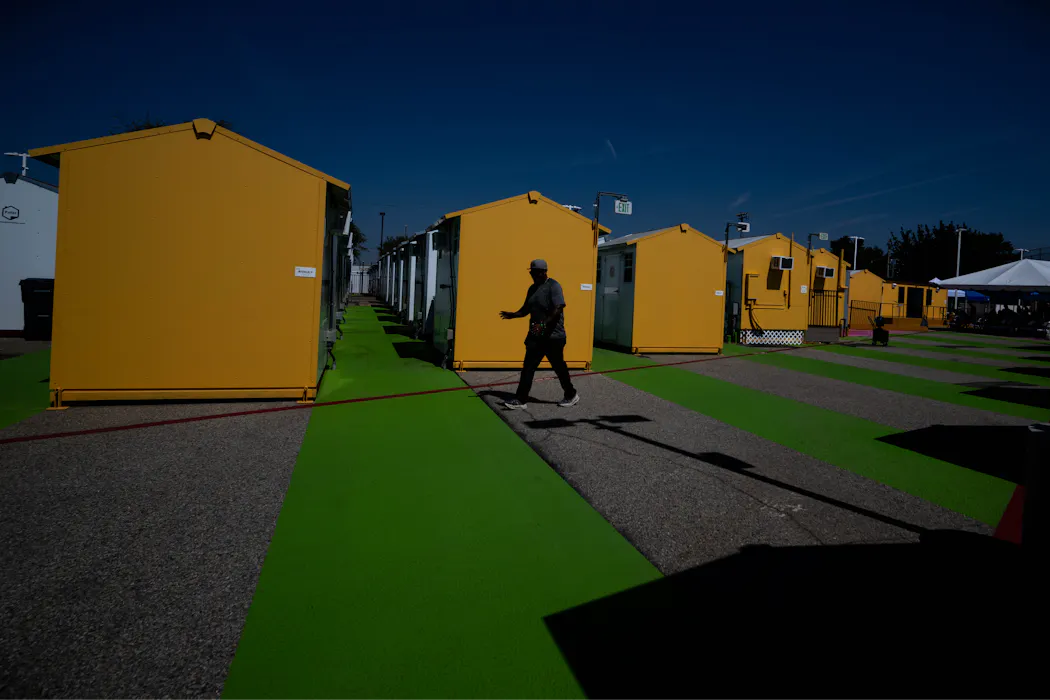
Tiny house villages, for example, represent a community-driven mechanism for people to find housing and community amid poverty and exclusion. These villages typically consist of clusters of small homes that provide people experiencing homelessness with shelter within a shared community.
Depending on the village, residents may also have access to shared facilities and services, such as bathrooms, kitchens and healthcare. These villages vary considerably in how they operate: Some provide temporary shelter, and others offer longer-term housing and pathways toward permanent housing.
A 2024 study that one of us conducted and that built on an earlier national study has allowed us to examine how tiny house villages across the country have increased over five years. The growth was striking: The number of villages nearly quadrupled, from 34 in 2019 to 123 in 2024.
This growth is particularly notable because the villages – often spurred by nonprofit and faith-based groups – have emerged outside conventional housing systems and are tailored to local circumstances. In the U.S, these models are increasingly supporting communities that are self-reliant out of necessity.

Dignity Village in Portland, Oregon, illustrates what this bottom-up response looks like. Housing some 60 residents, it grew out of an encampment established by homeless activists in 2000.
Dignity Village initially emerged as a tent city on vacant city land beneath a downtown bridge. Today, it has evolved into a self-governed community of tiny homes. Residents manage the village and maintain shared spaces.
People seeking to live at Dignity Village must be experiencing homelessness when they apply. Once admitted, residents become members of a community with its own rules and elected leadership. Residents are generally required to contribute at least 10 hours of work a week toward operating and maintaining the village. Exemptions are available for people who work, attend school or are unable to participate.
The City of Portland provides the land, but residents contribute to the costs of running the community through monthly program fees. Dignity Village also relies on private donations, grants and income from microbusinesses to pay expenses like electricity and waste removal.
A very different tiny house model has emerged in Austin, Texas.
A nonprofit developed Community First Village to provide permanent, affordable housing for people coming out of chronic homelessness. Unlike Dignity Village’s relatively small, resident-governed community, Community First operates on a much larger scale.
As of June 2026, more than 500 people lived there. That included more than 455 people who had experienced chronic homelessness, and nearly 50 “intentional neighbors” who chose to live in the community alongside them.
The larger nonprofit model has attracted substantial private and public investment, including $35 million in federal COVID-19 pandemic-relief funds allocated by Travis County toward an additional Community First site.
Similar communities are emerging across the United States. Just a few examples include Seattle, Los Angeles and Springfield, Missouri.
For much of the late 20th century, the dominant challenge facing American cities was managing population decline. Urban policy focused on attracting residents and investment back to places hollowed out by suburbanization and deindustrialization.
Today, many of the country’s fastest-growing metropolitan areas confront a different reality. The proliferation of tiny house villages across the U.S. is occurring at a time when many cities are attracting new residents and investment, while struggling to provide housing that remains accessible to all.
This is evident in Charlotte and in other fast-growing cities such as Austin and Phoenix, where population growth has occurred alongside persistent challenges around housing affordability and homelessness.

The authors do not work for, consult, own shares in or receive funding from any company or organization that would benefit from this article, and have disclosed no relevant affiliations beyond their academic appointment.
Politics + Society – The Conversation
Reading Time: 3 minutes
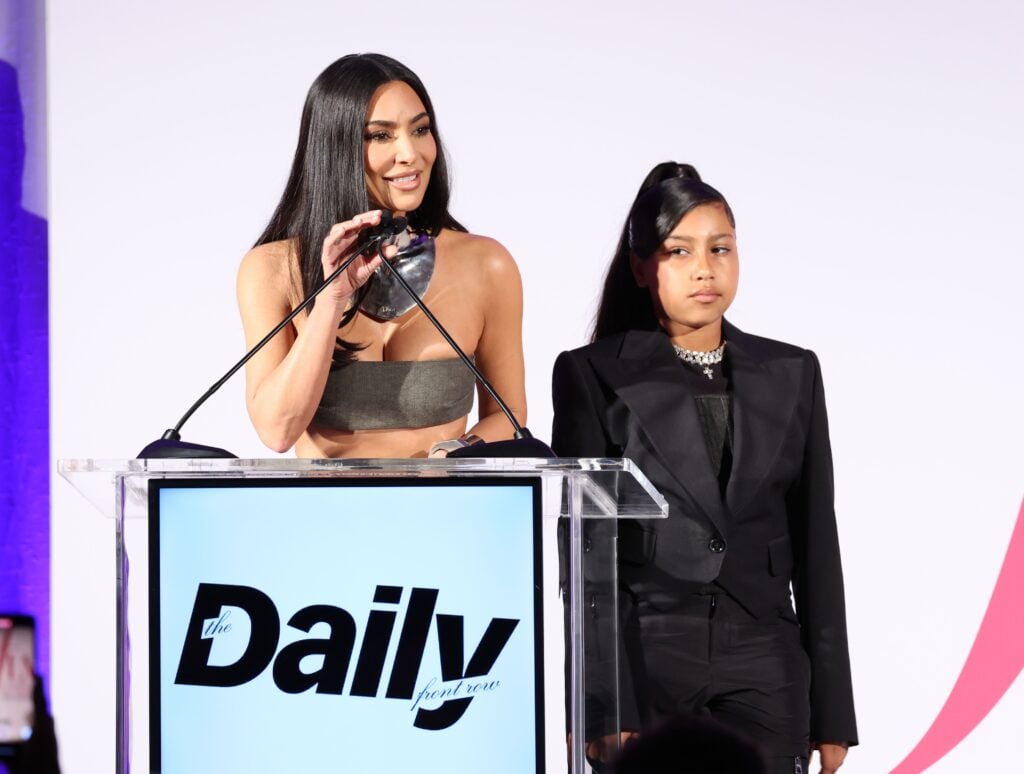
To accompany her nascent music career, North West is now modeling for magazine covers.
She is only 13.
As with her music videos, the cover shoot is getting mixed reactions.
A number of voices are condemning Kim Kardashian and Kanye West.
At only 13, North has graced the cover of the Dazed Autumn Issue 2026.
She spoke about her music, her last time feeling starstruck, and the piercing that she wants — but is not allowed to get.
Given the sorry state of our nation’s literacy, it is probably no surprise to hear that most people focused on the photos.
North posed for the Gus Van Sant cover pics wearing an elaborate collar of keys, a bunch of fake piercings (she loves the aesthetic), and of course her now-signature turquoise hair.
Additionally, she sported the black grill on her teeth. It goes well with the hair, and adds to the severity and intensity of the overall aesthetic.
Born into the world’s most visible family, #NorthWest has spent 13 years being watched.
Now, with a riotous debut EP, she’s ready to be seen on her own terms.
Shot by Gus Van Sant, the legendary auteur behind My Own Private Idaho and Good Will Hunting, we caught up with the… pic.twitter.com/nww4Fahftv
— Dazed (@Dazed) August 24, 2026
In a since-deleted tweet, Meghan McCain took to social media to take a break from saying unhinged things about the Girl Scouts, Abdul El-Sayed, Meghan Markle, to target North.
TMZ reports that her words were: “This poor baby. My heart just breaks for this child.”
(It appears that the former The View antagonist deleted her tweet after calling out the site’s coverage, which she felt was unfair towards her.)
McCain, who may have mentioned a time or two that she is the daughter of late Senator John McCain, clarified: “I was not mocking. I feel terrible for her and believe that kind of magazine cover is no place for a child. Don’t twist it.”
Though you do not ever “gotta hand it” to Meghan McCain, we can agree that children should seldom grace the covers of magazines. We might stop short at calling it heartbreaking, however.
An even worse blonde Megan variant, Megyn Kelly, of course weighed in on the Tuesday, August 25 episode of her dreadful podcast.
The former Fox News anchor and the former overpaid NBC whatever-her-title-was condemned Kim and Kanye for “rushing” to craft their daughter into a child star.
Dr. Drew pointed out that North has bipolar disorder in her (paternal) heritage, and claimed without evidence that her parents “have not been available” and “don’t look like they’re around all the time.”
He said that North becoming a direct public figure like this could have dire consequences.
He characterized the whole situation as a “guillotine.”
Behind the scenes at #NorthWest‘s Dazed cover shoot for the New Idols issue, photographed by legendary director Gus Van Sant
See more: https://t.co/HScbZLpF5I pic.twitter.com/sUHrv9qA8D
— Dazed (@Dazed) August 24, 2026
There are glimmers of truth in all of this. In particular, 13 is a very young age to be a public figure, and one likely to result in long-term harm.
But we should consider that this status is largely inevitable for North. Her younger siblings are stalked and approached by photographers in strip mall parking lots. The negative public attention is unavoidable.
It’s also clearly something that, at least for now, she wants. She likes to perform, she likes her look. And, in case anyone has forgotten what it was like to be in middle school, her outfits are just how many 13-year-olds would dress if they had money.
We can also remember that Kim’s younger sisters, Kendall and Kylie, grew up as famous tweens, too. Kendall was posing in a bikini on the beach for a photoshoot when she was, what, 14?
North West wearing a lot of bulky mall goth jewelry is age-appropriate and safe. The magazine photoshoot is weird, but we all know that it can get so much worse.
Meghan McCain Blasts Kim Kardashian, Describes North West as ‘Poor Baby’ … was originally published on The Hollywood Gossip.
The Hollywood Gossip
![<a href="https://tasteofcountry.com/dolly-parton-final-public-appearance/" target="_blank">Dolly Parton’s Last Public Appearance: What I Noticed [EXCLUSIVE]</a>](https://townsquare.media/site/204/files/2026/08/attachment-gettyimages-518927666.jpg?format=natural)
Dolly Parton showed up to her new Tennessee truck stop despite battling cancer, and her appearance left the crowd speechless. Continue reading…Country Music News – Taste of Country
Dolly Parton showed up to her new Tennessee truck stop despite battling cancer, and her appearance left the crowd speechless. Continue reading…The Boot – Country Music News, Music Videos and Songs
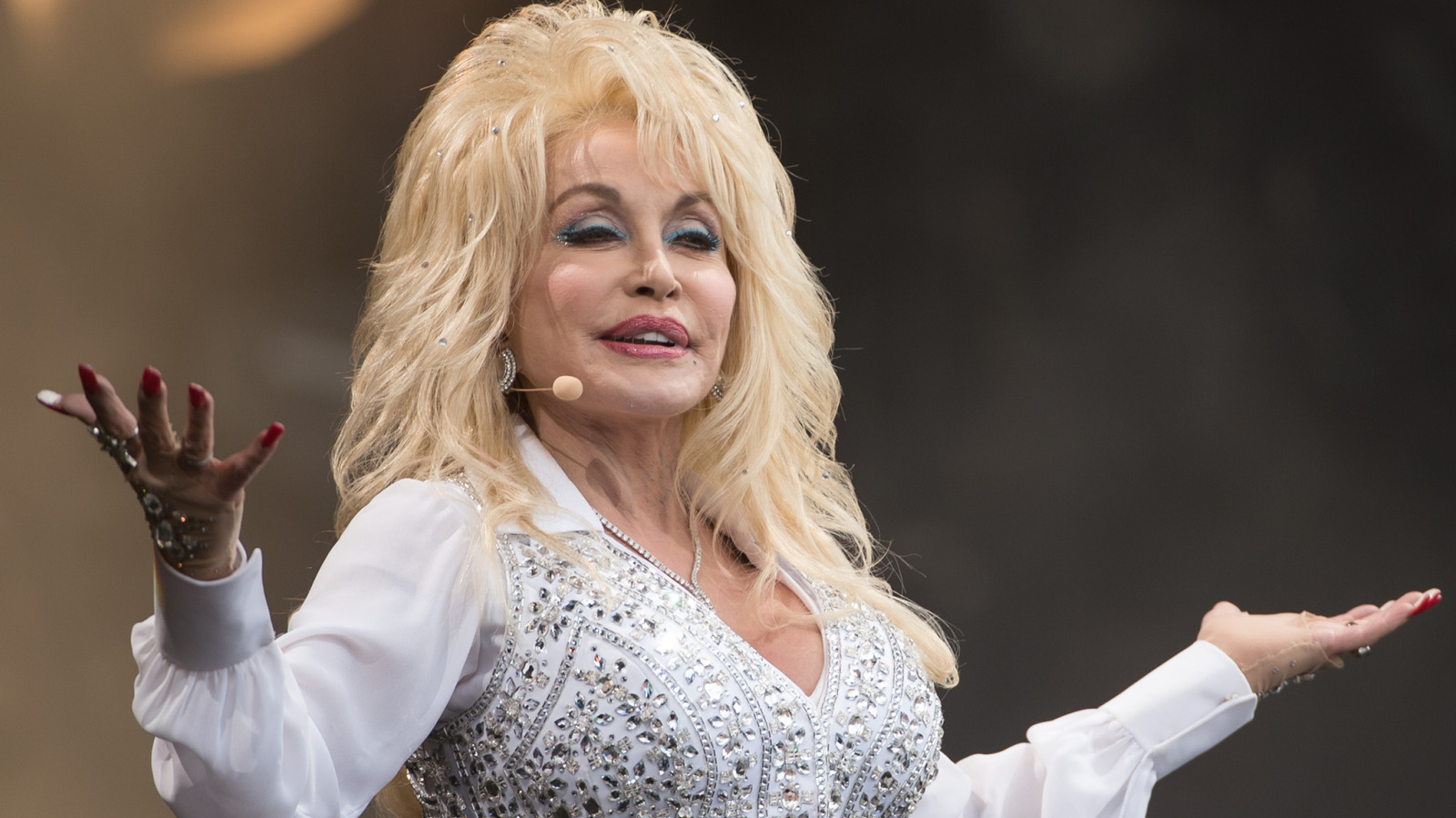
As someone who wasn’t much of a drinker, entertainment icon Dolly Parton stuck to a few personal rules whenever she’d indulge in a glass or two of wine.
Health Digest – Health News, Wellness, Expert Insights

 One of J.Crew’s most beloved pieces just got a 2026 upgrade, and Emma Chamberlain is here to introduce you to it.
Say hello to the Tiny Rollneck: a shrunken, fitted, 1/4 zip take on the iconic…
E! Online (US) – Top Stories