 Content warning: This story discusses suicide.
Mica Miller put faith before everything—including, according to friends and family, her own safety.
“Out of all of us, she was the most strong in her…
E! Online (US) – Top Stories









Content warning: This story discusses suicide.
Mica Miller put faith before everything—including, according to friends and family, her own safety.
“Out of all of us, she was the most strong in her…
E! Online (US) – Top Stories
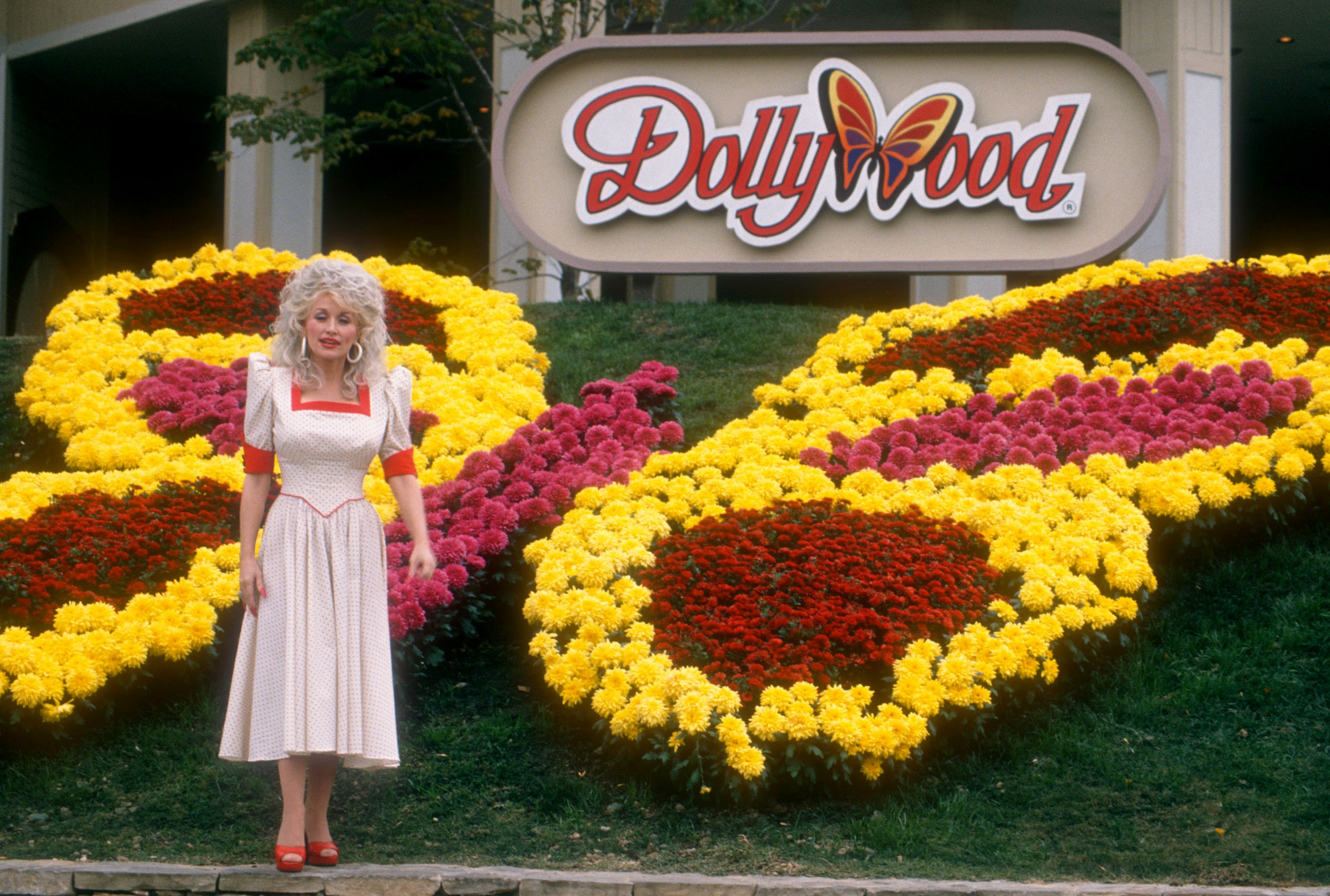
Dolly Parton’s death has left many wondering what happens to Dollywood. The Tennessee theme park shared a message about its future. Continue reading…Country Music News – Taste of Country
Dolly Parton’s death has left many wondering what happens to Dollywood. The Tennessee theme park shared a message about its future. Continue reading…The Boot – Country Music News, Music Videos and Songs

Alaska GOP Sen. Dan S. Sullivan can’t shake his same-name challenger.
Retired teacher Dan J. Sullivan punched a ticket out of the state’s top-four, all-party primary early Wednesday morning. He could now play spoiler in a high-stakes Senate clash between the Republican senator and former Democratic Rep. Mary Peltola that could help swing control of the upper chamber.
Republicans fought and failed to keep Dan J. Sullivan off the primary ballot, arguing he was a Democratic plant designed to boost Peltola. Both Dan J. Sullivan and Peltola’s campaign have denied any coordination.
The senator’s allies have already taken steps to mitigate the second Sullivan’s potential vote siphoning, in some cases running ads using the senator’s middle initial to help differentiate between the same-named candidates.
Supporters of the state’s ranked-choice voting system, which kicks in for the general election, argue the process helps curtail the spoiler effect. But the presence of other candidates could still skew the results of the battleground race. Outside groups flooded the primary with more than $2 million to boost myriad fringe candidates — and could do so again ahead of November.
It’s not smooth sailing for Peltola, either, as she wages an uphill battle to flip a red seat in a state President Donald Trump won by 13 percentage points in 2024. She recently replaced her campaign manager in a staffing shakeup ahead of the primary, among other internal moves.
Politics

President Donald Trump notched a major win on Tuesday night. Republicans in battlegrounds wonder if it was the best use of his time and money.
Sen. Darline Graham defeated Rep. Ralph Norman in South Carolina’s snap Senate GOP runoff, handing Trump a revitalizing win after several of his endorsed candidates fell in recent primaries.
It was a victory that Graham, a complete political unknown six weeks ago, could not have pulled off without Trump’s steadfast support, underscoring just how much his influence still matters among the Republican electorate in the deeply conservative state.
But South Carolina’s Senate seat will not dictate the balance of power in Washington, and GOP strategists working on critical swing state campaigns are eager for Trump to finally direct his attention to them.
“The message coming out of this is that obviously the president’s support is still super powerful. The president’s operation still has the ability to move the needle in a lot of these states,” said a Republican strategist working on several battleground races, including in Georgia, who was granted anonymity to speak candidly about Trump’s involvement. “Hopefully, this is a sign of things to come that the president is willing to get involved and really start to move the needle in some other places that obviously matter a little bit more than South Carolina.”
Trump’s persistent backing of Graham defined the race: He championed her appointment to her late brother Sen. Lindsey Graham’s seat, he coaxed her into the race with an early endorsement, stood by her as she stumbled on the debate stage, and flew down to Myrtle Beach for a rare political rally that few of his chosen candidates have enjoyed this cycle. MAGA Inc., Trump’s behemoth super PAC, even spent a slice of highly sought after cash from its $400 million stockpile in the closing days of the race.
And yet, the president hasn’t taken a meaningful step into the states that will matter in a few short months — even as battleground Republicans have been clamoring for him to spend his MAGA Inc. money.
“It’s now or never. It’s put up or shut up time, and it’s really time to start to see if he’s going to get serious,” the GOP strategist said. “You’ve got September and October to really move the needle here, and it just doesn’t seem like there’s any sense of urgency, or like we understand that we are down big in some of these states.”
During her victory speech in Columbia, Graham acknowledged Trump’s heavy hand: “Our victory would not have been possible without you, and we are truly grateful,” Graham said of the president. “South Carolina is truly Trump country.”
Norman’s take on the president’s participation was not as rosy: “The president got involved. He has that right. That’s his prerogative,” Norman said in his concession speech Tuesday, prompting jeers from the crowd at his election night watch party. “Y’all,” he continued, “his policies are good. I never understood why he got in this race. It is what it is, and I’ll accept it.”
Norman’s bewilderment reflected several national and South Carolina Republicans’ confusion as to why the president would expend energy for the safe Republican seat when his MAGA allies like Mike Collins in Georgia, scandal-plagued Ken Paxton in Texas and Michael Whatley in North Carolina are facing tough Senate battles against Democratic opponents.
“There’s the principle,” said a North Carolina-based GOP strategist who was granted anonymity to speak candidly about the battleground picture. “If you’re not Trump and you have these people shoved down your throat, you’re like, ‘Okay, are you gonna help?’”
The White House did not immediately respond to a request for comment.
Some Republicans are worried that though Trump helped power Graham’s win, the president’s overall unpopularity may be more of a curse than a boon in any highly competitive battleground state. A series of Trump-backed candidates lost gubernatorial and congressional primaries in recent weeks, including in Georgia and Iowa.
Republicans overall are facing a tough election environment given the ongoing and unpopular war in Iran, backlash to the administration’s highly-visible deportation agenda and voters’ persistent cost of living concerns.
“You have a president and maybe even a vice president that are just so underwater politically in the polls, that they might be a help by not intervening,” said Matthew Bartlett, a GOP strategist and former State Department official in the first Trump administration.
Still, Trump swept the battlegrounds in 2024, and his ability to boost Graham despite her foreign policy debate gaffe and questions about her political inexperience serves as a reminder of his electoral prowess to campaign officials.
The question remains when — or if — he’ll throw them a presidential life raft.
“I wouldn’t count on the money if I were in these states,” said the North Carolina-based Republican strategist. “He still could. I’m just saying, I wouldn’t count on it. We’re not dealing with somebody that’s, you know, super calculated in the way they plan.”
For months, Republicans across the country have watched on as the president has continued to amass a remarkable pile of cash — and many have implored him to empty his pockets in their races. The president told reporters last week that he’ll spend “a lot of that money” to boost “Republican candidates that I think are good,” without being specific.
However, what some saw as a distraction from the greater Republican cause this year, others read as the first few drops of Trump’s cash flood.
“If they’re going to spend 800 grand in South Carolina, they’re going to spend in the midterms,” said Matt Mackowiak, a Republican strategist based in Texas who worked on Sen. John Cornyn’s failed reelection campaign and is now backing the GOP ticket. “It signals they’re going to make a substantial investment in the midterms because you don’t make an 800-grand investment in South Carolina and say, ‘Yeah, we’re going to let everybody do their own thing.’ This was in some ways a test case.”
Trump’s targeted support for Graham — the kind that some Republicans are banking on to shift the dial later this fall — paid off for her in dividends on election night. Horry County, the site of the president’s marquee rally with the candidate late last week, resoundingly broke for Graham.
Trump’s backing also helped open the door to endorsements from key South Carolina Republican figures, including fellow GOP Sen. Tim Scott, who helped Graham shore up support in his Charleston-area home base, Gov. Henry McMaster, and two members of the state’s congressional delegation, Reps. Russell Fry and William Timmons.
Outside spending also proved crucial to Graham’s success. Her campaign and its allies outspent Norman by more than $5 million in the runoff alone, according to AdImpact.
Trump’s allies took a victory lap after Graham’s victory was confirmed Tuesday evening.
“The power of the Trump endorsement is alive and well in South Carolina,” said Mike Hahn, a GOP strategist involved in the midterms. “A good opening salvo for the team at MAGA Inc. and the president ahead of the midterms.”
Politics

The country music icon had already chosen the song she wanted played at her funeral. The reason goes back to a deeply personal memory involving her dad. Continue reading…The Boot – Country Music News, Music Videos and Songs

Former state Sen. Mike Mazzei narrowly won Oklahoma’s GOP gubernatorial primary Tuesday, boosted by President Donald Trump’s endorsement, a significant personal loan and a host of outside money.
His defeat of Oklahoma Attorney General Gentner Drummond on Tuesday is a victory for Republican leaders in the state and Trump, who had endured a recent string of uncharacteristic primary losses, particularly in gubernatorial primaries. The president’s preferred picks for governor in Wyoming, Iowa, Georgia, Minnesota and South Carolina all lost their races, and a trio of Trump-backed House candidates fell in Michigan and Florida earlier this month.
Trump endorsed Mazzei in May, ahead of the state’s open primary, but the race remained competitive. Drummond beat Mazzei by 0.3 percentage points in the first round on June 16, forcing Tuesday’s runoff. And the race was defined by massive levels of self-funding in a historically expensive primary for the state.
Mazzei loaned his campaign $11.6 million, while Drummond loaned himself $3 million, according to campaign finance records. But Mazzei was also aided by outside money: The conservative group Club For Growth spent $8 million on TV ads boosting Mazzei and attacking Drummond, per the tracking firm AdImpact.
Ahead of the runoff, the state senator earned endorsements from Gov. Kevin Stitt and Homeland Security Secretary Markwayne Mullin, who represented Oklahoma in Congress for 13 years.
Mazzei served in the state senate for 12 years before being term-limited in 2016. He joined Stitt’s administration for a year in 2019 as budget secretary. He’s the overwhelming favorite in a general election matchup against Democratic state Rep. Cyndi Munson in a state Trump won by 34 points in 2024.
Politics
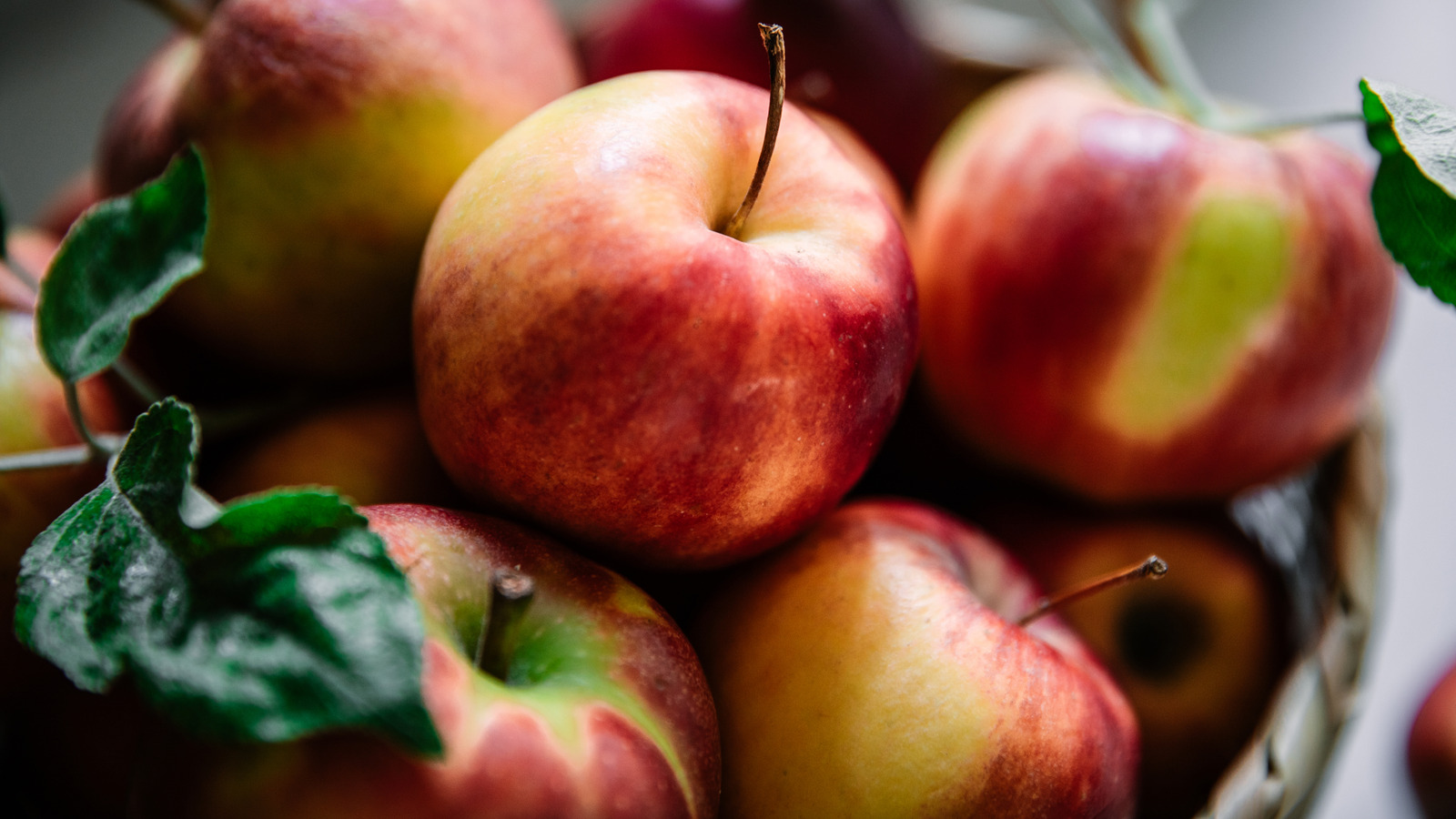
Whether you’re craving fruit-forward coffee, apple filled pastry, or creamy caramel apple dessert, some of the most popular fast food joints have you covered.
Mashed – Fast Food, Celebrity Chefs, Grocery, Reviews

Dolly Parton’s “I Will Always Love You” became one of music’s most iconic songs. Here are five singers who gave the classic unforgettable performances. Continue reading…The Boot – Country Music News, Music Videos and Songs

We’re now at the point of the preseason where health is the priority for teams and stars around the league. Tuesday brought a bit of good and bad news in that regard. Kansas City Chiefs quarterback Patrick Mahomes continues to progress in his recovery from his ACL tear, while Cincinnati Bengals wide receiver Ja’Marr Chase avoided a potential scare on Tuesday. Elsewhere, Indianapolis Colts wide receiver Alec Pierce was on the good side of injury news. As we’re just over two weeks away from the start of the regular season, here’s what you need to know from Tuesday’s news around the NFL. Kansas City Chiefs quarterback Patrick Mahomes expressed confidence Tuesday that he is on track to start Week 1 against the Denver Broncos as he continues his recovery process throughout training camp following surgery on his left knee last December. Mahomes is not expected to play in Friday’s preseason finale against the Seattle Seahawks as he awaits final game clearance from team medical staff. “Being able to go out there, day after day, and have the grind of a camp, that can even be harder than the regular season,” Mahomes said. “Honestly, the more we practice, the better I feel.” Should Mahomes not play against the Seahawks Friday, it would mark the first time in his 10-year career that he has missed the entire preseason. Offensive coordinator Eric Bieniemy pointed out Mahomes’ presence on the sideline during preseason action. “With him not playing in the preseason, it could drive you crazy,” Bieniemy told reporters. “He’s like a coach on the sideline. But it’s a good thing because you know he’s itching to get back out there and do whatever he can do to help us win.” The Cincinnati Bengals got quite the scare Tuesday afternoon when star wide receiver Ja’Marr Chase landed awkwardly on a deep route and left practice with a knee injury. Chase put minds at ease shortly after, appearing on Cincinnati’s ESPN 1530 to confirm he was “fine” after suffering a minor hyperextension. He added that he felt good enough to return and finish practice, but the team held him out strictly as a precaution. With Joe Burrow declaring a “now or never” mindset for this season, keeping the Bengals’ offensive firepower fully healthy is more important than ever. If Chase, Tee Higgins and Chase Brown can stay on the field, they will have all the tools needed for a deep playoff run. Chase is coming off another monster season with the Bengals, even with Burrow missing half the year due to turf toe. Despite the quarterback instability, Chase hauled in 125 receptions for 1,412 yards and eight touchdowns, featuring seven games with over 100 receiving yards. The Bengals are set to open up the season at home against the Tampa Bay Buccaneers. Chicago Bears right tackle Darnell Wright left practice early Tuesday after medical staff evaluated his right elbow. Wright reportedly exited during red zone drills, which led to trainers taking off a brace on his right elbow as he was sidelined. Wright suffered a torn ulnar collateral ligament (UCL) in the same elbow last season, playing through the injury with a protective brace as he went on to earn second-team All-Pro honors. The team is monitoring the situation with the expectation that the setback will not impact his availability for the regular season. Fresh off signing a four-year, $114 million extension, Indianapolis Colts wide receiver Alec Pierce is edging closer to his return. Head coach Shane Steichen announced that Pierce could hit the practice field as early as this week if all goes as planned. The return marks a major milestone for Pierce, who underwent off-season ankle surgery shortly after signing his deal. Sidelined for months, Pierce has yet to participate in any training camp or team workouts this summer. With Pierce’s status for the season opener and early in the season, the Colts signed veteran wide receiver Keenan Allen. Once healthy, the Colts will have a formidable trio of receivers in Pierce, Allen and Josh Downs, with quarterback Daniel Jones. Pierce is coming off a breakout season with the Colts. He hauled in 47 receptions, a career-high 1,003 yards, and six touchdowns while recording 50 or more receiving yards in 10 different games. Not only did he have a career year, but he finished with 21.6 yards per reception, establishing himself as one of the league’s premier deep threats. If the Colts can stay fully healthy, they figure to be in the mix in the AFC South race. The Seattle Seahawks have now lost promising TCU rookie safety Bud Clark for the 2026 season. After suffering a broken ankle against the Tennessee Titans in Week 2 of the preseason, Seattle is placing Clark on season-ending injured reserve, Seahawks head coach Mike Macdonald announced on Tuesday. Clark was selected in the second round of the 2026 NFL Draft out of TCU and was set to compete for safety reps alongside Julian Love and Nick Emmanwori. With Clark out for the season, Ty Okada is next in line at safety. The now-injured safety closed out his five-year career at TCU on a high note, leading one of the Big 12’s best run defenses. In his final season, Clark stuffed the stat sheet with a total of 56 tackles, four interceptions, seven pass deflections, a sack and 31 solo tackles.Latest Sports News from FOX Sports