Nearly 20 years after “Tim McGraw” launched her career, Taylor Swift is looking back at the country roots that shaped her as an artist and songwriter. Continue reading…Country Music News – Taste of Country









Nearly 20 years after “Tim McGraw” launched her career, Taylor Swift is looking back at the country roots that shaped her as an artist and songwriter. Continue reading…Country Music News – Taste of Country
Nearly 20 years after “Tim McGraw” launched her career, Taylor Swift is looking back at the country roots that shaped her as an artist and songwriter. Continue reading…The Boot – Country Music News, Music Videos and Songs

Not every recipe change is a deal-breaker for shoppers. However, a Costco shopper noticed that an update to this item had an unwanted nutritional impact.

Mashed – Fast Food, Celebrity Chefs, Grocery, Reviews

The final week of the NFL preseason is upon us, which means it’s decision week for all 32 teams around the league. The Cleveland Browns made the biggest decision on Monday. They named Deshaun Watson their Week 1 starter, giving him the honor over Shedeur Sanders after his polarizing comments toward the fanbase. That decision is one of many that will be made throughout the week as teams need to trim their rosters down to 53 players by Sunday evening. The Houston Texans and New England Patriots also made decisions on Monday, agreeing to a rare player swap in a trade that landed Houston a wide receiver. As we’re just over two weeks away from the start of the regular season, here’s what you need to know from Monday’s news around the NFL. The Cleveland Browns officially have a starting quarterback for the upcoming season. Head coach Todd Monken officially announced on Monday morning that Deshaun Watson will be the team’s Week 1 starting quarterback. Following a competitive camp battle with second-year quarterback Shedeur Sanders, Monken chose to give the nod to the veteran signal-caller. “I took in the full body of work over the course of the offseason to training camp to the games, the joint practice, and ultimately felt like to start the season on the road, Deshaun [Watson] gave us the best chance to move the ball and score points,” Monken told reporters. “I mean, that’s really what it’s about.” While highlighting the team’s ongoing belief in Sanders, Monken stressed that the choice was strictly about immediate offensive production. “I think Shedeur [Sanders] has done a great job,” Monken told reporters. “Come a long way and we’re excited about his future, but this is not a week-to-week decision.” Watson hasn’t played a full season since 2020 and has logged only 19 starts in a Browns uniform. In those starts, his play has been mediocre at best, falling drastically short of the massive three-first-round-pick haul Cleveland traded to bring him in. Over three seasons in Cleveland, Watson has posted a 9–10 record while completing 61.2% of his passes for 3,365 yards, 19 touchdowns, and 12 interceptions. With the decision now behind the Browns and Watson, all eyes shift towards Week 1 against the Jacksonville Jaguars. The Houston Texans agreed to acquire wide receiver Kayshon Boutte from the New England Patriots on Monday in exchange for safety Jaylen Reed and a 2028 seventh-round draft pick. The Texans made the move to bolster their wide receiver depth following a season-ending ACL injury to Jayden Higgins during joint practice last week. Boutte will join Sterling Shepard and Zay Jones as new additions to the receiving room. Boutte recorded 33 receptions for 551 yards and six touchdowns for the Patriots last season, but became expendable after the team traded for Pro Bowl wide receiver A.J. Brown. They also signed former Green Bay Packers pass catcher Romeo Doubs this offseason. Boutte addressed the trade speculation surrounding him during training camp last week. “I’m just blocking out the noise,” Boutte told reporters. “That’s the main thing. We all hear the stuff that’s going on. But like I always said, I’m where I’m at. My feet are here, so I’m not worried about what’s next or what’s behind me. Just being present.” Boutte joins a Houston receiving group that features Nico Collins, Xavier Hutchinson, Jaylin Noel and Tank Dell. The Carolina Panthers received positive news on running back Chuba Hubbard on Monday morning. Head coach Dave Canales announced that Hubbard is on track to be ready for the Week 1 opener against the Chicago Bears. Hubbard strained his hamstring earlier this month in training camp and still has yet to play in any of the Panthers’ preseason games while working his way back to full strength. “He’s expected to be ready for Week 1,” Canales told reporters. “He hit over 20 miles per hour the other day, but that is on a controlled setting and right now we don’t want to put him back out there for someone to pull on his jersey and for him to have to pull his way through that. He’s ahead of schedule and he’s doing a great job.” Hubbard is looking to bounce back after a frustrating and regressive 2025 season plagued by a calf injury. The injury opened the door for Rico Dowdle, who took over the starting job from Hubbard before signing a free-agent deal with the Pittsburgh Steelers this offseason. Not only is Hubbard expected to suit up for the opener against the Bears, but Canales revealed the Panthers plan to ease him in with a shared backfield. Former second-round pick Jonathon Brooks is set to share carries as part of a committee approach to start the season. If Hubbard struggles once again this season, Brooks has a genuine path to take over the backfield. The second-round pick out of Texas has shown promise this preseason and possesses the talent to develop into a primary starter as long as he can find a way to stay healthy. All offseason long, eyes have been on New York Giants wide receiver Malik Nabers and his knee recovery. Now, Nabers seems to be heading in the right direction to play against the Dallas Cowboys in Week 1. While head coach John Harbaugh refrained from making any blanket statements on Nabers’ timeline, he told reporters that “it’s reasonable to assume” the receiver will be ready for the start of the regular season. Jaxson Dart is set for a big season, but a lot of that could depend on the availability of Nabers. Once Nabers is officially back on the field, he’ll join a balanced group that includes Darnell Mooney, Malachi Fields, Darius Slayton and Odell Beckham Jr. Nabers only played in four games last season, but when he was on the field, he was one of the most explosive receivers in the league. Across those four contests, he hauled in 18 receptions for 271 yards (15.1 yards per catch) and two touchdowns. The Dart and Nabers connection was put on hold in Week 4 when Nabers suffered a season-ending ACL and meniscus tear against the Los Angeles Chargers.Latest Sports News from FOX Sports

The Haines Borough Assembly will consider changing how borough staff handle lawsuits over conditional use permits. They’ll also discuss two more questions that could go on the ballot in front of voters this fall. KHNS’ Melinda Munson talked to the Chilkat Valley News’ Will Steinfeld to find out more.
Melinda Munson: “It seems like a little bit of a shorter agenda than usual, but don’t let that fool you.
Will Steinfeld: You can never never…

Partipants in the Alaska Run For Women are seen at the race finish line at the University of Alaska Anchorage campus on June 11, 2022. The Healthy Alaskans program tracks a variety of indicators, including rates of obesity and exercise among adults and youth. (Photo by Yereth Rosen/Alaska Beacon)
Alaskans face chronic health problems that are not yet easing and, in some cases, getting worse, according to a new status report released by the Alaska Department of Health. At the same time, there are signs of improvement in health, health care and the socioeconomic conditions that support well-being, particularly among youth, according to the report.
The 2026 update is part of the long-term Healthy Alaskans program, a collaboration between the state Department of Health and the Alaska Native Tribal Health Consortium.
The program sets 10-year goals and uses a holistic approach that considers factors like food security, housing security, public safety, education and other indicators. The new report comes at about the midpoint of the period covered by the Healthy Alaskans 2030 State Health Improvement Plan.
“The State Health Assessment is a comprehensive health checkup for the whole state; it represents the health of all of us,” Dr. Robert Lawrence, the Department of Health’s chief medical officer, said in a statement. “Like any checkup, knowing where we are on target and where we can improve helps us be strategic on where we focus our time and attention to the benefit of all Alaskans.”
The report includes some bad news, some of which concerns obesity, poor diets and related ailments.
In 2024, 185,000 Alaska adults were identified as suffering from high blood pressure and 167,00 from high cholesterol, health conditions often tied to excessive weight, the report said.
Those totals represent significant proportions of the state population. As of 2025, Alaska’s population was estimated at 738,737, about three quarters of whom were adults.
Among high school students, 33% were overweight or obese in 2023, the report said. And the vast majority of Alaskans, whether adults or students, failed to consume the recommended daily amounts of fruits and vegetables and failed to engage in the recommended daily levels of exercise, the report said.
Alaskans’ life expectancy has not increased since 2014 and actually showed a slight downward trend through 2024, though there has been recovery since the dip caused by the COVID-19 pandemic. Broken down into demographic groups, Alaska’s Asian and Pacific Islander residents had the highest life expectancy in 2024, at 81.0 years, and Indigenous residents the lowest, at 67.6 years. The Alaska Native life expectancy in 2024 was 10 years shorter than the overall U.S. average, the report said.
The statistics on life expectancy are among several examples of health disparities resulting in poorer health for Alaska Natives. Those are related in part to unequal access to health care and other services, the report said. “The current and historical conditions, policies, rules, and power structures in communities underlie whether individuals have the best chance at living a healthy life, including practicing healthy behaviors,” it said.
Rates of infant mortality showed no improvement over the past decade, and a big disparity persists for Alaska Native people. The rate of infant deaths was 13 per 1,000 births among Alaska Native people in the years from 2020 to 2024 — about twice the rate for the state as a whole, according to the report.
Childhood vaccination rates in Alaska continue to lag national rates, the report said.

There is good news in the report, though.
Among those positive signs is a significant increase over time in prenatal care. In 2008, only 39% of women who gave birth in Alaska had received adequate prenatal care starting in the first trimester; by 2024, that measure had risen to 67%
High school graduation rates are up as well. In the 2010-11 school year, 68% of Alaska students graduated high school within four years; by the 2023-24 school year, that rate has risen to 78%. Graduation rates for Alaska Native students lagged the state average, but they also improved during the period, from 51% to 65%, the report said.
That is important because education is linked to better health, the report said.
“In Alaska, 35% of adults without a high school degree reported five or more poor physical health days in the last 30 days, compared with 22% of adults with at least some college education,” it said.
Alaska teens are less likely to be exposed to secondhand tobacco smoke, part of an overall trend toward establishment of tobacco-free zones and similar policies, the report said. In 2011, 36% of high school students were exposed to tobacco smoke; the rate fell to 25% in 2024, the report said.
Some health-related metrics showed mixed signals as of 2024, according to the report.
Drug overdoses that spiked amid the national opioid crisis are showing signs of abatement. Alaska’s rate of fatal overdoses more than doubled from 2019 to 2024, from 18.1 per 100,000 people to 45.6 per 100,000 people, the report said. But the 2024 rate represented a 5% decrease from the peak rate hit the year prior. That was not as dramatic as the national drop of nearly 27% from 2023 to 2024, but indications are that the downward trend will continue into 2025, according to Department of Health records.
Climate change poses numerous health challenges, the report said. In rural areas, changes to fish runs, wildlife populations and berry crops have interfered with traditional harvests of wild foods and diminished food security. In various parts of the state, wildfire smoke is a health hazard. Risks of certain diseases have increased with the changing climate, the report added.
As those challenges mount, there are new programs and systems aimed at mitigating those threats, the report said.
Alaska’s extensive and continually improving trail system, which helps people reach sources of wild food, and also supports exercise. Contributes to overall health, the report said. More Alaska-grown food has become available over time. Organizations like the Food Bank of Alaska are reaching residents in need, including the state’s growing population of elderly residents.

Riley Green didn’t become a country star overnight. Now he’s getting real about what it’s been like watching his career and fame grow over the past decade. Continue reading…Country Music News – Taste of Country
Riley Green didn’t become a country star overnight. Now he’s getting real about what it’s been like watching his career and fame grow over the past decade. Continue reading…The Boot – Country Music News, Music Videos and Songs

All the highlights from a blockbuster season of big movies. Continue reading…The Boot – Country Music News, Music Videos and Songs
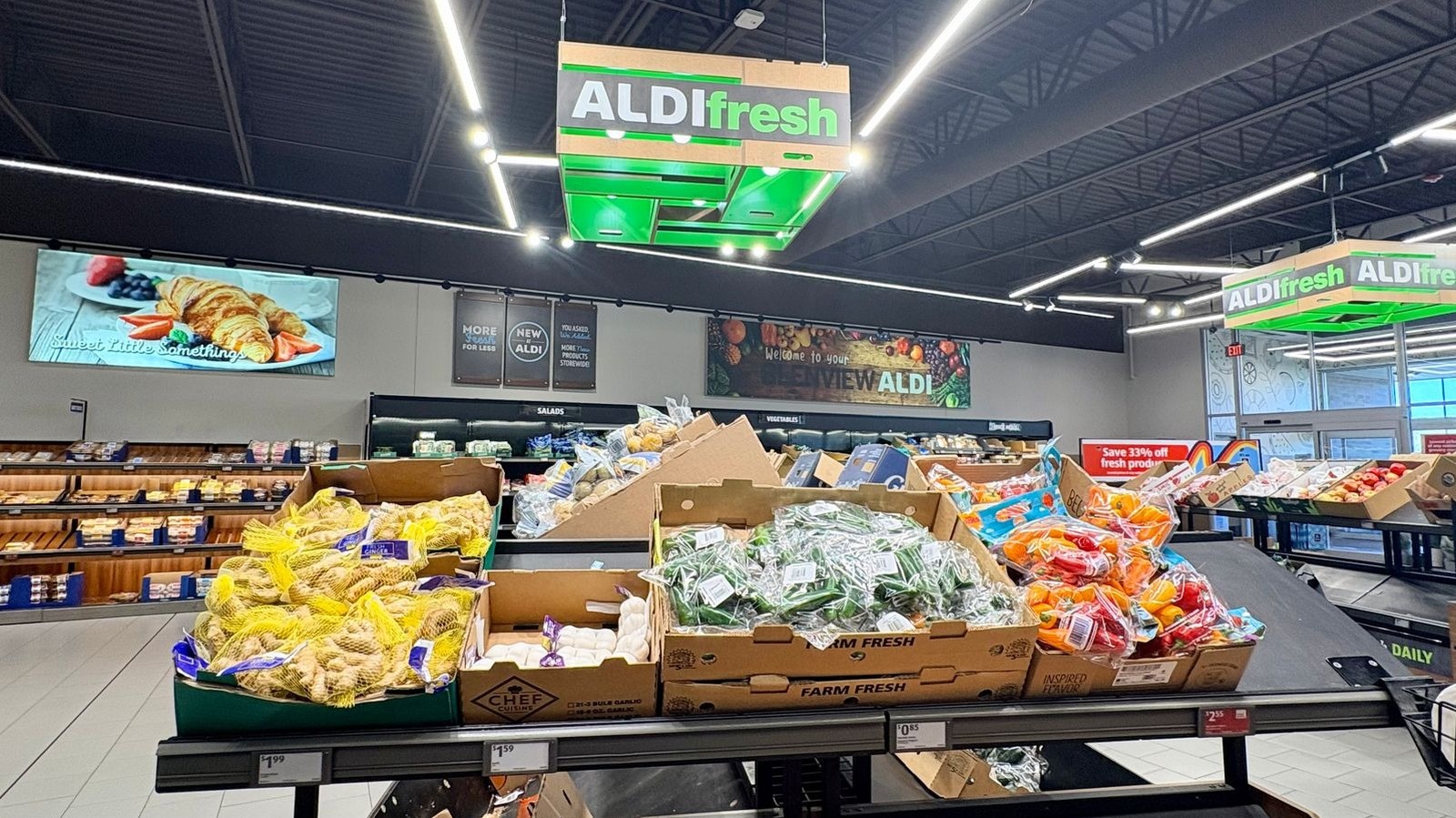
If you love Kinders’ seasonings, but you want a less expensive option, you can use this Aldi Seasoning on your roasted potatoes for even more flavor.
Food Republic – Restaurants, Reviews, Recipes, Cooking Tips