Categories
Uncategorized

Mail ballot mirages aren’t fraud, but mail ballot fraud isn’t a complete myth

A worker inspects a ballot the day after California’s primary election at the Los Angeles County Ballot Processing Center on June 3, 2026. Jae C. Hong/AP Photo

The 2026 primaries are resurfacing controversies about mail-in ballots that were at the heart of election disputes in 2020.

California’s June 2 primary – in which candidates from every party ran together and the top two advanced to the general election – raised eyebrows because of its so-called “red mirage.” A mirage is a misleading early count that can temporarily show a candidate ahead in a race, sometimes by a significant margin.

For example, early Election Day returns showed Republican Steve Hilton leading for California governor and Republican Spencer Pratt among the top two candidates for Los Angeles mayor. However, 4 out of 5 California voters return their ballots by mail, so as additional mail ballots were counted, leads changed. Hilton narrowly held on to second place, but Pratt fell into third place and off the November ballot entirely.

Rumors swirled that a late “ballot dump” in Los Angeles had seen Pratt receiving zero votes out of 24,000. These reports were debunked by PolitiFact, but they were reminiscent of claims six years ago.

In the 2020 presidential election, when Donald Trump led early in Georgia, Pennsylvania, Wisconsin and other crucial states, only to have that lead evaporate under the weight of mail ballots, he claimed a rigged election. This year, those claims returned, as Trump declared on Truth Social, his social media platform, on June 8: “Not possible for Spencer Pratt to have lost the L.A. runoffs after the big lead he had. 3rd World Nation. Rigged Elections!”

I am the associate director of the Institute of American Civics, and my teaching and research focuses on American political institutions, elections and public policy. I’ve been writing about American elections since 1992, and over the past three decades, I’ve followed with interest the growth of mail voting.

The controversy over mail ballot elections has become a microcosm of our polarized politics, with one narrative assuming mass fraud lies behind every electoral mirage, and another denying that there can be legitimate concerns about mail ballot elections. Both narratives warrant scrutiny.

The national picture

Today, eight states use all mail ballot elections: California, Colorado, Hawaii, Nevada, Oregon, Utah, Vermont and Washington. In those states, registered voters are automatically sent a ballot. Voters may deliver their completed ballots in person to an early voting station or to an Election Day polling place. Most, however, simply return the ballot the same way it came, via the U.S. Postal Service.

Another 29 states require voters to submit a request for a mailed absentee ballot but do not require an excuse such as illness or absence.

Three dozen states require mailed ballots to be received by election officials on or before Election Day, while the remainder allow votes to arrive later, as long as they are postmarked by Election Day.

More than two dozen states, including California and most other mail-ballot states, either explicitly or implicitly permit a practice referred to as “ballot harvesting” or “ballot collection,” in which activists can collect ballots from voters and deliver them to election offices or official collection boxes.

The Trump narrative

Trump argues that the “red mirage” is by itself evidence of election rigging. However, there is good reason to challenge such a claim.

Pratt, the Los Angeles mayoral candidate, was running in a city where Democrats outnumber Republicans roughly 4 to 1. Pratt’s defeat does not require extraordinary explanations. To the contrary, his defeat has a very ordinary explanation – as do most mirages.

Even without mailed ballots, states where there was a systematic lag between vote counts in rural and urban areas could experience dramatically shifting results, too.

In the mail-ballot era, analysts know that different groups of voters sometimes cast their ballots in different ways. California, for example, will regularly experience a pronounced red mirage because Democrats are more likely than Republicans to return their votes by mail, while GOP voters are more likely than Democrats to vote in person.

Additionally, mail ballots are often accepted after Election Day, Democratic-affiliated advocacy groups are more experienced than Republicans in ballot harvesting, and in-person early and Election Day ballots, along with mail ballots received before Election Day, are counted first. Mail ballots received on or after Election Day are counted later.

Other states, with different party norms and election rules, experience different results. In “Divided We Stand,” a book about the 2020 elections, my co-author, John J. Pitney Jr., and I discuss blue mirages that have appeared in Texas and Ohio.

These mirages are not a new phenomenon: In 1982, Democrat Tom Bradley’s Election Day lead for governor of California was proved a mirage after Republican George Deukmejian overtook him as absentee ballots came in. Back then, Republicans were most likely to vote by mail.
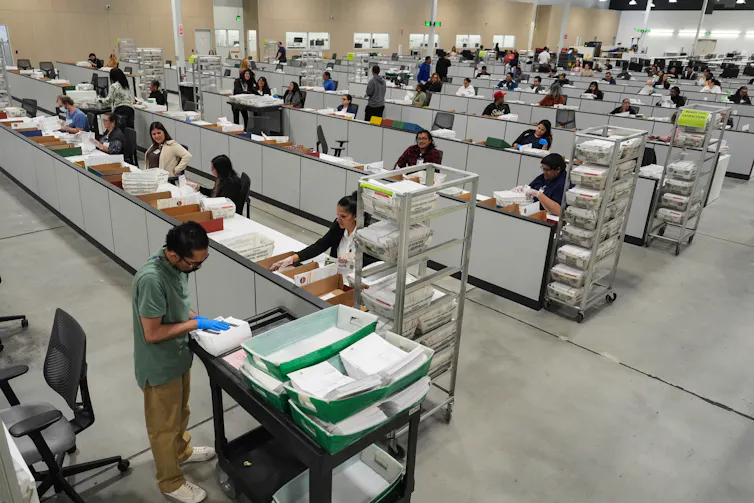
Rows of long desks fill a large room where workers are sitting and inspecting ballots. One worker stands in the foreground.
Ballots are inspected the day after California’s primary election at the Los Angeles County Ballot Processing Center on June 3, 2026.
Jae C. Hong/AP Photo

The problems with mail ballots

These easily explained mirages don’t necessarily mean that mail-ballot fraud is a nonissue and that there is nothing to be concerned about.

One June 2026 analysis in The Guardian contends that California’s election system “is working as designed: to protect against fraud and assure every vote is counted.” Like Trump’s claims, however, this too requires scrutiny.

In 2005, a bipartisan Commission on Federal Election Reform, headed by former president Jimmy Carter and former Secretary of State James Baker, found absentee voting to be susceptible to fraud, intimidation and vote-buying, and recommended that states prohibit third parties from handling absentee ballots as one solution.

In reality, fraud in ballots sent and returned by mail – either all-mail ballot or absentee – has occurred on a large enough scale to invalidate a 2018 U.S. House election in North Carolina, a 1997 mayoral election in Miami and a 2020 municipal election in Paterson, New Jersey, among others. It’s also produced numerous absentee vote scandals in Texas.

Mail-in critics also note that none of the eight all-mail ballot states require a copy of photo identification when completing a ballot, though supporters argue that other fraud prevention measures – like signature verification and online ballot tracking – are sufficiently rigorous.


Read more:
Mail-in voting is safe and reliable – 5 essential reads


Absentee or mail-in ballot vote fraud estimates vary. A November 2025 Brookings Institution analysis of the 2016 through 2022 general elections found about four cases of mail-voting fraud out of every 10 million mail votes. The Heritage Foundation found roughly 400 cases since 2000.

There are reasons to believe this understates the problem, though. In cases of large-scale organized fraud – the kind that can challenge the integrity of the electoral system – it is typical that only candidates or political organizers are charged with a crime. In the 1997 Miami mayoral race vote fraud scandal, for example, after several hundred absentee ballots were proved fraudulent, courts invalidated them all; still, only about 57 individuals were charged. Further, it would be unrealistic to assume every instance of election fraud is detected and results in even one arrest.

Other concerns

Electoral mirages are not by themselves proof of fraud, but fraud in mail ballot elections is a valid concern – and it is not the only valid concern.

Ballot harvesting, for example, lends itself to social pressure, can impinge on the secret ballot and gives outsize influence to organized interests.

The potential for fraud and long delays in tabulation can undermine confidence in elections, especially when voters have formed expectations of efficient and competent election administration. Older voters remember close national elections – in 1960, 1976 and 2004 – when results were known the next day.

In any event, convenience from mail voting does not always translate into more voters.

In California’s all-mail ballot election in 2024, voter turnout was 62.1%; in Florida, which limits mail voting to absentee ballots that voters must request, prohibits vote harvesting and requires absentee ballots to arrive by Election Day – all of which makes it harder to vote by mail – voter turnout was 66.7%.

Colorado and Hawaii – both all-mail ballot states – were toward the top and the bottom of turnout rates in 2024: Colorado had 73.1% turnout and Hawaii 50.3%.

The next election

In my analysis, whatever the temptations of partisan tribalism, neither narrative around mail ballots can be taken at face value. One automatically ascribes fraud to results that are often predictable, even routine; the other dismisses legitimate concerns as conspiracy theories.

Mirages will continue to occur, especially in states that use all-mail ballot elections, states that allow no-excuse absentee voting and states where votes can arrive after Election Day. A better-informed public would be better prepared to understand mirages when they occur – and better able to focus on more meaningful conversations about both the pros and cons of mail ballot elections.

The Conversation

Andrew E. Busch does not work for, consult, own shares in or receive funding from any company or organization that would benefit from this article, and has disclosed no relevant affiliations beyond their academic appointment.

​Politics + Society – The Conversation

Categories
Uncategorized

Public opinion on abortion has shifted 4 years after Dobbs decision overturned Roe v. Wade

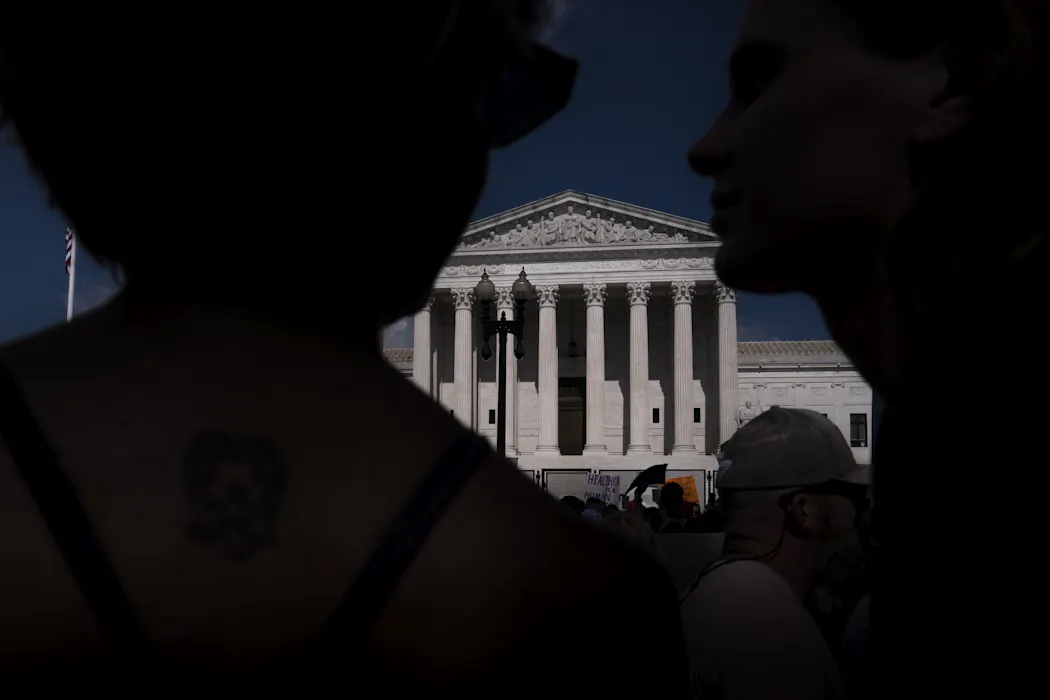
People gather in front of the Supreme Court building following the Dobbs v. Jackson Women’s Health Organization ruling on June 24, 2022, in Washington, D.C. Nathan Howard/Getty Images

It’s been four years since the Supreme Court’s decision in Dobbs v. Jackson Women’s Health Organization overturned Roe v. Wade, ending the federal constitutional right to abortion.

In the immediate aftermath of the decision, national attention centered on implementation of state bans and a rapidly shifting legal landscape.

But four years later, one of the most impactful developments has been less visible: a significant, sustained and politically consequential shift in public opinion. In the wake of Dobbs, the debate over abortion rights did not simply return to the states. It fundamentally altered how many Americans think about the issue and how they vote.

In our recently published book, “Not Going Back: Public Opinion on Abortion in Post-Dobbs America,” we examined how and why these changes have occurred, and what they mean for U.S. politics. We believe the shift could have real consequences for the November 2026 midterms.

Post-Roe stability

Drawing on several nationally representative surveys conducted before and after Dobbs, we examined how Americans’ abortion attitudes, political priorities and voting behavior have changed in response to the most significant shift in abortion policy in half a century.

For nearly 50 years after Roe, public opinion on abortion was remarkably stable. In 1975, Gallup found support for legal abortion in certain circumstances at 54% and support for a ban in all circumstances at 22%. In 2021 – the year before the Dobbs decision – these figures were virtually the same: 48% and 19%, respectively.

Despite heated political rhetoric, most Americans held nuanced views. They were neither fully anti-abortion nor fully pro-abortion. Instead, they supported legal abortion in some circumstances and not in others.

That underlying stability shaped both policy and politics for decades. Republicans were able to rally a committed core of supporters around opposition to Roe, while the underlying constitutional right to access abortion remained unchanged.

As states moved quickly after the Dobbs decision to enact abortion bans and strict gestational limits, public opinion moved in the opposite direction.

Today, more Americans identify as pro-choice than they did before Dobbs. And, as we document in our book, more Americans are now taking absolutist positions. They support legal access to abortion in all or most cases and oppose government regulation altogether.

How Dobbs shattered the equilibrium

One of the most striking changes in the post-Dobbs era concerns who cares most about abortion. For decades, abortion was a higher priority for Republicans and those identifying as pro-life.

That dynamic has now flipped. In both 2022 and 2024, Democrats and pro-choice Americans were more likely than Republicans to say abortion was a top political issue shaping their vote. In our book, we document how in both 2022 and 2024, pro-choice Democrats were especially motivated to vote and remained highly loyal to Democratic candidates.

At the same time, the considerable minority of Republicans who support legal abortion found themselves politically cross-pressured, meaning they experienced conflicting political influences.

Drawing on multiple nationally representative data sets, our book reveals that roughly one-third of Republicans hold views on abortion that do not align with the official pro-life position embraced by their party. They either identify as pro-choice or support legal abortion in at least some cases.

It was one thing to identify as a pro-choice Republican when Roe guaranteed a constitutional right to abortion. After Dobbs, however, Republican electoral victories could directly result in abortion bans and other restrictions. That makes partisan choices far more consequential.

We found that cross-pressured Republicans had lower turnout rates and were more willing to cross party lines, reflecting the growing tension between their abortion views and their party’s position. Given the size of this group, that presents a serious challenge for GOP candidates.

Several people gather in front of a federal building with columns.
A group of abortion-rights supporters gather in front of the Supreme Court on June 28, 2022, in Washington, D.C.
Nathan Howard/Getty Images

Reshaping US politics

At the same time, efforts to find a middle ground on abortion have proven difficult. Republican legislators in North Carolina and Virginia, for example, have sought to position policies such as 12- or 15-week bans as a reasonable compromise.

That might have worked in 1990. But public opinion has shifted in ways that make this strategy increasingly untenable. Our research shows that most Americans, including Republicans, do not see these “moderate” policies as meaningfully different from more restrictive bans.

One reason may be that, in the wake of Dobbs, abortion restrictions have become concrete rather than abstract. Extensive media coverage of women denied care during miscarriages, severe pregnancy complications and other medical emergencies has highlighted the consequences of gestational limits. This leads many Americans to judge these policies by their practical effects rather than the specific week at which abortion is prohibited.

In addition, our original survey data reveals that many Americans have only a limited understanding of how pregnancy is dated. That makes distinctions between six-, 12- and 15-week bans less meaningful than policymakers often assume.

Another major change is the emergence of a gender gap in abortion attitudes. For decades, men and women held remarkably similar views on abortion. That is no longer the case.

Since Dobbs, women have become significantly more supportive of abortion rights than men. For example, 56% of women say abortion should be legal in all or most circumstances, compared to 41% of men.

This new gender gap reflects both women’s experiences with pregnancy and abortion and the changed policy environment following Dobbs. After the ruling, the consequences of abortion restrictions became far more immediate and tangible.

Rather than accepting these new restrictions, many women reacted against them. As abortion policy moved sharply to the right in many states, women’s attitudes moved in the opposite direction. This has resulted in substantially greater support for abortion rights.

Our survey research further finds that a better understanding of human reproduction, including how pregnancies are dated, is associated with greater support for legal access to abortion.

Taken together, these changes have reshaped American politics in ways that advantage Democrats. Abortion rights played a key role in the 2022 midterms, contributing to stronger-than-expected Democratic performance nationwide.

And it continues to shape voter motivation and turnout patterns heading into future elections.

‘Not going back’

That said, abortion is not the only issue that matters in modern U.S. politics. In the 2026 midterm elections, the economy and partisanship – especially in an era dominated by President Donald Trump – will remain central to electoral outcomes.

Abortion alone is unlikely to determine any single race. But it has altered the political landscape in ways that will matter this November and beyond.

The phrase that gives our book its title – “Not Going Back” – captures this moment. The changes we document are not temporary reactions to a single Supreme Court decision.

The stability that defined abortion politics for half a century is gone. The new normal is a political landscape in which abortion rights have become both more widely supported and more politically consequential. They are motivating Democratic voters while creating new tensions within the Republican coalition.

Perhaps most importantly, Dobbs transformed abortion from a constitutional question into an electoral one. As abortion laws became substantially more restrictive, public opinion moved toward greater support for abortion access. The 2026 elections will offer another test of how the U.S. responds when public policy and public preferences move in opposite directions.

This story was produced in collaboration with Rewire News Group, an independent nonprofit media outlet that covers reproductive health.

The Conversation

The authors do not work for, consult, own shares in or receive funding from any company or organization that would benefit from this article, and have disclosed no relevant affiliations beyond their academic appointment.

​Politics + Society – The Conversation

Categories
Entertainment

4 Traditional Rules Americans Often Break When Dining In Mexico

Although the U.S. and Mexico are on the same continent, Americans tend to overlook these local dining customs when they head south of the border.

​Mashed – Fast Food, Celebrity Chefs, Grocery, Reviews

Categories
Entertainment

Interior Designer Nate Berkus on the 5 Home Pieces Worth Buying

Interior Designer Nate Berkus Says These 5 Home Pieces Are Worth BuyingNate Berkus is firmly anti-trend, and instead of piling on new decor, he’s focused on editing, refining, and investing in pieces that actually last. The interior design icon has clued us in to the…
​E! Online (US) – Top Stories

Categories
Entertainment

10 Reasons 2026 Is The Best Time To Become A Costco Member

There’s never been a better time to join Costco than 2026. The warehouse chain has introduced changes that make a membership more valuable than ever.

​Mashed – Fast Food, Celebrity Chefs, Grocery, Reviews

Categories
Food

Does Dollar General Sell Fresh Foods?

Dollar General is, perhaps, the most readily available shopping place for the average American. With over 20,000 locations, does the store offer fresh goods?

​Food Republic – Restaurants, Reviews, Recipes, Cooking Tips

Categories
Entertainment

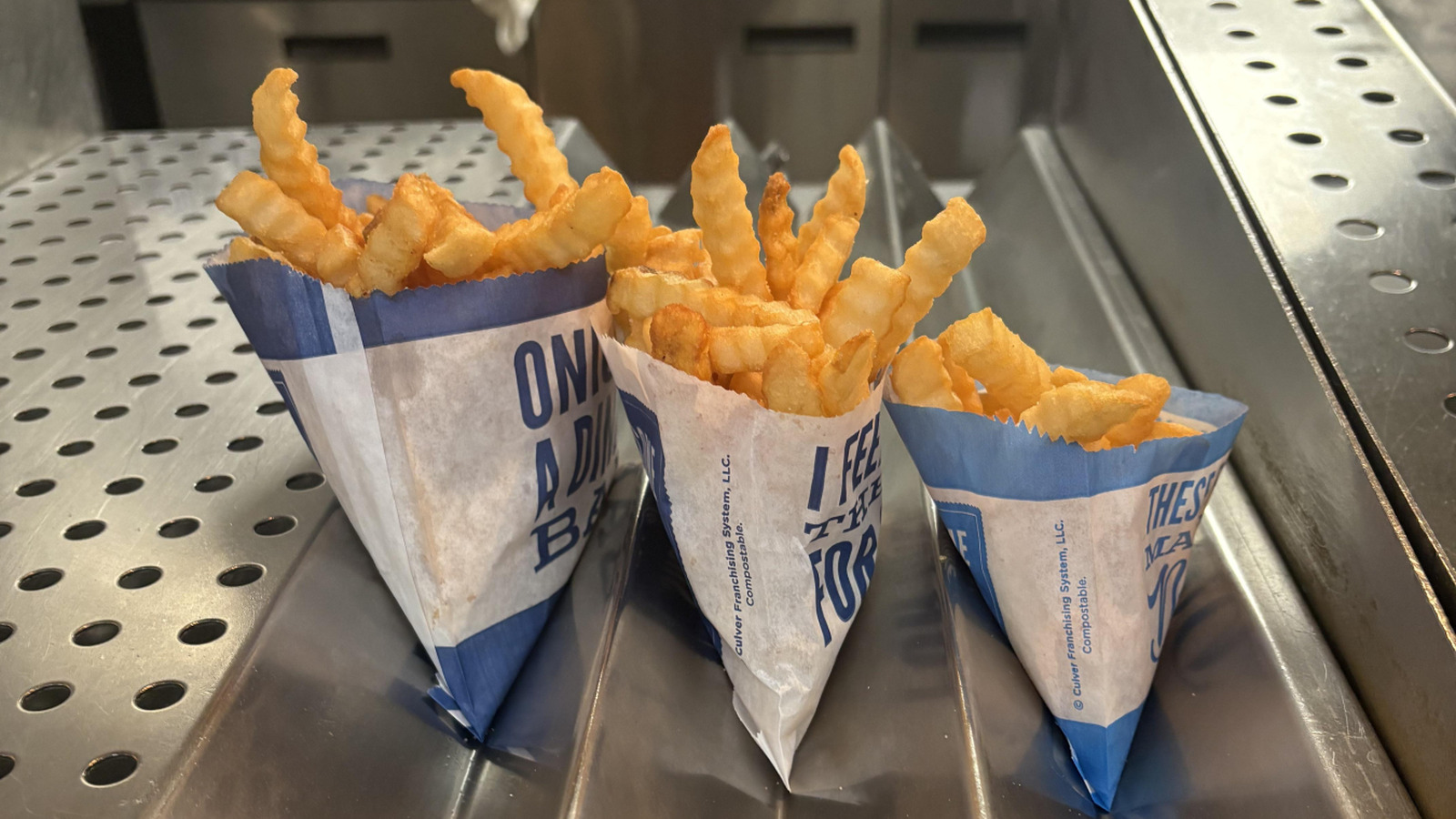
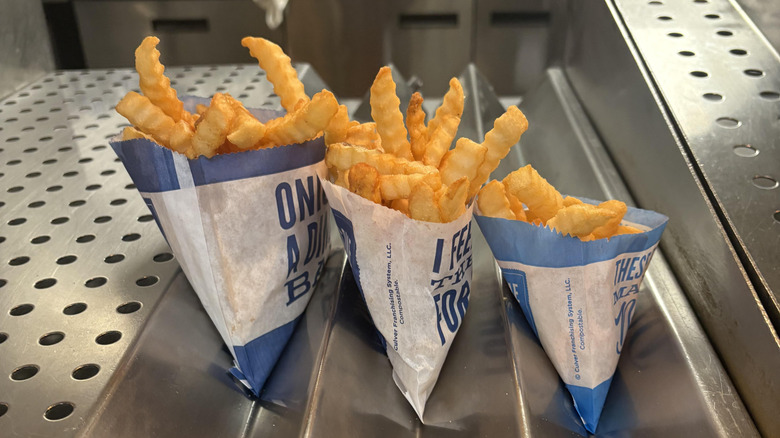
What Kind Of Cooking Oil Does Culver’s Use For Fries, Cheese Curds, And More?

The oil is a key part of the “extra crispy” hack that some Culver’s aficionados request when ordering french fries, cheese curds, or chicken.

​Mashed – Fast Food, Celebrity Chefs, Grocery, Reviews

Categories
Entertainment

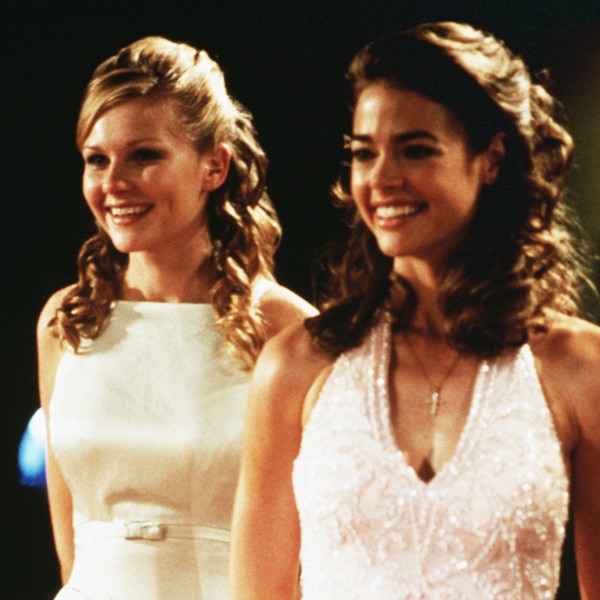
Shocking Secrets About Drop Dead Gorgeous Revealed

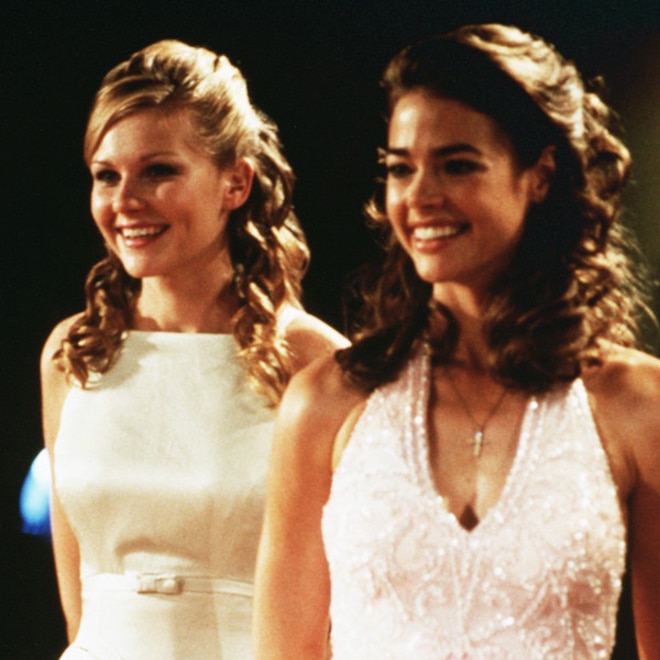
Drop Dead GorgeousJesus loves winners. And 27 years later, we still love Drop Dead Gorgeous. 
In the latest movie anniversary to make you truly feel the harsh, cruel and unjust passing of your youth, we’re here to…
​E! Online (US) – Top Stories

Categories
Alaska News

This Week in Fair History

(File photo/Chilkat Valley News)
Young fairgoers enjoy visiting with livestock in McPherson Barn in this file photo.

July 29, 2010:

Games, competitions, workshops and craft projects abound at this year’s fair. 

Kids can learn how to make popsicle stick bombs and kites at the Kids’ Stage or jump around in a new, larger bounce house. Adults can race in a half-marathon, become a high-striker or try a bungee run jump. Bingo, horseshoes and a fisherman’s rodeo also are on tap.

Melee fighting will be on display Saturday at the Horse Arena. Members of the Shire of Earngyld will demonstrate medieval fighting using shields, swords, staves and other weaponry. 

“It’s a recruiting tool for us,” said Nate Webb, the only Haines resident in the Juneau-based shire, a chapter in the international Society for Creative Anachronisms. “I’d like to get a group in Haines going.”

In addition to fighting, the group educates people on medieval history and culture.

For the fleet of foot, the Haines Hustle starts at 8 a.m. Saturday. There is a trail half marathon, a five-kilometer and ten-kilometer race. The races leave from Dalton City.

July 25, 2013

Your dog needn’t be lovable to win a prize in the fair’s Most Lovable Dog Contest. There are also awards for Best in Parade, Most Alaskan, Biggest Dog, Smallest Dog, Best Trick, Lookalike with Owner, Only a Mother Could Love, and Best Dressed. “Last year’s Best-Dressed went to a dog dressed as a sheriff and its owner dressed as a prisoner,” said coordinator Steve Vick of Haines Animal Rescue Kennel. “It was a riot.”

All participants must meet at the firehall at 10:30 a.m. on Saturday to register their dogs for the contest and to walk in the parade. “We ask to have leashes on all dogs during the parade,” said Vick.

Random spectators will serve as judges in the parade category. Immediately after the parade, dogs and their owners continue to Tlingit Park for the remainder of the contest, judged by out-of-towners.

Three visitors to town are asked to serve as judges. “We want to keep the contest fair,” Vick said. The three top finalists in Best Trick, Look-alike, and Best Dressed advance to the Main Stage in the fairgrounds at 1 p.m. where the audience will choose champions. 

Prizes offered include dog food, dog biscuits and cash prizes. Volunteers equipped with “pooper-scoopers” and extra leashes will assist the owners. 

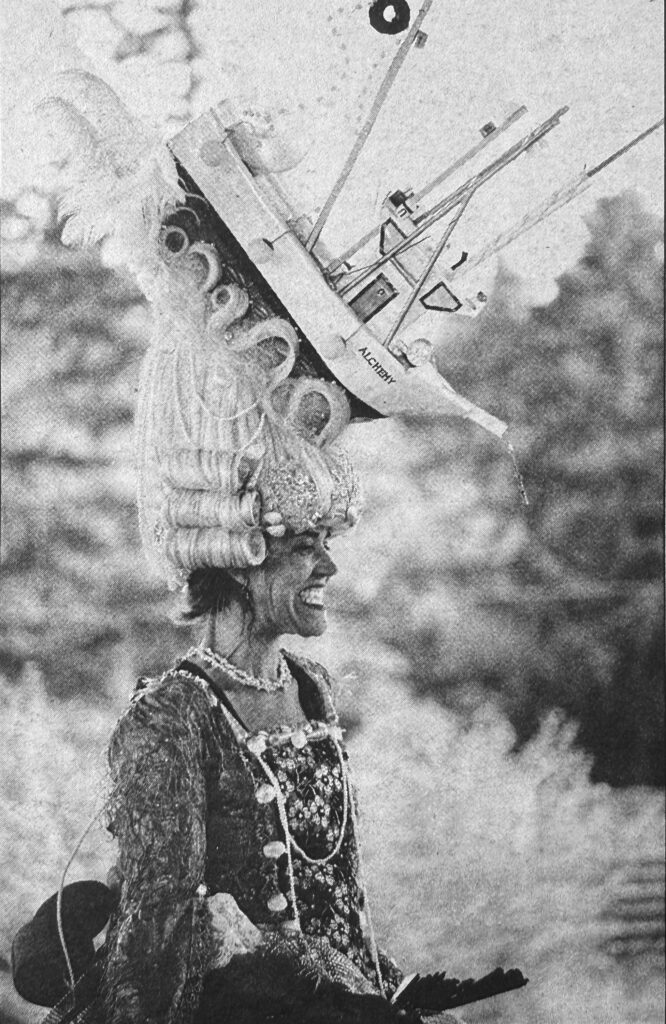
(File photo/Chilkat Valley News) A costume at the Southeast Alaska State Fair in this August 4, 2016 file photo.

August 7, 2003

Haines’ young equestrians will show off their riding skills beginning Thursday at the 33rd annual Southeast Alaska State Fair Horse Show.

Organizer Jeanette Heinrich said the three-day event won’t include any Juneau or Whitehorse participants, but that’s OK. 

“We kind of prefer it that way. This is more fun; it’s kind of a learning show; there’s less tension. It will be a little bit bigger than last year.”

Heinrich said up to 18 riders are expected to turn out for Thursday’s 4-H show, which involves Western and English saddle events. 

This year’s show will be judged by Annie Mabry of Anchorage. Mabry is renowned as a teaching judge, and is fresh off a stint as coach of the United States Special Olympics equestrian team that just returned from competition in Ireland. 

On Friday, the show opens to all comers in peewee, junior, intermediate and advanced divisions. The competition includes Western and English equitation, in which the riders’ performances are judged, and pleasure events, in which the horses’ performances are evaluated. 

(File photo/Chilkat Valley News, Matt Davis)
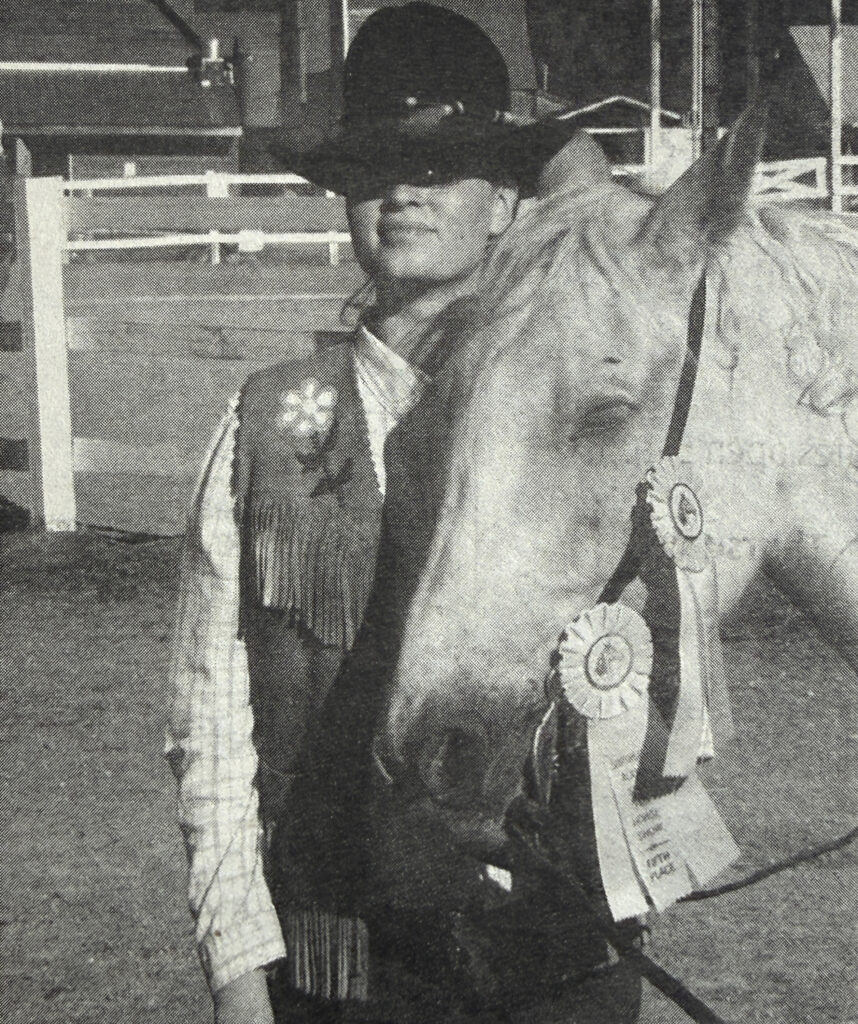
A rider shows off her winning ribbons in this July 21, 2005 file photo.

August 10, 2000

Athletes are gearing up for the annual Sam Donajkowski Memorial Triathlon. 

The event usually draws about 10 individual competitors and 12 teams, said coordinator Ellen Larson. “We have a good turnout. We recommend that if someone hasn’t been working out that they sign up with a team,” she said. 

The course involves swimming one-third mile, biking 14 miles on the Haines Highway, and running three miles around town. Teams of three as well as individuals can compete. “Some teams do all the segments with just two people,” Larson said. 

“We have a whole spectrum of competitors: People who are out to have a good time and get a little recreational exercise and people who are serious athletes and everything in between,” Larson said. Youth teams sometimes split the bike segment between two competitors to make the leg more kid-friendly, she said. 

Master’s divisions are available for more serious competitors, and single-sex and mixed teams have their own categories as well. “Basically there are categories for everyone,” Larson said. 

Coordinator Chip Lende said he expects a competitive race this year. “Especially in the women’s race. There are a lot more women in town who are athletes. I think the women’s race is the one that’s going to be exciting to watch,” he said.

Larson said the event typically is laid-back and fun. “It’s great the way everyone cheers each other on.”

July 21, 2005

Workers at the fairgrounds like to say the fair’s new Ferris wheel is “just like a bicycle wheel on a fork.”

But for most of the summer, it’s been even less than that: piles of cable, rods, brackets and wheels stacked up under Payson’s Pavilion, recognizable as a carnival ride only by its ten, two-seater gondolas. The workers, busy last week grinding and painting some of its hundreds of pieces, are confident they can assemble its iron skeleton.

The 40-foot amusement came second-hand and without instructions, so they’re working from photos of it in one piece.

“Most of it’s common sense – plus some group thinking,” said Benjamin Feldman, undaunted by a two-week deadline to get the ride up and going. “We still have 12 days.”

The wheel came from Juneau mechanic Dave Grafton who bought it online and hauled it to Alaska from western Pennsylvania about five years ago. Powering it with a backhoe, Grafton brought the wheel to Haines for the fair in 2000 and also operated it at Juneau’s Gold Rush Days celebration and in front of a department store. He sold it to buy a simulated roller coaster.

Grafton said the wheel was built in 1976. He bought it looking for an amusement that people of all ages could enjoy and said he expects it will fit in well with the old-fashioned amusements at the Haines fair. “I’m glad to see it’s going to have a good home. It needs a place where it can stay set up.”

The post This Week in Fair History appeared first on Chilkat Valley News.

Categories
Alaska News

New manager promises packed barn for this year’s fair

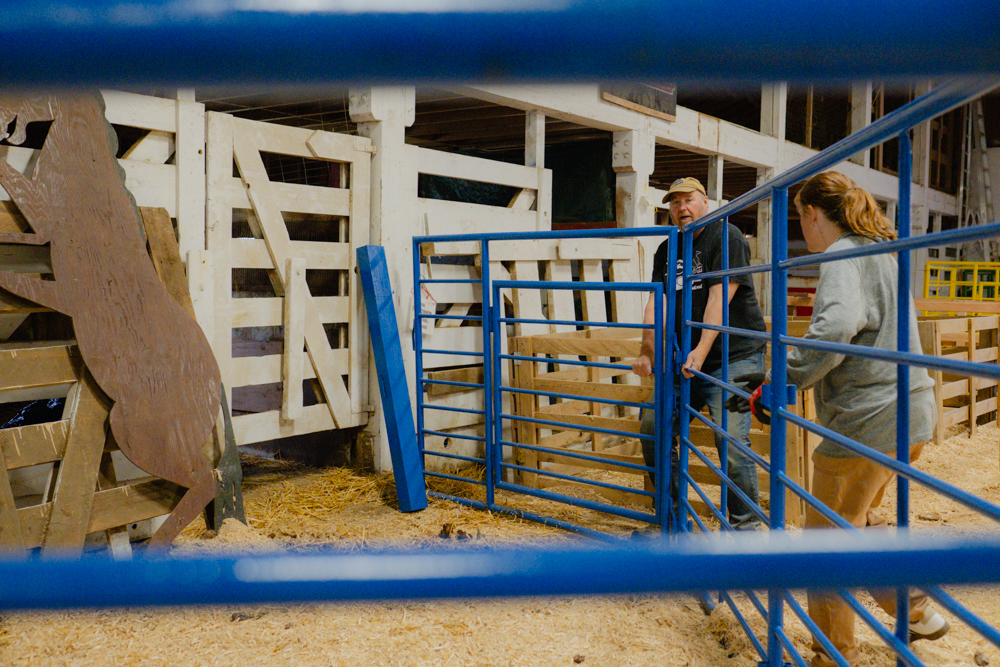
Greg Podsiki and Azure Jensen secure an enclosure in McPherson Barn. Tuesday, July 21, 2026. (Will Steinfeld/Chilkat Valley News)

On the Saturday before the opening of the Southeast Alaska State Fair, McPherson Barn was brimming with activity. 

Drills and saws ran simultaneously as volunteers worked to build pens for animals that had not yet arrived. 

Tommy Thompson and another man assembled railing for a pig-racing track that would take the speedy swine on a route around the duck and chicken enclosures. It’s sure to prompt a flash of frantic activity and feathers for the crowd, said Thompson, with a grin. 

As they worked, Greg Podsiki, the barn manager, walked up with lunch for himself and another volunteer. This year, Podsiki has breathed new life into the Fair’s barn which for years saw a shrinking number of animals.

Podsiki took it upon himself to start up a new 4-H chapter in the Chilkat Valley, and revitalize the Fair’s animal offerings. 

“Last year when I came, my daughter had nine chickens here and that’s all that there was in the whole fair,” he said. 

Podsiki said the animals were always his favorite part of fairs when he was growing up. 

Twenty years ago when he managed the Chilkat Valley’s fair barn for a few years, he said it was often packed. 

“We had a cow from Whitehorse, we had all sorts of animals,” he said. 

This year, his children asked him to take it over again – which he agreed to do on the condition that they help him with the project. 

“I haven’t seen them here yet,” he quipped. “My grandson was here.” 

Looking out over the barn, Podsiki said he could not have gotten everything together for this year were it not for the army of volunteers who came out to help him and the people who donated money. So far, he’s brought in $6,250 to help with the effort of transporting, feeding and watering the animals during the week. 

The cavernous barn is filled with pens for ducks, geese, chickens, pigs, and rabbits. There’s a turkey pen at one end that will hold 10 young turkeys and one large male turkey, two pens for goats and two enclosures ready for horses coming up from Juneau on Thursday.

“It’s going to be a full barn,” said Podsiki, who intends to park a trailer at one end and sleep with the animals to make sure there is no trouble with bears. Though, he doesn’t remember that’s been a problem in the past. 

“I feel very responsible for these animals,” he said. 

One motivation for Podsiki’s renewed interest in the barn is that he believes a fair should be about agriculture in the area. He said as the timing of the fair has moved earlier into the summer, it’s hard for people to show off their crops and food they’ve processed because it hasn’t been done yet. He also said people should get the chance to have a close encounter with livestock. 

It’s not really a petting zoo, but Podsiki said if it were up to him, it would be a chance for everyone to get the chance to touch some of the animals on display. 

“Sniff a horse, see what a horse smells like. Scratch a pig’s belly. Hold the chickens,” he said. 

In addition to the pig races, Podsiki said there will be first-, second- and third-place awards given for the animals. 

That’s something former fair manager Joanne Waterman said used to drive people to bring their animals, art and exhibits to the fair.

“Locally, there’s a level of competition about it,” she said. “There used to be a lot of bragging rights in all of the exhibits. The Fair used to put out a cookbook and it was all the winning recipes and stuff that got to be in the cookbook.  

“Nellie Dale was really proud of her canned salmon. She won every year. People would say, ‘Oh, I gotta beat Nellie,” Waterman said. 

Neither Waterman nor Podsiki could identify why the number of animals at the fair has declined.

Waterman said she remembers a gradual decline during her tenure in the late 1980s. 

And, she said, what Podsiki is doing is a huge job. 

“Trying to find somebody who’s willing to devote, you know, a month and a half to get the barn ready and to drum up the people to bring their animals in. It’s a huge job,” she said. “I admire that so much about him because I know what it takes.” 

Podsiki said there are fewer people raising livestock in the Chilkat Valley now, but when he started calling around he was surprised by the number of people in the upper valley who had some to offer. 

Ultimately,  he’s hoping children who come to this year’s fair and see the animals will be motivated to join his new 4-H chapter, which could lead to even more animals in the future. 

The post New manager promises packed barn for this year’s fair appeared first on Chilkat Valley News.