Seventy-two members of the European Parliament on Wednesday demanded an investigation into FIFA President Gianni Infantino after FIFA lifted the red card suspension of star U.S. striker Folarin Balogun following a call from President Donald Trump.
Last Thursday, Trump called Infantino to lobby for the automatic ban given to Balogun after receiving a red card against Bosnia and Herzegovina to be overturned. Four days later, FIFA’s disciplinary committee cleared Balogun to play in a crunch match against Belgium.
In a letter sent to the national football federations of the EU’s 27 member countries and obtained by POLITICO, the lawmakers asked them to “add your voice to recent calls in support of an investigation” into Infantino.
“Let us be clear: FIFA’s decision to change the rule on red card suspension mid-tournament is a disgrace and perversion of justice,” said Renew MEP Barry Andrews, who wrote the letter. “Once again, we’ve seen Infantino and FIFA surrender to the demands of the Trump administration.”
Despite Balogun taking part, the U.S. lost to a fired-up Belgium team, whose players mocked Trump’s dancing after scoring their fourth goal in a 4-1 demolition of the host nation.
The lawmakers argue that since FIFA imposes its ethics rules on the 27 member associations, they are similarly “bound by FIFA’s code of ethics to demand that senior FIFA officials be held accountable.”
Wednesday’s letter is the third missive in two weeks from European lawmakers to the world football governing body. Andrews wrote a letter last week urging FIFA to investigate Infantino over alleged violations of the organization’s own political neutrality rules, telling POLITICO that FIFA was “profoundly corrupt.” Two days later, fellow Renew MEP Petras Auštrevičius rebuked FIFA over its decision to allow Russians to participate in the U-15 World Cup in October.
The previous letters drew signatures from 50 and 44 MEPs, respectively, making the newest letter the most broadly supported push yet. The letter was signed by MEPs from six parliamentary groups.
“Not many issues can garner that level of bipartisan support,” Andrews added.
Kacey Musgraves is teaming up with Stanley 1913 for a brand-new limited-edition collection that pays tribute to her Texas roots while drawing inspiration from her recently released Middle of Nowhere album.
The newly announced Stanley 1913 x Kacey Musgraves collection features four signature pieces: the leakproof 40-ounce Quencher ProTour, a 24-ounce Pet Bowl, a 16-ounce Everyday Suburban Mug and a 1-quart Classic Legendary Bottle.
Inspired by rodeo culture and vintage Western fashion, the collection blends rustic charm with Musgraves’ signature style, creating a lineup that reflects the spirit and aesthetic of Middle of Nowhere.
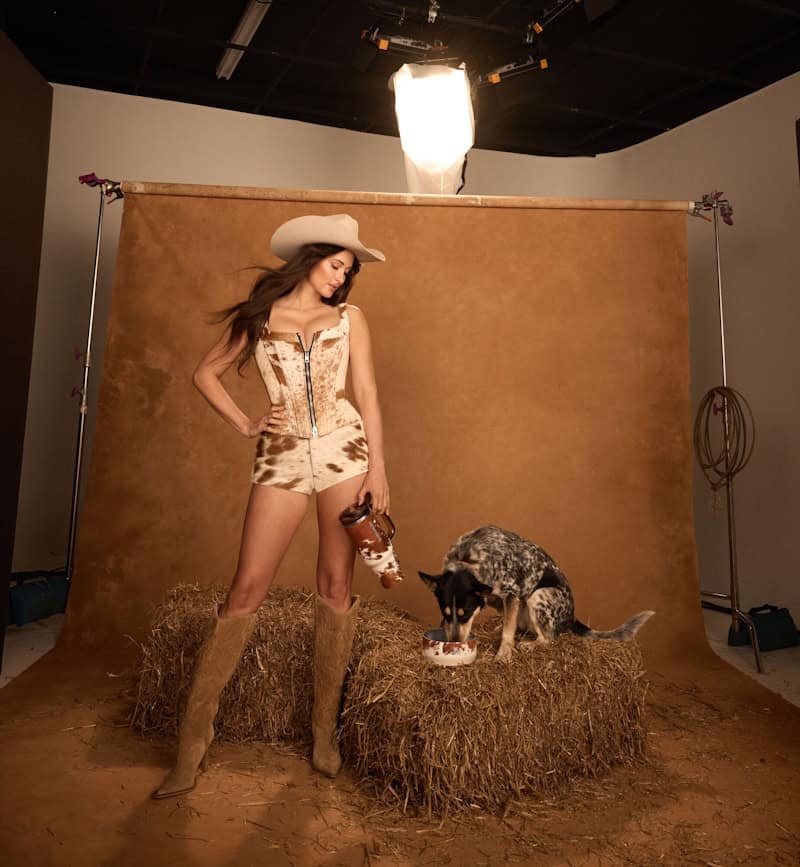
Kacey Musgraves; Photo Courtesy Stanley 1913
“I’ve been wanting to partner with Stanley 1913 for ages,” the 8-time GRAMMY winner shared in a statement. “It’s been fun collaborating on a collection that reflects my personal aesthetic; blending modern and traditional, and something I actually use every day whether I’m hydrating in the studio, preparing for tour, or surviving the occasional dry spell.”
“Like Kacey Musgraves, our brand continues to transcend categories and challenge what’s expected, and this partnership beautifully brings that spirit to life across our signature hydration and café products, as well as our first pet product in a partnership collection—blending artistry and iconic design into a capsule that feels distinctly her,” Kate Ridley, Chief Brand Officer for Stanley 1913, added.
The Stanley 1913 x Kacey Musgraves Collection features the following items:
The leakproof 40-ounce Quencher ProTour ($65), designed to keep drinks ice cold and featuring a first-of-its-kind translucent handle for a unique look.
A 24-ounce Pet Bowl ($40) inspired by Musgraves’ beloved rescue dog, Pepper, an Australian cattle dog she adopted in 2020. It also marks the first time Stanley has included a pet bowl in one of its collaboration collections.
Kacey Musgraves; Photo Courtesy Stanley 1913
The 16-ounce Everyday Suburban Mug ($45), a cupholder-friendly design with an easy-carry handle that’s made for life on the go, whether you’re hitting the road or heading home.
The 1-quart Classic Legendary Bottle ($55), a nod to Stanley’s iconic heritage that blends seamlessly with Musgraves’ signature mix of vintage Western style and modern design.
Both the Quencher ProTour and the Everyday Suburban Mug come adorned with a custom charm set featuring Middle of Nowhere album-inspired artwork, a Texas star, a silver concho and a vegan leather tassel.
How To Purchase Kacey Musgraves’ Stanley Collection
Fans can shop the limited-edition Stanley 1913 x Kacey Musgraves collection beginning at 9 a.m. PT on July 14 at Stanley1913.com. Those hoping to snag a piece can sign up for product availability notifications starting at 9 a.m. PT on July 9. As with most Stanley collaborations, the collection will be available while supplies last.
A mother bear known as Bear 402 and her cubs are seen on Sept. 26, 2018, below a viewing platform at Brooks Camp in Katmai National Park and Preserve. The Brooks Camp site, at the salmon-rich Brooks River, is a world-famous destination for bear viewing. Bears that arrive at the river’s waterfall area each year include those roaming the habitat used by the Mulchatna caribou herd. (Photo by R. Taylor/National Park Service)
With the Board of Game’s consent, the Alaska Department of Fish and Game is again killing large numbers of bears and wolves, most of them brown bears, this time to grow the Mulchatna Caribou Herd so its members can again be hunted by people living in the area. Or so the argument goes.
While combing through some writings of mine from years ago, I recently came across a piece I’d written for the Anchorage Daily News in 2006, when Frank Murkowski was governor and the state was once again expanding its predator-control efforts. In the commentary’s headline, I posed the question: “Where’s the outrage?”
Though angered and discouraged by the state’s intensifying campaign to kill wolves and bears, I was equally disheartened by the public’s apparent apathy. Most people didn’t seem to care, or weren’t paying attention. Or they’d grown numb to the carnage. Or they too readily accepted the state’s claims at face value.
Two decades and many predator-kill programs later, it seems not much has changed. In some ways, things are worse than ever, particularly in Southwest Alaska.
This state-run slaughter of brown bears—and what else can you call it?—is unprecedented, in multiple ways.
We might begin with the number of dead brown bears, which now exceeds 250 animals gunned down by department staff or hired killers since 2023. Or the fact that this has been the most brutal sort of bear-kill program, the animals terrorized by helicopter gunships before they’re killed; and even moms with cubs, and the cubs themselves, targeted for death. This is so despite abundant evidence that bears are not the problem and their killing not the solution.
I have written about this cruel, immoral slaughter several times, most recently in a commentary headlined “In defense of bears.”
Following its publication, a good friend texted me, “I just read your ADN article. Your scathing comments are remarks that people like me need to hear. Apparently folks go about their daily lives mostly unaware, or only vaguely conscious, of deceptive public commentary and downright evil Alaska policies/actions.
“I do encourage you to write more, but I also wonder if the public is listening or cares about an issue so unconnected to their daily activities. Somehow I feel an ADN article is more of a whisper when a bullhorn is needed. . . .”
His assessment appears all too true. I know many Alaskans who consider themselves progressive and “green” but are too busy or distracted or focused on other issues to care much about the killing of bears and wolves. Sadly, most of my friends fit into that category.
Even more infuriating is that most of the state’s conservation or environmental groups have largely stayed silent, the most notable exception—and too often the only exception—being the Alaska Wildlife Alliance.
Yes, those groups have their reasons, their priorities. But at some point, as we all know, silence becomes complicity.
It is frustrating and, yes, discouraging, to those of us who are passionate wildlife advocates to not only witness regressive and inhumane policies and practices not only continue, but in notable ways worsen, without a public uprising.
I know, I know: many of the people in my circles of friends—and those representing advocacy groups—who pay little or no attention to our state’s “wildlife politics” have their own passionate causes. I also realize I live in a “red” state and that many residents don’t share my views. And that many rural Alaskans, including Alaska’s Indigenous peoples, have different perspectives than mine.
But I also know this: If most Alaskans better understood the deception that underlies much of Alaska’s predator-kill programs, they would oppose what our state’s wildlife managers are perpetrating.
Our state’s system of wildlife management has been broken for far too long. A groundswell of opposition is needed.
There was a time when Alaskans pushed through citizen initiatives to right some of the state’s wrongs. But citizen revolts are most likely when “we the people” can see or read first-hand accounts of what’s happening. I think of the physician-hunter Jack Frost and his “mechanical predation” of wolves in the 1980s, or biologist-activist Gordon Haber’s snared-wolf video in the nineties.
In other words, people are most likely pushed into action by something visceral. And for more than a quarter century, the despicable nature of Alaska’s predator-kill programs has remained largely out of sight, and therefore out of mind.
But that may be changing, thanks largely to the Alaska Wildlife Alliance and increased media coverage of the Mulchatna bear slaughter, particularly by the Daily News. The AWA’s recent images of state-killed bears left to rot on the tundra, accompanying an ADN article, have already made some difference. And now the Daily News has begun a series of articles that takes a much-needed, in-depth look at the state’s Mulchatna bear-kill effort.
I’m hopeful this will make a difference: stir things up, get more Alaskans involved, ignite the start of significant change. Provoke some outrage.
Something else that gives me hope: the looming election.
Under Gov. Mike Dunleavy, our state’s mismanagement of wildlife—particularly the state-run killing of bears and wolves—has been more egregious than any I’ve witnessed in the 40 or so years I’ve covered Alaska’s wildlife politics.
But the push for extreme predator-control programs began long before Dunleavy took office and is intimately connected to our state’s unbalanced system of wildlife management, starting with the so-called “intensive management” law passed in the 1990s. And by the Board of Game.
The last time that seven-member board had any semblance of balance was during Tony Knowles’ term as governor nearly a quarter century ago. Since then, things have gotten progressively worse, as both BOG members and Department of Fish and Game officials have been appointed by Republican governors — and approved by legislators of both major parties — who have emphasized ever-more-extreme “intensive management,” predator-kill strategies to benefit human hunters, the large majority of them urban “sport hunters” and guided non-residents.
Over the years, the BOG and F&G have discovered they can do just about anything they want, without significant public or political backlash. That has emboldened their outrageous behaviors.
It’s long past time to return to more balanced—and yes, more progressive—wildlife management policies and priorities. This is the way Alaskans can have the most immediate impact: elect a governor and legislators who will ensure that ALL of Alaska’s wildlife are managed in a respectful, humane manner. It’s the least that we can do, outraged or not.
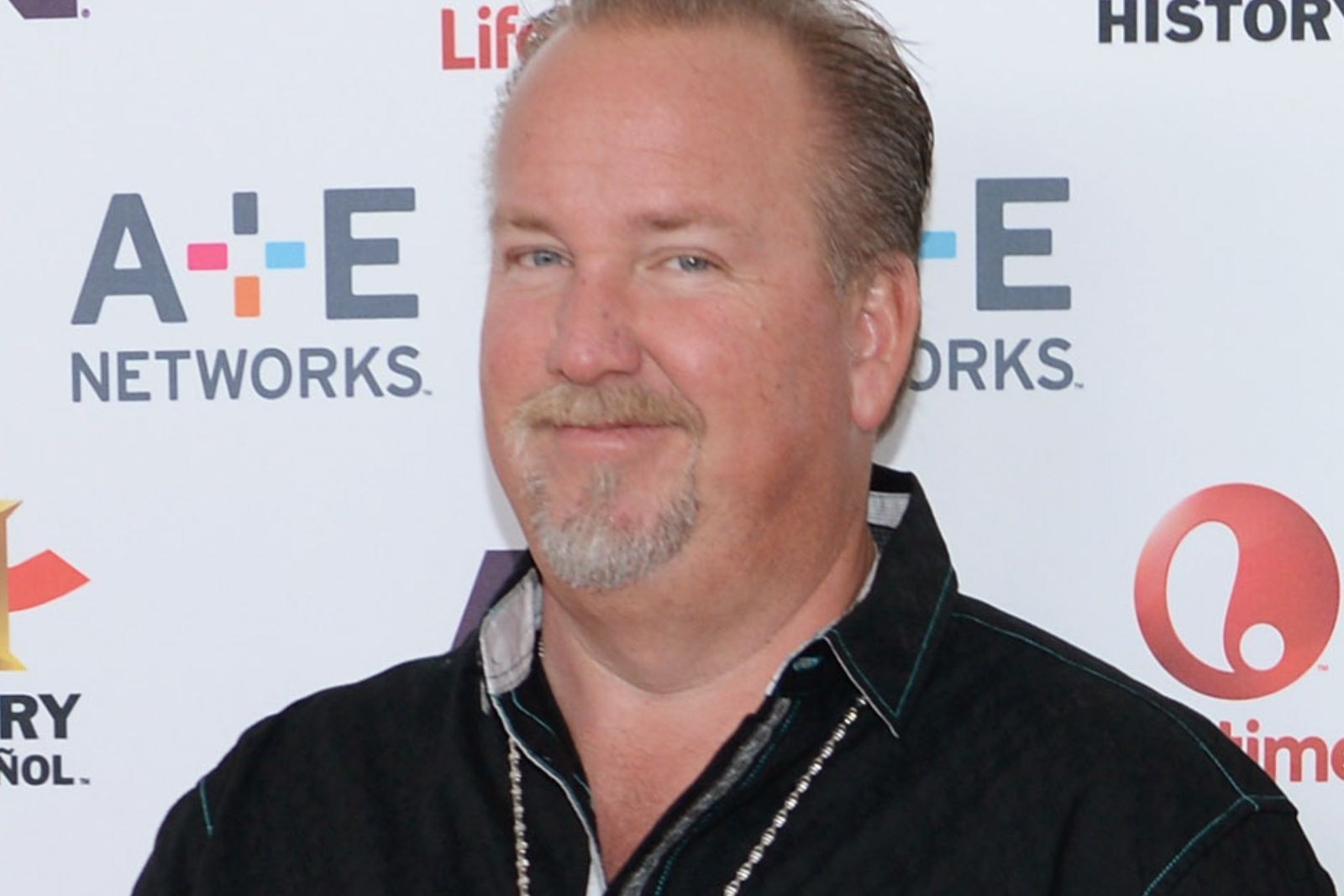
Newly-available police reports provide more information about what happened leading up to ‘Storage Wars’ star Darrell Sheets’ death in April 2026. Continue reading…Country Music News – Taste of Country
Newly-available police reports provide more information about what happened leading up to ‘Storage Wars’ star Darrell Sheets’ death in April 2026. Continue reading…The Boot – Country Music News, Music Videos and Songs
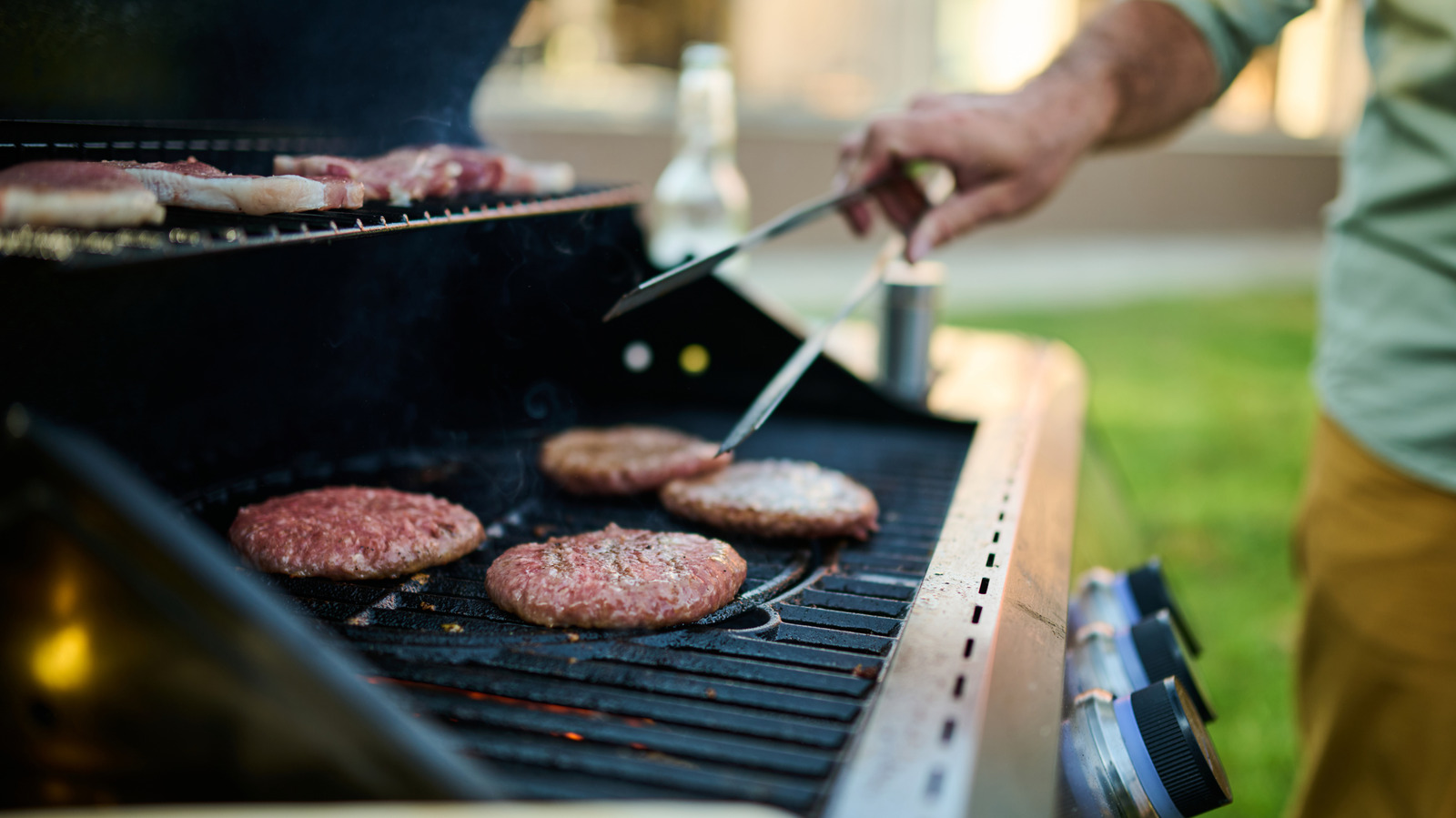
There’s no question that the best part of barbecuing is the grilling itself. The cleanup? Not so much. But you seriously shouldn’t grill on rusty grates.
Hakimi denies any wrongdoing. But if convicted, he could face up to 15 years in prison. A quarter-final loss Thursday would raise the possibility that this becomes Hakimi’s last World Cup game and that Moroccan football loses one of its clearest throughlines from its 2022 breakthrough as a global football power to its role as a 2030 World Cup co-host.
A global vessel for Arab, African and Muslim pride in the last World Cup in Qatar, Hakimi soon emerged as a different kind of icon elsewhere: In 2023, amid his divorce in Spain, online manosphere circles obsessively embraced an unverified rumor that he shielded assets from his wife by placing them in his mother’s name. Lauded by figures including controversial online influencer Andrew Tate, Hakimi was cast as a masculine legend imagined to have outsmarted a woman in a rigged gendered battle. This lore has been resurfacing the past three weeks, since a French court ruled Hakimi would stand trial for the rape charge.
While Hakimi’s exploits clash for some fans, they are congruent enough for others. Within Muslim manosphere circles, there is no contradiction between Hakimi the superstar and Hakimi the defendant.
Western manosphere ideologies frame men as individuals dispossessed by the state and by women who have gained too much power, with divorce law, false allegations, dating culture and economic independence among major fixations.
In specific Muslim contexts, manosphere beliefs echo similar gripes but center them around a restored family unit and the sharper absolutism that gender roles have strayed from divinely sanctioned hierarchy. More than a simple misogyny flanked by cherry-picked Quranic verses, it is a politics of anti-liberal gender views, minority resentment and secular distrust.
French courts strike a particular nerve: State secularism promises neutrality toward religion, but many deem that neutrality a guise to police Muslim communities and their racial minorities. Hakimi will be adjudicated in what some defenders consider an inherently hostile judicial order — one shaped by modern Western feminism and refracted through older tropes of the “dangerous Muslim man” in Europe, where biases pull on centuries of migration, empire and civilizational suspicion.
The cultural politics of Hakimi’s case extend beyond the star athlete. Patriarchal interpretations of Islam can mobilize new support for right-wing parties in Western democracies, even amid otherwise exclusionary stances. And Muslim women are left with a pointed dilemma: Naming gender violence within their communities can be read as feeding anti-Muslim sentiment, while not naming it feeds the silence that insulates perpetrators.
That tension between gender and religion, defense and accountability, surrounds the Hakimi case during this unresolved period. The verdict isn’t likely to lead to a resolution that satisfies all — acquittal will look to many as if his status protected him, and conviction will suggest to others that no status would ever be enough to earn fair treatment.
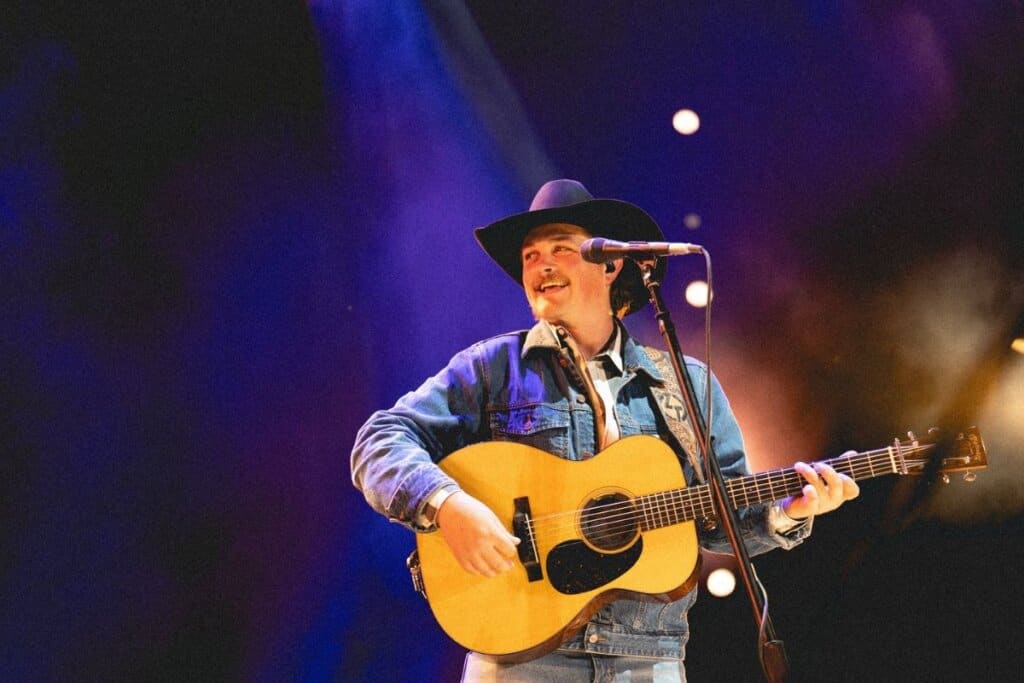
Zach Top may have made “Beer For Breakfast” a fan-favorite anthem, but these days he’s swapping the morning cold ones for early morning workouts. The GRAMMY-nominated country star recently opened up to Audacy’s Katie Neal about how life on the road has changed since stepping into the spotlight, admitting that the same lifestyle he once laughed at has now become his own reality.
During an appearance on the “Superstar Power Hour,” Top revealed that he’s officially in his gym phase, something he never expected would happen.
“I used to look at guys with their gym trailers and Riley [Green]’s got a big old gym set up out there and I’m sitting over there drinking beer at 10 in the morning and laughing at him for working out. And now that’s me too,” he laughed.
Zach Top; Photo Provided
The Washington native joked that he never expected to embrace this kind of lifestyle so soon into his full-time touring career.
“I thought I had 10 or 15 years of good, hard living in me. And I’m three years into full-time being on the road and I’m already slowing down.”
Top also shared that he has found success with his workout routine by using the Ladder App, which allows him to tailor workouts based on the equipment he has available while traveling.
“I got on this app ladder and it makes it very approachable. I mean, you can kind of cater the workouts to whatever your setup is. You can have a full gym set up of exercises or body weight stuff or I have just these adjustable dumbbells out on the bus,” he explained. “So I haven’t graduated to the full gym trailer Riley Green set up yet. I just got those adjustable dumbbells and this little coach guy walks me through the whole workout and everything’s timed out too. I was always bad when I would just try to go to the gym and have a list of exercises I needed to do.”
Like many people who start a fitness routine, Top admitted that working out is not necessarily his favorite activity, but seeing the results makes it worth it.
“The way this app is set up, it kind of just runs you down. I mean, it tells you before the workout, you’ll be done in 37 minutes. And that makes it feel very approachable for me. So easy. I don’t enjoy working out. I enjoy the results.”
These days, Top’s road routine looks a little different. Instead of starting his mornings with a beer, he’s now beginning his days with a workout before heading out with his band to explore the cities they visit, often including a round of golf along the way.
Photo Courtesy of Zach Top
“So we do a little working out in the morning and then a lot of times go play golf. It’s fun to, always in a new city, see a new course. That’s a fun little way to get away from the venue for a little while too because…You’re in a parking lot. It sounds like it’d be glamorous and fun, but yeah, you’re just sitting in another parking lot every day. And they usually have it set up really nice. It’s comfortable and we’re on our buses and stuff like that. So there’s nothing to complain about. But it is nice to get out of the parking lot and away from the venue, go see some green grass and stuff like that.”
From morning beers to morning workouts, Zach Top’s touring routine has officially entered a new phase. While he may not have a full gym trailer like Riley Green just yet, he’s found a way to make the most of his time on the road.










![<a href="https://tasteofcountry.com/country-music-most-important-modern-artists/" target="_blank">Country Music’s 25 Most Important Modern Artists [RANKED]</a>](https://townsquare.media/site/204/files/2026/07/attachment-top-modern-artists.jpg?format=natural)