Post Content








Post Content

Reading Time: 2 minutes
Back in 2023, adult film star Emily Willis went into cardiac arrest while being treated for ketamine addiction at a rehab facility in Malibu.
This week, her family was awarded a $3 million settlement against the facility, but for Emily, life will never be the same.
Following news of the settlement, Emily’s mother told TMZ that her daughter is still unable to speak and communicates only with her eyes and by shaking her head.
Emily went 30 to 40 minutes without oxygen during her cardiac arrest, and she still undergoes daily therapy with the goal of one day regaining the ability to speak.
According to TMZ, “Emily is still learning to walk again and needs help being fed,” but she is finally able to sleep without being monitored.
Her family reports that she is able to watch and understand her favorite movies and TV shows, and her mother estimates that Emily is able to comprehend “about 80 percent” of what is happening around her.
After undergoing 10 surgeries, Emily is currently living in Mexico, where she works with a team of “top-tier therapists.”
Emily’s mother says the family is hoping to travel to Spain, so that she can undergo a new procedure that’s designed to “stimulate the systems that control speech, communication, and movement.”
And while the family was just awarded a massive settlement, $3 million is really just a drop in the bucket, considering the fact that Emily will likely require lifelong care.
The settlement reflects a new trend — one that we previously saw following Matthew Perry’s death — in which parties responsible for an addict’s recovery are being held civilly and criminally liable for failing to live up to provide adequate care.
Prior to her two-month coma, Willis was one of the biggest stars in the world of adult film. In 2023, she transitioned to mainstream film with a role in the sci-fi film Divinity.
We wish Emily and her family all the best as they continue on their long road to recovery.
Emily Willis: Adult Film Star Still Unable to Speak Following Coma, Mom Says was originally published on The Hollywood Gossip.
The Hollywood Gossip

Alma reports that more Americans are facing anticipatory anxiety due to political instability, AI, misinformation, and environmental stressors like wildfires.
A wildfire smoke from Canada seen behind the lower Manhattan skyline and One World Trade Center in New York City, USA.

Pie is America’s original love letter, the dessert people finished when a hug felt too small, and a card felt too easy. Across generations, it … Read moreThe post Long before Tinder, pie was how Americans proved their love appeared…

As a millennial, can you expect to have a longer life expectancy than the boomers who came before you? Research provides some compelling insights.

Health Digest – Health News, Wellness, Expert Insights
Reading Time: 3 minutes
Early this year, Farrah Abraham announced a political run in the wrong year.
She panicked and pivoted to running for a new political position. In the right year, this time!
Now, the oft-ridiculed Teen Mom alum is doubling down on her campaign.
But she’s also taking a break to skewer her mom as a “sociopath.”
In January of this year, Farrah proclaimed her candidacy to be mayor of Austin, running in this year’s election.
She was live on TMZ when she learned that the next mayoral race will not be until 2028.
Farrah course-corrected, as one might charitably phrase it, to be running for Austin City Council in District 5.
She’ll be facing off against Ryan Alter, who is Harvard-educated and the incumbent.
Technically, Farrah also took some Harvard courses. You may recall how she ended up burning her Harvard sweatshirt and freaking out when, the clues suggest, a professor gently tried to speak with her about her wildly incoherent writing. She doesn’t take criticism well.
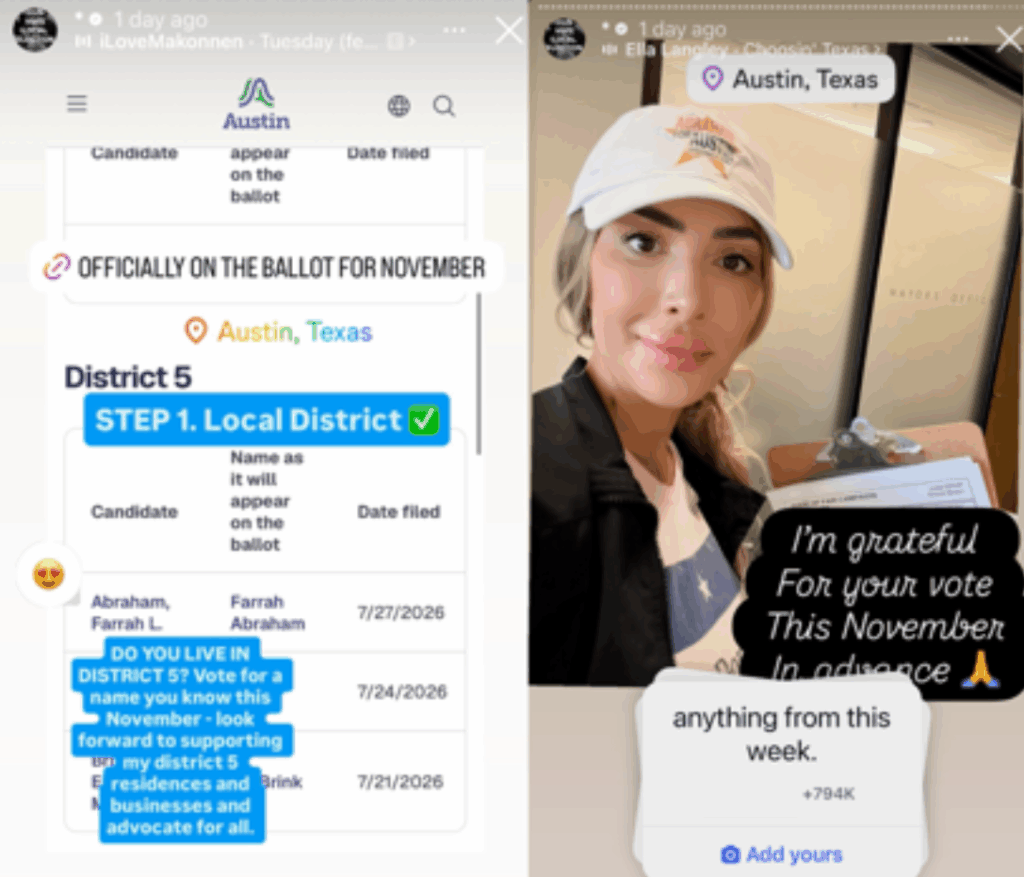
On Tuesday, July 28, Farrah doubled down on her farcical run for office by displaying her merch and declaring that she’s “officially on the ballot for November.”
(We said farcical, not impossible. Undeserving monsters whose only qualifications are being reality TV bigots can and do win elections, to the world’s everlasting regret, even if Spencer Pratt did lose recently.)
Ominously, Farrah thanked the people who live in District 5 “in advance” for supporting her.
There are big questions about whether Farrah meets eligibility requirements for City Council. But Farrah insists that she meets the requirements, even if she’s not disclosing her actual place of residency to the public.
We can only hope that the good people of Austin will not allow Farrah to launch a political career. Please.
Speaking of people whose names we all long to forget, Debra Danielsen has made multiple appearances on the podcast of Catelynn Lowell’s brother, Nick.
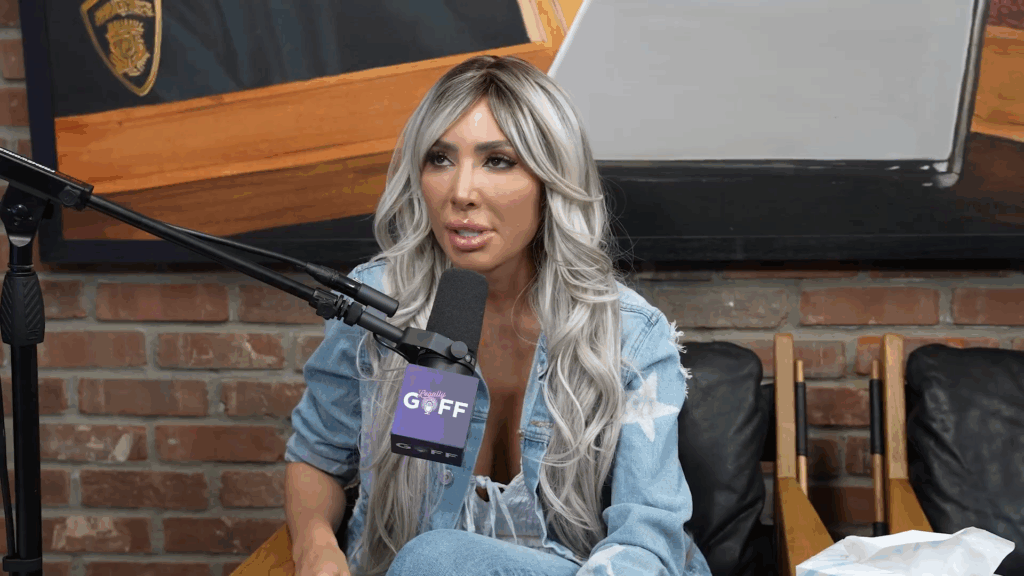
That is so tangential but was enough to set off Farrah, who griped about it on the Legally Goff Podcast.
First and foremost, Farrah blasted anyone related to Catelynn as “a family who goes out of their way to insert themselves into my life and hate on me.”
She added that her doctors and her “success team” (no, we do not know what that means) agree with her.
Farrah claimed that these people are “mind-boggled as to why my mom continues to act like a sociopath.”
Farrah did talk about learning to mentally disentangle herself from her mother. Who, to be fair, Teen Mom fans generally agree could not have been a good parent or a good person.
“Just having the education and the words now, to know, like, ‘Hey, if you’re acting like a sociopath, then that is what you are,’” she said.
“‘You’re no longer my mom,” Farrah expressed. “That has taken you over and I really hope that you get some help for that.”
She suggested: “Go find your own identity outside of your daughters’ and people hating your daughter and [you’re] joining in that. And I will never do that to my own child.”
Gosh, we sure hope that that’s true. For Sophia’s sake.
Farrah Abraham Doubles Down on (Revised) Political Run, Even If Nobody’s Sure If … was originally published on The Hollywood Gossip.
The Hollywood Gossip
Between inflation, rising car and property insurance premiums and the costs of contending with extreme weather, many Florida homeowners are feeling financially squeezed.
While the ballot box can’t change the risk of floods or hurricanes, a constitutional amendment on the November ballot could reduce homeowners’ costs in the form of lower property taxes. Sixty percent of voters must approve the amendment in order for it to become part of the Florida Constitution.
The average home in the state is worth about US$378,000 as of July 2026, with the median sale price slightly higher, at around $395,000. This corresponds with property taxes of just over $3,000 annually. Floridians in more expensive houses may pay double – or more – than the taxes on a median-priced home.
As an economist living in Florida, I’ve spent the past decade teaching about the economics of government and public finance, analyzing and breaking down policy, policy proposals and their impacts on the Sunshine State.
It can be difficult to navigate all the conflicting information and argumentation surrounding this proposed amendment, so I wanted to dig into what it would mean for Florida residents.
Current Florida homeowners can apply for a homestead exemption on their primary residence. This exemption allows homeowners to deduct up to $50,000 of their home’s assessed value, which reduces their annual property taxes.
The proposed Amendment 3, officially known as the Homestead Tax Exemptions, Property Assessments, and Spending Restrictions Amendment, does not eliminate all property taxes, but it does substantially reduce them. It would increase the current homeowner’s homestead tax exemption to $150,000 in 2027 and to $250,000 in 2028.
New Florida homeowners would qualify for a smaller exemption on their primary residence, which would increase after five years of residency.
Amendment 3 does not provide special tax relief for renters. Landlords could still see meaningful tax increases on an annual basis as their properties increase in value.
The ballot initiative’s language theoretically limits how tax dollars should be used by county and municipal governments, with the idea that such provisions ensure continued funding for essential services. Indeed, the ballot language provides a list of acceptable expenditures, such as public safety, infrastructure or obligations for employee retirement benefits.
However, the proposed amendment also says funds may be used for “expenditures approved” by local and county governments. This broad language on local spending authority may render the earlier stipulations toothless. The overall implication, therefore, is unclear.
If passed, Amendment 3 would lower the cap on annual property assessments on rental and commercial properties from a 10% increase to a 5% increase. Since property taxes are based on an asset’s assessed value, this effectively limits tax rate increases for businesses. The same caps would apply to second homes, which do not qualify for a homestead exemption.
The Florida Revenue Estimating Conference, which is the Florida Legislature’s research arm, estimates the bill would reduce revenue from property taxes by $11.8 billion per year.
The bill’s legislative proponents argue the measure is a win for taxpayers, citing reductions in the cost of homeownership while maintaining funding for schools and other essential services.
Detractors in the Legislature, meanwhile, cite projected budget shortfalls, concerns over the loss of critical services and the bill’s failure to address the primary drivers of increased living costs as their basis for opposition.

Current homeowners would see their property taxes fall. Others, however, would almost certainly pay more. Florida businesses, landlords and owners of other non-homestead properties would almost certainly see their taxes increase. Research shows that when governments cut property taxes for some groups, taxes shift to other groups.
If the state or local governments want to maintain the same revenue, Amendment 3 would necessitate tax increases in other areas, or more federal dollars to make up for the shortfall. This could include increases in state and local sales tax, expanding the list of goods subject to sales taxes, or increasing “documentary stamp taxes,” required on documents such as deeds, bonds and mortgages.
Florida property taxes are levied and collected by some 640 local government entities. There is no state income tax. This means that any reductions in property tax revenue directly affect local and county governments.
Local governments could replace declines in tax revenue in several ways. First, they may increase the tax or “millage” rate on less-protected property categories. These include non-homestead properties and large rental properties.
While Amendment 3 lowers the cap on property assessments for these other property categories, it does not mean taxes on these assets cannot or will not increase. And even small increases in the tax rate can be significant. A 1% increase in taxes on a $15 million commercial property, for example, equates to an increase of $150,000 on the owner’s tax bill. Though Florida’s Senate president, Republican Ben Albritton, stated that the bill would protect small businesses from tax increases, the ballot language does not support this claim. A small tax increase is still a tax increase.
Second, local governments may impose special assessments or implement higher fees for specific services, such as solid waste and stormwater utilities. They may also choose to levy additional taxes on permits and inspection fees, fuel taxes, or other service charges such as vehicle registration fees. State law even allows for possible increases in local sales taxes, though there are meaningful constraints.
Local governments may also increase taxes related to tourism, such as on food, beverages and hotels. It’s worth noting, however, that this is not a viable avenue for counties with limited tourism, and such revenues would fluctuate depending on tourism trends.
Finally, the state government could transfer additional funds to local governments from other state revenue sources. Such mechanisms already exist, though Amendment 3 does not make specific provisions for increased state-provided funding.

School-related property taxes are explicitly exempt from Amendment 3’s tax cuts.
And according to Albritton, the amendment would also ensure funding for critical services, such as infrastructure and public safety.
However, essential services would almost certainly be affected. For most Florida counties, these services make up the largest line item in their annual expenditures. Reducing property taxes has direct implications for essential service budgets.
Impacts on services would be uneven across the state. While some funding for police, fire and emergency medical services comes from state and federal sources, these services are primarily the responsibility of local governments. Local property taxes also fund services and facilities such as libraries and public parks.
Smaller, less-populated counties would be disproportionately vulnerable to service cuts compared with their larger counterparts. They lack a large tax base and are less able to generate revenue from other sources.
Providers of essential services have raised these concerns. In a rare position paper, the Florida Fire Chiefs’ Association has directly opposed Amendment 3, saying it would “create substantial uncertainty” around emergency services funding throughout the state.
This legislation hinges on several assumptions.
Amendment 3 assumes the caps on non-homestead properties will prevent overly burdensome tax increases on those properties. It also assumes that public safety and other key services can be protected through top-down rules on local spending. Implementing this legislation will also require the necessary personnel and infrastructure to effectively administer the law. If any of these assumptions is incorrect, the implications for businesses, local governments and Floridians are significant.
There are also some questions about the legality of classifying current and future Florida homeowners differently. This is particularly relevant when considering questions of residency and duration of residency.
In the past, Florida policymakers have drawn new residents and businesses to the state with the promise of no income taxes, a low cost of living and lower overall taxes compared to other states.
Amendment 3, while aligned with this “low tax” ideal, reveals real tensions when it comes to tax policy. The state can reduce property taxes, but those reductions would require trade-offs, such as raising other taxes or reducing government services to Floridians. The question is not whether these trade-offs exist, but whether they are acceptable in exchange for lower property taxes. Voters will decide Nov. 3.

Abigail Hall does not work for, consult, own shares in or receive funding from any company or organization that would benefit from this article, and has disclosed no relevant affiliations beyond their academic appointment.
Politics + Society – The Conversation
No doubt the “Good Eats” star gives a nod to this cookbook – long considered a solid wedding shower or first-house gift – for its good eats.
Mashed – Fast Food, Celebrity Chefs, Grocery, Reviews

It is all too easy to get caught up in the hype of first-round picks in the immediate aftermath of every NFL Draft, but history proves that the greatest impact is often made by players selected after Day 1. Case in point: The two best defensive rookies in the NFL last year — Cleveland Browns linebacker Carson Schwesinger and Seattle Seahawks defensive back Nick Emmanwori — were both Day 2 steals. The players listed below might not be the biggest names today, but they are clean schematic fits for their respective teams and appear to have a relatively clear path to playing time. It’s why they’re primed to make big contributions in 2026. And only a few of them were drafted in the first round. With training camp now underway, here are my NFC rookies to watch. NFC EAST Okay, this is just too obvious to ignore. Downs was the easiest evaluation of this draft class, as his tape was filled with instinctive, athletic and physical plays that should translate into immediate NFL success. This Cowboys’ defense desperately needed a sheriff and Downs is him. Between Malik Nabers, Darius Slayton and Calvin Austin — not to mention free-agent tight end Isaiah Likely — the Giants already boast plenty of playmaking wideouts for Jaxson Dart. The pass-catchers are relatively small by NFL standards and certainly not indicative of the team’s Giants moniker. The nearly 6-foot-5, 218-pound Fields, on the other hand, is a legitimate big-bodied X receiver who wins above the rim. I think he’ll quickly become one of Dart’s favorite downfield targets. No tight end in the NFL caught more touchdowns last year than Dallas Goedert (11), but I think this is both a function of his talent and a byproduct of defenses being lured to the line of scrimmage in an attempt to slow down the Eagles’ dynamic running game. Stowers won’t likely challenge Goedert in 2026, but he does immediately diversify a Philadelphia offense that no longer includes star wideout A.J. Brown. There is no doubt that rookie linebacker Sonny Styles will make an immediate impact for the Commanders. However, I’m also really intrigued by Williams, who plays bigger and faster than his measurables suggest. Williams reminds me a bit of former Seattle standout Doug Baldwin with his sneaky change of direction and knack for making big plays. NFC NORTH Protecting Caleb Williams is obviously Chicago’s top priority, and Jones — the reigning Rimington Award winner as the nation’s top center — was an excellent choice to do that. His 50 career starts for an Iowa program well known for producing plug-and-play blockers makes this technician a smart bet to start immediately. If there was a cornerback in this class perfectly suited to play for Dan Campbell, it was Abney — a scrappy defender who plays much bigger than his size. The Lions currently list free-agent addition Roger McCreary as their starting nickel. Don’t be surprised when Abney wrestles that role away as a rookie. The Packers wisely addressed one of their biggest positional concerns with their top pick. Cisse has first round-caliber traits and tape and provides the club with a contingency plan should fellow young corner Carrington Valentine continue to struggle. Plus, with Keisean Nixon a pending free agent, Cisse offers a cheaper, younger alternative. It might sound funny to see Orange in purple, but opponents won’t be smiling when the Vikings’ third-round pick emerges as a key starter as a rookie. Orange doesn’t offer much in the passing game, but he’s powerful and tenacious against the run and will be counted on to contribute immediately, with Minnesota cutting ties prior to the draft with veteran defensive tackles Javon Hargrave and Jonathan Allen. NFC SOUTH Branch will almost surely start the season as the Falcons’ primary punt and kick returner. But it is his ability to create in the quick game as a receiver and rusher that most intrigues me. Any offense that boasts the likes of Bijan Robinson, Drake London and Kyle Pitts is going to stress defenses and create easy one-on-one opportunities. Branch should bloom in a complementary role. Reigning Offensive Rookie of the Year Tetairoa McMillan is more of a glider than a true vertical threat, which is precisely where Brazzell excels. His ability to stretch the field should open up Carolina’s passing game for others, though Brazzell isn’t just a deep decoy. I really like his body control and sticky hands, as well. Toolsy wideouts Jordyn Tyson and Bryce Lance will draw most of the attention among the Saints’ draft class, but Miller mind upo being their best pick. A rugged run-stuffer who I think is just scratching the surface of his potential as a pass-rusher, Miller should step in and be a key contributor as a rookie before truly emerging in 2027 as current starters Davon Godchaux (32 years old) and Nathan Shepherd (31) are aging and in the final year of their respective deals. Growing up an NFL legacy has left Trotter uniquely prepared to handle big expectations, and he’ll be confronted with them immediately given franchise legend Lavonte David’s recent retirement. Trotter has the speed, physicality and alpha mentality to star right away. He’s also stepping into a terrific situation given the Bucs boast two massive defensive tackles in Vita Vea and A’Shawn Robinson to keep him clean. NFC WEST The jump from the FCS to the NFL is massive, but Proctor performed well against top competition, including against LSU and at the Senior Bowl last year. His combination of quickness, length and strength should give the Cardinals much-needed depth and flexibility up front. I see him contributing as a rookie and emerging as a starter within a year or two. The Rams may have found a future starting blocker in the middle rounds with Trost, whose burly frame projects best inside to guard after spending virtually all of his college career outside at tackle. Trost won’t get nearly the attention as first-round quarterback Ty Simpson, of course, but he should play a key role as the Rams’ sixth man on the offensive line as a rookie. The 49ers were ravaged by injuries a year ago, and that is the most obvious reason the club finished last in the NFL in sacks (20). Their depth could look much different in 2026 with the return of DEs Nick Bosa and Mykel Williams, and the additions of rookie DE Keion White and free agent Osa Odighizuwa. While it all might leave few opportunities for Halton, I love his slipperiness. Even if he doesn’t start a single game this season, don’t be surprised if he carves out a significant role and matches his collegiate career high of five sacks as a rookie. I’ve been covering the NFL draft for over a quarter-century now, and I can’t recall a prospect being selected in the first round that never started a college game. That is the case with Price, who stuck it out at Notre Dame despite playing behind Jeremiyah Love. Seattle’s selection was bold, and I believe it will pay off handsomely for the defending champs. Price’s tape suggests he’ll be an ideal fit in their wide-zone scheme. In fact, I expect Price to not only be Seattle’s leading rusher in 2026 but vie for Offensive Rookie of the Year honors in the process.Latest Sports News from FOX Sports