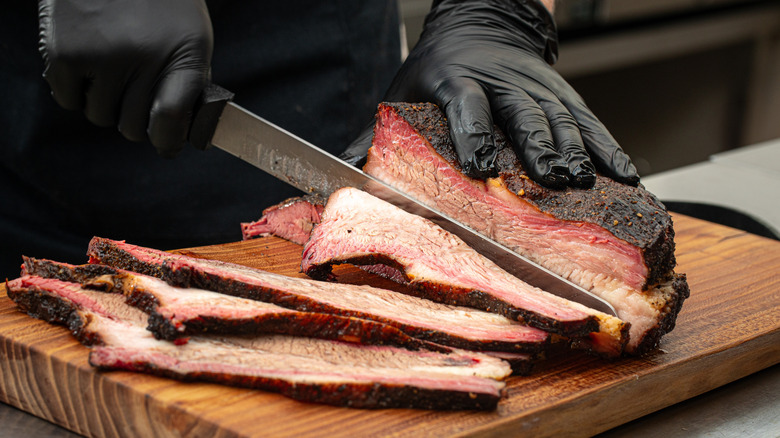
Brisket is a delicious dish, but it takes a good while to prepare. While braising is a set-and-forget method, smoking uses fewer ingredients.
Food Republic – Restaurants, Reviews, Recipes, Cooking Tips








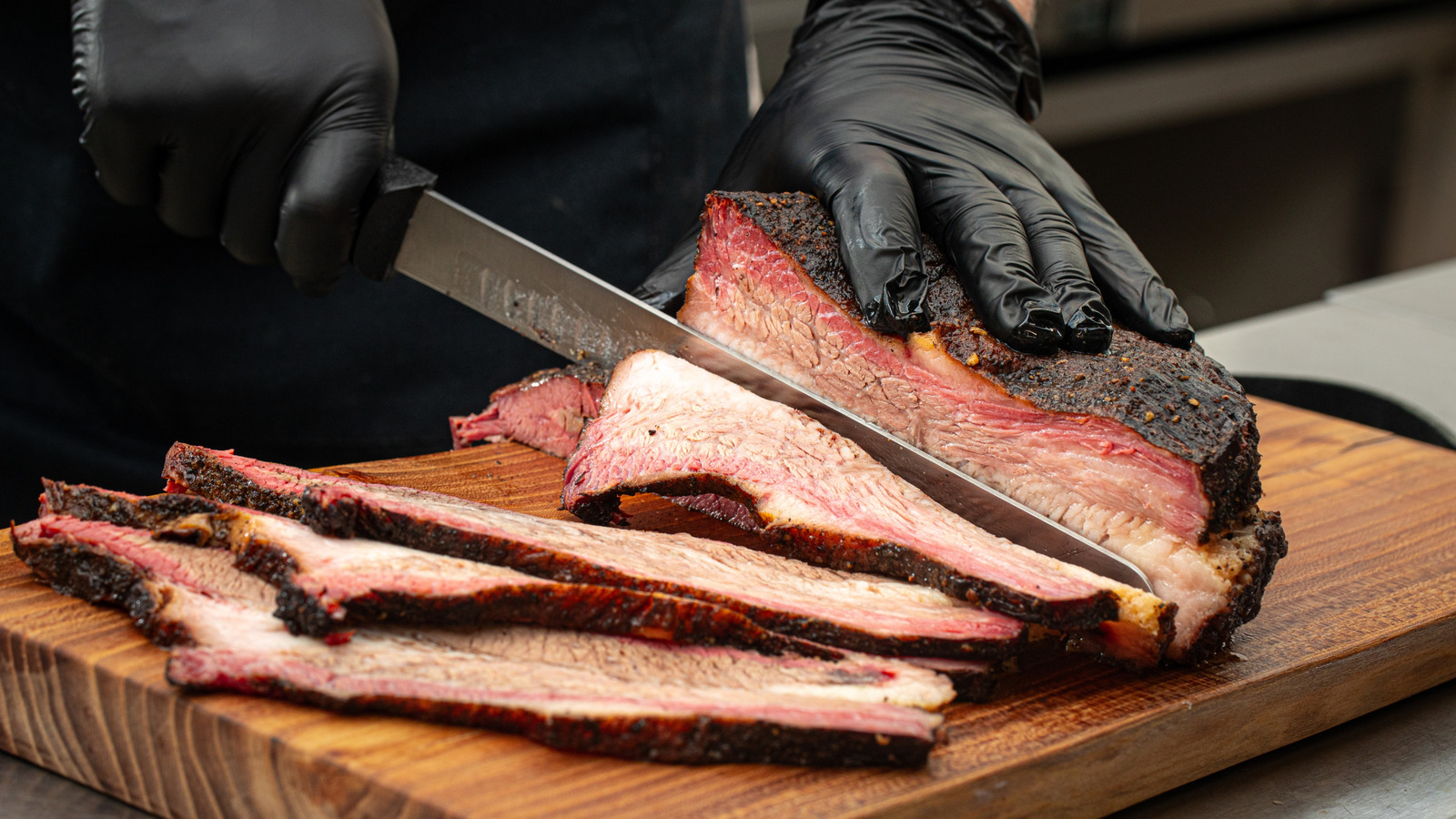
Brisket is a delicious dish, but it takes a good while to prepare. While braising is a set-and-forget method, smoking uses fewer ingredients.
Food Republic – Restaurants, Reviews, Recipes, Cooking Tips

Portland may not be as well known for its pizza as somewhere like NYC, but one delightful pie from this Oregon city left our writer speechless.

Mashed – Fast Food, Celebrity Chefs, Grocery, Reviews
Farkhunda Muhtaj has spent years fighting to keep the Afghanistan women’s national soccer team alive after the Taliban banned women from sport following President Joe Biden’s chaotic withdrawal of American forces from the country. That campaign reached a breakthrough this year when FIFA agreed to establish an official Afghan women’s national team.
The 28-year-old Afghan-Canadian, born to refugee parents from Kabul before her family settled in Toronto, helped lead the evacuation of Afghan soccer players after the Taliban returned to power in 2021. Since then, she has lobbied FIFA, organized a team in exile and worked to ensure Afghan players are ready to compete again — while playing as a midfielder for Calgary Wild of the Northern Super League in Canada.
The captain of the Afghanistan women’s soccer team, Muhtaj spoke with POLITICO from her home in Calgary.
This interview has been edited for length and clarity.
The World Cup is sometimes described as one of the few genuinely global events left in a world that is being shaped by war, polarization and rising nationalism. Do we ask too much of sport to solve society’s problems?
Sport can still drive social change in a positive way, but when we look at the World Cup and competitions on a global scale, we often think that it’s going to solve geopolitical tension — and it doesn’t, unfortunately. But what I can say is fans that watch the World Cup definitely have a different perception compared to what they have learned in the past about certain regions. That’s a huge positive because you are able to come to conclusions on your own around what different cultures look like and you are able to understand that you have some biases toward certain communities that are not true. So, from a fan perspective, it definitely has the power to unite.
You helped lead the evacuation of Afghan soccer players from the country when the Taliban returned to power in 2021. Did that experience teach you anything about international solidarity — or a lack of international solidarity?
I’ve had incredibly positive experiences with American citizens that were able to help me with this evacuation. Whereas if we look at the government, perhaps I wouldn’t have received the same level of support or care from that perspective, just because unfortunately it was a failure from the U.S. government, what happened in Afghanistan.
It’s important to understand that you can’t underestimate your impact. You have to take things one step at a time and doors will open up, but you need to remain persistent. Throughout the whole journey hopefully things will end up the way you imagined, which in that case was helping evacuate these young girls and their family members.
What’s the set-up for the Afghan women’s football team right now?
Since 2021, unfortunately, the Taliban has banned women’s sport participation, which meant that the Afghanistan Football Federation also could not continue supporting the national women’s team. And so it no longer existed in 2021. During that time, when I helped evacuate the Afghan youth national team players to Portugal, I actually created the official Afghan youth national team as a result and the goal was really to make sure that we were in a state that we could continue to train and compete, albeit without any funding from FIFA or the Football Federation.
At the FIFA Congress in Vancouver this year, President [Gianni] Infantino actually announced that we were going to start the official national team. So they adjusted their governance just so that we could be a national team. That refugee pilot project was until June 30, which just passed, which means moving forward the goal is to make sure that they can build a sustainable program for this official national team program.
Do you feel like FIFA, national governments and other stakeholders are doing a good job to make sure people in your situation and your team are not forgotten about?
It’s difficult to say because it’s taken them many years to finally be able to recognize us when this is something that we had advocated for right from the beginning in 2021. So I am grateful that we have this opportunity now and we do have an independent national team and can rebuild. But I also feel like the longer we wait, the more difficult the situation gets. From a national team perspective, we haven’t been active for five years.
We really need to catch up and we’re not going to be on international standards right away, but it is a process and we are going to get there and I do truly believe in this group and the tenacity of Afghan women. But it would have been fantastic had this happened sooner and from a governmental perspective, unfortunately, the way geopolitics works, there’s always going to be something else that everyone focuses on.
How have events of the last few years changed what it means to represent your country?
Growing up, for me, football has always been bigger than just sport. My dad was introduced to football through being a refugee and he passed that on to us as well. As I came to Canada when I was two years old and my family were immigrants here, football is something that really united us, helped us integrate into society, built confidence and transferable life skills that definitely benefit us to this day.
And we give back through the game as well. We have a nonprofit organization called Scarborough Simbas that I’ve co-founded, which uses sports to help ease the settlement and journey of refugees and newcomers to Canada through the power of football.
If there’s a young girl out there watching the World Cup today, growing up in a country that’s affected by conflict or repression, what would you want her to know about the role sport can play?
I would go back to my speech at One Young World, which is a platform that unites the world and has people coming together, sharing each other’s stories, to discuss what’s happening around the world. I would argue the World Cup is like that, where it gives people different perceptions. You hear different stories about players, the challenges that they went through and it really humanizes the experience of those players, because, at times, I think we can feel so distant from a professional footballer.
But what I said in that speech, as well, was the fact that sport is so much more than a game, it was an opportunity. And for me when you are in those situations, it’s an opportunity to change gender norms and perceptions around your country as well, but also to understand that your impact is so much greater than the circumstances that you are in. So I would say to that young girl that gets involved in sport: compete … but give back to the game as well.
I am fully aware that it’s not as easy as what I’m saying. But I hope that they can understand that football and sport will give them so much more than they would have ever imagined.
Politics

Tired of boring old red sauce? Look no further than your pantry; this canned soup will have you eating a seaside bistro-worthy pasta dinner in minutes.

Food Republic – Restaurants, Reviews, Recipes, Cooking Tips

An ice wedge is exposed in an eroding permafrost bluff at Utqiagvik, seen on Aug. 4, 2022. Mud flowing downhill is the product of ice melt within the soil. Utqiagvik, the nation’s northernmost community, bears some of Alaska’s most serious risks of permafrost-thaw damage to infrastructure, according to a new study. (Photo by Yereth Rosen/Alaska Beacon)
Permafrost usually hits the news as a hazard; a planetary risk. When this ice-rich ground thaws, it damages roads and building foundations. It drains lakes and tips trees into drunken forests. It releases greenhouse gases that have been locked in carbon-rich soils for thousands of years, amplifying warming, driving further thaw.
These are serious concerns, and we spend a good deal of time studying their causes. But another consequence of permafrost thaw receives far less attention: As the climate warms, we are losing our frozen heritage.
Permafrost contains the most exceptional archive of the distant past on the planet, a record of ancient life preserved in a way that exists almost nowhere else on Earth.
A recent study we led, published in Nature Communications, recovered DNA from Arctic ground squirrel droppings preserved in permafrost in Klondike, Yukon. In these pellets, we found plants the squirrels had eaten, parasites they carried and even traces of the larger animals — mammoths, horses and bison — that shared their grassland.
A single dropping held a detailed portrait of a vanished ecosystem, spanning an extraordinary depth of time — from around 14,000 to 700,000 years ago.
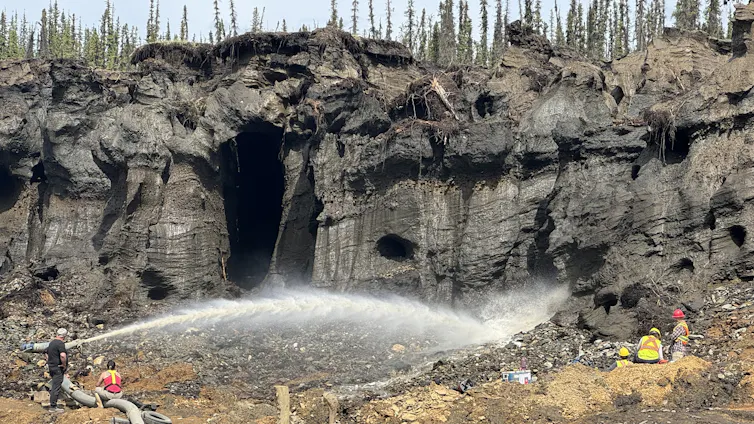
In the Klondike region of central Yukon, within the traditional territories of the Tr’ondëk Hwëch’in and the First Nation of Na-Cho Nyäk Dun, placer gold miners commonly use high-pressure water to strip away frozen silt and organic material to reach the gold-bearing gravels beneath.
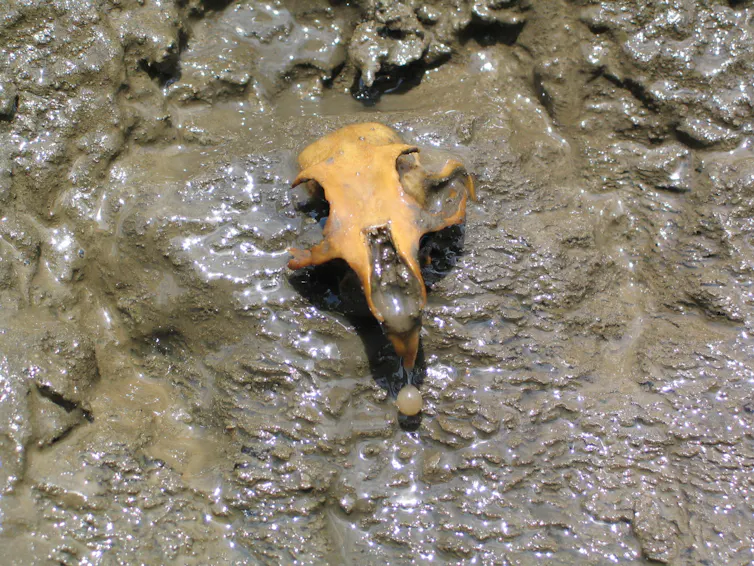
As the permafrost thaws, it gives up what it’s held for tens of thousands of years: wedges of ground ice; mats of grass roots still woven together; the nest of an Arctic ground squirrel with the animal’s bones curled inside. Every so often, we find the mummified carcass of an ancient wolf pup or the blue-stained glint of a mammoth tusk or a bison skull.

Miners call this frozen overburden “muck.” Scientists refer to it as Yedoma — part of an extensive complex of fine-grained frozen sediment stretching from Yukon across Alaska and the Bering land bridge into Siberia.
It is one of the richest paleontological and paleoenvironmental archives in the world — and we are only beginning to grasp how much it holds.
For most of its history, palaeontology was a hands–on science: a fossil was something you could pick up — a bone, a tooth, a tusk.
Over the past decade, that’s changed. Today we examine these deposits at the molecular level. From a teaspoon of frozen soil or the droppings of long-dead animals, we can recover billions of fragments of ancient DNA directly.
Permafrost preserves not just bone but the fragile, molecular archive of life — DNA, RNA, proteins, a genetic record of entire communities — under conditions of cold, darkness and low oxygen that stop the decay that would otherwise erase this material.
The DNA and proteins are heavily fragmented, but new sequencing technologies and enrichment methods now allow us to reconstruct full genomes and whole communities of ancient organisms from these scattered pieces — a feat impossible even a few years ago and one that is advancing quickly.
Ecosystems are only one part of what is held there. Years ago, some of us were part of a team, led by researchers Hendrik Poinar and Gerry Wright at McMaster University, that searched this same ground for antibiotic-resistant genes.
In 30,000-year-old permafrost, we found a diverse set, including genes associated with resistance to drugs such as vancomycin, with the ancient versions functioning much like those in hospitals today.
That work showed antibiotic resistance is far older than the clinical use of antibiotics. It also hinted that this frozen ground is a vast, almost entirely unread catalogue of microbial chemistry — one that may yet inform how we counter drug resistance or yield useful new enzymes.
Thaw is accelerating as ground warms across the North. As permafrost temperatures climb, microbial activity increases and more unfrozen water becomes available, allowing organic material to begin decomposing even before complete thaw. Material sealed away for thousands of years meets oxygen, free water and microbes, and the record fragments.
Practically, this means we need to be collecting and preserving far more of this material than we do now — building archives of frozen sediment and the molecules within them while they can still be read.

We have made efforts toward this goal in the Permafrost Archives Laboratory at the University of Alberta, one of the few facilities of its kind in the world, but it remains a small collection against a vast Arctic.
The science to interpret these archives is advancing quickly but the deposits themselves are degrading, particularly in areas of warm permafrost such as central Yukon.
The only real solution to permafrost thaw is to reduce greenhouse gas emissions and slow the warming of the North. In the absence of that, the least we can do is preserve what we can of this archive — in cold storage and in careful study — before significant portions are degraded beyond recovery.
The invisible DNA archives of a lost world remain buried in these frozen soils. If those records thaw, the beauty and complexity of life that shifted and adapted to the great ice ages of the past, with lessons for our warming world, will be lost.
This article is republished from The Conversation under a Creative Commons license. Read the original article.
SUBSCRIBE: GET THE MORNING HEADLINES DELIVERED TO YOUR INBOX.

A spot in the World Cup final is on the line when Argentina and England meet on Wednesday at Atlanta Stadium. The mindset and the motivation between the two nations and their fans are different as Argentina desperately wants to defend its title while England is looking to join the world’s elite and win its first title since the 1966 World Cup. The winner of the second World Cup semifinal will face Spain, which beat France, 2-0, on Tuesday in the first semifinal match. Here is everything you need to know for Wednesday’s World Cup semifinal. England vs. Argentina: How To Watch All eyes are on Lionel Messi in every game he plays. He has won a World Cup, Copa Américas, Champions League titles and every domestic league in which he has participated. But there is one thing Messi has never done: played against the English national team. These teams have a storied rivalry at the World Cup. In the quarterfinal of the 1966 World Cup, England defeated Argentina 1-0 in a game that saw Argentina’s captain, Antonio Rattín, have to be escorted off the field by police after a disputed red card. Coincidentally, Rattin died at 89 years old last week on the same day as Argentina’s quarterfinal win over Switzerland. Then in 1986 in Mexico City, we saw Diego Maradonna’s infamous “Hand of God” incident when he punched in a long ball past English goalkeeper Peter Shilton and the handball was missed by Tunisian referee Ali Ben Nasser. Argentina ended up winning, 2-1, and it is still widely one of the most talked about moments in World Cup history. Then in the round of 16 at the 1998 World Cup, England again disputed the officiating, as David Beckham was sent off and Alan Shearer had a goal disallowed. Argentina prevailed on penalties after a 2-2 draw. After having been eliminated by Argentina in two of the last three World Cups, England got revenge in a group stage matchup in 2002 with a 1-0 win. The goal was scored by Beckham via a penalty after Michael Owen was fouled by Mauricio Pochettino. That result led to Argentina’s shocking failure to advance out of group play. On Wednesday, the teams will write another chapter in their intense World Cup rivalry, and both teams should feel confident about arriving at this stage. Lionel Messi is the 2026 World Cup’s leading goalscorer with eight goals. He now has 21 career World Cup goals, making him the tournament’s top scorer. But in this tournament, he has assists in each of the last two games to also give him a record 10 career World Cup assists. What is perhaps the best news for Argentina is that Lionel Scaloni’s team has been developing a more balanced attack as the tournament has progressed. Messi scored the team’s first five goals of this World Cup. Since then, he scored three of the team’s next 12 goals. That balanced attack makes La Albiceleste far more difficult to stop. For England, the story is similar in that Harry Kane is not doing as much heavy lifting as he was at the beginning of the tournament. Since England’s lackluster 2-1 win over DR Congo in the round of 32 where Kane rescued England with two late goals, Jude Bellingham has sprung to life and been one of the tournament’s best players in the round of 16 and the quarterfinals. Bellingham scored two goals in a 3-2 win over Mexico and then two goals again in a 2-1 win over Norway. In doing so, Bellingham became the first player to score two or more goals in consecutive World Cup knockout games since Maradona accomplished the feat in 1986, which coincidentally included the “Hand of God” against England. Against Argentina, England will need Bellingham to also get wingers Anthony Gordon and Bukayo Saka involved to isolate Argentina’s fullbacks and create space. Meanwhile, Argentina’s midfield trio of Enzo Fernández, Alexis Mac Allister and Rodrigo De Paul will need to control the pace of the game and contain Bellingham. Central defenders Cristian Romero and Lisandro Martínez will also need to be on their game to stop Kane and the multitude of scoring options England has. England should be considered the favorite with more depth and players in their prime years. But even at age 39, Messi can win games by himself. Players To Watch The Real Madrid playmaker is in excellent form with two goals in each of his last two knockout games. He is finding space and is finishing with clinical precision. With Bellingham playing this well, England is far less reliant on Kane, and that helps the Three Lions immensely. At age 39, Messi continues to put up numbers that show why most people consider him to be the greatest player of all time. Against England, it will be another huge test and one of the big takeaways is how he will hold up after playing 330 minutes in his last three games.Latest Sports News from FOX Sports

In what was billed as a blockbuster between arguably the two best teams in the world, Spain defeated France 2-0 in surprisingly convincing fashion. Spain took advantage of French mistakes, used slick passing to maintain possession, and pressed relentlessly to down the French at Atlanta Stadium. Spain was in control from the opening whistle and scored first through a penalty drawn by Lamine Yamal that was converted by Mikel Oyarzabal in the 22nd minute. Then in the second half, right back Pedro Porro found an opening to move into the box and beat Mike Maignan. The results for Spain under head coach Luis de la Fuente are phenomenal. The team has not lost a game in its last two major tournaments. At Euro 2024, Spain won all seven of its games en route to the title. At this World Cup, Spain has won six games and drew once (take a bow, Cape Verde). Spain now enters Sunday’s final as the favorite. 1. Spain’s System Is On Full Display From the opening whistle, it was clear that France was in for a far different test than anything else it has faced at this World Cup. Spain is always an excellent possession-based team that can make its opponents chase the game for long stretches due to its passing. France knew what it was going to face. Spain defeated France each of the three times the teams played this current decade. First was a 2-1 win in the Nations League final in 2021. Then it was a 2-1 win in the semifinals of Euro 2024. Then last year in the Nations League semifinal, Spain won a wild 5-4 decision. Entering this game, France had a lot of momentum with both Kylian Mbappé and Ousmane Dembélé scoring and assisting in droves. On top of that, Michael Olise was the tournament’s most impactful midfielder. But the story of this game is how France was so overwhelmed when it could not maintain possession or handle the press. France was clearly frustrated chasing the game as much as it did. It could not focus and play to its strengths and get the ball to Mbappé or Dembélé in dangerous areas. Spain played its system to perfection. On both sides of the ball, the entire team was perfectly in synch with each other. Offensively, Yamal was a nightmare for France even if he did not score. Both goals originated from his side of the field. He had a goal called back on a close offside, and he demanded a lot of respect. Defensively, Spain again showed why they are so difficult to score against. Spanish defenders were always shutting down passing lanes and forcing turnovers. It was a double-edged sword. Spain was brilliant, but France also lacked the resolve to figure out solutions. Les Bleus became frustrated and let Spain do whatever they wanted. 2. Rodri Led An Immense Spanish Spine The biggest strength for Spain was its spine, specifically its central defender pairing and central midfield pairing. In the midfield, Rodri and Fabian Ruiz were excellent at winning and maintaining possession. The chemistry they displayed on both sides of the ball was on another level. Rodi was the best player on the field in this game. He was everywhere on both sides of the ball. He won 7/11 of his ground duels. He won 4/4 of his aerials. He drew three fouls. In central defense, Pau Cubarsí and Aymeric Laporte continued to frustrate opponents. Cubarsí is just 19 years old and the season he has had with Barcelona and now leading Spain into the World Cup final with six clean sheets makes him one of the most promising and accomplished teenage players in the world. But with the midfield and defenders so well-connected, it puts less pressure on the attack. Spain does not need to score goals in droves. It can control games and be patient until the moment comes. 3. France’s Cheap Giveaways And Mistakes Proved Costly What was also apparent in this game is how France struggled to often make important passes. There were many times when midfielders could not get the ball into the attack and saw passes intercepted by Spanish defenders. Michael Olise was particularly guilty of this, and that was surprising given how well he had been playing entering into this game. But he was a big reason why Dembélé and Mbappé saw such little of the ball. But Olise was far from the only culprit. Lucas Digne’s foul on Lamine Yamal to concede a penalty was a mental error that cannot be made at such a level. France’s fullback and wingers were never able to get forward to get numbers into the attack. 4. Oyarzabal Scores Big Goals In Big Moments Mikel Oyarzabal is not Kylian Mbappé, Erling Haaland, or Harry Kane – but he is perfect for this Spain team. Since 2025, he now has 17 goals in 19 games. In 2024, he scored the winner against England in the final of Euro 2024. In this game, he took the penalty in the 22nd minute and hit an unstoppable shot. Oyarzabal is interesting because he is the center forward for maybe the best national team in the world. He doesn’t play for one of the best clubs in the world, such as Barcelona, Real Madrid, Manchester City, or Paris St. Germain. He plays for Real Sociedad, where he has spent his entire professional career. But Oyarzabal is a testament to this Spanish team that it is about the system and the players that fit that system. It’s about the right players, not necessarily the best players. Oyarzabal is a perfect fit for this team, and he scores the big goals.Latest Sports News from FOX Sports
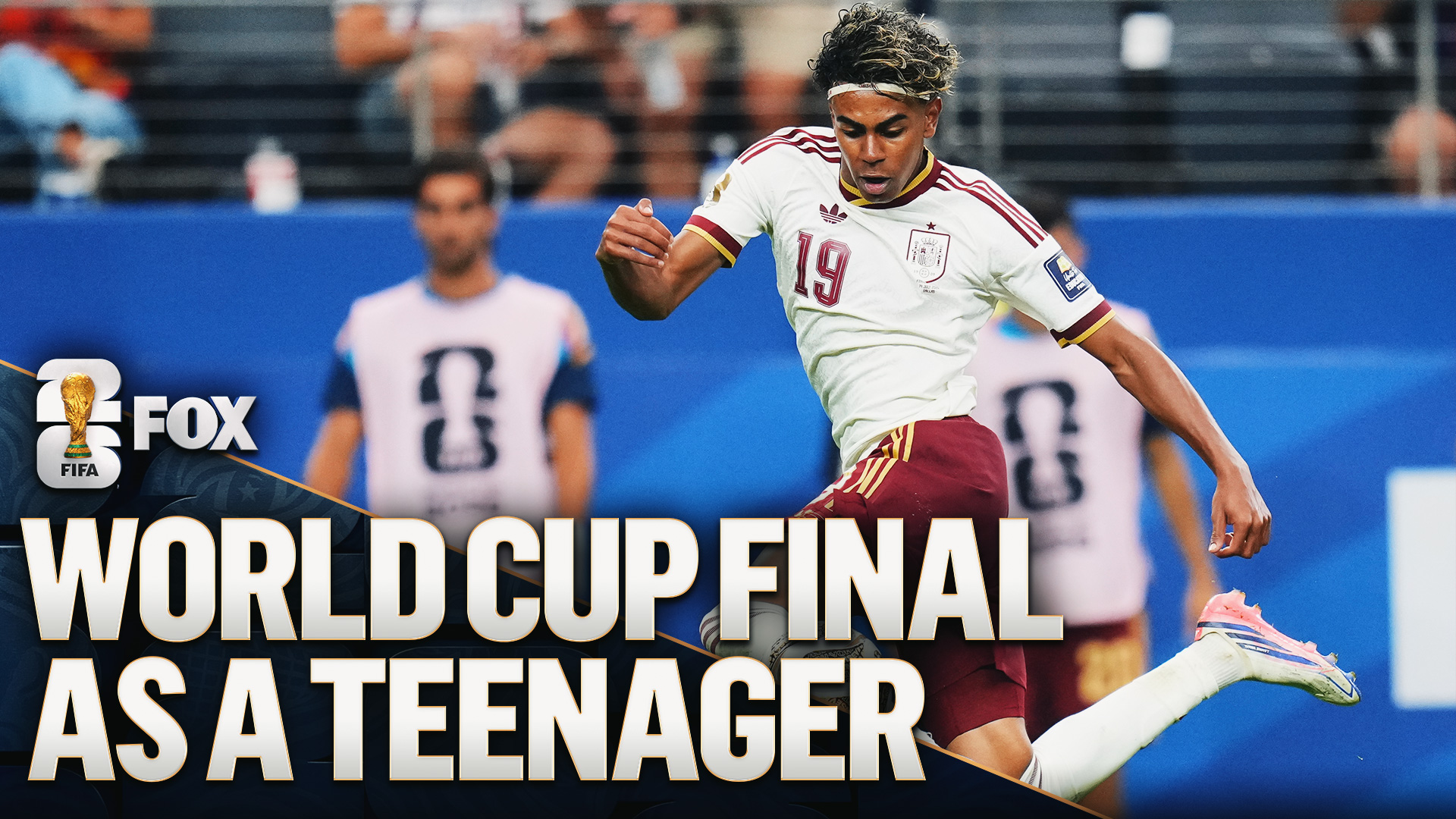
If Lamine Yamal wins the World Cup on Sunday, he legally wouldn’t be allowed to partake in any celebratory champagne with Spain teammates in the United States. At the age of 19, Yamal will be playing in a World Cup final after helping La Roja defeat France in Tuesday’s semifinal. How does his age compare to previous legends who also played in the final? Let’s take a look: Pelé | Brazil Pelé was 17 years and 249 days when he helped Brazil win its first World Cup in 1958. Pelé had burst onto the international scene at the tournament in Sweden, scoring six goals in all – including in the final over co-hosts. Pelé remains the youngest goalscorer in a World Cup final. Of course, his status only grew as he led Brazil to titles in 1962 and 1970. Diego Maradona | Argentina Maradona was 25 years old when he and Argentina won the 1986 World Cup in Mexico. But he could have joined Pelé as another 17-year-old champion had he been selected to Argentina’s squad in 1978. Despite already being a teen phenom, he was left of that squad by then-coach César Luis Menotti who felt the youngster wouldn’t be able to handle the pressures of a home tournament. Good thing it worked out in the end. Ronaldo | Brazil Another Brazilian legend, another World Cup champion before the age of 18. Although Ronaldo didn’t actually play at the 1994 World Cup, he was part of the squad that won it all at the Rose Bowl. At the age of 17 years and 298 days, Ronaldo was just two months older than when Pelé got his first in 1958. After losing the final in 1998 to hosts France, Ronaldo would win his second career title in 2002 by beating Germany. Kylian Mbappé | France Mbappé burst onto the scene at the 2018 World Cup for France and instantly became a global phenom. At 19 years and 207 days old, he helped Les Bleus lift its second World Cup ever. He made history during that match against Croatia by scoring France’s fourth goal, becoming only the second teenager in history to score in a World Cup final, joining Pelé’s performance in 1958. Lionel Messi | Argentina When compared to other players on this list, Messi was a late bloomer when it came to playing in the World Cup final. He was 27 years old when he and Argentina fell to Germany in the 2014 final in Brazil. Of course, Messi finally helped Argentina get over its World Cup drought by winning the 2022 title at age 35.Latest Sports News from FOX Sports

From small countertop essentials like stand mixers to major food-prep utilities, these Whirlpool-owned brands dominate the U.S. kitchen appliance market.

Food Republic – Restaurants, Reviews, Recipes, Cooking Tips
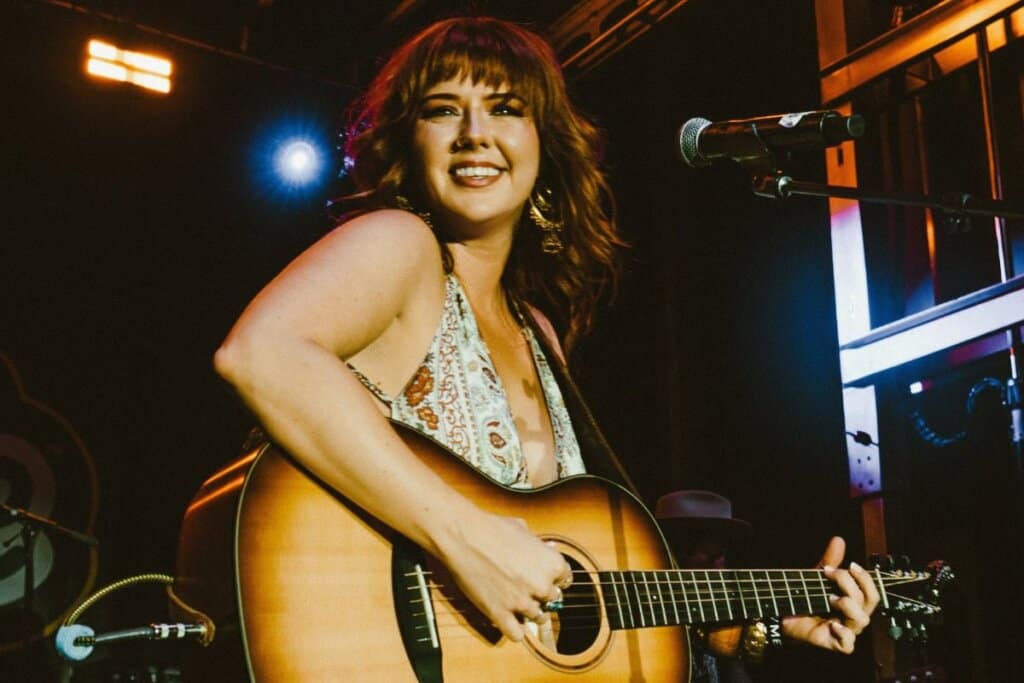
Cassidy Daniels is quickly becoming one of country music’s most exciting new artists. Between sharing her original music on the Yellowstone spin-off series, Dutton Ranch, touring with Brothers Osborne and preparing to release her debut full-length album, she continues to build momentum both on and off the stage.
The recent 101 Music signee is now based in Nashville, but her journey began in a military family that moved around frequently throughout her childhood. While she calls North Carolina home, she also spent formative years in Kentucky and Florida, but no matter where she lived, her love for music always followed.
Daniels knew she wanted to pursue music by 9 years old, and at 12, she began building a community in Music City and laying the foundation for the career she has today. She cut her teeth performing on Nashville’s Broadway strip before reaching a national audience as a finalist on CBS’ The Road.
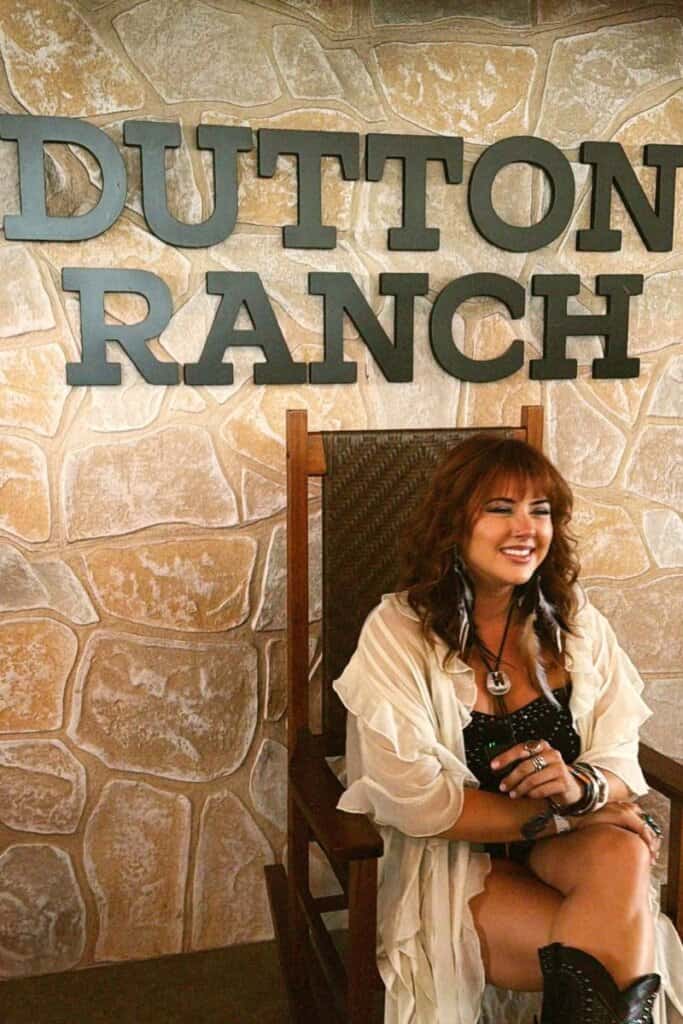
That experience also led to a connection with Taylor Sheridan, who later featured Daniels throughout the first season of Dutton Ranch, where she performed several original songs, including “Heart Shaped Necklace,” “Crazy Love” and “Ain’t No Jukebox.” All three tracks are set to appear on her forthcoming album, produced by Brothers Osborne’s John Osborne.
Keep reading the exclusive Q&A to learn more about Cassidy Daniels’ journey to Nashville, the new perspective she gained on The Road, Her upcoming album and more.
Was music something that always followed you through all the different places that you lived growing up?
Yeah. So I grew up in a post-9/11 active-duty military family. So songwriting and music was kind of my solace. And it definitely followed me around when we moved because honestly, the little Toys R Us keyboard that I had was our only constant. And it was something that ended up being very therapeutic for me too because my dad was gone in the height of combat. So it ended up being a hobby that kept me busy, kept me distracted and kept me entertained as a kid.
Was your family musical too or was this something that you pursued on your own?
This was something that I pursued. I grew up in the church, so I always sang in church. But to do it for a full-time career, I’m the first in my family to ever do it.
At what point in your life did you really start to pursue it more seriously?
This sounds so crazy, but I was like nine years old. I had a dream. And I just knew. I was like, “Yeah, this is what I’m going to do forever.” And then there was just never a world where I wasn’t going to do music. I mean, I had my want to be a marine biologist phase. Music was plan A.

What steps did you take to get yourself to get your foot in the door in Nashville?
At the time I was getting into music, I kind of knew that females have a little bit less time than guys do on the spectrum of doing things in music…But I started very young because of that reason. I knew that if I didn’t start when I was like 12 years old, that it would just end up being too late. So I started literally when I was 12 years old and I met Liz Rose when I was 14 and I really just kind of bullied my way into the circles that I needed to be in. I had a lot bigger balls at 14 than I do now. So I just kind of bullied my way into the right circles that I knew would take care of me and wouldn’t take advantage of me. And thank God it worked out.
What was your mission with the kind of songs you were writing at the time and how has that shifted since then?
Well, I think it really started as a… I wanted to perform. I always knew that I wanted to sing and I wanted to perform in front of people. And if songwriting was what was going to get me there, I really made sure to hone in on my craft. So I guess the mission became to write great songs that connect with people so that you can play them for them all over the world.
You got to gain a whole new audience when you were on The Road. Talk about that experience and how you got yourself into that.
The Road was definitely a whirlwind of an experience. So one of my dear friends that’s been just a champion of mine for a long time, her name’s Avon. She called me and she works out in LA in Hollywood as a producer and a music supervisor. And she called me and she was like, “Hey, we have this show that I think it would be perfect for. It’s Taylor Sheridan, it’s Blake Shelton, and it’s Keith Urban. You should come do it.” So she called me and I really trusted her because my initial plan wasn’t to do things like that. I didn’t feel like I was made for TV. I didn’t think that I would do anything more than music and songwriting. And I ended up going on The Road and I let it take me as far as it could possibly take me. And then everything was history from that point on because Taylor Sheridan got ahold of me and put me on a bunch of other shows and it’s been crazy.
You’ve had several songs air on Dutton Ranch and you’ve gotten to perform on the show. How did it feel to share your music in that way?
It’s honestly really wild to think about because I mean, that stuff just doesn’t happen in the industry. So I really take it with gratefulness and appreciate him seeing something in me that I’ve been trying to get people to see for years and years and years.
What have you learned from diving into the TV side of things?
Working on set was honestly the hardest I’ve worked in a very long time. Comparative to like manual labor. It’s a lot of hurry up and wait. It’s a lot of, just mentally taxing because you’re just sitting around and you’re waiting. I got ADHD like a crazy person. It’s hard for me to sit around and wait. And then just like the repetitiveness of it. It was so hard, but I gained a whole new respect for acting and how a show runs and the craft of all that. So now what I’m doing is, in respect for the craft, I’m looking forward to learning more about acting and hopefully becoming a better actor myself.
So it sounds like you’re open to branching out into even more acting in the future?
Oh my gosh. I totally am open to it. I will pretty much do… If Taylor Sheridan calls me and says he wants to put me on a show, I’m going to do it.
“Crazy Love,” “Heart Shaped Necklace,” and “Ain’t No Jukebox” were all on the series. How did those particular songs get picked for the show?
Well, these songs are actually songs that I’ve been sitting on for literal years. Everyone always underestimates the process of what it takes to put out a song in Nashville. It’s just, for lack of a word, it’s just a bitch to get a song out. Takes so long to record it. And I’ve been sitting on these for literally…”Heart Shaped Necklace” and “Crazy Love” for three years, four years even, and two years for “Ain’t No Jukebox.” So I mean, how these ended up in the show is once again, my friend Avon literally has just been familiarized with my catalog for a long time. And she’s known about those songs and have loved them for a hot minute. And as soon as she found a place for them, she threw them in there.
Talk about what it was like working with John Osborne to produce “Crazy Love” and seeing that song finally come to life after so many years.
“Crazy Love” for me is such a true representation of me as an artist. I’ve played that song at songwriter rounds for years and years and years and had the same reaction with it from every single place I played it at. And I think that with it finally being out, it’s going to get to have the opportunity to live in a new space. And especially with the way that John O produced it. Working with him has been phenomenal. I’ve never had a producer be so kind and open to trying what I would like to see within my vision. And I mean, it’s been a whirlwind, but it’s also been a long time coming.
You’re also currently on the road supporting Brothers Osborne. How did you first get connected with them and what led you to work with John in the studio as well?
I got connected with Brothers Osborne, actually, we met on The Road, on that show. So my entire career has basically been just like a big domino effect. I met Brothers Osborne on set of The Road and I mean literally John was just like, “Yeah, I’ll produce her record.” It’s been an honor working with him. I’ve learned so much from him and TJ, especially on the road and how they do their show. They’ve been a great, great, great mentor for me.
What can you share about this upcoming album?
I can tell you that I have an album coming out in the early fall. I don’t have a release date yet for you…It’s coming out in the early fall and literally every single song is produced by John O. It is literally the songs that I’ve loved and played on stage from dive bars to stadiums. And I think it’s just a collection of songs that really puts my flag in the dirt and says this is who I am.
Will you be dropping any more songs before the full project becomes available in the fall?
For sure. “Ain’t No Jukebox” is going to be a single off that project. So that will be coming out next month… So you’ll get one more single before the album. And then the album’s going to be 10 songs of just literally my diary out on my sleeve in front of the whole world for y’all.

What was the inspiration behind “Ain’t No Jukebox”?
So I made my living in the dive bars in Nashville for years and years and years before I ever did anything of substance to the music industry. And it was really something that helped me cut my teeth and make me a better player, musician and band leader. And I used to be on Broadway singing and somebody would come request a song and I’d make my living literally one song request at a time. They’d request a song. Sometimes I didn’t know it and I’d go, “Well, honey, I ain’t no jukebox” when they get upset about it. So it kind of just came into the writing room as just a silly story of something that I was just saying because it was funny on stage. And I wrote it with Kenny Whitmire and Lee Starr and they helped turn it into an actual song with a storyline. And it honestly is one of those songs that just kept slipping through the cracks in the best way and right down to our feet where we just knew that this is a honky tonk, stomping song. We got to put this on the record. It kind of weaseled its way in.
When you look back on where you started and all the things you’ve accomplished in between, what do you think is the thing that you’re most proud of for accomplishing so far?
I think if I were to choose something to be proud of with just myself, it’s really picking the right team. I’m very thankful that God gave me a good intuition about people and with my specific team…an artist is only as good as their team is and my team’s been incredible. Another thing would probably be just not taking no for an answer. If I quit every time somebody tell me no, I’d have been done 10 years ago.
Fans can keep up with Cassidy Daniels on Instagram.
The post Country Next: Cassidy Daniels appeared first on Country Now.
Country Now