Categories
Alaska News

Flights are faster and cheaper. Travelers are choosing the train anyway

Luxury rail is entering one of its busiest periods in years, with new routes launching across North America, Europe and the Middle East. The Canadian … Read moreThe post Flights are faster and cheaper. Travelers are choosing the train anyway…

Categories
Sports Fox

2026 MLB Midseason Awards: Picks for MVP, Cy Young, ROY, Top Reliever And Manager

Before the season began, many expected reigning Cy Young Award winners Tarik Skubal and Paul Skenes and reigning MVPs Aaron Judge and Shohei Ohtani to defend their crowns as the top players in their respective leagues. A few months later, a lot has changed, and a path has opened for some new contenders. Tigers ace Skubal missed more than a month of action (but returned remarkably quickly) after undergoing an innovative elbow procedure. Skenes was one of Pittsburgh’s two All-Star representatives, but he entered the break with a 3.57 ERA. Yankees superstar Judge hasn’t played in more than a month after suffering a stress fracture in his rib. And Ohtani … well, sorry to the other National League MVP hopefuls, but he’s still Shohei Ohtani. Ahead of the second half, here are my midseason picks for the major awards. NL MVP As long as Ohtani holds up physically, you can lock this in now. Despite dealing with knee and biceps issues this year, Ohtani is cruising toward his fifth MVP award and third straight since joining the Dodgers. At the plate, he has the fifth-highest OPS in Major League Baseball. On the mound, he has the second-lowest ERA among all pitchers who have thrown at least 50 innings. Cubs star Pete Crow-Armstrong is providing value all over the field and Phillies slugger Kyle Schwarber leads MLB in home runs, but there’s just not much anyone can do when one player is both one of the best hitters and one of the best pitchers in the sport. In the mix: Pete Crow-Armstrong, Cubs; James Wood, Nationals; Kyle Schwarber, Phillies AL MVP The MVP door is open in the American League with Aaron Judge injured, and Alvarez is seizing his opportunity. The Astros slugger leads all qualified MLB players in on-base percentage, slugging percentage and OPS and has a chance to win the Triple Crown. Alvarez leads the AL in home runs and RBIs and is just four points behind Rays All-Star Yandy Díaz in batting average. In the mix: Bobby Witt Jr., Royals; Junior Caminero, Rays; Ben Rice, Yankees NL Cy Young Award Like the MVP race above, as long as “The Miz” holds up physically, this is his award to win. He leads all qualified MLB pitchers in ERA, strikeouts, WHIP and opponents’ batting average by a commanding number. In fact, no qualified starter has ever held opponents to a lower batting average than what Misiorowski is doing now (.148). Not including the shortened 2020 season, the only qualified starter in MLB history with a strikeout rate as high as Misiorowski’s over the course of a full season is Gerrit Cole in 2019. In the mix: Cristopher Sánchez, Phillies; Zack Wheeler, Phillies; Chris Sale, Braves; Chase Burns, Reds AL Cy Young Award This is the closest battle in the American League. Blue Jays ace Dylan Cease has the most strikeouts and highest strikeout rate in the American League, and if by season’s end he starts to close the gap on Schlittler in innings pitched, then this conversation will be different. But Schlittler sports an ERA that’s a half-run better — his 2.05 ERA and 0.94 WHIP are both the best marks among all qualified AL starters — and the 25-year-old has done it while making three more starts than Cease. In the mix: Dylan Cease, Blue Jays; Joe Ryan, Twins; Parker Messick, Guardians NL Rookie of the Year Finally, we get to a closer race. Reds All-Star Sal Stewart, who has two more hits than Wetherholt and leads all qualified rookies in RBIs, has started to close the gap. Also keep an eye on Colorado’s TJ Rumfield, who leads all NL rookies in hits and OPS. But the overall value Wetherholt is providing — he leads all NL rookies in WAR by a significant margin, in large part due to his exceptional defense — still has him ahead of the field. In the mix: Sal Stewart, Reds; TJ Rumfield, Rockies; Foster Griffin, Nationals AL Rookie of the Year Through his first 93 big-league games, McGonigle has more walks than strikeouts. That is a remarkable feat for any player, let alone a 21-year-old in his first big-league season. Royals superstar Bobby Witt Jr. is the only American League player worth more bWAR than McGonigle, who has the fifth-highest on-base percentage in the AL. If White Sox slugger Munetaka Murakami comes back swinging the way he was prior to his hamstring strain, that could at least make this race a little more interesting. In the mix: Munetaka Murakami, White Sox; Parker Messick, Guardians; Kazuma Okamoto, Blue Jays NL Reliever of the Year Miller has struck out nearly half of the batters he has faced, is a perfect 25-for-25 in save chances, and still hasn’t allowed an extra-base hit this season. He’s one of just six relievers all time with a strikeout rate over 48% in at least 30 innings of work, and he has the lowest ERA of that crop (0.91). Don’t be surprised when he gets Cy Young votes. In the mix: Jhoan Duran, Phillies; Raisel Iglesias, Braves; Dylan Lee, Braves AL Reliever of the Year When Jeff Hoffman stumbled out of the gates this year in Toronto, Varland ended the ninth-inning uncertainty. Varland, a 15th-round pick by the Twins in 2019 who was named an All-Star for the first time this season, is a perfect 19-for-19 in save opportunities. He has a 1.10 ERA — the lowest mark of any AL closer — and has the highest strikeout rate among all qualified AL relievers. In the mix: Cade Smith, Guardians; Bryan Baker, Rays; Jacob Latz, Rangers NL Manager of the Year The Phillies were 9-19, tied for the worst record in MLB and already 10.5 games back in the NL East, when Don Mattingly took over for Rob Thomson on April 28. They’re 45-24 under Mattingly and are now just two games back of the first-place Braves at the break. Of course, if the Marlins do the unthinkable — they’re only four games back of first place — this award belongs to Miami manager Clayton McCullough. In the mix: Clayton McCullough, Marlins; Walt Weiss, Braves; Oli Marmol, Cardinals AL Manager of the Year What a time on the South Side of Chicago. Just a year ago, the White Sox lost 102 games. Now, they enter the second half in first place in the AL Central, they have the second-best run differential in the American League, and the vibes couldn’t be better for this franchise on the rise. In the mix: Kevin Cash, Rays; Skip Schumaker, Rangers; Stephen Vogt, Guardians​Latest Sports News from FOX Sports

Categories
Entertainment

Open Channels FM: Open Channels FM Launches Live News Show Focused on the Open Source Ecosystem

Open Channels FM is launching a new video news show called Open Channels News, starting July 27th. It’s a quick, five to ten-minute program covering various open source topics, available live and on YouTube.​WordPress Planet

Categories
Entertainment

Meghan Markle Emmy Nomination Sparks Outrage Among UK Critics

Reading Time: 2 minutes

On Tuesday, Meghan Markle received her very first Emmy nomination.

The Duchess’ Netflix series With Love, Meghan has been nominated for Outstanding Lifestyle Series.

And naturally, Meghan’s biggest haters have worked themselves all into a tizzy over it.

Prince Harry, Duke of Sussex and Meghan, Duchess of Sussex during a Scar Tree Walk on April 16, 2026 in Melbourne, Australia.
Prince Harry, Duke of Sussex and Meghan, Duchess of Sussex during a Scar Tree Walk on April 16, 2026 in Melbourne, Australia. (Photo by Asanka Ratnayake/Getty Images)

“A huge congratulations to the amazing crew, producers, and team who worked on ‘With Love, Meghan’ on Netflix,” Meghan wrote on Instagram in response to the news, adding:

“We are nominated for an Emmy for Outstanding Lifestyle Series!”

Naturally, the moment of joy in the Duchess’ life brought tremendous consternation to the many online trolls who still fixate on her every move.

And of course, The Sun was happy to compile the most vitriolic comments in an effort to make it sound like the entire internet is seething over this nomination.

“Poor Meghan Markle never disappoints,” wrote one hater, adding:

“She’s wasted no time getting around to crowing about her Daytime Emmy nomination for her contrived, critically panned, embarrassing flop.”

“You know… the obviously worthless Emmy that you can apply for yourself. The delusion runs deep with Meghan,” another added.

“Is this a joke? With Love, Meghan was cancelled & had horrible ratings,” a third chimed in.

“How much does any Emmy nomination cost, because this was clearly bought,” a fourth wrote.

The author of The Sun piece made little effort to conceal the fact that they share the social media commenters’ contempt for Meghan’s show.

“In some of the show’s more bizarre scenes, Meghan eats a sea urchin’s privates and squeezes her hand up a chicken’s bum,” they wrote after repeatedly referencing the series’ ratings struggles.

It’s true that Meghan’s show has not been renewed by Netflix, but that’s hardly pertinent to the conversation about the nomination, which was based on the quality of the series, not its popularity.

Why would ratings have any impact on a show’s Emmy chances? Why are so many Brits seething about an American award show?

It’s best not to think about these questions or the reason why so many Brits are still fixating on Meghan’s every move years after she moved back to America.

The haters probably don’t give the question much thought themselves, as doing so would force them to confront some very dark truths about themselves.

Meghan Markle Emmy Nomination Sparks Outrage Among UK Critics was originally published on The Hollywood Gossip.

​The Hollywood Gossip

Categories
Health

Not Stampedes, Not Showdowns — This Illness Was The Leading Cause Of Death For Cowboys

One might think that the iconic players of the Wild West frequently met their demise in dramatic ways. But the era’s most potent killer was a treatable disease.

​Health Digest – Health News, Wellness, Expert Insights

Categories
Uncategorized

After 1776, the founders designed a government that accounts for ‘a degree of depravity in mankind’

Once America had become a country, a new government needed to be designed. Nazlisart/iStock Getty Images

The parades, reenactments and fireworks are over. And in the aftermath of Americans’ celebration of the 250th anniversary of the Declaration of Independence, it is important to recognize that the declaration was only the first step in making a unified country.

Many of the founders argued that the country needed a remodeled government. They asked whether it was possible to design a government for the new country that ensured liberty in the face of the inherent flaws of human nature.

Revolution’s aftermath

In the aftermath of the American Revolutionary War, the national government remained a loose confederation of state governments. While effective in winning the war, the new government faced social and political fissures in the postwar period.

The war left the new republic with extensive debts shared unevenly between the states. Common farmers, including many Revolutionary War veterans, rebelled in opposition to postwar taxation policies. Rather than a cohesive national unit, Americans faced a loose, tense and combative set of state and local interests.

The Second Continental Congress in 1777 produced the first constitution of the United States, the Articles of Confederation. However, differing interests between state governments, including the management of western territory and public finance, slowed ratification. Only in 1781, as the Revolutionary War was entering its final stage, did all of the states finally agree to ratify the articles.

Both the terms of ratification and the text of the Articles of Confederation reflected a suspicion between the state governments, each of which wanted to protect their own local interests rather than cede authority to the national government.

A large, formal hall with many men in Colonial dress talking, some from a stage.
A 1935 painting depicting – and titled – ‘The Adoption of the U.S. Constitution in Congress at Independence Hall, Philadelphia, Sept. 17, 1787.’
John H. Froehlich, painter; photo by Universal History Archive/Universal Images Group via Getty Images

Lumbering system

The limited powers that the articles granted to the national government reflected the lack of consensus between states. The government designed in the articles lacked any strong executive authority and did not have a national judiciary.

Additionally, the national legislature, which the articles referred to as a “league of friendship,” functioned less like a representative organ of the people at large than a council of state governments.

The articles created a single-chamber Congress in which each state cast one vote. Major legislation required a supermajority, and amendments required unanimity.

To many, such a slow-moving, restrictive system was preferable, particularly with the memory of the abuses of the British government still in recent memory.

However, the 1780s saw a series of contentious events – a barely thwarted uprising of frustrated soldiers called the Newburgh Conspiracy, interstate trade disputes, an economic depression and a rural tax rebellion that prompted many American leaders to reconceptualize the role and structure of American government around a more unified, national and interventionist model.

Competing visions

The nationalists were members of the Constitutional Convention that met in Philadelphia in the Summer of 1787 to draft the successor to the articles, the United States Constitution. This group included Alexander Hamilton, James Madison and John Jay. These three men sought to convey that the proper role of government is to protect people from themselves.

The nationalists believed in a more centralized national union that balanced competing interests in the new republic. They sought to eliminate friction between the states by eliminating interstate trade barriers, consolidating state debts and creating a stronger central administrative body under a strong executive.

Furthermore, they sought to create a balance of power by creating a three-part federal government consisting of a two-chamber legislature, an executive branch and a national judiciary. Each would have expanded powers.

In contrast to the articles, the proposed Constitution included uniform national commercial regulation, monetary controls such as the exclusive right of the national government to issue legal tender, augmented executive powers to determine foreign policy and an overarching federal court structure. It also included an explicit national power to suppress uprisings.

The representatives to the convention, which also included prominent figures such as George Washington and Benjamin Franklin, considered the federal government’s ability to deal with uprisings and fiscal policy to be particularly important. It was also topical: A tax imposed on cash-poor farmers to pay down the public war debt had just prompted a rebellion in western Massachusetts led by Revolutionary veteran Daniel Shays.

Many rebels believed the burden of repaying the public debt fell disproportionately on common people while benefiting elites. Nationalist political theorists such as Hamilton, Madison and Jay saw such revolts against national authority as the product of demagogues instigating unrestrained urges into social movements they referred to as “factions.”

Initially, the terms of the new Constitution received substantial opposition from prominent political writers later known as the Anti-Federalists. These often anonymous authors began publishing criticisms of the yet unratified Constitution as an unwarranted accumulation of federal power that would endanger the hard-won liberties secured by the Revolutionary War.

This is where the document that has become known as the Federalist Papers comes in.

A gray-haired man dressed in a Colonial manner, with a ruffled white shirt and gray waistcoat and jacket.
Alexander Hamilton, who along with James Madison and John Jay wrote the collection of essays called the Federalist Papers.
Stock Montage/Getty Images

‘If men were angels …’

Hamilton, Madison and Jay responded to these criticisms as a group. Adopting the pen name Publius, they published 85 essays in New York newspapers supporting ratification. In defense of the Constitution’s proposal to increase the powers of the proposed national government, these authors turned to some of the most basic philosophical questions about humanity.

Each argued that the inherent flaws of human nature necessitated a strong government to check political abuse, self-interest and even violence that they saw as inherent in the fabric of human society. They rallied around the position reflected in Madison’s famous statement in the essay known as Federalist 51 that “if men were angels, no government would be necessary.”

The Federalist Papers include proposals for institutional solutions that sought to redirect the destructive drives of individuals toward positive social ends. To the authors, a new constitutional government that controlled both the impulses of the masses and the abuses of their leaders would serve as the means through which the new United States government could accomplish this task.

Each saw human nature as susceptible to corruption by base impulses and self-interest.

In Federalist 10, Madison argued that faction is “sown in the nature of man.”

Similarly, in Federalist 6, Hamilton rejected the commonly held idea that republics were automatically peaceful. Instead, he argued, political leaders and states were driven by ambitions and jealousies, which he saw as a characteristic shortcoming of the government under the Articles of Confederation as well as a law of nature governing relations between nations.

Hamilton wrote that if the states remained disunited, then “the subdivisions into which they might be thrown would have frequent and violent contests with each other.” To argue otherwise, he wrote, would be “to forget that men are ambitious, vindictive, and rapacious.”

Consequently, as Hamilton asserted in Federalist 15, governments must have effective coercive authority to enforce laws because they cannot rely solely on the goodwill and civic virtue of their citizens: “If there be no penalty annexed to disobedience, the resolutions or commands which pretend to be laws will, in fact, amount to nothing more than advice or recommendation.”

Ultimately, the defense of the Constitution provided by the Federalist Papers sought to frame the new government in terms of a skeptical view of humanity that recognized what Madison called “a degree of depravity in mankind.”

They also asserted that constitutional design and balanced government could control these dangerous impulses. As Madison added, “There are other qualities in human nature which justify a certain portion of esteem and confidence.”

The Conversation

Donovan Fifield receives funding from the European Research Council.

​Politics + Society – The Conversation

Categories
Uncategorized

When can a power company take your land for a data center?

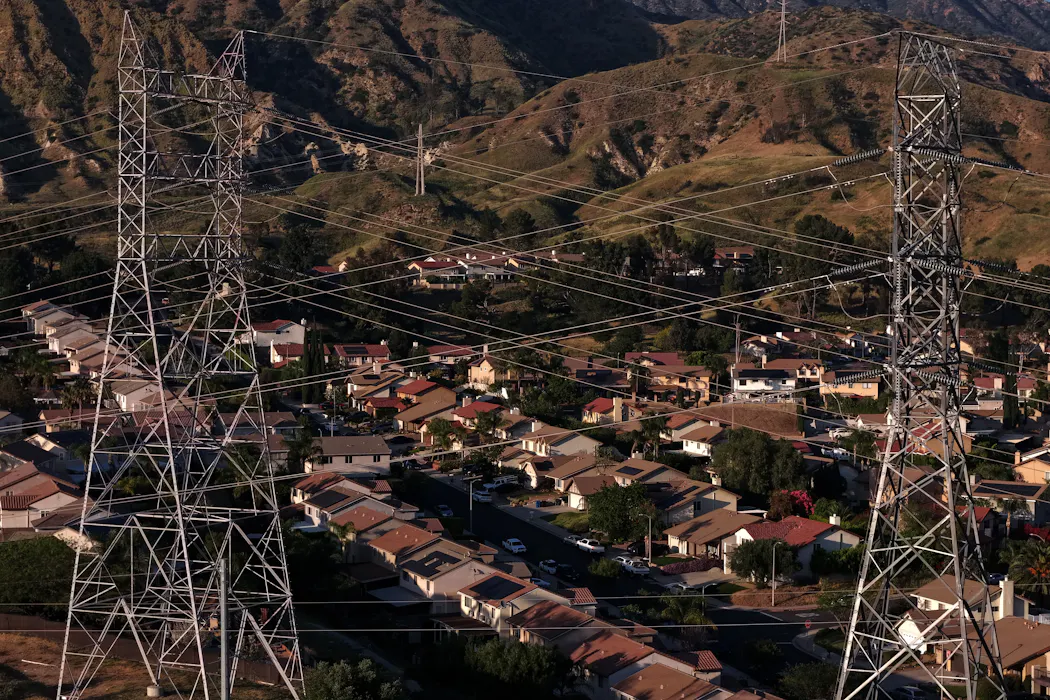
Meeting data center power demands will mean building more transmission lines and acquiring more land to put them on. These lines are in California. Justin Sullivan/Getty Images

The artificial intelligence boom in the United States is being matched by a data center building boom. There are more than 3,000 data centers in the U.S. and another 1,500 in development, according to a Pew Research Center analysis.

While President Donald Trump has promoted AI advancement, calling it crucial to economic and national security, polling shows that 7 in 10 Americans oppose the construction of AI data centers in their communities, citing higher utility bills, pollution, noise and the loss of green space. These centers, which hold computer servers that process words, images and lines of code for large language models such as ChatGPT, also use high amounts of water and electricity.

There is growing opposition to the infrastructure surrounding them, too, particularly the transmission lines needed to power them, which often must cross land belonging to private citizens.

Where private citizens refuse to sell their land, companies are turning to eminent domain, the government’s inherent power to seize private property without a landowner’s consent. But does a line built to serve a private data center qualify?

I’m a legal scholar who studies eminent domain issues, and I interpret today’s disputes over seizure of property for the benefit of AI infrastructure as the latest incarnation of a long-standing debate about the limits of taking private property for public use.

Why is expansion needed?

Data centers have massive power needs that can stress electrical grids and threaten their reliability. In 2024 they accounted for more than 4% of the nation’s total electricity use. Demand will grow as more are built. To meet this demand, power companies must build more transmission lines – and acquire land to put them on.

Across the U.S. – in states such as Georgia and Pennsylvania – power companies have looked to eminent domain to facilitate these goals.

What is eminent domain?

Power companies can approach landowners to purchase easements for transmission lines; if landowners refuse, the government might force a sale.

The government may take private land without consent if the seizure is for “public use” and if the landowner is given “just compensation,” according to the takings clause of the Fifth Amendment of the U.S. Constitution.

While the federal government has the power to initiate eminent domain actions – also called condemnations – most are done by state and local governments.

Governments can also delegate this power to private entities or “common carriers,” such as power and water companies, though every state has its own rules for whether and how these utilities can exercise eminent domain. In Texas, for example, the state Supreme Court has held that a project must “serve the public” and “cannot be built only for the builder’s exclusive use” in order to qualify as a common carrier.

What is the ‘public use’ standard?

While property may be taken only for “public use,” the U.S. Supreme Court has interpreted that requirement permissively. In its 2005 Kelo v. City of New London decision, the court held that economic development qualified, allowing New London, Connecticut, to seize homes for private development around a Pfizer facility. That redevelopment, however, never happened, and Pfizer eventually left New London.

In response to that decision – and the public backlash that followed – 45 states enacted eminent domain reform laws.

In addition to reform laws, some state supreme courts interpret the eminent domain provisions of their own state constitutions more restrictively. The supreme courts of Michigan, Ohio and Oklahoma have all prohibited seizing private property to give it to another private party purely for economic development.

This means private landowners may have more success challenging condemnation actions under their state constitutions than in federal court. Still, courts typically permit exercise of eminent domain by utilities such as power companies.

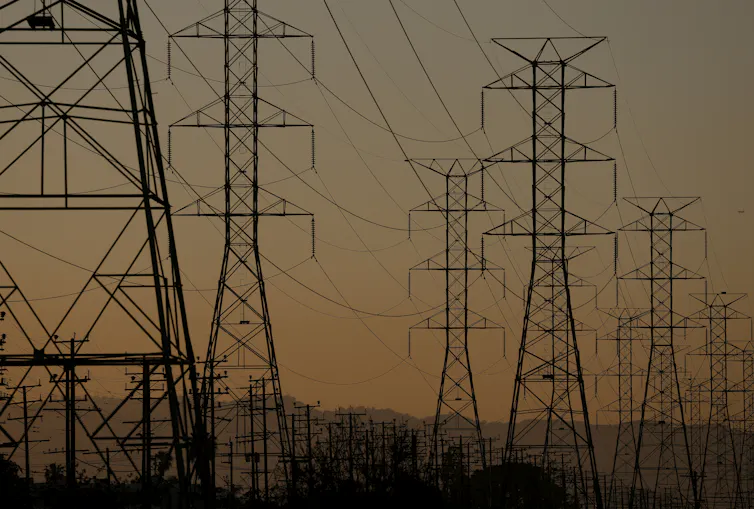
Rows of transmission towers and power lines silhouetted against a hazy sky
Data centers used more than 4% of U.S. electricity in 2024, and demand is rising.
Justin Sullivan/Getty Images

What does this mean for data center expansion?

Suits challenging the seizure of property for transmission lines on the grounds of public use have mixed results.

For example, the supreme courts of South Dakota and Vermont have each affirmed seizures by power companies, determining that providing at least some energy and improved power grid reliability to in-state customers were valid public uses.

But this argument changes if transmission lines, some of which cross state lines, don’t benefit anyone in the state.

In 1984, for example, the Mississippi Supreme Court rejected a power company’s condemnation action because the transmission line in question would have run from Mississippi into Louisiana without benefiting any Mississippi customers.

These decisions suggest that as data centers increase energy demand and stress current infrastructure, seizing land to improve power grid reliability will likely qualify as public use, especially if the intention is to secure reliability for in-state customers.

Still, arguments around whether additional transmission lines actually serve in-state customers may give landowners grounds for a challenge.

The Conversation

Aaron Walayat does not work for, consult, own shares in or receive funding from any company or organization that would benefit from this article, and has disclosed no relevant affiliations beyond their academic appointment.

​Politics + Society – The Conversation

Categories
Entertainment

Jurassic Park Star Sam Neill’s Cause of Death Revealed

E! Placeholder ImageMore information has come to light after Sam Neill’s passing.


Three days after the Jurassic Park star died at the age of 78, his manager Philip Grenz confirmed to TMZ that Neill died of pneumonia,…
​E! Online (US) – Top Stories

Categories
Entertainment

Don’t Judge A Mango By Its Color; Try This Instead

While the ripeness of many fruits becomes evident by their color, mangoes require something a little different. Next time you shop for mangoes, try this.

​Mashed – Fast Food, Celebrity Chefs, Grocery, Reviews

Categories
Alaska News

What does your phone background say about you?

One in seven Americans say they secretly judge people based on their phone background, according to new research. The survey of 2,000 Americans found that 14% of respondents say they think someone’s phone background image says something about their personality.…