Charley Crockett went quiet on social media right around the same time things got loud over who he chose to cut from his tour. Continue reading…Country Music News – Taste of Country









Charley Crockett went quiet on social media right around the same time things got loud over who he chose to cut from his tour. Continue reading…Country Music News – Taste of Country

A savory snack that Sam’s Club launched for the summer is gaining traction with shoppers, who have named the American-made item a new favorite.

Mashed – Fast Food, Celebrity Chefs, Grocery, Reviews

Reading Time: 2 minutes
Lots of crazy things happened on the third and final season of Euphoria.
But predictably, nothing garnered more media attention than Sydney Sweeney’s nude scenes.
Such racy material is rare in mainstream movies and TV shows these days, but there was a time when risque content was much more common.
And Sydney once sat down with an actress who famously stripped down on camera 20 years ago.
Yes, the acclaimed indie drama Black Snake Moan hit theaters back in 2006, and Christina Ricci discussed the project with Sydney for a Variety piece that was published in 2022.
Why is the conversation going viral again four years later? Maybe it’s because of Sydney’s recent nude scenes.
Or maybe it’s because two beloved actresses were talking about their experiences getting naked on camera, and the sort of thing is like catnip to the internet.
“Once, I had to do a movie where I was naked pretty much the entire time. And I realized, from trying to manage it ahead of time, that the thing that made me more uncomfortable was other people being uncomfortable with me being naked,” Christina told Sydney, adding:
“So, what I did and you probably wouldn’t be allowed to do this now I just stayed naked.”
“Oh no, they’d throw robes on you now!” Sydney pointed out.
“Yeah! I was like, ‘Don’t make me feel weird, like I’m the person who has to be ashamed.’ I just stayed naked. I would talk to crew members naked, because I wanted everybody around me to stop reacting to it.
“Because then I would forget that I was naked. And it worked! But it’s one of the only times that I’ve ever actually really felt comfortable being naked on camera.”
So there you have it. Christina pulled off a power move and found strength in vulnerability.
We’re sure there’s some lesson to be learned in all of that.
But yeah, she’s right that that sort of thing would not be permitted these days.
Somewhere, an intimacy coordinator’s head exploded while reading that.
Christina Ricci Tells Sydney Sweeney She ‘Stayed Naked’ on Set Between Nude … was originally published on The Hollywood Gossip.
The Hollywood Gossip
Lutak Dock
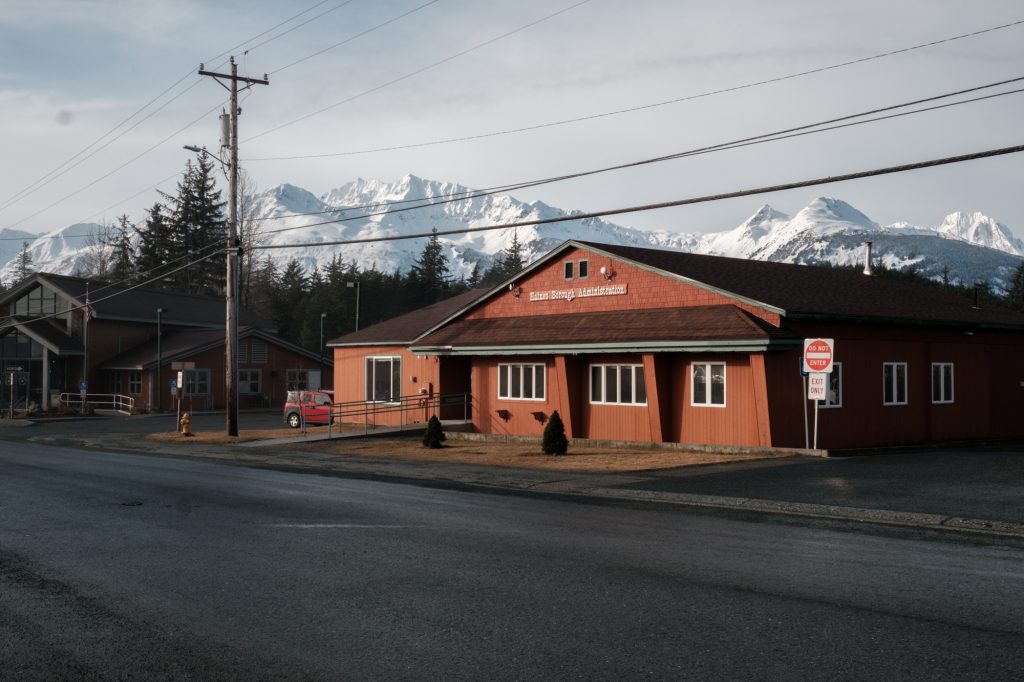
The borough is seeking a project manager for the Lutak Dock, a role assembly member Gabe Thomas said could keep the dock on schedule by “keeping the fire lit.”
That comes as assembly member Eben Sargent again brought up concerns with the management of the project, including not having an updated schedule and concerns that current management may make it so “the price would be somewhat immovable to the builder.”

But before he could delve into all of his concerns, mayor Tom Morphet told Sargent that the assembly meeting was not the correct forum for airing those concerns.
“I don’t think this venue is a good one for a conversation between yourself and the manager,” Morphet said.
Morphet suggested that Sargent have a private conversation with the manager to address the questions he was presenting as well as coming to the assembly with a letter of concerns that the body could then review and send to its contractors.
Sargent told the assembly that he had written formal letters to the body, met with the manager privately, met with the harbormaster multiple times, participated in meetings, and reached out privately to Sean McFarlane, the Moffat & Nichol advisor working with the borough, who would not speak to him.
“I think it is highly likely that we would have problems constructing the dock within the parameters financially that we’ve ascribed. The reason this conversation is appropriate for the venue is the Haines Borough Assembly is the body that manages the financial resources, risks and responsibilities of the people we represent … and currently, in my opinion, is failing to do due diligence to protect those financial interests. So that is why I’m forcing this conversation,” he said.
One topic the assembly did spend some time on is the current schedule for getting the project built. Sargent pointed to the schedule being “entirely why we have failed in this project in the past.”
Borough manager Fullerton told the assembly that in the March project timeline and schedule presented by Moffat & Nichol, they had not accounted for the delay between when the assembly chose its preferred design and the federal Maritime Administration receiving the change.
That set the entire project schedule back a month and a half, she said.
Fullerton said she has asked consultants Moffatt & Nichol to start with the conceptual design.
“I realize that it might be slightly premature, but based on my conversation with MARAD and with their expectations, I felt that since time is of the essence, that we needed to go ahead and start with the development of the scope,” Fullerton said. The borough cannot start making substantial progress without an understanding of the scope of the design, she said.
The borough cannot start some major permit work until it can describe the project with details like the number of pilings, or columns of materials anchoring the dock, to be driven and how much fill will be excavated.
Tsunami Sirens
The borough is eligible to get one to three tsunami sirens through a grant from the state and the assembly voted Tuesday to move forward with acquiring the sirens. Potential locations include Lutak Road and around the Letnikof and Mud Bay Road area.
Fullerton estimated that the yearly maintenance costs per siren would range from $2,000 to $4,000. Assembly member Craig Loomis recalled the 1964 earthquake and tsunamis that resulted from that. He was in Haines at that time and said there was no tsunami to be seen, just the tide going out and back in.
Haines fire chief Zak Overmyer said local landslides that result in tsunamis are the major concern.
A landslide in the Lynn Canal could generate a wave more than 50 feet tall, according to a 2018 report from the state’s Division of Geology and Geophysical Surveys. Before Haines got its first siren in 2024, police officers evacuated residents by sending officers door-to-door and driving through the community with a bullhorn during a 2018 tsunami scare.
New vehicles
Borough staff are planning to buy a new $65,000 flatbed truck for the Public Works Department. Currently, staff are working a truck from the 1990s. The truck would be used for sanding roads. Both the truck and $74,000 for a new Chevrolet Tahoe police car were budgeted on the capital improvements list earlier this year. The assembly voted to move forward with the purchase of the truck but hold off on the new police car.
Outhouses
Assembly members also voted to schedule public hearings on a measure that would prohibit the use of outhouses in the Haines townsite. This decision came after a land-use permit request was submitted to the borough with an outhouse in a wetland.
Fullerton said she denied the permit and would “like some teeth behind me in denying to have outhouses in the townsite in today’s day and age.”
If passed, new language in the general approval criteria for the permit will explicitly ban construction, erection or maintenance of any temporary or sustained outhouse or privy which would allow human waste to be discharged into soil, ground or surface water unless it has been treated.
Morphet said that this question of outright prohibiting outhouses has come up in the past and that for many, they’re a nostalgic vestige of Alaska’s history.
“There’s an emotional connection to outhouses,” Morphet said.
Public hearings on the measure will be held July 28 and Aug. 11.
The post Assembly Briefs: Dock, new vehicles, and outhouses appeared first on Chilkat Valley News.
The Takshanuk Watershed Council and Southeast Alaska Independent Living (SAIL) teamed up for a second year of Sea to Summit Girls Adventure Camp. The camp leaders included Ashleigh Reed, Staci Evans and Tracy Wirak-Cassidy. This three-night, four-day camp for 12-to-15-year-old girls included wilderness safety and practical life-saving skills, including finding their GPS location using a cellphone and stopping major bleeding with Jenn Walsh. They learned knot tying with Sue Libenson. The campers took Sara Jaymot’s workout class and also learned a thing or two about breathing techniques and tools to regulate their nervous system with Jess Kayser Forster. The group hiked Mount Riley and followed the hike with some self-care, including foot soaks and facial steams.
Will and Ben Egolf brought their families back to Haines for an action-packed visit. Their parents are Haines residents Jo Anna and Dan Egolf. Ben was joined by his wife Emily Egolf, son Danny Egolf and daughter Charlie Jo Egolf from Colorado. Will and his wife Jennifer Egolf joined them from Illinois. The group stayed at a local vacation rental and enjoyed daily hikes, beach combing, boat rides, campfires and catching up with old friends. The toddlers enjoyed the American Bald Eagle Foundation, all of the playgrounds and story hour at the library. They also saw whales, moose and bears. Cousins Carlee Heinmiller Young and Riley Erekson made an earlier trip to Haines in May. They enjoyed visiting friends and family
Silke Vom Bauer has been in love with Haines since 1994 when she came to town on the ferry and hitchhiked into Haines with some friendly locals. She brought Steve Schland with her on this trip. The duo have been boondocking through Haines and bear watching at Chilkoot Lake. Schland had the opportunity to play piano at the pop-up variety show held at the Klondike and was invited to play music at the Sheldon Museum on a busy cruise-ship day. Schland said he likes to spread joy by sharing the blues. On this trip to Haines they enjoyed the roadside pull-outs heading out of town and a side trip to Mosquito Lake where they found the very reason for the lake’s name.
Deborah Marshall made a chocolate espresso cheesecake for last week’s KHNS fund drive. It fetched $500. Julie Korsmeyer was the lucky listener to get the cake, which she then gifted to the Four Winds Resource Center’s annual art exposition dessert table. The fourth annual art expo featured some of Haines’ talented artists. Silent auction items were available and live music was supplied by Laurie Mastrella and Mark Carroll. The event sent local art to new homes and an entire cheesecake was shared with the upper valley art enthusiasts.
Alisa Sims recently enjoyed the scenic drive from Anchorage to Haines, which included an evening of tent camping in British Columbia. She was shocked to notice that she had lost a deeply sentimental ring, likely when she was shaking out her tent to depart the sight. The ring was a “you saved my life” gesture from her partner of 22 years, who could have died from a deadly bacterial infection had she not acted when she did. Upon returning home and checking the tent more than a few times, she made plans to fly back to Haines. Sims arrived at the airport and called a taxi to pick up a rental car. Lori Barker, the taxi driver in Haines, was happy to offer her metal detector for the search, which ultimately was not needed. Sims arrived back at the camping site in British Columbia around 6 p.m. with ideal lighting for the search for the cherished ring, which only took a few minutes. Sims says that she had just enough time to get back to Haines and enjoy dinner and a glass of wine at Deer Heart.
The post Duly Noted: Summer camp, family visits, espresso cheescake and more appeared first on Chilkat Valley News.
10 Years Ago
A brown, frothy liquid poured from the taps of the Haines Borough’s water customers last week, following a drop in pressure at the Borough’s water treatment plant.
The plant had been experiencing low pressure for about 10 days when pressure dropped to about 35 pounds at 11 p.m. Saturday night, ending water processing and causing the borough to pump water that had accumulated at the bottom of its FAA Road storage tank, said public facilities director Brad Ryan.
“The tanks got so low we were pumping what had settled at the bottom of the tanks. It was treated water; it just didn’t look good,” Ryan said.
That the borough’s Tower Road water tank – a secondary storage source – had been empty due to roof repairs complicated the issue, Ryan said, as did high water demand resulting from hot weather.
20 Years Ago
Recent work installing a fiber optic cable from town to Letnikoff Cove will provide virtually unlimited phone and internet service out the Chilkat Peninsula, said Irv Oleson, Haines Division Manager for Alaska Power and Telephone.
The cable, which replaces copper line installed 10 years ago, also will speed internet service. Line replacement will be complete by fall, with connections to be made during the winter. The utility is expecting an increase in phone customers when a $5,000 connection fee ends Aug. 20.
The firm plans to extend fiber cable to other parts of the valley in coming years, Oleson said.
In related news, the Utility expects to electrify homes between 5 mile and 10 mile Haines Highway early this fall. Oleson said delays in getting supplies are slowing progress.
30 Years Ago
The Haines Borough School District will need a new elementary school principal next month.
K-8 co-principal Bob Adkins has announced that he will take advantage of the district’s new retirement incentive program, which state officials recently announced they will approve, said superintendent Ron Erickson.
Erickson said that he already is advertising for the position.
Co-principal Marla Browne previously chose to return full-time to the classroom.
The co-principal arrangement won’t be continued, Erickson said.
The school board voted last week to institute the early retirement program, which was authorised by legislation.
Adkins is the only school district employee who is taking advantage of the program immediately, Erickson said. Technically, the deadline is next Monday, but full benefits are no longer available for the upcoming year, he said.
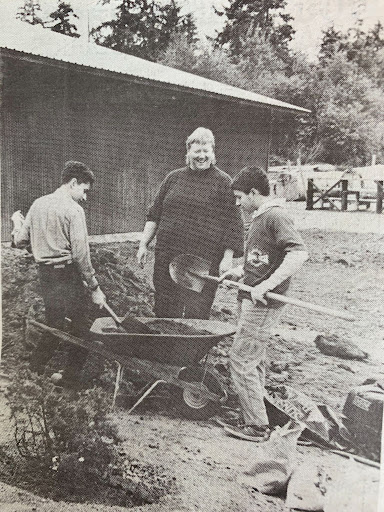
July 11, 1996. Jeremiah Brower, right, and Peter Klein plant shrubs at the fairgrounds while fair manager Joanne Waterman looks on.
The post This Week in History: Brown water, fiber optic cables and new principals appeared first on Chilkat Valley News.

Twelve contestants stepped up to the table positioned outside of Olerud’s after the Fourth of July parade, ready to participate in a hot-dog-eating contest. Olerud’s employees Tyler Swinton and Bryce Wortman prepared 160 hot dogs for the 17 people who initially signed up.
As it was their first time hosting a hot-dog-eating contest, the duo were unsure how many hot dogs people would consume, so they estimated each would eat a max of 10 hot dogs. This resulted in an excess of hot dogs. Swinton and Wortman cooked and packaged each tray shortly before the contest.
“It turned out to be more of a hit than we could have imagined for the first year,” Swinton said. More than 300 spectators gathered to watch as contestants competed for the grand prize of $250.
The rules were simple: contestants had to fully finish as many hot dogs as possible in 250 seconds, or four minutes and 10 seconds. Contestants could not dunk their hot dogs or buns.
They hatched the idea in May and June, when Swinton and Wortman were thinking about how Olerud’s could celebrate the 250th Independence Day. Wortman follows hot-dog-eating contests nationally and was advocating for Haines to have its very own.
The winner, eating eight hot dogs, was Shannon Miller. Jesse Benham, Michael Dillinger and Kris Fisher tied for second place, each eating six hot dogs. Other contestants included: Aurora Alten-Huber, Chuck Jones, Kayla Yeoman, Kevin Smith, Marc Lapeyri, Maxman Sullivan, Cory Zembower and Sonny Willard.
Looking at next year’s contest, Swinton said they are working on finding a way to have everyone see the event more easily, potentially by renting a flatbed trailer.




The post Hot-diggity-dog! appeared first on Chilkat Valley News.
Voters in Alaska have until July 19 to register to vote in the upcoming August primary election.
The August primary includes the U.S. Senate seat, currently held by Republican Dan Sullivan, the state’s House seat, currently held by Republican Representative Nick Begich and 50 seats in the state legislature. The Governor’s office is also up for grabs and 17 candidates are in the running to replace Mike Dunleavy who has termed out.
The state’s August 18 primary is open, so all candidates will appear on the same ballot no matter their party affiliation. Voters will pick one candidate in each race and the top four vote-getters advance to the general election.
There will also be a ballot measure on the August primary ballot. If approved, it would limit some political contributions.
You can register online at voterregistration.alaska.gov, in person at a Division of Elections office or by mailing, faxing or emailing a voter registration. Voters can check their registration status online at myvoterportal.alaska.gov.
The post The deadline to register to vote in Alaska’s primary is this weekend appeared first on Chilkat Valley News.
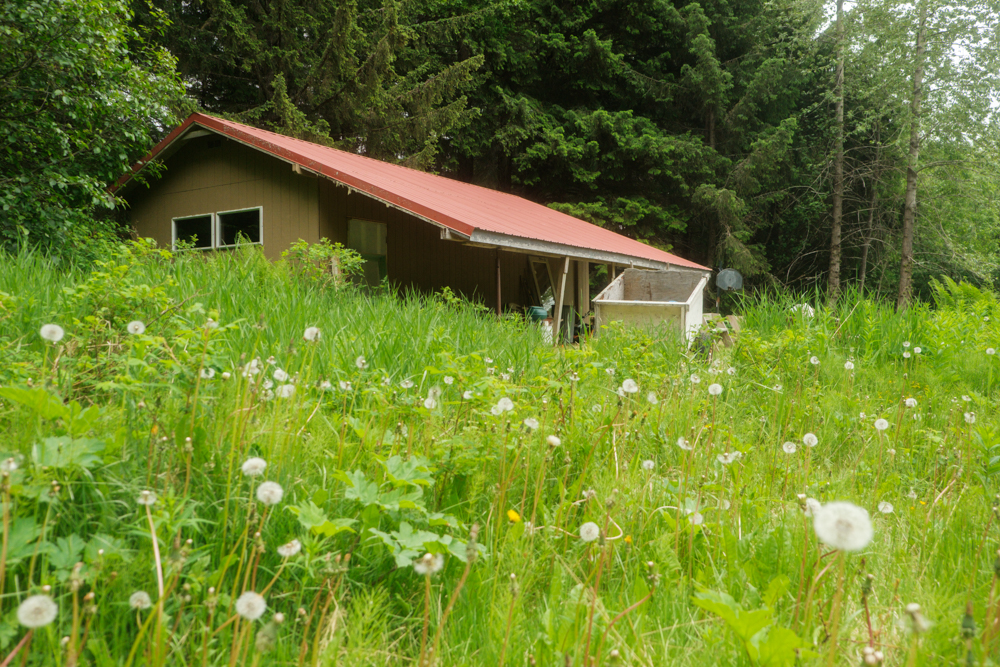
The Haines Borough has dropped its controversial effort to tax the 1 Mile Haines Highway Episcopal Church property.
The assembly voted unanimously Tuesday to end a borough appeal in Superior Court seeking to overturn a Board of Equalization decision from May. In that decision, the citizen board ruled the church property be exempt from property tax under a religious-use exemption. That had reversed an initial decision by the borough assessor that the property be taxed.
The exemption, which is written in state statute, exempts properties used exclusively for non-profit religious purposes. The debate regarding the Episcopal Church property centered around that “exclusive use” element, with borough staff and its contract assessor arguing that after six years without a church service at the property, it was no longer being used for religious purposes. Church members, meanwhile, argued both that the property was open to members for meditation and private prayer, and that there was no stipulation in state law regarding frequency of religious use to qualify for the exemption.
Borough manager Alekka Fullerton filed the appeal to Superior Court in early June without assembly input. On Tuesday, assembly members criticized that decision, including Cheryl Stickler, who cast the appeal as a First Amendment infringement.
The borough’s exemption decision did not dictate the church’s use of the property, only that some uses would incur taxation. But Stickler seemed to argue that taxation functionally acted as government intervention in worship.
“The First Amendment… to me prohibits a government body from going in and saying, this is how frequently you worship, this is how your property looks, this is how you have to prove to us you’re using this as a church property,” Stickler said.
“There’s fair and then there’s right,” she said after. “In my opinion, it is not right to levy taxes on our churches no matter what denomination, what faith. We, as Americans, get the right to freely exercise how we believe and what we believe.”
Fullerton and assessor Martins Onskulis, however, stood by their argument that the church property, according to “the letter of the law,” as Fullerton put it, had to be taxed.
“This is about treating taxpayers equally and following the letter of the law with respect to mandatory tax exemptions,” Fullerton said.
“We’re setting some sort of precedent,” Onskulis argued. “What if a church buys 100 properties in Haines. Are we going to exempt half the borough because it’s now owned by a church?”
Onskulis, as evidence that the church was not being singled out unfairly, said other vacant church lots in the borough were made taxable this year. That type of process, as well municipalities appealing board of equalization decisions, are something assessors in the state “see every year,” he said.
Other assembly members disagreed with Onskulis and Fullerton, but on different grounds than Stickler.
“I personally do see possible cases where it would be appropriate to tax church-owned property not used for religious purposes, but I don’t think that’s what we’re looking at here tonight,” assembly member Eben Sargent said. “We don’t have explicit standards for what current use means. I think in this case, the church has asserted they are using it, and the [Board of Equalization] agreed with them.”
“In the absence of a clear explicit standard, I think we should rely on [the Board of Equalization] and church’s own description of their use,” Sargent said later.
Assembly member Craig Loomis opposed the appeal as a waste of money, given the legal fees and minimal possible return.
“I think we would probably lose this lawsuit anyway,” Loomis said. “Representing the taxpayers, as a taxpayer, I think this is a waste of money.”
The assembly voted unanimously to have borough staff withdraw the pending appeal from Superior Court.
The whole issue will likely be moot going forward, at least for the Episcopal Church property, given that the church has begun holding services there in recent weeks.
As for other church properties around town, there looks to still be some grey area. Because the exemption is written into state statute, the borough cannot change the wording of the law, borough attorney Max Holmquist said. The assembly may still be able to set policy regarding interpretation or application of the exemption law, and at one point during Tuesday’s meeting Fullerton asked if they intended to do so.
But assembly members opted to keep their decision limited to the specific question of the Episcopal Church, and questions about requirements surrounding frequency of use remain unanswered.
The post Assembly ends Episcopal Church appeal appeared first on Chilkat Valley News.

The Valley of the Eagles Golf Course, near 1 Mile Haines Highway, is, and always has been, an operation that demands constant labor and produces no revenue. For 20 years, it has been owned by people with no interest in playing golf.
It’s counterintuitive, but all true – except for the statement that the course doesn’t produce any revenue. It did once, when longtime area doctor Stan Jones and his wife Kathy Pardee-Jones sold it in 2021. That was after it sat on the market for five years, no one willing to pay the $1.6 million asking price.
Jones wasn’t worried during that time, at least as he remembers it now. “I had said, when the good lord wants me to sell it, he’ll sell it for me,” the 94-year old Jones said in an interview this summer. “One day he sold it for me.”
It happened on a Sunday. There were two men interested in the property, they walked the course, and within a week they made an offer. Their offer was below the asking price, but still, for Jones, “very, very satisfactory.”
Soon after the first offer, a second came in – a cash offer – this one above the original asking price. Jones won’t say who that second offer came from. But it eventually lost out to the two men with the Sunday offer, one of them current golf course owner Clayton Jones (no relation to Stan and Kathy): a much younger man and a successful businessman.
The younger Jones wasn’t happy about the competing offer, Stan Jones remembers.
“Clayton could not believe it,” he said. “He called our realtor, and after, she told us, ‘I’ve never been talked to like that before.’ Clayton’s partner, he said, ‘well, he’s just a young buck. He’ll get over it.’ And he said we’ll top that offer by $100,000 and we’ll top subsequent offers up to a maximum of a certain amount.”
The bidding continued up to the maximum and Clayton Jones eventually won. In large part because of that sale, Stan Jones says he’s made more post-retirement than he did in his 26-year career as Haines’ doctor and clinic owner.
When asked about the windfall recently, Jones responded first by singing a hymn: “Praise God from whom all blessings flow, praise him all creatures here below.”
“When I sold the golf course I gave a nice contribution to the Salvation Army,” he said. “I gave some other nice contributions. I’m not a big spender. But every day I thank the lord for my family, for my health, for my wealth, and I ask the good lord to help me know how to spend it.”
In some sense, Jones’ windfall came for free: well over a million dollars of land created out of submerged silt.
A couple thousand years ago, the Chilkat Valley was covered by glaciers, weighing down the land. When they receded the land began to lift, inch by inch, until about 30 years ago, the golf course rose out from the river.
At least, that’s the rough idea. Before the golf course existed as such, Jones purchased the property in 1965, without any grand plans of laying claim to rising land. Five years later, while building his medical clinic in town, he dug down and found an old bed of clams in the dry dirt.
That all became relevant around a decade later, when the Alaska Supreme Court decided land created from post-glacial rebound could become the private property of adjacent landowners.
In the wake of that ruling, Jones resurveyed his land, adding 93.4 acres of former wetlands — the substrate that would become the golf course. Today, he recalls the acreage down to the decimal point.
Through it all, the now-golf course remained unvegetated drainage. At one point a friend’s father visited town and hit golf balls into the area. They stuck and sank.

In 1989, Jones’ first wife died. “We were married for 33 and a half years,” Jones said. “And she got up one morning getting ready to go to church and dropped dead.”
On the last day of that year, he retired from his practice and sold the clinic, citing rising costs and poor insurance reimbursement rates for rural physicians. Two weeks into retirement, he left town to spend half a year working in mission hospitals across Africa.
Jones is so closely identified with his former practice in Haines that today, he’s still Doctor Jones to the people who stand to greet him everywhere he goes. When he returned from his mission work, however, he was no longer the town’s doctor, though, according to the newspaper at the time, he wasn’t retired either. “I don’t really look at myself as being so much retired as shifting gears to use my talents in another direction,” he told the Chilkat Valley News reporter.
About a year and a half later he married Kathy Pardee-Jones, and a few years after that came the resurvey that added his 93.4 acres of new land.
He considered a number of business ideas for the land, things he thought wouldn’t be environmentally harmful. At one point he considered a salmon-rearing habitat, but a fisheries biologist told him it would be challenging.
“He said it would be very expensive,” Jones remembers. “So I said, well, maybe we could have a golf course.”
Jones had never golfed. He would swing a club for the first time only years later, when some of his employees brought him out onto the course after the day to play a few holes. (Asked what he thought about the game of golf, Jones responded, “it’s fine.”)
He had, however, seen a study by the Anchorage market research firm McKinley Research Group, then known as the McDowell Group, that, according to Jones, said 2% of cruise passengers wanted to play a round of golf in Alaska. If 2% of Haines’ cruise tourists came to the course, he reasoned, the course would have a hard time even accommodating everyone.

Jones showed up one day in the Seattle office of Mark Miller, a golf course designer. They had never met and Miller had just moved from Hawaii, where he was designing courses for a major firm. Generally, he said, he was contracted by large development outfits, not individual small-town landowners in Alaska. He invited Jones in, and Jones showed him the aerial photos of the wetlands. Miller remembers telling Jones his idea for a course would be basically impossible. Jones remembers it differently, Miller saying the permitting would be very difficult. But the course? Not necessarily impossible.
“I kind of told him, you can’t design a golf course in a floodplain where you’re putting down fertilizer and grass and chemicals. But he just kept going, and kept calling me,” Miller said. “Finally, he said, what if I flew you up here and you could see the site.”
Soon after, Miller was in Haines, sitting in a canoe with Jones. (Miller remembers it as the middle of the night at a high high tide; Jones calls that impossible, saying it was during the day, based on his recall of a specific 6 p.m. tournament tee time the day before.) Whatever the hour, they agree that they were in a canoe, and that as they were paddling, Jones was pointing out submerged fairways which existed at that point only in his mind.
“We got big rubber boots on, you know, up above our knees,” Miller remembers. “And he’s paddling around and pointing at the water going, ‘this is where the first green is gonna be,’ and it’s underwater. We get out and we’re trudging around in knee-deep water and he’s pointing out the layout of the course, and I’m kind of thinking, man, this is the wildest thing I’ve ever seen in my life.”
By the next morning the tide was down. Seeing it dried out made it more plausible for Miller, along with the beauty of the site in the daylight. With Jones, they hatched a plan for a pesticide-, herbicide-, and irrigation-free golf course — something that could be permitted in the wetland area. They would plant it with a blend of grasses to find something that would survive the tidal inundation.
“I think when he got it in his head he wanted to do that, there was nobody that was going to hold him back, and if I wouldn’t have helped him, he probably would’ve found someone else,” Miller said.
Permitting took seven and a half years and, Jones said, $25,000 worth of design work. By summer 2003 they had the permits and Turner Construction was hired to drag the land level and put the course in. They waited for the winter freeze to truck in fill for the greens (“I don’t know what you call them on a golf course — the places where the holes are at,” as Donnie Turner called them). Stan Jones had pounds and pounds of copper slag brought in and brushed into the turf at those greens to weigh them down.
“I said, geez Stan this seems like a bad place for a golf course, there’s not enough people,” the elder Turner, Don Turner Jr., said, also calling Stan a “real good man” — in his estimation “honest as the day is long.”
“His wife wasn’t real happy about it for a bit, but it was something he wanted to do for some reason,” Turner Jr. said.
After three years of work, in summer 2006, the course officially opened. As a business venture, it was tied into a deal with the cruise ships and Alaska Mountain Guides to send a tour over to the golf course — that 2% of passengers Jones had read about. But there was a gap between what the McDowell Group study suggested would happen and what did happen.
“Yes I was disappointed,” Pardee-Jones said, of seeing only small groups trickle in. “No, we weren’t a groomed course. But the scenery was incredible, our blood, sweat and tears were out there. Sure, there were some that were expecting more than we had, but most people that came loved it.”
The margins were nonexistent after the cruise ships took their cut, which meant the couple couldn’t pay themselves a salary. Jones says after the cruise lines and tour company were paid out, the golf course got around $25 for each person on the tour.
It took some of the shine off the course as a business proposition. And yet, even in hindsight, both Jones and Pardee-Jones are big supporters of the cruise industry in Haines, for the economic activity it brings, but also for the idea that there’s something worth seeing in the Chilkat Valley — golf course or otherwise.
“We need an economy,” Pardee-Jones said on a recent afternoon, next to their big picture window overlooking the cruise-ship dock. “The cruise ship people are in and they’re out, and they get to see the beauty we live with. We have an awful lot to offer.”

Even as the cruise ship gambit petered out, the couple kept the course running. They ran charity events and veterans’ fundraisers and gave money to the Uglies Cancer Fund, and still they took no salary.
There were some differences between the Haines version of what a golf course would look like and what Pardee-Jones refers to as the “high buck” ones down south.
Golf pros who came in later would note the differences, too. Like high schoolers and families allowed to roam around at the course, playing holes out of order and at their own speeds.
“Families are important,” Pardee-Jones maintains now, even after the course-as-business-venture failed and the property eventually sold. “The memories you make doing the fun things you do as a youth or teenager, that’s what’s going to stick with you. Not a tour of Disneyland. Where else were kids going to learn the right way to golf? At another course, you could do four people at a time. Here we had whole families get together out there.”
Jones, the man who took retirement as an opportunity to work, did constant physical labor at the course. Today, at 94, he still works on fixing things even without owning the golf course. On a recent afternoon, he sat in his living room annotating design drawings of the Lutak Dock. In his doctor’s script, he wrote his calculations and explanations for why one type of construction put forward by engineers would be clearly better for the tax-paying public than another. The triangle proofs in his notes are drawn with straightedges.
“The good lord has put us here to help people, whether it’s practicing medicine, or doing a golf course,” he said, the drawings stacked in front of him on the table.
For years, the couple practically lived out on the course. But eventually, they put it up for sale, because Jones says now, deadpan, he was “old and decrepit.”
So arrived the other Jones. Clayton, who bid so much to buy the course, is neither old nor decrepit. The Montana native first came to the state rappelling out of helicopters in North Pole for the U.S. Forest Service, a bush pilot who shuttles friends to ski in the backcountry and describes himself as an “avid tinkerer.”
He also founded a company, Alaska Power and Engineering, in Haines 10 years ago. It’s headquartered in a small office on the golf course. Last year, Clayton Jones said, they managed $10 billion of energy infrastructure construction.
According to the company website, it does a range of work, including construction oversight, inspections, and site management. There’s a solar project in Puerto Rico, solar in northern Indiana, solar outside Reno, four wind projects in Japan, battery storage in Glendale, battery storage in Saratoga Springs; the list goes on and on, from town to town.
Despite the big business, he keeps a low profile. Earlier this summer, mayor and longtime resident Tom Morphet was sitting at the bar in Deerheart, talking loudly about Clayton Jones landing his private plane on the golf course. Morphet later said he hadn’t known what the younger Jones looked like; if he did, he would’ve realized Jones was sitting a few tables away from him in the room.
Right now, Morphet is focused on the plane, but he’s long had an interest in public use of the golf course land. He had hoped, when the property was for sale, for public ownership.
Though he doesn’t much know Clayton Jones, the mayor describes him as “a type we’ve seen before.” In his decades in Haines, Morphet said, he’s seen a long string of private pilots at the heart of neighborly disputes:
“I think those two things: expendable income, money for recreational aircraft, and kind of that wild west mentality, that anyone can do anything in Alaska. Those two forces keep returning in one form or another to our community,” Morphet said.
In a general sense, there’s a logic behind questioning why a successful businessman would pour so much into a golf course that, in a business sense, is an abject failure. The course continues to bring in no money, and it’s currently unadvertised to tourists and free to play for locals.
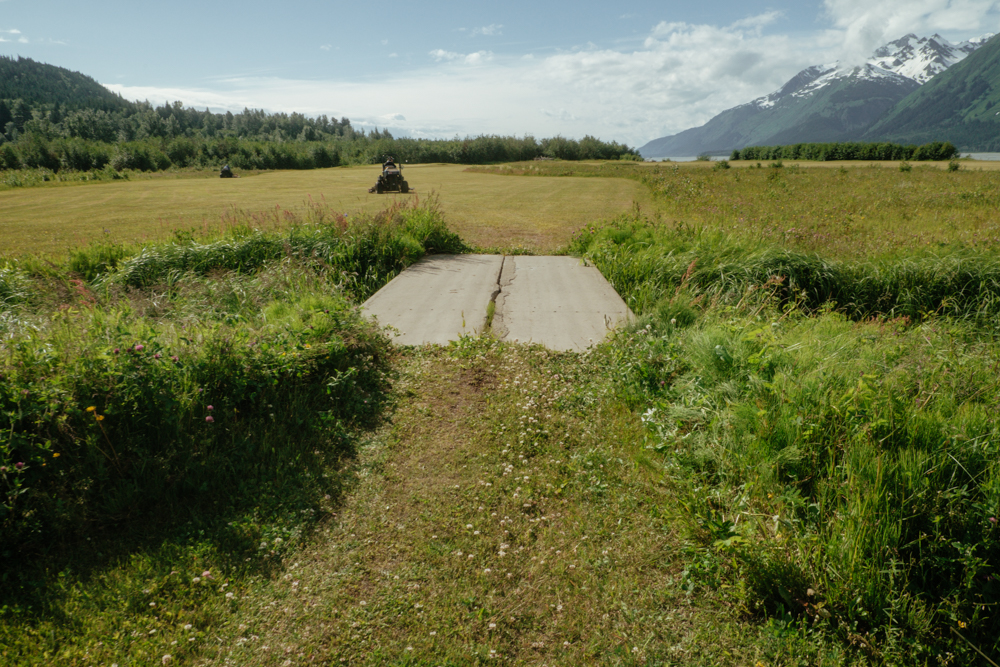
While course manager Joe Parnell in particular, as well as Stan Jones, do plenty of work, Clayton Jones handles much of the land himself. He bought two greens mowers this year from a club in Montana his parents belong to and had them shipped to Haines. The formerly artificial turf greens are now natural grass, demanding more regular upkeep.

Meanwhile, Clayton Jones, like the previous owner, hadn’t owned a golf club until he bought a clubhouse full of them. He still doesn’t play, and when walking out on one of the fairways recently, he hesitated when asked which one he was on.
Like the elder Jones, part of the value he sees in the land is that it continues to rise, continues to shake off the water. When he bought it, he figured it was getting to the point of fully drying out, and he was right. It’s vegetating now, with alders coming up in thickets, and there are no longer island greens by default at high high tides. That’s given him a huge stretch of waterfront acreage looking out at the mountains – the greatest untouched wilderness left, as he describes it.
Nevertheless, he doesn’t have any plans to subdivide the property, or develop it into anything else. There’s no “higher purpose” for it all, other than as a golf course, he says.
But a golf course for who?
Clayton Jones argues against the kind of characterization Morphet raises. The course, he insists, is about tying himself into the community, not separating himself from it. He only has a home in one place, and that’s in Haines, he makes sure to note.
“I’m a big believer in a local, year-round economy, so those are the people I take care of,” he said. “We built a successful company here in this community. This is our way of giving back.”
“Those people in the dead of winter you see in the brewery?” he added. “That’s who I want to serve.”
It’s not the most dramatic possible answer for why he has the land and the golf course in his backyard. But he’s delivering on his promise, with the course open Thursday through Saturday this summer, plus Wednesday afternoons.
The other Joneses, Stan and Kathy, are glad to see the golf course still open to the public, still standing after their years of work. But when asked if he considers the course a major accomplishment, Stan Jones demurs.
“Does it make any difference?” he asks, followed by a long pause. “It’s there if people want to use it and if the ownership wants it to be used. But I’m not going to lose any sleep either way. It would be nice if it was readily available to the community on a full-time basis but I wouldn’t care if there was a different interest to it.”
Stan Jones and Pardee-Jones now winter at a condo in Leisure World, a community in Mesa, Arizona. They have friends there and they dodge winter.
But when they’re home in the summer, the self-described “old and decrepit” Jones is still out alongside Parnell putting in hours on the mower, in all sorts of weather. Parnell once joked that when he’s mowing the fairway with the rain whipping off the river, he imagines himself as a sort of Ernest Shackleton figure, the explorer who escaped Antarctica on an open wooden skiff.
On a Friday morning earlier this month, the two of them went out to the course, and Stan Jones did donuts on the mower in the parking lot. He waited until someone looked up and saw before racing off toward the fairway by the river.
“Being born is a fatal condition,” Jones said. “I can die anytime. I’m happy for the things that I’ve been able to do, the life I’ve been able to live.”
And even though he claims he won’t lose any sleep anymore over the golf course, Jones sure lingers at the property even after the work is done. “This is my baby,” he said.
The post 20 summers later, Haines’ improbable golf course endures appeared first on Chilkat Valley News.