A young black female entrepreneur in discussion with a colleague.








A young black female entrepreneur in discussion with a colleague.

Beurer reports that after receiving a hypertension alert from your smartwatch, you should stay calm, check your blood pressure with a certified monitor, and consult a doctor if needed.
A person measuring blood pressure using a digital device and a smartwatch.

America keeps its most famous hot dogs in a handful of loud cities, each armed with a big-league ballpark and a signature dog worth arguing … Read moreThe post The cities that actually eat the most hot dogs are not…

Reading Time: 3 minutes
Almost exactly one month ago, Mitch McConnell was hauled onto an ambulance and hospitalized.
Some of the least trustworthy voices on America claimed to have had extensive, closely timed conversations with him.
Many — perhaps even most — have believed the former Senate Majority Leader to be dead.
Now, McConnell’s office has put out a statement and a dubious photo, claiming that he is alive. Is it true?
PHTOO ONE
On Sunday, July 12, McConnell’s office released an image, allegedly both authentic and recent, featuring the Kentucky Senator.
The photo shows the 84-year-old Republican on a hospital bed beside his wife, Elaine Chao.
Conspicuously, the only real detail in the photo is the sports section of the Sunday edition of the Washington Post.
Though the text is conspicuously blurry, the photo does appear to match the real thing. (It could be a fake image, like multiple previous “photos” of the Senator following his hospitalization were proven to be, though those were crucially not from his office.)
In addition to the photo, McConnell’s office released a statement, allegedly from McConnell himself.
www.nbcnews.com/politics/con…
Mitch McConnell said in his first public statement since he was hospitalized nearly a month ago that he was “briefly unconscious” after he suffered a fall.In the statement, accompanied by a photo of McConnell smiling in a hospital chair alongside his wife.
— Deborah Lynn (@mrsdeborahlynn.bsky.social) July 13, 2026 at 8:13 AM
McConnell, who vanished from the public eye on June 14 after being hauled away in an ambulance via stretcher,
In the lengthy statement, ostensibly from McConnell, it is clarified that he did not suffer “a heart attack or stroke.”
Rather, the statement claims that he was taken to the hospital after a fall and was “briefly unconscious.”
This statement came out 28 days after his hospitalization. That’s four weeks to the day, and a full lunar month.
The words attributed to McConnell claimed that the Senator had “had to deal with a mild case of pneumonia” but has been moved from the hospital to a rehabilitation center.
PHOTO THREE
It is easy to look at those doubting the authenticity of this statement on McConnell and say that this is political opportunism.
After all, if McConnell is proven to have died before August 3, Kentucky can hold a special election to fill his Senate seat.
However, many of the loudest voices expressing doubts about the veracity of McConnell being alive and well aren’t coming from the Left.
Rather, conspiracy theorist and Trump-supporter Laura Loomer and numerous other Republicans, some in office and others with Fox News credentials, aren’t buying it.
“How come Mitch McConnell’s staff won’t release a video of him?” Loomer tweeted. “A photo could have been taken at any time. I call BS. The American people aren’t stupid.”

We wouldn’t advise people to believe Loomer’s word for just about anything. There are few polite words that accurately describe her.
However, there are reasons to question this statement and photo.
Why does McConnell look so healthy after pneumonia compared to a few months ago? Why didn’t he record even a short video to reassure his constituents in Kentucky?
We’ve been leery of definitively stating that McConnell is getting the Weekend at Bernie‘s treatment. Tortoises can live for a very long time, after all.
For now, he could very well be just as alive as he claims. That said, he and his office don’t seem to be very good at proving it. Why could that be?
Mitch McConnell ‘Proof of Life’ Photo Invites Doubts & Ridicule from Both … was originally published on The Hollywood Gossip.
The Hollywood Gossip

 The Broadway community is in mourning.
Josh Grisetti, who was known for his turn in Something Rotten! and his role on season five of The Marvelous Mrs. Maisel, died by suicide on July 10, his…
E! Online (US) – Top Stories
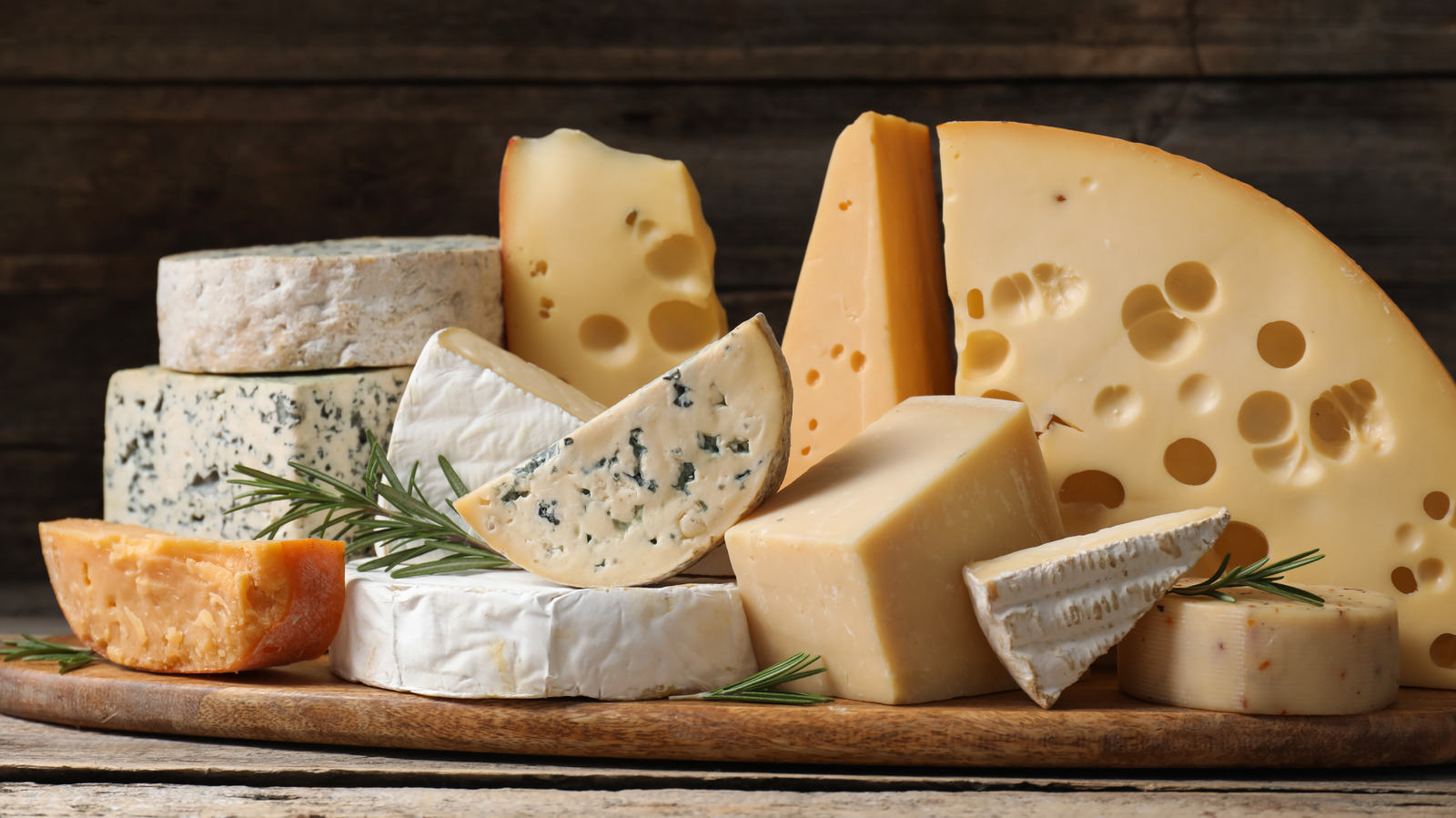
Aldi may be the cheapest grocery store in the country, but cheese can often be a different story. Is it less expensive at Trader Joe’s? Where should you buy it?
Food Republic – Restaurants, Reviews, Recipes, Cooking Tips
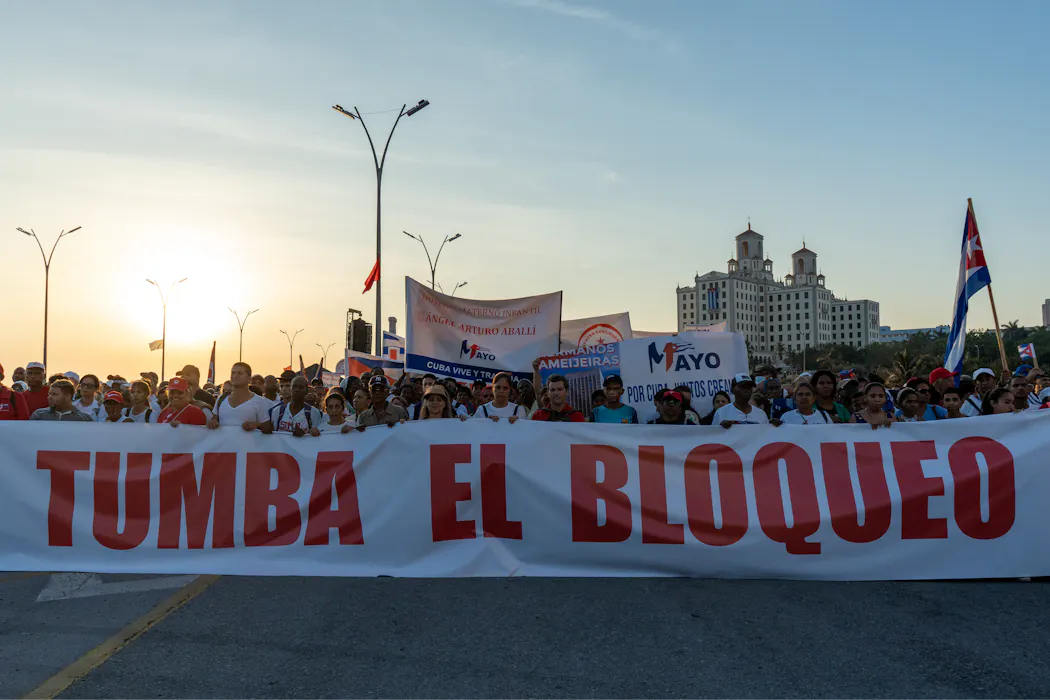
As I consider the dire economic and political turning point my home country of Cuba is facing today, the words of Cuban singer Willy Chirino’s “Nuestro día ya viene llegando (Our day is coming)” come to mind like they did in the 1990s:
“Hoy que mi pueblo vive ilusionado, yo me siento inspirado y un Son estoy cantando anunciándole a todos mis hermanos, que nuestro día viene llegando.” This translates to, “Now that my people live filled with hope, I feel inspired and a Son I am singing, telling all my brothers, that our day is coming.”
Many Cubans in the diaspora of nearly 3 million in the U.S., including some of my own friends and family members, believe the days of the Cuban failed political system on the island are almost over.
As a Cuban American and a senior lecturer in global and intercultural studies, I am curious and concerned about what the country’s next chapter will be.
Growing up in Havana’s Chinatown neighborhood, I witnessed firsthand Cuba’s economic transformation in the early 1990s, during the euphemistically named “Special Period in a Time of Peace” following the collapse of the USSR.
At the time, I was completing my compulsory military service. I saw how the supplies provided by the Eastern Bloc to the Cuban military started to dwindle. Little by little, basic supplies, such as boots and uniforms, were no longer being replaced when they got worn out.
Back home during my weekends off, I started to see changes in my neighborhood. Privatization and commercialization were taking over my old street. The building across from our apartment was being remodeled into a three-story Chinese restaurant called El Pacífico. The many Cuban and Chinese families who had lived there were relocated to apartments on the outskirts of Havana.
Chinatown was open for business. This was the first of many neighborhoods in Havana that started to be commodified for tourism in the 1990s. Nevertheless, Cuba’s government maintained its socialist messaging to the Cuban people: Collective ownership and equality can be provided and guaranteed only by the socialist state.
But at the same time, it was making agreements with international capitalist enterprises, such as the hotel chain then called Sol Meliá, or other projects, including Fidel Castro’s international promotion of Cohiba cigars. And these contradictions were becoming harder to hide from the people in changing neighborhoods like Chinatown.

In the early years after the revolution that brought Fidel Castro’s government to power in 1959, the government held popular tribunals in which those perceived as standing in the way of socialist ideals were put on trial. Most of the accused were found guilty without due process and either endured long prison sentences or faced execution squads.
This dogmatic approach to revolutionary citizenship led to the horrible treatment of any perceived as nonconformist, such as LGBTQ people, hippies or punks. These dissidents were sent to labor camps designed to transform “questionable” people into Che Guevara’s ideological concept of the “hombre nuevo” – the new revolutionary man.
But in the past 20 years, Cuba’s more progressive social policies have helped to redeem the authoritarian excesses of the revolution’s early years. This has helped to guarantee the government’s survival.
One of the few Latin American countries to legalize gay marriage, Cuba has also gained a global reputation in its many advances toward gender equity. In fact, Mariela Castro, Raúl Castro’s daughter, is now the leading voice of the LGBTQ+ movement in Cuba.
Those most affected by the U.S. sanctions and Cuban government antipathy are “los cubanos de a pie,” that is, “Cubans on foot.” This is a large majority of the population that has very little income, no connection to the government and no access to the new private-public partnership business model in Cuba known as “mipymes” and no remittances from relatives living abroad. Today, they are crying out for a change – any change.
The tactics used by President Donald Trump’s administration on Jan. 3, 2026, to capture Venezuelan president Nicolás Maduro set the road map for what many in the diaspora expected would follow in Cuba.
Many Latinos, including Cubans and Cuban Americans living in the United States, were in favor of this action, especially the old generation of Miami Cuban and Venezuelan exiles who have long supported the Republican Party.
On the island, many Cubans are willing to accept a U.S. invasion if it means things will change. They feel that if Cubans are not going to have access to any of their country’s resources, it might as well be in the hands of the United States.
What very few have discussed publicly, however, both in the Cuban community and outside of it, is what has – or has not – happened in Venezuela since the U.S. took Maduro. Few are asking: Has the political system really changed? Is Venezuela better off now than under Maduro?
Trump has yet to publicly state his aims for the future of Venezuela, outside of taking over its oil industry. The U.S. appointed acting President Delcy Rodriguez on Jan. 5, 2026, but it’s not clear what this bodes for Latin American sovereignty.
A U.S. military capture of Cuban President Miguel Díaz-Canel and even the aged Raúl Castro, who has been indicted by the U.S. judicial system, might have symbolic power but, in my opinion, is not likely to repopulate Havana’s Palacio de Gobierno with fresh political perspectives.
In Cuba, the trappings of the old regime remain deeply rooted in the country’s political infrastructure, and the threat of U.S. military intervention is nothing new for the Cuban government that has outlasted many U.S. administrations.
The Cuban government also knows it can create chaos in the Caribbean by unleashing another migratory crisis. This leverage, of course, comes at the expense of “los cubanos de a pie.”
The Cuban economy, heavily reliant on tourism, faces unprecedented pressures.
With the specter of U.S. intervention looming, many foreign companies operating on the island have decided to leave. The abrupt departure of companies such as mining company Sherritt International and the SOL by Meliá hotel chain has undermined mining, tourism and energy in Cuba.
And in June 2026, Trump further hardened sanctions with an executive order that punishes companies doing business with Cuban companies. This additional economic pressure seems to be creating some momentum and fragmentation to force the Cuban government into a dialogue that favors the U.S. agenda.
Add to this the fact that oil imports from Venezuela and other countries, including Mexico and Russia, have dissipated, causing a major energy crisis, and it’s clear that change is urgently needed – but in which direction?
As days pass, the uncertainty remains, and the voice of the Cuban people is obscured behind the political clamor between the Cuban and U.S. governments.
Like Willy Chirino, I long for a day when I can come back to Cuba with my now-teenage children to show them where I was born and introduce them to their relatives still living on the island, with the hope of building a real future together.
In the meantime, as I sip a cortado in a Midwestern college town, another 1990s popular song comes to mind. It comes from Los Van Van, a Cuban band formed during the exciting early revolutionary years, beloved by Cubans inside and outside the island: “Orula, para todos los Cubanos, Ashé yo te pediré,” which translates to, “Orumila, Yoruba deity, blessings for all the Cubans is what I am asking for.”

Juan Carlos Albarran does not work for, consult, own shares in or receive funding from any company or organization that would benefit from this article, and has disclosed no relevant affiliations beyond their academic appointment.
Politics + Society – The Conversation
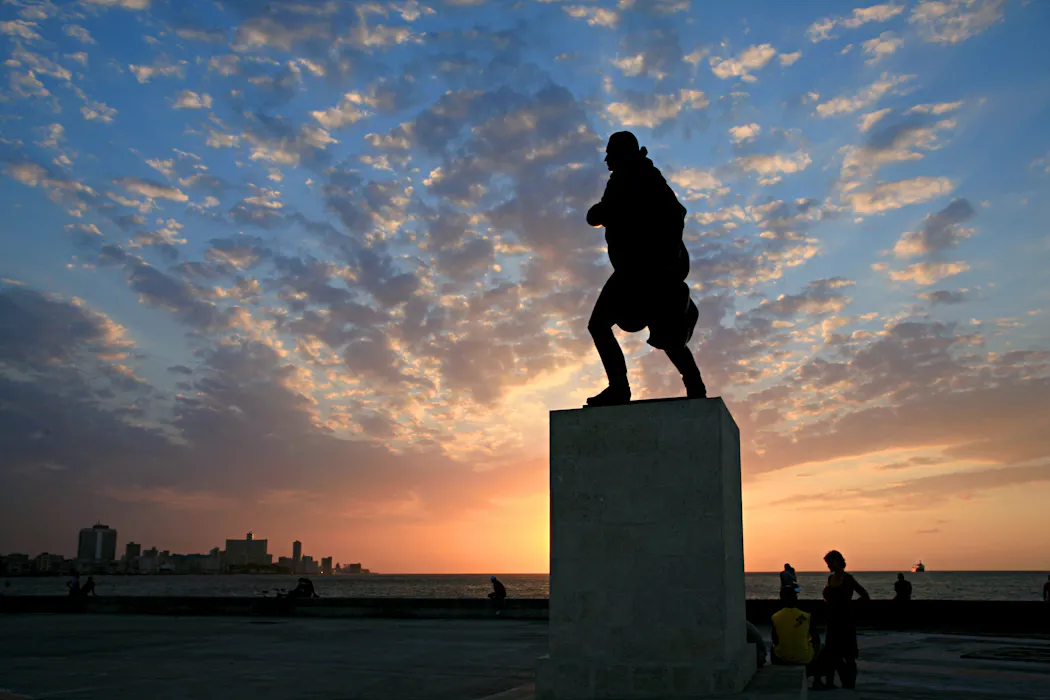
Since the beginning of the second Trump administration, the United States has ramped up military, economic and political interventions in Latin America.
Nowhere were those three factors more clear than the U.S. abduction of Venezuelan President Nicolás Maduro in January 2026. Since then, the Trump administration has used a mix of carrots and sticks to cajole what remains of Maduro’s government to support U.S. aims, including opening up the country’s oil industry to foreign development and targeted killings of accused criminals in the country. At the same time, the U.S. has found local Venezuelan allies in opposition leaders such as María Corina Machado, winner of the 2025 Nobel Peace Prize and a longtime Maduro critic.
As a historian of early U.S. political economy, diplomacy and war, I believe the ongoing U.S. intervention in Venezuela echoes a far earlier intervention in the early 19th century.
It was then, in 1805, that the South American revolutionary Francisco de Miranda visited the U.S. on a charm offensive to meet with leading statesmen, including President Thomas Jefferson. In a similar vein as Machado today, his goal in meeting with U.S. officials was to rally support for his proposed expedition to overthrow an unpopular government at home.
From almost the beginning, America’s founders wanted to protect and expand the country beyond the 13 original states. In addition to running up against vast tracts of land populated by Native Americans, that meant almost immediate rivalries with the foreign empires – Britain, France and Spain – that had laid claim to large parts of the modern-day U.S.
It was in this age of revolution and expansion in Europe and the Americas that Miranda cut a ubiquitous figure.
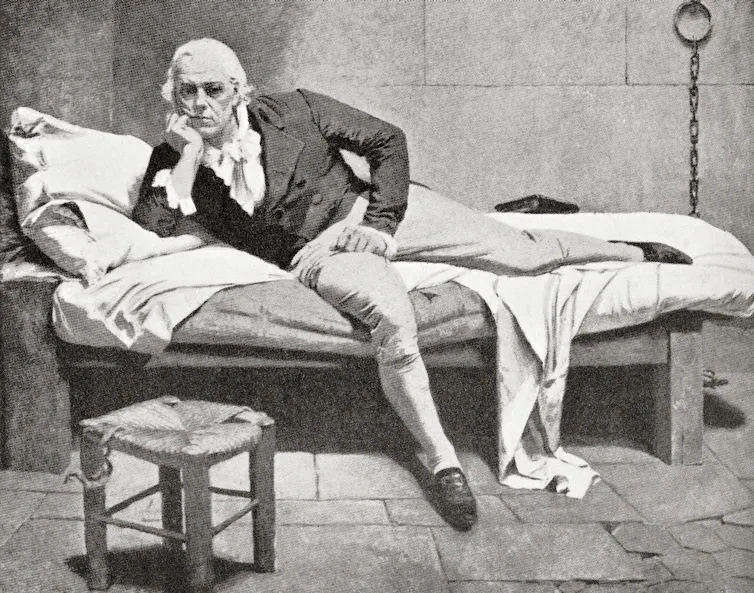
He was a veteran of the American Revolution, fighting in a U.S.-allied Spanish army against the British in Florida. He would go on to fight among republican forces during the French Revolution, being imprisoned by the more radical Jacobins.
Yet it was the independence of South America from the Spanish Empire – particularly in his native Venezuela – that could be considered his life’s work.
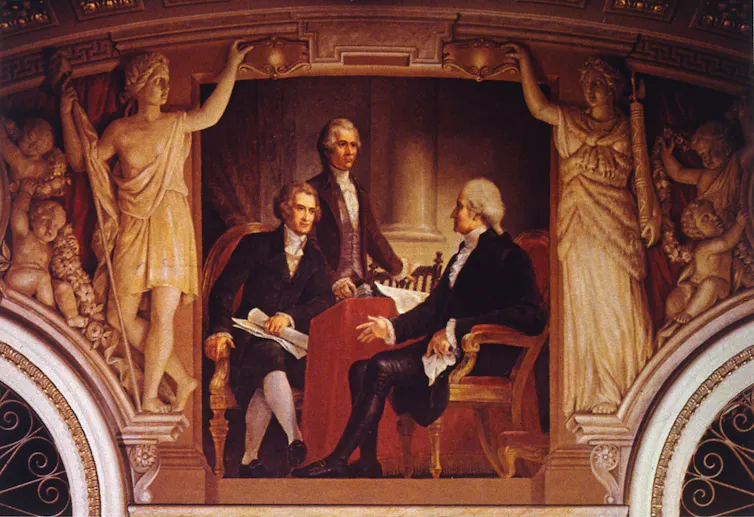
Miranda had spent over two decades courting allies in the U.S. in support of South American republicanism – and specifically the overthrow of the Spanish colonial government in Caracas and elsewhere. Such was Miranda’s successful cultivation of powerful Americans that Alexander Hamilton, the nation’s first Treasury secretary, was one of his most influential advocates.
In 1784, Hamilton sent Miranda a long list of notables who would be interested in South American intervention. Then, in 1798, once Hamilton was appointed inspector general, he implied that the recently expanded U.S. Army could be a vehicle for seizing Spanish territory. Although that didn’t come to fruition at the time, the point was clear: Miranda believed American statesmen were receptive to his ideas.
In the early 19th century, anticolonial agitation rocked the Spanish territory that would soon become Venezuela. Increasing Spanish costs for defense, such as building forts and training militia, led to higher taxes and strained local economies. That came after several tax rebellions broke out in the last decades of the 18th century. In general, there was widespread societal discontent over restrictive Spanish trade monopolies, as well as exclusive government posts for Spanish-born judges and officials.
Soon after their own revolution from colonial rule, many Americans had a general sympathy for South American colonial subjects – if a limited understanding of their political situation.
Additionally, U.S. investors wanted access to the South American silver trade, as well as an end to Spanish royal monopolies on Venezuela’s coffee, cacao and indigo, just like U.S. investors today eye oil and real estate.
Amid this context, Miranda arrived in New York City in the fall of 1805 with plans to find allies for a scheme to foment a war for independence.
He met with William Smith, an old friend and the son-in-law of former President John Adams. Smith, serving as surveyor of the port of New York, connected him with a wealthy merchant named Samuel Ogden, who often sailed armed vessels to Haiti. The two men suggested that Miranda travel to Washington to secure official U.S. government support before proceeding with his plans to overturn the government in what became Venezuela.
When Miranda arrived at the White House, he sat in on a Cabinet meeting and was invited to dine with Jefferson. They chatted about revolution, and Jefferson spoke favorably of Spanish American independence, predicting that it would soon come to pass.
Jefferson would later write to Don Valentín de Foronda, Spanish minister to the U.S., that his administration “had no suspicion that (Miranda) expected to engage men here.” But it would be very surprising if Jefferson had not caught whiff of the expedition – either from Miranda himself or through gossip.
Indeed, the capital’s elites were abuzz with Miranda’s visit and plans. Washington merchant and investor William Mayne Duncanson, for example, called on Jefferson to offer his services in the venture, assuming that Jefferson was amenable to Miranda’s plans.
Whatever Jefferson’s knowledge, he also cared about America’s diplomatic reputation – and, more broadly, the law of nations. So he worked for several years to convince Spain that the U.S. government was not involved in organizing the expedition.
Miranda returned to New York from Washington in early January 1806 without official support. He assumed, however, that he had the tacit approval of the Jefferson administration. So he, Smith and Ogden fitted out a merchant vessel called the Leander with military stores and 200 men, who had varying degrees of understanding about what they had signed on to.
They left New York City on Feb. 2, 1806, and the press began speculating about where the ship was going and who was on board.
On Feb. 22, a list of incriminating questions addressed to Secretary of State James Madison appeared in the Philadelphia Gazette. This editorial, assumed by other newspaper editors to be submitted by the Spanish ambassador, accused Madison and Jefferson of condoning Miranda’s actions.
Partly to avoid culpability at home and abroad, Jefferson pressed charges against Ogden and Smith. They were arrested on Feb. 20 and tried in a federal court that summer. A sympathetic jury declared them not guilty.
Meanwhile, members of Miranda’s expedition were captured by Spanish soldiers off the coast of what would soon become Venezuela and tried for their attempted insurrection. The majority were imprisoned; 10 men were hanged.
Miranda escaped to Aruba and later played a major role in the Venezuelan war of independence from Spain that begin in 1810. There, he briefly led the country before being sidelined by his protegé, the great liberator Simón Bolívar, who believed Miranda traitorously reached armistice terms with the Spanish Empire in 1812 and gave him up to Spanish authorities. Miranda died in a prison in Spain in 1816.
In the U.S., the fate of the American prisoners fueled public outrage and an acrimonious political debate about expedition. As Jefferson’s opponents criticized him for sanctioning intervention and neglecting to free the prisoners, his supporters lashed out at the opposing Federalist Party for allegedly orchestrating a rebellion in Spain’s colonies in the first place.
Miranda’s expedition was one of the earliest instances of debates of the U.S. considering intervention in Latin America. At this point in its young history, the U.S. government officially refused to countenance a military expedition.
But it would launch a long history of foreign elites like Miranda believing that American intervention could be a necessary tool for creating a new political reality at home. The goal, as ever, was freedom from unpopular rule.

Lindsay Schakenbach Regele does not work for, consult, own shares in or receive funding from any company or organization that would benefit from this article, and has disclosed no relevant affiliations beyond their academic appointment.
Politics + Society – The Conversation
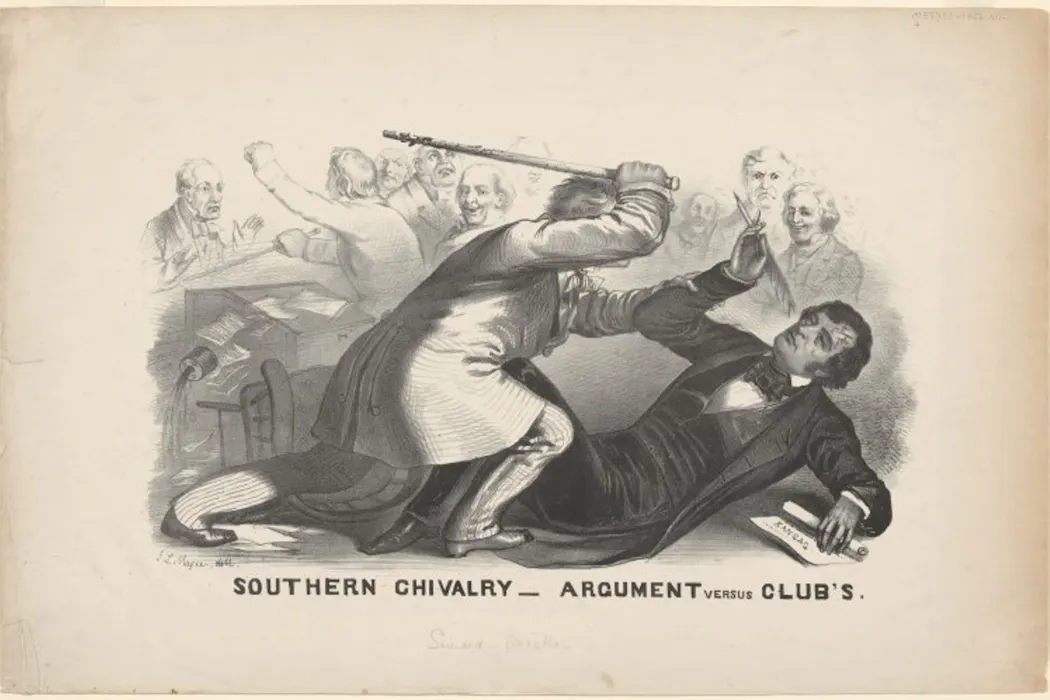
On May 22, 1856, Preston Brooks strode into the United States Senate chamber and beat Sen. Charles Sumner unconscious with a cane. Brooks, a South Carolina congressman, was retaliating for a speech Sumner had given condemning slavery and personally insulting a relative of Brooks.
Though lasting only a minute, the beating had far-reaching consequences. It pushed Americans one step closer to civil war.
And, as I discovered while researching my book “The Man Behind the Cane: Preston Brooks, Political Violence, and the Road to the Civil War,” it sparked a nationwide debate over free speech, political violence and the relationship between the two.

Northerners denounced the caning as an attack on Sumner’s right to free expression. Even if they thought Sumner’s abolitionism too radical – as most white Northerners did in 1856 – they believed a U.S. senator had the right to say what he wanted without violent reprisal.
Visual images of the caning reflected the Northern take on free speech. In John Magee’s political caricature, “Southern Chivalry – Argument Versus Club’s,” Brooks wields a sturdy stick against a defenseless Sumner, who is clutching a pen in one hand and a rolled-up speech in the other. Winslow Homer’s print “Arguments of the Chivalry” depicts Sumner writing at his desk as Brooks prepares to strike.
Homer’s headline captured the message of both depictions: “The Symbol of the North is the Pen; the Symbol of the South is the Bludgeon,” which is a quote from a speech by antislavery activist Henry Ward Beecher.
Defenders of Brooks insisted any abolitionist speech was too incendiary to deserve protected status. Brooks’ hometown newspaper in Edgefield, South Carolina, berated Sumner for “licentiously prostituting the principle of freedom of speech,” reflecting the widespread conviction among white Southerners that free speech had limits.
The argument between supporters of Brooks and Sumner was not isolated to the caning incident. Societies throughout history have punished language deemed blasphemous, seditious, inciting or slanderous. In most times and places, authorities have hewed more to slaveholders’ conception of free speech as a limited privilege than to abolitionists’ assertion of an absolute right. In the United States, the idea of free speech as virtually inviolable became mainstream only in the 20th century.
To pro-slavery Americans, abolitionist words warranted violent responses because such words were themselves tantamount to violence.
Alexander Stephens, future Confederate vice president, justified the caning by saying, “I have no objection to the liberty of Speech, when the liberty of the cudgel is left free to combat it.”
Another Southern politician wrote to Brooks, “Address your arguments to the Skin, to the physical sensibilities.” And one of the many replacement canes given to Brooks bore the revealing inscription “Use Knock-Down Arguments.”
Slaveholders were collapsing the distinction between words and physical violence. Language could constitute violence, and an act of violence could be a counterargument.
This logic has resurfaced in our own time, but instead of slaveholders using it to maintain white supremacy, today it is more often deployed to designate certain types of expression, such as burning crosses or displaying Nazi symbols, as hate speech against marginalized communities. It has also appeared in the increasing moves by the Trump administration to label dissent as terrorism.

While most Northerners in the 1850s continued to value freedom of speech over violence, the caning convinced some that they must respond in kind.
One Minnesota newspaper editor hoped that “every Northern member will fully arm himself, and if necessary plant a cannon by the side of his desk to be used as the most effectual argument in favor of Free Speech.”
It was increasingly difficult to keep rhetorical and physical violence separate as the slavery conflict heated up.
This was a new phase in the history of free speech. While abolitionists and increasing numbers of Northerners fought for an expansive idea of free expression, publishing pamphlets and newspapers and submitting petitions to Congress, slaveholders tried to suppress antislavery language.
Terrified that abolitionist words might lead to rebellions by the enslaved, slaveholders feared for their survival. As prominent abolitionist Frederick Douglass recognized, “Slavery cannot tolerate free speech.”
Political reformer Lydia Maria Child described a growing threat: “A slaveholding community necessarily lives in the midst of gunpowder and, in this age, sparks of free thought are flying in every direction.”
Responding to those sparks of abolitionist free thought with violent repression, including acts such as the Sumner caning, slaveholders’ violence fueled the rise of the new Republican Party. The Republicans articulated their opposition to slavery with their slogan of “free soil, free speech, free labor, free men.”
Brooks and his kind ultimately brought about their own demise by provoking Northern outrage – outrage that ultimately led to war once the slaveholding South seceded.
Who gets to say what to whom? Are there any words that can justify violence? These questions polarized the country after the caning. In new forms, they continue to confound American politics 170 years on.

Paul Quigley received funding from The Carnegie Trust for the Universities of Scotland.
Politics + Society – The Conversation