Categories
Politics

The politician who kicked his way to power

Britain wouldn’t have its latest likely next prime minister if not for soccer.

Andy Burnham, the former Greater Manchester mayor elected to the U.K. Parliament in a closely-watched by-election on Thursday, is expected to oust Prime Minister Keir Starmer as Labour Party leader in a matter of weeks. The sport propelled his political rise.

The pivotal moment of Burnham’s long political career came in 2009, when he was the Cabinet minister for culture, media and sport under then-Prime Minister Gordon Brown. Burnham was asked to return to his native Liverpool for a memorial commemorating the Hillsborough disaster.

The 1989 event remains Britain’s worst-ever sporting catastrophe. Almost 100 Liverpool fans were crushed to death at a cup game in South Yorkshire, following a series of disastrous crowd control errors by police chiefs and stadium staff.

The horror of the day was compounded in the immediate aftermath, when police sought to cover up their mistakes by falsely blaming drunken Liverpool fans for the crush. The lies were amplified by a willing national media and allowed to linger for years; the city grieved and demanded justice. Bereaved families campaigned for years. But no one listened, and no one was held accountable.

Born in Liverpool and steeped in soccer culture, Burnham knew all this as he headed to the memorial at Liverpool’s Anfield stadium 20 years later. He was well aware how a young government envoy would be greeted by the crowd, still raging at the injustice two decades on. But to his credit, he went anyway — and was met with a wall of heckles, chants and protest songs from the part of Anfield, known as the Kop, where the team’s loudest supporters congregate. (The video of his halting, shattered-looking appearance is well worth watching.)

Burnham — until then a typical career politician in Westminster — has described the day as a seminal moment. He returned to Cabinet and demanded a new inquiry into Hillsborough. Three years later its report revealed every claim made by the justice campaigners — of police failures and a scandalous cover-up — had been true. The government was forced to apologize.

Burnham was widely praised for his role in exposing the truth about Hillsborough. But more significant in his ultimate rise to power would be the shift in his own psyche. “I always say that I took my first steps out of Westminster on 15 April 2009 when I walked out to face the Kop,” he wrote in his memoir, “Head North,” penned with close friend (and Hillsborough survivor) Steve Rotheram. “Things were never the same after that day.”

Burnham says his experiences dealing with the Hillsborough justice campaign shaped his view of the Westminster political machine, as an arrogant and failing institution which ignores English regions outside of London. Eight years later he would quit Westminster altogether to become a mayor in his native northwest.

Fast-forward to 2026, and Burnham finds himself in an enviable position — an experienced politician able to cast himself as a political outsider ready to take on the Westminster elites. (While Starmer supports the North London-based champions Arsenal, Burnham is a season ticket holder at his beloved Everton F.C., and is regularly photographed jogging in a vintage Everton jersey.) It’s a familiar narrative which chimes with disgruntled voters everywhere.

Read Jack’s POLITICO Magazine profile of Andy Burnham here and POLITICO’s full coverage of the Makerfield by-election and its unfolding fallout here.

​Politics

Categories
Food

Can You Clean The Outdoor Grill If It’s Still Hot?

Regularly cleaning your grill prevents you from having to replace parts (or the entire setup), but should you let it cool off completely before scrubbing it?

​Food Republic – Restaurants, Reviews, Recipes, Cooking Tips

Categories
Entertainment

Love Island’s Olandria Details Lesson of Embracing Her “Natural Body”

Olandria CarthenOlandria Carthen knows the power that comes with being a bombshell.

That’s why the Love Island USA star has learned how “incredibly important” it is that she use her influence in the spotlight to…
​E! Online (US) – Top Stories

Categories
Alaska News

Federal government appeals decision that blocked oil drilling in Alaska caribou protection area

One caribou in the Teshekpuk herd approaches another on June 27, 2014. The herd, which spends the entire year on the North Slope, uses land adjacent to Teshekpuk Lake. (Photo by Bob Wick/U.S. Bureau of Land Management)

One caribou in the Teshekpuk herd approaches another on June 27, 2014. The herd, which spends the entire year on the North Slope, uses land adjacent to Teshekpuk Lake. (Photo by Bob Wick/U.S. Bureau of Land Management)

The federal government is continuing to push for oil drilling in a North Slope conservation area intended to protect caribou.

Last month, the U.S. Department of the Interior asked the 9th U.S. Circuit Court of Appeals to review a ruling from U.S. District Court Judge Sharon Gleason that blocked oil and gas lease sales in part of the National Petroleum Reserve-Alaska near Teshekpuk Lake.

Gleason’s ruling came a day before a scheduled lease sale in the reserve, and some parcels affected by her decision did go out to bid.

More than 1 million acres near the lake had been protected under a conservation agreement with a Native coalition known as Nuiqsut Trilateral. The Trump administration canceled the agreement in December, ahead of an oil lease sale in March.

Parties to the agreement sued, saying the cancellation was illegal, and Gleason preliminarily ruled in favor of the plaintiffs, placing the area off limits to oil and gas leasing while the case goes forward.

If successful, the Interior Department appeal would allow leasing to go forward, at least temporarily, while the broader case is argued in court. 

Written arguments have repeatedly been delayed, and the federal government’s opening arguments are now due by July 6, with the last briefs expected in August.

Meanwhile, written arguments in the underlying case are scheduled to be finished by the end of June, with possible oral courtroom arguments to follow at a later date.

SUBSCRIBE: GET THE MORNING HEADLINES DELIVERED TO YOUR INBOX.

Categories
Sports Fox

World Cup Knockout Round: Who’s Advanced Out Of The Group Stage?

As the group stage of the 2026 FIFA World Cup proceeds, teams will secure their spot in the knockout stage, which begins on June 28 and wraps up with the World Cup final on July 19. The field of 48 will be whittled down to 32, and then the titular knockouts will begin, with extra time and penalty shootouts occurring as needed to determine a winner. Here are the teams that have managed to punch a ticket to the knockout stage of the World Cup so far. Netherlands’ Group Stage Results June 14: Netherlands 2-2 JapanJune 20: Netherlands 5-1 SwedenJune 25: Netherlands 3-1 Tunisia Sweden’s Group Stage Results June 14: Sweden 5-1 TunisiaJune 20: Netherlands 5-1 SwedenJune 25: Sweden 1-1 Japan Japan’s Group Stage Results June 14: Japan 2-2 NetherlandsJune 20: Japan 4-0 TunisiaJune 25: Japan 1-1 Sweden Ivory Coast’s Group Stage Results June 14: Ivory Coast 1-0 EcuadorJune 20: Ivory Coast 1-2 GermanyJune 25: Ivory Coast 2-0 Curaçao Ecuador’s Group Stage Results June 14: Ecuador 0-1 Ivory CoastJune 20: Ecuador 0-0 CuraçaoJune 25: Ecuador 2-1 Germany South Africa’s Group Stage Results June 11: South Africa 0-2 MexicoJune 18: South Africa 1-1 CzechiaJune 24: South Africa 1-0 South Korea Bosnia and Herzegovina’s Group Stage Results June 12: Bosnia and Herzegovina 1-1 CanadaJune 18: Bosnia and Herzegovina 1-4 SwitzerlandJune 24: Bosnia and Herzegovina 3-1 Qatar Brazil’s Group Stage Results June 13: Brazil 1-1 MoroccoJune 19: Brazil 3-0 HaitiJune 24: Brazil 3-0 Scotland Morocco’s Group Stage Results June 13: Morocco 1-1 BrazilJune 19: Morocco 1-0 ScotlandJune 24: Morocco 4-2 Haiti Canada’s Group Stage Results June 12: Canada 1-1 Bosnia and HerzegovinaJune 18: Canada 6-0 QatarJune 24: Canada 1-2 Switzerland Swizerland’s Group Stage Results June 13: Switzerland 1-1 QatarJune 18: Switzerland 4-1 Bosnia and HerzegovinaJune 24: Switzerland 2-1 Canada Colombia’s Group Stage Results June 17: Colombia 3-1 UzbekistanJune 23: Colombia 1-0 DR CongoJune 27: Colombia vs. Portugal — Miami Stadium (7:30 p.m. ET, FOX, FOX One) Norway’s Group Stage Results June 16: Norway 4-1 IraqJune 22: Norway 3-2 SenegalJune 26: Norway vs. France — Boston Stadium (3 p.m. ET, FOX, FOX One) France’s Group Stage Results June 16: France 3-1 SenegalJune 22: France 3-0 IraqJune 26: France vs. Norway — Boston Stadium (3 p.m. ET, FOX, FOX One) Argentina’s Group Stage Results June 16: Argentina 3-0 AlgeriaJune 22: Argentina 2-0 AustriaJune 27: Argentina vs Jordan — Dallas Stadium (10 p.m. ET, FOX, FOX One) Germany’s Group Stage Results June 14: Germany 7-1 CuraçaoJune 20: Germany 2-1 Ivory CoastJune 25: Germany 1-2 Ecuador USA’s Group Stage Results June 12: USA 4-1 ParaguayJune 19: USA 2-0 AustraliaJune 25: USA vs Türkiye – Los Angeles Stadium (10 p.m. ET, FOX, FOX One) Mexico’s Group Stage Results June 11: Mexico 2-0 South AfricaJune 18: Mexico 1-0 South KoreaJune 24: Mexico 3-0 Czechia​Latest Sports News from FOX Sports

Categories
Alaska News

Juneteenth reminds us of Black Americans’ long struggle for education following end of slavery

Mary McLeod Bethune, the daughter of former slaves, with a line of girls from the Daytona Normal and Industrial School for Negro Girls that she founded. Daytona Beach, Florida, 1905. (Photo retrieved from the Library of Congress)

The abolitionist and writer Frederick Douglass is known for many things, but perhaps among the most significant is his views on education’s relationship to slavery. Douglass himself was born into slavery in Maryland in 1818.

Douglass described in his 1845 autobiography how one of his enslavers, Mrs. Auld, began teaching him to read when he was a child. Mrs. Auld’s husband ordered her to stop giving Douglass lessons.

“Just at this point of my progress, Mr. Auld found out what was going on, and at once forbade Mrs. Auld to instruct me further, telling her, among other things, that it was unlawful, as well as unsafe, to teach a slave to read,” Douglass writes. “To use his own words, further, he said, ‘If you give a n— an inch, he will take an ell. A n— should know nothing but to obey his master.’”

Congress enacted the 13th Amendment on Jan. 31, 1865, abolishing slavery. It was not until June 19, 1865, that word of the amendment reached enslaved people in Galveston, Texas, marking the origin of the Juneteenth holiday.

The Biden administration declared Juneteenth a federal holiday in 2021. Today, Juneteenth commemorates the end of slavery in the U.S. But the story for formerly enslaved people continued to unfold in complex ways well after Juneteenth, including when it came to their educational journeys.

Juneteenth made clear that freedom was not just confined to someone’s physical enslavement, but mental enslavement as well, bound in the laws that barred enslaved people from receiving an education in Southern states.

Making learning illegal

In 1739, the Stono slave rebellion took place in South Carolina. Fearing that educated slaves would go on to plot future rebellions, South Carolina passed an anti-literacy law in 1740, banning slaves from being taught how to read.

Most Southern states soon followed with anti-literacy laws of their own between 1740 and 1834, in the hopes of preventing any further slave rebellions. These laws applied to both enslaved and free Black people.

Despite these laws, thousands of enslaved people still learned to read and write in the antebellum South. Literacy was a means of freedom.

Meanwhile, the first African Free School for Black children was established in New York City in 1787. The one-room schoolhouse began with 40 students, the majority of whom had parents who were formerly enslaved. Six additional, similar schools were created with public funding by 1824.

Juneteenth and the path to freedom

Juneteenth is a complicated story of formerly enslaved people’s faith and resilience, as well as white supremacists’ hate and resistance to formerly enslaved people experiencing liberation.

It also offers an important reminder that true freedom must also include the right to an education.

Formerly enslaved individuals had various responses to their newfound freedom in 1865, ranging from gratitude and joy to despair and loss.

Many formerly enslaved people decided to leave plantations and Southern states to reunite with family members and communities separated by slavery.

Others opted to remain where they had been enslaved, seeking to experience freedom in familiar surroundings. In fact, the vast majority of freed people remained in the South.

Regardless of their choices, the approximately 4 million formerly enslaved people challenged the U.S. to acknowledge their liberation and welcome them as equals.

Relentlessly, they endeavored to establish themselves as free citizens within the nation. One of these newly freed people’s primary goals was to receive an education.

Learning to read, write and more

After the Civil War, newly freed people gathered in churches, homes, cellars, sheds, meetinghouses and even under shade trees in the fields where they worked the crops to learn how to read and write. They also learned basic job skills, such as the ability to read and understand labor contracts.

Many of the teachers had no formal training, and some of them were local Black people who were self-taught.

Other educators included white teachers from the South and the North, sent by churches and aid societies.

White aid societies and religious organizations from the North, including the American Missionary Association and the National Freedman’s Relief Association, sometimes funded these free schools for formerly enslaved Black people.

However, most of the money to fund these schools came from the newly freed Americans, who privately paid for their schools.

While about 90% of the Black population in Southern states were illiterate in 1865, this percentage dropped to 70% by 1880.

Freed formerly enslaved children with their teachers in Beaufort, South Carolina, ca. 1862. (Photo retrieved from the Library of Congress)

A journey into higher education

Newly freed Black people also began to have more options for higher education.

The first historically Black college and university, Cheyney University, was established in Pennsylvania in 1837, well before the Civil War. A total of four HBCUs were established by the end of the Civil War in 1865.

At this point, true liberation began, as a growing number of HBCUs offered academic freedom to Black Americans, who otherwise would have been prohibited from attending most colleges and universities.

In the 15 years following the Civil War, a total of 59 HBCUs had opened their doors to Black students.

In 1867, by act of Congress, Howard University was established in Washington, D.C. It provided not only basic college courses but also programs in law, medicine, education and pharmaceuticals.

A promise that requires education

A whole new set of challenges and opportunities greeted the formerly enslaved Black Americans who sought freedom in the North. Most arrived in cities such as Chicago and New York, where they found some humanitarian support but also racial discrimination and poverty.

Their lives were constantly filled with both legal and racial hostility.

Education ranked high among the free people as a priority, as they looked to gain new skills and advance in life. They learned not only the basics in reading and math, but also job skills, citizenship and advanced learning in professional careers, such as law, medicine, pharmacy and teaching.

Ultimately, Juneteenth offered a promise of freedom – but education was necessary to make it happen.The Conversation

This article is republished from The Conversation under a Creative Commons license. Read the original article.

SUBSCRIBE: GET THE MORNING HEADLINES DELIVERED TO YOUR INBOX.

Categories
Music

‘Dukes’ Star John Schneider Fires Back at Ex-Wife in Court

He’s pushing back against her claim that he owes her millions. Continue reading…​The Boot – Country Music News, Music Videos and Songs

Categories
Music

‘Dukes’ Star John Schneider Fires Back at Ex-Wife in Court

He’s pushing back against her claim that he owes her millions. Continue reading…​Country Music News – Taste of Country

Categories
Food

14 Condiments That Don’t Need To Go In The Fridge Once You Open Them

If your fridge is packed with jars and bottles of condiments, it’s time to make some room. These sauces and spreads don’t need to be refrigerated right away.

​Food Republic – Restaurants, Reviews, Recipes, Cooking Tips

Categories
Music

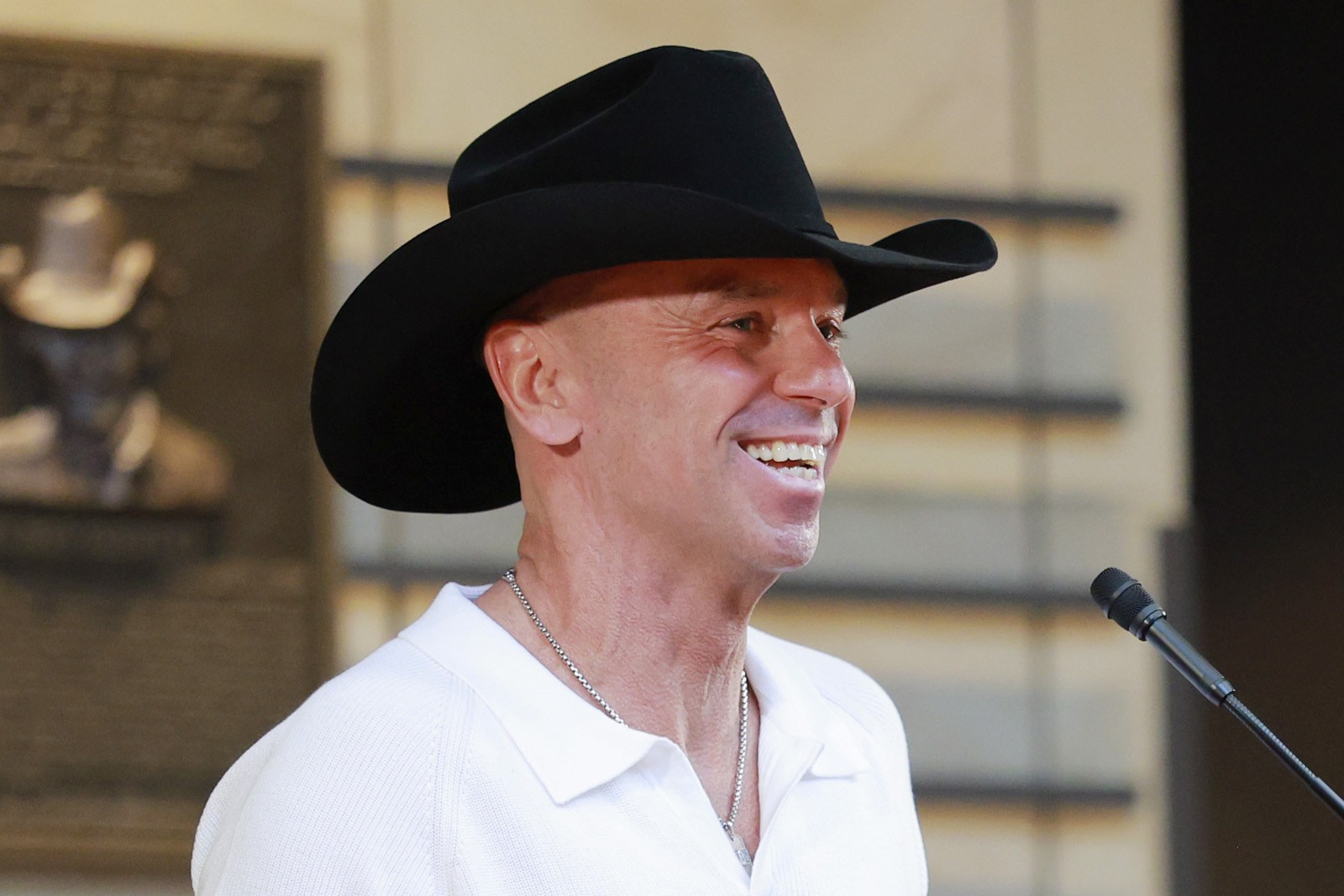
Top 10 Kenny Chesney Songs; Country’s Most Important Artists

The best Kenny Chesney songs create a ripple of emotions when you least expect it. Here are the 10 greatest from his 30-plus year career. Continue reading…​The Boot – Country Music News, Music Videos and Songs