The song sat in the archives for more than a decade. Continue reading…Country Music News – Taste of Country









The song sat in the archives for more than a decade. Continue reading…Country Music News – Taste of Country

Sunday, June 14
A caller at 27 Mile Haines Highway reported a brush fire. HVFD, KVVFD, and AST responded. The fire was extinguished.
An officer on Mud Bay Road conducted a vehicle stop. A driver received a verbal warning for speeding.
The Haines Volunteer Fire Department and Haines Borough Police Department police responded to a wood stove fire in the 300 block of Dalton Street. The fire was extinguished.
Monday, June 15
A caller in the 200 block of Third Avenue reported there may be someone in a family member’s property.
A caller in the 1000 block of Haines Highway reported that a neighbor was in their yard.
An officer on Lower Mud Bay Road conducted a vehicle stop. A driver received a verbal warning for speeding.
Haines Borough Police Department officers observed an unsecured building in the 20 block of Oslund Drive. The building was secured.
Haines Borough Police Department officers responded to a disturbance call in the 500 block of Chilkoot Street.
Tuesday, June 16
OCS called to speak with an officer in the 300 block of Haines Highway. An officer took the call.
A Haines Borough Police Department officer in the 200 block of Main Street performed an accident report for a vehicle accident without injury.
A caller in the 1600 block of Mud Bay Road reported a juvenile brown bear in the area.
A caller in the 1200 block of Lutak Road reported a possible scam call and wanted to file a report for information.
An officer on Mud Bay Road conducted a vehicle stop. A driver received a verbal warning for speeding.
A Haines Borough Police Department officer served a trespass order in the 100 block of Glacier View Road.
A Haines Borough Police Department officer in the 300 block of Haines Highway assisted another agency.
A Haines Borough Police Department officer in Haines performed a routine traffic stop.
A caller in the 100 block of Bear Trail Lane reported seeing a person running from their property with stolen property.
A citizen on Front Street turned in an ID they found. A cruise ship agent was contacted.
Wednesday, June 17
A caller on Front Street reported a subject forced entry into their house. One subject was taken into custody.
A caller in the 400 block of Main Street reported a cow and calf crossing the roadway and on the side of the road. A Nixle alert was sent out.
An officer on Mud Bay Road conducted a vehicle stop. A driver received a verbal warning for speeding.
An officer on Mud Bay Road conducted a vehicle stop. A driver received a verbal warning for speeding.
A caller in the 300 block of Lynnview Drive reported a juvenile had left home. Haines Borough Police located the juvenile and returned her to the residence.
Thursday, June 18
A caller in the 600 block of Haines Highway reported finding a purse and gift cards. The item’s description was logged.
A caller on Haines Highway reported a possible DWI with a driver swerving over road lines.
A caller at 2.5 Mile Lutak Road reported a possible issue with a bear attractant.
A ship agent in the 300 block of Haines Highway turned in found items. An officer took custody of the items.
A caller at 2 Mile Haines Highway reported gravel had fallen out of a truck and into the roadway. Haines Borough Police Department and DOT personnel responded. The roadway was cleared.
Friday, June 19
A Haines Borough Police Department officer at 4 Mile Lutak Road stopped to check an abandoned vehicle. It was off the road and not a traffic hazard.
Saturday, June 20
A caller at 1 Mile Lutak Road reported a bear in the area.
An officer on Lower Mud Bay Road conducted a vehicle stop. A driver received a verbal warning for speeding.
A caller on Third Avenue reported a suspicious person in the area.
A Haines Borough Police Department officer in the 400 block of Main Street performed a traffic stop.
HVFD performed support for the Kluane Bike Relay at Fort Seward.
A citizen at Tlingit Park reported the theft of several items.
A caller on Haines Highway reported losing a cell phone. Item description and contact information were obtained.
There were six 911 hang-up calls, one canine call, 11 EMS calls and 33 burn permits issued during this reporting period.
The post Blotter: June 14 – June 20 appeared first on Chilkat Valley News.
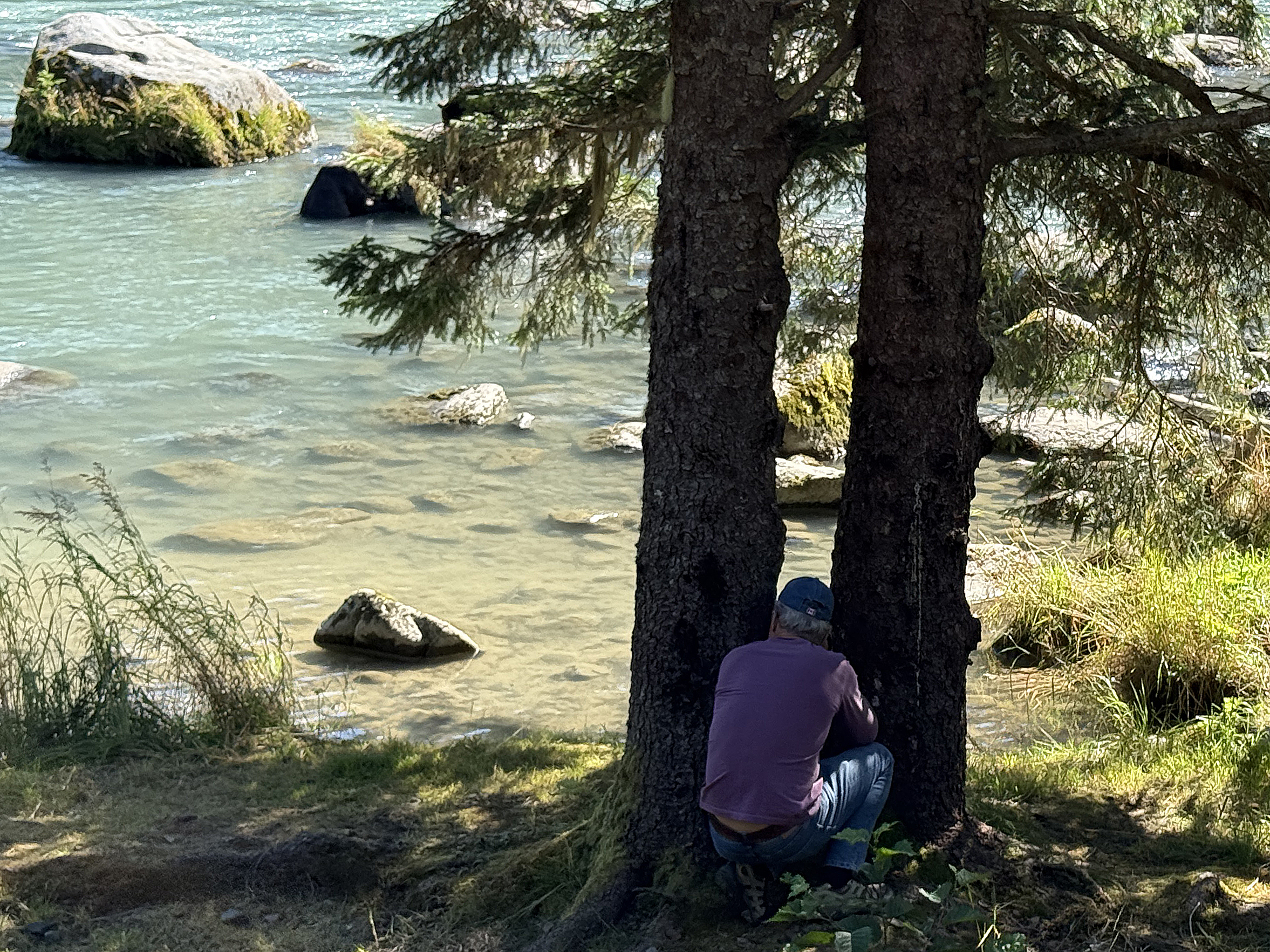
What was once commonly called the “bear monitoring” program is being revived along the Chilkoot Corridor in Haines. The new Alaska Department of Fish and Game hire is meant to keep bears, and people, safer.
Fish and Game has hired a technician to monitor the behavior of bears and people where they collide the most in Haines: the Chilkoot River Fish Weir, which attracts bears and the tourists that watch them.
The position is called the Chilkoot River Corridor Human Bear Education position. Approximately 300 brown bears live in Game Management Unit 1D, which includes Haines and Skagway.
Hannah Manninen is a state biologist based out of Juneau. She said the new position has been filled and is in the process of starting.
“It is a position that has a variety of duties,” she said. “So they will be doing things like discussing bear awareness with visitors that come into the Chilkoot River Corridor. They also will be talking with anglers. They’ll be talking with people about camping in bear country, how to store human food and secure angler trash.”
Manninen said the technician will be conducting walk-throughs and collecting data. What they won’t do is enforcement.
“They are not able to actively enforce things,” she said. “They can inform people, they can help educate people. But they don’t actually have that enforcement authority. But they are going to have a strong working relationship with the state trooper that’s on the ground up there, the wildlife trooper that’s up there, and then also the park ranger that is up there.”
Manninen has been a part of the Chilkoot Corridor Working Group, which pressed for the new hire. The original Chilkoot Corridor Group started 26 years ago. But that group fell apart during the pandemic.
While the working group had hoped for two technicians, there was funding for only one. The position is just for this season and is being described as a pilot program.
The new hire comes with a reframe.
“We are trying to get away from calling it a bear monitor, because they’re not only out there monitoring the bears,” Manninen said. “Right? This is the bears’ natural habitat … Really it’s about educating people, and what we’re doing, and what people need to actively be doing to safely recreate around bears.”
Researchers estimate that about 20% of the brown bear population in Haines and Skagway was killed through legal hunting, shot in defense of life or property or hit by cars in 2020.
The post Haines to get bear education position, funded by ADFG appeared first on Chilkat Valley News.

In the first week of June, three men flew into Haines to meet with borough manager Alekka Fullerton. They were executives she hadn’t met from a company she hadn’t heard of. As she learned at the meeting, they manage much of the operations at the borough’s cruise ship dock.
Their visit makes three large corporations that have started circling Haines’ cruise infrastructure in the span of just a few weeks this spring.
It started with an offer in April from international port management company Global Ports Holding. A few weeks after news of the interest broke, a Miami-based executive from the company touched down in Haines to pitch the public, proposing the company take over management of the dock, many of its costs, and much of its revenue.
For many in Haines, the question that accompanied the Global Ports offer was one of public versus private control: continue having the borough operate the public dock, or let Global Ports take a crack at it.
But the visit from the three executives — from Ketchikan-based Survey Point Holdings — has made the question more complicated. Under the current status quo, the small facility is already part of a privately-held management network.
Amid the wave of interest, it now appears where the borough decides to cast its lot may have implications not just for the two-thousand some residents of the Chilkat Valley, but also for a system of interconnected cruise infrastructure across the state. Specifically, some say, for who makes money from that system, and how.
The system, as it stands, is centered around Survey Point, with Global Ports — despite touting itself the largest cruise terminal management company in the world — on the outside looking in.
Currently in Haines, Survey Point and its subsidiaries schedule cruise ships, tie them up when they arrive, deliver ship supplies, and coordinate medical services. The gangways at the dock are owned by the company, as are the Yokohama fenders that floated the F/V Pavlof after it sank in the Small Boat Harbor this winter. One Survey Point executive provided input into design concepts, completed two years ago, for a major Port Chilkoot Dock upgrade.
“In the past all the stuff just happens and no one knows what’s happening behind the scenes,” said Survey Point president Ethan Berto in an interview two weeks ago. “It goes smoothly and no one thinks to ask.”
Fullerton acknowledges she didn’t know much about the system, attributing it at least in part to the fact that it was never in writing. For all of Survey Point’s work at the municipal dock, there has never been a contract or memorandum of understanding between the company and the borough.
In addition to learning more about the company’s operations in Haines, Fullerton and other staff had a second key takeaway from the meeting. Berto, they said, had come to remind the borough of his work specifically because of the Global Ports overture.
Global Ports has described itself as providing “core port services,” including “handling ships and their passengers and crew through terminal and marine services.” The company’s potential landing in Haines could disrupt what Survey Point does, though neither company will say exactly how.
“I don’t know enough about what Global Ports is proposing to know if any of these relationships would change,” Berto said, of Survey Point’s operations in Haines. “It could drastically change or potentially might not change at all.”
On top of current operations, Berto said that knowing now the borough is entertaining management offers for its dock, Survey Point would be interested in a role closer to what Global Ports is offering.
That puts the two companies in a position of vying for the same infrastructure — a pattern that has played out before.
In recent years, Global Ports has rapidly expanded, particularly outside its center of operations in Europe and Asia. From 2022 to 2025, it increased one revenue metric in the Americas from $14.7 million to $106 million, largely through ventures in the Caribbean.
Before Haines, Global Ports had tried unsuccessfully to enter the Alaska market at least twice, bidding on a port management deal in Ketchikan six years ago and on the White Pass railroad and dock in Skagway before that. Both times the company was bidding against Survey Point.
Whereas Global Ports has been trying to gain a first operation in the state, Survey Point has been bidding from a position at the heart of Alaska’s cruise ship industry.
In the recent meeting between Survey Point’s executives and borough staff, “a lot of the conversation revolved around all the companies (Berto) owns,” Fullerton said.
That list of companies connected to Survey Point is long and includes most of the services needed to bring a cruise ship to port — particularly a large foreign-flagged cruise ship subject to more stringent federal regulations.
Ownership of Survey Point itself includes the Berto Family, with Ethan Berto and father Bob Berto, and a 50% stake held by a marine-terminal subsidiary of Blackstone, the private equity firm.
Under the Survey Point umbrella is Southeast Stevedoring, which ties up ships at port. Subsidiaries Temsco, Coastal, and Northstar Helicopters fly passengers on high-cost shore excursions. Other subsidiaries run port security, emergency response, and tugboat services. Survey Point owns docks in Skagway, Juneau, and Ketchikan — the state’s big three cruise ports — as well as its controlling stake in White Pass.
Perhaps most significantly, under the Survey Point umbrella is Cruise Line Agencies of Alaska, or CLAA. CLAA is responsible for scheduling ship itineraries in every public cruise port in the state, not just Haines, as well as some privately-owned cruise terminals.
They’re contracted to provide that scheduling service by the cruise lines. The details of the contracts are not known by any port communities in the state, said borough tourism director Rebecca Hylton, and, like in Haines, the company doesn’t have any written agreements with municipalities.
The scheduling service is a powerful lever to control in a place where, industry experts say, demand for cruise berths far outstrips supply — where cruise towns have miles on end of berthing infrastructure, and still the ports are full.
“Overall there’s a very limited amount of berthing capacity in Southeast,” said former Holland America senior vice president Joseph Slattery. “The port of Juneau is locked down. For a new entry, a cruise line adding capacity, you can’t just come up with an ideal itinerary and expect to be able to operate that.”
Such high demand for berthing space could theoretically give the owners of the berths a lot of leverage in the market. For instance, in 2019 the City of Ketchikan solicited bids for a so-called preferential berthing agreement. With that model, cruise lines would offer the city cash in exchange for guaranteed space at a public dock. The city at the time asked for a minimum bid of $16.7 million per berth.
But the city never moved forward with any berthing deals. And putting those kinds of deals on the table is an outlier, because municipalities don’t directly control scheduling at their docks — CLAA does.
And CLAA’s scheduling system doesn’t center around a kind of free market, space for the highest bidder, model. Instead, it operates according to a principle that goes by a number of names, including the “historic berthing model,” and “historic priority scheduling.” Under the historic berthing model, once you get dock space in a certain place at a certain time, you keep it, theoretically, for good.
In a 2021 letter to the Skagway assembly, longtime CLAA Skagway port manager Steward Stephens explained the system as following core principles: for instance, when multiple cruise lines want a slip, “priority is given to the cruise line company that has historically called on that day of the week… historic priority for each port is determined on the length of time a cruise company has been berthing at a particular port,” Stephens wrote.
That ensures a large number of slots for the largest cruise lines, specifically Carnival Cruise Line, which has been at the top of a food chain of consolidation. In 1989 and 2002, Carnival, now by far the largest cruise line in the world, acquired Holland America and Princess Cruises, who had dominated the early decades of the modern Alaska cruise industry during the last century. By the time those two former big fish were acquired by Carnival, they had already folded in Sitmar, which had been a large competitor in the Alaska market, and Westours, which was the original modern Alaska cruise operator, running passengers from ships to the White Pass railroad and to motorcoaches out of the Halsingland Hotel in Haines.
Today, in large ports like Juneau and Ketchikan, berthing rights are “locked up by the big operators,” Slattery said.
Carnival and CLAA also have formalized business ties outside of the historic berthing rights system. Carnival is the other major party in the White Pass ownership group, with a 45% stake. Together, they purchased the railroad and its associated infrastructure for just under $300 million. The ownership of Survey Point’s dock in Ketchikan gives Survey Point a 55% stake, Carnival (through its subsidiaries) a 30% stake, and Royal Caribbean — the second largest cruise line in the world — a 15% stake.
Currently, there aren’t a lot of ways to work outside the CLAA system. Alternative models to carve out dock space include what American Cruise Lines does, when it offered Haines financing for a dock in exchange for guaranteed berthing access. Other lines have vessels small enough, and domestically flagged, so as to have fewer infrastructure needs, able to come to shore where other ships can’t, said one small cruise line owner, Dan Blanchard, of Uncruise.
But by and large, fitting into the big-ship schedule in Alaska means going through CLAA.
Enter Global Ports, which some say could be an opening in that status quo.
Survey Point seems to think as much. At the meeting between the company and Borough officials, Fullerton said she specifically wrote down one of Berto’s questions that raised the outside company by name: “the question was, if Global Ports Holding were to take over, what would the rest of their itinerary be. If they’re planning to have boats come to Haines, where else would they go,” Fullerton said.
Slattery, while not speaking directly to the Global Ports versus Survey Point question, did say ports like Haines could pitch themselves as a way in for new operators.
“In big ports you can’t break in and get 20 straight weeks of a Tuesday berth. Ports like Haines are trying to break in and offer an alternative — Prince Rupert is another one in that category,” Slattery said. Prince Rupert’s facility, in British Columbia, is managed by Global Ports. “It’s an avenue for a new entry to construct a quality itinerary.”
Others more explicitly say that moving outside the current system with Global Ports would benefit Haines.
One of those advocates is former Skagway mayor Andrew Cremata, who is a paid advisor for Global Ports through his personal consulting firm. He doesn’t speak for the company, he said, but insists he does genuinely believe it’s the best option for the Lynn Canal, which is why he agreed to contract with them.
“(Survey Point) is a private company that has a vested interest in the status quo,” Cremata said. “In my opinion, I think it’s wise for a town like Haines to look outside the existing business model for someone that will come in and get you top dollar.”
As Skagway mayor, Cremata said, he advocated for his borough to put berthing space at the public docks out for bid, like Ketchikan did, rather than follow CLAA’s system for assigning berth space. Skagway should be getting three to four times (the amount they currently get),” he said. “MSC, Viking, whoever isn’t included in the historic berthing model would be bidding and they would probably bid a lot more money.”
Berto, however, argues that kind of community-to-community bidding system could introduce “huge inefficiencies” and destabilize the industry.
“It wouldn’t be fair to kick out a ship that’s been coming for years and years just because another company bid a dollar more,” Berto said.
Plus, he said, municipalities already have the power to charge fees. Haines, for instance, charges cruise ships $9 per passenger each time they dock. “(Cruise lines) are all paying the posted tariff,” Berto said. “They’re all paying what Haines is asking them to pay.” Still, that’s a payment for use of the facility after scheduling is done, different from a payment for guaranteed use of the facility at a specific time or volume.
Global Ports themselves haven’t made any public mention of putting dock space out for bid. And if it did successfully do so, it doesn’t appear that higher berthing fees would translate directly to borough revenue.
The company hasn’t submitted an official term sheet yet, but has said it expects in a deal all the fees the borough currently charges cruise ships to dock it would instead collect.
When asked if his company would use CLAA to schedule ships when managing the Haines facility, Colin Murphy, the Global Ports executive who visited Haines, noted that the company doesn’t have “vested interests,” but said it would “work with whatever booking method our cruise customers prefer.”
Rather, the conversation in the Chilkat Valley in favor of bucking the current system has centered around increasing passenger count. Supporters of a Global Ports deal say doubling, tripling, or even quadrupling the town’s annual cruise ship visitation could be an essential economic lifeline.
“We used to have 25 to 30 employees,” Pioneer Bar and Bamboo Room owner Christy Tengs-Fowler said to Murphy in May. “We have a building that could serve hundreds of people a day but it’s just sitting there. It’s not sustainable, and businesses are going to close… I feel lucky you came here and I hope we listen and learn and try to work with you. To me it’s like a godsend.”
Many people — including industry experts, executives from the competing companies, and borough leaders — say those are the questions Haines has to settle first and foremost, of how many passengers the community really wants, and what it hopes development will look like.
Answers to those questions will shape what kinds of deals the borough assembly is open to. But even if the community can reach some kind of consensus there, it might not lead to a clear answer about which company to go with.
Survey Point, Global Ports, and a third interested company, Huna Totem Corporation, have all said Haines’ “local character” is a selling point for the town — something they’d work to maintain. All say they can get boats into port, too. Global Ports has explicitly cited that as a main goal, potentially increasing traffic from roughly 67,000 passengers to eventually 300,000.
Berto as well said he saw traffic to Haines as decreasing congestion at larger ports, and not competing with them. But he added that he would be “skeptical of any terminal operator that said they could guarantee growth.”
“Ultimately cruise lines are ones that make decisions about where they’re going. Terminal operators don’t own ships or control where they go.”
Amid all the different pitches, one point of differentiation is that Survey Point is the only company with something to take away.
Coordinating cruise ships in the region requires weaving together a whole host of considerations: “an orchestration of port availability, logistics, navigation, fuel consumption, speeds, everything that makes the itinerary work,” as Slattery put it. That’s work Survey Point and CLAA are already doing.
Former Haines tourism director Steven Auch used the word orchestration as well. “CLAA looks at the entire orchestration of everything that’s happening,” he said. “If I had a dock, I’d rather somebody was able to look at the larger picture and slide things around according to that… of course you can look at it as someone holding that and using it as leverage. Sure, welcome to negotiations 101.”
Ethan Berto himself was yet a third to use the word orchestration. When he talked about what his companies do, he said he didn’t think many understood how complex it was. Shifting the system, he said, could have consequences.
“As things get busier they have to be even more orchestrated, and they get very complex,” he said. “Every time you change something in a complex system it creates problems somewhere else.”
There’s no final decision on how the borough government will weigh all these considerations.
As of Monday, Fullerton said the borough and Global Ports are getting closer to finalizing a term sheet. Fullerton also said she has now been officially notified of interest from Huna Totem Corporation, and is not ruling out officially soliciting offers from all interested companies.
The post Behind the battle for Haines’ cruise ship dock appeared first on Chilkat Valley News.
Mayor joining MARAD meeting over Lutak dock
During this week’s report from borough manager Alekka Fullerton, she said the Lutak Dock Liaison committee will be meeting with the Maritime Administration on Wednesday. Committee members are borough staff: clerk Mike Denker, Fullerton, facilities director Brad Jensen, planner Chen Wu, and harbormaster Henry Pollan. Fullerton told assembly members on Tuesday that this meeting was to understand the timeline of where the borough is currently with the Lutak Dock project.
Mayor Tom Morphet spoke up, first asking if any elected officials were joining the meeting, then requesting to sit in on the meeting. Assembly member Mark Smith said he was concerned about having an elected official join the meeting. Morphet said that he wanted to sit in on the meeting “unless somebody blocks me.” He said he wanted to ensure that the borough did not “drop a $25 million grant.”
After much back and forth between assembly members, the decision to allow the mayor to attend the meeting ended in a vote that came down to a 3-3 tie with Eben Sargent, Kevin Forester and Craig Loomis voting to allow Morphet to join the meeting, while Cheryl Stickler, Mark Smith and Gabe Thomas voted against it.
That tied vote meant Mayor Morphet got to vote to break the tie, and ultimately allow himself to attend Wednesday’s meeting.
H-1B Visa
Following the lengthy discussion about the upcoming meeting with MARAD, assembly member Smith brought up the question of vital employee borough planner Chen Wu’s H-1B visa status. For his visa, Wu needs an employer to sponsor the visa request. Smith questioned if it was the “tax payers responsibility” to pursue this.
Fullerton said that the borough wants to retain Wu, who has been the borough’s planner since August 2025.
Last September, the Trump administration raised H-1B visa costs from $5,000 to $100,000. That led to the Haines Borough School District losing its special education teacher, Stacey Spencer, earlier this year after her visa expired in December and the school district was unable to obtain alternate legal status that would have allowed her to remain.
The increase in fees impacted school districts across the state which have turned increasingly toward hiring foreign teachers due to staffing shortages and shrinking budgets.
In April, superintendent Lilly Boron said that nearly all of the district’s applicants for the upcoming school year would be required to have an H-1B or J-1 visa.
But on June 6, U.S. District Court Judge Leo Sorokin ruled that the $100,000 fee was unlawful.
At the borough level, Wu’s job is at stake if the borough does not end up sponsoring his request.
Fullerton estimated that the cost for the whole process will be approximately $2,000, a fee she said Wu is prepared to pay.
Episcopal Church discussion
During public comments at the start of the assembly meeting, Sarah Chapell, Cindy Jones, Barbara Nettleton and Jim Stanford aired their frustrations over the borough’s appeal to remove the tax exemption from the parcel of land owned by St. Michael & All Angels’ Episcopal Church.
Nettleton and Stanford are both on the Board of Equalization. The borough is asking the superior court to overturn a decision the BOE made which allowed the property to be exempt from taxes. The disputed parcel is located at Mile 1 on the Haines Highway, and was purchased by the church in 2000. After the four voiced their concerns, borough finance director Jila Stuart clarified that the assessor was “not singling out the Episcopal Church.” She explained that assessor Martins Onskulis looked at all the exempt churches. Stuart said that while this one was appealed, it is not a unique situation.
The post Assembly Briefs: Mayor joins MARAD meeting, H-1B visa and Episcopal Church’s land appeared first on Chilkat Valley News.

David Svenson is in town visiting his older brother, John Svenson. David has been visiting Haines since the 1960s — he celebrated his 16th birthday here. This year he brought his 16-year-old son Shion Svenson on the trip from their home in California. David Svenson has been sculpting, carving and making art in the Chilkat Valley with local artists for years and has been inspired by Leo Jacobs Sr. , Nathan Jackson and Ed Kasko. Highlights of this trip included going halibut fishing with Ken Gross. David Svenson and his son both caught their very first halibut together on this trip.
Christiane Leitinger recently visited Haines from Colorado with her family and a stack of pictures from 1961. They set out to match up the photos from her parents’ epic trip that started in Prince Rupert, British Columbia to Haines in 1961, aboard the only vehicle to drive the Lynn Canal. As a boat it averaged four knots. Her parents were Ilse Abshagen and Hans Leitinger; they were traveling in The Ugly Duckling. The Ugly Duckling was a Ford GPA, an amphibious jeep. About 1,200 Ford GPAs were produced during World War II and Abshagen and Leitinger were the first people to drive the Inside Passage in theirs, as documented by plenty of photos. Christiane Leitinger has an amazing collection of pictures from the trip and notes that her parents made on the voyage. She and the family are off to Anchorage next. Leitinger has a solid lead on what could be the current location of the vessel. While the family was in town they compared 1961 photos with areas along Mud Bay road to discover the final landing of the Ugly Duckling before it made the road trip to Anchorage.
Bryce Norton, “Little” Will Tuttle , Lizzy Hahn, Lilly Franck, Katherine Perry, Joseph Rossman and Koa Doddridge went water skiing on the Lynn Canal this week. Norton was the skipper for the adventure in rather chilly waters. Hahn said that 57 degrees was an acceptable temperature. She’s from Nome, maybe that explains things. The chilly waters did not stop Tuttle from skiing in the wake of the Hubbard and a cruise ship, much to the delight of passengers aboard.
Tyler Scovill has been working at The Parts Place for 40 years. His dog, George, has only been on the payroll for a few. His sister, Tomi Scovill, can be credited with inspiring him to move to Haines. He was living in Pentwater, Michigan when she bought the store and pitched the idea to him. His milestone was celebrated with coworkers and friends. Cupcakes and pinwheel appetizers were shared; Scovill enjoyed homemade lasagna and there were several cases of his favorite beverage to enjoy. He said that while working at the Parts Place, the price of oil has changed dramatically, and no people have come in looking for blinker fluid.
The post Duly Noted: Water skiing, ugly ducklings, birthdays and more appeared first on Chilkat Valley News.
10 Years Ago
A free workshop led by Dan Henry July 7-9 aims at helping residents develop skits for September’s Historic Hysterics Skit Festival.
The festival, Sept. 9-10, celebrates the 90th anniversary of the Chilkat Center and will serve as the annual fundraiser for the Chilkat Center.
The festival aims to feature a series of 10-15 minute skits equivalent to a mini theater festival, with adjudication and awards, said Annette Smith, secretary of Lynn Canal Community Players.
A collaboration between the foundation and the theater troupe, the festival seeks theatrical pieces with a humorous and historical bent, based on an event or item from Haines or Alaska history.
Anyone interested in creating a skit is invited to attend the workshop. “You don’t have to be a writer. You can just be a person who has fun developing something like that,” Smith said.
20 Years Ago
Haines residents are being warned to be on the lookout for phishing attacks that target First National Bank Alaska customers.
The phishing is done by counterfeit E-mails designed to look like official bank correspondence and include urgent requests for personal information.
Banker Dick Flegel, president of the Haines Branch, said “calls started coming in about a week ago. The three of four calls so far have been from local businesses.”
The scam could last a few days up to a month or longer, a bank warning advised residents. “Anyone receiving an E-mail that could be phishing, should not respond to the solicitations nor click on any links within the E-mail,” the announcement said.
30 Years Ago
A cellular telephone was used to summon rescuers to Sullivan River Monday afternoon, after an injury on a three-thinning operation.
A Fairbanks man called Haines police with a report of a man being struck by a tree, said chief Charlie Fannon. The man with the phone apparently was part of a crew working on a Native allotment for Tlingit-Haida, Fannon said.
The dispatcher alerted the U.S. Coast Guard and the Alaska State Troopers in Juneau, and in turn a two-person medical emergency team from Glacier Valley Fire Department was deployed on a Temsco helicopter under a standing arrangement between the department and the company.
The injured man, 24 years old, was struck in the hip by the butt end of a tree as it fell after being cut, said Jeff Newkirk, a supervisor at the fire department.
The post This Week in History: Skit festival, phishing attacks, and a man in a tree appeared first on Chilkat Valley News.
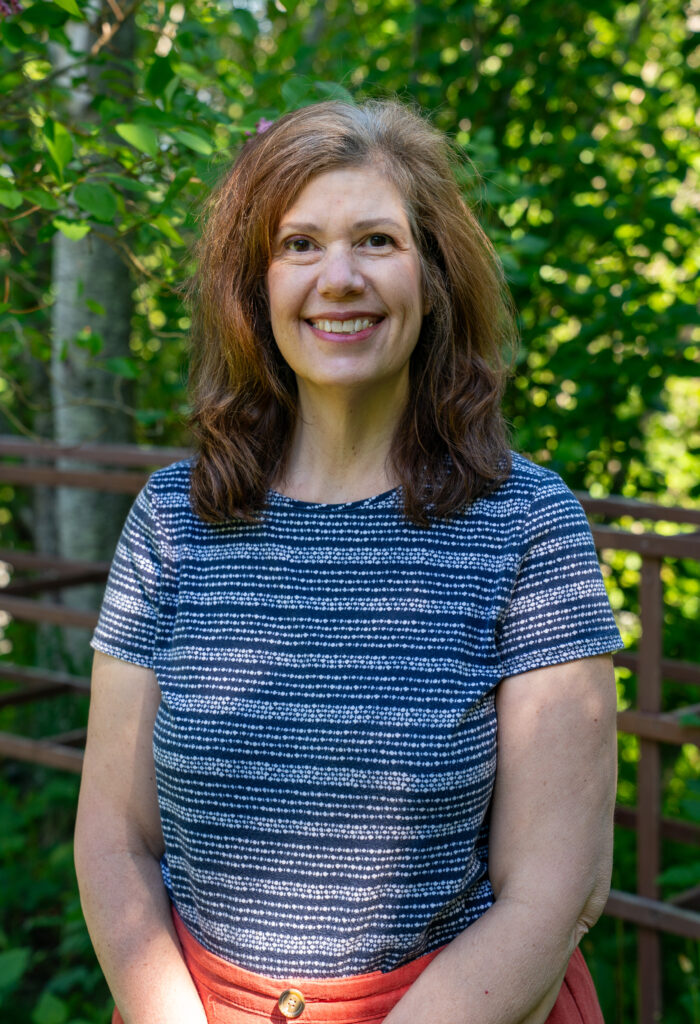
As teachers closed down their classrooms in preparation for next year, some longtime teachers like Lisa Andriesen packed up their rooms for good.
Andriesen’s route to the Chilkat Valley started with a grandmother who always talked about wanting to come to Alaska. That motivated Andriesen to attend a job fair in Anchorage where she met the Haines Borough School District superintendent at the time, who later reached out and encouraged her to apply.
Andriesen said she didn’t know where Haines was when she applied to be a middle school teacher, but she still got the job and took the ferry up to Haines 35 years ago, fresh out of the University of Michigan in Ann Arbor with her teaching certificates in hand. She was 21 years old. She said she figured she could do anything for one to two years.
Thirty-five years later, most if not all, Haines middle school students had Andriesen as their language arts and social studies teacher.
Andriesen was not only a middle school teacher, but also the homeschool correspondence coordinator for almost 15 years. Andriesen said there were two language arts and social studies teachers in the middle school when she first started. Now, with fewer students, there is only one.
She said one of the reasons she stuck with the job for so long is that the staff she worked with were driven and motivated.
“So many people that they [school district] hired have been so dedicated, wanting to do the best for the kids, and just great, fun people to work with and teach with,” Andriesen said.
Haines Borough School District superintendent Lilly Boron said over the five years that she was the principal, the school lost a lot of core teachers.
“We’ve had about 40% turnover rate,” Boron said. Boron mentioned that because of the current state funding environment in Alaska, teachers are having to do more with less. She said Andriesen is one of the core teachers in the middle school and for the homeschool program that the school depends on for their institutional knowledge.
She also blamed, and thanked, Andriesen for pushing her into leadership positions. Boron said Andriesen recommended that Boron attend a principal program, which ultimately led to her stepping into an administrative role in the district. Not only was Boron a colleague of Andriesen’s, but her twin daughters were also students of Andriesen.
Looking to the future, Andriesen said she thinks artificial intelligence will drive a big change for education.
“We’re just starting to learn how to deal with it, what to incorporate, what to ask from the kids.” Andriesen said.. She encouraged her students to use the Quizlet AI tools, which allowe concepts to be explained in new ways and give new examples.
But, she said, it’s an adjustment for teachers. She gave the example of teaching students for three years in middle school, so she becomes familiar with their writing styles.
A few of her students have tried to use AI for their writing but she could tell it wasn’t their style of writing. Andriesen anticipates that this may become more common.
As the coordinator for the homeschool program, Andriesen oversaw the curriculum, checking work samples and plans that parents would send in. Andriesen said that there are currently around 25 students enrolled in the Haines Borough’s homeschool program, which spans K-12. During the COVID-19 pandemic, the program had 80 students enrolled.
Andriesen said that a challenge in education is the never-ending new techniques. It’s a balancing act of knowing what works for the students and incorporating new methods. Andriesen said she changed a lot in her teaching over 35 years.
Other challenges arose with new administrators who were not familiar with Haines and trying to acclimatize them as well as maintaining programs through reduced staffing. Andriesen said that with staff reductions, teachers took on more responsibilities and got more creative with their schedules to be able to fit in the additional programming.
“I’ve really been proud that we’ve been able to keep our art, music, P.E., … industrial arts and everything.” Andriesen mentioned that it would be easier to move to a smaller schedule, but then the students wouldn’t have access to the vast amount of programs.
“We want them to get everything that they can have,” Andriesen said.
As the social studies and language arts teacher, Andriesen said she would find ways to connect history, civics, novels and readings with public speaking and research. She especially enjoyed working on hands-on projects and simulations to simulate various real-world situations.
Jeanine Ward was a student of Andriesen’s around 21 years ago. She said she still remembers a stock market activity that students participated in. Ward said they learned how to trade stocks and all created something that had never been created before. She created edible glue to put cakes back together. Students recreated the rise of the stock market and eventually saw its fall – something the students never saw coming, according to Andriesen.
Andriesen worked with grades six through eight for two hours a day.
“You get to know them [students] pretty well,” Andriesen said. Sixth graders have a lot of energy and are easier to cause to laugh compared to the more serious eighth graders, who would finish her sentences. Andriesen said that a middle schooler’s mind changes more than a two-year-old’s mind. “Middle schoolers are fun. You never know what to say, they’re super funny.”
The middle schoolers, she said, kept her on her toes. “They’re so silly and goofy… they don’t really care. That’s like their personality, that’s the fun part.”
Although she was teaching in the same position for 35 years, Andriesen said that every year felt different. While she was teaching similar things, the students are what made each year unique, with each class having their own group personality. A few of her students this year were the children of students Andriesen had during her first two years teaching.
When the elementary and middle school moved to join the high school building, Andriesen picked her classroom when it was still cement. She has been the only teacher in that room since it was built. Over the past school year, Andriesen was able to “slowly kind of say goodbye to things.”
Now that she has retired, Andriesen said that she is looking forward to not having to pack a lunch anymore. She will be traveling to go see the location of the Battle of Verdun in France. After teaching about World War I for years, Andriesen said that while it is a sad site, she is looking forward to being part of and near to something that she has taught for so long.
Replacing Andriesen to teach middle school social studies and language arts is Shannon Jeter. Jeter is moving to Haines from Maryland and has experience teaching middle school. Jeter will be one of the two new middle school teachers, in addition to the science teacher. There are still three positions waiting to be filled: two special education instructors and a kindergarten teacher.
“Ultimately, the students that pass through her classroom door were stronger and better for her instruction,” Boron said.
The post After 35 years, Andriesen closes the classroom door appeared first on Chilkat Valley News.
Nearly 300 teams participated in the 30th Kluane Chilkat International Bike Relay on Saturday. They biked the nearly 150 mile race as solo riders, or as part of two-, four- or five-to-eight member teams.
One big change this year was the number of solo riders, which skyrocketed. A record 73 total registered, of which 48 men, 24 women and 1 solo open competitor finished.
Here’s more from racers and teams about their experience went this year:

Tom Binder’s driveway acted as a lemonade stand for cyclists going by on Saturday. He along with Nicholas Bishop, mayor Tom Morphet and Debra Schnabel got their camping chairs out and sat along the highway with a plywood table filled with paper cups of lemonade. They offered those who stopped canned vodka lemonade. There was also a bottle of vodka sitting on the table next to the lemonade cups, in case riders wanted an added kick to their drink.
Whitehorse local Vincent Menard said that he, his sister, Orlina Menard, and the rest of their family have been doing the race since he was in 2nd grade. The first time they did it, the siblings rode tandem bikes with their parents. They have since moved on to being a part of an eight person team and tested out a four person team this year. “We’re getting older and wanted to try a little harder.” Menard said his parents came along to view the team, named “Dodging Potholes,” but decided to turn around before the border, while the siblings kept going to the finish line in Haines. “We’re just supporting the bike environment and the culture, not the country.”

Whitehorse cyclists Craig Flaherty and Jonathan Lowey were driving their team’s support car when they came across Juneau cyclist Darin Tingey stuck on the side of the Haines Highway. Tingey got a flat tire about a half a mile after the construction zone started. Road cycling tires are not built to handle the amount of gravel that cyclists faced towards the end of their race. The duo from Whitehorse had a spare tube that they helped put into Tingey’s tire. Tingey was competing in the two person men’s category with his father Brent Tingey.

Winners of the two person mixed relay, Alisha Falberg and husband Adam Moser averaged 20.1 miles per hour. The duo from Juneau has completed the race five times. “On a day like today, it [KCIBR] is the place to be. There is no other place in the world we’d rather be,” Moser said. He and Falberg are avid cyclists in Juneau and train rain or shine. Moser rode the first four legs from Haines Junction to Mansfield Creek, with Falberg riding the last four legs from there until Haines. Moser said he did not feel much of a headwind this year, which was an advantage speedwise. The duo received second and third place in this category in years prior but say this race felt a bit easier because of the “impeccable conditions.” Falberg said the conditions one year were so bad that she had two layers on her upper body, a headband, full tights, shoe covers and full finger gloves. Falberg and Moser hope to be back to race again sometime in the near future.

Dressed to the nines in tutus with tiaras on their helmets, the Canadian four person women’s relay team “Islanders” said they hope to make this race a yearly occurrence. Lauren Keryluke, from Whitehorse, organized the group’s costume, allowing each member to be decked out in a sparkly tutu while they rode. Alanna Stobbe, Erica Friesen and Tyra Bretten said they were leisurely racing. Bretten said she hopes to dress up in a tutu in future races. Keryluke rode the leg through the construction on the Haines Highway, an area where she said she “ate a lot of gravel, lot of dust,” but ended up passing a lot of people because she was on a gravel bike. The entire team rode gravel bikes over road bikes because of the road conditions in Canada, where all the members live. Earlier in the race, the team came across a rider with a flat tire and assisted him, “the rescuers with the tutus,” as Friesen explained.

Team captain Jennifer Gibson gave the team a mission before the race started: have fun. The group said they not only completed their mission but also exceeded expectations. The team, all from Whitehorse, was named “Ghost Riders” and received third place in the four person women’s relay. This was Harriet Stanford and Jennifer Gibson’s second time competing in the race. Hilary Lefort and Aly Miller joined the duo for their first ever KCIBR race. “A lot of training happened today,” said Lefort after completing her longest ride. Miller is new to road biking, having just completed her second month of road biking. Now that the race is over, the group talked about all riding the race solo, but riding together as a group.

Third place finisher in the men’s solo category was 21-year-old Matteo Kuizenga. This was the Fairbanks rider’s first time racing the KCIBR as well as his first time being in Canada. Kuizenga first got the race on his radar in April while looking at races to compete in this summer. He learned about the race from fellow Fairbanks biker, Tyson Flaharty, who has won the race multiple times. Fires in the Interior of Alaska impact cyclists ability to train. Kuizenga said that this race is great timing because he was able to train consistently before the fires and smoke start. Kuizenga works 30 hours a week at the Alaska Center for Energy and Power, and tries to bike around 10 to 14 hours a week. While he does not have a coach, he gets advice from fellow cyclists. To train for the race, Kuizenga focused on duration and getting a lot of time in the bike saddle. His longest ride before the KCIBR was a 115 mile ride from Fairbanks to Nenana and back. He said he is still figuring out the best training methods. Kuizenga has done other long races, like the White Mountains 100 and the Triple Dome Classic which consists of 15 hours straight of biking, but this was his longest race distance wise. This was the first road race that Kuizenga has ever done, with most of his experience being in fat bike races. Second place finisher Tyson Flaharty and Kuizenga bike together in Fairbanks and stuck together for most of this year’s race. After Hudson Lucier’s attack at Million Dollar Falls, Kuizenga said he and Flaharty followed cruising down the descent at around 50 miles per hour. The three cyclists split on the Haines Summit descent, which led to what Kuizenga described as “basically what my worst nightmare was going in,” – a two hour solo time trial. For the rest of his race, Kuizenga worked on holding out his lead ahead of Whitehorse racers Simon Connell and Jonah McConnell. He said this was tricky because of the headwind. The duo behind him had the advantage of drafting off of each other. The night after he finished the race, Kuizenga said he spent around two hours going through the Strava data of everyone who he raced with. He wanted to figure out what the gaps were and where he gained or lost time during the race. The physically hardest part of the race for Kuizenga occurred on the Million Dollar Falls climb, but the hardest part mentally came with the last two hours of the race, while he was “leaving it all on the table.” However, he said he still felt strong, seven hours in going up the finish climb.

In the week leading up to the race, Hudson Lucier was worried that the race would be quite rainy after it was raining every day in Whitehorse. This year’s men’s solo race winner did not see any rain on his ride, however did face some wind around 25 to 20 kilometers from the finish line. Lucier won solo last year, making this his second solo win. Lucier said that his race was faster by about 10 minutes over last year’s race, even with the gravel section that had larger rocks compared to last year’s gravel. “There was some extra body degradation that happened because it’s just so rough,” Lucier said. However, he was able to get through the construction zone without getting a flat. Lucier explained that the race typically plays out the same year after year, with racers starting out hard going up the Haines Junction hill and then sticking together until the Million Dollar Falls climb. On this climb, the peloton broke down into five solo riders and three two person riders. Lucier made his move and attacked on the Guardsmen climb and was able to get a two minute lead to the border. “This year it was all just about building/ maintaining the lead.” He said that this is not his preferred strategy, however with the finish on the climb, he did not want to gamble with coming up to the finish line with other people. Breaking away from Tyson Flaharty and Matteo Kuizenga simplified the finish for Lucier. Lucier is the head coach of the Cycling Association of Yukon. Last year’s Canada summer games led to an uptick in people interested in racing. Lucier said that their program saw an increase in participants with 24 people under 19 signing up for the race program. He said this was more than the Yukon ever had in a cycling program. Lucier’s athletes will be going to Saint George, Quebec after the KCIBR for Canadian Road Championships which goes from June 25 to 28. For many Yukoners like himself, Lucier said that the KCIBR is the goal race for the year. For athletes going to nationals, the race acts as their last big training ride that they do. Coming from the Yukon, Lucier said that they don’t have a ton of practice riding in the heat. This year’s heat impacted his last 40 kilometers, with his feet starting to hurt quite badly. “Ensuring that you’re eating and drinking enough is super key,” Lucier said about biking in the heat. Lucier estimated that around nine of his racers from the under 19 and under 17 categories raced the KCIBR solo. He said it won’t take long until those racers start fighting for the win as well. “Theres been a huge surge in the last two years of people interested in racing their bike,” Lucier said about the Yukon cycling environment.

Growing up in Whitehorse, Heather Clarke participated in the eight, four and two person race relays. For the past four years, Clarke has won the KCIBR solo women’s race. Clarke was not sure how many times she has completed the KCIBR total over the years. “It’s just one of my favorite events, I love it,” Clarke said after completing her fifth solo race. Clarke said the weather the past few years has been amazing, with “pretty good” winds during this year’s race. She said that the first three legs had a huge group of strong riders. Throughout the ride, Clarke was managing both the heat, swiping salt off her face after the finish, as well as her nutrition. Looking at her strategy over the past few years, Clarke said she tries to stay at the front of the group and hang on as long as she can. This year, her chain dropped right when the first move occurred, which resulted in her being dropped from the first group. With around 40 kilometers to go before the finish, Clarke got into a good group. This was when her dad came up and said that they were on track for the record. “So I looked at her and said, ‘Let’s go.’” Before the race started, Clarke explained how the border crossing worked to another solo women’s rider, Rachel Canning, who was racing the KCIBR for the first time. “People wait [at the border] because there’s always a headwind coming into Haines and you just want people to ride with,” Clarke said. Biking through the construction on the Haines Highway, Clarke said they saw a lot of casualties with some people getting flat tires on their front and rear tires. Clarke, however, made it through with no flat tires, but was waiting for them to go while biking through the five mile section. She explained that this is one of her favorite races, because of the community, amazing scenery and how hard it is. “I love the challenge of it. It is a truly hard race and you’re really out there.”
“I also think there’s a huge uptaking, like the solo women, which I’ve been trying to build and bring people.” She said that when she did the race four years ago, she was fully on her own with the solo men’s racers. This year, she said the turnout for the women’s solo race increased greatly. “It makes me so excited that all these strong women are taking on this really challenging event,” Clarke said. “It takes a village for sure, and everyone lives it.”
The post Haines welcomes 30th annual bike relay appeared first on Chilkat Valley News.

Reading Time: 2 minutes
Thus far, we think it’s safe to say that the highly anticipated America 250 celebrations have not been the nationwide unifying event that our leaders had promised.
First, a UFC fighter used his moment on the mic to allege that Michelle Obama is secretly a man. Nothing says unity like disparaging a former first lady on a national stage!
And then there’s the fact that tourists are getting arrested at the Lincoln Memorial Reflecting Pool, which sounds like a Mad Libs result from a very dark timeline.
And now we have the situation that played out at the Great American State Fair on Wednesday.
As you may recall, everyone from Martina McBride to Milli Vanilli canceled on the event, leaving organizers to rely on the talents of … Vanilla Ice and Kash Patel’s girlfriend.
It’s hard to crack jokes at a time when everything sounds like a joke, so rest assured that that is not our attempt at humor:
The man who brought us “Ice, Ice Baby” and Alexis Wilkins, who is dating the current FBI director, were indeed tapped to perform.
To be fair, Alexis is a singer by trade. But she has about 5,000 monthly Spotify listeners, so she’s about as popular as your nephew’s screamo band.
For obvious reasons, lots of people jumped to the conclusion that she only landed the State Fair gig because of her connection to Patel.
And Alexis’ performance didn’t do much to dissuade them from that notion.
“She sounds like A DEAD CAT!!!!!” wrote one user (via Radar Online).
“Hello, D.C. police. I’d like to report a murder,” another added.
“Yes, someone has viciously murdered the national anthem,” a third chimed in.
“Wasn’t Milli Vanilli available?” a fourth asked.
Listing any further criticism would feel like overkill at this point, but — eh, what the hell? Here’s a few more burns for good measure”
“I think we’ve discovered the vocal equivalent of a bowl of potato salad with raisins in it,” another person tagged in.
“It’s got the energy of a senior who forced her way into the freshman talent show because she couldn’t get into choir even though she auditioned every year,” yet another added.
“This is the best we can do for America’s 250 birthday kickoff? What an absolute joke,” yet another chimed in.
Hey, she’s no Milli Vanilli, but Alexis clearly did her best. She hasn’t publicly responded to the criticism yet, but you can be sure that Kash is gearing up to do some ranting and raving on her behalf.
Alexis Wilkins, Girlfriend of Kash Patel, Slammed For ‘Murdering’ National … was originally published on The Hollywood Gossip.
The Hollywood Gossip