A new report from ‘Wall Street Journal’ says that Garth Brooks is considering selling his music catalog for an astronomical price. Continue reading…The Boot – Country Music News, Music Videos and Songs
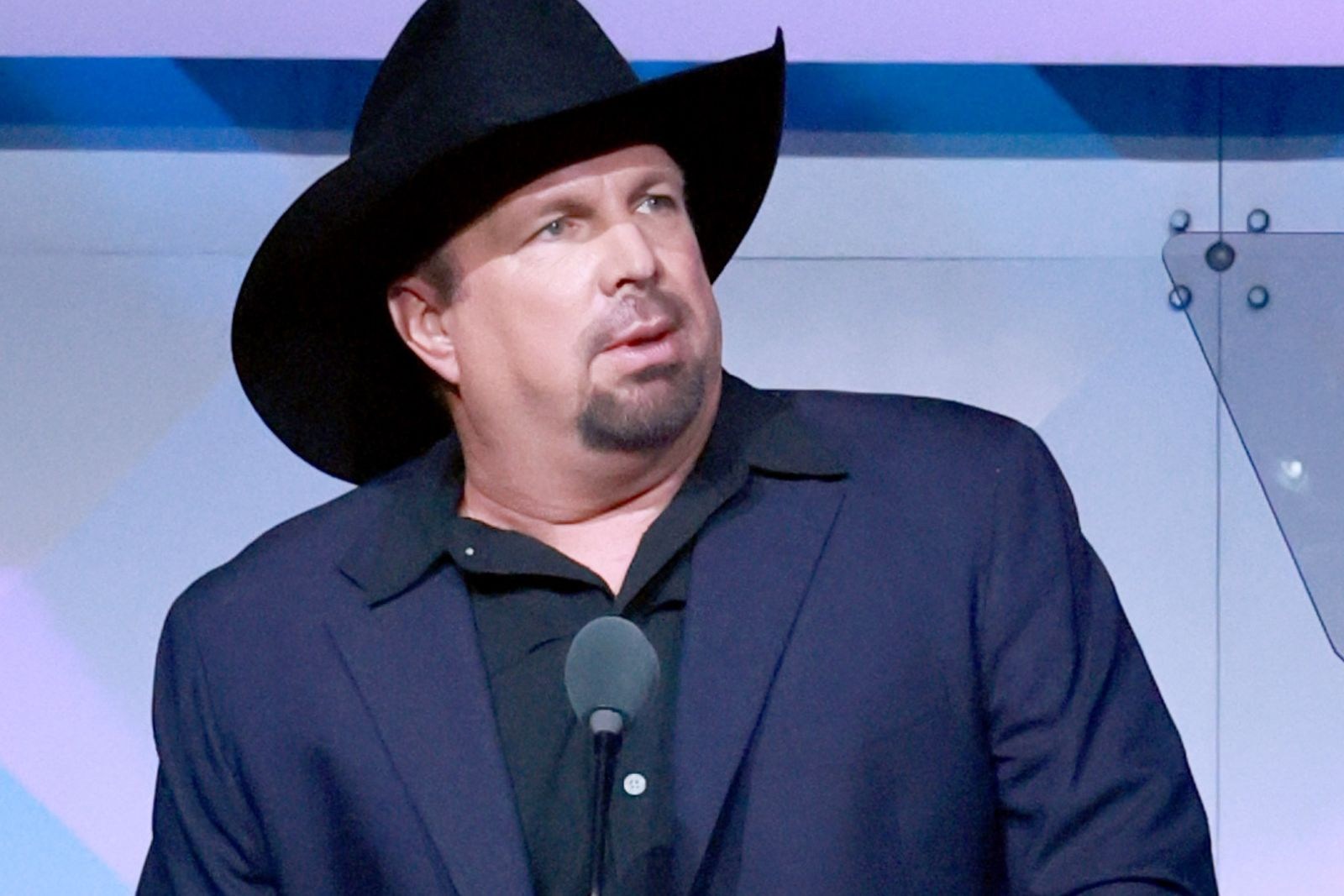








A new report from ‘Wall Street Journal’ says that Garth Brooks is considering selling his music catalog for an astronomical price. Continue reading…The Boot – Country Music News, Music Videos and Songs
A new report from ‘Wall Street Journal’ says that Garth Brooks is considering selling his music catalog for an astronomical price. Continue reading…Country Music News – Taste of Country

You might see the price of a bucket of chicken at KFC from the 1960s and think to yourself, gee, I wish it was still priced the same, but what about inflation?

Food Republic – Restaurants, Reviews, Recipes, Cooking Tips

There’s a character in Kip Moore’s songs that fans can’t shake: Janie. Now, it seems like Moore is wrapping up the character for good. Continue reading…The Boot – Country Music News, Music Videos and Songs
There’s a character in Kip Moore’s songs that fans can’t shake: Janie. Now, it seems like Moore is wrapping up the character for good. Continue reading…Country Music News – Taste of Country

NASCAR’s history is jam-packed with emotional wins, daring maneuvers and nailbiter photo finishes. Continue reading…The Boot – Country Music News, Music Videos and Songs
NASCAR’s history is jam-packed with emotional wins, daring maneuvers and nailbiter photo finishes. Continue reading…Country Music News – Taste of Country

Members of the Alaska Organized Militia, including the Alaska Army and Air National Guard, Alaska State Defense Force, and Alaska Naval Militia, work alongside and conduct damage assessments with community members in Kongiganak, Alaska, Oct. 18, 2025. In the wake of Typhoon Halong, AKOM members were on the ground in western Alaska, conducting damage evaluations and laying the groundwork for recovery operations in affected communities. (Alaska National Guard photo by Staff Sgt. Joey Moon)
The Trump administration has denied Alaska’s request for a larger federal cost share for disaster recovery efforts following devastation wrought by the remnants of Typhoon Halong in Western Alaska last fall.
In a May 31 denial letter, a senior official with the Federal Emergency Management Agency denied the state’s appeal for a 90% federal cost reimbursement for the first three months following the disaster, saying the request for additional funding was “not warranted.”
The denial leaves the federal government covering 75%, and the state covering the remaining 25% of disaster recovery costs, putting Alaska on the hook for tens of millions of dollars.
Gov. Mike Dunleavy claimed the federal government would fully reimburse the state for the first 90 days of immediate disaster relief and recovery efforts, when President Trump signed a federal disaster declaration in October.
But FEMA denied the request for full reimbursement in December. The state appealed and requested a 90% federal cost reimbursement, and that request was again denied on May 31.
Officials with Dunleavy’s office did not comment on the decision on Tuesday or Wednesday.
In the letter, the FEMA official said the department will continue to monitor the costs and could consider a 90% federal cost share if the costs run up to a certain level established by federal law.
Jeremy Zidek, public information officer with the Alaska Division of Homeland Security and Emergency Management, which oversees the state’s disaster response, said by email Tuesday the 75% federal cost share is standard. He said that reimbursement rate will be for all past and future disaster recovery costs related to the storm.
“After the denial of the state’s 90/10 request the state is still in a good position to address all 2025 West Coast Storm related funding requirements which are eligible for state disaster recovery programs and to fund the federal cost share,” he said.
There is not yet a full cost estimate for the Western Alaska storm disaster, including ex-Typhoon Halong. In February, the division’s director, Bryan Fisher, told lawmakers the latest FEMA assessment at that time was $125 million.

Further rebuilding and repair efforts in Western Alaska are underway this summer. An estimated 1,200 people are still displaced from the region, according to KYUK Public Media in Bethel. A coalition of tribal leaders from across the Yukon-Kuskokwim Delta told visiting federal policymakers with the U.S. Senate Committee on Indian Affairs last month that beyond immediate infrastructure repairs, severe erosion and environmental contamination are affecting communities. They also raised concerns with the federal disaster response system, from delayed payments to a patchwork response. The hardest-hit villages of Kipnuk and Kwigillingok have voted to relocate, but funding and timelines are uncertain.
Since the storms, FEMA reports approving $47 million in individual and household assistance, including nearly $9.5 million in housing aid, and over $5 million in public assistance grants.
On the state side, the Alaska Legislature allocated additional disaster relief funding, including funding to be used in case of a FEMA denial.
This spring, lawmakers approved an additional $75 million for the Western Alaska storm response in an unusually high supplemental budget.
Lawmakers also appropriated $35 million in the state’s Disaster Relief Fund for the next fiscal year in the case the Trump administration denied the appeal. That brings the fund to a total of nearly $73 million for addressing a number of disasters throughout Alaska this past year, Zidek said, with the largest portion going to the Western Alaska storm recovery.
“We anticipate this amount will be sufficient to address funding of the state disaster recovery grants and our federal cost share obligations,” Zidek said.
But House Speaker Bryce Edgmon, I-Dillingham, said in a phone interview Tuesday that he expects further unanticipated disaster recovery costs this year. “From a budgeting standpoint in the Legislature, I will not be surprised to see a supplemental budget request,” he said.

Edgmon said unfortunately, the FEMA denial was an “expected outcome.”
“(The governor) was optimistic that we might be able to get 100% reimbursement from FEMA. I think that optimism was fairly short-lived, based on FEMA’s comments, and you know their concerns about the amount of money, working with other states, and the like,” he said. “The general understanding was that it was probably going to be a 75-25 split.”
Edgmon said while the cost of the disaster recovery is still uncertain, legislators will address the state’s funding needs as they come in, acknowledging the huge regional recovery effort.
“It’s pretty hard to know what the actual cost is going to be leading up to at some point in the future, and we hope as soon as possible relocation of at least two communities in the Y-K Delta,” he said.
Edgmon said the displacement has been painful for those communities, and he’s hopeful the state will continue partnering with FEMA in the disaster recovery effort and eventual relocation of communities.
“There was a real effort to get FEMA to engage as much as possible, to fund as much as possible. Certainly, we want to be able to provide for the relocation of communities, which is going to be a very large price tag involved in that, when that time arrives, and we just need to continue doing everything we possibly can to get people back in their homes,” he said.
Alaska’s congressional delegation weighed in Tuesday, with spokespeople for U.S. Republican Sens. Lisa Murkowski and Dan Sullivan saying in statements that both senators are committed to advocating for the communities hit by the Western Alaska storms.
Murkowski and Sullivan supported the state’s appeal and said they were active in urging FEMA and the Trump administration to fully support the disaster relief effort.
Joe Plesha, communications director for Murkowski, said that the senator had reached out personally to Markwayne Mullin, secretary of the U.S. Department of Homeland Security, which oversees FEMA, to advocate for the state’s appeal for a 90-10 split.
“While that appeal was unsuccessful, she will continue looking for opportunities to secure federal assistance and administrative flexibility to help Western Alaska and survivors of Typhoon Halong,” he said.
Plesha noted Murkowski chaired the U.S. Senate Committee on Indian Affairs’ two-day field hearings last month, to hear from storm affected residents. “She is focused on working with local, state, tribal, and federal partners to establish a nimbler system so that communities can not only recover quicker but establish the infrastructure and support systems to become more resilient,” he said.
Devyn Shae, a spokesperson for Sullivan said the senator supports residents in their “long journey of rebuilding.”
“Alaskans are incredibly resilient, but ensuring the communities hit by Typhoon Halong have the resources they need to fully recover remains a top priority for Senator Sullivan,” Shae said. “The senator and his team are reviewing FEMA’s decision and will continue working alongside state and local partners to support ongoing recovery efforts.”
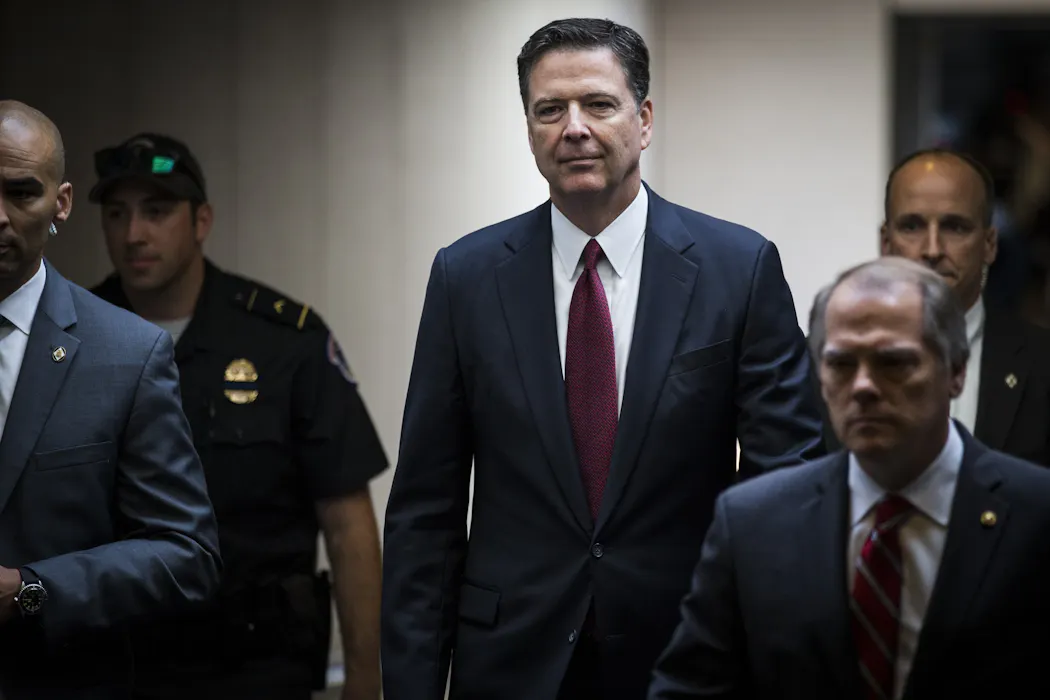
In the case of United States v. James Brien Comey Jr., the U.S. president’s security is pitted against the bedrock right to free speech enjoyed by Americans.
Two federal charges have been lodged against former FBI Director James Comey and are based on his Instagram post that depicted seashells spelling out “86 47.”
Comey’s post was interpreted by the U.S. Department of Justice as a threat to harm President Donald Trump. The indictment, obtained by the DOJ, alleges Comey violated two federal laws: 18 U.S.C. § 871, which makes it a crime to “knowingly and willfully” threaten, kidnap or “inflict bodily injury upon the President of the United States,” and 18 U.S.C. § 875, which criminalizes “communication containing any threat to kidnap any person or any threat to injure the person of another.”
Comey’s argument against the charges is likely to be twofold: (1) He lacked the requisite intent that the prosecutor needs to prove his case, and (2) even if he had the intent required by the statute, his speech is protected by the First Amendment. U.S. District Judge Louise Flanagan set Oct. 21 as the Comey case trial date.
I’m a scholar of constitutional and criminal law as well as the First Amendment. The charges against Comey exist in a legal gray area that includes the First Amendment and a series of court decisions over five decades that have gone back and forth over what dangers constitute speech that can be punished.

In criminal law, there are generally two parts to most crimes – the criminal act and the criminal intent. The criminal act is referred to as the “actus reus.” The criminal intent is known as the “mens rea.”
Some crimes also require a particular result. For instance, murder requires a death of a person. A defendant can neither be charged with nor convicted of murder unless and until the victim dies. If the victim doesn’t die, then at most the defendant can be convicted of only attempted murder.
The criminal charges alleged in Comey’s case don’t require a result, however. The president need not be kidnapped or injured for someone to be charged with violating either of them.
But the prosecutor must still prove the criminal intent and the criminal act for both charges to stick in Comey’s case. In my view, the Justice Department will have a difficult time proving the mens rea against him.
Comey has consistently maintained that he didn’t know “86 47” implied violence against the president.
Comey has stated he came across the shells that spelled out “86 47” while walking on a beach in North Carolina, took a picture and posted it on Instagram.
The term “86” is commonly used to mean “to throw out” or “to get rid of” in American slang. According to Merriam-Webster, the term “comes from 1930s soda-counter slang meaning that an item was sold out.”
Comey later removed the image from Instagram and posted a statement that read, “I posted earlier a picture of some shells I saw today on a beach walk, which I assumed were a political message. I didn’t realize some folks associate those numbers with violence. It never occurred to me but I oppose violence of any kind so I took the post down.”
Even though Comey has insisted that he thought it was a silly picture of shells arranged in a clever way to express a political viewpoint, the Trump administration argues that Comey not only knew the meaning of “86 47” but that he purposefully threatened the president.
The first crime charged in the indictment, 18 U.S.C. §871, requires the defendant to have “knowingly and willfully” threatened to kidnap or inflict bodily injury upon the president. This is the statute’s mens rea; the defendant must have known that he was threatening the president of the United States.
Comey’s statements suggest that he didn’t know the threatening nature of his Instagram post. Thus, he cannot be convicted of “knowingly” threatening the president if he didn’t know its meaning.
To convict Comey, the prosecutor must prove that he did, in fact, know the meaning of “86 47” when he posted it.
Comey’s career as a federal prosecutor and his tenure as the FBI director may work against him here. In my view, it’s more than plausible that Comey encountered the threatening version of the term “86” in his career. It’s also more than plausible that the term appears in documents, records and court filings that Comey has drafted and signed over his career, all of which could be used against him at trial.
But even if the Justice Department can prove Comey did, in fact, know the threatening nature of “86 47,” its case against him is not a slam dunk.
And that’s because of the First Amendment.

As a constitutional law scholar, I’d expect Comey to argue that his Instagram post was protected speech.
Even though the laws charged in Comey’s case are generally valid and constitutional, criminal defendants can always argue that otherwise valid and constitutional laws are unconstitutional as applied to them and their particular case. Comey is likely to argue this in his defense, but it won’t be as straightforward as one might think.
The First Amendment is not absolute – not all speech and expression is protected by the Constitution.
In Chaplinsky v. New Hampshire from 1942, Justice Frank Murphy wrote that it’s “well understood that the right to free speech is not absolute at all times and under all circumstances.”
In 1969, the U.S. Supreme Court held in Watts v. United States that while “true threats” are not protected by the First Amendment, political hyperbole remains protected speech. The Supreme Court defines true threats as statements where the speaker means to communicate a serious expression of intent to commit an act of unlawful violence against a particular individual or group of individuals, but the speaker need not actually intend to carry out the threat.
Watts v. United States involved a threat against the sitting president of the United States, Lyndon B. Johnson. In that case, Robert Watts expressed his strong opposition to the military draft at a public rally, saying, “If they ever make me carry a rifle, the first man I want to get in my sights is L.B.J.” He was subsequently charged and convicted under the same statute, 18 U.S.C. § 871, used in Comey’s case.
The Supreme Court reversed the conviction, ultimately agreeing with Watts, who had maintained that his statement was “a kind of very crude offensive method of stating a political opposition to the President.”
As the court explained, quoting an earlier decision on press freedom, “For we must interpret the language Congress chose ‘against the background of a profound national commitment to the principle that debate on public issues should be uninhibited, robust, and wideopen, and that it may well include vehement, caustic, and sometimes unpleasantly sharp attacks on government and public officials.’”
Since Watts, countless defendants have faced similar charges for threatening the president. Many have been convicted.
In the 1970s, Eugene Hart was convicted of threatening the president after his brother reported Hart’s plan to assassinate President Richard Nixon. An appellate court affirmed his conviction, concluding that Hart’s verbal threat coupled with his detailed assassination plan couldn’t have been “uttered in jest or in the nature of a hyperbole.”
In the 1980s, David Hoffman was convicted of threatening President Ronald Reagan when he mailed a letter to the White House stating, “Ronnie, Listen Chump! Resign or You’ll Get Your Brains Blown Out.” And in 1999, Donald Adams was convicted of threatening the president when he approached the White House gates telling Secret Service officers, “I want to kill the president.”
But in those cases and others, the defendants took concrete steps that demonstrated their sincerity and conscious awareness of the threatening nature of their speech. In my estimation, both are absent in Comey’s case.

Wayne Unger does not work for, consult, own shares in or receive funding from any company or organization that would benefit from this article, and has disclosed no relevant affiliations beyond their academic appointment.
Politics + Society – The Conversation
In April 2026, Dr. Cerina Wanzer Fairfax was shot and killed by her husband while their divorce was pending.
She had done what she was supposed to do. She had initiated the legal process to leave Justin Fairfax, the former lieutenant governor of Virginia. It didn’t save her.
What happened to Wanzer Fairfax has a name: femicide.
Femicide is the intentional killing of women on the basis of gender. Women are most often killed by their partner, former partners or another person who believes they have a claim on their life. It happens in living rooms and driveways and parking lots. It happens during marriage, divorces, separations and in the weeks after a woman finally walks out the door.
As a scholar focused on the intersection of firearm violence and intimate partner homicide, I examine the policy and structural conditions that determine who is at risk and where prevention efforts are falling short.
Intimate partner homicide doesn’t affect all women equally. Black women have the nation’s highest rates of homicide by an intimate partner, according to data from the Centers for Disease Control and Prevention.
A 2024 study in The Lancet tracking homicide deaths from 1999 to 2020 found that Black women ages 25 to 44 are killed at nearly four times the rate of their white peers.
Spring 2026 saw three such cases make national headlines.
Just prior to Wanzer Fairfax’s death, Vice Mayor Nancy Metayer Bowen of Coral Springs, Florida, was shot to death – allegedy by her husband. Also in April, in Louisiana, Shaneiqua Pugh was shot by her husband, as was Christina Snow, the mother of three of the killer’s children. Pugh and Snow are both expected to survive. Eight children, however, were killed.
Three cases. Three states. One month. All, sadly, preventable.
Intimate partner homicide claims more than 1,800 lives in the United States every year. Nearly half of victims are killed by a current or former intimate male partner – not a stranger. These aren’t random acts of violence.
Separation is one of the most dangerous times in an abusive relationship. This is why we cannot see the death of Wanzer Fairfax and others like hers as one-off tragedies. They represent a decades-long pattern of intimate partner femicide in Black relationships – a pattern driven by firearm access coupled with inadequate policy enforcement.
Guns are what make intimate partner violence so deadly. About half of the roughly 1,800 annual intimate-partner femicide cases involved a gun. And in every region of the country, firearm homicide disproportionately kills Black women.
If the gun is what escalates the risk, it is also where policy has its best chance to intervene.
State law can explicitly restrict perpetrators of domestic violence from purchasing or possessing firearms through two types of civil protection orders: final domestic violence restraining orders and temporary restraining orders. Research demonstrates that states with strong gun restrictions along these lines have meaningfully lower rates of intimate partner homicide.
Generally speaking, though, these laws are not working as designed.
In most states, for example, only certain kinds of relationships qualify for protective orders to be issued against an abusive partner. The most common qualifying relationship is romantic partner or former partner. This characterization poses a problem called “the partner loophole.”
Federal gun-possession restrictions had a similar limitation for decades. If the relationship was a dating partnership, the prohibition against abusive partners obtaining a firearm did not apply. This came to be known as the “boyfriend loophole.”
In 2022, the bipartisan Safer Communities Act extended the gun prohibition to abusive dating partners. While the law now covers more kinds of relationships, it does not yet offer equal protection to Black women in those kinds of relationships.
Research using the National Violent Death Reporting System found that state-level enforcement of the policy was associated with reductions in intimate partner homicide among unmarried white victims, but not among victims of color.
Firearm-relinquishment laws are another weak spot I’ve identified in protecting Black women from intimate partner violence.
When a court issues a domestic violence protective order, federal law prohibits the restrained person from possessing a gun. But this prohibition does not automatically remove guns already in the person’s possession: A gun-relinquishment law must be invoked to compel them to surrender their weapons.
Some states, including California and Washington, have strong relinquishment provisions. They require judges to mandate surrender, set compliance deadlines and authorize law enforcement to recover unrelinquished weapons. These laws are associated with reductions in intimate partner homicide.
But other states give judges discretion. A 2025 review of civil protection order cases in South Carolina found that courts issued a firearm-protection order in only 32% of eligible cases in 2019. In North Carolina, a 2024 study examining state enforcement laws found that despite 93% of cases meeting the conditions for gun relinquishment, the policy was enforced in only 37% of cases.
As a result, researchers have found, firearms are discussed in fewer than 1 in 4 protective-order hearings nationwide, and courts order abusers to surrender their guns in 66% of applicable cases.
The result of unequal state policy enforcement is a prohibition that exists on paper and a gun that stays in the home.
The evidence is clear: When gun prohibition and relinquishment laws are fully enforced in abusive relationships, they can save lives.
Yet most states have gaps that limit how effective these policies are in practice. And that failure falls hardest on Black women.
Research shows that state firearm restriction laws with relinquishment provisions were associated with a 16% reduction in firearm intimate partner homicide for white victims. For Black victims, the reduction was not statistically significant.
This is especially concerning given that Black women experience the highest incidence of injury and death from intimate partner violence in the country.
The problem isn’t the laws themselves. It’s that the mechanisms of the law depend on a delivery system – courts, law enforcement, protective orders – that doesn’t work well for Black women.
After reporting domestic abuse, Black women are more likely to be incarcerated for defending themselves against their abuser, and they lose custody of their children more often once CPS becomes involved. A study examining preferences of intimate-partner violence survivors found that Black women report fear and distrust of police as a barrier to engaging with the legal system.
Because of these experiences, Black women understandably engage the criminal justice system less frequently. And laws protect only the people who can use them.
Another problem surrounding intimate partner homicide inflicts its harms after death.
When a woman is killed by her partner, media coverage often follows a familiar script: a name, a location, a grieving community. What it almost never includes is the word that I believe most accurately describes what happened: femicide.
Feminists in many countries, particularly in Latin America, have fought to enact femicide laws in response to pervasive violence against women. But the U.S. has no such laws and lags behind here.
Research has documented consistently that news coverage of intimate partner homicide depicts it as episodic rather than systemic, treating each killing as an isolated event rather than part of a preventable pattern.
When the victim is a Black woman, the issues compound.
Coverage of Black women’s deaths is less frequent, less sustained and less likely to generate the kind of public outrage that drives policy change. The focus in these stories, when they do run, tends to fall on the relationship or the victim’s personal history rather than on the systems that failed her.
This matters because media framing helps to determine what the public believes is fixable.
When journalists cover intimate partner homicide as a private tragedy, it becomes politically inert. When they contextualize it as the result of an unenforced gun law or a legal loophole, it becomes a policy failure – and policy failures have a policy remedy.
I believe the U.S. needs comprehensive standards for firearm restrictions in domestic violence cases, more robust enforcement and targeted efforts ensuring these protections reach all communities equitably.
For Black women, delay or failure may be the difference between life and death.
This story was produced in collaboration with Rewire News Group, an independent, nonprofit newsroom dedicated to covering reproductive health.

Sativa Banks does not work for, consult, own shares in or receive funding from any company or organization that would benefit from this article, and has disclosed no relevant affiliations beyond their academic appointment.
Politics + Society – The Conversation