Quite a few stars from the ’80s wowed their fans with incredible weight loss transformations, all of which were achieved through good old-fashioned hard work.
Health Digest – Health News, Wellness, Expert Insights








Quite a few stars from the ’80s wowed their fans with incredible weight loss transformations, all of which were achieved through good old-fashioned hard work.
Health Digest – Health News, Wellness, Expert Insights

These old-school tips and tricks can make your life easier in the kitchen, from helping ingredients last longer to keeping equipment clean.

Mashed – Fast Food, Celebrity Chefs, Grocery, Reviews

Tracing its origins to the 1920s, this Italian sandwich was a massive success. It quickly spread across the country, becoming a staple at thousands of eateries.

Food Republic – Restaurants, Reviews, Recipes, Cooking Tips
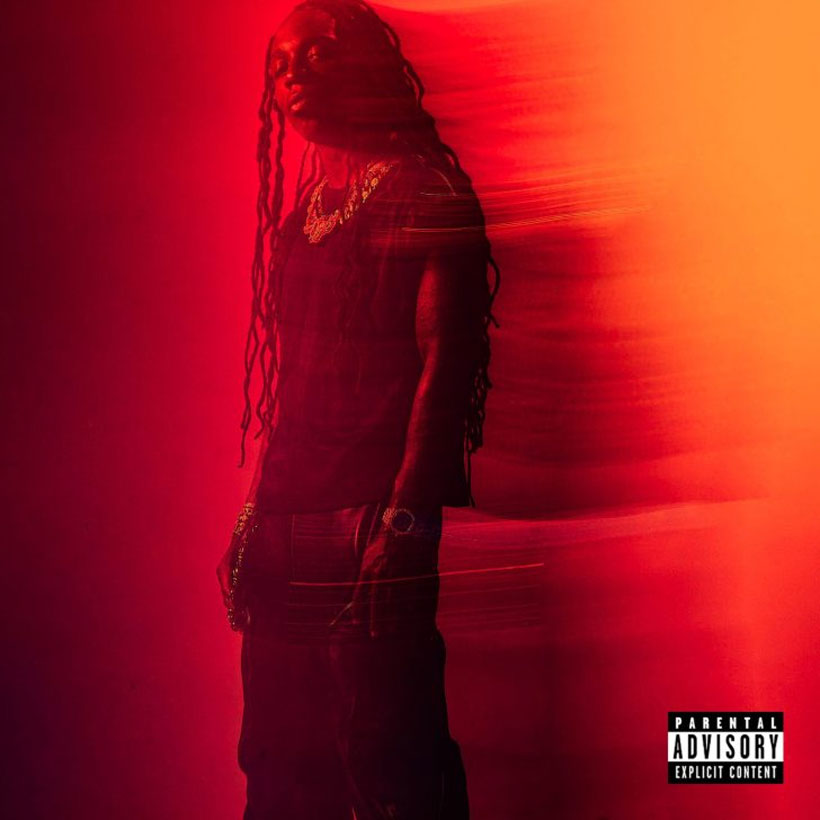
Jacquees just gave the world another big reason to anticipate his upcoming album Mood 2. On new single “Lick Back,” the Cash Money R&B star teams up with one of the label’s legacy talents, Juvenile. Produced by Nash B, Hitmaka, D-Rok, and Dinuzzo, the track leans into the sound of New Orleans bounce, providing a high-energy environment for Jacquees’ gorgeously gliding vocals and a vintage rap verse from New Orleans native Juve the Great.
The “Lick Back” music video, directed by Jacquees on location in New Orleans, further amplifies the music’s invigorating vibe. Sonically and visually, it’s an ideal convergence of Atlanta and New Orleans, two of the most important cities in American music.
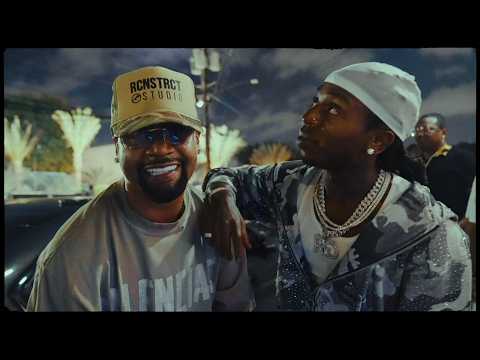
Mood 2, the sequel to Jacquees’ 2016 mixtape Mood, is scheduled for release July 31 on Cash Money and available to pre-save now. In addition to “Lick Back,” the 22-song project also features the recent singles “Physical” featuring Tink, “Let You Go” featuring K Camp, and “He Kant.” It’s part of a prolific streak for Jacquees that also includes last year’s collaborative album with Dej Loaf, Friendzone 2, and 2024’s Baby Making. Inspired by his own new fatherhood, Baby Making had Jacquees pursuing a specific objective. “If you and your significant other are on that same wavelength and one of you needs to set the mood, the Georgia native has got you,” Hot New Hip Hop wrote of the release.
Last weekend, Jacquees gave a headlining performance at the five-year anniversary and pre-Juneteenth Los Angeles edition of Black On The Block at Los Angeles Center Studios. He has more shows on deck for this summer, including stops in Indianapolis June 26 at La Flaca at the Square, Aug. 24 in Norfolk at Waterside District, and Aug. 15 in Minneapolis at Armory. Tickets are available at JacqueesLive.com.
Listen to Jacquees’ Lick Back here.
Discover more about the world’s greatest R&B artists | uDiscover Music
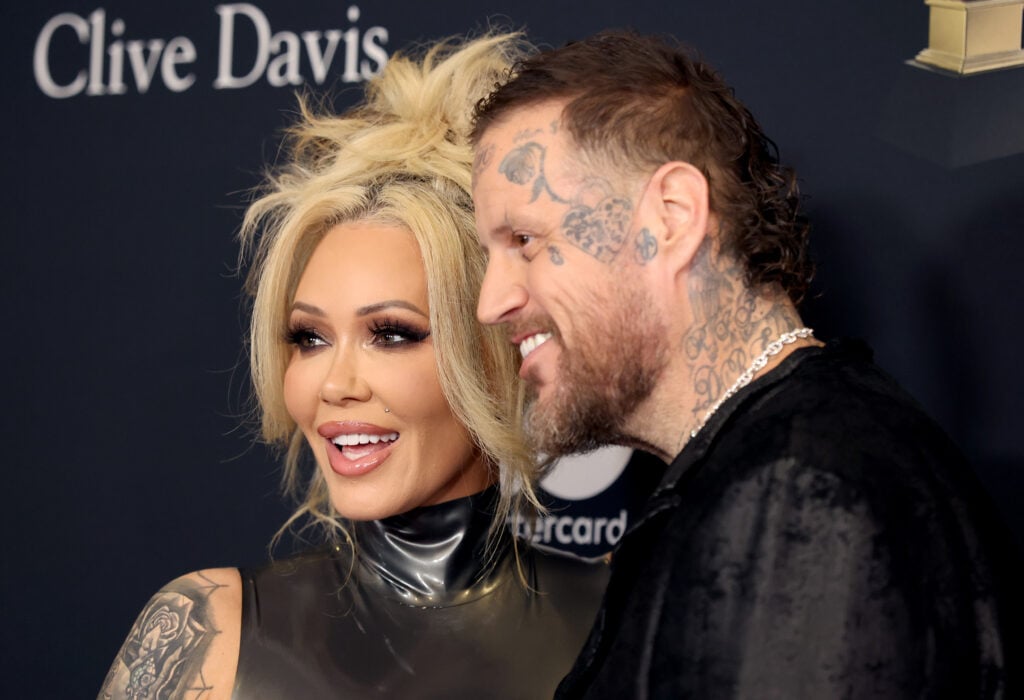
Reading Time: 2 minutes
It’s officially a wrap for one of the music world’s most beloved couples.
We can now confirm that Jelly Roll and Bunnie Xo are calling it quits after 10 years of marriage.
TMZ has reported that Mr. Roll — whose real name is Jason DeFord — filed for divorce from Bunnie in Williamson County, Tennessee on May 18.
And in case you thought Jelly wasn’t serious about ending things, TMZ also reports that moving vans were spotted outside the couple’s home on Monday.
The move comes as a surprise for a number of reasons, not the least of which is that Jelly and Bunnie — whose real name is Alisa DeFord — have spent much of this year publicly praising one another.
“I want to thank my beautiful wife,” Jelly said at the Grammys after he won the award for Best Contemporary Country Album back in February.
“I would have never changed my life without you. I would have ended up dead or in jail. I would have killed myself if it wasn’t for you and Jesus. I thank you for that.”
Jelly Roll and Bunnie XO’s relationship has long been a central part of the singer’s public story. The pair first met in 2015 at one of his concerts in Las Vegas and quickly formed a connection.
A year later, Jelly Roll proposed to Bunnie onstage during a concert appearance in Las Vegas.
According to previous accounts of their relationship, the couple secretly tied the knot later that same night in a courthouse ceremony, keeping the wedding under wraps from friends and family.
In 2023, they returned to the same Las Vegas chapel to renew their vows, a gesture that seemed to symbolize just how far they had come together.
Over the years, both Jelly Roll and Bunnie XO have spoken openly about the challenges they faced as a couple, including his infidelity, for which Bunnie eventually forgave him.
They frequently described themselves as stronger for having worked through those struggles.
Neither of the DeFords has commented publicly on the split, but given how open they’ve been in the past, we’re guessing that that won’t be the case for much longer.
And divorce is pretty much a rite of passage for country singers, so you can expect Jelly’s next album to be loaded with depressing bangers.
We will have further updates on this developing story as new information becomes available.
Jelly Roll Files For Divorce From Bunnie Xo After 10 Years of Marriage was originally published on The Hollywood Gossip.
The Hollywood Gossip

Taco Bell may be a last bastion of frugality, but its quesadilla is on the pricy side; plus, it isn’t always cooked through. Improve it with this order hack.

Food Republic – Restaurants, Reviews, Recipes, Cooking Tips
Arrests for betting on the U.S. military operation that removed Venezuelan leader Nicolás Maduro. Death threats from gamblers to a journalist reporting on an Iranian missile attack on Israel. Fears of government officials manipulating world events – including the Iran war – to make a quick buck.
These are some of many concerns that experts have raised about how prediction markets – online marketplaces that allow people to bet on world events – might be affecting national security in the U.S. and abroad.
But prediction markets may not be only influencing international affairs. They could also affect the 2026 midterm elections.
We are social scientists who study gambling, public policy and national security. Here are four things you need to know about how prediction markets may be changing American politics:

Prediction markets offer people the opportunity to bet on political events by purchasing “shares” – like stock in a company – of different potential outcomes. If an outcome takes place, the market pays out for each share purchased by those who guessed correctly. More betting activity in favor of an outcome raises its price and lowers its payout, and vice versa.
Prediction markets are different from casinos and online sportsbooks because there is no “house” – like a casino – that determines the size of the payout for correctly guessing who will win or lose a sporting event. In a prediction market, players “bet” against one another, not the house. The markets make money by charging transaction fees on each trade.
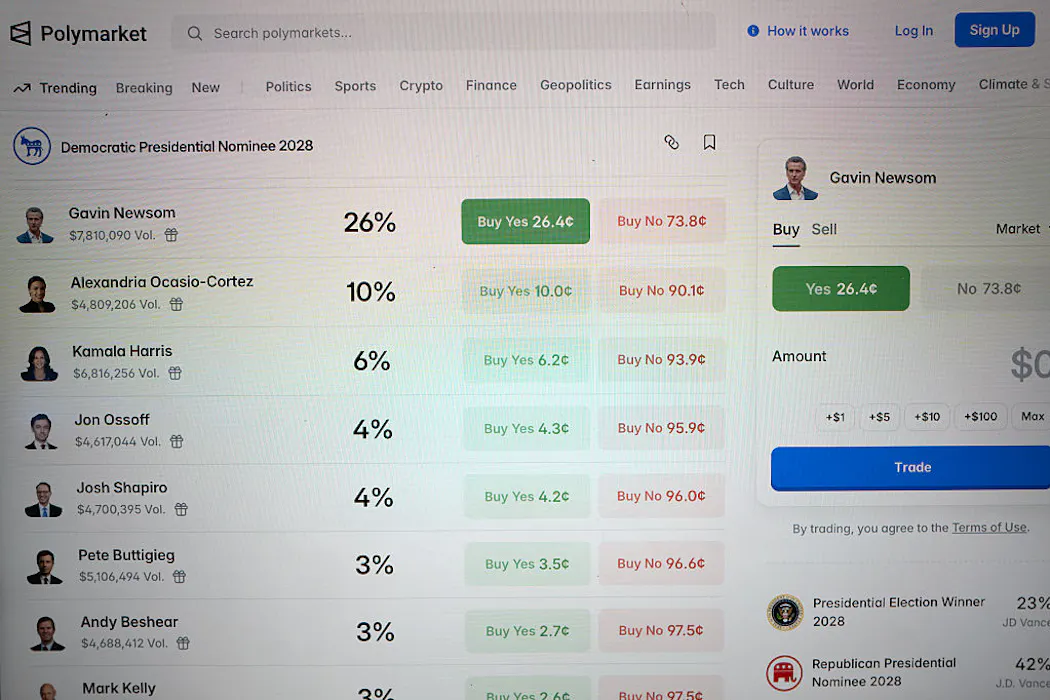
Betting on prediction markets allows users to turn many aspects of U.S. politics into a game. For example, betting on election outcomes is very popular on prediction markets. Kalshi – a popular prediction market platform – has a portion of its site specifically designated for election-related markets. That includes the chance to bet on the eventual winner of the 2028 presidential election, the margin of victory in the 2026 South Dakota primary elections and which of two Dan Sullivans could become Alaska’s next senator.
Kalshi also offers opportunities to bet on nonelection outcomes, like whether or not the Supreme Court will ban transgender girls and women from competing on “female sports teams,” or whether the government will confirm before September 2026 that aliens exist.
The gamification of politics through prediction market betting is not new. Predictit, a self-described “political prediction market,” has been operating in the U.S. for over a decade.
What has changed in recent years, however, is that prediction markets are no longer an obscure pastime enjoyed by political junkies. Prediction markets have become quite popular, and media organizations are even integrating betting market data in their political analysis. For example, Kalshi is CNN’s “official prediction markets partner.” In a segment called “The Odds,” CNN commentators often use Kalshi data to make predictions about candidates’ electoral performance.
Insider trading on prediction markets occurs when people with nonpublic information – like internal polling, military intelligence, etc. – place wagers on events. While some prediction markets are trying to crack down on the practice, insider trading could already be affecting the upcoming U.S. midterm elections.
In spring 2026, for example, NPR documented several cases where campaign staffers working on statewide campaigns admitted to using inside information about candidates’ performance in the polls to “buy low” on their candidate’s electoral prospects prior to the release of favorable polling data. Additionally, although prediction markets usually prohibit betting on one’s own campaign, both Democrats and Republicans running for political office have come under fire for betting on their own campaigns.
Betting on one’s own campaign could create a scenario where a candidate’s electoral performance seems more robust than it actually is to prediction market users or watchers, including media organizations who report on prediction market data.
This may in turn generate more favorable media coverage, which could affect public sentiment toward the candidate. Unlike polling, which is not typically prone to the same kind of meddling by campaigns, betting on one’s own campaign could ultimately change voters’ minds regarding the viability of a candidate.

Given concerns about insider trading and its potential consequences, we asked Americans whether U.S. government officials should be forbidden from trading on prediction markets. In a nationally representative online survey of 1,000 U.S. adults conducted via the survey platform Verasight in March 2026, we found that nearly 70% supported banning government officials from trading on prediction markets, while 20% supported a more limited trading ban when government officials have “inside” information.
Lawmakers in Washington are beginning to respond to public opinion. The Senate recently banned senators and their staff from trading on prediction markets, although how this policy will be implemented remains uncertain. However, members of the House, employees of the executive branch, military officials and other government employees can still bet on prediction markets.
Some lawmakers have proposed limiting trading when government officials have insider information about an event, such as internal polling or fundraising data that members of the public do not have access to.
Others in Congress have made an effort to ban all trading on “death markets,” which include war, assassinations and related topics. Known as the “DEATH BETS Act” – its title is an acronym that stands for “Discouraging Exploitative Assassination, Tragedy, and Harm Betting in Event Trading Systems Act – the legislation has been introduced but is pending committee review.
State governments are also taking action to regulate prediction markets.
Massachusetts, for example, is suing Kalshi for allowing “backdoor betting” on sports.
Backdoor betting refers to wagering through less regulated channels like prediction markets, rather than highly regulated state casinos and sportsbooks. Backdoor betting has been estimated to cost states over US$1 billion in tax revenue since prediction markets first began allowing sports wagering in early 2025.
Minnesota became the first state to ban prediction markets altogether, while Illinois has sent cease and desist letters to prediction market operators that it claims are operating without adhering to state gambling laws.
In a recent Truth Social post, President Donald Trump blasted the idea that states should be able to regulate prediction markets. Referencing their recent regulatory actions, Trump referred to Minnesota Governor Tim Walz and Illinois Governor JB Pritzker as “SCUM” in the post.
Trump also expressed enthusiasm for prediction markets in the post, saying that the U.S. is “at the top” of a “new form of Financial Market.” The president and his family have deep financial ties to the industry. For example, Donald Trump Jr. serves as a prediction market adviser to Kalshi and Polymarket and is an investor in Polymarket.
Following Trump’s post, the administration began reviewing a proposal to give the Commodity Futures Trading Commission the exclusive authority to regulate prediction markets.
While the CFTC has repeatedly asserted regulatory authority over prediction markets, some – like former CFTC Chairman Gary Gensler – believe that states, not the CFTC, should be in charge.

Matt Motta receives funding from the Massachusetts Gaming Commission.
Robert Ralston does not work for, consult, own shares in or receive funding from any company or organization that would benefit from this article, and has disclosed no relevant affiliations beyond their academic appointment.
Politics + Society – The Conversation

Wendy’s sounds tasty at pretty much any time of day (or night), but Reddit says visiting when business is slow might be the wrong move. Here’s why.

Mashed – Fast Food, Celebrity Chefs, Grocery, Reviews

More than a year after retiring from ‘Wheel of Fortune,’ Pat Sajak resurfaced with a playful update on life after television — though not everyone is buying his story. Continue reading…The Boot – Country Music News, Music Videos and Songs
President Donald Trump’s 11th-hour endorsement of Rep. Mike Collins early Sunday morning surprised even some of the Georgia Republican’s aides and advisers, who thought a tense White House meeting had all but ended his chances of securing the president’s support.
In that meeting just weeks earlier, Trump repeatedly raised Collins’ hardline stance on abortion, pressing him on how he could win in a general election for Georgia’s marquee Senate race, according to three people familiar with the meeting, granted anonymity to speak about the private discussions.
The late May sit-down was dominated by the issue of abortion, the people said. Those close to Collins walked away thinking that getting Trump’s endorsement was unlikely. One person close to the White House and familiar with the meeting said it was consistent with how the president typically works through key issues with potential endorsees before making a decision.
The interaction underscores how questions over electability are top of mind for the president this cycle, especially in a critical battleground, and as abortion remains a political vulnerability for the GOP.
Yet on Sunday, the president publicly backed Collins in the early hours of his 80th birthday in a post on Truth Social, upending the GOP Senate runoff in its closing days and delivering a blow to Republican Gov. Brian Kemp’s candidate of choice, former college football coach Derek Dooley.
Collins and Trump spoke shortly before the president issued his 1 a.m. endorsement, two people familiar with the call said. The post shocked some Collins aides, who woke up to the news.
Abortion has been a thorn in Trump’s side politically in recent years. He’s faced criticism from anti-abortion advocates for not doing enough to advance their agenda, while trying to avoid alienating the broader electorate on an issue that has proven to be political dynamite for Democrats in recent cycles.
As Republicans prepare for political headwinds in November, they are trying to avoid some of the electability problems that plagued some 2022 midterm campaigns — especially in Georgia, where Democratic Sen. Jon Ossoff has since emerged as a formidable opponent.
During a 2022 debate for his current House seat, Collins said, “I have always stated and I’ve always been and always will be 100 percent pro-life, period. No exceptions,” a position that put him to the right of Trump on the politically potent issue of abortion.
But Collins represents a deep-red district. Running statewide, in a major battleground state that hasn’t elected a Republican to the Senate in a decade, he’s shifted his position.
Asked recently on the campaign trail about his views on abortion, Collins said he supports “Georgia’s heartbeat law, which includes exceptions, 100 percent,” according to a video of the remarks obtained by POLITICO. Georgia’s current abortion law bans the procedure in most cases after about six weeks — with exceptions in cases of rape, incest or to protect the life of the mother.
Trump’s concerns about Collins’ strict stance were not unfounded. Polling shows large majorities of Americans oppose bans that include no exceptions for rape or incest.
The president’s reluctance to get off the sidelines in Georgia’s Senate runoff loomed over the contest for months. His backing has been a pivotal factor in other Republican primaries this cycle, often providing candidates with a decisive boost.
Both Collins and Dooley spent weeks jockeying for Trump’s support. The endorsement is expected to provide a late boost to Collins — though it arrived after early voting had already concluded and just days before the runoff, giving him less time to capitalize on it.
Conversations between Collins and the White House began the same night that he advanced to the runoff last month, according to a person familiar with the talks, granted anonymity to discuss private details at the time.
Collins had already lined up support from groups aligned with the president’s MAGA movement. Club for Growth PAC, the powerful GOP super PAC closely allied with Trump, backed Collins early in the primary. He also touted support from Turning Point Action and close allies of the president like Rep. Brian Jack (R-Ga.), a former top adviser.
Trump further reaffirmed his support for Collins in a tele-rally late Monday afternoon from France, where he had arrived ahead of his meetings at the G7.
“Mike is a special guy, a special congressman, a special person, and so I’d like to have everybody go out and get out and vote for this man. We love Georgia, you know,” Trump said, pivoting to swipe at Dooley for not voting in 2016 or 2020, and for making a comment in which he correctly said that Trump lost the 2020 election in Georgia.
“He said he didn’t think I won the election in 2020, and I won it by a lot,” Trump falsely claimed.
Dooley and Kemp, asked about the president’s endorsements in a Monday morning press conference, both demurred. “A vote for Mike Collins is a vote for Jon Ossoff. A vote for me is a vote for the people of Georgia,” Dooley said.
Politics