With over 30 million Spotify streams, Ella Langley’s journey is a testament to talent meeting opportunity in the music world. Continue reading…Country Music News – Taste of Country









With over 30 million Spotify streams, Ella Langley’s journey is a testament to talent meeting opportunity in the music world. Continue reading…Country Music News – Taste of Country
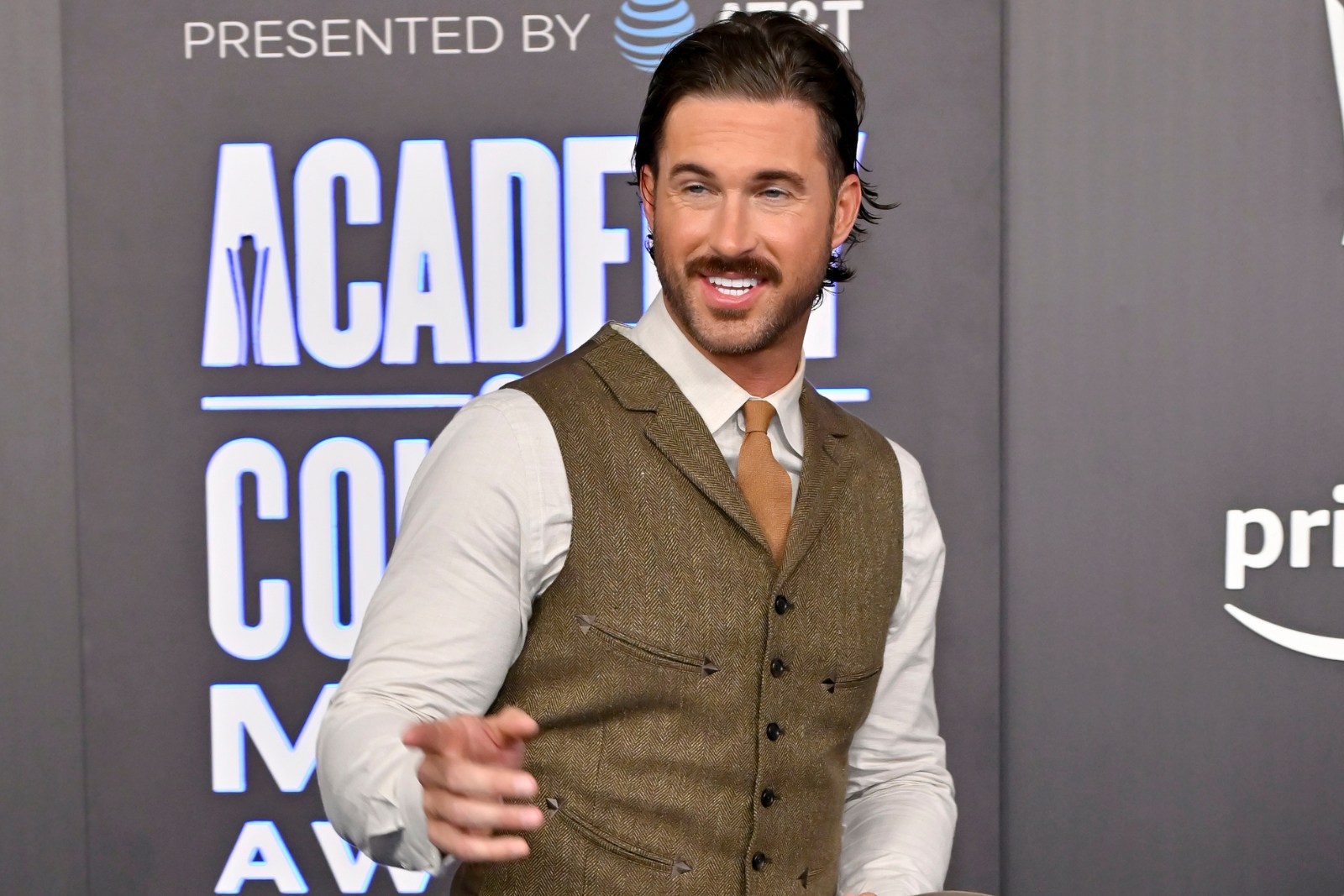
When Riley Green goes back to his hometown, he trades the spotlight for a normal rural life where the biggest thrill is shelling peas with Grandma. Continue reading…The Boot – Country Music News, Music Videos and Songs
When Riley Green goes back to his hometown, he trades the spotlight for a normal rural life where the biggest thrill is shelling peas with Grandma. Continue reading…Country Music News – Taste of Country
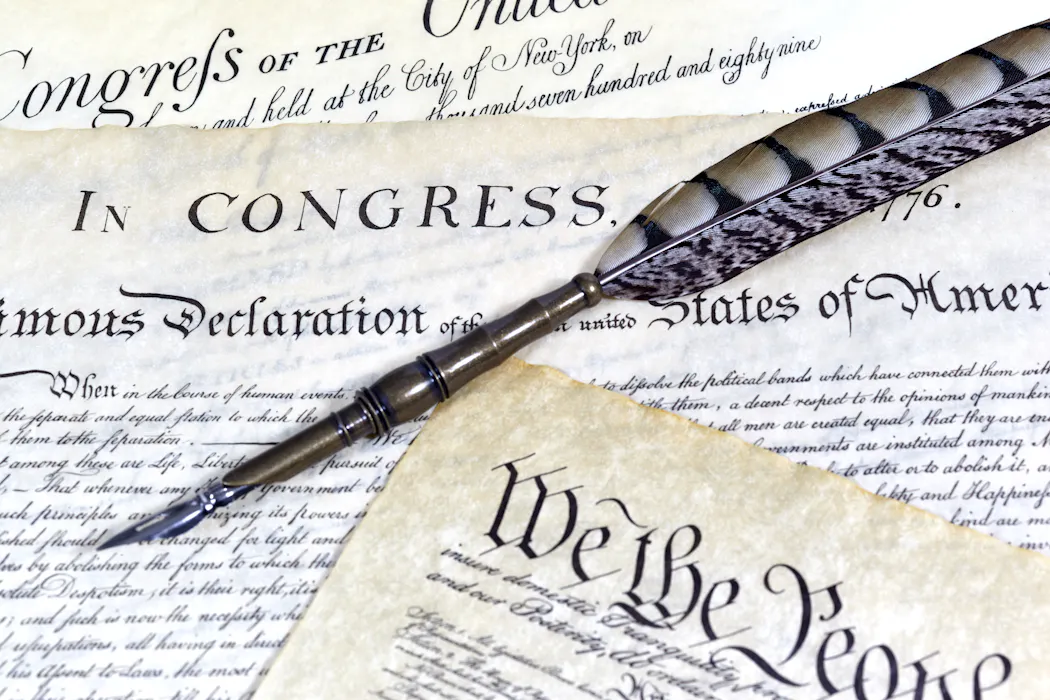
More people are talking about the Declaration of Independence now than they likely have for decades, largely because of the festivities, exhibits, historical commemorations and other public events associated with the upcoming 250th anniversary of American independence.
But even as they discuss the historical meaning, purpose and ideas of the declaration, they should remember that independence was only the first step in becoming a nation.
Despite laying out the purposes of the new nation, the declaration did not say what kind of government the new United States should have. That discussion was left for later debates, leading first to the Articles of Confederation and then, ultimately, to the Constitution.
Yet, fully understanding the Constitution requires referring to the another crucial founding-era document: The Federalist, known to many as The Federalist Papers. Without it, the Constitution may not have been ratified, and it has helped guide American government and law for the past 2½ centuries.

Under the Articles of Confederation, adopted by the Continental Congress in late 1777, the national government was exceptionally weak, unable to levy taxes or tariffs or enforce treaty obligations. Moreover, the states often abused their authority, both over their own citizens and with regard to each other. For example, states would often impose tariffs on each other’s goods, even if those goods were moving only from Virginia to Maryland and vice versa, thereby inhibiting the development of a national market and hamstringing internal trade.
The Constitution sought to correct these problems by creating a much stronger national government able to protect itself from national security threats, both foreign and domestic, and secure liberty at the same time.
Those supporting ratification adopted the name Federalists on the idea that they supported strengthening the national government, which was often described as a federal union. Their opponents, who sought to defeat the Constitution’s ratification, were then dubbed the Anti-Federalists, much to the latter’s consternation.
While there were a variety of Federalist authors writing to support the Constitution during the ratification debates in 1787-88, the essays of The Federalist were specifically co-authored by Alexander Hamilton, James Madison and John Jay under the collective pseudonym “Publius.”
The practical political purpose of the essays was to convince New York to ratify the Constitution. Nine states had to ratify to put the Constitution into effect, yet it was recognized that without key states such as New York, Virginia, Massachusetts and Pennsylvania, the Constitution – and more broadly the union – could not survive.
Thus, even though 10 states ratified before New York, enabling the Constitution to go into effect, New York’s ratification remained essential.
Each of The Federalist’s 85 essays – 51 by Hamilton, 29 by Madison and five by Jay – were addressed “To the People of the State of New York.” Nearly all were published in New York newspapers as op-eds, with some republished in other states. They were meant to be read and thought about by an interested and educated public, as the authors understood the importance of public opinion not simply to the ratification process but to any democratic system.
Ratifying the Constitution was the immediate goal of The Federalist. But in making their arguments, the authors went further, addressing fundamental questions of politics by laying out the political theory that underlies that Constitution.
In short, The Federalist sits at the intersection where theory meets practice.
In “Federalist 1,” Hamilton breaks down major issues to be considered in deciding whether to adopt the Constitution: the utility of the union; the defects of the Articles of Confederation; the need for energetic government; how the Constitution is analogous to the New York constitution; how the Constitution will preserve liberty and prosperity; and how the Constitution creates a republican government. Such a republican government is defined by Madison in “Federalist 39” as a government with powers derived from the people and administered by representatives for a period of time.
Reflecting the political debate, however, the authors had to be flexible with their writing plans as they responded to the arguments made by their Anti-Federalist opponents.
Yet, even in that dynamic environment, there are two consistent themes that contribute to The Federalist’s timelessness.
The first theme revolves around what Hamilton in “Federalist 9” calls “the science of politics.” Hamilton and Madison frequently address the ideas of past political philosophers and the traditional assumptions of what republics were supposed to look like.
This is most evident in “Federalist 10” where Madison overturns the long-held belief, articulated most clearly by the French philosopher Montesquieu and embraced by the Anti-Federalists, that republics needed to be small to preserve liberty.
Madison shows that, on the contrary, it was a large republic that could best deal with the problem of factions and preserve liberty by preventing any faction from gaining a majority, thereby providing “a republican remedy for the diseases most incident to republican government.”
Similarly, in “Federalist 70,” Hamilton explains that a single strong executive is not inherently monarchical and antithetical to republican government, but rather is essential to a republic’s proper operation. “Energy in the Executive is a leading character in the definition of good government,” he wrote.
The Federalist advanced political science itself, changing the conception of what a republic was and could be.

A second theme is the recognition of how human motivations interact with institutions.
Past philosophers, such as Aristotle, emphasized the necessity of virtue in both the people and their rulers, and Montesquieu argued that virtue was the defining principle of republics.
But Hamilton and Madison, focusing more on historical experience than theory, emphasized the need for institutions to account for the self-interested behavior of officeholders.
This emphasis is evident at the very beginning when Hamilton asserts in “Federalist 1” that a clean debate on the merits of any public proposal “is a thing more ardently to be wished than seriously to be expected,” and that some people will be driven by personal interests.
In “Federalist 51,” Madison provides the clearest articulation of this view with his famous statement, “Ambition must be made to counteract ambition. The interest of the man must be connected with the constitutional rights of the place.”
In their view, it is not enough to rely on the virtue of officeholders. But we can arrange our institutions in such a way that our low, base, self-interested human nature may be channeled to ultimately serve a higher public good.
This is not, however, to say that The Federalist is a cynical work.
In “Federalist 55” Madison points out that “there are other qualities in human nature which justify a certain portion of esteem and confidence.”
That optimistic statement is followed by his observation, “Republican government presupposes the existence of these qualities in a higher degree than any other form.”
Republics rely on the people having some measure of public virtue to work. The key insight Madison brings out is that such higher qualities alone cannot be relied upon.
The institutions created by the Constitution are set up to be functional, but they are also built to account for the kind of human beings who will inhabit them. As Madison succinctly put it in “Federalist 10”: “Enlightened statesmen will not always be at the helm.”
Thomas Jefferson called The Federalist “the best commentary on the principles of government which ever was written.” It remains the most systematic and important exploration of our constitutional system.
As Americans celebrate the 250th anniversary of American independence, it is worth reflecting on the institutions that have facilitated the endurance of that independence. You can find no better guide to that reflection than The Federalist.

Jordan Cash does not work for, consult, own shares in or receive funding from any company or organization that would benefit from this article, and has disclosed no relevant affiliations beyond their academic appointment.
Politics + Society – The Conversation

_Detroit Police Chief Todd Bettison says alerts from ShotSpotter, a gun detection technology, help officers respond quickly to shootings.
“Without it, I wouldn’t have the closure rate [of resolved crimes] that I have and a lot of families wouldn’t have the justice they deserve,” he said in March 2026, according to BridgeDetroit, a nonprofit news service.
_During a Detroit City Council committee meeting on May 18, 2026, police officials said ShotSpotter led to hundreds of search warrants and confiscated guns in 2025. _
It’s not clear how many arrests resulted last year. Bettison has been quoted saying that ShotSpotter during the May 18 City Council meeting and
256 during a March 23 budget briefing. We reached out to the Detroit Police Department to clarify the number, but it didn’t respond by our deadline.
The department has requested a nine-month extension for ShotSpotter, which would cost the city an additional $US2.06 million, while it considers other vendors to provide gun detection technology, the Detroit News reported.
The system uses a network of acoustic sensors to detect, locate and alert police to shots fired. ShotSpotter is in use in more than 180 American cities, according to the company. The technology has been criticized for its high price tag, ineffectiveness in improving public safety and lack of transparency.
Detroit City Council first approved ShotSpotter in 2020, and the system became fully active in 2021. In 2022, City Council members narrowly approved, by a 5-4 vote, expanding the program to more neighborhoods. The technology now covers approximately 39 square miles (about 101 square kilometers), about a third of the city, and is deployed in the neighborhoods police say are most likely to experience gun violence. The contract that expires on June 30, 2026, cost $7 million over a four-year period.
Divya Ramjee and Tian An Wong are part of a team of researchers who studied the effectiveness of gunshot detection technology in Detroit during its first two years. The study is currently under peer review. They answered the following questions for The Conversation Detroit._
How did ShotSpotter affect calls to 911 to report gunshots?
Wong: Our research first looked at calls to 911 reporting gunshots before and after the first deployment of ShotSpotter in Detroit, covering February 2018 to November 2022. This data is available on Detroit’s Open Data Portal. In the areas of Detroit where ShotSpotter was implemented in 2021, calls to 911 to report gunshots initially dropped by 47%. This effect disappeared about after a year, however, and these calls returned to previous levels.
Our study does not cover the 2023 expansion of ShotSpotter in Detroit, though the data is currently available for those interested.
Although ShotSpotter alert time and location data is publicly available, the outcome of the police response to those alerts, is not and the DPD has never released data on the effectiveness of the technology during these first two years of use. To analyze outcomes, we made a Freedom of Information Act, or FOIA, request to the Detroit Police Department.
Did the technology affect officer response times or the rates of arrests for violent crime in Detroit?
Wong: By analyzing the FOIA data, we found that of the 5,853 ShotSpotter alerts from that first deployment, just two alerts, or 0.03%, resulted in at least one arrest. Additionally, 798 alerts, or 13.63%, resulted in at least one firearm recovered.
Those numbers are obviously low. However, we don’t believe that arrest rates should be used as a measure of ShotSpotter’s success. We need to understand the nature of those arrests and if they helped bring down gun-related incidents in the community.
We did not find any difference in officer response times. Some have argued that the alerts generate responses to events that would otherwise not have been reported due to lack of trust in law enforcement, but it is difficult to verify this claim.
I’d argue the request to renew ShotSpotter is not based on a rigorous review of the technology’s impact. In addition to ShotSpotter, Detroit also introduced a community violence intervention program in 2023 with a similar name – Shot Stoppers. That program determines grant renewals to participating community organizations based on a drop in homicides and nonfatal shootings in their geographic area.
But the reality is that homicides in Detroit hit a 60-year low in 2025, and nonfatal shootings are also significantly down. This tracks with nationwide crime trends. Our research tries to get at the role ShotSpotter played in this reduction, if any.
What do you make of Bettison’s statement that ShotSpotter alerts led to dozens or hundreds of arrests in 2025?
Wong: The arrest data that we obtained from the Detroit Police Department covers February 2018 to November 2022. Bettison is referring to a later time period – after the expansion of the coverage area – so his numbers don’t necessarily contradict ours. The only way to know for sure is to FOIA data for this most recent time period and fact-check what the chief is saying. This process is currently underway.
In the meantime, two arrests, as we found in the actual data we obtained from the police department, compared with 78 – or even 256, as Bettison as said – seems like a big jump, and more context is needed.
Is there any evidence that ShotSpotter saved lives of gunshot victims?
Ramjee: Evidence is inconclusive at best. Some research supports that the technology can potentially increase the likelihood of police transport of gunshot victims to hospitals and reduce EMS response times for victims, which could potentially improve survival outcomes. However, research hasn’t proved a corresponding reduction in mortality rates in areas where ShotSpotter has been deployed across the U.S.

How is ShotSpotter received in other U.S. cities?
Ramjee: There are continued issues with the accuracy of sensors, including false positives and missed gunshot detections, that complicate its practical effectiveness.

The lack of evidence that ShotSpotter improves public safety, given its high cost, has prompted a number of communities to reassess its value. Chicago; San Antonio; Houston; Baton Rouge, Louisiana; Charlotte, North Carolina; and Portland, Oregon have either terminated existing agreements or indicated that they do not intend to renew them upon expiration.
In New York, the city comptroller indicated that available evidence from a June 2024 audit did not support continued investment in ShotSpotter. Nevertheless, the New York City Police Department opted to renew its contract for an additional three-year term, at a cost of approximately $21.8 million.
What happens to the data ShotSpotter collects? Specifically, does the city of Detroit own it, can researchers access it, and how does that compare to 911 data?
Ramjee: ShotSpotter data ise not broadly shared with the public. The company, which rebranded as SoundThinking, Inc. in 2023, considers the raw audio from sensors, the underlying algorithms and other system-generated data to be proprietary. SoundThinking states that the company only shares alerts, gunshot locations, timestamps and short, isolated audio clips with police agencies. Prosecutors, defense attorneys and courts may also access this incident data as part of criminal cases, depending on legal rules.
Cities and municipalities themselves do not necessarily obtain full ownership of ShotSpotter data even when data is shared with them. In most cases, contractual agreements dictate the access and use of incident data by the respective jurisdictions, and there are generally constraints on how they can store, analyze or publicly release the data.
For 911 call data in Detroit, access to the data depends on the level of detail required. The city’s Open Data Portal provides a large dataset of law enforcement-serviced 911 calls that includes time of incident, call type, response metrics and ShotSpotter-initiated 911 alerts, but it redacts information that exposes a person’s identity.
Obtaining the actual dispatch logs or the arrest outcomes from ShotSpotter alerts typically requires submitting a FOIA request. That process can be tedious, may involve delays due to issues with resources, outdated technology or flawed data reporting practices, and may ultimately result in partial data or data with redactions.

Tian An Wong received funding from the American Council of Learned Societies (ACLS).
Divya Ramjee is affiliated with the Center for Strategic and International Studies.
Politics + Society – The Conversation

Curious Kids is a series for children of all ages. If you have a question you’d like an expert to answer, send it to CuriousKidsUS@theconversation.com.
Can kids go to prison? – Artie, age 10, New York City
The United States has a special justice system for people under age 18. But youth can be tried in adult courts and go to adult jails and prisons for certain crimes.
The youth justice system was created because young people are different from adults. The part of the brain that helps control emotions and actions doesn’t finish developing until your mid-20s. Research shows that most people who commit crimes in their youth grow out of this behavior as they mature.
For this reason, juvenile courts and detention centers are designed to protect young people and help them return to normal life. That’s supposed to be balanced with holding young people accountable in ways that reflect their age and degree of maturity.
The Supreme Court has recognized that children are not little adults. It ruled in 2005 that sentencing a person under 18 to death violated the Constitution’s ban on cruel and unusual punishments.
In 2010 the court reached the same conclusion about sentencing someone under 18 to life in prison without the possibility of parole for crimes other than murder. And in 2012 it ruled that states could not mandate life without parole for people under 18 even if they committed murder.
Many young people who end up in court are accused of delinquency – actions that break the criminal law, such as stealing a car or breaking into someone’s house. If they are found guilty, the consequences can be serious.
They may be put on probation and supervised in their community. But they can also be placed in residential programs or committed to locked juvenile facilities until age 18, or 21 in some states.
Young people can also be charged with what are called status offenses – actions that are illegal for people under age 18, such as skipping school, running away from home or being unable to follow the rules at home. Status offenders can be sent to foster care or group homes, where they are not locked up. They are not supposed to be placed with delinquents in juvenile facilities.

The U.S. is more willing than many other countries to try young children in the criminal system. This is true even though the Supreme Court ruled in 1960 that no person should be prosecuted in any court system unless they have a factual and rational understanding of the charges they face and can effectively communicate with their lawyer.
Many youth under age 14 lack these abilities and are not legally competent to stand trial. This was an important reason Massachusetts, where I served as a juvenile court judge, raised the minimum age of juvenile court jurisdiction for all offenses to 12 in 2018.
However, 24 other states and four U.S. territories have no minimum age for trying children in juvenile court. Among the 26 states that do have a minimum, that age is 10. Fourteen states and four territories allow children of any age to be detained or locked up.
The American Bar Association recommends that 14 should be the minimum age of prosecution. That’s the most common standard in other countries.
In every state, cases that involve serious offenses, such as armed robbery or rape, can be moved to the adult criminal system. Generally, youth can be transferred to adult courts at age 14 for certain offenses. Some states allow transfer of people as young as age 10.
This can happen for different reasons. Some states allow prosecutors to ask juvenile court judges to waive jurisdiction after a hearing on the case. Other states let prosecutors directly file cases in the criminal system. Still others have laws that automatically send youth to the criminal legal system solely based on the offense charged.
The Supreme Court ruled in 1966 that transfer to adult court should not occur without a statement of findings or reasons by a judge. When judges considered these requests, the court held, they should take into account the nature of the offense, the impact on the victim, and the offender’s age, maturity, prior history and prospects for treatment.
But in states that automatically steer cases to adult court, or let prosecutors choose to file charges there, hearings don’t occur.
Today, 28 states and Washington, D.C., have provisions for automatically sending youth to the adult criminal system. Data shows that this policy mainly affects people of color.
Between 2009 and 2024, for example, 80% of Maryland youth charged as adults were Black. In 2017, 84% of Alabama youth charged as adults were Black. And in Nebraska in 2024, 36% of youth transferred to the adult system were Black and 20% were Latino.
Florida prosecutes children as adults for serious crimes and sends juvenile offenders to adult prisons at higher rates than any other state. From 2009 through 2019, more than 16,000 children – some as young as 10 years old – were prosecuted as adults in Florida.
Transferring young people to adult prisons interrupts their education and social development. It also exposes them to high rates of violence by adult inmates.
What’s more, it doesn’t make the public safer. Studies show that youth who are transferred to the adult justice system are 34% more likely to commit new crimes after release than offenders who stay in the juvenile system.
Many of my fellow lawyers believe that trying young people as adults isn’t being smart on crime. In our view, the best way to keep the public safe and rehabilitate young offenders is to treat them in ways that reflect their age. That means channeling fewer young offenders into adult courts and not allowing youth who are transferred to be locked up with adults.
Hello, curious kids! Do you have a question you’d like an expert to answer? Ask an adult to send your question to CuriousKidsUS@theconversation.com. Please tell us your name, age and the city where you live.
And since curiosity has no age limit – adults, let us know what you’re wondering, too. We won’t be able to answer every question, but we will do our best.

Jay Blitzman was a juvenile court judge in Massachusetts for 24 years, culminating as first justice of the Massachusetts Juvenile Court, Middlesex Division. Previously, he was a founder and the first director of the Roxbury Youth Advocacy Project and co-founded Citizens for Juvenile Justice, where he currently serves on the advisory committee. He is a member of several American Bar Association committees addressing youth justice issues.
Politics + Society – The Conversation

The Trump administration on May 20, 2026, indicted former Cuban President Raúl Castro for murder, based on the downing of two planes near the Cuban coastline in 1996 that killed four people.
As a historian of Latin America and U.S. foreign policy, I believe the indictment may be the prelude to direct U.S. military action against Cuba.
Before Castro, the last U.S. indictment of a Latin American leader occurred in January 2026, when a U.S. attorney appointed by President Donald Trump charged Venezuela’s Nicolás Maduro with narco-terrorism. Those charges were promptly followed by U.S. military strikes on Venezuela and the abduction of Maduro.
Since January, the U.S. has ended the flow of Venezuelan oil to Cuba and has used economic and military pressure to prevent other nations from trading with the island. And Trump recently threatened a “friendly takeover” of Cuba.
I believe that what’s missing from most recent analysis of this situation is the history of U.S. aggression against Cuba. This is essential context for understanding the Trump administration’s recent escalations.
In 1823, U.S. Secretary of State John Quincy Adams identified Cuba as “an object of transcendent importance to the political and commercial interests of our Union.” The 1959 Cuban Revolution that overthrew U.S.-backed dictator Fulgencio Batista and replaced him with Fidel Castro, brother of Raúl, directly challenged those interests by asserting political autonomy and expropriating private property.
State Department officials observed that “the majority of Cubans support Castro” because of the government’s redistributive measures and its “real honesty, courtesy, and idealism.” One official warned “that if the Cuban revolution is successful other countries in Latin America and perhaps elsewhere will use it as a model and we should decide whether or not we wish to have the Cuban revolution succeed.”
They decided quickly. By December 1959, President Dwight Eisenhower’s CIA director had approved plans to overthrow the Castro government. U.S. policy thereafter included direct sponsorship and safe haven for Cuban paramilitary groups.

The CIA-led Bay of Pigs invasion in April 1961 is only the most famous episode. The U.S. trained 1,400 Cuban exiles to invade Cuba, hoping to ignite a nationwide rebellion. Instead, Cubans rallied behind the government.
Though U.S. analysts often criticize the invasion because it failed, it was also a major crime under international law. Several hundred Cubans were killed.
Fear of a repeat invasion also led Soviet premier Nikita Khrushchev to send nuclear missiles to Cuba, precipitating the Cuban missile crisis of October 1962 that nearly led to nuclear war.
Longtime CIA official Richard Helms later testified that in the early 1960s, “We had task forces that were striking at Cuba constantly. We were attempting to blow up power plants, we were attempting to ruin sugar mills, we were attempting to do all kinds of things during this period. This was a matter of American Government policy.”
In 1976, Luis Posada Carriles and Orlando Bosch, two Cuban exiles, planned the bombing of a Cuban civilian airliner near Barbados that killed all 73 people aboard.
“The C.I.A. taught us everything,” Posada Carriles said later. “They taught us explosives, how to kill, bomb, trained us in acts of sabotage.”
Both men were given refuge in the United States for the rest of their lives.
The Bay of Pigs invasion and the airline bombing violate the core principles of international law, including prohibitions on the unprovoked “threat or use of force” and collective punishment. The U.S. government itself defines “international terrorism” as “violent acts” intended “to influence the policy of a government by intimidation or coercion” or to “intimidate or coerce a civilian population.”
By that definition, its Cuba policy qualifies.
Another U.S. method of striking at Cuba was through economic sanctions, first imposed on the country in 1960. That year, a State Department official wrote that “every possible means should be undertaken promptly to weaken the economic life of Cuba” so as “to bring about hunger, desperation and overthrow of government.” The logic of collective punishment was clear: make Cubans suffer enough that they rebel against Castro.

This policy is now more aggressive than ever. The tightening of U.S. sanctions since Trump’s first term has reduced Cuba’s income from tourism, remittances and overseas medical missions. Now, by choking off the supply of fuel, the U.S. has critically weakened the healthcare and sanitation systems that depend on electricity.
Medical professionals and United Nations observers have described scenes of ventilators and incubators left without power, pharmacies empty and healthcare workers forced into “horrible decisions” about who lives and dies. A recent medical study reported a 148% increase in infant mortality between 2018 and 2025, meaning that about 1,800 infants died who otherwise would have lived.
The focus of the recent U.S. indictment against Raúl Castro was the incident on Feb. 24, 1996, when the Cuban military, which was headed by Castro, shot down those two planes.
The planes were operated by Brothers to the Rescue, an anti-Castro group of Cuban exiles who said they were aiding Cuban emigres trying to reach Florida. The group’s head, and one of the surviving pilots that day, was José Basulto, a veteran CIA asset and participant in the Bay of Pigs invasion.
In 1962, Basulto fired a cannon and machine gun “16 times” at a Cuban hotel, he later recounted. “I was trained as a terrorist by the United States,” Basulto once told an interviewer.
Basulto’s plane had entered Cuban airspace on Feb. 24, as a U.S. customs service specialist later testified. Correspondence from the day shows that Basulto did so knowingly. The previous July, he had told a TV audience, “We want confrontation.”
While the Cuban military could have deescalated the situation more carefully that day, Cuba had been trying for months to stop the violations of its airspace.
I believe indicting Cuban officials over the incident is disingenuous, given the provocations by Brothers to the Rescue and U.S. actions against Cuba, which are in direct violation of international and U.S. laws that prohibit threats, nondefensive violence and collective punishment.

Kevin A. Young does not work for, consult, own shares in or receive funding from any company or organization that would benefit from this article, and has disclosed no relevant affiliations beyond their academic appointment.
Politics + Society – The Conversation

Weber grills are well reviewed and known for their quality, but if you’re shelling out a sizable amount of money for one, you want to know how long it lasts.

Food Republic – Restaurants, Reviews, Recipes, Cooking Tips

This pricey burger chain actually doesn’t season its patties at all, believing that the beef is flavorful enough without any salt and pepper.

Food Republic – Restaurants, Reviews, Recipes, Cooking Tips
For a few seismic days this summer, a scattering of towns and villages in the north of England will become the center of the political world.
The Makerfield parliamentary by-election on June 18 is an improbable setting for a political earthquake.
By-elections — the British equivalent of a U.S. special election — are held when a member of Parliament resigns, dies or (this being Britain) becomes so enmeshed in tabloid scandal that they are flung out of office by angry voters.
There are usually a handful each year, and they tend to be of fleeting political interest — offering a brief snapshot of public sentiment.
Turnout is generally low. Governing parties tend to do poorly. Sometimes a seat changes hands — but with 650 members of Parliament, a single by-election rarely constitutes a significant shift in power. Most are quickly forgotten.
Makerfield is different, in every sense. Here, a few thousand voters in this proudly unglamorous corner of England will choose the future direction of the U.K.
The reason why lies 200 miles away in Westminster, where Prime Minister Keir Starmer’s Labour government is on its knees. Starmer has had a miserable time since winning a landslide general election two years ago. He is historically unpopular, and Labour has collapsed in the polls. Many in the party want a change of leader, with Nigel Farage’s populist-right Reform Party on the march and threatening to sweep to power at the next general election, currently expected in 2029.
But the most viable candidate to take over from Starmer — the most popular figure by far with grassroots Labour Party members — is not an MP at all.
Andy Burnham is a former Labour Cabinet minister, but quit Westminster almost a decade ago to become the Mayor of Greater Manchester. He now oversees England’s second city, and a surrounding region of 2.8 million people — roughly the size of Baltimore and its wider metropolitan area. It has proved an enviable power base.
Burnham, 56, has a populist touch many feel Starmer, 63, lacks. His ability to connect with ordinary voters, and to vocally fight for his region against perceived “Westminster elites,” has struck a chord. He is ambitious and clearly yearns for Downing Street. But he needs a path back to Parliament, and fast.
And so to Makerfield, a parliamentary district 20 miles west of Manchester. Makerfield is not so much a place as a collection of places — of small towns and suburbs in the former industrial heartland midway between Manchester and Liverpool.
Last month, with Starmer’s leadership under intense scrutiny following a catastrophic showing in local authority elections, Makerfield’s Labour MP, Josh Simons — once a close ally of Starmer, but no longer — announced he was resigning from parliament to provide Burnham a route back to Westminster.
In some ways Makerfield is the ideal seat for Burnham. He grew up and still lives in the surrounding area. He was the MP for neighboring Leigh for 15 years. He knows it well.
In other ways, it looks immensely challenging, for this will be no coronation. To become the local MP, Burnham first has to win the by-election triggered by Simons’ resignation. And this is precisely the sort of seat — white working class, Brexit-supporting, furious with the traditional political parties — where support for Reform has surged.
Farage has vowed to throw everything he has at winning the seat. The Reform candidate, Robert Kenyon, is a local plumber who was beaten by Simons in 2024. (Simons received 18,000 votes to Kenyon’s 12,800.) Since then, Labour’s popularity has nosedived, while support for Farage’s party has surged. Were they facing any other candidate, Reform would be red-hot favorites to pick up the seat.
But Burnham is no ordinary Labour candidate. Greater Manchester is his manor, where his name recognition is near-universal. He vastly out-performs Labour on any generic ballot. By-elections are notoriously hard to predict — and this one is expected to be tight — but he has every chance of success.
The stakes are sky high. If Burnham wins on June 18, he will immediately challenge Starmer for the leadership. He appears to have the support among Labour MPs and party members to succeed. Britain would likely have a new prime minister — and an entirely new direction — by the fall.
But if Burnham loses on June 18, his pathway back to Westminster would remain closed. And the argument that he’s the best candidate for Labour to take on Reform would have been thoroughly disproved at the ballot box.
Starmer would likely face a leadership challenge from elsewhere. But no other candidate looks assured of success. Starmer may limp on, perhaps all the way to the general election. And perhaps — if current polls are to be believed — to crushing defeat.
Such is the power invested in the people of Makerfield, where a few thousand swing voters now find themselves deciding the next leader of Britain. The whole world will be watching as they make their choice.
Politics
_speaking_during_Southwest_Detroit_flood_press_conference_held_on_February_17,_2025_(54334410463).jpg)
