Categories
Music

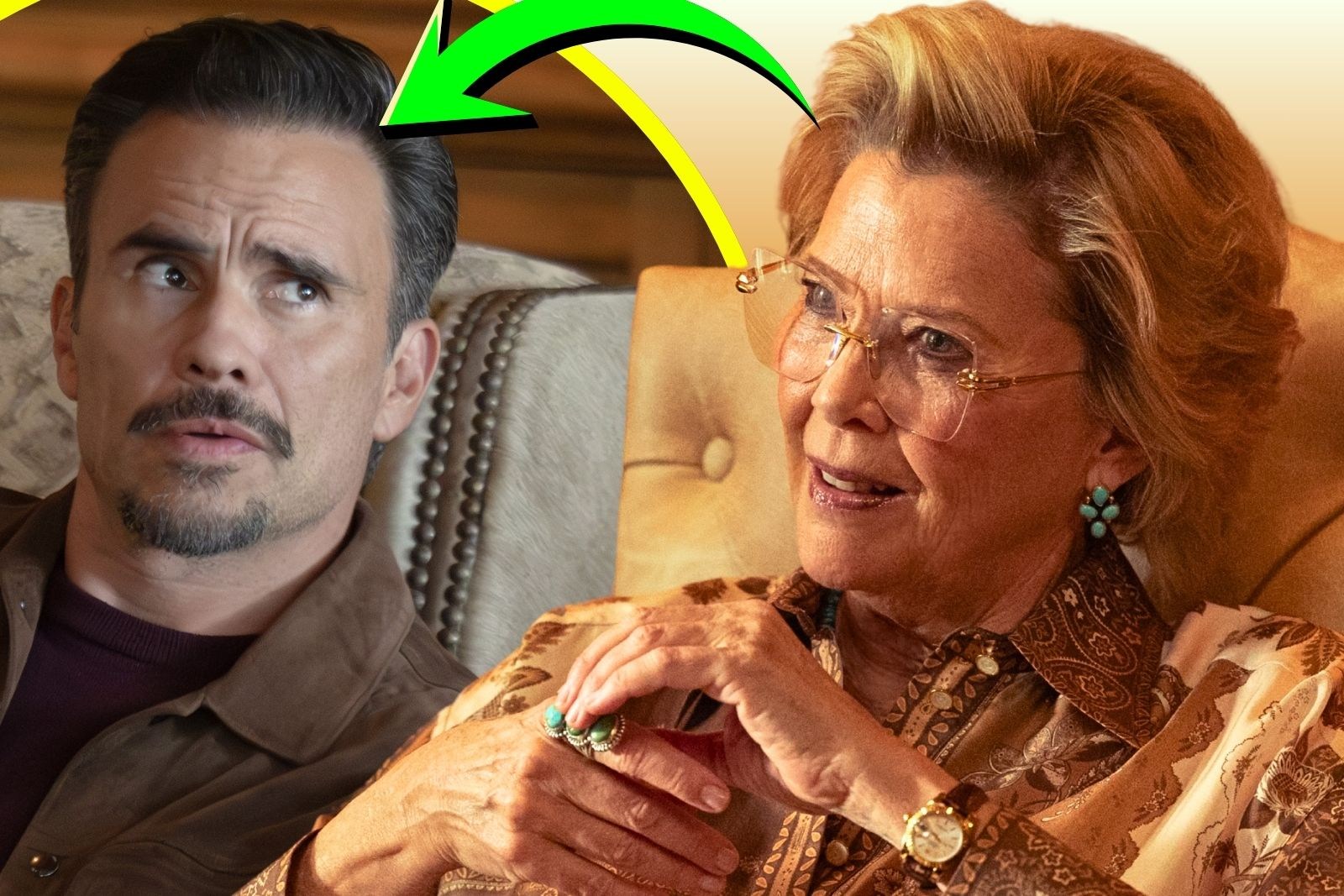
‘Dutton Ranch’: Why Did Rip Do It? Episode 1 + 2 Ending Explained

Yellowstone fans will find plenty to love about spin-off Dutton Ranch. Continue reading…​The Boot – Country Music News, Music Videos and Songs

Categories
Music

‘Dutton Ranch’: Why Did Rip Do It? Episode 1 + 2 Ending Explained

Yellowstone fans will find plenty to love about spin-off Dutton Ranch. Continue reading…​Country Music News – Taste of Country

Categories
Alaska News

Alaska Senate advances bill to expand early interventions for children with developmental delays

Melissa Lewis holds her three-month-old baby Twyla at a screening and event in support of Alaska infant learning programs at the Gold Town Theater in Juneau on Apr 29, 2025. She said while her baby is not showing signs of delays or needing intervention services, they attended the event to support the cause and more state funding and support for early childhood programs. (Photo by Corinne Smith/Alaska Beacon)

Melissa Lewis holds her three-month-old baby Twyla at a screening and event in support of Alaska infant learning programs at the Gold Town Theater in Juneau on Apr 29, 2025. She said while her baby is not showing signs of delays or needing intervention services, they attended the event to support the cause and more state funding and support for early childhood programs. (Photo by Corinne Smith/Alaska Beacon)

The Alaska Senate approved a bill that would expand eligibility and services provided by early intervention programs for children experiencing developmental delays or disabilities.

The Senate Health and Social Services committee sponsored the legislation, saying the state’s eligibility requirements for services are restrictive compared to the rest of the nation. “Under Alaska’s current restrictive eligibility structure, many healthcare providers hesitate to refer children for services because they are unsure if the child will meet the state’s stringent developmental delay requirements,” lawmakers wrote in a statement introducing the bill.

Senators unanimously passed Senate Bill 178 on Wednesday, and it now advances to the Alaska House for consideration. 

Alaska parents and advocates have spotlighted Alaska’s growing need for early intervention services for families and children from infancy to age three. Infant learning programs that provide intervention services can include screening and assessments, targeted speech, movement and play therapies, as well as education and counseling for parents in child development. Research shows targeted interventions provide a wide variety of benefits for young children in their growth and development, and can reduce challenges and the need for special education services later in life.

Under current Alaska law, children must demonstrate a 50% delay in order to be eligible for early intervention services. If passed, the legislation would reduce the requirement to a 25% delay, thus expanding eligibility for these types of services and interventions.

An estimated 1,800 Alaska families are served each year by 17 infant learning programs across the state, funded by the state of Alaska and federal Medicaid, at no cost to families. 

Sen. Löki Tobin, D-Anchorage, said Wednesday on the Senate floor the underlying goal of the bill is to expand access. “We know that early interventions will reduce the need for intensive interventions later in life,” she said, and urged lawmakers to consider the proposal a compounding investment.

Sen. Loki Tobin, D-Anchorage, speaks Thursday, May 14, 2026, during a joint session of the Alaska Legislature. (James Brooks photo/Alaska Beacon)

“We know that 46% of children who exit an infant learning program at age three do not require special education services when they reach kindergarten. That equates to an average of $229,071 of potential savings over the course of that child’s K-12 education,” she said. 

Tobin said the estimated potential cost savings to the state is $38.9 million annually. 

“But the most important piece of this is helping support children and families,” she added. 

Additionally, the legislation would expand services that are eligible for Medicaid funding. The bill would also require the Alaska Department of Health to review the conditions that qualify as a disability and make recommendations to the Legislature on updating those conditions. 

According to a state fiscal analysis, the legislation is estimated to cost the Department of Health over $450,000 to implement the changes in policy, including two new full time positions to manage expanded eligibility, billing, and statewide staff training. 

Last year, the Legislature approved a significant boost in funding for existing early intervention services statewide, but Gov. Mike Dunleavy vetoed the $5.7 million increase

This year, the House and Senate have advanced draft budgets which provide a moderate increase in funding — by roughly $2.7 million next year. 

In addition, both bodies proposed additional funding in their draft budgets if Senate Bill 178 is passed and expands eligibility and services. The House draft version would add $3 million, and the Senate version would add nearly $3.2 million. 

A conference committee of six legislators from the House and Senate are currently in negotiations and compiling the budget proposals in the next few days, ahead of the legislative session’s end on May 20.

SUBSCRIBE: GET THE MORNING HEADLINES DELIVERED TO YOUR INBOX.
Categories
Music

Little Big Town Had a Wardrobe Malfunction at Their First ACMs

Little Big Town can laugh about their first ACM Awards now. Continue reading…​The Boot – Country Music News, Music Videos and Songs

Categories
Music

Little Big Town Had a Wardrobe Malfunction at Their First ACMs

Little Big Town can laugh about their first ACM Awards now. Continue reading…​Country Music News – Taste of Country

Categories
Entertainment

Britney Spears Visited Liquor Store Ahead of ‘Barking’ Dinner: What Did She …

Reading Time: 3 minutes

Last month, Britney Spears checked herself into rehab. She’s now back in LA, and all eyes are on her.

In fact, she’s getting so much attention that an energetic dinner out on Wednesday night made headlines.

At a tavern, she reportedly carried a knife through the dining area, lit a cigarette indoors, and barked.

Now, a new report says that she stopped by a liquor store beforehand. But what did she actually get?

Britney Spears in 2016.
Singer Britney Spears performs onstage during 102.7 KIIS FM’s Jingle Ball 2016 presented by Capital One at Staples Center on December 2, 2016. (Photo Credit: Kevin Winter/Getty Images for iHeartMedia)

What did she get from the liquor store?

The Daily Mail obtained surveillance footage of Britney and a friend stopping by a Sherman Oaks liquor store on Wednesday ahead of their dinner.

The footage shows the music superstar stop by Wines of the World with her companion in the LA neighborhood.

In the video, Britney walks around the store and seems to be in a good mood — from what one can tell in a video.

Her companion selected a canned beverage. The two then went up front to pay.

Britney selected a pack of gum and added it when it was time for him to pay.

So, just to clarify, this is footage of a 44-year-old woman buying gum before going to dinner with two companions.

She didn’t buy alcohol. It’s unclear if companion actually purchased an alcoholic beverage.

(Liquor stores do generally offer other items — such as, for example, gum.)

Rather than a look at a “wild” post-rehab Britney, we’re instead facing the jarring reality that has defined her world for the past quarter of a century.

Wherever she goes, she is surveilled. Her every action is under a microscope.

So, aside from being messy (and lighting up before leaving the restaurant), she did nothing wrong, right?

Admittedly, a liquor store is probably an ill-advised place for someone to visit in general after rehab.

Many people who visit rehab facilities may be struggling with addiction rather than simply with substance abuse.

Addiction is complex, and can wear down someone’s impulse-control until they might tell themselves anything to justify indulging once again.

That doesn’t seem to be the case with Britney. In her case, the big worry might be optics.

In a sense, one might argue that this surveillance footage is doing her a favor. Yes, it’s deeply intrusive. But it also shows her buying gum — rather than a vague mention of her simply stopping at a liquor store.

Britney’s rep highlighted that the dinner was a pretty normal dinner out.

The statement specified that she was at the dog-friendly tavern with her assistant and bodyguard.

For the knife, well, she was at a restaurant and wanted to cut her burger. (Some of us don’t touch burgers with our hands, but in her case, it was just to slice one in half.)

As for the “barking,” she was telling a story about her own dog. At a restaurant that welcomes dogs on its patio.

One wonders if all of the hysteria surrounding Britney’s every move and Instagram post has primed people to imagine her actions as more dramatic and messy than they actually are.

Britney Spears Visited Liquor Store Ahead of ‘Barking’ Dinner: What Did She … was originally published on The Hollywood Gossip.

​The Hollywood Gossip

Categories
Uncategorized

AI-generated fantasies of US intervention reveal how desperation has narrowed Cuba’s political horizons

Cuba’s American liberators, depicted on the left in a political cartoon from 1898 and on the right in an AI image. Cartoon: Blanche S. Crawford, Cartoon History of the Spanish American War (Scrapbook, 1898), 48. AI image: screenshot from Instagram. Images for this article sourced by Jorge Damian de la Paz.

Ever since U.S. commandos successfully removed Nicolás Maduro from power in Venezuela on Jan. 3, 2026, speculation has been growing that “Cuba could be next” on the list of the Trump administration’s targets.

“We’ll take over Cuba almost immediately,” President Donald Trump mused during a speech in Florida on May 1. “On the way back from Iran, we’ll have … the USS Abraham Lincoln come right by Cuba, stop about 100 yards offshore, and they’ll say, ‘Thank you very much, we give up.’”

It’s hard to say whether such remarks are just bluster. While the White House has been trying to coerce Cuban authorities into negotiated political and economic concessions through a de facto oil blockade since January, Trump has also reportedly grown frustrated by the Cuban government’s ability to outlast months of sustained U.S. pressure.

That has not stopped many Cubans and Cuban Americans from eagerly predicting a military operation’s success or insisting that such a U.S. action is necessary.

Their tool of choice? Not battle plans or political manifestos, but artificial intelligence. For weeks, Cuban social media feeds and WhatsApp groups have been filled with armchair fantasies of deliverance from communist rule made with tools like Midjourney, DALL-E, Runway and ChatGPT. In some clips and images, the island nation is represented as a female captive or a child being freed by an American protector. In others, magically renovated cityscapes feature statues and portraits erected in Trump’s honor, replacing revolutionary iconography.

It is easy to dismiss such animations as online trolling. But as a historian of Cuba, I noticed something troubling when my colleague Jorge Damian de la Paz sent me a selection of these digital illustrations and reels. Their visual language eerily mirrors classic U.S. political cartoons during Cuba’s final war for independence against Spain in the late 19th century. That imagery went on to justify U.S. meddling in Cuban affairs for decades.

A fraught history

In the 1890s, American illustrators at publications such as Puck, Judge and Harper’s Weekly similarly portrayed Cuba as a feminized victim: weak, vulnerable, often racialized as nonwhite and incapable of securing freedom on her own. They imagined grateful tropical citizens celebrating future American liberators for defeating their Spanish overlords and bestowing the benefits of “civilization” on Caribbean life.

Such tropes were not innocent. They helped generate the cultural consensus that legitimized U.S. intervention in the Cuban war in 1898 – known by most Americans as the Spanish-American War. They also shaped Cuba’s postwar order: four years of U.S. military occupation, an imposed amendment to Cuba’s first constitution authorizing future American military action to preserve stability, and decades of political and economic dependence on the United States.

Taking their cue from heroes of the independence struggle such as José Martí, many Cubans grew to resent this asymmetrical relationship with the North, even as they fell in love with imported American consumer products and cultural pastimes. Especially by the 1930s and 1940s, mainstream political movements on the island all sought to, at a minimum, rebalance the extent of U.S. influence over Cuban life. Their failure to do so was part of what propelled Fidel Castro’s radical nationalist revolution to power in 1959.

Reversing course

But today, formal and informal polling suggests that significant numbers of Cubans and Cuban Americans seem willing to welcome, or at least tolerate, the explicit U.S. intervention that most of their forefathers rejected.

AI-generated expressions of these views do not appear to be coming from staunchly anti-communist exiles in South Florida alone. Comments and reposts suggest they are resonating among Cubans living on the island, many of whom are desperate for “something, anything” to put an end to the worsening blackouts, shortages and societal paralysis that have made daily life feel like purgatory.

If a U.S. military operation is the only way to escape, one friend in Havana told me, “que sea rápido” – let it be over quickly.

What’s distinct about AI is that it is providing this fatalism with a visual vocabulary rooted in imperial attitudes from the 1890s. This makes sense when you consider how the technology works: Generative AI systems have been trained on enormous, often U.S.-centric archives of historical photographs and other materials. They easily reproduce the old cultural and political prejudices seen in these digital repositories.

As a result, image and video generators appear to be spitting 19th-century American discourses back at 21st-century Cuban users. The most extreme iterations of the imagery even resurrect a long-dormant idea from more than a century ago: the outright annexation of the island as a U.S. state. In so doing, AI provides narrative fuel for the Trump administration’s efforts to rewind the clock to an era when Washington condescendingly treated Latin America as its “backyard.”

Deprivation and desperation

The depth of Cuba’s predicament today helps explain why these images are going viral.

Long before the Trump administration cut off oil supplies, Cubans were enduring their worst economic, political and social crisis in three decades. Botched internal reform efforts, repression of dissent, and mass migration profoundly eroded faith in Cuba’s Communist Party leadership and institutions in recent years. This has been particularly true since the island’s tourist-heavy economy was hit hard by COVID-19 and 2021 mass protests rocked more than 50 towns and cities.

Of course, plenty of Cubans in Cuba still blame the long-standing U.S sanctions regime, and Trump’s unprecedented additions to it, for many of their problems. Not all are willing to accept change at any cost.

But Cuban officials’ defense of national sovereignty in the face of mounting U.S. threats rings increasingly hollow. Cuba hasn’t held a truly competitive election in nearly 80 years and has been ruled by a one-party state for 65. Under those circumstances, political independence does not rest on the consent of the governed. It’s also hard for a country to claim sovereignty when its economy relies so strongly on external patrons, such as Russia, China, Venezuela (until January) and even the United States. Despite the embargo, Cuban Americans send hundreds of millions of dollars in remittances, food, medicines and other goods annually.

The seduction of rescue

Yet even if fantasies of rescue are understandable, they should be deeply concerning to anyone who cares about Cuba’s future.

The danger posed by AI images is not simply that they normalize the idea of a U.S. military intervention that could cost Cuban lives. It is that they replace deeper civic imagination with spectacle and clickbait.

AI is offering visions of liberation without requiring Cubans to grapple with the far more difficult dilemmas that any real transition would entail. Those questions include how to rebuild institutions, restore trust, confront inequality, reconstruct the economy, forge reconciliation and negotiate competing political visions after decades of polarization and authoritarianism.

Prolonged desperation, coupled with authorities’ stubborn refusal to open the island’s political and economic systems, has narrowed some Cubans’ political horizons to the point where they outsource their own salvation rather than imagine it from the bottom up.

The coming weeks may determine whether digital fantasies turn into concrete policy or remain wishful thinking. But one thing is certain: AI images of U.S. military intervention in Cuba reveal that many Cubans and Cuban Americans have given up on defining change on Cuban terms. That choice could mean the difference between a Cuba that once again becomes a U.S. client state and one where Cubans reclaim ownership of their nation’s future.

The Conversation

Michael J. Bustamante does not work for, consult, own shares in or receive funding from any company or organization that would benefit from this article, and has disclosed no relevant affiliations beyond their academic appointment.

​Politics + Society – The Conversation

Categories
Health

Joan Collins’ Stunning Cameo At 92 In Cannes Has Everyone Revisiting Her No-Nonsense Health Tips

At the Cannes Film Festival, Joan Collins proved that, at 92 years old, her decades of skincare and mindful health practices helped her achieve ageless beauty.

​Health Digest – Health News, Wellness, Expert Insights

Categories
Entertainment

What Happens If You Eat Strawberries Every Day?

You’ve probably heard that an apple a day keeps the doctor away, but what if strawberries are your fruit of choice? The impact depends on multiple factors.

​Mashed – Fast Food, Celebrity Chefs, Grocery, Reviews

Categories
Food

Chick-Fil-A’s Iconic Phrase Was Inspired By A Fancy Hotel

A key element of Chick-fil-A’s elite service is the phrase “My pleasure” in response to customer thanks. But where did this practice actually originate?

​Food Republic – Restaurants, Reviews, Recipes, Cooking Tips