Categories
Alaska News

Alaska Legislature approves state’s first tax on e-cigarette products

E-cigarette products, also called vapes, are advertised in the windows of a tobacco shop in Midtown Anchorage, seen May 26, 2026. (Photo by Yereth Rosen/Alaska Beacon)

E-cigarette products, also called vapes, are advertised in the windows of a tobacco shop in Midtown Anchorage, seen May 26, 2026. Lawmakers have passed a bill that would impose Alaska’s first state tax on e-cigarette products. (Photo by Yereth Rosen/Alaska Beacon)

Four years after Gov. Dunleavy vetoed a similar measure, lawmakers passed a bill imposing state’s first tax on electronic cigarettes and related products.

The legislature’s approval of Senate Bill 24 was a victory for Senate President Gary Stevens, R-Kodiak. It was the third such bill sponsored by Stevens, who is retiring this year.

“This bill is about protecting our children from becoming addicted to nicotine,” Stevens said in testimony to the House Finance Committee on May 7.

The bill is intended to counter the multibillion-dollar tobacco industry’s efforts “to addict young people to these substances” in the face of declining use of traditional cigarettes, he said.

E-cigarette products use battery-operated devices to produce vapors that are inhaled, a contrast with traditional tobacco that is burned. They were not widely marketed in 2006, the last time Alaska’s state tobacco tax was adjusted. While many Alaska municipalities have updated their tax systems to include e-cigarette products, the state had not.

If it becomes law, the bill would impose a 25% tax on retail products, as well as prohibit purchases by anyone under 21, the same legal age for traditional tobacco purchases.

Supporters of the bill said the tax and the age restriction would discourage youth use of the product, just as higher taxes and other restrictions contributed to a reduction in youth smoking.

“We know that tobacco and nicotine are highly addictive drugs. The younger you start, the more severe your addiction is likely to be, and if we can delay your introduction to the product, the less likely you are to become addicted. Young people are also price-sensitive,” Rep. Sara Hannan, D-Juneau, who carried Stevens’ bill in the House, said in floor debate on May 19, the second-to-last day of the session.

Opponents objected to the idea of a new tax, and they also argued that vaping should be treated as more benign than smoking.

“My concern is that this isn’t a tobacco bill. This is a tax bill. This is tax, tax, tax,” said Rep. Jamie Allard, R-Eagle River. She added that she believes 18- and 19-year-olds should have the right to smoke or vape. 

“My point about this whole thing is freedom. They’re not doing anything wrong, and now you’re imposing a law to take people’s freedom away that doesn’t impair them. So, what’s next? We need to stop. These are adults,” she said.

The bill passed the House 24-16, and the Senate concurred the next day by a vote of 15-5.

Evolution of the bill

During public testimony on the bill, some opponents said that vaping is a safer alternative to smoking, an argument that the industry has made.

Health experts take issue with the claim. While e-cigarettes expose users to fewer toxic chemicals than cigarettes do, they also pose health risks. Along with leading to nicotine additions, they are associated with a dangerous lung condition called EVALI, which stands for e-cigarette or vaping use-associated lung injury.

Stevens’ first bill on the subject passed in 2022 by wide margins, but Dunleavy vetoed it, citing his desire to avoid new taxes. Another version died in 2024 after members of the House, then with a Republican majority, stripped the e-cigarette tax provisions from it and added a reduction in marijuana taxes.

A key difference between the 2022 bill and the new bill is the way the tax is applied. The previously passed bill would have imposed a 45% tax at the wholesale level. The newly passed bill applies a 25% tax on the retail level.

The change reflects the varying types of e-cigarette products. While some are sold as complete units, others are not supplied to retailers as finished products. Instead, they are assembled by retailers from liquids and other components, and it would be very difficult to track down all those suppliers to impose a wholesale-level tax, bill supporters said.

A collection of electronic cigarette products confiscated at various schools is seen on May 16, 2023, in the state capitol. The products were collected by Tim Lamkin, an aide to Senate President Gary Stevens, prime sponsor of three bills over aimed to reducing youth use of e-cigarette products, also known as vapes. (Photo by Yereth Rosen/Alaska Beacon)
A collection of electronic cigarette products confiscated at various schools is seen on May 16, 2023, in the state capitol. The products were collected by Tim Lamkin, an aide to Senate President Gary Stevens, prime sponsor of three bills over aimed at reducing youth use of e-cigarette products, also known as vapes. (Photo by Yereth Rosen/Alaska Beacon)

Senate Bill 24 underwent other changes on its way to final passage.

The most controversial was an amendment that allows indoor smoking at designated cigar bars. It was added by Rep. Kevin McCabe, R-Big Lake, during House floor debate on May 19, the second-to-last day of the session.

He said it would help local economies by allowing for specialty cigar bars that can be operated separately from any other food or beverage establishments. He pointed to successful cigar bars operating elsewhere in the nation.

“Frankly, Mr. Speaker, some adults just want a nice quiet place to go enjoy a nice premium cigar,” McCabe said in floor debate.

While anti-tobacco organizations advocated for Senate Bill 24 and previous versions of it, they said the cigar amendment undermines protections for smokefree environments.

“The scientific evidence is clear: there is no safe level of exposure to secondhand smoke, and cigar smoke is no exception. Cigars produce large volumes of toxic smoke that damage the heart and increase the risk of heart disease, stroke, cancer and lung disease—for workers and patrons alike. The only safeguard against secondhand smoke is not to allow it,” said a statement issued by the American Heart Association, the American Cancer Society Cancer Action Network and the American Lung Association.

A different amendment, approved during the committee process, added synthetic nicotine products to the tax program. Those products are generally sold in pouches and deliver nicotine that is derived through a lab process rather than from tobacco.

Another change dropped the maximum fine for a minor possessing tobacco or nicotine products from $300, as proposed in the original form of the bill, to $100.

Federal policy

The federal government, like Alaska, currently imposes no excise tax on e-cigarette products, even though most states do. Democrats in Congress have tried to impose a federal e-cigarette tax since 2019 through a bill called the Tobacco Tax Equity Act, but the bill has yet to pass.

Among those who opposed it is Sen. Dan Sullivan, R-Alaska. In a 2022 message, Sullivan said he opposed increased tobacco taxes, “even if done to curb tobacco use,” arguing that they are unfair to low-income consumers. And he said e-cigarette use should not be discouraged through taxation. “If taxes are raised on these products, I worry that it could exacerbate smoking issues by disincentivizing the use of these safer products,” he said in his message.

Legislative opponents of Senate Bill 24 cited Sullivan’s position on federal legislation in their arguments against a state tax.

The Alaska legislation comes as the Trump administration is loosening restrictions on e-cigarette products.

President Donald Trump has positioned himself as an ally of the industry. During the 2024 campaign, he pledged to “save vaping.”

The U.S. Food and Drug Administration on May 5 authorized the use of four types of flavored vapes, including mango and blueberry, over public health advocates’ objections. Days before the FDA announced its decision, a subsidiary of tobacco company Reynolds American donated $5 million to MAGA Inc., a pro-Trump political action committee.

The Vapor Technology Association, an industry group, welcomed the FDA decision allowing fruit-flavored products back on the shelves and lauded Trump for it. But the group said it was only a “first step.”

The e-cigarette industry has lost some customers in recent years. Youth use of the products is down from a peak reached in 2019, both nationally and in Alaska, according to the U.S. Centers for Disease Control and Prevention and the Alaska Department of Health.

Researchers attributed the decline in part to past bans on flavored products. And the CDC cited education campaigns to discourage youth vaping. The Alaska Division of Public Health is among the agencies involved in such campaigns; it has a youth-focused program called “Not Buying It.”

SUPPORT: YOU MAKE OUR WORK POSSIBLE

Categories
Music

Did Riley Green Take a ‘Marshals’ Set Souvenir? [EXCLUSIVE]

Even a country star can’t escape the tight grip of set security. Continue reading…​The Boot – Country Music News, Music Videos and Songs

Categories
Music

Did Riley Green Take a ‘Marshals’ Set Souvenir? [EXCLUSIVE]

Even a country star can’t escape the tight grip of set security. Continue reading…​Country Music News – Taste of Country

Categories
Hip Hop

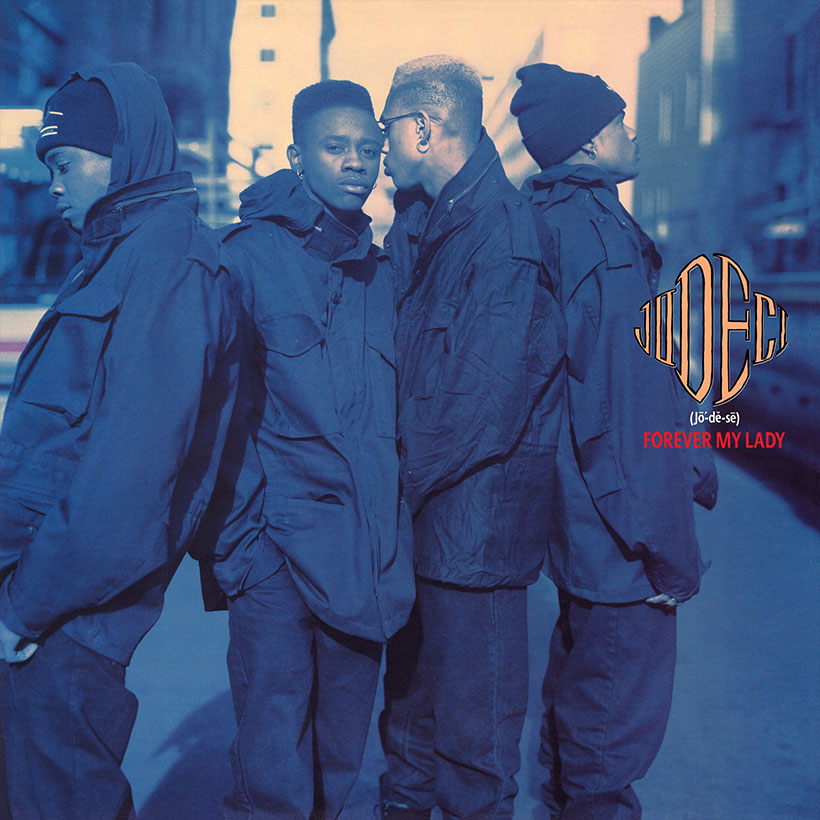
Jodeci’s ‘Forever My Lady’ Gets 35th Anniversary Vinyl Reissue

Jodeci Forever My Lady

For a generation of R&B fans, Forever My Lady is forever. This year Jodeci will celebrate their landmark debut album, released in 1991 at the height of the new jack swing era, with a new expanded vinyl reissue for its 35th anniversary.

The 2LP set will feature the original Forever My Lady tracklist plus five bonus tracks, including “Forever My Lady – Live From Uptown MTV Unplugged/1993,” the Swing Mob radio mix of “I’m Still Waiting” (as heard in the song’s music video), the radio remix of “Come And Talk To Me,” a previously unreleased a cappella version of “Stay,” and the hip hop version of the Fried Green Tomatoes soundtrack favorite “Cherish.”

Forever My Lady established Jodeci as hit-makers on the vanguard of R&B. The group’s pioneering mixture of traditional gospel-rooted vocals and synthetic production—spearheaded by Jodeci member DeVante Swing and young R&B peer Al B. Sure—became a dominating force at R&B radio. The forward-thinking sound was mirrored by the Charlotte quartet’s adoption of hip hop wardrobe and styling, which contributed to their status as game-changers.

Forever My Lady debuted atop the Billboard R&B chart, went 3x Platinum, and sent four singles to the Billboard Hot 100, including “Forever My Lady,” “Stay,” “I’m Still Waiting,” and the album’s biggest hit, “Come And Talk To Me.” In addition to its commercial success, Forever My Lady was a critical sensation. Critics praised the album for its innovative approach and masterful execution, including Entertainment Weekly’s Arion Berger, who called it a “forceful and assured debut,” “sophisticated beyond the band members’ years.”

“I was impressed with the fact that they were so young, but they knew who they were musically,” recording engineer Paul Logus later told Okayplayer. “They were so damn good at what they did. It was just unbelievable. The thing that blew me away instantly about DeVante was how musical he was and what a virtuoso he was with whatever he picked up.”

Listen to the 35th anniversary edition of Jodeci’s Forever My Lady here.

​Discover more about the world’s greatest R&B artists | uDiscover Music

Categories
Entertainment

Gayle King: I BEGGED Oprah to Quash the Gay Rumors! She Refused!

Reading Time: 3 minutes

She and Oprah Winfrey are not and have never been an item.

Sorry, folks.

In addition to revealing how she once caught her now-ex and his mistress (her former close friend), Gayle King also opened up about the longstanding gay rumors.

When tabloids first began claiming that the two were secret lovers, Gayle begged her bestie to quash the claims. Oprah declined.

Gayle King on Call Her Daddy speaking
During her ‘Call Her Daddy’ podcast interview, Gayle King delved into a variety of personal topics. (Image Credit: YouTube)

‘If we were gay, we would tell you’

During the Wednesday, May 27 episode of the Call Her Daddy podcast, Gayle told host Alex Cooper how the gay rumors used to get under her skin.

“I tell you this, it used to really bother me,” the iconic broadcast journalist admitted.

It all started in 1993, when she — famously — caught her ex-husband, William Bumpus, cheating with a close friend. The two divorced.

At the time, a tabloid ran a nonsensical story claiming that Gayle and longtime bestie Ooprah were “secretly gay.” And it got to her.

“Number one, if we were gay, we would tell you because, believe me, there’s nothing wrong with it,” Gayle emphasized. “It’s just I prefer a man. I prefer a man.”

“And then I would say to her, ‘You’ve got to say something on your show because it’s hard enough for me to get a date on a Saturday night, and now people think I’m a lesbian,’” Gayle recalled telling Oprah.

“‘You’ve got to say something.’ And she said, ‘No, we should just leave it be,’” she recalled. “‘No, I’m just going to leave it alone. Leave it alone.’”

Oprah was, for 25 years, one of the most watched and influential people on the planet. She still falls into the latter category.

“So, well, that’s fine for you to say. You have somebody. I don’t,” Gayle remembered grumbling at the time.

“So, it used to really bother me,” she reiterated. “And now even today there are still people that say, ‘Well, you know, the truth is. …’”

Gayle King on Call Her Daddy
Journalistic icon Gayle King joined the ‘Call Her Daddy’ podcast in May 2026. (Image Credit: YouTube)

‘I’ve now gotten to the point in my life that very few things get to me’

Time has taught Gayle to care less about what others imagine her life to be like.

“I don’t care,” she bluntly admitted.

“I’ve now gotten to the point in my life that very few things get to me,” Gayle shared.

She explained that this is “because, you know, when you go on social media, it is an accelerator on hate.”

Gayle expressed: “As long as I feel good about what I’m doing … Otherwise, you’ll drive yourself nuts. So now I really don’t care.”

Oprah has been with Stedman Graham since 1986. She and Gayle met when both worked for WJZ-TV Baltimore.

Some people respond to gay rumors — in person or from tabloids — with explicit homophobia. Notably, Gayle is decidedly not doing that.

Incidentally, Gayle did not limit her commentary on relationships to clarifying that she likes men. She told Alex that she prefers younger men.

Honestly? Good for her. And, for what it’s worth, it’s pretty reasonable to be annoyed at people speculating that you and your bestie are secret lovers.

Gayle is a legendary broadcast journalist. She signed up to report the news. She never wanted to be the news.

Gayle King: I BEGGED Oprah to Quash the Gay Rumors! She Refused! was originally published on The Hollywood Gossip.

​The Hollywood Gossip

Categories
Entertainment

Amanda Conner, Wife of Ryan Edwards, Admits to Relapse Following DUI Arrest

Reading Time: 2 minutes

Over Memorial Day weekend, Amanda Conner was arrested on suspicion of DUI.

Now, the wife of former Teen Mom star Ryan Edwards is opening up about her relapse.

Days after being arrested in Tennessee on charges that included DUI, child neglect, and driving on the wrong side of the road, Conner took to social media to address what happened and to acknowledge that she has fallen off the wagon.

Amanda Conner is in trouble with the law yet again.
Amanda Conner is in trouble with the law yet again. (Hamilton County Sheriff’s Department)

“I relapsed. I fell hard,” Amanda said on TikTok.

Conner has long been open about her struggles with addiction and recovery.

As first reported by The Ashley’s Reality Roundup, Amanda said she had been doing well for a long period of time before everything unraveled, describing the relapse as both devastating and humbling.

And perhaps most painfully, she admitted that her choices affected the people she loves most.

Conner reportedly acknowledged the disappointment she caused her family, including her children, while also emphasizing that she intends to take accountability rather than run from what happened.

“I’m not proud of myself,” she reportedly shared, adding that she is determined to move forward and regain stability.

While social media reactions have been mixed — especially given the seriousness of the allegations tied to her arrest — some followers praised Amanda for publicly owning her mistakes instead of denying or minimizing them.

Amanda was arrested in Hamilton County, Tennessee, and booked on charges including DUI, child abuse/neglect and driving left of center.

Authorities reportedly alleged that a child was present during the incident.

Court records also indicate restrictions were put in place following the arrest, including limits regarding contact with the alleged child victim pending future legal proceedings.

The day after the arrest, Amanda called the cops and alleged that Ryan had been abusive to her.

As longtime Teen Mom fans know, Ryan spent years battling his own highly publicized addiction struggles, including arrests, rehab stints, and periods of estrangement from loved ones.

He met Amanda while they were both in early recovery, and for a while, it looked as though they might be good influences on one another.

Now, the couple finds itself facing another painful chapter. But Amanda appears determined to get back on the wagon.

We will have further updates on this developing story as new information becomes available.

Amanda Conner, Wife of Ryan Edwards, Admits to Relapse Following DUI Arrest was originally published on The Hollywood Gossip.

​The Hollywood Gossip

Categories
Uncategorized

To ‘86’ occasionally means to kill but usually doesn’t: A linguistic investigation into the Instagram threat charge against James Comey

A federal grand jury indicted former FBI Director James Comey in April 2026 over a social media photo of seashells. Brendan Smialowski/AFP via Getty Images

A federal grand jury in April 2026 charged James Comey with making a threat against President Donald Trump and transmitting a crime across state lines.

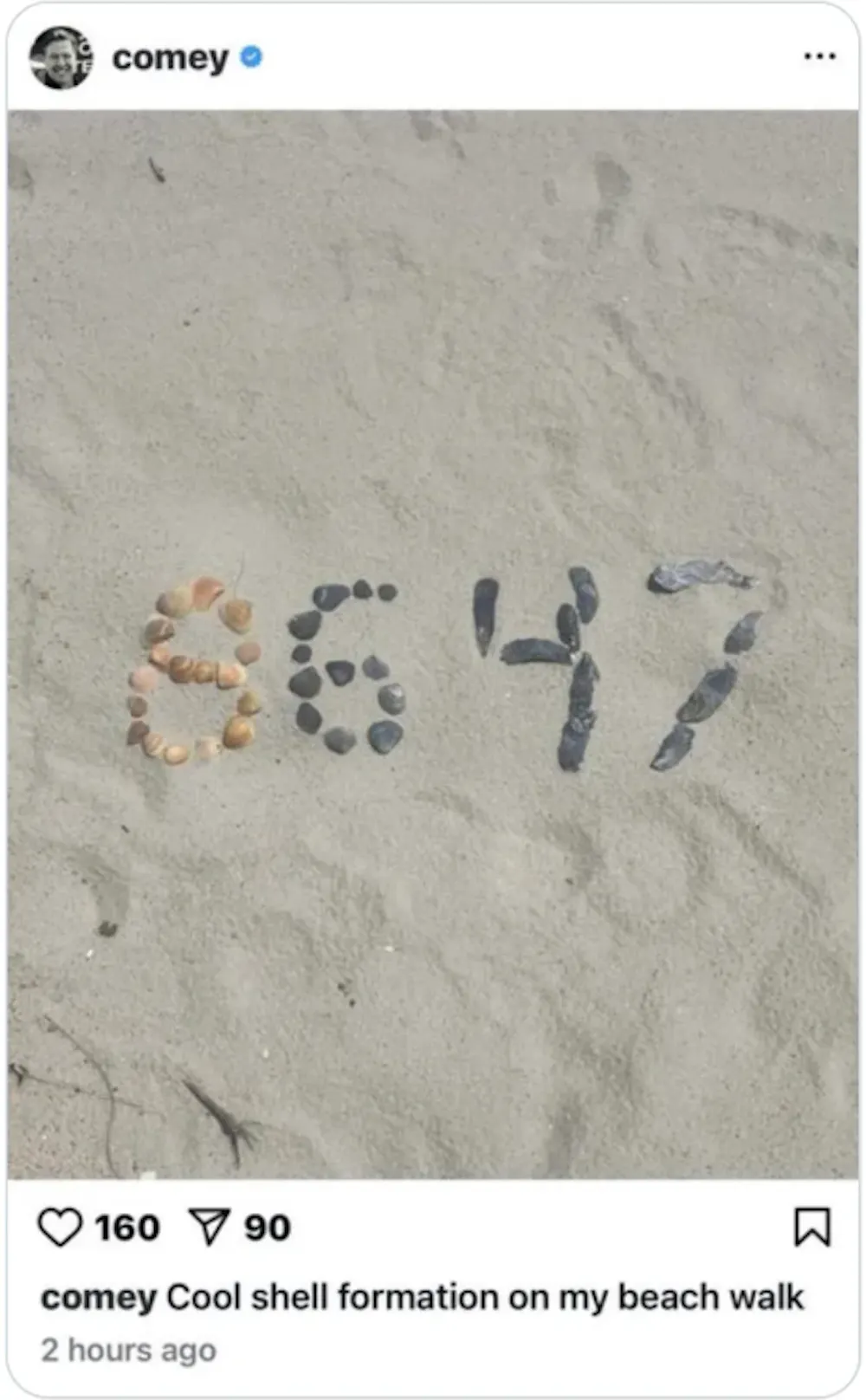
The charges came after Comey, the former FBI director, posted an image of seashells on a North Carolina beach, arranged in the form of the numerals “86” and “47.” Forty-seven was an ostensible reference to Trump, the 47th U.S. president, and 86 to a colloquial expression conveying a sense of “getting rid of” or “casting aside.”

But is “86 47” really a threat? And if so, is it a criminal one amounting to a threat to assassinate the president, as prosecutors have suggested?

In contrast to crimes such as murder or arson, which can be committed without uttering – or writing – a single word, threats are inherently crimes of language. They don’t exist without the linguistic symbols used to convey them.

Linguists like me who work in the field of language and the law understand these types of crimes to be “speech acts,” utterances that perform the action they name. What is a promise if not the words “I promise” or an apology if not the words “I’m sorry”?

The law is full of speech acts. Rulings, verdicts and arrests are all speech acts. So, too, are the crimes of language: solicitation, perjury, bribery and threats.

What is a threat?

Threats are language that states or implies the intent to intimidate or create harm. As a speech act, they need not be direct but often are.

In December 1984, the White House mail room received a letter with the message, “Ronnie, Listen Chump! Resign or You’ll Get Your Brains Blown Out,” referring to President Ronald Reagan. Below these words was a drawing of a pistol with a bullet being ejected from the barrel.

The Secret Service conducted a handwriting comparison analysis of the words, which led to the arrest of David Hoffman. He stated that “he didn’t know it was against the law to threaten the President.”

But Hoffman did commit a language crime. Although he didn’t use the words “I threaten to blow your brains out if you don’t resign,” the passive construction “you’ll get your brains blown out” accompanied by a drawing of a pistol constituted a direct threat that expressed a clear intent to intimidate and harm the president.

The scientific process of dictionaries

This brings us to the Comey case. Can a photo of 38 seashells arranged in the numerals “86” and “47,” and broadcast over Instagram, constitute a threat against Trump?

In theory, “86 47” could be an indirect threat, but the interpretation of Comey’s message really hinges on the meaning of “86” when used as a verb.

Three men stand behind a lectern as one man speaks.
Acting Attorney General Todd Blanche speaks on April 28, 2026, in Washington, D.C., as charges are brought against former FBI Director James Comey.
Tasos Katopodis/Getty Images

This is where tools of forensic linguistics, which helps solve crime and resolve matters of language and the law, can help.

The first tool is lexicography, the academic study of creating dictionaries. A classic maxim of lexicography is that dictionaries are out of date before they are printed. It’s a nod to the fact that words’ meanings change and new words enter the language quickly.

Although dictionaries are imperfect, their definitions are the result of the rigorous study of word meaning and adherence to the scientific process of lexicography, the practice of writing and editing dictionaries and other reference materials.

In the Comey case, we would expect to find “86” listed as a noun. But the inclusion of the nonstandard verb form – “to 86” – would tell us that what may seem mysterious and cryptic actually has a conventionalized and well-recognized meaning.

Of the five major dictionaries of contemporary English I consulted, all had entries for “86” as a verb. The Oxford English Dictionary, for example, includes: “to eject or debar (a person) from premises; to reject or abandon; (in earliest use) to refuse to serve (a customer).”

Oxford also offers this second entry: “In restaurants and bars, an expression indicating that the supply of an item is exhausted.” This may explain why many restaurant workers across the country have strong reactions to the Comey indictment.

The American Heritage Dictionary definition includes “to refuse to serve (an unwelcome customer) at a bar or restaurant; to throw out, eject; to throw away, discard.” Merriam-Webster provides a similar definition: “to refuse to serve (a customer); to eject or ban (a customer); broadly, to eject, dismiss or remove (someone).”

Collins Dictionary offers two entries, the first in line with the others – “ to reject from, or to refuse to serve at” – and the second: “to cut off, eject, cancel, eliminate, kill, etc.”

The dictionary evidence is therefore mixed: Most definitions convey a sense of “kicking out” or “refusing service,” but Collins does include “kill” as a secondary definition.

How ordinary speakers of English use ‘86’

More evidence is needed, so I turned to the second tool: linguistic corpora. A corpus – plural: corpora – is a collection of texts chosen to represent language as it is actually produced by speakers and writers across genres and time periods. Linguistic corpora are useful because they show us usage in context, while providing enough data to conduct quantitative analysis of word meaning.

With over 1 billion words, the Corpus of Contemporary American English is the largest corpus of spoken and written American English available today. I analyzed usage of the word “86” in the corpus and found 372 attestations in full form – “eighty-six,” not “86.”

Seashells are arranged on a beach in the form of the numerals '86' and '47.'
Comey posted an image of seashells on a beach arranged in the form of the numerals ‘86’ and ‘47.’
James Comey/Instagram

The vast majority of the attestations had nothing to do with “ejecting.” But in a random sample of 100 cases of “eighty-six,” 20% were the verb form conveying the sense of “discard” or “eject.” Of those, two attestations meant “to kill,” and both came from fictional television and film. Far more common were expressions such as “Definitely 86 the coat, it sends the wrong message” and “Can we 86 the flags, please?”

When the direct object of the verb was a human subject, “86” still overwhelmingly meant “to discard” or “eject,” including this example when the subject was another sitting U.S. president: “Obama’s going to lose this election … they will blame his one term on a homophobic electorate who chose to eighty-six him because of his SSM stance,” in reference to his support for gay marriage.

In the Obama case, “86” clearly meant “vote him out.”

User-generated dictionaries are a third tool linguists use to analyze word meaning in the context of language crimes. They are less reliable than dictionaries written by professional lexicographers, but – like corpora – they give us a sense of the pulse of the language as it’s happening now.

Although they often contain factual errors, they tell us what English speakers think they know about the origins and meanings of words – a useful tool for analyzing language crimes.

I studied the entries provided by users for “86” on Urban Dictionary, where the highest-ranked definition is “to remove, end usage, or take away.” Of the 63 entries, only seven mention killing, one of those in reference to the Comey seashells. The vast majority of other entries align with the dictionary evidence: 86 means to get rid of something, or to have run out of a key ingredient.

The Comey indictment states that “a reasonable recipient who is familiar with the circumstances would interpret” Comey’s post “as a serious expression of an intent to do harm to President Trump.”

Looking across dictionaries, linguistic corpora and user-generated dictionaries, “eighty-six” could mean to kill but probably doesn’t. A general speaker of contemporary American English would interpret Comey’s post as an expression of opinion, a desire to “eject” the president from office.

The Conversation

Phillip M. Carter does not work for, consult, own shares in or receive funding from any company or organization that would benefit from this article, and has disclosed no relevant affiliations beyond their academic appointment.

​Politics + Society – The Conversation

Categories
Health

‘I Was Afraid To Die’: Celebrities Who Are Vocal About Their Panic Attacks

Even people who are often in the spotlight can experience panic attacks. In fact, some celebrities have been vocal about sharing their mental health stories.

​Health Digest – Health News, Wellness, Expert Insights

Categories
Entertainment

Kelly Dodd Facing Revenge Porn Charges, Accused of Issuing Violent Threats

Reading Time: 2 minutes

One of the worst alums to come out of the Real Housewives franchise has found herself on the wrong side of the law.

Again.

RHOC alum Kelly Dodd is accused of sharing revenge porn of an unnamed woman.

Notably, this is not the same woman whom she is accused of battering in June of last year.

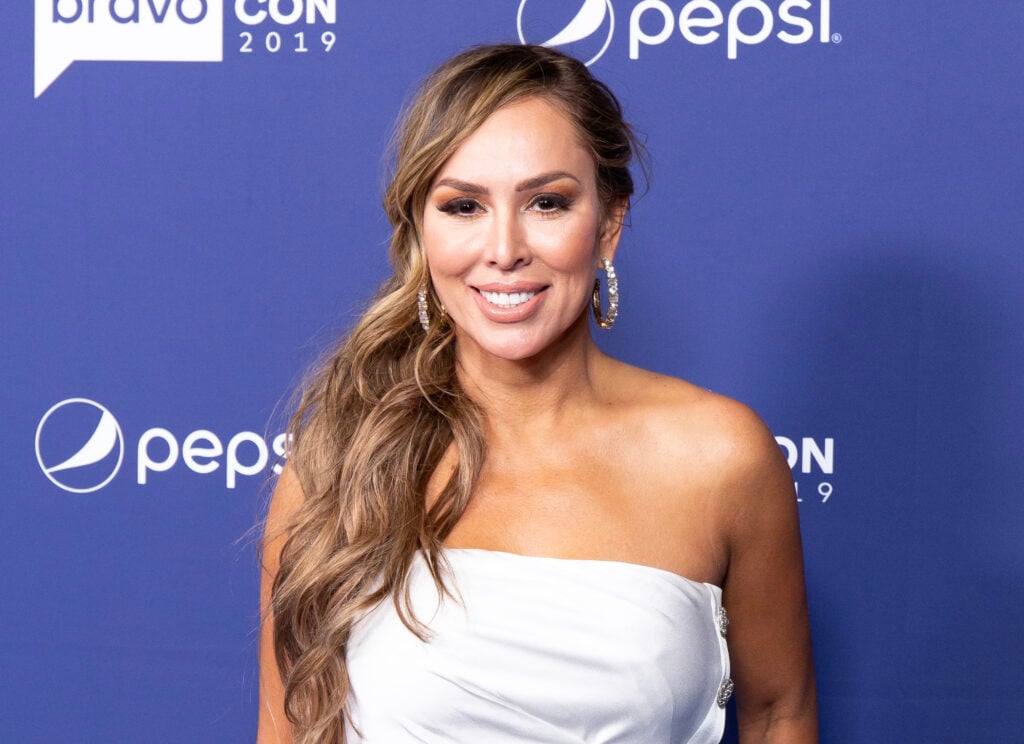
Kelly Dodd in 2019.
Kelly Dodd attends opening night of the 2019 BravoCon at Hammerstein Ballroom on November 15, 2019. (Photo Credit: Arturo Holmes/WireImage)

She’s accused of secretly recording and then distributing private videos of a woman

TMZ reports that prosecutors accuse Dodd of “unlawfully and intentionally” distributing images of an unidentified woman.

Specifically, it is said to be footage of a woman having sex and of the same woman masturbating.

There is no explanation for why Dodd may have allegedly shared the footage. Presumably, the motive will come up in court.

The date of the crime, court documents say, was on or around August 29, 2025.

Meanwhile, the alleged victim is identified solely as Jane Doe.

TMZ details that Dodd allegedly recorded the footage without Doe’s consent.

The recording took place when the alleged victim had a reasonable expectation of privacy.

According to court documents, Dodd and Doe discussed the footage, leading to a mutual agreement to keep the media private.

Around the same time as Dodd allegedly broke this agreement to share the revenge porn, she is accused of another wrongdoing.

Prosecutors say that the fallen Real Housewife contacted Doe and threatened to injure her, her property, and her family.

There’s a lot that we don’t know (yet) about what happened

As a result of all of this, prosecutors cite, Jane Doe suffered severe emotional distress.

It is unclear who was the alleged recipient of revenge porn.

And, again, we do not know what motive prosecutors say motivated Dodd to distribute the material — or issue the seemingly verbal threats late last summer.

Hopefully, more details will come out at trial, if not before then.

Though fans of RHOC remember Dodd’s propensity for outbursts (to say nothing of the sinister turn that her posts have taken over the past six years or so), people have a lot of questions.

We mentioned that Dodd is facing a separate and seemingly unrelated charge.

In June of 2025, two months or so before this revenge porn incident, she allegedly attacked a different Jane Doe.

This alleged attack was more physical.

TMZ tallied it up, and that means that Dodd is facing 3 different charges — all misdemeanors — and possible jail time.

Dodd’s behavioral problems have been obvious, on Bravo and social media, for years. We’d love to hear that she’s gotten things under control.

Kelly Dodd Facing Revenge Porn Charges, Accused of Issuing Violent Threats was originally published on The Hollywood Gossip.

​The Hollywood Gossip

Categories
Entertainment

Are Cloudy Eggs Safe To Eat?

So you’ve just cracked open an egg, and the white inside has a cloudy look – should you still use it? Here’s the lowdown on what this characteristic means.

​Mashed – Fast Food, Celebrity Chefs, Grocery, Reviews