It’s heartwarming to hear how a simple hug and high-fives turned competition into a lasting friendship in country music. Continue reading…Country Music News – Taste of Country









It’s heartwarming to hear how a simple hug and high-fives turned competition into a lasting friendship in country music. Continue reading…Country Music News – Taste of Country
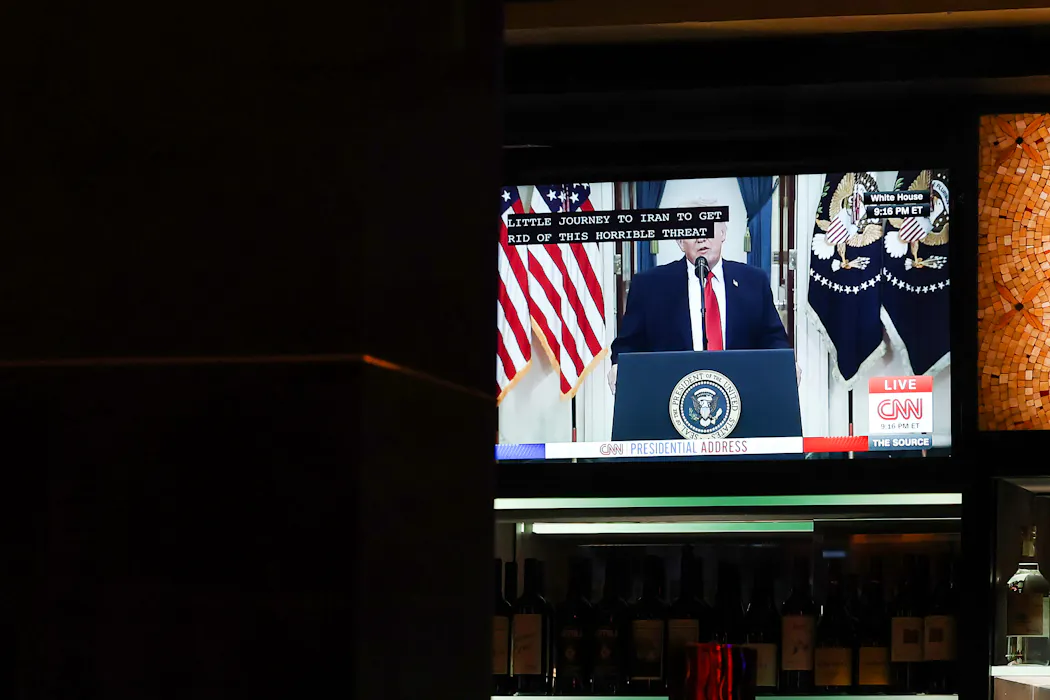
May 1, 2026, marks the 60th day of Operation Epic Fury in Iran – a symbolically significant date designating when a president who has mounted unilateral military operations must receive Congressional approval or wind it down.
However, the complex history of the War Powers Resolution clock demonstrates it is a toothless milestone.
The Trump administration signaled on April 30, 2026, that it would ignore that deadline, set by the War Powers Resolution. Secretary of Defense Pete Hegseth testified before the Senate Armed Services Committee that “we are in a cease-fire right now, which my understanding is that the 60-day clock pauses or stops in a cease-fire. That’s our understanding, so you know.”
Sen. Tim Kaine of Virginia, a Democrat, responded that the 60-day threshold poses a “legal question” and “constitutional concerns.”
This is not the first time presidents and members of Congress have sparred on the meaning of the War Powers Resolution. What happens next will play out through regular politics, because the conflict is not a matter of simple legal interpretation.
In the U.S. Constitution, Congress and the president share war powers.
In the shadow of political struggles in the final years of the Vietnam War, Congress passed the War Powers Resolution in 1973 to “insure that the collective judgment of both the Congress and the President will apply to the introduction of United States Armed Forces into hostilities.”
A crucial section of the resolution reasserts legislators’ role, and makes clear that the constitutional power of the president to make war is subject to, or exercised with, the following conditions: a Congressional declaration of war; specific statutory authorization; or a national emergency created by attack upon the United States, its territories or possessions or its armed forces.
For new military campaigns that do not meet these criteria, the resolution included a 60-day clock that begins when a president reports the action to congressional leadership within 48 hours of the action beginning.
The clock can be expanded to up to 90 days upon presidential determination and certification of “unavoidable military necessity respecting the safety of United States Armed Forces” related to removal of troops.
After 60 to 90 days, the resolution originally said this type of unilateral military action would be terminated automatically unless both chambers of Congress approved some form of legislative authorization.
Congress could also choose to terminate an unauthorized military operation any time before the 60 days with a concurrent resolution, which doesn’t require a president’s signature – essentially, a “legislative veto.”
And to make sure the president couldn’t stretch the definition of congressional approval, the resolution said neither existing treaties nor new budget appropriations could substitute for legislative authorization of a military action.
Since 1973, actions by all three branches across a variety of political and policy landscapes have undermined its intents and procedures.
In 1983, the Supreme Court declared various kinds of legislative vetoes unconstitutional, which led Congress to reinterpret its War Powers Resolution procedures and powers and effectively amend its processes to expedite any joint resolution or bill that “requires the removal of U.S. armed forces from hostilities outside the United States.”
Now, if members want to stop a presidential military campaign already in progress, they must act affirmatively and pass a disapproval resolution, which a president could veto like any other bill. Congress has sent only one such disapproval – to President Donald Trump in his first term – which he vetoed. Congress did not have the two-thirds required in the Constitution to override.
Both chambers of Congress now have to vote twice, once to disapprove a military action and then again to overcome a likely veto, to stop something it never approved in the first place.
The 60-day mark for the current Iran operation has therefore loomed as more of a politically charged symbol of this longstanding imbalance on war powers than a real deadline for action by either branch.
The House and Senate have tried to pass legislation to stop military operations against Iran six times since operations began. All attempts have failed, including the most recent vote on April 30. Democrats are considering filing suit against President Trump if operations go beyond 60 days without authorization.
Yet federal courts have long expressed disinterest in getting involved in constitutional questions related to the War Powers Resolution, especially if members of Congress are the plaintiffs.
Although most presidents from Richard Nixon onward have claimed that the War Powers Resolution is an unconstitutional check on their institutional powers, they usually filed the required reports on new military actions 48 hours after they began.
While the current Iran conflict is different in many ways, presidential unilateralism, inconclusive chamber actions and even member lawsuits all echo controversies over U.S. military action in Kosovo in 1999 and Libya in 2011.
Operation Epic Fury against Iran began Feb. 28, 2026, and President Trump sent the required report to Congress on March 2, 2026.
After detailing the rationale for military action, Trump added “Although the United States desires a quick and enduring peace, it is not possible at this time to know the full scope and duration of military operations that may be necessary.”
He concluded the memo with his interpretation of constitutional power to act unilaterally.
“I directed this military action consistent with my
responsibility to protect Americans and United States interests both at home and abroad and in furtherance of United States national security and foreign policy interests,” the president wrote. He acted, he said, “pursuant to my constitutional authority as Commander in Chief and Chief Executive to conduct United States foreign relations.” He said he made the report “consistent with the War Powers Resolution. I appreciate the support of the Congress in these actions.”
Similarly, on March 26, 1999, President Bill Clinton sent a War Powers Resolution letter explaining his decision two days earlier to take part in a NATO-led operation against the Federal Republic of Yugoslavia, known as FRY.
Clinton wrote to Congress using mostly the same words and phrases Trump did in his 2026 letter. Clinton also said that he took the action “in response to the FRY government’s continued campaign of violence and repression against the ethnic Albanian population of Kosovo.”

Clinton explained his authority in virtually the same language as Trump and, like Trump, said it was hard to predict how long the operations would continue.
The House and Senate repeatedly failed to either approve or disapprove of Clinton’s actions through a series of votes across March and April 1999. But lawmakers did send him supplemental appropriations for the operations in May.
NATO suspended the operation after 78 days. Almost a year later, a federal appellate court upheld a district court’s decision rejecting a lawsuit led by Rep. Tom Campbell, a California Republican, alleging Clinton violated the War Powers Resolution. Rather than deciding on the merits, the decision rejected the lawmakers’ claims of injury as not reviewable by the court.
In a very different context, a similar rhythm played out during President Barack Obama’s presidency.
During the “Arab Spring” revolts of 2010-2011, the U.N. Security Council passed two resolutions condemning violence against Libyan civilians by security forces under the direction of Colonel Moammar Gadhafi.
On March 21, 2011, two days after NATO operations began against Gadhafi’s forces, which included American air support, Obama sent his War Powers Resolution letter to the Republican House and Democratic Senate. Obama had not received prior legislative authority from Congress.
Obama’s letter included language almost identical to Clinton’s earlier letter and Trump’s later one.
As with Kosovo, the House and Senate did not ultimately agree to either approve or disapprove of the president’s actions in support of the UN and NATO over the operation’s 222 days. In addition, Democratic Rep. Dennis Kucinich of Ohio led a group of mostly Republican House members in a failed War Powers Resolution lawsuit to stop the president.
The Office of Legal Counsel in the Department of Justice has published legal opinions that explain and defend presidential war powers, including with Kosovo and Libya. In December 2025, that office published a memo defending the imminent January 2026 capture of Nicolás Maduro. On April 21, 2026, the State Department published a defense of ongoing U.S. actions in Iran.
Within the current dynamics of the War Powers Resolution, until Congress musters bipartisan supermajorities to connect its own institutional ambition with constitutional power, presidents from either party will decide alone if, and when, the country goes to war. Instead of Congress, presidents may heed public opinion and economic indicators, especially in election years.

Jasmine Farrier is affiliated with the American Political Science Association.
Politics + Society – The Conversation

Reading Time: 2 minutes
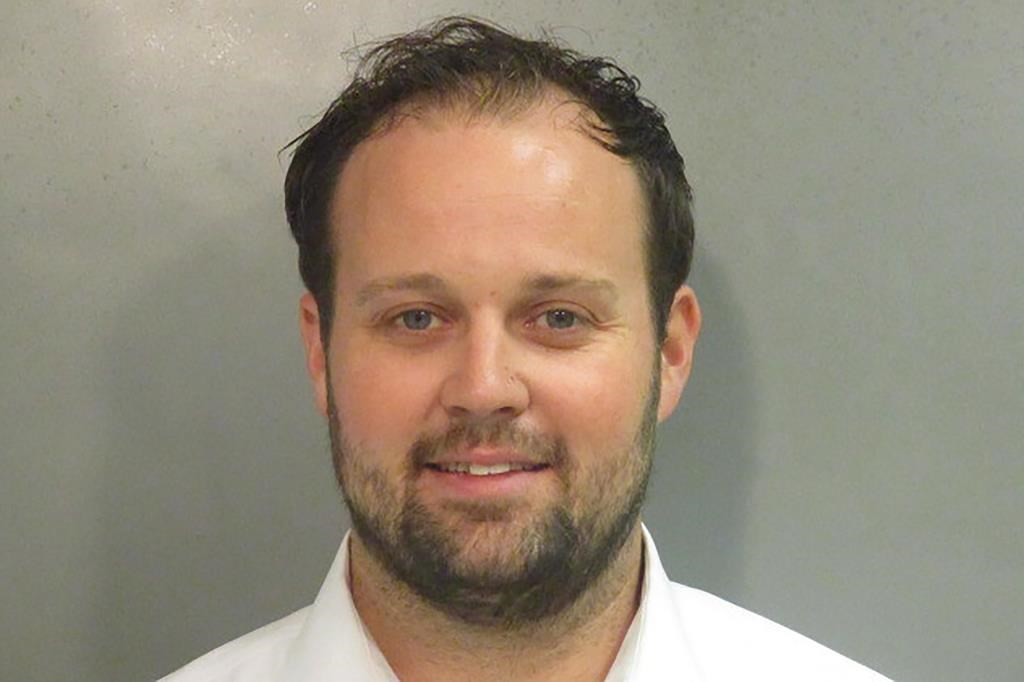
Josh Duggar has been behind bars since 2021, and he’s not scheduled for release until 2032.
Josh’s release date keeps getting pushed back due to his bad behavior behind bars, and cousin Amy Duggar claims that he’s currently being held in solitary confinement.
That’s the good news. The bad news is that Josh is still allowed to make contact with the outside world.
And a newly revealed prison email from Josh to wife Anna Duggar tells us more about their marriage than we ever wanted to know.
“Okay so wow! WOWOWOW! I just got your 4 photo collage,” he wrote Anna in June 2022 (via Radar Online), adding:
“THE PICS ARE SUPER HOT AND YOU LOOK STUNNINGLY GORGEOUS. YOU ARE SOOOO CUTE! THANK YOU FOR SENDING! YOU ARE SOOOO PRECIOUS!”
“It’s so much fun to get those — wow you are sexy!” Josh ranted on.
“Thank you for sharing with me, it means a lot to hear your heart! Thank you for the super sexy photos too cutie! xoxo.”
You get the idea. It seems that Anna also offered some updates on her life in her latest email, but Josh was primarily fixated on her pics.
He also implored her to figure out how to continue sending pics once he arrives at his new home with “the feds,” aka Seagoville Federal Correctional Facility in Texas.
In other newly revealed emails, Josh lashed out at his parents and accused them of hypocrisy.
“You continue to talk about how you forgive others and try not to be bitter, yet you constantly are putting me down,” Josh wrote.
“Not just this situation, I’m talking years of it. Do you think it’s helping me? Does it help you? Does it help the ‘spirit’ of our family?
“When I try to bring this up, or ANY criticism of Pops and Mom, they immediately point to my bad choices in life and then defend themselves. REALLY? You accuse Anna of doing this most of the time and you call her the ‘most bitter person you know’ etc.”
On Reddit, many commenters noted that Anna, who is now raising seven kids on her own, has every right to be bitter.
These days, Josh is desperately appealing his sentence every chance he gets. But it still seems unlikely that he’ll be released this decade.
So maybe the 2020s aren’t such a hellscape after all!
Josh Duggar Begs Wife For ‘Sexy’ Pics In Bizarre Prison Email was originally published on The Hollywood Gossip.
The Hollywood Gossip

If you’ve ever picked up a bag or clamshell of grapes, you’ve likely noticed the tiny holes scattered across the packaging. So, what’s the deal with those?

Food Republic – Restaurants, Reviews, Recipes, Cooking Tips

Reading Time: 2 minutes
Fans and detractors alike seem to be asking the same question:
Is Olivia Wilde okay?
A recent video — alongside other recent glimpses at the actress — has people mixing body-shaming, concern trolling, and old-fashioned worry.
Other fans are rushing to her defense, saying that she’s doing just fine.
In late April, Wilde stopped to chat with SFGate for quick red carpet interview.
The 42-year-old actor and director was there for the San Fransisco International Film Festival.
Specifically, she was promoting The Invite, her newest film.
Unfortunately, much of the focus on social media had nothing to do with her creative works.
Instead, the attention fell upon her appearance.
To say that she looked “slimmer than usual” would arguably be to miss the point of much of the discussion.
Wilde has always been a strikingly beautiful actress.
While that is still the case, her facial features appear to be both exaggerated and, some argue, sunken.
Her famously prominent cheekbones stand out even more than usual, which is saying a lot.
Is she sick? Is this the result of some sort of ill-advised cosmetic change? Or are people being concern-trolls just to give a famous woman a hard time?
When a flurry of commenters across social media criticized or expressed worry about Wilde’s appearance, some took that as an insult.
A number of fans have expressed the belief that lighting, angles, and unflattering lighting were at play.
(That actually seems likely.)
Others have pointed out that Wilde’s other recent appearances — including photos that she herself has shared to social media — display similar features.
(We cannot dispute that, either.)
Ultimately, we do not know if this is natural aging, illness, or something else.
We do know that online discourse is almost never careful.
Yes, every now and then, a celebrity will admit that social media feedback got them to see a dermatologist about an urgent issue, or helped them to kick a bad habit.
The vast majority of the time, it looks and sounds like body-shaming — no matter the intention. The comments do not help, and could even cause someone to double down.
As a society, we need to feel less entitled to “worry” about someone’s looks. If Wilde is getting this kind of chatter, what chances to the rest of us have?
Olivia Wilde Worries Fans With ‘Gaunt’ Appearance: Is She Okay? was originally published on The Hollywood Gossip.
The Hollywood Gossip

A lawsuit against Greg Biffle’s estate is one of two filed between families on board the fatal flight. Continue reading…The Boot – Country Music News, Music Videos and Songs
A lawsuit against Greg Biffle’s estate is one of two filed between families on board the fatal flight. Continue reading…Country Music News – Taste of Country

(Photo by Halfpoint Images/Getty Stock photo)
The Alaska House of Representatives advanced two bills relating to certified nurse aide training and home health care workers this week in an effort to support Alaska’s growing senior population.
The bills aim to regulate Alaska’s health care by setting training standards for CNAs and regulating wages and conditions for caregivers.
HB 244, sponsored by Rep. Jubilee Underwood, R-Wasilla, would establish eleven standards of a CNA training program at no cost to the state to ensure that patients receive competent health care. The bill passed with 39 yes votes. Rep. David Nelson, R-0Anchorage was excused absent.
“It simply says through regulation, CNA training should reflect the real job, communicating with patients, recognizing behavioral changes, supporting dignity and independence and properly caring for people with cognitive conditions,” Underwood said.
The House also advanced HB 96, sponsored by Rep. Mike Prax, R-North Pole, which would establish a Home Care Employment Standards Advisory Board to investigate and provide a biennial report on wages, workforce and working conditions for home care personnel. The board would be required to meet at least three times annually. The bill also ensures that 70% of Medicaid funding to agencies providing home and community-based services will go directly to employees and benefits.
“The home care industry has kind of developed organically if you will and there are no professional licensing requirements at this time, but they do need to set up some recognizable standard to organize the industry for purposes of pay and services,” Prax said.
The bill passed 35-5 in the House Monday and advanced to the Senate for consideration.
Alexis Rodich, director of Alaska and Montana SEIU 775, a union representing long-term care workers, said in April that the bill is a solution to a caregiver workforce crisis and provides accountability for Medicaid dollars.
The Health Department stated in the fiscal note that it would cost approximately $378,900 annually and would require the department to hire two full-time health program managers.
Rep. Jamie Allard, R-Eagle River, voted against the bill. She said Monday that she supports the need for home care employment positions but suggested consolidating the duties of the Home Care Employment Standards Advisory Board into another Health Department board.
Rep. Zack Fields, D-Anchorage, supported the bill and said that it is in the state’s best financial interest to maintain a functioning home health care work force.
“It both minimizes our long-term expenses for long-term care while keeping our elders in the place they prefer to stay, which is in their home with their family,” he said.
According to Rodich, personal care services are 45-90% less costly than nursing facilities or Alaska pioneer homes.
Shanah Kinison, a caregiver for a child with disabilities, wrote that she sees caregivers leaving the state and the bill could support caregivers, clients and their families.
“I support HB96 because it will address the shortage of caregivers in Alaska, the disparity in wages & training, and resolve other issues facing caregivers & their clients,” Kinison said.
Vanessa Liston, a caregiver for one of her children, supported the bill in a letter to legislators and said that the bill could improve her son’s life.
“This bill could upgrade the caregivers and give capability to hire strong caregivers that have pride in their job!! This is so important to the folks with disabilities and would be a game changer for growth for the future!!” she wrote.

Kacey Musgraves’ new album is — pretty much from start to finish — about loneliness. But don’t think that means you’re in for a bunch of gloomy ballads. Continue reading…The Boot – Country Music News, Music Videos and Songs
Kacey Musgraves’ new album is — pretty much from start to finish — about loneliness. But don’t think that means you’re in for a bunch of gloomy ballads. Continue reading…Country Music News – Taste of Country