Ella Langley is making waves in country music with seven nominations at the ACM Awards, including a prestigious nod alongside Riley Green. What a journey! Continue reading…The Boot – Country Music News, Music Videos and Songs










Ella Langley is making waves in country music with seven nominations at the ACM Awards, including a prestigious nod alongside Riley Green. What a journey! Continue reading…The Boot – Country Music News, Music Videos and Songs
Ella Langley is making waves in country music with seven nominations at the ACM Awards, including a prestigious nod alongside Riley Green. What a journey! Continue reading…Country Music News – Taste of Country

A 35-year-old Kentucky woman was arrested in late 2025, accused of taking abortion pills that she ordered online.
The gestational age and status of the pregnancy is unknown. But Kentucky, like the majority of Southern states that contain Appalachian counties, has a complete abortion ban.
Mifepristone is a medication approved by the Food and Drug Administration for self-administered abortion care through 10 weeks’ gestation, and research suggests it is safe and effective up to 16 weeks. Mifepristone can still be ordered into states with abortion bans after the Supreme Court weighed in on the matter on May 4, 2026.
Abortion is illegal in Kentucky, however, and the police viewed the woman’s actions as criminal. A grand jury supported bringing charges, including fetal homicide, “abuse of a corpse” and tampering with physical evidence. Her distressed mugshot was plastered all over regional news sites.
As a social work researcher who studies access to reproductive healthcare in underserved Appalachian communities, I have worked with clients in similar circumstances. I have observed that many decisions to end pregnancies are motivated by intense barriers to accessing healthcare – not by criminal intent.
It can be extremely difficult for women in this region to get healthcare, and these access burdens affect quality of life in the region. For example, research suggests that Appalachian women are more likely to die at younger ages when compared to women living in other regions of the United States.
Here are six factors I consider when a case like this appears in the news.
Data clearly shows that outlawing abortion care does not stop abortions from happening.
According to data from the Society of Family Planning’s #WeCount project, U.S. abortion rates have actually increased since the Supreme Court overturned Roe v. Wade in 2022, ending federal abortion protections.
What state abortion bans do is change how people try to get care.
For people living in most of rural Appalachia, brick-and-mortar abortion facilities are currently only available in another state, often a great distance away.
The only way many people can get care, then, is to order pills and self-manage their own abortion.
When someone orders abortion pills without medical consultation, however, there is more room for error in assessing relevant medical information, such as how far along their pregnancy is. When abortion care is legal and accessible, like other forms of healthcare, such estimates are made in consultation with a health provider.
Multiple clinics, community groups and pharmacies will send abortion pills to Kentucky for self-managing abortions up to about 13 weeks into pregnancy, according to the abortion access resource Plan C. These places may offer medical support, peer support or no additional support at all.

Patients who do involve a telehealth provider report satisfaction with that experience.
Yet patients in abortion-ban states may avoid using sites that are connected to support services because they fear being discovered and prosecuted. Abortion bans may therefore compel patients to make critical reproductive health decisions without consulting an expert.
This may have occurred in the Kentucky case, according to what the law enforcement officers reported to the Lexington Herald-Leader newspaper.
Another factor to consider is how abortion bans contribute to existing healthcare deserts in rural Appalachian communities.
Even before the repeal of Roe, people living in Appalachian communities were not getting adequate healthcare. Communities in central and southern Appalachia face significant health disparities: These regions have higher illness and death rates and increased risk of cancer and diabetes compared to non-Appalachian areas of the United States.
In part, that has to do with inadequate healthcare infrastructure endemic in rural parts of the country. Geographic isolation, limited financial incentives and lack of infrastructure decrease the number of available health providers, meaning that only about 9% of U.S. physicians practice in rural areas.
Appalachia has lost regional obstetric services in recent years and seen numerous hospital closures, further discouraging providers from working there. One study found that of 53 rural hospitals that closed between 2005 and 2016, 66% of them were in Southern states, 21% in Appalachia.
This has reduced access to specialty care, including reproductive healthcare.
Abortion bans have compounded all these problems. They make it difficult, if not impossible, for providers to practice within established standards of care when treating conditions such as miscarriage, which can discourage ER physicians and OB-GYNs from remaining in red states.
The shortage of medical professionals makes it increasingly challenging to obtain reproductive healthcare in the region – except by mail.
Money is another important factor in people’s reproductive choices.
Research indicates that financial distress is a main reason that people seek abortions. Those who are denied abortion access are more likely to be in poverty four years after they give birth than those who were able to access it.
Appalachia’s history of resource extraction has left it impoverished. In Central Appalachia – in Kentucky – up to 21% of residents live in poverty.
The median household income in adjusted 2023 dollars in Wolfe County, Kentucky, where the woman was arrested, is just over US$29,000, compared to about $79,000 in the rest of the country. It costs approximately $232,000 to raise a child in Kentucky from birth to age 18, the mortgage broker LendingTree calculated in April 2026.
Facing the daunting cost of another mouth to feed, families confronting an unintended pregnancy may see abortion as a financial necessity. Appalachian residents in these circumstances are figuring out how to get the abortion care they need against steep odds.

In rural Appalachian communities where most residents know each other, abortion and reproductive health stigma – some of which, research suggests, is rooted in religiosity – can present a significant barrier to care.
My own research has found that stigma may dissuade Appalachians from seeking healthcare and discussing sexual health topics with providers due to fear of judgment. Many Appalachians have reported to me their negative reproductive health visits with regional medical providers, including attempts to coerce patients into using or not using contraception.
Because abortion is stigmatized in Appalachian communities, healthcare workers may be inclined to inform police on their patients.
One news report indicates that in cases where abortions were reported to police, 39% of reports were made by health professionals and another 6% by social workers. In 412 cases of pregnancy criminalization analyzed by the advocacy group Pregnancy Justice, 264 involved information that had been disclosed in a medical setting.
That is what happened in the Kentucky case: People working in a clinic allegedly told the police that the woman had disclosed her abortion.
Abortion medication shipped directly to one’s home, by contrast, offers privacy.
The prosecutor eventually dismissed the homicide charge, because Kentucky law exempts pregnant people from being prosecuted for getting abortion care. But other charges were added, including concealing the birth of an infant. The woman may still be facing legal consequences.
One final factor I consider relevant in understanding this case is sex education – or rather, the lack of it in most Appalachian states.
Kentucky requires some sexual health education in public schools, but each county can dictate much of the content. Sex education in the state is not required to be comprehensive, and it must promote abstinence.
As NPR reported in 2023, there are parts of rural Appalachia without comprehensive sex education, where contraception is unaffordable and abortion is also banned. Those trying to provide better sex education have faced harassment and threats of violence.
When people do not receive the sexual health education needed to know their bodies and how they function, they are more vulnerable to negative health outcomes such as unintended pregnancy. And they may not know their bodies well enough to know how long they’ve been pregnant when they make reproductive health choices.
All of the factors listed above could potentially affect people in any community. But rural Appalachian communities are disproportionately affected by a confluence of these factors.
In my analysis, the Kentucky case elucidates how poor health infrastructure and bad health policies – such as abortion bans – place one barrier after another in front of people who are just trying to do the best they can to cope with an unintended pregnancy.
This story was produced in collaboration with Rewire News Group, an independent newsroom dedicated to covering reproductive health in the United States. Read their version here.

Gretchen E. Ely has previously received funding for her research from the Society of Family Planning.
Politics + Society – The Conversation

You might think the state to produce the most cranberries is California because of how much produce it supplies the nation, but you’d be wrong.

Food Republic – Restaurants, Reviews, Recipes, Cooking Tips

President Donald Trump’s power as the GOP’s kingmaker faces a major test with this month’s primaries. So far, he’s on rocky footing.
His revenge tour kicks off Tuesday in Indiana, as he tries to oust eight Republican state legislators who blocked his redistricting effort there. Then it moves on to Louisiana and Kentucky, where he’s backing challengers to two longtime enemies, Sen. Bill Cassidy and Rep. Thomas Massie, who he’s been itching to unseat for years. Trump has also selected his favorite candidates in the crowded GOP primaries for Alabama Senate and Georgia governor.
But his picks have struggled to dominate their fields, with most holding only narrow leads in polling and some failing to pull far ahead in fundraising. In Indiana, even a few allies of the president are tempering expectations of a full eight-lawmaker sweep.
The results will reveal how effective the president’s political operation is at turning out Republicans when Trump is not on the ballot, and how motivated MAGA is to go along with his ongoing retribution campaign. It’s also a potent expression of his power ahead of the likely lame-duck phase of his presidency.
Some Republicans — even those involved in the races — say the shaky standing of Trump’s preferred candidates suggests that his ability to move his base en masse is beginning to slip. MAGA, they note, may be developing a mind of its own as the party begins to look beyond the Trump era.
“He’s hit his max power and now you’re seeing the backside of that power curve,” said former GOP Rep. Adam Kinzinger, a frequent target of Trump’s wrath who retired from Congress amid intense backlash for his 2021 vote to impeach the president and a new congressional map that would have left him in a member-on-member primary. “This will be his last competitive election cycle that will have any impact on him. And I think the base is starting to think into the future.”
Trump has a long history of unseating his congressional opponents, backing primary challengers to his critics and wielding his social media platform and his official bully pulpit to create such politically hostile conditions that many of his adversaries simply retire. Republican candidates have long jockeyed — and continue to trip over themselves — for his stamp of approval, hoping not to end up on the wrong side of his anger.
“The Trump endorsement is the most powerful and influential endorsement in the history of American politics,” said White House spokesperson Davis Ingle. “President Trump’s sterling record with his endorsements speaks for itself.”
Still, he’s produced a very mixed track record in contested races. Trump’s candidates have felled some of his biggest foes in GOP primaries, including former Rep. Liz Cheney (R-Wyo.) and other Republicans who voted to impeach the president in his first term. But he’s also suffered some high-profile losses; he failed to oust Georgia Gov. Brian Kemp and has watched several of his picks fall short in congressional races over the years, including Sen. Luther Strange in Alabama and scandal-plagued Rep. Madison Cawthorn in North Carolina.
Success will be even trickier this cycle: The May contests come as he continues an unpopular war in Iran that’s causing voters pain at the gas pump, as people sour on his economic and immigration agenda and as his approval ratings continue to sink.
“The [Trump] endorsement just isn’t moving voters. It just isn’t,” said a GOP operative working on the Alabama Senate race who was granted anonymity to speak candidly. “When you’ve endorsed more than 800 people in 10 years, the potency of an individual endorsement wanes.”
As the redistricting wars become a defining element of the midterms, Tuesday’s election will illuminate the president’s ability to maintain his grip on the Republican coalition.
While the White House and its allies have deployed the full force of its political operation against eight Indiana legislators — spending nearly $10 million across the races — they’re beginning to downplay the likelihood they will sweep all of them. Critics of the revenge effort say the strategy has been scattered and undisciplined.
How many incumbents survive will be an important piece of evidence predicting how the rest of May will go for the White House.
“We’ve tried to be helpful, as we always are, with our colleagues that are incumbents right now and will continue to be,” Rodric Bray, Indiana’s Senate President Pro Tempore who led the charge against Trump’s redistricting push, told POLITICO. “The challenge, of course, is that money matters in politics. When $9 million is spent, that has a huge impact, and we’ll see what the result is.”
Trump-backed Rep. Julia Letlow is struggling to dominate the polls in her primary challenge to unseat Cassidy, who earned MAGA’s ire for voting to convict Trump on impeachment charges in 2021. The latest Emerson College poll shows Letlow locked in a close three-way race, with her at 27 percent, State Treasurer John Fleming at 28 percent and Cassidy at 21 percent. Nearly 1 in 4 likely GOP primary voters are undecided.
Letlow entered the race at Trump’s urging. She boasts endorsements from Louisiana’s GOP Gov. Jeff Landry and national groups like the Make America Healthy Again PAC, which has promised $1 million in support like distributing mailers — a needed financial boost given her middling war chest compared with Cassidy’s.
But Trump has not sent the calvary for Letlow, withholding his own war chest and not making any trips to Louisiana on her behalf. The president recently doubled down on his campaign against Cassidy, telling GOP primary voters to kick the incumbent “OUT OF OFFICE” — but Trump notably did not name-drop Letlow or urge voters to back her.
Trump faces two very different tests of his influence in Kentucky, where he is simultaneously boosting Rep. Andy Barr as retiring Sen. Mitch McConnell’s successor and pushing to oust a longtime thorn in his side in Massie.
The president waded in late for Barr, endorsing the representative less than three weeks before the primary while also offering one of his two rivals, businessman Nate Morris, a job in his administration — a move that could help propel Barr past former Kentucky Attorney General Daniel Cameron.
But it is Massie’s 4th District race that may prove more troublesome for Trump. The president finally fronted a challenger to the renegade Republican after Massie voted against the party’s signature tax-and-spending package last year, and Trump’s allies have now poured over $10 million into sinking the incumbent.
So far, Massie has withstood the onslaught. He leads his rival, former Navy SEAL Ed Gallrein, in polling, fundraising and name ID. One recent survey showed half of likely voters in his deep-red district with a libertarian bent preferred an independent-minded lawmaker, compared to 37 percent who wanted a strong Trump supporter.
Massie, who threads that needle by saying he’s with Trump “91 percent of the time,” argues that supporting him and the president aren’t “mutually exclusive things.” And he thinks the Trump-directed flood of outside money against him has its limits.
“If outside billionaires spend millions of dollars, they can change somebody’s profile,” Massie said in a recent interview. “But I think what they’re going to find out is that my brand is established well enough … that [they] can persuade some of the people, but they’re not going to be able to persuade enough of them.”
The president isn’t being driven by revenge in Alabama. But even there, his chosen candidate is battling to break through a crowded GOP primary field for Senate: The Trump-backed Rep. Barry Moore has a slight lead in public polling, while Attorney General Steve Marshall, who has been in office for nearly a decade, is holding his own.
Meanwhile in Georgia, Trump’s backing of Lt. Gov. Burt Jones’ gubernatorial run is a rebuke of Secretary of State Brad Raffensperger, who rose to national prominence by defying the president’s efforts to overturn the 2020 election and is himself running for governor.
Still, Trump’s endorsement has its limits: Rick Jackson, a health care executive, has a slight lead over Jones in most polls for the GOP primary as he also makes a play for the MAGA base. He’s been pummelling the lieutenant governor with millions spent on attack ads.
“If any other candidate had received that amount of negative, they would be polling within the margin of error of zero,” said a Georgia-based Republican strategist who is unaffiliated with any candidate and was granted anonymity to speak openly. “When you’re looking at the reasons why [Jones] is now in a toss-up race, I would say the President’s endorsement is by far the top reason why.”
As both Jackson and Jones compete for the same slice of voters, some Republicans see Jones’ inability to dominate the race as evidence of Trump’s waning influence.
“It’s not just Donald Trump — Georgia candidates historically have not benefited very much from endorsements from out-of-state celebrities,” said Jason Shepherd, former Cobb County GOP Chair.
After Sen. John Cornyn finished ahead of Attorney General Ken Paxton in Texas’ March primary, Republicans in Washington were on standby for Trump’s expected endorsement. It never came.
Perhaps in the clearest example of MAGA beginning to make decisions without Trump’s explicit approval, Texas Republicans have rallied around the scandal-plagued Paxton. Polling now shows that a Trump endorsement for Cornyn, at this point, likely wouldn’t sway voters significantly — and Paxton would maintain his edge.
GOP Texas consultant Vinny Minchillo that if Trump does decide to weigh in, he “will have to sell this to the faithful and tell them exactly what to do. Especially if he endorses Cornyn.”
Trump’s endorsement still matters, he said, but “less so with each day that passes.”
Politics

State lawmakers raised concerns in a series of legislative hearings while they considered the confirmation of Gov. Mike Dunleavy’s attorney general designee Stephen Cox. At issue were controversial legal actions Cox took in his first eight months in office.
Cox is an attorney and has served in various roles in federal law enforcement, including as U.S. Attorney for the Eastern District of Texas and other roles in the U.S. Departments of Justice and Homeland Security, as well as in private industry in Texas and Alaska, according to his resume. Cox is a member of the Federalist Society, a national conservative and libertarian legal organization. Prior to being appointed, he worked as legal counsel for Bristol Bay Industrial, LLC, a holding company and investment subsidiary of the Bristol Bay Native Corporation, since 2021.
Dunleavy appointed Cox to the Attorney General’s office in August, after Treg Taylor resigned to run for governor. Cox appeared before lawmakers in Senate and House confirmation committees ahead of a joint session to vote on his appointment next week.

While in Alaska’s top legal post, Cox has taken several controversial actions lawmakers questioned. He defended handing over Alaska’s private voter information at the request of the U.S. Department of Justice, which has prompted a lawsuit by civil rights groups. Cox and the Alaska Department of Law also joined over 110 amicus briefs, or “friends of the court briefs” on a wide variety of federal and state cases, including U.S. Supreme Court cases.

Some lawmakers raised concerns that Cox has taken legal positions with amicus briefs that were highly politicized, aligned with the Trump administration and in some cases contrary to Alaska law and unrelated to Alaskans interests.
That included joining Alaska in cases opposing birthright citizenship, supporting a Christian baker declining to bake a cake for a same-sex wedding, and supporting the most recent case where the U.S. Supreme Court ruled that Louisiana’s congressional maps cannot be drawn based on race — a decision critics say effectively limits the Voting Rights Act.
Senate President Gary Stevens, R-Kodiak, asked why Cox had signed Alaska on to challenge birthright citizenship, which the U.S. Supreme Court is scheduled to decide in June. Stevens became emotional, saying it was a fundamental value to provide refuge to people fleeing war and poverty, or seeking better opportunities — like his own ancestors who escaped the Irish famine.
“It just baffles me. How can you or your department or anyone in the administration argue against birthright citizenship? It’s in our Constitution. It’s a moral issue,” Stevens said.

Cox said he believes that birthright citizenship should not be granted for children of those visiting or temporarily in the United States, but only for those who intend to stay.
“My view of the Constitution under the 14th Amendment is that it is not simply birth on the territory, that you also have to be not subject to the foreign jurisdiction, and that there has to be some kind of allegiance,” Cox replied.
“But I also recognize, like everything, I could be wrong,” he added. “But again, we will hear what the US Supreme Court decides on that issue.”
Lawmakers in the Senate Judiciary and State Affairs Committees pressed Cox on his reason for signing on to cases that they said would be contrary to Alaskan’s interests.
Sen. Matt Claman, D-Anchorage, asked if Cox would sign on to cases challenging abortion rights in another state, while Alaska’s Constitution protects the right to abortion within the right to privacy.
“What is your perspective with respect to filing amicus briefs and requests for amicus briefs regarding the right to abortion, that the courts have found is specifically protected in Alaska?” Claman asked.
After several minutes of back and forth, Cox finally said he would have to consider the specific case and consult with the governor.
“I would look hard at the law. I would consult the experts within the Department of Law. I would get their expertise. If I felt that the state of Alaska did not have an interest, I wouldn’t bring it,” he said. “If I thought that there was an interest in that the state of Alaska did have, notwithstanding what the Alaska Supreme Court has ruled in in its prior cases, I would have a conversation with the governor.”
Sen. Bill Wielechowski, D-Anchorage, questioned Cox on why he didn’t oppose a lawsuit before the U.S. Supreme Court that would require mail-in ballots to be received by Election Day, which would be a challenge for many rural Alaska precincts. Alaska law currently allows ballots to be received within 10 days, or 15 days if mailed overseas.

“Why didn’t you stand up for Alaska and say to the court: this is a bad law for Alaska. We want you to strike this down. We want you to say no to this,” Wielechowski said.
Cox defended the decision to submit an amicus brief declaring no support for either party as a “strategic choice.”
“I actually like briefs in support of neither party that are very fact-based. And I think, and again, I realize people might disagree, but I think sometimes they get noticed the most, but that was a strategic choice,” he said.
Lawmakers also questioned the time and resources expended by the Alaska Department of Law on amicus briefs, versus prosecutions and law enforcement in Alaska. “Why would we spend that money when we have this crisis on domestic violence and sexual assault, when that money is better spent on prosecution in state?” Claman asked.
Cox defended the initiative, and the creation of a new Alaska State Solicitor General role focused on multistate litigation in October. He said his goal in office is to pursue more amicus briefs.
“Going forward, I’d like Alaska to take more of a leadership role, offering more of our own briefs, and shaping the arguments directly, as opposed to just being a joiner,” he told lawmakers.
Several senators questioned Cox on his role in the Dunleavy’s administration’s decision to share confidential voter information at the request of the U.S. Department of Justice last year. Critics and plaintiffs in new lawsuit against the state say the sharing of voter information — including full name, birth dates and partial social security numbers — was a violation of voters’ privacy. The state also signed an agreement to remove voters the DOJ flags as ineligible.

Cox said he believed the request was lawful, and noted the federal government had threatened to sue.
“One, was there a statute that authorized disclosure of confidential information? There was, for lawful government purposes,” Cox said. “And two, we took the posture of cooperation. Alaska has a long standing history of cooperating with the U.S. Department (of Justice) Civil Rights Division.”
“And I will be candid with you,” he added. “I have a disposition of cooperating with law enforcement.”
Sen. Scott Kawasaki, D-Fairbanks, pressed Cox on the decision to share the voter information, which he and other lawmakers stressed is protected by Alaska’s Constitution.

“The state also has a constitutional right of privacy. It’s one of the, I think, bedrocks and one of the most important things I think some people recognize in the state constitution,” Kawasaki said. “Why was that not your first thought, is that Alaska has got a constitutional right to privacy. Let’s take a pause before we do anything more that the Department of Justice has requested?”
Cox defended the decision as lawful: “I will concede I am learning about the right to privacy. And the Legislature has far better expertise on the right to privacy,” Cox said. “And the law department’s position is that that statute is a valid statute and that it is not unconstitutional.”
Sen. Jesse Bjorkman, R-Kenai, also questioned the purpose of sharing Alaska’s voter information, which Cox defended as under “lawful government purpose” in the agreement. But Bjorkman raised doubts that the reasons the federal government may deem voters to be ineligible is clear.
“If we are releasing the data for a lawful purpose, but we can’t positively identify what the purpose is, and then judge that according to whether or not it is indeed lawful,” Bjorkman said. “I have a concern about that.”
Cox told lawmakers that while in the Attorney General’s office his priorities include a new “quality of life” initiative working with the municipality of Anchorage to prosecute retail theft and public disorder infractions.
“We’ve cross-designated prosecutors so that state and municipal attorneys can use each other’s authorities. We’re looking at civil tools like abatement actions to go after drug houses or even using data from retailers to identify patterns and repeat offenders,” he said.
Cox said prosecuting violent crime like domestic violence and sexual assault is always the No. 1 priority of the office, and added he’s focused on resource development and consumer protection as well.
“Alaska has some of the strongest consumer protection laws in the country, and I think we can be enforcing them more aggressively,” he said.
“At bottom, this job is about the rule of law, what the law requires, how it is applied and how we exercise the state’s power within those limits. I’ve spent much of my career in law enforcement settings where the stakes are real. Decisions affect liberty, public safety and public trust. That experience shapes how I approach this office,” he said.
Cox is scheduled to appear before the House Judiciary Committee on Monday. A joint session on state appointments was scheduled for May 7 but was postponed and likely will be set for early next week.
The post Alaska lawmakers raise concerns with Dunleavy’s attorney general pick ahead of confirmation vote appeared first on Chilkat Valley News.
Juneau’s Goldbelt Tram is scheduled to remain closed until May 24 following an accident last Thursday when one of the two passenger cars docked at the base station at an accelerated rate of speed, injuring employees in the car, Goldbelt Inc. announced Monday.
The closure is to “investigate the issue and take any necessary corrective measures to ensure the safety of our guests and employees,” the Juneau-based Alaska Native corporation stated in a post on its Facebook page.
“The Tram is in the process of refunding all pre-paid tickets for visits scheduled during the closure period that were purchased through our website. If you purchased tickets through a third party, such as a cruise line, please contact that vendor directly for refund assistance.”

The accident occurred at about 9 p.m. last Thursday when five employees were taking one of the cars down from the mountain. Two were taken to Bartlett Regional Hospital after the impact at the base, where they were treated and released.
Damage occurred at both the top and bottom stations, due to both cars operating in tandem when the incident occurred.
Goldbelt has not specified the reason for the accident.
This story was originally published by the Juneau Independent.
The post Goldbelt Tram to remain closed at least until May 24 after accident last week that injured employees appeared first on Chilkat Valley News.

The wrestling icon’s final documentary revisits key moments from his life — and some of them carry a very different weight now. Continue reading…The Boot – Country Music News, Music Videos and Songs
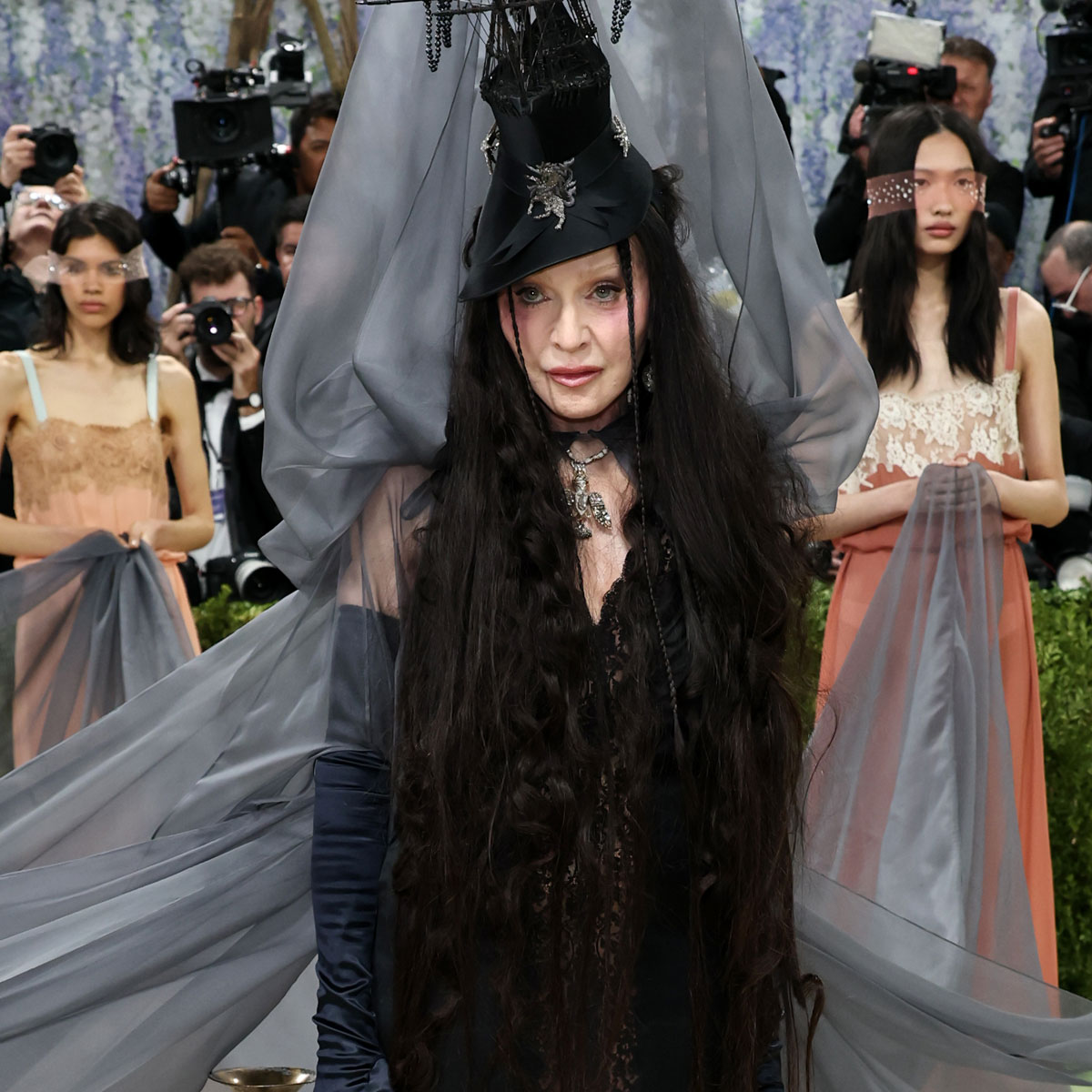
 Madonna is striking a pose at the 2026 Met Gala.
Indeed, the “Vogue” hitmaker dressed to impress at the annual fundraising event at the Metropolitan Museum of Art in New York City May 4.
Staying…
E! Online (US) – Top Stories

 Hold on tight—because Suki Waterhouse is rocking the Met Gala 2026.
The Daisy Jones & the Six actress enjoyed a stylish outing at New York City’s Metropolitan Museum of Art May 4, stepping out on…
E! Online (US) – Top Stories