Billy Bob Thornton said he was working some country music. Now we know the details. Continue reading…Country Music News – Taste of Country









Billy Bob Thornton said he was working some country music. Now we know the details. Continue reading…Country Music News – Taste of Country
Reading Time: 2 minutes
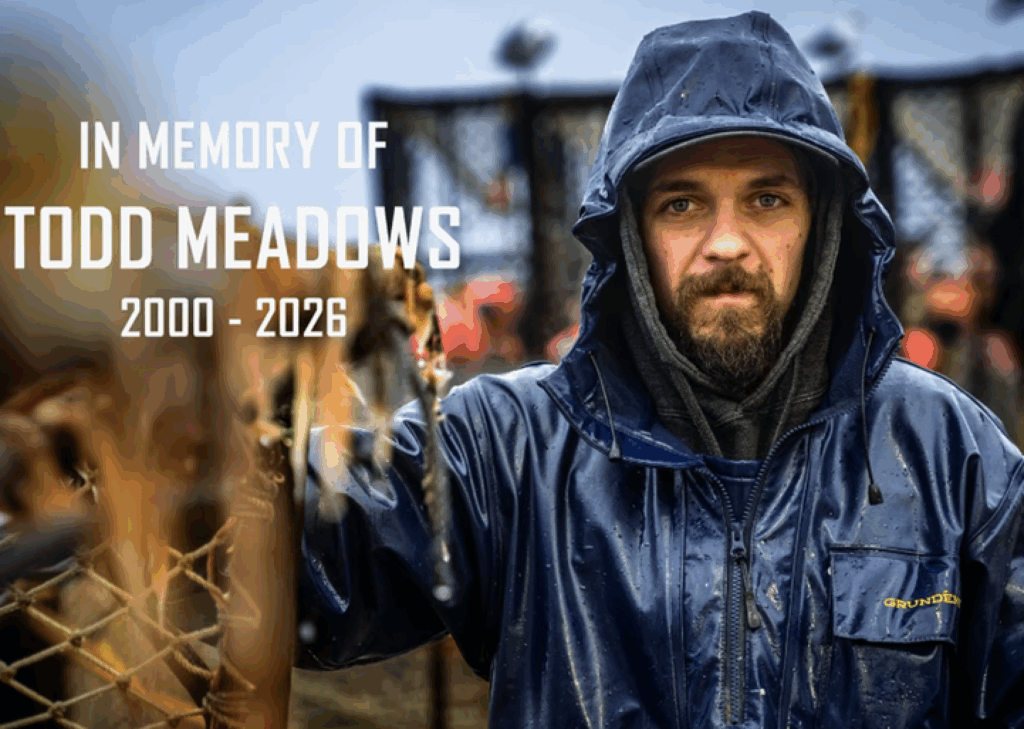
As we reported back in February, Todd Meadows — a cast member on the popular Discovery reality show Deadliest Catch — was killed during filming.
He was just 25 years old.
Now, the first footage of Meadows’ final days aboard the Aleutian Lady has been released.
The 25-year-old rookie fisherman appears in the Season 22 premiere of Deadliest Catch, speaking enthusiastically about working in Alaska after years of wanting the opportunity.
In footage obtained by TMZ, the deckhand openly acknowledged just how dangerous life at sea could be only days before his tragic death while filming the Discovery series.
Eager to hit the high seas in order to support his wife and three kids, Meadows made some heartbreaking comments about finally living out his dream.
“It’s gonna be fun,” Meadows says in the footage. “I’m just fortunate that I fell in love with it.”
That quote hits a whole lot differently now.
Meadows was killed after falling overboard while crabbing in the Bering Sea off the coast of Alaska.
Cameras were reportedly rolling at the time of the accident, though Discovery has already confirmed the footage will not air.
The tragedy marked one of the most devastating moments in the long history of the franchise.
According to accounts shared after the incident, Meadows became entangled while inside a massive crab pot and was pulled into the freezing water during operations aboard the Aleutian Lady.
Crew members desperately attempted to rescue him and performed CPR for an extended period of time after retrieving him from the ocean.
His official cause of death was later ruled drowning with probable hypothermia.
The Season 22 premiere reportedly opens with footage of Meadows reflecting on the magnitude of finally making it to Alaska for the job.
The episode also includes an emotional tribute card honoring Meadows following news of his death.
Friends, family members and fellow fishermen have continued mourning the young deckhand in the months since the accident. Captain Rick Shelford previously described Meadows as someone who “quickly became family” aboard the vessel.
Meanwhile, the U.S. Coast Guard continues investigating the fatal incident.
Deadliest Catch has always marketed itself around the brutal realities and dangers of commercial crabbing.
But for viewers watching Meadows smile excitedly about the adventure he was about to begin, the season premiere is likely going to feel far less like entertainment and far more like a heartbreaking goodbye.
Todd Meadows: Final Days of Late ‘Deadliest Catch’ Star, 25, Revealed In New … was originally published on The Hollywood Gossip.
The Hollywood Gossip

An artist’s rendition of the proposed Watana Dam on the Susitna River. (Image courtesy Alaska Energy Authority)
For decades, the Susitna–Watana Hydroelectric Project has occupied a liminal space in Alaska’s energy conversations — too large, expensive and controversial to move forward, yet too potentially transformative to fully dismiss. In many ways, it has become shorthand for the state’s uneasy relationship with mega-projects that promise to reshape Alaska’s future but struggle under the weight of their scale and cost.
If built, the project would primarily serve the Railbelt electric grid stretching from Homer to Fairbanks — home to roughly three-quarters of Alaska’s population and the majority of the state’s electricity demand — and could ultimately supply a substantial share of that system’s power needs for generations.
Historically, momentum behind the project has tended to parallel moments of energy insecurity, including the energy shocks of the 1970s and the fuel price spike in 2008. Today, similar pressures are beginning to re-emerge, particularly around the adequacy, affordability and long-term security of the Railbelt’s natural gas supply.
I will admit that in the past, my view of the Susitna project has been ambivalent at best, and at times skeptical. But over the last several years, the broader landscape surrounding the project has shifted significantly. Given those changes, I believe the project deserves one last serious reconsideration before Alaska closes the door on it — likely for good.
In the 1970s and early 1980s, the original Susitna project progressed through years of study and design before ultimately stalling out in the mid-1980s as economic conditions changed. With low-cost Cook Inlet natural gas readily available, the need for a project of Susitna’s scale diminished, and the Railbelt instead embarked on a path centered on gas-fired generation.
At the time, this shift arguably made sense. Gas was abundant, relatively inexpensive and well-matched to the scale and structure of the Railbelt grid. That made hydroelectric projects like Susitna — and even the much smaller Bradley Lake Hydroelectric Project — among the more expensive options available. Bradley was ultimately constructed, but only after narrowly securing legislative approval by a single vote, reflecting just how difficult the economics were to justify at the time. In 1980s dollars, natural gas cost on the order of 2 cents per kilowatt-hour, while power from Bradley Lake was roughly double that.
This history also helps explain why Bradley Lake was developed outside the conventional utility regulatory model overseen by the Regulatory Commission of Alaska. The project was pursued as a long-term infrastructure investment rather than through traditional least-cost planning processes.
While Bradley Lake squeaked by, those same economics ultimately doomed the much larger Susitna project during that era. But that calculus has not withstood the test of time. Hydropower prices have remained relatively stable, while natural gas prices have increased significantly and are expected to continue rising.
The same dynamics that have defined Cook Inlet gas over the past half century would apply to North Slope gas as well, just on a larger scale. The moment we turn on that tap, we begin drawing down a finite resource — one whose cost and availability will inevitably change over time as supplies diminish and prices remain tied to broader market forces.
Against that backdrop, it is not surprising that the Alaska LNG gas line and Susitna have often been seen as competing priorities, vying for the same pool of state resources and political bandwidth. But they are not, in fact, competing choices. These projects operate on different tracks and could be complementary.
Susitna is, at its core, an in-state investment – tied to Railbelt demand, local economic development and long-term price stability. Alaska LNG, by contrast, is driven largely by access to external markets, with in-state benefits a byproduct of that. Both may have a role to play, but they are not solving the same problem.
At the beginning of this legislative session in January, the Alaska Energy Authority quietly delivered its required annual update to the Legislature on the Susitna–Watana Hydroelectric Project. The update was just two pages long. In it, Executive Director Curtis Thayer described how AEA has ceased active efforts on the project, focusing instead on archiving the extensive body of work completed to date and effectively placing it on the shelf alongside the more than 3,000 reports compiled during the original Susitna licensing effort in the 1980s. This is the directive the Authority has been given, and it is complying.
However, the broader energy landscape facing the Railbelt today looks very different from the one that existed when the project was last seriously pursued. Over the past decade, three major shifts have materially changed the conversation.
First, the Railbelt today can no longer rely on Cook Inlet gas. This resource — which accounts for the vast majority of heating in Southcentral Alaska and roughly 70 percent of electricity generation on the Railbelt — is not disappearing overnight, but it is steadily declining. Production from existing fields is expected to taper year by year, and utilities have been put on notice that Hilcorp Energy, the basin’s primary producer, is not interested in entering into new long-term supply commitments. That places growing pressure on utilities to secure alternative sources. The urgency of this challenge cannot be overstated; it is sucking up a great deal of the oxygen in boardrooms and halls of Juneau right now.
Second, the federal policy landscape has changed in ways that could be a game-changer for Susitna’s economics. The clean energy tax credit framework created under the Inflation Reduction Act, and since partially preserved on a bipartisan basis, now provides technology-neutral incentives for large hydropower projects. Perhaps most significantly for Alaska, where much of the energy system is owned by public and cooperative utilities, these entities can now – for the first time – access the credits directly through a cash-equivalent “direct pay” mechanism.
In practical terms, these incentives could offset on the order of 50 percent of total capital costs. For a project like Susitna, that could amount to several billion dollars and substantially alter the financial outlook. Although the up-front costs would still be significant, reducing the capital burden could materially lower rates – especially during the initial financing period.
Third, the demand outlook is beginning to change. For much of the past decade, utilities across the country, including those on the Railbelt, have operated in an environment of flat or declining demand. That trend is now reversing. Electrification of heating and transportation, along with the rapid growth of power-intensive data centers, is creating the first credible expectation of sustained load growth in years — and with it, the potential to fully utilize the project’s output. For large, capital-intensive resources, that expanded revenue base matters.
Taken together, these developments do not guarantee that Susitna makes sense. But they do suggest that many of the assumptions underlying earlier decisions to shelve the project warrant reconsideration.
What would the Susitna project mean for the Railbelt? It would not be a marginal addition. At full buildout, it could generate on the order of 2.5 to 3 million megawatt-hours annually — enough to displace roughly 60 to 80 percent of gas-fired electricity generation on the Railbelt, depending on system growth and future demand.
Building out Susitna and its associated transmission infrastructure would also provide an important new anchor for the Railbelt’s long and relatively fragile grid, strengthening reliability and improving the ability to move power between regions. In many ways, this reflects the project as originally envisioned — a foundational asset around which a more interconnected Railbelt system could evolve.
But today, there are additional benefits not necessarily envisioned half a century ago. Susitna could place the Railbelt in a much stronger position to integrate variable renewable energy sources like wind and solar at scale, both by enabling greater interregional movement of power and because the reservoir itself could function much like a large energy storage system — allowing water to be held back when renewable generation is abundant and converted into electricity when the wind is not blowing or the sun is not shining.
It could also begin to reshape heating demand. If electricity prices fall while natural gas prices continue to rise, consumers may increasingly shift toward electric heating technologies such as heat pumps. That, in turn, could increase electricity sales, spread fixed system costs across a larger base of consumption, and potentially reinforce a virtuous cycle of higher system utilization and lower rates — even without the addition of large new industrial loads such as a data center.
Of course, we cannot pretend there are no trade-offs. No energy source is entirely environmentally benign. Fossil fuels require extraction, transport and combustion, with associated emissions and exposure to volatile global markets. Wind and solar carry their own challenges related to land use, materials sourcing, intermittency and project lifespan. Hydropower is no different, and its environmental and social impacts must be weighed carefully.
In particular, the legacy of major dam projects constructed during the early and mid-20th century still shapes public perceptions today. Many of those projects fundamentally altered landscapes and ecosystems, often with profound consequences for both communities and the environment. That history continues to influence how many Alaskans — especially environmentally-minded residents — view projects like Susitna.
But much has changed since the era of large dam construction in the United States. Modern licensing requirements are far more rigorous, and advances in hydropower design — from fish passage technologies to flow management and environmental mitigation — have meaningfully reduced many of the impacts associated with earlier projects.
Canada, in particular, has continued to build out large-scale hydropower, with many newer projects incorporating Indigenous ownership, revenue-sharing and long-term partnership structures. For example, the Site C Dam on the Peace River in British Columbia entered full commercial operation in 2025. It is substantially larger than the proposed Susitna project and is a good example of both Canada’s continued investment in large hydro and a more modern approach to structured, negotiated forms of community participation and benefit-sharing.
The question, then, is not whether Susitna would be impact-free. It is whether the trade-offs it presents look different today than they did in the past, especially given modern environmental standards and evolving approaches to collaboration and mitigation. Could Alaska Native landowners, resource agencies, utilities and conservation organizations work together to shape a project that minimizes environmental impacts and potentially even improves aspects of the salmon fishery? I believe that is possible, given the growing urgency of the Railbelt’s long-term energy challenges — issues that ultimately transcend the traditional sides of this debate. After all, there is some truth to the old adage about never wasting a good crisis.
Sometimes, decisions are made through inaction — and this could be one of those moments. There is a clearly defined timeline to take advantage of federal tax credits for hydropower, and given how long it takes to develop projects of this scale there is little time to lose. Delay, even by a year or two, could place the project beyond the reach of those incentives.
Susitna has always been envisioned as a project requiring significant state investment. It is simply too large for any single Railbelt utility — or even all of them collectively — to finance on their own. But there may be a different path forward. Historically, projects of this scale were built by governments. Today, they are increasingly advanced through public-private partnerships, and that model may be worth exploring in Alaska as well.
Ideally, the next step would be to finalize the licensing process so the project could be positioned for development under whatever funding mechanism is ultimately pursued. That is the clear and logical next step. But doing so would require tens of millions of dollars, and at least for now, no funding for that effort has been included in the FY27 state budget.
But even absent state funding, the Alaska Energy Authority is already well-positioned to take a more modest next step. The state has invested heavily in dozens of studies to understand the resource, the engineering and the environmental considerations. That work has value — and we own it. Rather than placing those studies on a shelf, AEA could package that body of work and test the market through a request for information or proposals aimed at gauging private-sector interest in moving the project forward.
This would not be a commitment to build. Any concrete next step on the project would require continued public input through well-established permitting processes. But it would be a way to learn. The private sector is, by necessity, disciplined — if the project can be structured in a way that makes sense, there will be interest. If not, that is also valuable information. Either way, it would provide clarity that Alaska does not currently have.
There is an obvious recent precedent for this approach. The Alaska LNG Project has relied on a similar model of testing commercial interest and allowing that response to help guide next steps. A comparable approach for Susitna could allow the state to keep the project in play without committing to full-scale development.
At a minimum, this is about preserving optionality. The immediate decision before us is not whether to build Susitna, but whether to take reasonable incremental steps to keep the project viable while Alaska evaluates its long-term energy future. That seems like a prudent course of action — before the opportunity slips away for good.

There are plenty of lesser-known regional fast food chains that you should be paying attention to, including a beloved one in Tennessee and Virginia.

Food Republic – Restaurants, Reviews, Recipes, Cooking Tips

Watkins Glen International (Watkins Glen, N.Y.) — Carson Hocevar didn’t spend all that much time in a dapper gray suit Monday night, but it was certainly a little bit of a new look for someone who performs best in a fire suit. How in the world did the 23-year-old Hocevar get invited to the 2026 Met Gala? “They called NASCAR and asked,” Hocevar told me Friday after truck series qualifying at Watkins Glen. “They watched [me win] Talladega and must have saw the Chili’s suit and thought I was into fashion with how crazy our suits get and invited me. “It was a great time.” It’s one thing to be asked to go, but once someone is asked, how do they arrange a stylish suit in such a short period of time? Enter Cassidy Towriss, the Cadillac F1 team chief brand advisor who is married to Dan Towriss, CEO of TWG Motorsports, the parent company of Spire (the team Hocevar drivers for in the NASCAR Cup Series). He sported a Christian Dior suit. “She knew exactly who to hook me up with,” Hocevar said. “I went to Texas for the race [last weekend] and went and got fitted and got everything. She was a lifesaver in the whole deal.” Hocevar said they had many options for the suit. “It was luckily that my favorite was the gray one and it was the first one [I tried on]. And I didn’t want to be like, ‘I like the first one’ because they are going to think I just don’t want to try anymore on. … They all liked the first one. “They handled everything. I was like, ‘I have no preconceived notion, I don’t know what I’m supposed to do. You just take care of me.” Did Hocevar, who certainly is a free spirit and could be considered a little awkward, ever wonder if he could show up in a fire suit? “It would be funny,” Hocevar said. “I would have been a lot more comfortable if I just had a sponsor hat on.” Hocevar noted on the E! telecast that he would love to meet Sabrina Carpenter. He did not, but he said he met plenty of celebrities. He wouldn’t mention a favorite. “It was shocking how many people knew of NASCAR and knew of me,” he said. “There was a bunch of people I got to meet. It was just an opportunity and experience that I never thought I would go to and enjoy. “It’s a total different universe and world than I’m used to.” Having seen his followers jump on the social channels certainly doesn’t hurt either. But maybe impressing one of his biggest fans marked his biggest achievement of going to the gala. “I don’t know if I made my mom as proud driving any vehicle … compared to how proud she was and excited I was on her favorite channel,” Hocevar said. “The only uptick would maybe be a Hallmark Christmas special. “If I was on that, that might top the Met Gala. But she was super excited.”Latest Sports News from FOX Sports
Reading Time: 2 minutes
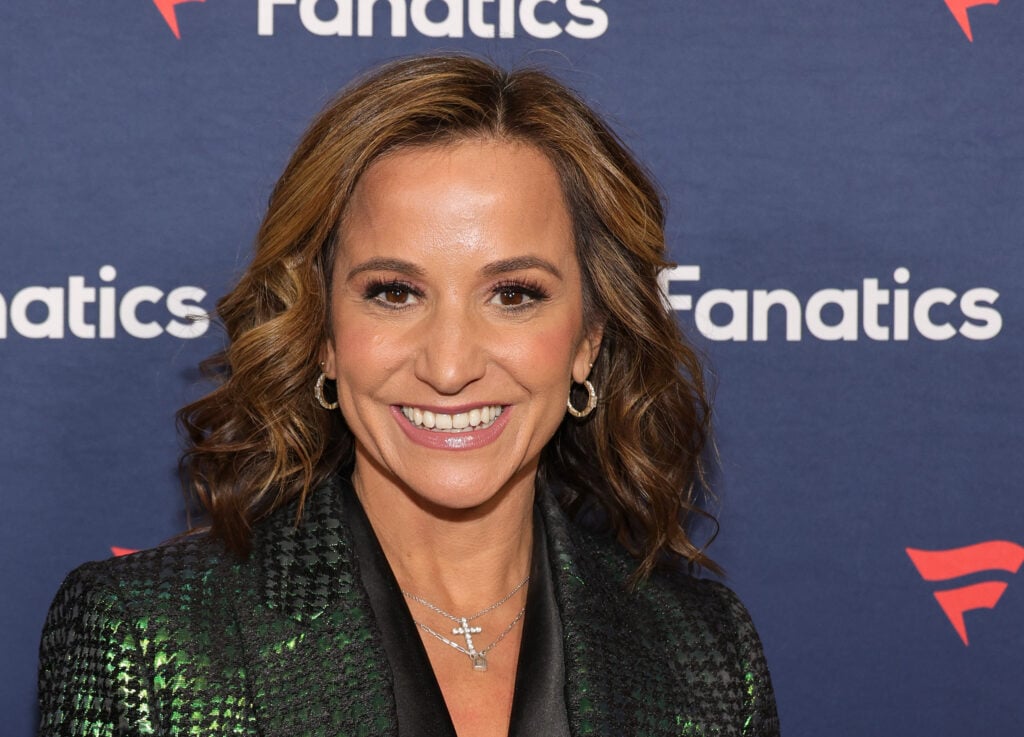
For weeks now, the Mike Vrabel-Dianna Russini situation has been the biggest scandal of the NFL offseason.
And while we still don’t know if there was anything sexual going on between these two, it seems that for a couple of married people, they’ve been spending a LOT of time together.
We already know that Vrabel and Russini rented a boat together while she was pregnant with her first child, and now it looks as though they also put in an awkward appearance on Barstool Sports together.
The irreverent outlet was hosting a Family Feud-style remote game show during the pandemic, and Russini gave a response that seems even more cringe in retrospect.
“OK, Dianna, what is something you might close your eyes to do?” the former Athletic reporter was asked.
“When you have sex with your husband or wife,” Dianna replied, as the host pointed out that the questions were taken from the kids’ edition of Family Feud.
The clip resurfaced and went viral this week.
And for obvious reasons, Barstool founder and CEO Dave Portnoy, who is a Patriots fan, was not a fan of the footage.
“What the f–k is this clip! I disavow! There is no way this can be real,” he tweeted. “Can we just play some football! Hut hut! Blue 42! Blue 42! Hut! Hut!”
This is not the first time that Russini made remarks about her husband, Shake Shack exec Kevin Goldschmidt, that rubbed some folks the wrong way.
“I’m married to someone average. I don’t post a lot about him. If I was married to someone beautiful, I’d over-post too,” she said during an ESPN appearance in 2021, just months after she and Goldschidt tied the knot (via Page Six).
“So the guy’s got a heart of gold, and here I am on national TV killing him/ Look, we’re average together, but he makes me above average because he married me,” she continued, adding:
“I am so sorry, I need to really stop killing my husband on television. I’m going to be divorced by Christmas!”
Obviously, Russini was joking. But those jokes hit differently in the weeks since photos of Russini hugging and holding hands emerged (both parties are still married to other people).
“I’ve had some difficult conversations with people that I care about — my family, the organization, the coaches, the players,” the New England Patriots head coach said in a statement on the issue.
For her part, Russini resigned from her post at The Athletic shortly after the photos went public.
We will have further updates on this developing story as new information becomes available.
Dianna Russini Jokes About Bad Sex With Husband In Front of Mike Vrabel: Watch and Cringe! was originally published on The Hollywood Gossip.
The Hollywood Gossip

The lingering NFL offseason question is on the way to being answered: quarterback Aaron Rodgers is taking a visit and is reportedly likely to re-sign with the Pittsburgh Steelers. But the catch is simple – what’s in it for Rodgers to re-sign? Well, that’s the question that Colin Cowherd wants the answer to, defending the future Hall of Famer’s potential ask for a pay bump in 2026. “He wants more money and the Steelers are going to cave. He deserves more money,” Cowherd said on “The Herd.” “You can’t ask a Hall of Fame quarterback in back-to-back years to give you two freebies. Last year was a Costco free sample year. This year, I need you to buy in bulk.” Rodgers, who turned 42 in December, had a relatively solid 2025 campaign in his first year in Pittsburgh. He finished the season with 3,322 passing yards, 25 total touchdowns and seven interceptions, leading the Steelers to a 10-7 record and an AFC North title and a playoff spot. Additionally, the Steelers’ offense drastically improved under Rodgers, including yards-after-catch and red zone touchdowns. However, Rodgers made a relatively small salary last season. He had a $13.65 million salary in 2025, which ranked outside the top 20 among quarterbacks. Now, it appears Rodgers is looking to make a bit more than that as he plans to fend off retirement for another year. But beyond salary, Pittsburgh does have some enticing things to sell Rodgers on to return for 2026. The Steelers hired Mike McCarthy, who was Rodgers’ head coach for several seasons with the Green Bay Packers, to replace Mike Tomlin. They also upgraded the offense, adding veteran running back Rico Dowdle and wide receiver Michael Pittman Jr. before selecting offensive tackle Max Iheanachor and wide receiver Germie Bernard in the NFL Draft. Still, Cowherd doesn’t think that the improvements Pittsburgh has made on offense should give the Steelers power at the negotiating table with Rodgers. “Most NFL teams have a three to five-year plan at quarterback, and the Pittsburgh Steelers treat quarterback like it’s a slot corner or an off-ball linebacker,” Cowherd said. “[They say,] ‘We may get to it at the trading deadline, let’s see what plays out in the preseason.’ They treat quarterbacks with absolutely no urgency at all.” Rodgers has been a bit complicit in this, though. He has also been slow to give Pittsburgh an answer, which was originally expected by the NFL Draft, but it never came. Now, the 42-year-old quarterback has until July 22 to decide due to Pittsburgh using the UFA tender. The tender gives the Steelers exclusive negotiating rights through minicamp and up to July 22 unless Rodgers signs with another team while still a free agent. The speculation is that Rodgers will likely re-sign with the Steelers after his visit on Friday. Ideally, re-signing a quarterback familiar with the playbook, and pairing him with a coach he has a long-standing relationship with, would be a big question answering for Pittsburgh. However, it’ll be up to both sides to find common ground ahead of Rodgers returning to Pittsburgh.Latest Sports News from FOX Sports

ANAHEIM, Calif. — When White Sox special assistant David Keller made his annual scouting trip to Japan last August, Munetaka Murakami was among a list of top targets. But the odds of the White Sox actually signing the 25-year-old Nippon Professional Baseball superstar? “I thought it was like a 1% chance,” Keller, who runs Chicago’s international scouting department, told me this week during the team’s series against the Angels. “Realistically, just given who he is, the talent level, the system that I still felt was forming [with the White Sox]. All of those things, him desiring to come to the South Side of Chicago, those are things that are unknown.” Nine months later, Murakami is already one of Major League Baseball’s top home run hitters. The Japanese sensation has now mashed 14 homers through his first 37 games and became the first rookie since Trevor Story in 2016 to enter May with at least a share of MLB’s home run lead. To the surprise of almost everyone, Murakami’s impact is happening in a Chicago White Sox uniform. “I think it raises our profile in Japan,” Keller said, “in a way that’s probably immeasurable.” Getting a foothold in the country figured to be a long-term endeavor for Keller, who was a longtime Mets scout before joining the White Sox in September 2024. At the time of Keller’s hiring, the White Sox did not have a full-time scout in Japan and were in the midst of the worst season in modern baseball history. Keller and general manager Chris Getz knew that establishing a presence in the Pacific Rim would require patience, likely years, to make inroads. The process accelerated when they hired a full-time NPB scout, Satoshi Takahashi, last June. A few months later, Keller took his summer trip to Japan. By then, Murakami had already been on the MLB radar for years. At 22 years old in 2022, the superstar slugger set the single-season NPB record with 56 home runs while being named the Central League MVP for the second straight year. But he was a polarizing talent. While Murakami remained a powerful force in the ensuing years, he was unable to replicate his record-setting season. Last year, injuries limited him to 56 games. He still launched 22 home runs despite the missed time and clearly possessed the ceiling to develop into one of MLB’s top power threats, but a high strikeout rate and defensive limitations figured to limit the corner infielder’s suitors and lower his floor. His three-true-outcome profile — homers, walks, strikeouts — made him unlike other Japanese stars who made the MLB leap, which had been a dream of Murakami’s since he was a child, and therefore made him difficult to project. But when Keller traveled to Japan last season, as he had done annually in his role as a Mets scout, something caught his eye. “He had really dedicated himself to getting into better shape, to moving better on the baseball field and really making the most of his ability, which for years prior had stood out,” Keller said, “because the NPB game is slightly different than the major-league game.”While the top home-run hitters in MLB routinely eclipse 50 in a season, Murakami’s 56 homers in 2022 represented a significant outlier in Japan. That year, he was one of only three NPB players with at least 30 home runs. Since he set that single-season mark, no NPB player has hit more than 41 home runs in a season.”There aren’t players quite like him,” Keller said.Teams can’t speak directly to NPB players until their posting window opens, so they talk to people who know the players, watch them pregame, see how they interact in game with teammates and coaches and try to gather as much information as they can through different means.Even beyond the power, the White Sox liked what they saw. “When you see a guy who’s genuinely liked, who’s taking care of his body and has the makeup and character to navigate the ups and downs of the game combined with significant talent, you start to get pretty excited,” Keller told me. “I wanted to really study the at-bats and see what it looked like, and I felt comfortable telling Chris that we have a guy here who has big-time power, who’s going to have good at-bats, who’s going to walk. And, yes, that’s going to come with some strikeouts, but I think that the risk is a worthy endeavor.” An unlikely match When Chicago’s 60-win season ended last year, Murakami’s name came up again during White Sox leadership meetings in October. But the projected salary range for the top NPB talent was still well beyond where they would realistically go. Despite Murakami’s risky profile, most prognosticators thought he would land a long-term, nine-figure deal. His power potential seemed too high, the chance to secure a 26-year-old superstar too tantalizing, for some team not to take a chance. Over time, though, it became clear to the White Sox that Murakami’s projected market wasn’t materializing as expected. That opened a path for the White Sox to make a multipronged push. Chicago’s analytics department and director of hitting Ryan Fuller studied Murakami’s swing meticulously. They felt confident they could help him make the adjustment to big-league pitching. The White Sox’s front office stayed in touch with Murakami’s agency at Excel and effectively sold the plan to owner Jerry Reinsdorf. Still, the White Sox were coming off a second straight last-place finish and a fourth straight season missing the playoffs — and they were still operating with a bottom-five MLB payroll. They also had a geographical disadvantage, though they didn’t think playing on the coast mattered as much to Murakami as it did to other Japanese players. “Again, I think I’d be lying to you to tell you I thought we were going to be significant players,” Keller said. “I was really hopeful that in a couple of years we were going to be major players in the NPB market.” But the White Sox kept Murakami in their conversations as they explored the corner infield market, and they had factors working in their favor. Most importantly, there were only a handful of teams looking for a slugging first baseman. The Mariners answered their need when they re-signed Josh Naylor in the middle of November. Weeks later, the best power hitter on the market came off the board when Kyle Schwarber returned to Philadelphia. Days later, Pete Alonso went to the Orioles, and the Mets countered by signing Jorge Polanco. “Maybe at some point the music would stop, and there wouldn’t be enough chairs,” Keller said. “And maybe we would still have a chair open.” It didn’t hurt that Shingo Takatsu, who pitched for the White Sox in 2004 and 2005, was Murakami’s longtime manager in Tokyo and spoke glowingly of his experience to the young slugger. Ultimately, the deal that Murakami signed — two years for $34 million — came in well below projections and reflected teams’ hesitancy. His floor scared most teams away from pursuing the ceiling. Not the White Sox. They added the slugger on a low-risk, high-reward deal that accelerated their plans to establish a presence in Japan and added to their growing list of intriguing young talents. Already, Takahashi is frequently sending Keller photos from Japan of people walking the streets in White Sox hats, something that never would have been prevalent in previous years. When Murakami was introduced in his No. 5 White Sox uniform on Dec. 22, Getz still couldn’t believe it. He did not mince words when describing his expectations. “We believe that Mune is going to be a star in this game,” Getz said from the dais. Through the first month of the season, it is looking that way. Murakami has the highest whiff rate in MLB, but he also has the highest hard-hit rate and is launching home runs at such a prolific pace that his high strikeout numbers haven’t doomed him. He entered Friday trailing only Yankees superstar Aaron Judge for the MLB lead in home runs. And while nearly all of Murakami’s slug has come from homers — he didn’t hit his first double of the year until his 35th game — he rarely chases and has the ninth-highest walk rate in MLB, which has allowed him to log the highest on-base percentage among all qualified White Sox hitters. “I always thought it would play,” White Sox pitcher Anthony Kay, who pitched against Murakami in Japan, told me. “I feel like, as baseball players, we see when guys are talented, and I feel like everyone over there saw it and knew that it would transfer over to the big leagues. But for him to be able to do it at such a quick rate and not really have a transition period is special.” It’s only May, but Murakami is currently on a 61-homer pace. He is the only player in MLB history to post at least 10 homers and 20 walks through his first 25 games, and he’s attracting more and more believers with every blast. On Monday in Anaheim, a group of roughly 20 fans ran behind the visitor’s dugout to try to get Murakami’s attention, some carrying signs, one wearing a Team Japan jersey, another donning his Yakult Swallows NPB uniform. The blemishes in Murakami’s game did not bother the White Sox, and their recent lack of success did not deter Murakami from choosing them, a decision he felt even better about after Cubs players Seiya Suzuki and Shota Imanaga expressed to him how much they enjoy the city of Chicago. “My main priority was to find the best fit,” Murakami said through his translator at his introductory press conference. “Whether the contract was long or not wasn’t really a factor. I just really believe in the city and the organization, and I’m really, really happy to be here.” ‘I’m able to be fully who I am’ In the middle of April, sidelined by arm fatigue, fellow NPB product Tatsuya Imai acknowledged the difficulties he was experiencing both on and off the field trying to adapt to his first season stateside. Conversely, as the Houston Astros pitcher struggled to adjust to the change, Murakami appeared to be fitting in seamlessly in his new environment. “People experience the differences, cultural or environmental, but for me there’s nothing about that,” Murakami told me this week through his interpreter, Kenzo Yagi. Despite the language barrier, he has found it easy to be himself. “My teammates are really communicating to me a lot,” he continued. “They listen very well, they talk very slowly, they open up with so much communication that I’m really comfortable making mistakes in English. I’m really happy that they have my back and that I’m able to be fully who I am in the clubhouse, and that’s why I’m really comfortable.” There’s guesswork involved for every MLB team when it comes to projecting how a player might handle an international move. But when the White Sox got a chance to speak to Murakami via Zoom last winter, they felt more comfortable. Manager Will Venable told me that any worries about the transition were eliminated on day one of spring training when he saw the way Murakami “chopped it up” with his teammates. Murakami’s willingness to move from third to first base, and his response to coaching and feedback, further eased any potential concerns. “He’s just been great in every way imaginable,” Venable said. Murakami is constantly working on his English, which his teammates say has already gotten better. He leans on his interpreter during hitters’ meetings, but he’ll occasionally deliver one-liners. He is finding different ways to showcase his personality and engage with those around him, even as he learns the language. When he arrived at his locker at Camelback Ranch in the spring, Murakami laughed it off when his first name was mistakenly spelled “Munetaki,” posting the picture to his Instagram story with a tongue-out laughing emoji. The White Sox attempted to make the transition as comfortable — quite literally — as possible for Murakami, who extolled the benefits of the team adding a bidet to the clubhouse. “It’s good for the environment, too,” Murakami said with a grin. “Everybody uses too much toilet paper.” White Sox players continue to praise Murakami as a teammate. He tries to teach them Japanese every day, and they’re proactively going to him with different phrases. “I know a few words,” infielder Chase Meidroth told me. “We’ve had some sushi dates. We’ve gone out a few times.” How does Murakami know where to go? “I ask a lot of people that have been around the city,” Murakami told me with a grin. “But mostly I just search on websites.” On the White Sox’s latest road trip, Meidroth was among a group of players who joined Murakami for an authentic omakase sushi experience — where a chef creates a personalized, multi-course meal — on an off day in San Diego. Murakami was hoping to show them how to properly put soy sauce on the fish. “Aside from being a good baseball player, it’s really fun playing with him,” Meidroth said. “Obviously, at first it helps with Kenzo, but I think his English has gotten a lot better. He understands a lot of words, and I pick up on stuff that he says too. You just kind of get to that point where you’re with each other every day, you start to pick up on stuff.” That applies to other languages, too. Cuban infielder Miguel Vargas was surprised when he heard Murakami use Spanish phrases with him. “Right now, we don’t pick any language,” Vargas told me. “We mix all three. My Japanese is not that good, but his Spanish is good. He tries and has a great attitude.” Quickly, Vargas got a sense of how much Murakami cared — about winning, yes, but also about those around him. “He always comes and says, ‘Hey, good AB, how you feel? How do you look at this pitcher?’” Vargas said. “You got a tough day, he comes and says, ‘Hey, tomorrow, we got ‘em.’” ‘Freakish’ power Early in spring, White Sox shortstop Colson Montgomery described Murakami’s power as “freakish.” Murakami has spent the last month demonstrating why. There was the 451-foot home run in Arizona that gave him five straight games with a homer, the 425-foot left-on-left blast that fell into a tree in right field at Sutter Health Park and the 429-foot blast off Angels standout Jose Soriano on a 98.1 mph fastball up and out of the zone. But it was another deep drive that many of Murakami’s teammates and coaches have singled out as the most breathtaking. On April 17, Elvis Alvarado left a full-count 98.2 mph fastball over the heart of the plate that Murakami sent for a ride. A’s center fielder Denzel Clarke took a few courtesy steps toward the warning track, but he knew the result. He looked up and watched the baseball disappear over the batter’s eye. There were questions coming in about Murakami’s ability to handle MLB velocity, but he’s answering them. He’s slugging .643 on pitches 97 mph or above. “He has this opportunity to see, like, ‘OK, what am I in Major League Baseball?'” White Sox hitting coach Derek Shomon told me. “I think if you bucket it in a way that you’re just saying, ‘This is the player you have to be,’ it can be very limiting. We don’t know, right? There’s a good hitter in there that obviously can launch but also is drawing walks at a ridiculously high clip because he’s not expanding. So, who knows, man? What we do know is the best version of it is pretty damn good.” The changes in his swing Murakami has had to make as he adjusts to MLB pitching have only been “micro-adjustments,” according to Shomon, primarily regarding his setup and first move to get him in the best position to launch. That, clearly, has not been a problem. Ten of Murakami’s 14 homers have traveled more than 400 feet, a number matched only by Judge, and his power and keen eye have made him one of MLB’s 20 best hitters by most advanced metrics. The version of Murakami that Kay sees now differs a bit from the one he saw in NPB. “I’d say he matured a little bit in his approach,” Kay said. “He knows he’s not going to be pitched a lot in the zone, so his eye has definitely gotten better from what I saw in Japan.” He is patiently lifting a White Sox team that is less than a game out of a wild-card spot in the middling American League. Soon, decisions will have to be made. Murakami’s short-term pact with the White Sox helped alleviate the risk they assumed, but it also meant just two seasons with Murakami under contract. For now, they’ll keep enjoying a reality that never seemed possible. “Whether I’m on the road or flying, I’m trying to tune into every at-bat,” Keller said, “because he has a chance to do something pretty cool every time he’s in the box.” __ In “Touching Base,” we check on the top players and topics making headlines around baseball and what comes next.Latest Sports News from FOX Sports
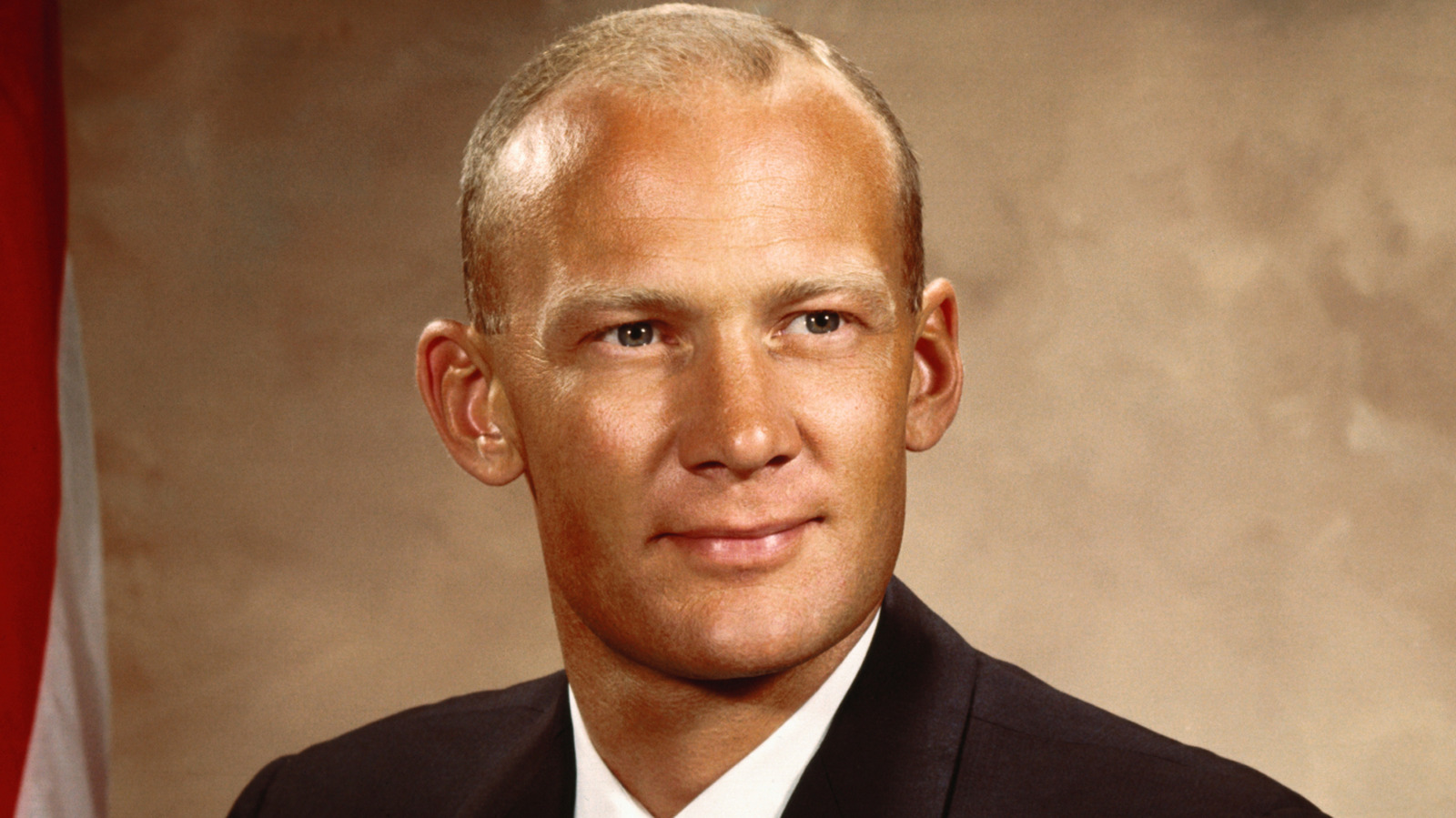
The world practically stood still on July 20, 1969, when Apollo 11 astronauts landed on the moon. Buzz Aldrin commemorated his historic steps with this drink.
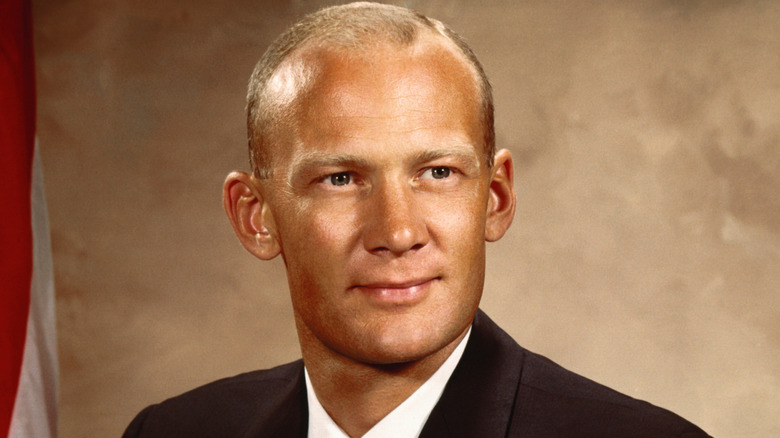
Mashed – Fast Food, Celebrity Chefs, Grocery, Reviews

Smoke from a wildfire at the entrance area of Denali National Park hovers on June 30, 2024, on the hillsides behind hotels and businesses serving tourists. (Photo provided by National Park Service)
The Alaska Legislature has voted to mandate a three-step disaster evacuation scale for use statewide, a move inspired in part by a miscommunication in a wildfire near Denali National Park.
The state House voted 39-1 on Wednesday to pass Senate Bill 192 and require that state and local officials use the terms “Ready,” “Set,” and “Go,” defined on maps by the colors green, yellow and red, when providing public information about evacuations from the path of a disaster.
People in a “Ready” area should begin packing for an evacuation and preparing their homes or property. Those in a “Set” area should be prepared to leave quickly, and those in a “Go” area should evacuate.
Because the Senate passed the bill 19-0 on April 24, the House’s action sends SB 192 to Gov. Mike Dunleavy for final approval or veto. The bill was sponsored by Sen. Jesse Bjorkman, R-Nikiski.
The Ready-Set-Go system is already in broad use within Alaska, but not universally.
Last year, Brenda Ahlberg, emergency manager for the Kenai Peninsula Borough, testified that during a wildfire in the Denali Borough, local officials used green to designate an area that should evacuate immediately.
That caused confusion among affected residents, she said.
Michelle Weston, fire chief in Girdwood, also spoke in support of the bill last year, stating that coordinated evacuation information is particularly important for travelers who may be moving through different parts of Alaska and are unfamiliar with local standards.
One standard would prevent confusion caused by different rules, she said.