Categories
Politics

Albany reels in ICE

Gov. Kathy Hochul and state lawmakers passed measures to limit federal immigration enforcement operations in New York.

DAYS THE BUDGET IS LATE: 51

CROWD CONTROL: State Democrats are aligned on reining in ICE — but there’s sharp disagreements over whether the measures will meaningfully impact the NYPD.

Gov. Kathy Hochul and state lawmakers passed a package of measures this afternoon that seek to curtail federal immigration enforcement agents’ operations in New York.

“Tom Homan can shove it,” Brooklyn state Sen. Andrew Gounardes said at a press conference this morning, referring to the Trump administration’s border czar.

The package aims to restrict the ability of police departments like the NYPD to control crowds while federal officers conduct immigration enforcement actions.

“If ICE or DHS ask a local police department to facilitate their operations — lock down the street, clear out traffic, cordon off an area, put up, ‘do not cross signs,’… those types of actions would no longer be allowed,” Gounardes said of the immigration package.

Also in the agreement: banning masks for federal and local law enforcement and creating a list of “sensitive locations” that ICE won’t be able to enter without a judicial warrant.

The slew of anti-ICE measures are just the latest effort by Democrats in blue states like New York to push back against the Trump administration’s aggressive immigration tactics.

But the push to prohibit local police departments from cooperating with federal immigration authorities is likely to prove messy on the ground — as evidenced by a recent fracas in Brooklyn.

A host of elected allies of Zohran Mamdani pointed fingers at the mayor and police commissioner Jessica Tisch earlier this month when the NYPD took steps to control a crowd of anti-ICE protesters who tried to obstruct federal officers that detained an undocumented man and transported him to Wyckoff Heights Medical Center.

The NYPD says officers were doing their job by responding to 911 calls about disorderly protesters — and they also say these new measures wouldn’t have had any effect on how they operated that evening in front of Wykoff. During those efforts, eight people were arrested due to scuffles with cops and attempts to block the federal officers’ exits. Videos depict a chaotic scene, with the NYPD seen throwing a protester to the ground.

But protesters say the NYPD’s efforts to control the crowd made it so the city’s cops, directly or indirectly, were supporting ICE and clearing a path for their movements.

Brooklyn state Sen. Julia Salazar, a key backer of the immigration measures, insists the new language from the state would’ve stopped the NYPD from interfering with anti-ICE protesters outside the Brooklyn hospital that day.

“Someone was quite violently taken into ICE custody by ICE agents,” Salazar said, recounting the incident. “Then they were taken to Wyckoff Heights Medical Center in Bushwick, and the police officers from the NYPD facilitated the entry and exit of those officers — which would be prohibited going forward.”

An NYPD spokesperson told Playbook the “legislation will not impact the NYPD because we do not engage in civil immigration enforcement, period.”

The actual language of the bill would bar any “informal agreement” with federal immigration authorities “under which an officer or employee may engage in or assist immigration enforcement, or otherwise may perform a function of an immigration officer.” The dispute over its actual effect prompts questions about the role of local cops to ensure order in the face of anti-ICE demonstrations, especially after similar protests turned deadly in Minnesota.

Mamdani’s spokesperson Dora Pekec said city policy already prohibits coordination between the NYPD and ICE and that “the Mayor supports this piece of legislation and has made clear that he believes ICE has no role in promoting public safety here in New York City.”

Tomorrow Mamdani will release a report – resulting from a February executive order – examining all city interactions with federal immigration enforcement efforts.

At a May 12 event hosted by the Association for a Better New York, Tisch slammed critics who said the NYPD was colluding with ICE at Wyckoff.

“NYPD officers, in the middle of the night, amid chaos outside of their control, did their job professionally and skillfully and made sure events did not spiral into a calamity,” she said. “The critics of the NYPD’s actions — those who would have us stand aside and call cops doing their jobs collusion – have lost sight of the lives at stake.”

The Wyckoff incident prompted rare public criticism of the Mamdani administration from left-leaning lawmakers who held an emergency press conference and wrote a letter decrying the NYPD’s actions that evening.

“They provided security for ICE,” City Council member Sandy Nurse, who represents the area, said of the incident.

In a statement, Hochul spokesperson Jen Goodman said the new law “would not ban local law enforcement from actions like crowd control in the interest of protecting New Yorkers.” — Jason Beeferman

FROM THE CAMPAIGN TRAIL

A Emerson College poll finds former City Comptroller Brad Lander is leading the Democratic primary against incumbent Rep. Dan Goldman.

POLL-A-PALOOZA: We’ve got the latest snapshots of the city’s most competitive primaries in a trio of surveys from Emerson College Polling for PIX 11 — rare outside polling in these races.

The biggest gap: Former City Comptroller Brad Lander, who’s challenging Rep. Dan Goldman, is leading by a whopping 34 points. The survey has Lander with 57 percent support, compared to the incumbent’s 23 percent. One in five likely Democratic primary voters are undecided.

Goldman’s campaign was quick to dispute the results: “This poll is not remotely close to an accurate read of this race,” campaign manager Simone Kanter wrote on X. “The data we’ve seen shows a dead heat after messaging.”

He went on to argue that the survey oversampled college-educated voters and young people, writing that the poll “is assuming an electorate that looks exactly like the once-in-a-generation turnout Mamdani mobilized when he was on the ballot.” (Mamdani has endorsed Lander in the race, which will be a test of the mayor’s political muscle.)

Emily Minster, a spokesperson for Lander’s campaign, said they are “taking nothing for granted.”

A recent internal poll from a pro-Goldman super PAC found the incumbent trailing Lander by 5 points. Goldman has been up on the air for weeks; Lander began advertising today.

The polls showed far tighter races in the other primaries for NY-07 and NY-12, which are being vacated by retiring Reps. Nydia Velázquez and Jerry Nadler, respectively.

In NY-07, state Assemblymember Claire Valdez has 23 percent support, followed by Brooklyn Borough President Antonio Reynoso with 21 percent. City Council member Julie Won comes in at 13 percent and public defender Vichal Kumar at 1 percent.

Valdez leads among Hispanic voters and is running about even with Won among Asian voters.

An eye-popping 43 percent of respondents are undecided — giving the campaigns a major opportunity to grow their support.

The race for NY-10 is competitive between state Assemblymembers Micah Lasher and Alex Bores, who come in at 22 percent and 20 percent, respectively. Kennedy scion Jack Schlossberg has 11 percent, while anti-Trump commentator George Conway has 10 percent and public health practitioner Nina Schwalbe has 3 percent. Around a third of respondents are undecided.

Recent surveys — nearly all of which have been internal polls — also showed a tight race, with Lasher and Bores toward the front of the pack. Earlier this year, Schlossberg had a slight lead in polls. Heavy outside spending has occurred in recent weeks in favor of Lasher, as well as groups both spending for and against Bores.

Mamdani has a strong approval rating in all three districts: 78 percent approve of him in the 7th, 79 percent in the 10th and 66 percent in the 12th.

The polls were conducted May 16-17 among likely Democratic primary voters. In the 7th, there were 350 respondents and a margin of error of plus-or-minus 5.2 percentage points. In the 10th, there were 450 respondents and a margin of error of plus-or-minus 4.6 percentage points. In the 12th, there were 425 respondents and a margin of error of plus-or-minus 4.8 percentage points. Madison Fernandez

NOT THERE: Democrats are feeling good heading into this year’s midterms. But good enough to not donate to battleground Rep. Laura Gillen?

Oath, a donor platform that measures which Democrats it would be most effective to support, shared new recommendations for which candidates should make the cut, our colleagues in D.C. reported this morning. Among those who fall into the do-not-donate category is Gillen, whose Long Island seat that she narrowly flipped in 2024 is widely considered a crucial 2026 contest for control of the House. In a memo, Oath rationalized that Gillen’s seat is “moving into safe Democratic territory” and “does not have a Republican opponent who even raised $100,000.”

However, it’s unclear how much Hempstead Receiver of Taxes Jeanine Driscoll, local Republicans’ candidate of choice, has raised. She entered the race in April — after the second fundraising quarter began — and has not filed a financial report with the Federal Election Commission. Driscoll’s primary opponent, Air Force veteran Marvin Williams, has raised close to $90,000 — most of which was self-funded.

Also adding uncertainty to upcoming elections is a pending case in the Supreme Court that could open the floodgates to massive political spending from the national parties and benefit Republicans.

“Laura Gillen is running in a fiercely competitive Frontline seat,” Democratic Congressional Campaign Committee spokesperson Riya Vashi said in a statement. “The DCCC is committed to ensuring Laura has the resources and support she needs to win this November.” Madison Fernandez

From the Capitol

New Jersey Transit is creating back up plans for increased traffic expectations during the World Cup games.

THE WHEELS ON THE BUS: The Port Authority of New York and New Jersey has spent months working with other agencies planning for “nightmare scenarios” involving waylaid trains and buses during the World Cup, its executive director said Thursday.

Those plans could come in handy given the history of heat-related problems in the region and a pair of fires that disrupted service in and out of Penn Station in the past week.

New Jersey Transit’s backup plan for waylaid trains is a fleet of buses to carry fans. But those buses also break down in the heat and will need to get through the Port Authority’s tunnels to reach MetLife Stadium where eight World Cup matches will be played. So the Port Authority is working on a backup plan for the backup plan, including freeing up lanes in the Lincoln Tunnel that normally go in one direction to go in another.

“It’s going to be July, it’s going to be hot, on any given day we have bus break downs because the engine gets too hot,” Port Authority head Kathryn Garcia told reporters following a board meeting today. “We need to be able to be very flexible.”

Port Authority Chair Kevin O’Toole said during the hottest day last week he was behind a bus that broke down in the Lincoln Tunnel. Within five minutes a tow truck was there and another bus came to pick up the passengers.

“We are going to anticipate certain breakdowns and hopefully we can do our best to accommodate the public,” he said. — Ry Rivard

FROM CITY HALL

Mayor Zohran Mamdani announced that New York City would offer 1,000 $50 tickets to World Cup matches.

NOTHING IN LIFE IS FREE: Mamdani announced a deal today to provide 1,000 World Cup tickets to New Yorkers at $50 a pop.

The mayor unveiled his discount ticket scheme this morning at a beer garden in Harlem, rattling off teams, players and moments from World Cups of yore before getting to the meat of his announcement.

“We’re so excited, frankly, because we know that there are so many New Yorkers who thought that there was no way they could afford to go to this tournament, and now there is that glimpse of an opportunity,” the mayor said.

But New Jersey Democrats were having none of it. They attacked FIFA – soccer’s global governing body – for the discounted tickets, which are only available to New York residents, even though the matches are being played in the Garden State.

“This publicity stunt does nothing to address the cost of tickets,” New Jersey Democratic Reps. Nellie Pou and Frank Pallone said in a joint statement.

New Jersey Gov. Mikie Sherrill’s spokesperson, Stephen Sigmund, said “FIFA not caring about costs for New Jersey residents isn’t new.”

FIFA said the agreement was between the local host committee and the mayor’s office, and that FIFA was only involved in ensuring the tickets went to fans who genuinely planned to attend rather than sell tickets.

New York and New Jersey officials have repeatedly sparred over how to run the upcoming tournament, despite being co-hosts. Most of that dust up to date has been over dueling bus and train services to get fans to matches. — Ry Rivard and Joe Anuta 

In Other News

SUITED UP: Mamdani’s top lawyer, Ramzi Kaseem, brings a history of suing the NYPD and defending high-profile civil liberties cases to City Hall. (The New York Times)

ICED OUT: A Manhattan parking garage removed federal vehicles after protesters alleged they were being used by immigration enforcement agents. (Gothamist)

SHEIK UP: The Mamdani administration distanced itself from the views of an Islamic leader who has cast doubts on basic facts about the Holocaust. The mayor has met with the controversial figure at least three times since January 2025. (Washington Free Beacon)

Missed this morning’s New York Playbook? We forgive you. Read it here.

​Politics

Categories
Alaska News

Alaska lawmakers approve one-time funding for K-12 schools, plus energy relief

A school bus drives by the Alaska State Capitol on Jan. 21, 2026. (Photo by James Brooks/Alaska Beacon)

A school bus drives by the Alaska State Capitol on Jan. 21, 2026. (Photo by James Brooks/Alaska Beacon)

Alaska lawmakers approved an additional $144 million in one-time funding for K-12 schools next year, plus a batch of education policy changes that garnered bipartisan support particularly aimed at boosting teacher retention and offsetting districts’ energy costs. 

The Alaska Legislature has been divided, and at odds with Gov. Mike Dunleavy, over the level of state funding for public education — even as districts across the state face significant budget deficits and declining enrollment, forcing steep cuts and school closures. 

Rep. Andi Story, D-Juneau and co-chair of the House Education Committee, acknowledged the strife of school districts and said the policy changes and one-time funding are a step in the right direction. 

“It doesn’t meet the need, but it moves the dial in the right way,” she said. 

Last year, lawmakers passed a historic increase to state funding for K-12 schools and added millions in sustained per student funding, known as the base student allocation —   but only after multiple vetoes by Dunleavy, and an equally historic veto override by the Legislature in a special session in August restoring the funding increase.

Alaska Gov. Mike Dunleavy speaks to reporters about school funding and education policy on Thursday, April 17, 2025. (Photo by James Brooks/Alaska Beacon)
Alaska Gov. Mike Dunleavy speaks to reporters on Thursday, April 17, 2025. (Photo by James Brooks/Alaska Beacon)

This year, in the second year of the 34th Legislature, lawmakers seemed to have less appetite for taking on another education funding battle with Dunleavy — particularly amid competing priorities in the Senate and House multipartisan majorities to pass elections reform and revive a state pension system. Both items were vetoed by Dunleavy. The governor has focused on pressing lawmakers to approve a property tax break for a proposed trans-Alaska gas line, and called a special session on that topic beginning on Thursday.

But Alaska schools will see some additional funding next year as the U.S. war on Iran and global oil shock has driven up state revenues from the rise in oil prices. 

In addition to the  $144 million in one-time funding in the operating budget for K-12 schools, including $29 million for offsetting rising energy costs next year, lawmakers also approved a pared-down education package. It establishes a student loan forgiveness program for teachers, an adjustment to state funding for districts in local municipalities and a plan for the state to fund school districts energy costs — beginning in 2028, and subject to future Legislatures funding it.  

“I’m thrilled,” said Story on Wednesday after the vote. She authored the underlying bill establishing the loan forgiveness program for teachers, which is aimed at recruiting and keeping young teachers in Alaska.

Rep. Andi Story, D-Juneau, speaks on the House floor on the last day of the 34th Legislature on May 20, 2026. (Photo by Corinne Smith/Alaska Beacon)

“It’s an incentive to keep continuity, keep your teachers employed, and that’s great for kids —  whenever they can have the same teacher in the building, that always makes a difference,” she said. 

If approved by the governor, the bill would establish a new student loan forgiveness program for teachers of up to $15,000 over three years. It’s focused on teachers specializing in English as a second language, special education, science, technology, engineering and math. The program is expected to serve up to 120 teachers next year.

Senators also included a provision from another bill to cap local municipalities’ contributions to school districts. The provision says the contribution may increase by no more than 4% from the previous year. The cap is intended to provide relief to boroughs with rapidly rising property assessments, which informs how much they contribute to their local schools as part of the complex funding formula with state and federal dollars. 

Sen. Jesse Bjorkman, R-Soldotna spoke in favor of the policy change, as much of the Kenai Peninsula region is seeing rising property values. “Our current law does shift significant cost from the state to local municipalities,” he said. “We accept as local municipalities that we have some skin in the game… we’re okay shifting some cost, but not so much.” 

State plans to cover K-12 schools’ rising energy costs

In addition to the $29 million lawmakers allocated for K-12 schools’ fuel costs next year, they approved a provision in the education package that would initiate the state covering school districts’ fuel costs beginning in 2028 and subject to future lawmakers approving the funding.  

Alaska districts have reported rising fuel costs in recent years to keep schools warm and facilities running, especially in rural and remote areas — estimated at $90 million statewide this year.

If approved by the governor, the state would annually reimburse districts based on the average of the past three-years of fuel costs. Districts are asked to make a reasonable effort to manage fuel use and costs, to not exceed the usage from the previous year and report how much they’re spending on fuel to the Alaska Department of Education and Early Development.

Fuel costs are expected to skyrocket this year with the onset of the U.S. war on Iran, and districts are facing bulk fuel orders in the millions. Officials with the Lower Kuskokwim School District report an 80% expected increase in fuel costs next year for its nearly two dozen village schools in Western Alaska.

Sen. Robert Yundt, R-Wasilla, speaks Tuesday, April 15, 2025, on the Senate floor. (Photo by James Brooks/Alaska Beacon)

On Wednesday, Sen. Rob Yundt, R-Wasilla, said he’s watching three schools close in his district in the Matanuska-Susitna Borough and expressed enthusiasm for the plan on the Senate floor: “I cannot tell you how excited I am. My district last year spent between $6.4 million on natural gas and electricity alone. Those have been rising every year for our community.”

“I do look forward to the day that the state pays for the energy related to all of our schools,” he said.

The bill also includes provisions for homeschooled students to keep textbooks, equipment and other supplies when they leave a school district, to allow regional resource centers to hire former teachers while keeping their defined benefit retirement benefits and to allow school board members to be hired as substitute teachers. 

It also changes the statute so that schools that are closed during school consolidation can be reopened in four years instead of seven years. 

‘Most anti-education governor in history’

This year, members of the House and Senate advanced various education bills that failed to garner bipartisan support. 

They included more targeted and ambitious funding increases with millions for energy costs, transportation, reading instruction and career and technical education programs, as well as policy changes related to tribal compacting for public schools, homeschool programs and math instruction. 

Story authored another bill to help stabilize school districts’ budgeting process by redefining the student counts that passed the House last week, but failed to advance in the Senate. “It costs $113 million and they had already put one time funding in there for districts,” she said, referring to funding in the current operating budget. “And I think there was a fear that the governor would veto that.”

Story said she plans to reintroduce the proposal if re-elected next year.

Senate President Gary Stevens, R-Kodiak, Sens. Cathy Giessel, R-Anchorage, and Bill Wielechowski, D-Anchorage are seen at a news conference after the Senate adjourned on May 20, 2026. (Photo by Corinne Smith/Alaska Beacon)

After adjournment Wednesday night, leaders with the Senate Majority caucus praised the 34th Legislature’s wins for education in a news conference, but acknowledged they were hard fought, and that districts are continuing to struggle amid budget cuts. 

“This has been probably the most anti-education governor in the history of our state,” said Sen. Bill Wielechowski, D-Anchorage, and criticized Dunleavy for repeatedly vetoing funding increases for schools. 

“It’s been an absolute battle,” he said. “So people wonder why schools are closing, because we haven’t kept pace with inflation. But part of its revenue, a huge part of its revenue, we’ve got to figure out (and) we’ve got to stabilize our revenue going forward. It’s going to be tough conversations going forward.”

SUPPORT: YOU MAKE OUR WORK POSSIBLE

Categories
Sports Fox

Crystal Palace Coach Says USA Defender Chris Richards Tears Ankle Ligaments

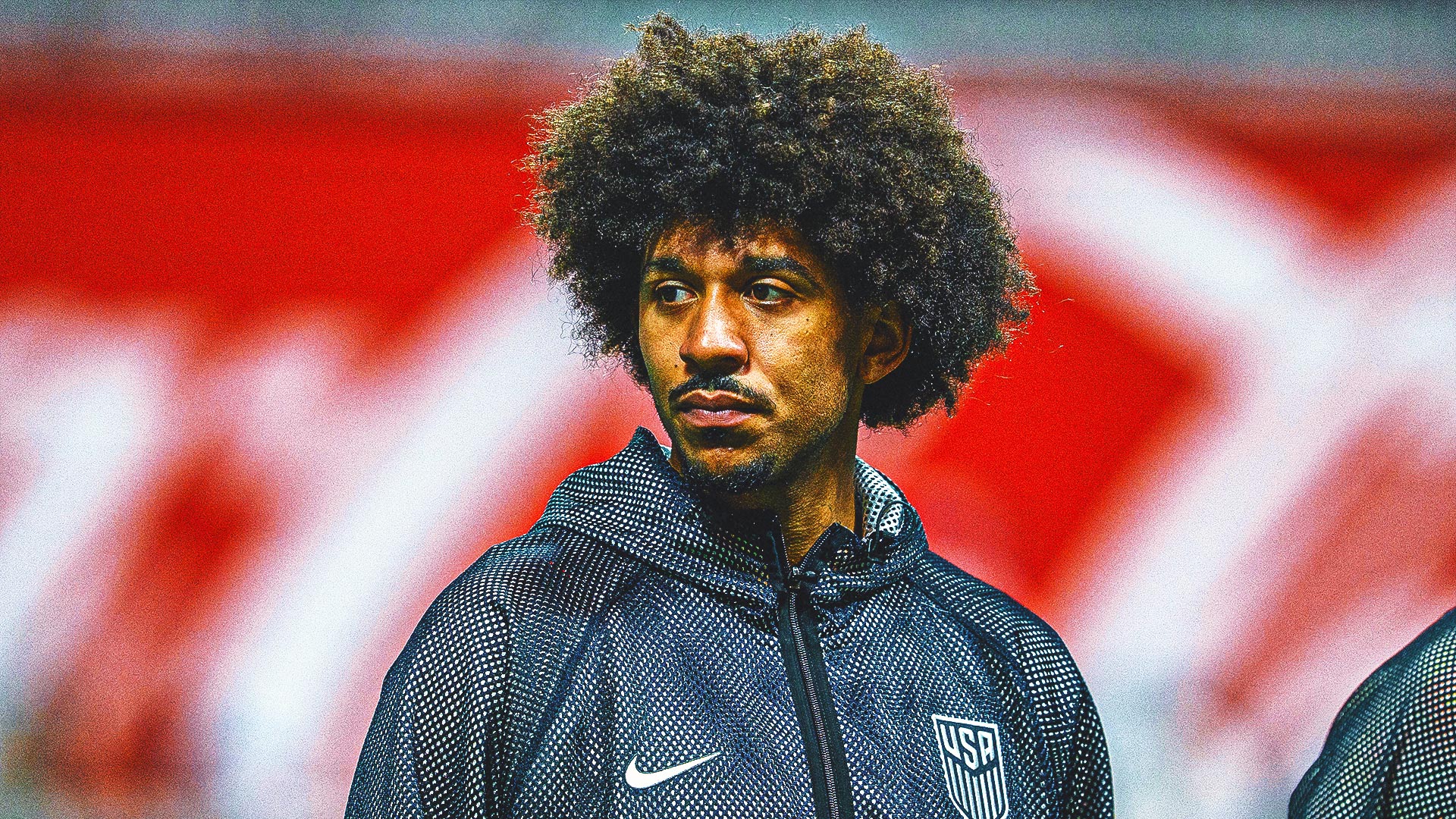
With just five days until the United States names its 2026 World Cup roster, the United States men’s national team has potentially dealt a massive blow. Star defender Chris Richards has suffered two torn ligaments in his ankle, Crystal Palace manager Oliver Glasner said in a press conference Thursday. Richards sustained the injury during Palace’s draw with Brentford on Sunday. The 26-year-old center back from Birmingham, Alabama, recently captained the U.S. in a friendly against Portugal under coach Mauricio Pochettino. While Glasner ruled Richards out for this weekend’s Premier League finale against Arsenal, the race is on for both club and country. Palace is desperately trying to get him fit for next Wednesday’s UEFA Conference League final against Rayo Vallecano in Leipzig, though Glasner rates his chances as a “50/50” coin flip. “He tore two ligaments in his ankle,” Glasner said. “He is in from sunrise until sunset having treatments… we will give our best and he will give his best—and then let’s see if we can get it done.” The timing could not be worse for the hosts. The Americans kick off their home World Cup campaign against Paraguay on June 12, preceded by crucial tune-ups against Senegal on May 31 and Germany on June 6. Missing Richards—who has 36 international appearances since his 2020 debut—would leave a massive void in Pochettino’s backline. 2026 FIFA World Cup: How To Watch The 2026 FIFA World Cup will run from June 11–July 19, 2026. Spread across three countries, the tournament will culminate with the final on July 19 at New York New Jersey Stadium in East Rutherford, New Jersey. All 104 tournament matches will air live across FOX (70) and FS1 (34) with every match streaming live and on-demand within both the FOX One and the FOX Sports app. A record 40 matches, more than one-third of the tournament, will air in prime time across FOX (21) and FS1 (19). The opening match on June 11 between Mexico and South Africa (3 p.m. ET) will stream for free on Tubi, as well as the USA’s opening match against Paraguay on June 12 (9 p.m. ET).​Latest Sports News from FOX Sports

Categories
Entertainment

Katie Holmes & Her Mom Make Rare Joint Appearance at ABT Gala

Katie HolmesKatie Holmes’ night out with her mom was en pointe. 

Indeed, the Dawson’s Creek alum and her mom Kathleen Holmes stepped out for a rare mother-daughter appearance at the American Ballet Theatre’s…
​E! Online (US) – Top Stories

Categories
Music

‘Dutton Ranch’ Ep. 3 Preview: Why Should Rip Be Worried?

A teaser video for Ep. 3 of ‘Dutton Ranch’ hints at big trouble at home for Beth and Rip. Continue reading…​The Boot – Country Music News, Music Videos and Songs

Categories
Music

‘Dutton Ranch’ Ep. 3 Preview: Why Should Rip Be Worried?

A teaser video for Ep. 3 of ‘Dutton Ranch’ hints at big trouble at home for Beth and Rip. Continue reading…​Country Music News – Taste of Country

Categories
Entertainment

Ahead of Stephen Colbert’s Final Show, Jimmy Kimmel Tells Viewers: …

Reading Time: 3 minutes

We’re just hours away from Stephen Colbert’s final episode of The Late Show, and fans and friends are eagerly paying tribute to the beloved comic.

As we previously reported, CBS decided to cancel Colbert’s show in a surprise move that many believe to be politically motivated.

No stranger to political controversy himself, Colbert’s longtime friend and fellow late night host Jimmy Kimmel used his platform to address the situation last night.

Stephen Colbert and Jimmy Kimmel speak onstage during the 71st Emmy Awards at Microsoft Theater on September 22, 2019 in Los Angeles, California.
Stephen Colbert and Jimmy Kimmel speak onstage during the 71st Emmy Awards at Microsoft Theater on September 22, 2019 in Los Angeles, California. (Photo by Kevin Winter/Getty Images)

During his monologue, Kimmel delivered an emotional tribute to his colleague while also taking a very public shot at CBS.

And, in true Kimmel fashion, he managed to sneak in a joke that was only half-joking.

The ABC host began by announcing his show would not air opposite Colbert’s final broadcast out of respect for his friend and the staff behind The Late Show.

“We will be off tomorrow night out of respect for our colleague and friend Stephen Colbert, and the writers, producers, and staff and crew at The Late Show, whose final show on CBS airs opposite ours,” Kimmel said.

But while the gesture was gracious, Kimmel also made it abundantly clear that he is still not over CBS pulling the plug on Colbert’s program.

“I think you know how I feel about the fact that they’re being pushed out,” Kimmel said.

“I hope the people who did the pushing feel ashamed of themselves tonight — although I know they probably won’t.”

Kimmel went on to praise Colbert and the Late Show writers and producers, celebrating what they accomplished over the past 11 years while emphasizing that there was never any real bad blood between the two shows.

“I think it is most important to congratulate Stephen and the team at The Late Show for all the great work over the last 11 years — and all the great work they will continue to do in other venues, I have no doubt,” he said.

“Everyone at that show has always been very gracious to us. We never felt like we were competing against them. It was nothing like the old days of late-night. I always loved being on Stephen’s show. I loved having him on ours. I hope we’re able to do that again. I hope he comes to visit as many times as possible.”

Then came Jimmy’s digs at the Trump-friendly bigwigs at CBS’ parent company, Paramount.

“On behalf of everyone at our show, we want to say to everyone at your show: It has been a pleasure to work alongside you,” Kimmel concluded.

“I will be watching tomorrow night. I hope that those of you who watch our show will also tune in to CBS for the last time. Don’t ever watch it again. But watch tomorrow night to wish Stephen a fond farewell.”

CBS recently announced that The Late Show would be replaced by Comics Unleashed, the long-running stand-up clip series created by Byron Allen.

Earlier this month, Kimmel also mocked the decision during his annual roast at the broadcast upfronts.

“As you know, CBS is turning 11:35 p.m. into a time slot least likely to offend the President with a rerun of Comics Unleashed from 2007 featuring Paula Poundstone and Andy Dick,” Kimmel joked.

“Poor Stephen. It’s bad enough to lose your job. Imagine getting replaced by the owner of the Weather Channel.”

As for Colbert, the longtime host appears to be trying to keep things in perspective — at least publicly.

In an exit interview with The Hollywood Reporter, Colbert reflected on the end of his late-night run.

“We’re all big boys. I got to do this for 21 years. What is there to complain about, really?” he said. “I knew that the show had to end at some time. I did not expect it to end this way. But my staff are the only people I’m worried about.”

After more than a decade behind The Late Show desk, Colbert’s final guest lineup remains under wraps.

But one thing seems certain: Kimmel — and millions of other fans — will be watching.

Ahead of Stephen Colbert’s Final Show, Jimmy Kimmel Tells Viewers: … was originally published on The Hollywood Gossip.

​The Hollywood Gossip

Categories
Sports Fox

‘It Changed Everything’: Reliving The 1994 World Cup As Told By USA Legends

For me and many others, this particular World Cup completes a full circle. I was a literal child when the 1994 World Cup arrived on these shores. I fell in love with the event thanks in large part to a bunch of unknown American players with some epic hairdos and hideous faux-denim jerseys. Before we turn toward this year’s 48-team extravaganza, let’s hear from some of the men who represented the Stars and Stripes 32 years ago and from others who were impacted by that epic summer. Chapter 1: The Preparation With no domestic league and only a smattering of overseas players, the U.S. Soccer Federation turned the national team into a de facto club team, signing players to contracts and training full-time in Mission Viejo, California, in the years leading up to USA ’94. Cobi Jones | Midfielder/Forward: In 1994, hardly anyone was paying attention to soccer. Eric Wynalda | Forward: We were trying to prove to the American people that we didn’t suck. Mike Sorber | Midfielder: Nobody even knew who we were, what we were. Nobody knew anything. The media knew nothing about soccer. It was considered a foreign sport. Tab Ramos | Midfielder/Forward: There were people who had no idea the difference between soccer and lacrosse. So we were all used to selling the game. Tony Meola | Goalkeeper: The idea that U.S. Soccer had to put us together was crazy. But I realize how important it became, in the end, to build that group. There wasn’t a guy there that wasn’t ready to fight for the next guy. Hugo Pérez | Midfielder: This is a team that was basically together for three years. Ramos: Out of the 22 players on the final World Cup roster in ’94, something like 14 or 15 didn’t even have a club. The squad trained year-round under their new coach, Bora Milutinović. Under the well-traveled Serbian manager, the U.S. went from a defensive team that just tried to survive against top opponents to one that tried to go to-to-toe. Sorber: We needed an international coach. The American coaches only wanted guys who could run and were physical. But we always had that. We needed football IQ and brains. Bora wanted guys who were smart and could figure things out and make plays. Pérez: Bora, when he came in, on one of the first days said, “We’re gonna change the way we play football in this country.” He believed in keeping the ball, possession. And he picked the players to do it. Meola: No host nation had ever not made it to the second round. That was always something that we had in the back of our minds. I think every one of us said “it’s not going to be us.” Chapter 2: Ready For Showtime Few thought the U.S. would advance in the World Cup, especially in a group that included two stout European squads (Switzerland and Romania) and a tough Colombia squad. Wynalda: “You guys won’t get out of the group.” That was all we heard. Every sponsor was like, “don’t f*** this up.” It was bad. The pressure on us was immense. Pérez: Between ’91 and ’94, we played more than 80 games internationally, all over the world, against the best clubs and national teams. I think that was a key factor in our preparation. Because when we arrived at the World Cup, we knew we could play against anybody. Ramos: After all those results, we thought, “Hey, you know what? We’re going to force all these teams to play their best to beat us.” It wasn’t so much that we were great. But we knew we were good enough to really compete. Sorber: I remember specifically [English journalist] Paul Gardner at the draw. Paul says, “Do you think you can get out of the group?” I said, “Absolutely.” He was blown away. But I’d already played Colombia, Romania, Brazil. Were we better? No. But we were right there. Chapter 3: Against All Odds The U.S. opened against Switzerland on June 1994 at the Pontiac Silverdome, home of the NFL’s Detroit Lions. It was the first indoor match in World Cup history. After falling behind, Wynalda’s sensational free-kick goal salvaged a crucial point and a 1-1 draw. Wynalda: The night before the game, I took two free kicks in the Silverdome. If I don’t hit those, I don’t know the flight of the ball in that stadium. I realized I don’t have to hit it that hard. So I was standing over the ball, trying to control my emotions and all this adrenaline and just calmly hit the same way. And it actually went exactly where it was supposed to. Next up was a date with Colombia at the Rose Bowl. The U.S. won 2-1, in part due to an own goal scored by Colombian defender Andres Escobar. The U.S. captured the imagination of what had been a skeptical American public, though it was dampened by Escobar’s murder in Colombia days later. Alexi Lalas | Defender: There was this David-Goliath type of narrative that led up to that game. Pérez: Colombia was coming to the tournament, they hadn’t lost in three years. Everybody was saying that they were favorites to win the World Cup. Wynalda: When we beat Colombia — and I have to say, when Escobar got killed it was horrible, we’d exchanged jerseys a bunch of times, he was a friend — that’s when we won over the public. Sorber: The Colombia game changed everything. Lalas: That was certainly a defining type of moment, a touchstone. It was the first time America was proud relative to the game of soccer. That was something that America had never experienced before. Sorber: The next day, there’s twice as much media there. At least. Jones: We’re the USA, right? We like winners. Wynalda: The next game, against a really good Romanian team, was the first time I felt the belief from our supporters. It was the first time that they felt that they could back us. Chapter 4: The Dream Run Ends Losing 1-0 to Romania in the group finale meant that the U.S. had to face mighty Brazil in the round of 16 at Stanford Stadium on July 4. Milutinović elected to bench Wynalda and insert Perez in midfield in place of suspended captain John Harkes. The home side played the entire second half up a man but without Ramos, whose skull was fractured by the flagrant elbow that got Leonardo red-carded just before the break. But Brazil won on Bebeto’s 73rd minute goal, ending the Americans’ run. Pérez: Everybody thought that they were gonna destroy us, and it turned out to be the opposite. Wynalda: That was the worst day of my life. Pérez: At halftime we passed by the locker room, and I could hear guys complaining. They were nervous. They didn’t know why they were not beating us, so they had, they got battle, they were nervous. We had the momentum. Unfortunately, we couldn’t finish it off. Pérez: For me, it was the biggest game so far in the history of our country. …We were able to play them without any fear. I still think we could have won the game. Wynalda: I saw Bora in Miami a few years ago and said, “We could’ve beaten them if you would’ve f***ing put me on the field.” I had to get it off my chest. Chapter 5: Legends And Legacy Created The Americans had done their country proud — even if they didn’t immediately realize the impact the tournament had made not just on mainstream America, but on the country’s youth. Landon Donovan | Midfielder/Forward | USA ‘02, ’06, ’10: It’s crazy to say, but prior to 1994, I had no clue that anything like the World Cup existed.  I knew nothing about soccer. Maurice Edu | Midfielder | USA ’10: I can still see Bebeto scoring. I remember thinking, “Come on Tony, you can save that!” I was only eight, but I remember damn near everything. Eric scoring that free kick against Switzerland, the Colombia game and Earnie Stewart’s goal, and obviously the own goal and what happened after that, unfortunately. Seeing the guys after the Colombia game walking around the pitch with the flags draped around their shoulders? Those images, they live with you. Jones: Especially as I’ve gotten older, more people talk about the fact that they watched me during the 1994 World Cup, that I was an inspiration to them within the Black community and even beyond. Pérez: The importance of what football is right now in this country, a lot has to do with that team in ’94. Sorber: How good that team was doesn’t get discussed enough. Wynalda: The legacy of ’94 is that it was when people fell in love with the game, when they actually thought for the first time that we’re not going to stink at this. Lalas: I’m talking to you today because of the summer of ’94. Ramos: I can’t tell you the number of people who say 1994 was the first time I really got into soccer. Donovan: There’s no question the 1994 World Cup helped propel me to wanting to be a pro. Sorber: It doesn’t get discussed enough, how good that team was. Wynalda: I think we were proud that America was finally proud of us. That was not the case until the 1994 World Cup. Chapter 6: A Big Opportunity This summer, a new generation of U.S. players – led by star forward Christian Pulisic and dynamic midfielder Weston McKennie – get the rare chance of playing a World Cup on home soil. Will they capture fans’ hearts like their predecessors in 1994? Ramos: If we win the first game of the [2026] tournament against Paraguay, the whole country will be behind the team. It’s hard to understand for people that didn’t live the experience of 1994. Lalas: It’s going to be fun to see who emerges from this group, in terms of that attention that you know inevitably is going to come. Ramos: The current group is just so much better in every way. These are seasoned soccer players. A lot of them are going to their second World Cup. For them, it’s not about competing. … I was disappointed with Mauricio Pochettino when he said we competed really well against Belgium in March, because we’ve been doing that for 40 years already. We have good players. I don’t think we get excited about competing. We get excited about achieving the results we’re not supposed to. Meola: There’s somebody today that has no idea who Christian Pulisic or Weston McKennie are. And a month from now, they’re never going to forget them for the rest of their lives.​Latest Sports News from FOX Sports

Categories
Politics

The latest Paxton-Cornyn ad dustup is an ominous sign for the Texas GOP

Texas Attorney General Ken Paxton says he wants to end his campaign on a “positive” note. Sen. John Cornyn, however, is prepared to go down fighting.

Paxton said Thursday he’s pulling his negative ads against Cornyn in the final days ahead of their bruising GOP primary for Texas’ Senate seat. The move reveals that the MAGA warrior, bolstered by President Donald Trump’s endorsement, is confident in his ability to clinch the Republican nomination.

But Cornyn, who’s facing an uphill battle to keep his seat, responded that he will keep his own attacks coming, leaning into Paxton’s long trail of personal and political scandals.

In a race that’s been defined by personal shots, the latest online dustup between the two underscores the difficult path forward for the Texas GOP after next week’s runoff election. The Paxton-Cornyn matchup has deepened divisions between the MAGA and establishment wings of the GOP, and the fighting between the two camps has gotten so ugly that some Republicans are fearful it will dampen turnout in the midterms, hurt down-ticket Republicans — and possibly cost them the seat.

Paxton’s announcement came after Texas GOP Chair Abraham George, a fellow conservative hardliner, asked the candidates to move beyond their feud out of consideration of the fight ahead to keep the seat red. The attorney general, who has gone after Cornyn for being too old to continue serving in Congress, wrote on X that his campaign has “already changed our TV ad traffic starting today to ensure our campaign ends on a positive note and that we can focus on beating the leftist lunatic in the fall,” referring to Democratic nominee James Talarico.

He called on Cornyn “to do the same for the good of our party. A Super PAC supporting Paxton, Lone Star Liberty, also announced Tuesday it was pulling its own negative ads.

Cornyn respondedin a post on X that Paxton is “desperate to avoid accountability” — and laid out exactly how bruising his ads will remain, saying the campaign needs a few more days to make sure voters know “that you plea bargained with a child sex offender, offering them only one day in prison and no sex offender registry as a favor” to a donor. He was referring to a recent report by the Texas Tribune on a plea deal Paxton offered to a man facing sexual abuse charges.

Cornyn and his allies have poured millions into brutal, personal ads trying to defeat Paxton — and they’ve had a lot of material to work with. Paxton has faced an impeachment attempt by the state legislature, ethics complaints from his staff and a federal securities fraud investigation. He’s currently going through a divorce that his wife filed for on “biblical grounds.”

Republicans are increasingly concerned that a Paxton nomination would put the seat in jeopardy, given his significant personal and political baggage, and bracing to spend upwards of $100 million to bail him out in the general election. Cornyn finished narrowly ahead of Paxton in the March primary, but the Trump endorsement puts Paxton in a strong position to overcome that deficit.

“We are going to continue to tell the truth about Paxton,” Cornyn said in another post. “He’s escaped accountability for too long. Judgment day is coming.”

​Politics

Categories
Music

Stella Lefty, ‘Boston’ Lyrics Describe a Love We All Dream Of

“I like it when you’re nice to me,” she sings. Continue reading…​The Boot – Country Music News, Music Videos and Songs