It’s no secret that unexpected cold snaps and overnight freezes can destroy an unprotected vegetable garden. Here’s how you can protect your plants.

Food Republic – Restaurants, Reviews, Recipes, Cooking Tips









It’s no secret that unexpected cold snaps and overnight freezes can destroy an unprotected vegetable garden. Here’s how you can protect your plants.
Food Republic – Restaurants, Reviews, Recipes, Cooking Tips

Reading Time: 3 minutes
Back in 2015, Rachel Dolezal became a household name — but not in a good way.
The white woman with white parents was exposed for spending much of her adult life claiming to be a Black woman.
If anything, she has doubled down since then.
She has capitalized upon her infamy — becoming an OnlyFans success. She’s now getting certified as a sex coach.
In a new interview with The Daily Mail, Dolezal explained why she turned to OnlyFans.
For over a decade now she has been just about unemployable.
She’s too infamous after being exposed for claiming to be Black despite being a white woman with white parents.
When Dolezal first signed up for OnlyFans, she was just posting about her artwork and makeup. Soon, however, she started putting out content that you’d expect on the adult media subscription platform.
“I never really aspired to be doing explicit self-play and nude modeling for income,” she told The Daily Mail. “It was survival at first and then became an art form for me.”
Dolezal began posting photos of herself nude and wearing lingerie. The subscription price of $9.99 meant that some folks were willing to spend the money just out of curiosity.
She says that OF is her most successful business venture. Like, it’s not even close.
“People would suggest, because you have name recognition, just do this — you’ll become a millionaire,” Dolezal recalled. “But none of that panned out.”
She continued: “Except maybe the OnlyFans — I’m not a millionaire but it’s paid more bills than anything else.”
Every time that her infamous name makes headlines, she says, a new wave of subscribers comes pouring in.

Dolezal also told The Daily Mail that she is working on becoming a sex coach.
She says that she has nearly 300 hours in certification for her sex coach qualification.
Her goal, she explained, is to help single moms and busy parents improve their sex lives.
Additionally, she took time to complain about how she has been ostracized for her continued pretense of being a Black woman, even though she is a white woman with white parents.
“Can we agree to disagree and still respect each other and allow each other to provide for our families,” Dolezal complained, “and not have this need to keep me — or anybody else — punished forever?”
Finally, Dolezal revealed that she has chosen a new name for herself: Nkechi Diallo.
(Nkechi is Igbo while Diallo is Fula, but clearly that didn’t stop her.)
It’s unclear why she’s sharing this. There was always a chance that she’d have gotten clients under that new name who’d never know who she is.
Or perhaps she is hoping that the same morbid curiosity that drives people to check out her OnlyFans will get her sex coach clients.
Something interesting about Dolezal is that, despite her very inconsistent claims, she was right when she said that race is a social construct. A lot of people imagine there to be, like, a “white gene” or something, but that’s not the case. This is a cultural concept that has changed — even over the past century.
But being a construct does not mean that something is not important. Race is inherited from one’s parents and their parents. There’s nuance there at times, but really not in Dolezal’s case.
Rachel Dolezal Announces OnlyFans Success, Sex Coach Certification, & New (African) … was originally published on The Hollywood Gossip.
The Hollywood Gossip

Anchorage officials and trail advocates use shovels to ceremoniously break ground on May 9, 2026, on the Ship Creek connection between the city’s Tony Knowles Coastal Trail and the Ship Creek Trail. From left are: Shanna Gamble, director of Anchorage Parks and Recreation; state Sen. Löki Tobin, D-Anchorage; state Sen. Bill Wielechowski, D-Anchorage; Zara Fields; state Rep. Zach Fields, D-Anchorage; Anchorage Assembly member Daniel Volland; Anchorage Mayor Suzanne LaFrance; Anchorage Assembly member Sydney Scout; Aaron Leggett, president of the Native Village of Eklutna; and Beth Nordlund, executive director of the Anchorage Park Foundation. The new section of trail, about a mile long, will fill a gap in Anchorage’s system of paved bike trails. The trail connection is expected to be completed in the fall of 2027. The project includes a plaza at Ship Creek focused on Dena’ina culture. (Photo by Yereth Rosen/Alaska Beacon)
When Anchorage officials and outdoor recreation advocates gathered Saturday to ceremoniously mark the start of construction for a 1.3-mile section of trail near the city’s industrial port, they said they were taking a small step toward a big vision.
The connector will close a gap in the city’s existing network of paved bike trails and, supporters hope, eventually be part of what they call the “Alaska Long Trail,” an interlaced network spanning 500 miles from Fairbanks to Seward.
Anchorage Mayor Suzanne LaFrance characterized the Long Trail as a “dream trail connecting Seward to Fairbanks that will most definitely, most definitely, swing through downtown Anchorage.”
“Our parks and trails are the crown jewels of our community,” she said at the ceremony.
Supporters say trail expansions and improvements offer a big payoff to residents and to the economy, helping to diversify tourism activity that is otherwise highly dependent on the cruise ship industry.
The new trail connection is to include a plaza dedicated to Dena’ina heritage tied to Ship Creek, which in that Indigenous language is called Dgheyaytnu, meaning Stickleback Creek.
Farther south along the 500-mile corridor, another incremental step toward the Alaska Long Trail goal was completed last fall.
A new trail stretch at Moose Pass, a Kenai Peninsula community of about 225, offers a potentially unbroken hiking route down to Seward, about 30 miles to the south.

The work, funded by the U.S. Forest Service, includes six miles of new trail along what is the historic Iditarod Trail route that was used in Gold Rush and territorial days for travel between Seward and Nome.
The work also includes four miles of improved trail and two new bridges, said Jane Boer, the Alaska Long Trail officer at the nonprofit organization Alaska Trails.
Boer described the work in a progress report on the Alaska Long Trail that she delivered last Friday at the annual Statewide Trails conference held in Anchorage and hosted by Alaska Trails.
“I think it’s really exciting that there’s a new trail down there, new adventures to be had,” she said.
To supporters, the trails that wind through Anchorage and other communities enhance quality of life and, in the longer run, the economy.
State Rep. Zach Fields, D-Anchorage, who rode to the Saturday groundbreaking ceremony with his daughter Zara on an e-bike, is among the supporters.
“Trails are Anchorage’s competitive advantage,” Fields said at the event. “I think we all appreciate that they’re amazing for our quality of life because they’re the single most important thing we can do to become more competitive in a global economy.”
Trails also support an aspect of the tourism industry that is independent of cruise ship companies.
“It’s independent travelers who spend more money and stay longer,” said Haley Johnston, executive director of Alaska Trails.
The Alaska tourism industry’s dependence on cruise ships is evident in visitor statistics from the state’s national parks.

It took until last year for visitation to Alaska’s eight national parks to recover from big losses inflicted by the COVID-19 pandemic, which in turn depressed cruise travel, according to a new report in Alaska Economic Trends, the monthly magazine of the Alaska Department of Labor and Workforce Development.
In 2020, the first year of the COVID-19 pandemic – and a year when summer cruise travel virtually stopped – visitor numbers at Alaska’s eight national parks nose-dived by 86% in 2020. That compared to a 28% average drop across the country for national park visitation, according to the analysis.
The contrast was striking, said Karinne Wiebold, the state economist who wrote the article.
In the Lower 48, where national parks are within driving distance for most visitors, those lands became something like havens for people who wanted to recreate safely.
“For people it became a really enjoyable way to travel and be outside,” Wiebold said. But that social distancing did not work for people trying to travel to Alaska. “But when you come to Alaska, you’re not in a bubble.”
Much of the statewide trend has been driven by visitation at Glacier Bay National Park, which is visited almost entirely by cruise ship, and Denali National Park, which is a major destination for cruise passengers who add train or bus trips to their itineraries.
While visitation has returned to pre-pandemic levels, National Park Service employment is now well below that, despite a rebound that started in 2021, according to the analysis.
Trump administration cuts brought National Park Service employment down to 784 in 2025 from 865 the year before. In 2019, prior to the pandemic, Alaska had 869 park service jobs. The jobs support operations in all of Alaska’s National Park Service units, which include national preserves, national monuments, historical parks and other protected areas as well as the eight national parks.
The administration is proposing more cuts to both funding and employment. The budget it has proposed for the coming fiscal year would cut National Park Service employment in 2027 by more than 30% from 2025 levels.
The most recent trail connections and improvements have been paid for by a combination of federal, state, local and private funds.

The Moose Pass-area projects, which are in the Chugach National Forest, were the beneficiary of about $12 million in federal appropriations secured over three fiscal years by Sen. Lisa Murkowski, R-Alaska, according to Alaska Trails.
The Ship Creek project, tentatively estimated to cost $19 million, is being paid for by a variety of sources, including federal transportation funds, state funds and local park bonds approved in recent years by Anchorage voters.
Over three budget cycles, the state has put over $6.7 million into Alaska Long Trail projects, according to Alaska Trails.
The concept of a “world-class trail” on par with the Appalachian and Pacific Crest trails continues to have lawmakers’ support, said Sen. Bill Wielechowski, D-Anchorage.
“I can’t emphasize enough how excited we are about the Long Trail,” Wielechowski said at the groundbreaking ceremony. “Every year in the legislature we’ve been trying to put a little bit more, a little bit more, towards it to build that out.”
There are no projects specific to the Alaska Long Trail in the 2027 fiscal year capital budget currently pending in the legislature, though there are several individual trail-related items.
The pending operating budget does propose an increase in funding for the state Division of Parks and Outdoor Recreation, which could benefit trail users. The budget passed by the legislature last year appropriated $23.9 million; after Dunleavy’s vetoes, the amount was whittled to $21.8 million. The new operating budget that lawmakers are now crafting for the coming fiscal year puts funding for the division at $27.7 million.
Along with the Forest Service, there are numerous sources of federal funds for Alaska trail projects, such as those available from the Department of the Interior under the Great American Outdoors Act. However, budget cuts may have closed off one of those federal opportunities.
Among the Trump administration cuts to the National Park Service was the elimination of the two positions administering the service’s Rivers, Trails and Conservation Assistance Program in Alaska.
The program assists locally led conservation and outdoor recreation projects, including trail construction and maintenance. In the past, the program supported projects around the state, from Prince of Wales Island in the southernmost part of Southeast to Nome on the Bering Sea coast.

SUBSCRIBE: GET THE MORNING HEADLINES DELIVERED TO YOUR INBOX.

Parker McCollum has a lot on his plate these days. Between his headlining tour, preparing to welcome his second child with wife Hallie Ray, and gearing up for ACM Awards weekend as both a nominee and performer, life is moving fast for the Texas native.
During a recent interview with Audacy’s Katie Neal, McCollum called in from home and opened up about everything currently happening in his world. With a little over three months until the arrival of their second son, he said he and Hallie Ray are trying to soak up every moment of being a family of three before life changes again.
“I think we’re going to try our best to enjoy these last three and a half months with just one and then we’ll gear up for the newborn stuff again. So pray for me,” he joked.
The couple’s second baby boy will join their son, Major Yancey Tyler McCollum, who was born on August 8, 2024. While preparing for their newest addition, McCollum admitted that picking out another strong name has become a challenge.
“We get some pretty funny heated arguments over it,” he admitted. “Every now and then we’re like, all right, we have time. Let’s not do this today.”
With a name like Major already setting the bar high, McCollum explained why finding the perfect fit matters so much to him.
“Well, I’m like, these are my boys. They’re going to take over everything that I build in this life. I’ll leave it to them. So name’s got to be good. They’ve got to have strong names.”
While preparing for another major milestone at home, McCollum is also celebrating one in his career. He heads into the 61st ACM Awards with a nomination for Album of the Year for his self-titled project, a recognition he says means more to him than any other accolade he’s received so far.
“It’s the greatest honor of my career so far,” he stated. “It’s my favorite record I’ve ever made. I’ve never been more proud of a collection of songs than I am this record that came out last year. So to be mentioned amongst so much fricking talent, so many crazy records and all the records that could have been nominated for this album to receive a nomination is mind-blowing.”

McCollum also shared that he hopes to cross paths with ACM Awards host Shania Twain during the festivities in Las Vegas, and maybe do a little gambling.
“I’ll play a little blackjack. I try to play some golf while I’m there, maybe the day after, but I play in Chicago the night before, so I’ll be coming in hot…So it’ll be quick, but we’re going to make the most of it.”
McCollum is also set to perform during the show alongside fellow Texan Lee Ann Womack. Additional performers include Ella Langley, Miranda Lambert, Cody Johnson, Blake Shelton, and more.
Fans can watch the 61st ACM Awards streaming live exclusively for a global audience across 240+ countries and territories on Prime Video on Sunday, May 17, 2026, at 8 p.m. ET / 7 p.m. CT / 5 p.m. PT from the world-renowned MGM Grand Garden Arena in Las Vegas, Nevada.
The post Parker McCollum Opens Up About Naming Second Baby Boy: ‘They’ve Got To Have Strong Names’ appeared first on Country Now.
Country Now

Note to self: Never get into a drinking contest with Jason Aldean. Continue reading…The Boot – Country Music News, Music Videos and Songs
Note to self: Never get into a drinking contest with Jason Aldean. Continue reading…Country Music News – Taste of Country

Reading Time: 2 minutes
The sports world was rocked by tragedy yesterday, when it was revealed that Memphis Grizzlies forward Brandon Clarke had passed away.
He was just 29 years old.
Naturally, there are questions about how such a shocking loss could have occurred, and many believe Clarke’s passing may have been tied to a recent run-in with the law.
In April, Clarke was arrested in Arkansas after allegedly leading police on a high-speed chase.
He was eventually charged with possession and trafficking a controlled substance, in addition to charges related to fleeing the scene of a crime.
Now, TMZ is reporting that Clarke’s death is being investigated as a possible overdose.
Nothing conclusive has been announced regarding the cause of death. But while details remain scarce, it seems that police in California’s San Fernando Valley believe that Clarke’s passing was related to his substance abuse.
Clarke played 7 seasons in the NBA, averaging 10.2 points, 5.5 rebounds, and 1.3 assists over 309 games
“We are heartbroken by the tragic loss of Brandon Clarke. Brandon was an outstanding teammate and an even better person whose impact on the organization and the greater Memphis community will not be forgotten,” the Grizzlies said in a statement (via TMZ).
“We express our deepest condolences to his family and loved ones during this difficult time.”
Brandon’s sports agency, Priority Sports, also released a statement.
“We are all beyond devastated by the passing of Brandon Clarke. He was so loved by all of us here, and everyone whose life he touched. He was the gentlest soul who was the first to be there for all of his friends and family,” Priority posted on social media, adding:
“Our hearts are so broken as we think about his mom, Whitney, his entire family, and all of his friends and teammates. From high school to San Jose State to Gonzaga to the Grizzlies, Brandon impacted everyone who was part of his life.”
“Everyone loved BC because he was always there as the most supportive friend you could ever imagine. He was so unique in the joy he brought to all of those in his life. It’s just impossible to put into words how much he’ll be missed.”
Our thoughts go out to Brandon Clarke’s loved ones during this incredibly difficult time.
Brandon Clarke Cause of Death: NBA Star Was 29 was originally published on The Hollywood Gossip.
The Hollywood Gossip
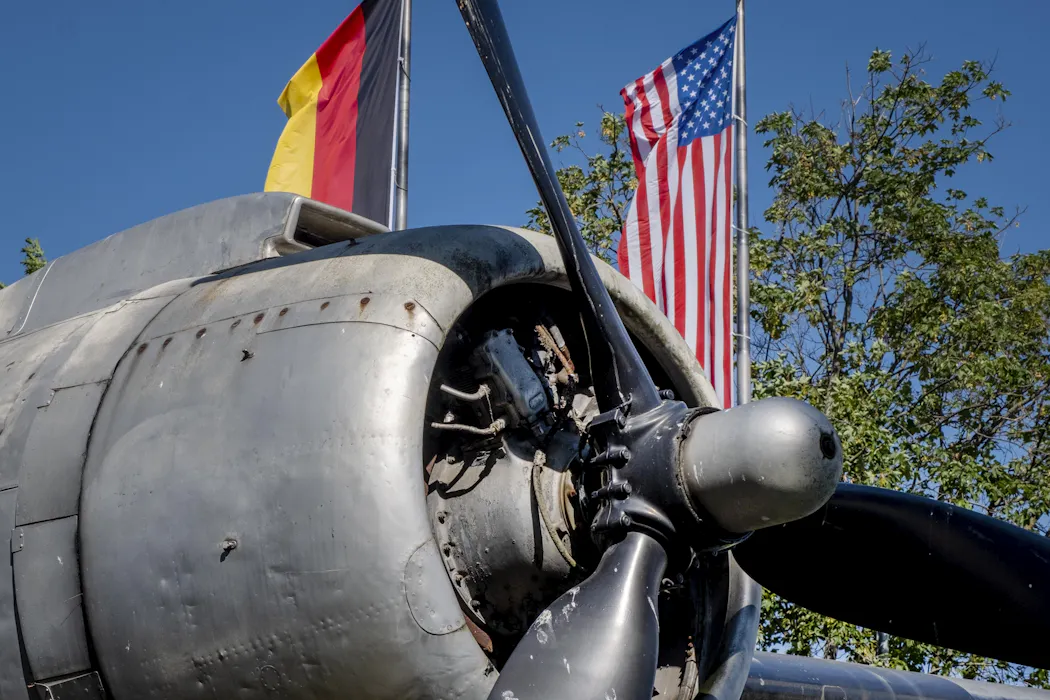
President Donald Trump announced on May 1, 2026, that the United States will withdraw 5,000 U.S. troops from Germany – personnel who had been deployed there as a response to Russia’s invasion of Ukraine.
Germany-U.S. tensions started after the U.S. invasion of Iran. German Chancellor Friedrich Merz refused to support Trump’s war and stated that Iran had humiliated Washington’s leadership by closing the Strait of Hormuz. Trump followed the initial U.S. troop withdrawal announcement with threats to pull more armed forces.
U.S. troops will depart Germany over the next six to 12 months, leaving about 31,000 troops in the country.
The Trump administration’s decision to withdraw personnel comes after weeks of mounting tensions between the U.S. and NATO members. The United Kingdom and Portugal have restricted Washington’s ability to use its bases in those countries for certain activities related to the Iran war.
Trump also threatened to withdraw U.S. troops from Spain and Italy over their opposition to the war and refusal to help the U.S.
“Why shouldn’t I?” Trump said on April 30, 2026, referring to possible U.S. troop withdrawal from the two European countries. “Italy has not been of any help. Spain has been horrible. Absolutely.”
These remarks suggest the Trump administration views U.S. troop withdrawal as punishment for noncompliant European allies. But the reality is more complicated. Although this proposed 5,000-troop reduction is less than 15% of current U.S. forces in Germany, its logic and consequences speak to broader issues of power projection.
As experts in international relations, foreign policy and security cooperation, we have studied the relationship between U.S. military deployments and their host countries for years. While U.S. deployments contribute to the security of the host state, having troops based in Europe and other countries provides the U.S. with significant flexibility for pursuing its own foreign policy goals.
Europe has historically been one of the regions with the highest concentrations of U.S. military personnel deployed overseas.
Since the end of the Cold War, for example, Italy has hosted between 20,000 and 40,000 personnel, and Spain between 2,000 and 7,000 personnel. Germany has regularly hosted the largest deployments. At the end of the Cold War, the U.S. maintained approximately 227,000 military personnel in Germany. Though Europe remains a significant location for basing U.S. troops, this number fell dramatically in the 1990s, hovering between 50,000 and 75,000 for most years since then.
Historians and policymakers often explained U.S. deployments to Europe as a means of deterring the Soviet Union during the Cold War.
Nobel laureate Thomas Schelling described the logic in 1966: Even a small deployment in West Berlin served as a trip wire, ensuring that Soviet incursions would trigger a much larger military response from the U.S. and its European allies.
But a closer look at U.S. foreign policy challenges this view. While U.S. troops stationed in Europe were meant to defend Europe, their utility has extended far beyond that.
U.S. military bases and deployments provide the U.S. with greater flexibility and opportunities to pursue its foreign policy goals. By forward positioning military personnel and assets, the U.S. can reduce response times during crises, as well as the costs of moving its military resources into strategic positions.

Foreign deployments can convince countries not to attack countries that host them. During the Cold War, for example, the U.S. deployed nuclear weapons to Incirlik Air Base in Turkey, a NATO ally. Turkey’s close proximity to the Soviet Union increased the U.S.’s ability to challenge its superpower rival with these weapons.
These missiles were famously later withdrawn during the Cuban missile crisis in 1962, giving the U.S. something to bargain with in persuading the Soviets to remove their missiles from Cuba.
Larger military engagements, such as the Vietnam War or the wars in Iraq and Afghanistan, have typically relied on U.S. military facilities in allied states that are closer to the conflict. During the Vietnam War, U.S. bases in Germany, Japan and the Philippines were used as staging areas through which U.S. personnel and equipment moved on their way in or out of Southeast Asia.
U.S. facilities in Germany, such as Ramstein Air Base and Landstuhl Regional Medical Center, have been integral to combat operations, satellite control of drones and treating U.S. personnel wounded in combat. Landstuhl has admitted over 97,000 wounded soldiers since its founding in 1953 and has already treated service members injured during the ongoing Iran war.
Further, military equipment such as radar and interceptor missiles often have limited ranges. Deploying this equipment closer to rival countries can increase the chance of successfully intercepting and destroying incoming missiles.
Beyond warfare, U.S. humanitarian relief and disaster response operations often benefit from U.S. bases.
For instance, after a large earthquake struck Japan in 2011, U.S. personnel and facilities located in and around Japan enabled the rapid mobilization of relief operations.

In 2004, a powerful earthquake in the Indian Ocean triggered large tsunamis, affecting millions of people in nearby countries. U.S. personnel stationed at Yokota Air Base near Tokyo provided relief and supplies to people throughout Southeast Asia and as far as eastern Africa.
Similarly, after an earthquake in Turkey in 2023, U.S. medical personnel relocated from Germany to Incirlik Air Base to help provide relief.
Beyond their humanitarian benefits, these missions can increase favorable views of the U.S. More positive public views of America may also make foreign governments more likely to support U.S. foreign policy goals.
Host states often make direct and indirect contributions to the costs of hosting and sustaining U.S. personnel. These can range from direct financial transfers to construction, tax reductions and subsidies. Japan and South Korea increased the amount they pay to host U.S. troops after Trump demanded they do so in 2019.
U.S. equipment – from tanks and trucks to planes and ships – also often relies on a host country’s infrastructure to operate and move within the host country. Germany, for example, paid over US$1 billion for construction costs and the stationing of U.S. troops in Germany during the 2010s.
Not all countries that host U.S. troops invest as much in their infrastructure as Germany does, and having those troops elsewhere could prove far more costly than having them in Germany.

Michael A. Allen received grant research funding from the Department of Defense’s Minerva Initiative, the US Army Research Laboratory, and the US Army Research Office from 2017 to 2021.
Carla Martinez Machain has received funding from the Department of Defense’s Minerva Initiative, the US Army Research Laboratory, and the US Army Research Office.
Michael E. Flynn has received funding from the Department of Defense’s Minerva Initiative, the US Army Research Laboratory, and the US Army Research Office.
Politics + Society – The Conversation
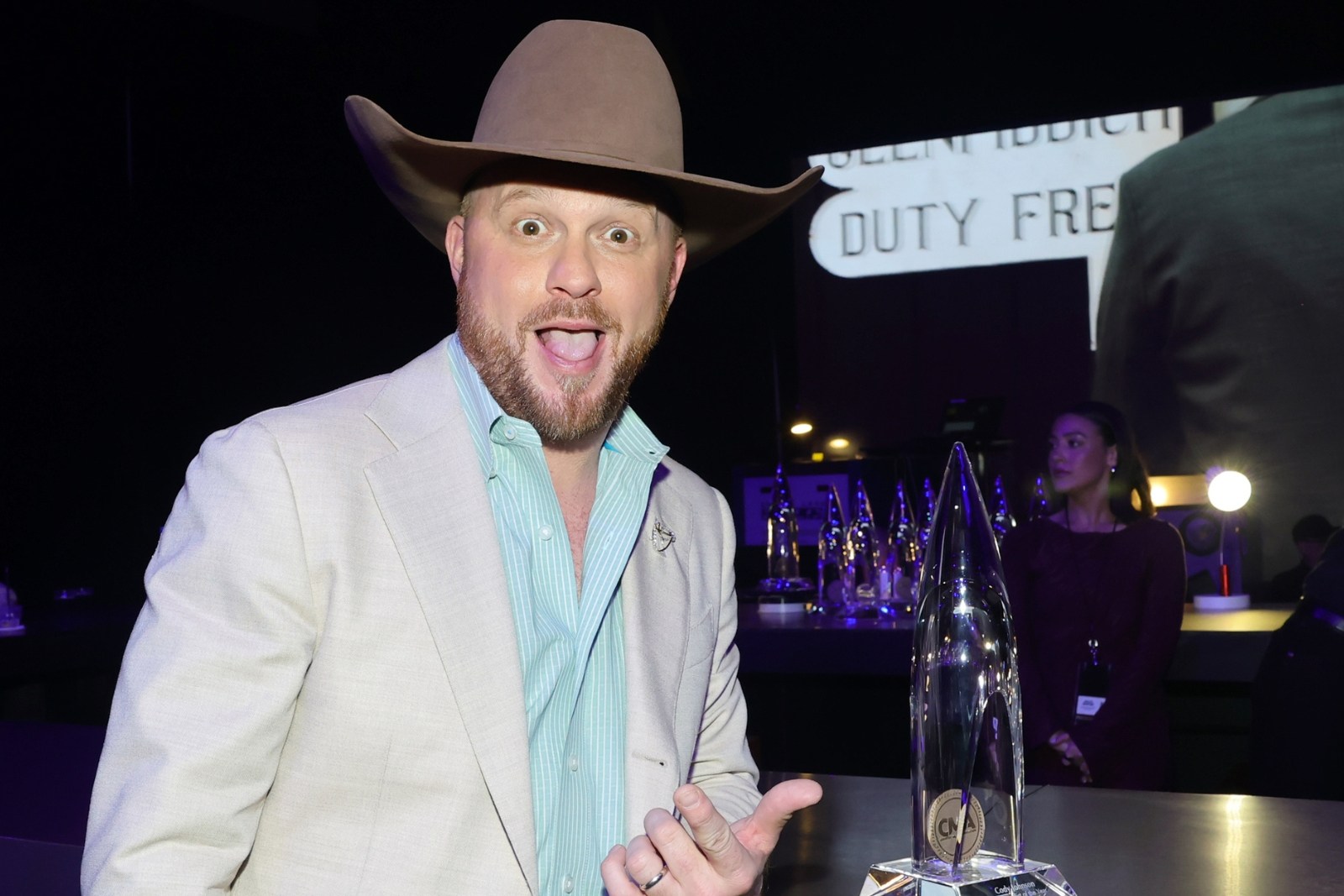
Johnson says there’s one big difference between six-month-old Jaycee today and his daughters when they were babies. Continue reading…The Boot – Country Music News, Music Videos and Songs
Johnson says there’s one big difference between six-month-old Jaycee today and his daughters when they were babies. Continue reading…Country Music News – Taste of Country