But if you were looking forward to Sweeney’s cameo — playing herself — resign yourself to reality now.
After multiple controversies over the past year, she’s been cut from the final film. Why?
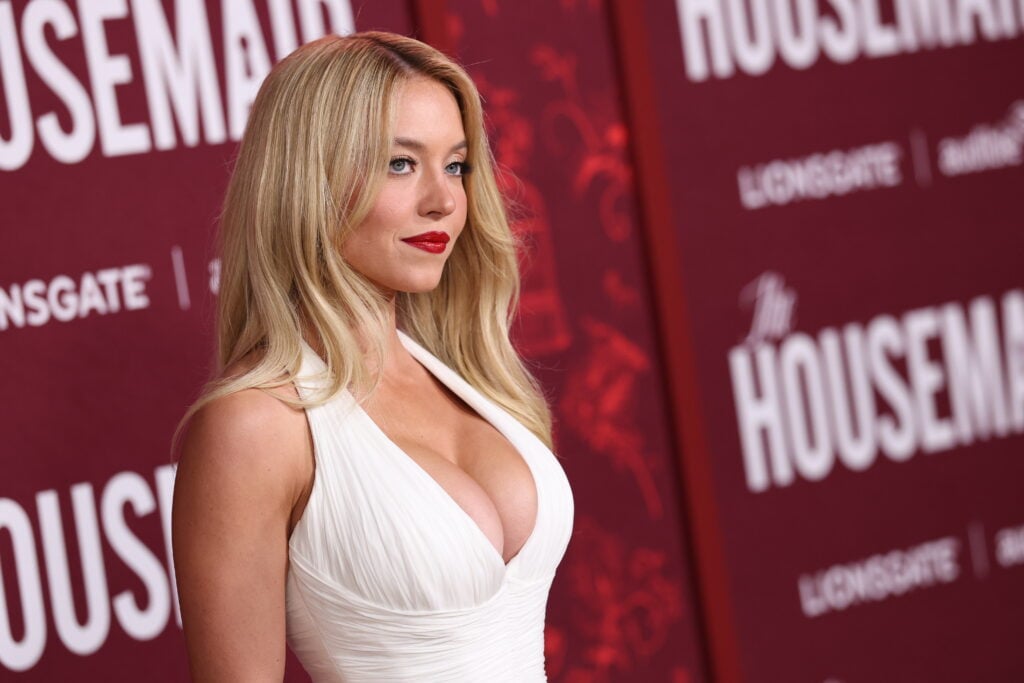
Sydney Sweeney attends the Los Angeles premiere of Lionsgate’s “The Housemaid” at TCL Chinese Theatre on December 15, 2025. (Photo Credit: Monica Schipper/Getty Images)
She would have portrayed herself for a three-minute scene
Originally, Sweeney would have portrayed herself in The Devil Wears Prada 2.
The scene would have lasted just a few minutes, featuring her being styled by Emily Blunt’s character, Emily Charlton.
Some celebrity cameos are tongue-in-cheek, sometimes involving a bit of humorous self-mockery.
Others are very straightforward — an actor or singer portraying themselves earnestly.
We may never get to know what Sweeney’s scene would have looked like. Because it’s gone.
Though Sweeney filmed the scene, Entertainment Weekly reports that its removal from the final cut was a “creative decision.”
Ultimately, the scene did not work structurally for the overall film.
Anyone who has worked in any creative storytelling field can attest that, sometimes, you have to exclude scenes, events, or even entire characters for the sake of the overall story.
In a film, time is extremely valuable, and any error can create painful pacing issues.
The team behind The Devil wears Prada 2 is reportedly grateful for Sweeney’s participation in the project, and were reluctant to cut the scene from the final product.
But what about the elephant (or eagle) in the room?
It’s probably not a sign of hard feelings or whatever that Sweeney didn’t attend the premiere on Monday, April 20.
Even if she’d still appeared in the final cut, she would have been a cameo, not a lead. And she didn’t even appear in that.
(Few films seek to draw attention to what-might-have-been alternate cuts unless there are serious creative differences, like between a director and a studio.)
But Sweeney filmed her scene last summer. She was, to be blunt, a much less polarizing figure at the time.
Following her not-actually-that-controversial American Eagle add, she’s avoided rejecting Donald Trump’s approval, she’s gone public with dating Scooter Braun, and unconfirmed Zendaya feud rumors have only mounted.
To be clear, Sweeney has not actually made public statements to cater to bad guys who seem to want to be her biggest fans.
But critics argue that her reluctance to distance herself from them by simply outright rejecting endorsements from the worst and weirdest people alive is damning in and of itself.
(Should she? Yes. But we can fully understand that she’s been put in a no-win scenario as people continue to make up their own stories about who she is and what her values are.)
For now, any time that she is cast in something or not cast in something, invited or disinvited, people are going to read more into it than is probably there.
People are unable to be normal about Sweeney. That’s fuel for her career, but it also feels like her own personal hell.
Sen. Matt Claman, D-Anchorage, speaks Wednesday, April 23, 2025, on the floor of the Alaska Senate. (Photo by James Brooks/Alaska Beacon)
With only four weeks left of the legislative session, the Senate Judiciary Committee has merged several bills into a wide-ranging omnibus crime bill. Even with the tight timeline, some lawmakers are optimistic about its chances for passage before the end of the session.
The new draft omnibus crime package combines ten bills ranging from raising the age of consent to increasing criminal penalties for AI-generated child sexual abuse material into one large bill supporters hope will have the momentum to pass both the House and the Senate in the next 28 days.
The Senate Judiciary Committee chair Sen. Matt Claman, D-Anchorage, introduced the 55-page omnibus bill on Friday, saying the bills have a stronger prospect as a package.
“I think that increases the likelihood we’ll be able to pass it,” he said in an interview on Monday.
With one month to go in the second year of the two-year legislative cycle, this is the last opportunity for bills to be passed by the 34th Legislature.
The draft omnibus crime bill was added to House Bill 239, sponsored by House Majority Leader Rep. Chuck Kopp, R-Anchorage, who spoke in support at the hearing on Friday.
“This bill has grown, it’s gone from the sports car to the school bus” he said. “Policies I all support as a bill sponsor.”
Gov. Mike Dunleavy sponsored two bills included in the omnibus package, but did not respond to a request for comment on Tuesday.
The bills included are in various stages. Some have passed the House, while others are being considered by various committees in the House and Senate. Several lawmakers who sponsored bills now included in the omnibus package agreed that politically it could increase chances of passage by May 20.
Rep. Sarah Vance, R-Homer, sponsored a bill that would create state felony penalties for AI-generated child sexual abuse material. It unanimously passed the House last month.
“I’m excited that it’s included in the omnibus bill, because that shows intent by the Senate to pass the bill,” Vance said on Monday. “So I have great confidence that it will cross the finish line.”
But Claman, who is running for governor, has drawn public criticism for the process of how the omnibus crime bill was put together this session.
Advocates for raising the age of consent — along with the Anchorage Daily News editorial board — criticized Claman for holding a bill to raise the age of consent to 18 in the Senate Judiciary Committee, which passed unanimously by the House last year, in order to be included in the omnibus bill. Critics urged Claman and the committee to pass the bill and allow it to move forward as a stand alone bill toward a full Senate vote and final passage.
Claman has argued that despite limited time left in the session, the bills included have been vetted and the combination package will garner more support among legislators and the governor to pass in the last few weeks of the session.
“I’ve been in the Legislature now since 2015, and so in the last 11 years, we’ve passed 11 different bills relating to public safety,” he said. “So I think there are ten different measures that we put into the bill, and if we tried to do them all individually, probably wouldn’t get them all passed.”
Claman pointed to an omnibus crime bill, House Bill 66, enacted in 2024, with support from Gov. Mike Dunleavy and across political affiliations. “That’s certainly, I think, the best example,” he said. “So I do have confidence we’ll get it passed.”
Rep. Andrew Gray, D-Anchorage, speaks Friday, April 26, 2024, on the floor of the Alaska House of Representatives. (Photo by James Brooks/Alaska Beacon)
Rep. Andrew Gray, D-Anchorage, sponsored House Bill 101, the bill that would raise the age of consent from 16 to 18 years old. Backed by advocates for sexual violence prevention, he said the change in law is essential for protecting teens from sexual exploitation and abuse. Under current law, it’s legal for an adult to have sex with a 16 or 17 year old. But when they are assaulted, teens must prove that they did not consent.
Despite previous disagreement and pushing for a stand alone bill, Gray said Monday he will back the omnibus crime bill in order to see the law changed.
“If that happens, inside an omnibus crime package that has other bills that are also worthy of passage, I’m fine with that,” he said. “I just want the policy to change.”
The draft omnibus crime bill now contains ten bills that previously stood alone:
House Bill 239 — would increase criminal penalties for hit and run incidents so that drivers that cause a death and knowingly failing to stop and render assistance, and establishes mandatory sentencing of four to seven years for a first hit and run felony conviction
House Bill 101 — would raise the age of consent from 16 to 18 years old, with provisions to allow consent to sex with someone up to six years older than them. The draft bill also allows 16 and 17 year olds to consensually exchange sexual or explicit messages within the six year close-in-age gap without penalties.
Senate Bill 247 — would create state criminal penalties for creating AI-generated images or video that depicts sexually explicit or obscene content involving anyone under 18 years old
House Bill 62 — Sponsored by Gov. Mike Dunleavy, the bill would establish a statewide tracking system for sexual assault examination kits, expedite processing times, and ensure that survivors can privately monitor the status of their own kit.
Senate Bill 100 — Also sponsored by the governor, and would establish the crime of organized theft, including mail theft and medical record theft
House Bill 242— would redefine criminal law to prohibit any sexual contact or assault by a health care worker during professional treatment, changing the current law which only applies to patients being unaware of sexual contact or assault for criminal charges to apply.
Senate Bill 17 — would establish the crime of airbag fraud for knowingly selling, installing or manufacturing a counterfeit airbag in a vehicle
House Bill 81 — would establish minor marijuana related convictions to remain confidential on individuals personal records, under certain criteria
House Bill 384— would expand confidentiality agreements between victims and service providers by updating the definition of “victim counseling center” to include tribal organizations
Senate Bill 233 — would reassign the Controlled Substances Advisory Committee from being administered by the Department of Law to the Department of Commerce, Community and Economic Development.
The new version of Vance’s bill focused on AI-generated child sexual abuse material included in the bill is closer to her initial proposal. Social media controls for minors added by the House were stripped out of the Senate version. Vance said she supports the amended version given First Amendment protections around social media.
“I think that was a wise decision right now, because Alaskans are very mixed on how they feel that we should address social media,” Vance said.
Rep. Sara Hannan, D-Juneau, is the sponsor of House Bill 242, and said she supports her bill being included in the Senate omnibus, but she is still pushing to advance her standalone bill in the House.
Rep. Sara Hannan, D-Juneau, speaks on the House floor on Apr. 13, 2026. (Photo by Corinne Smith/Alaska Beacon)
“I need people who didn’t serve on the two committees that heard it in the House to understand it,” she said, as the Senate draft will come back to the House for a concurrence vote. “It still helps to educate on the issue.”
Hannan’s legislation follows a high profile case in Juneau last year where the court dropped several charges against a chiropractor because under current law part of the legal definition of sexual assault by a medical provider requires the alleged victim to be unaware the assault is happening.
“Right now, the victim needs to be unaware, and the perpetrator needs to know that they are unaware,” Hannan said Tuesday. “So to change that in statute, I think is an important policy statement for us to make.”
Hannan said significant policy bills typically take several years to get through the Legislature, with public input, debate and support gathering. But she expressed confidence in the support for the omnibus crime bill in the weeks ahead.
“We’re running the clock down,” she added. “The only downside, from my perspective, is the advocates and the victims that were directly involved in the case that inspired this bill. You know, they get more acknowledgement when it’s the standalone bill… But in the end, if the goal is to change the policy, there’s no downside to it.”
The Senate Judiciary Committee will continue to hold hearings on the crime bill this week and its members have until Friday to introduce amendments before it advances to the Senate floor for a vote. Claman said he expects that to be in the last week of April.
The country megastar has been enjoying a resurgence in popularity in recent years, and a new generation of fans is curious about her past.
Given how many of her classic ballads touch on the topic of heartbreak, we suppose it’s no surprise that yes, Shania is divorced.
Shania Twain performs during the opening ceremony on Day One of the 2017 US Open at the USTA Billie Jean King National Tennis Center on August 28, 2017 in the Flushing neighborhood of the Queens borough of New York City. (Photo by Clive Brunskill/Getty Images)
And in the style of sad country songs everywhere, her first marriage ended because of an affair.
Shania Twain Divorced Mutt Lange After She Caught Him Cheating
Yes, Shania parted ways with legendary music producer Mutt Lange after she caught him having an affair with her best friend, Marie-Anne Thiébaud.
Bur Shania had the last laugh, as she’s currently married to Marie-Anne’s former husband, Frederic Thiébaud.
Shania Twain and her husband Frederic Thiebaud attend the “Who you gonna call” photocall during the 16th Zurich Film Festival at Kino Corso on September 26, 2020 in Zurich, Switzerland. (Photo by Andreas Rentz/Getty Images for ZFF)
“Forgiveness is in the family of letting go. But forgiveness, more specifically for me anyway, is not about forgetting necessarily,” she said.
“It’s about understanding the other person, and that might mean that they’re wrong … Maybe you believe forever that whatever they did was wrong,” Shania continued, adding:
“Do I hate my ex-husband for making a mistake? No. It’s his mistake. Not my mistake.”
Shania Twain performs during halftime of Super Bowl XXXVII between the Tampa Bay Buccaneers and the Oakland Raiders on January 26, 2003 at Qualcomm Stadium in San Diego, California. (Photo by Al Bello/Getty Images)
Shania Twain Says She’s Moved On From Painful First Marriage
“So sad for him that he made such a great mistake that he has to live with. And I don’t know what that is, but it’s not … That’s not my weight,” she continued.
“My father’s a better example, OK, because this is someone that I totally forgive.”
Shania has spoken previously about the abuse she endured as a child and her long journey toward forgiving her stepfather.
Shania Twain attends the American Heart Association’s Go Red for Women Red Dress Collection 2020 at Hammerstein Ballroom on February 05, 2020 in New York City. (Photo by Mike Coppola/Getty Images for American Heart Association)
In an earlier interview on the “Armchair Expert” podcast, Shania said that when they both learned their spouses had cheated, her now-husband handled the news much better than she did.
“He was so thoughtful about it all … It was not cool with him, but he was smarter about it,” she said.
“I was uncontrollably fragile over it, which I had never felt before ever because I thought for once I was stable,” Shania added.
Shania Twain and her husband Frederic Thiebaud attend the “Who you gonna call” photocall during the 16th Zurich Film Festival at Kino Corso on September 26, 2020 in Zurich, Switzerland. (Photo by Thomas Niedermueller/Getty Images for ZFF)
“I really believe that I’m safe. So that really devastated me I think more than any other instability I’ve ever felt,” Twain added at the time.
Fortunately, Shania found her happy ending, and she and Frederic are still going strong.
To paraphrase one of Twain’s best-known songs, Frederic is clearly still the one!
Now, a controversial Netflix documentary is revealing new information about the wrestling legend’s final days.
In his final interview, which is just now being made public, Hogan — whose real name was Terry Bollea — revealed that at one point, he was consuming a potentially lethal amount of fentanyl on a daily basis.
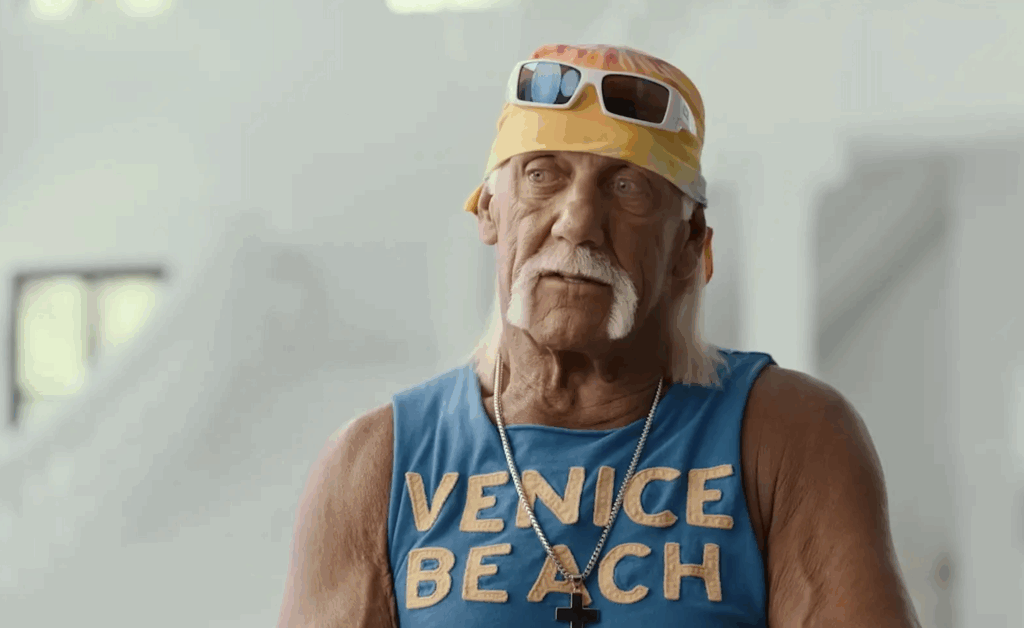
Hulk Hogan’s final interview has finally been made public. (Netflix/YouTube)
“I was taking 80 milligram fentanyls, two in the morning, stuffing them under my gums…I had two 300-milligram patches of fentanyl on my legs, and they gave me six 1,500 milligram fentanyl lollipops to eat,” Hulk says in the doc, which is currently available for streaming.
“You should be dead. We have never seen a human being take this much fentanyl,” a pharmacist told the wrestler at one point.
The heavy drug consumption began in 2009 when Hogan began competing for the TNA wrestling organization.
His divorce from wife Linda Hogan had financially devastated Hulk and left him with little choice but to step back into the ring.
Unfortunately, he was in his late fifties by then, and he quickly realized that his body could no longer sustain the sort of grueling workouts and performances that he has endured in his younger days.
“His back was in so much pain,” Hogan’s friend and former manager Eric Bischoff recalls in the documentary.
“I would literally have to go to his hotel, help him get out of bed, get into the shower,” to get ready to appear at events, “that he was contractually obligated to do.”
In interviews that took place just weeks before his death at the age of 71, Hogan revealed that he was still in a tremendous amount of pain.
“I feel okay but it’s a pain,” he says about his health. “I have my son take the tops off water bottles for me, because I can’t turn them.”
He explained in the documentary that the situation is “kind of embarrassing,” but it “keeps me humble.”
As with much of his life, Hogan’s final days were defined by personal strife, with his daughter, Brooke Hogan, being written out of his will and later revealing that she and her father were unable to heal their fractured relationship ahead of his death.
Hulk Hogan: Real American is currently available on Netflix.
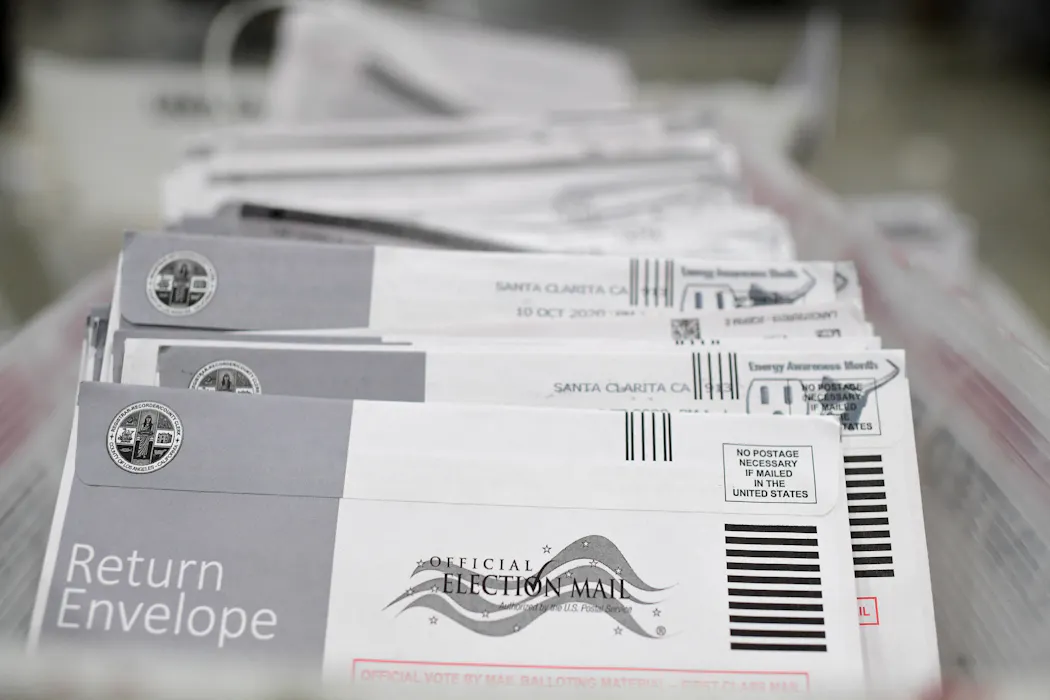
Mail-in ballots in their envelopes await processing at the Los Angeles County Registrar-Recorder’s mail-in ballot processing center in Pomona, Calif., on Oct. 28, 2020.Robyn Beck / AFP via Getty Images
John Jones knows about voter suppression. Currently the president of Dickinson College, Jones – nominated in 2002 by President George W. Bush and confirmed unanimously by the U.S. Senate – served for almost two decades as a federal court judge. In that role, Jones presided over a case, filed just prior to the November 2020 presidential election, in which a conservative legal foundation sued Pennsylvania’s top election official, alleging that she had allowed 21,000 dead people to remain on the voter rolls. The group asked Jones to stop those people from voting.
Jones denied the request. “In an election where every vote matters, we will not disenfranchise potentially eligible voters based solely upon the allegations of a private foundation,” he wrote in his memorandum on the case. In this interview with The Conversation politics and legal affairs editor Naomi Schalit, Jones discusses President Donald Trump’s March 31, 2026, executive order to wrest control of mail-in voting from states and give it to the U.S. Postal Service and the Department of Homeland Security; how the constitutional design of U.S. voting bars such federal control; and how Trump’s order would disenfranchise voters and is now the subject of lawsuits by voting rights groups and 23 states.
Article 1, Section 4, of the Constitution says, “The Times, Places and Manner of holding Elections for Senators and Representatives, shall be prescribed in each State by the Legislature thereof; but the Congress may at any time by Law make or alter such Regulations.” When you saw the executive order by the president, what did you think?
My first thought was, this executive order is dead on arrival. It assumes two problems that really don’t exist.
The president’s March order asserts that states don’t maintain active and appropriate voter rolls. That’s just not true. State after state takes that very, very seriously, and it’s a principle of federalism that states are given the responsibility for conducting elections. This includes maintaining accurate voter rolls, which, despite the noise to the contrary, states have historically done very well.
The second inaccuracy that undergirds this executive order is that there is rampant fraud in mail-in voting. There is absolutely no evidence to show that that is true.
President Donald Trump has repeatedly claimed there is pervasive fraud in mail-in voting, despite a lack of evidence.
So you have those twin rationales that are, in my view, demonstrably untrue. And as someone who believes that we need to defer to the laws and the Constitution, not to mention find accurate facts, this is deeply troubling. It’s just beyond the president’s authority to do this.
There are other problems. They are less critical but equally fatal.
President Trump said on signing the executive order that “the cheating on mail-in voting is legendary.” So the order gives the U.S. Postal Service the job of determining who may cast mail ballots, in cooperation with the Department of Homeland Security. Is that one of the problems you see?
That is not what the post office is equipped to do. I could joke here that they have a hard enough time at the U.S. Postal Service getting the mail delivered. Now they’re supposed to develop a program in concert with Homeland Security so that they could work to disqualify voters because they’re not on the list that Homeland Security provides to them that supposedly contains U.S. citizens. Homeland Security is simply not equipped to do this either. This is out of their skill set as well.
And now the administration is in effect saying, “We want to make it really, really difficult for you to vote by mail,” because of these contrived and, quite frankly, false premises that have to do with voter rolls and fraud in elections. There are legal challengesover this order in federal courts in D.C. and Massachusetts. The result will be a legal race to see which of those courts enjoins the policy first.
Victoria Beraja, center, and her mother, Lisa Burgess, right, both of Nevada, protest the passage of a mail-in voting bill during a Nevada Republican Party demonstration at the Grant Sawyer State Office Building on Aug. 4, 2020, in Las Vegas. Getty Images
Why does anybody have to sue if this is simply not in the president’s power to make happen?
Because if they don’t sue to enjoin this, since these agencies – the Postal Service and Homeland Security – are under the executive branch, they’ll just go ahead and implement this cumbersome and impossible initiative.
Secretaries of state have pushed back against this. In a separate move by the administration, the Department of Justice has asked states to turn over their voter rolls, and many have refused to do so, standing on the principle that it’s beyond the executive to demand those. Variousfederalcourtshave backed the states so far. One of the problems with the request is a lack of confidence that the information can be kept safe by the federal government. And states work very, very hard to do that.
When I was on the federal bench and denied the injunction in the lawsuit filed by a conservative legal foundation that sought to take 20,000 plus voters off the rolls, I did so because there was no good proof that they were, in fact, deceased, which is what the suit asserted. Subsequent to the election, at the now infamous Four Seasons landscaping press conference, Rudy Giuliani was waving my decision in the air and decrying the fact that dead people voted in Pennsylvania. That was simply not true.
These types of hyperbolic claims, made up out of whole cloth, stoke fears. This recent executive order is a solution that is looking for a problem that doesn’t exist.
Why did the framers of the Constitution set up a process where states run elections and not the federal government?
Well, first of all the federal government didn’t have the apparatus to conduct elections. And states had been running elections; they knew how to do it. There was a great deal of trust in the states’ ability to run elections. And there was the core debate of federalism, as to what powers states could retain, and they didn’t want to abdicate many of those powers. There was also a debate about the potential for fraud, that if there was a single entity controlling all the elections – that is, if you centralize elections under one politically motivated executive – it’s a really fraught situation which can be abused.
The Constitution is clear, and unless amended, Article 1, Section 4, is – to use the trite phrase – what it is. The power rests with the states, absent congressional action. There is no mention of the president. None. This executive order is thus, in my view, patently unconstitutional, and I harbor little doubt that it will be found to be so.
John E. Jones III does not work for, consult, own shares in or receive funding from any company or organization that would benefit from this article, and has disclosed no relevant affiliations beyond their academic appointment.
Lainey Wilson reveals why she once wrote a song about getting a speeding ticket as a teenager. Continue reading…The Boot – Country Music News, Music Videos and Songs