 Ever wonder what products the Kardashians include in their music festival’s gift bags? When it comes to Kourtney Kardashian’s Camp Poosh, we sure did! We’re not surprised to find that her sister’s…
E! Online (US) – Top Stories










Ever wonder what products the Kardashians include in their music festival’s gift bags? When it comes to Kourtney Kardashian’s Camp Poosh, we sure did! We’re not surprised to find that her sister’s…
E! Online (US) – Top Stories
Reading Time: 2 minutes
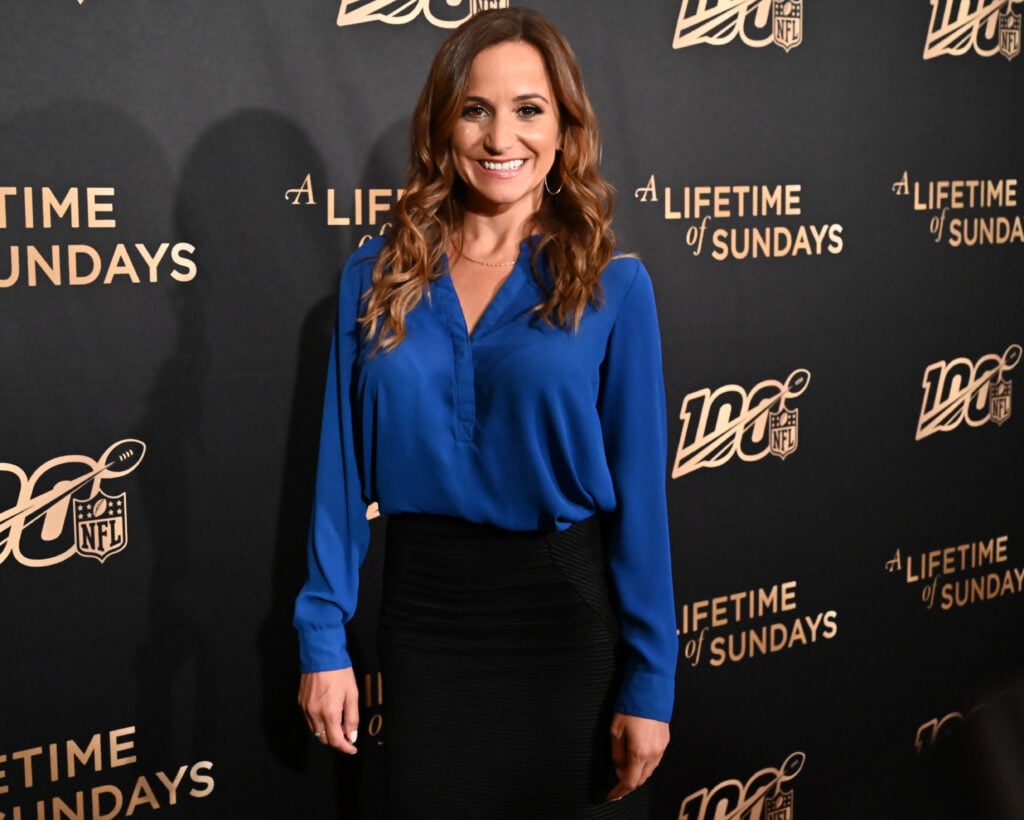
The fallout surrounding Mike Vrabel and Dianna Russini just took another dramatic turn.
Newly surfaced photos appear to show the longtime NFL coach and the sports reporter kissing during a night out at a New York City bar in March 2020, six years before the recent pics that first sparked widespread speculation about their relationship.
The news comes less than 24 hours after Vrabel revealed that he’ll check into therapy, a move that will cause him to miss part of the NFL Draft, which begins tonight.
According to Page Six, the images were taken at Tribeca Tavern and allegedly capture the pair in an intimate moment while sitting closely together.
An eyewitness told the outlet “They were kissing and they were all over each other … He had a ring on.”
The timing is what has made the report especially explosive.
Vrabel was already married at the time the photos were taken, while Russini would marry later that same year.
The newly surfaced images come on the heels of previously published photos showing the two holding hands and embracing at a resort in Sedona, Arizona in March of this year.
In the wake of that earlier report, both parties issued written statements attempting to downplay what the resort photos depicted. However, the controversy continued to escalate.
Less than a week later, Russini resigned from The Athletic after the photos led to an internal investigation at the New York Times-owned sports outlet.
Vrabel also addressed the matter publicly this week, acknowledging the personal toll the situation has taken.
He told reporters he has had “difficult conversations with people I care about,” and later announced that he would be seeking counseling.
“I have committed to seeking counseling, starting this weekend,” Vrabel said, adding:
“I have always wanted to lead by example, and I believe this is what I have to do to be the best husband, father and coach that I possibly can be.”
For now, the newly released bar photos have only intensified the conversation surrounding the pair, turning what was already a highly public controversy into an even more closely watched story.
We will have further updates on this developing story as new information becomes available.
Mike Vrabel, Dianna Russini Caught Kissing In NYC Club In 2020! was originally published on The Hollywood Gossip.
The Hollywood Gossip

THE ISLAMAPHOBE & BLAKEMAN: As Nassau County Executive, Republican Bruce Blakeman has welcomed Muslim residents with open arms.
He’s eaten at their Ramadan Iftar dinners, appointed the first Muslim chaplain to the county’s police force and talked about the value of Muslims as Nassau County county residents and Americans.
But as he tries to win a statewide race for governor, Blakeman is now aligning himself with a leader of the anti-Muslim faction of the national GOP — and he’s not responding to questions about it.
On Friday night, Blakeman will appear with Rep. Andy Ogles — the Tennessee Republican who has led the effort in Washington to “denaturalize” and “deport” Mayor Zohran Mamdani — at the Metropolitan Republican Club’s annual gala.
“Muslims don’t belong in American society,” Ogles has said. He’s also called Mamdani “Little Muhammad” and claimed that “denaturalizations and deportations are the only way to save the Big Apple.”
Blakeman’s team declined to comment on Ogles’ past statements or the gubernatorial candidate’s upcoming appearance with the House member.
Blakeman will deliver the gala’s keynote speech, and Ogles will be honored with the club’s Ronald Reagan Award for the Advancement of Individual Liberty. Also on the list of featured attendees are former Mayor Rudy Giuliani, Council Member Vickie Paladino and former Nassau County Bridge Authority Commissioner and pro-Israel influencer Emily Austin. Tickets start at $321.
The event’s host, the Metropolitan Republican Club, is often seen as the more mainstream counterpart to the city’s far-right New York Young Republican Club. The statewide New York State Young Republicans disbanded last year after POLITICO uncovered a trove of racist, homophobic and antisemitic chats involving members of the organization and other Young Republican groups around the country.
Ogles spoke at the New York Young Republican Club’s gala in December, where he said “naturalized illegal immigrants are polluting our politics” and “the new right must have courage to deport them,” a reference to his call for Mamdani’s deportation.
Husein Yatabarry, executive director of the Muslim Community Network, told Playbook remarks like Ogles’ can have a “huge impact” on the state’s roughly 1.7 million Muslim residents as they consider whether to engage in state politics.
“It’s sad to see that a lot of politicians are leaning into xenophobia and Islamaphobia and not looking at Muslims as part of their community’s fabric, but looking at Muslims as a way to get the most rude and heinous people behind you as a candidate,” Yatabarry said.
Ogles, who wrote a letter to the Department of Justice in October asking for Mamdani to be denaturalized, did not respond to a request for comment. He faces his own political battle this year, as a Democratic mayor has found fundraising success while hoping to topple Ogles in his deep-red district. Federal authorities are also reportedly investigating Ogles for potential campaign finance violations.
On the campaign trail, Blakeman often touts his strong electoral performances in purple Nassau County when speaking of his electability statewide. He easily won reelection last year in what was otherwise a bleak year for Republicans in New York.
But his Friday night appearance won’t be the first time he’ll find himself alongside figures from the extreme corners of the GOP. Blakeman was the keynote speaker at an event honoring John Eastman, an attorney who was disbarred in California last week for his efforts to overturn the 2020 election. When Blakeman’s running mate, Madison County Sheriff Todd Hood, spoke at a Buffalo-area political club led by a man who called Mamdani “vermin,” the Nassau County executive didn’t seem to mind.
“Mayor Mamdani is a disgrace,” Blakeman said in a statement at the time. “He is anti-American, antisemitic, and anti-Cop.” — Jason Beeferman

PAC IT UP: House Democrats’ biggest super PAC touted its “largest early investment” in the organization’s history, with a notable omission — New York.
House Majority PAC’s announcement earlier today of an initial $272 million spend on advertisements includes zilch in the notoriously expensive New York City media market, where Democrats are protecting Reps. Tom Suozzi and Laura Gillen on Long Island and attempting to flip Rep. Mike Lawler’s seat just north of the city in NY-17.
Democrats, fear not. Money is on the way, according to HMP.
“Today’s initial reservations prioritize markets where rates increase significantly and there will be more reservations to come,” the super PAC’s communications director CJ Warnke said in a statement. “HMP plans to invest heavily to flip districts like NJ-07 and NY-17.” (The NYC media market covers Republican Rep. Tom Kean in New Jersey’s 7th District as well.)
National Democratic groups are working from a much smaller electoral map in New York after flipping four seats two years ago. Last cycle, HMP’s initial reserve included $16 million in New York City and $5 million in markets further upstate.
Meanwhile, the Congressional Leadership Fund — the House GOP’s main super PAC — on Thursday also released its initial advertising reservations, which the group similarly described as its “largest ever.” That $153 million investment includes $18.6 million in New York City. CLF also said it is putting money into Albany ($2.1 million), Binghamton ($1.8 million) and Syracuse ($658,000), markets that cover Democratic Rep. Josh Riley’s district — another seat that Republicans have their eye on.
Last cycle, CLF’s initial reservation included $20 million in New York City and $8 million in markets elsewhere in the state.
“House Majority PAC isn’t even spending one dollar to defend vulnerable Dem members Tom Suozzi, Laura Gillen, Josh Riley & [New Jersey Rep.] Nellie Pou,” CLF spokesperson Lydia Hall said in a statement. “They’ve given up on these incumbents while funding other offensive fantasies across the country.” — Madison Fernandez

SCHRÖDINGER’S CANNABIS: New York’s beleaguered medical cannabis program can breathe a sigh of relief today after the Trump administration rescheduled medical cannabis through an executive order. Overnight, they went from dealing in a Schedule I, federally illegal substance to one that has a pathway to federal regulation under Schedule III.
What does this do for New York’s medical cannabis producers? First off, they will no longer be subject to an onerous federal tax code that barred them from taking typical business deductions like employee salaries. And starting next week, they’ll be able to register with the Drug Enforcement Administration — a dramatic shift for an industry that was viewed by the federal government as illegal drug traffickers.
The cannabis industry in New York and beyond is cheering the move as normalizing medical use of the substance. While the order doesn’t immediately change the status of the state’s adult-use market, where anyone at least 21 years old can legally shop, it does signal that the administration will likely take steps to do so this summer.
Beyond that is where things get a little murky. “There are a lot more questions coming out of this order than there are answers,” said Katie Neer, a cannabis regulatory lawyer who represents the New York Medical Cannabis Industry Association.
It could make it easier for the cannabis industry to access financial services, though that remains to be seen. And it could draw more capital to New York’s medical cannabis operators, where there are 10 licensees that are not yet operational. It could also enable New York’s medical cannabis operators, who are under one of the strictest programs in the nation, to export their products.
“It creates a market across the world for New York’s pharmaceutical [cannabis] products … to be exported internationally,” said Adam Goers, senior vice president of corporate affairs for New York medical cannabis operator Columbia Care. In terms of interstate commerce? “We’ll see how that plays out.”
New York’s medical cannabis program launched in January 2016 with 10 licensed operators. Eight of those are still operational, and the state issued licenses to 11 new medical operators more recently.
For now, even as they welcome the federal shift, cannabis companies will be tasked with figuring out the confusing legal complexities moving forward. Some of New York’s medical marijuana businesses also sell products in the adult-use market, which creates a quandary when it comes to figuring out their taxes, and more.
“It’s Schrödinger’s cannabis, right?” said Mike Feldman, general counsel of Nabis, a cannabis distributor in New York. “It is sitting in a warehouse, and it is both Schedule I and Schedule III at the same time.” — Mona Zhang
TRAIN TROUBLES — A dispute between Amtrak and New York’s Metropolitan Transportation Authority threatens the full rollout of new Acela trains, Amtrak said in a lawsuit that represents the latest transit dispute between President Donald Trump’s and Gov. Kathy Hochul’s administrations.
The suit, filed in Manhattan federal court, asks a judge to order Metro-North to give Amtrak access to the tracks, POLITICO Pro reports.
Amtrak said Metro-North is blocking its ability to test new trains because of a dispute between the two railways over liability for damage to an overhead power line that Metro-North blames on one of Amtrak’s NextGen Acela trains.
In a statement, MTA suggested Amtrak is trying to distract from another ongoing dispute where MTA says Amtrak is holding up expansion of commuter service to Penn Station.
In the lawsuit, Amtrak reveals an issue with its new Acela trains tangling with MTA infrastructure near a bridge in Westport, Connecticut during previous tests. Similar infrastructure problems — involving the interaction between overhead power lines and a train pole that draws energy from them — caused massive delays for commuters in New Jersey two summers ago. The Garden State and Amtrak were able to work through their issues; this lawsuit against New York suggests a broken relationship between Amtrak and Empire State officials. — Ry Rivard
— BILLIONAIRE BLUES: Citadel CEO Ken Griffin suggested the hedge fund might halt its planned New York City expansion after Mamdani filmed a video at his Manhattan penthouse to announce a new tax on second-homes worth over $5 million. (The Wall Street Journal)
— DELAY NOW, PAY LATER: Mamdani’s team presented Hochul’s administration with a plan to delay pension fund payments in an effort to save at least $1 billion as New York City faces a multibillion-dollar budget gap. (The New York Times)
— ZONE OF INTEREST: Unions are meeting with Mamdani’s administration to push for a veto of the buffer zone bill, which keeps protesters away from schools and educational facilities, as the mayor’s decision deadline nears. (THE CITY)
Missed this morning’s New York Playbook? We forgive you. Read it here.
Politics

 Charlize Theron’s motherhood journey is the tops.
In fact, the Oscar winner bonded with her youngest daughter August, 11, over rock climbing while training for her new action movie Apex, bringing…
E! Online (US) – Top Stories
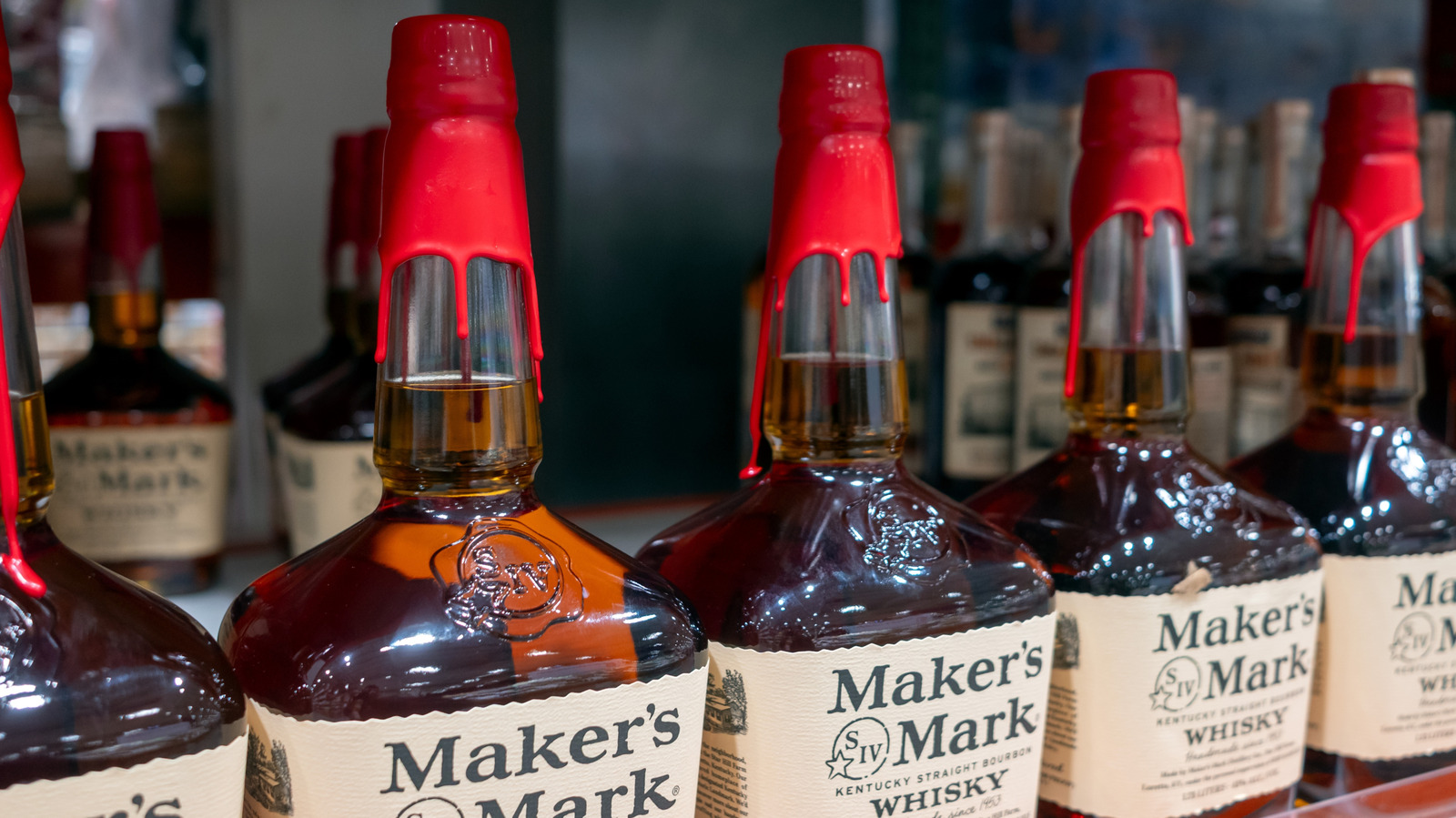
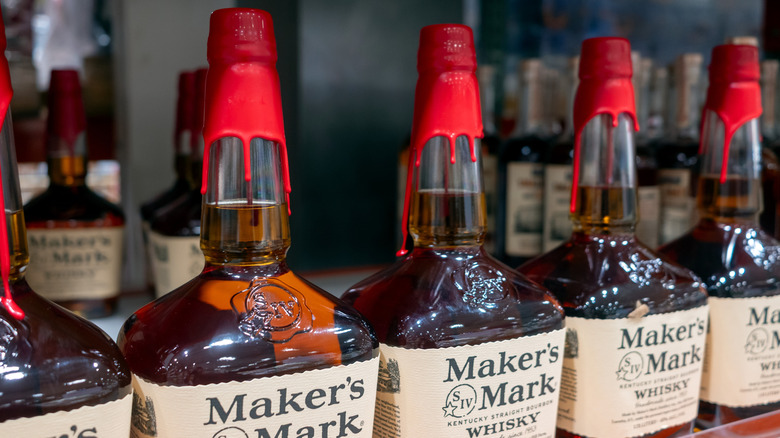
Fans of Maker’s Mark will be interested to learn that the brand is re-releasing a rare whisky from 2025, but when will it hit shelves, and where?
Mashed – Fast Food, Celebrity Chefs, Grocery, Reviews
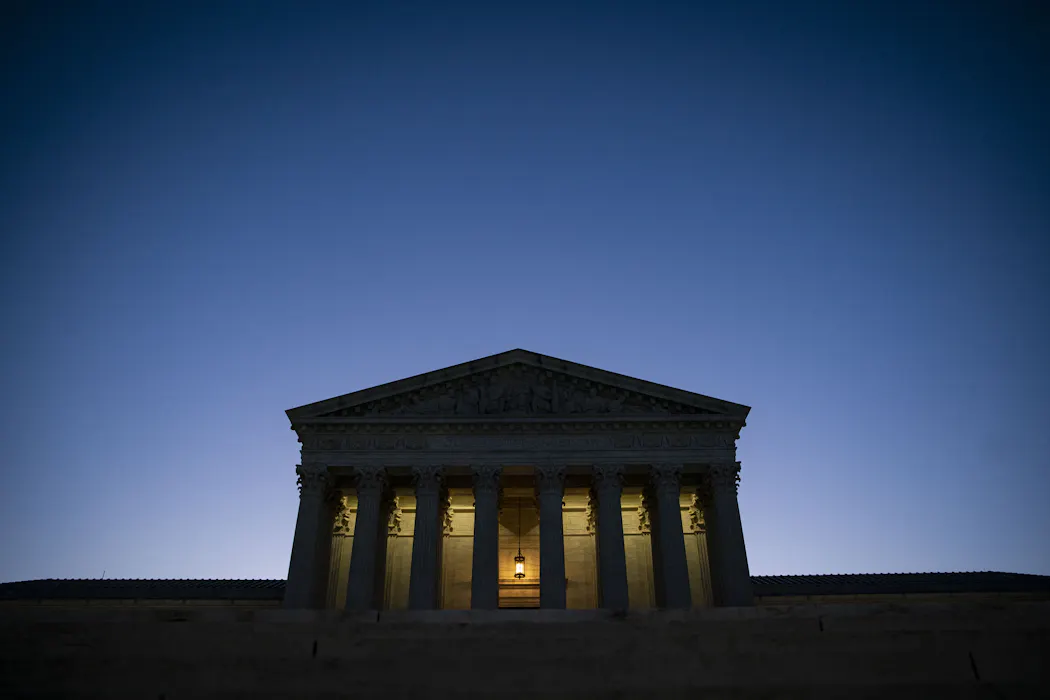
The recent publication of confidential Supreme Court memoranda by The New York Times has brought to light a pivotal moment in the court’s history. “The birth of the Supreme Court’s shadow docket has long been a mystery,” wrote reporters Jodi Kantor and Adam Liptak. “Until now.”
Originally coined by legal scholar William Baude, the term “shadow docket” refers to the Supreme Court’s emergency docket, which, as Baude wrote, includes “a range of orders and summary decisions that defy its normal procedural regularity.”
That’s law professor-speak for cases that are given abbreviated consideration and accelerated review by the justices, all out of public view – what The New York Times story referred to as the court “sprinting.” These cases aren’t included in the annual list of cases the justices have chosen to consider and that are presented by attorneys in public sessions, called “oral argument,” at the court.
During the second Trump administration, such shadow docket cases have proliferated as President Donald Trump has continued to push boundaries, challenge precedents and expand executive power. These cases have typically involved a request by the presidential administration “to suspend lower court orders” that temporarily block “an administration policy from taking effect,” according to liberal legal advocacy group the Brennan Center for Justice at New York University School of Law.
The lack of transparency in considering and ruling on the shadow docket, combined with the weight of the issues presented to the court via that docket, mean that the practice has come under strong criticism by many court watchers. Here’s how the process works and what you need to know to evaluate it.

The emergency docket is different from the court’s merits docket, which is the customary path for cases to reach the Supreme Court.
Ordinarily, in federal courts, a case begins in a federal district court. An appeal of the decision in the case is made to a federal appeals court. If a party in the case wants to appeal further, they can aim for U.S. Supreme Court review. That requires filing a “petition for writ of certiorari” to the court.
The Supreme Court does not take all the cases for which it has been petitioned. The court holds complete discretion to choose which cases to consider each term and always rejects the vast majority of petitions that it receives. By custom, the court agrees to consider a case if at least four justices vote to grant the writ of certiorari.
For the cases that the court agrees to consider, the parties to that case file briefs – written legal arguments – with the Supreme Court. Third parties can also file briefs with the court to assert their own arguments; these are known as “friend of the court” or amicus curiae briefs.
The justices then read those briefs and hear oral arguments in the case in a public session, during which they can question attorneys for both sides, before they meet and confer. At the end of this conference, the justices vote on the outcome in the case before assigning an author to draft the opinions.
The merits docket – the ordinary process – is methodical. It promotes deliberation and reasoned decision-making resulting in lengthy opinions that explain the justices’ rationale and provide guidance for lower courts in future cases.
On the other hand, the emergency docket is a process whereby the court makes quick decisions without full briefing and deliberation, and it produces orders and rulings that almost always present little to no explanation.
As Baude wrote, “Many of the orders lack the transparency that we have come to appreciate in its merits cases.”
Most of the court’s rulings and orders in cases on the emergency docket go without explanation. On occasion, however, the court produces short opinions that provide some explanation in emergency docket cases, albeit these are often dissents from the justices who disagree with the ruling.
Transparency is important, especially for the Supreme Court, because it builds trust and legitimacy. According to Gallup, as of September 2025, 42% of respondents approve, 52% disapprove and 6% have no opinion of the Supreme Court. A 2025 Pew Research Center poll found that 48% of Americans have a favorable view of the court, down from 70% five years earlier.
As a constitutional law scholar, I’ve written elsewhere that the low approval might be attributable to the court’s undisciplined overruling of landmark cases regarding individual rights, such as the abortion rights case Roe v. Wade. In my view, it is reasonable to conclude that the court’s lack of transparency, specifically with its growing emergency docket, contributes to distrust in the court.
As the late Justice Sandra Day O’Connor stated, “The Court’s power lies … in its legitimacy, a product of substance and perception that shows itself in the people’s acceptance of the Judiciary as fit to determine what the Nation’s law means and to declare what it demands.”
Conversely, a lack of transparency breeds distrust and erodes institutional legitimacy.
The 2016 case at the center of the memoranda published by The New York Times –West Virginia v. EPA – concerned environmental regulation. As the justices’ memoranda illustrate, West Virginia, North Dakota and several energy companies sued the Obama administration over its Clean Power Plan and sought to block the new, transformative regulation from going into effect.
The Clean Power Plan would have required states and energy companies to shift electricity production from higher-emitting to lower-emitting production methods to reduce carbon dioxide emissions.
After losing at the trial court, the states and energy companies filed an emergency appeal to the Supreme Court asking the justices to pause the Obama regulation from going into effect while the parties litigated the case in the lower courts.
This was a highly unusual request because, as Taraleigh Davis at SCOTUSblog confirms, “nobody had previously asked the court to halt such a major executive regulatory action before any appellate court had ruled on it.”
The court granted the unprecedented stay on Feb. 9, 2016, without any explanation as to why it temporarily blocked the Clean Power Plan. It eventually struck down the plan on June 22, 2022.
Defenders of the emergency docket frequently claim that the court’s conduct is permissible because its orders are temporary. In West Virginia v. EPA, the court temporarily blocked the Clean Power Plan from going into effect until it eventually struck it down after hearing the case on its merits docket.
What is overlooked, however, is that even temporary orders from the court can have lasting implications that are difficult, and in some cases impossible, to undo.

Consider the example of one of Trump’s immigration actions.
The administration seeks to terminate the temporary protected status for Haitian nationals, which had shielded them from deportation. But a federal district court temporarily blocked the president from doing so as the litigation continued.
The administration then filed an emergency appeal to the Supreme Court – still pending as of this writing – asking the court to overrule the district court. If granted, the court effectively would allow the administration to revoke TPS for Haitian nationals.
As an amicus brief in the case articulated, if TPS is revoked, Haitians “will be forced to face the untenable options of leaving behind their citizen children and/or partners, bringing family members with them to a country submerged in crisis, violence, and food insecurity, or staying in the U.S. without any legal status or work authorization and facing the constant threat of deportation.”
In other words, if the Supreme Court overrules the district court in this case on its emergency docket, then the Trump administration could deport the Haitian nationals even as their cases challenging the revocation of their TPS continue.
If the Haitian nationals ultimately prevail, reversing their deportation would be exceptionally difficult to do.

Wayne Unger does not work for, consult, own shares in or receive funding from any company or organization that would benefit from this article, and has disclosed no relevant affiliations beyond their academic appointment.
Politics + Society – The Conversation

 Lisa Rinna is giving Maura Higgins her flowers—or should we say roses?
Following news that the Love Island USA: Aftersun host is joining season 35 of Dancing With the Stars, Lisa revealed she’s…
E! Online (US) – Top Stories
Reading Time: 2 minutes
Last week, R&B singer D4vd was arrested in connection with the death Celeste Rivas Hernandez.
On Monday, more than seven months after a body was found in the trunk of his car, D4vd was charged with murdering Rivas Hernandez.
Earlier today, the singer was back in court for a hearing in which both sides presented new information, including a claim from the prosecution that d4vd — whose real name is David Burke — had stored a “significant amount” of child sexual abuse images on his phone.
Prosecutors said today that they have more than 40 terabytes of discovery to turn over to the defense.
Thus far, only about 30 percent of the evidence has been turned over, a fact that is expected to delay the start of the trial.
Currently, D4vd is being held without bail at Twin Towers Correctional Facility in Los Angeles.
According to NBC News, the 21-year-old was “stoic” in the courtroom today.
He spoke only twice, once mumbling “yeah” when the judge asked if he agreed to the date of his next hearing, which is set for Friday, May 1.
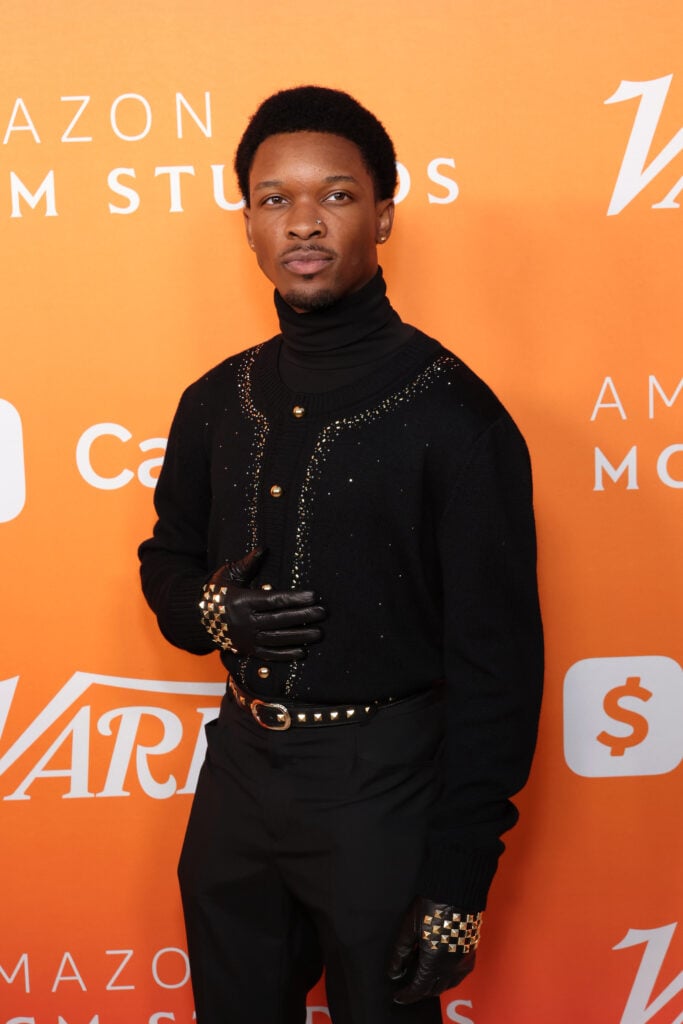
On a second occasion, David said, “Yes, ma’am,” when the judge asked if he understood how his next hearing would be conducted.
Attorneys for Burke claimed that their client is innocent of any wrongdoing, and they announced their intention to “vigorously defend his innocence.”
It is unclear at this time how much of the massive data file recovered from Burke’s devices is believed to be sexual abuse material.
Prosecutors also did not reveal if any of the explicit images were of Rivas.
The 14-year-old disappeared from home in April of last year. Prosecutors allege that Burke murdered her with a sharp object shortly thereafter before dismembering her body and hiding it in the trunk of his Tesla.
The Rivas Hernandez family was not present in court today
“These findings have caused profound emotional pain for the family,” Rivas Hernandez family attorney Patrick Steinfeld said this week.
“They respectfully ask for privacy, understanding, and patience as they process this information.”
We will have further updates on this developing story as new information becomes available.
D4vd: Singer, Accused Murderer Had ‘Significant Amount’ of Child Sex Abuse … was originally published on The Hollywood Gossip.
The Hollywood Gossip
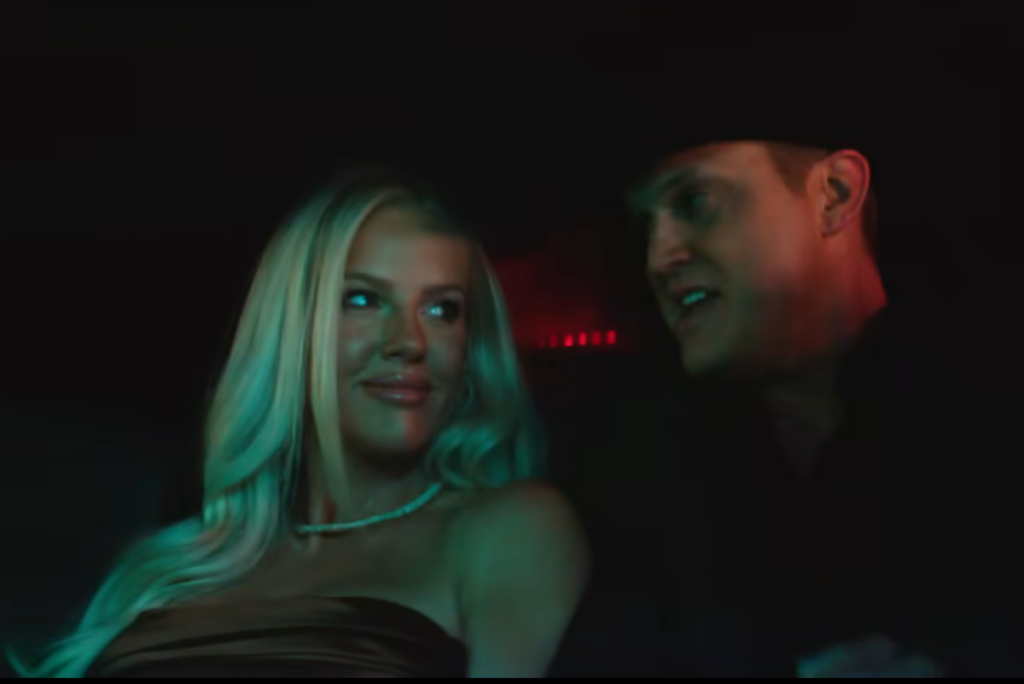
Jon Pardi’s newest single, “Boots Off,” was inspired by a real-life moment with his wife, Summer, so it’s no surprise he cast his longtime love in the recently released music video.
The clip follows the couple on a night out, getting dressed up and hitting the town before the evening quickly turns into a more intimate night back at their hotel.
Throughout the video, fans get a glimpse into their playful dynamic, with moments that include impromptu dancing, cozying up in the back of a limo, and sneaking in a little flirting as they make their way down the hotel hallway. Once back in the room, the chemistry continues as Summer changes into black lingerie, while Jon adds a bit of humor to the scene by channeling Joel Goodsen in Risky Business, famously played by Tom Cruise, and even a little Elvis Presley.
In a recent interview with Country Countdown USA, Jon opened up about the video and having Summer play a part in it.
“That was the good part. We could really be romantic on screen. I wrote it about Summer. We wanted to make it about a romantic night in a nice hotel. So we did it at the Grand Hyatt in Nashville,” he revealed.
Of the video, he admitted it was “just fun” to shoot and added that he wanted to add a bit of “comedy” to the scenes.
“I called my Elvis jumpsuit girls. I always wanted a baby blue one. I made an excuse to get another Elvis jump suit. You get super powers in the jump suit,” he laughed. “Once I put them on, I become Elvis Pardi. You never know when Elvis Pardi’s gonna come out.”
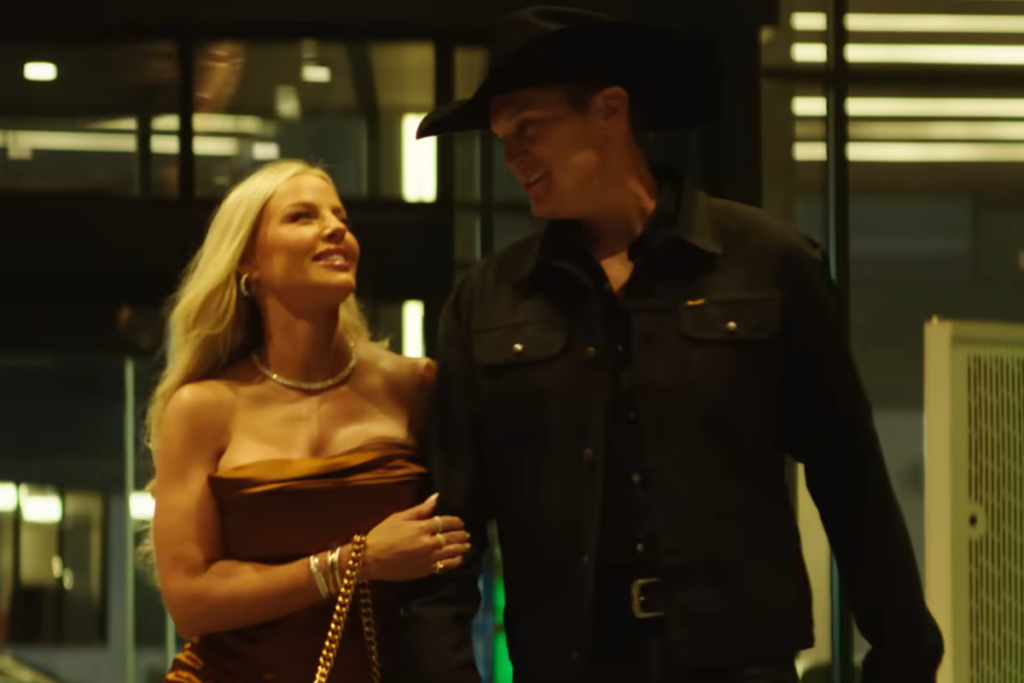
“Boots Off” appears on Jon Pardi’s latest album, HONKYTONK HOLLYWOOD, and was co-written by Pardi alongside Luke Laird and Wyatt McCubbin.
The track was inspired by a real-life moment he shared with his wife, Summer, following one of his shows.
“Boots Off is about, well, you know, kind of self-explanatory, but it’s out of fun night, you know, and it all kind of started when I had trouble getting my boots off, like after a show, you know, get a little sweaty, you got to get them off and you know, you got that sexy wife like Summer and you know, you’re getting ready,” he shared.
The track is currently climbing the country radio charts and has cracked the Top 30.
The post Jon Pardi Casts Wife Summer in Steamy ‘Boots Off’ Music Video appeared first on Country Now.
Country Now
Fans are raving about the new pictures. Continue reading…The Boot – Country Music News, Music Videos and Songs