Vinegar has been around for millennia, but the answer as to whether you can keep it at room temperature might leave a sour taste in your mouth.

Mashed – Fast Food, Celebrity Chefs, Grocery, Reviews










Vinegar has been around for millennia, but the answer as to whether you can keep it at room temperature might leave a sour taste in your mouth.
Mashed – Fast Food, Celebrity Chefs, Grocery, Reviews

 Angel Reese is living the dream.
One day after it was announced that she was being traded from the Chicago Sky to the Atlanta Dream, the WNBA player said she couldn’t be more thrilled about her…
E! Online (US) – Top Stories

 Caitlyn Jenner has taken legal action against the estate of Sophia Hutchins.
Nine months after the Olympian’s friend and manager died on July 2 at the age of 29 following an ATV crash, Jenner’s…
E! Online (US) – Top Stories

Bipartisan calls for President Donald Trump’s removal from office increased on April 7, 2026, after he issued threats to destroy “a whole civilization” if Iran refuses to reopen the Strait of Hormuz.
These calls have come from across the political spectrum, from Democratic Reps. Alexandria Ocasio-Cortez of New York and Melanie Stansbury of New Mexico to former Rep. Marjorie Taylor Greene and right-wing pundit Alex Jones. Unlikely allies seem to agree that the president has gone too far and needs to be reined in.
Their concerns have emerged as Iran has walked away from talks to end the war and Trump’s language suggests that he plans to escalate it by destroying the country’s power plants and bridges.
Concerns over Trump’s fitness for office have grown in recent weeks as his commentary has become more erratic.
If lawmakers do attempt to remove Trump from office, here’s what would happen:
The Constitution’s 25th Amendment provides a way for high-level officials to remove a president from office. It was ratified in 1967 in the wake of the 1963 assassination of John F. Kennedy – who was succeeded by Lyndon Johnson, who had already had one heart attack – as well as delayed disclosure of health problems experienced by Kennedy’s predecessor, Dwight Eisenhower.
The 25th Amendment provides detailed procedures on what happens if a president resigns, dies in office, has a temporary disability or is no longer fit for office.
It has never been invoked against a president’s will, and has been used only to temporarily transfer power, such as when a president is undergoing a medical procedure requiring anesthesia.
Section 4 of the 25th Amendment authorizes high-level officials – either the vice president and a majority of the Cabinet or another body designated by Congress – to remove a president from office without his consent when he is “unable to discharge the powers and duties of his office.” Congress has yet to designate an alternative body, and scholars disagree over the role, if any, of acting Cabinet officials.
The high-level officials simply send a written declaration to the president pro tempore of the Senate – the longest-serving senator from the majority party – and the speaker of the House of Representatives, stating that the president is unable to discharge the powers and duties of his office. The vice president immediately assumes the powers and duties of the president.
The president, however, can fight back. He or she can seek to resume their powers by informing congressional leadership in writing that they are fit for office and no disability exists. But the president doesn’t get the presidency back just by saying this.
The high-level officials originally questioning the president’s fitness then have four days to decide whether they disagree with the president. If they notify congressional leadership that they disagree, the vice president retains control and Congress has 48 hours to convene to discuss the issue. Congress has 21 days to debate and vote on whether the president is unfit or unable to resume his powers.
The vice president remains the acting president until Congress votes or the 21-day period lapses. A two-thirds majority vote by members of both houses of Congress is required to remove the president from office. If that vote fails or does not happen within the 21-day period, the president resumes his powers immediately.

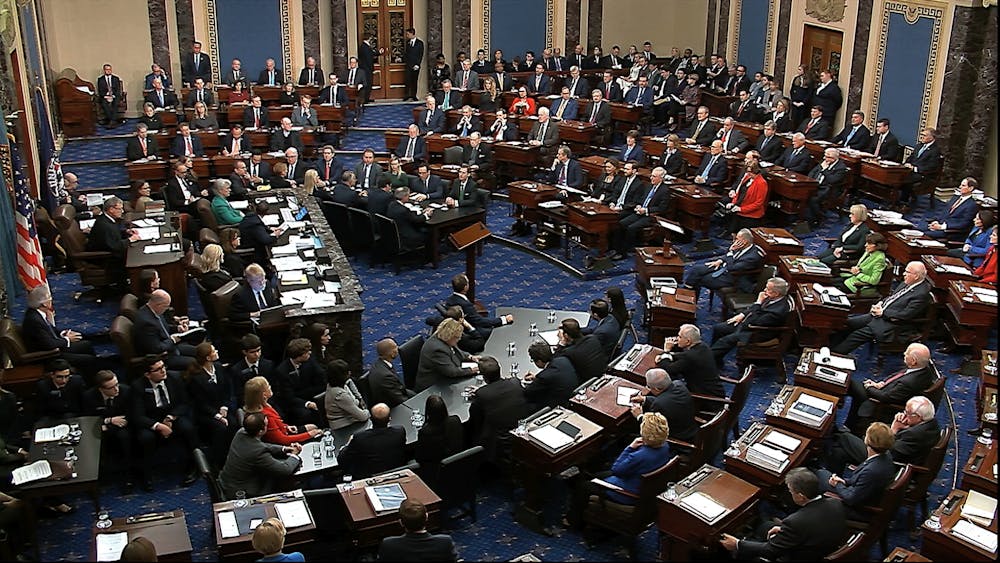
Article II of the Constitution authorizes Congress to impeach and remove the president – and other federal officials – from office for “Treason, Bribery, or other high Crimes and Misdemeanors.” The founders included this provision as a tool to punish a president for misconduct and abuses of power. It’s one of the many ways that Congress could keep the president in check, if it chose to.
Impeachment proceedings begin in the House of Representatives. A member of the House files a resolution for impeachment. The resolution goes to the House Judiciary Committee, which usually holds a hearing to evaluate the resolution. If the House Judiciary Committee thinks impeachment is proper, its members draft and vote on articles of impeachment. Once the House Judiciary Committee approves articles of impeachment, they go to the full House for a vote.
If the House of Representatives impeaches a president or another official, the action then moves to the Senate. Under the Constitution’s Article I, the Senate has the responsibility for determining whether to remove the person from office. Normally, the Senate holds a trial, but it controls its procedures and can limit the process if it wants.
Ultimately, the Senate votes on whether to remove the president – which requires a two-thirds majority, or 67 senators. To date, the Senate has never voted to remove a president from office, although it almost did in 1868, when President Andrew Johnson escaped removal from office by one vote.
The Senate also has the power to disqualify a public official from holding public office in the future. If the person is convicted and removed from office, only then can senators vote on whether to permanently disqualify that person from ever again holding federal office. Members of Congress proposing the impeachment of Trump have promised to include a provision to do so. A simple majority vote is all that’s required then.
This is an updated version of an article originally published on Jan. 9, 2021.

Kirsten Matoy Carlson does not work for, consult, own shares in or receive funding from any company or organization that would benefit from this article, and has disclosed no relevant affiliations beyond their academic appointment.
Politics + Society – The Conversation

Calling all foodies: Bring your appetites, and beeline it to this Northern California city that plates some of the best food in the country.

Mashed – Fast Food, Celebrity Chefs, Grocery, Reviews

 The crew of the Artemis II mission had to tidy up their tears quickly, lest they be bouncing all over their spacecraft.
Because there wasn’t a dry eye in the Integrity as they named a crater that…
E! Online (US) – Top Stories


 I hate to raise alarm bells but Mother’s Day is going to be here before you know it. If you haven’t started game planning a gift for you mom, grandmother, wife, or maternal figure in your…
E! Online (US) – Top Stories

Spring has officially arrived and Walmart has a lineup of new groceries that you can’t miss in April 2026. From breakfast to dirty soda, they have you covered.

Food Republic – Restaurants, Reviews, Recipes, Cooking Tips

Reading Time: 3 minutes
These days, Chelsea Houska is one of the top home renovation stars on HGTV.
But way back in the day, she got her start on MTV’s infamous Teen Mom franchise.
In fact, Chelsea might be the show’s biggest success story (she’s certainly doing better than Jenelle Evans, anyway).
These days, Chelsea says her approach to reality TV has changed, and that means her children won’t be part of any future Teen Mom coverage.
Houska, who rose to fame alongside her husband, Cole DeBoer, told People this week that while she once shared her kids’ lives on camera, she wouldn’t think of doing that now.
“They were on TV so much, especially Aubree, in her early life. Looking back, I don’t know if I would choose that again at this point,” she said.
From there, she touched on how her views on privacy have changed in recent years.

“I’m so grateful for it and everything. I’m just saying for our kids now, that’s been the biggest difference between the two [shows],”
Chelsea noted that the stakes feel higher now that she and Cole’s children are older and more aware.
“We learned as we’ve gotten older and the kids have gotten older, we really want to be selective on how we show the kids, how much we show the kids, and just really try to protect them,” she explained
The South Dakota native went on to note that her current show, Down Home Fab, is very different from Teen Mom.
“HGTV has been so incredible,” Chelsea explained, adding:
“If you are uncomfortable with the kids being on [camera], you just tell us, that is totally fine. If they don’t want to, it’s okay. We will never dive deep into anything personal with them.”

These days, Chelsea admits that Teen Mom stardom had its downsides. And she claims she has no such problems on HGTV.
“I think I had been on TV for so long before and it was such a different dynamic,” she said, adding:
“Reality TV, such as Teen Mom, was very chaotic, you know, a little negative from time to time. It was a totally different feeling when we started [at] HGTV. I actually wasn’t nervous about any of that.
“I was like, they want us to look good. They want people to love us, and they want to show our true personality. And so I was excited too, just because I trust these people 100% and I’m not nervous about anything. I can say whatever.”
Chelsea’s shift reflects a larger trend among former teen reality stars who have become more selective about what they share as their children grow older.
And while she clearly values the opportunities Teen Mom provided her family, she understands that motherhood today looks different than it did when she first started filming.
Chelsea Houska Says She Regrets Putting Her Kids on ‘Teen Mom’ was originally published on The Hollywood Gossip.
The Hollywood Gossip