Hacker using laptop. Lots of digits on the computer screen. (Getty Image)
The Federal Bureau of Investigation released a report Thursday that showed Alaskans lost nearly $40 million in cyber crime in 2025.
Special Agent in Charge Matthew Schlegel of the FBI Anchorage Field Office said it is the highest financial loss ever reported in Alaska for such crimes.
“Behind these numbers are real people – Alaskan families who lost hard-earned savings, retirement funds, and financial security,” he said in a news release.
Americans lost nearly $21 billion in cyber crimes in 2025, according to the FBI Internet Crime Report issued by the Internet Crime Complaint Center.
This chart outlines IC3 loss trends over a 10-year period for Alaska, with reported losses exceeding $158 million. (FBI graph)
Alaskans reported the 2025 losses in 3,202 complaints to the Internet Crime Complaint Center, making it the highest financial losses ever reported in Alaska in one year. Losses went up by $13.6 million since 2024.
The FBI encouraged people to identify red flags of a potential scam to protect themselves from cyber threats and crime.
“To combat this ever-evolving threat, it has never been more important for residents and businesses to be diligent with cybersecurity, electronic interactions, and safeguarding personal and financial information,” Schlegel said.
The greatest losses in Alaska were from investments-related fraud, confidence or romance fraud, compromised business emails and tech support scans. Approximately 482 Alaskans lost more than $18 million to cryptocurrency crimes.
According to the report, 20% of Alaskans who reported losses from internet crimes were 60-years-old and older who lost $16.2 million.
President Donald Trump issued an executive order on March 6 directing officials to develop a plan to prevent, disrupt, investigate and dismantle Transnational Criminal Organizations in order to stop cyber-enabled criminal activity.
“Cybercrime, fraud, and predatory schemes are draining American families of their life savings, stealing the benefits of years of work, and destroying the lives of our youth,” Trump wrote in the order.
Ryan Seacrest’s physical transformation over the years has turned him into a role model for men’s health. As these photos show, he’s serious with his workouts.
Health Digest – Health News, Wellness, Expert Insights
We have sad news to report from the world of music today.
Nedra Talley Ross — the singer best known as a founding member of the legendary group the Ronettes — has passed away.
News of Ross’ death comes courtesy of a statement from her daughter:
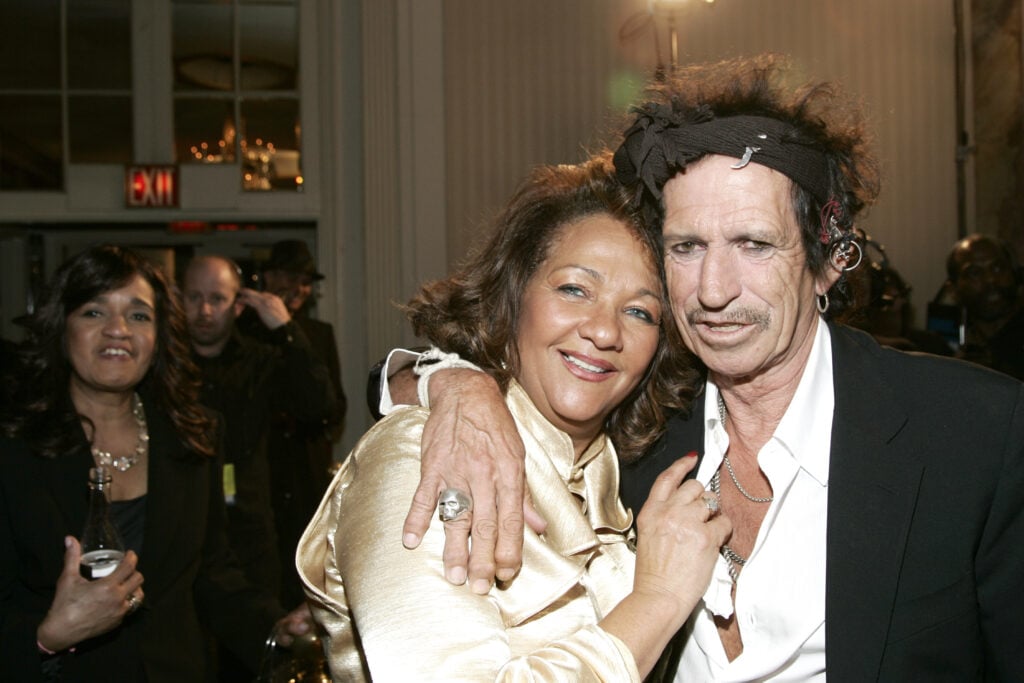
Nedra Talley of The Ronettes and Keith Richards. (Photo by Brian Ach/WireImage for ON 3 PRODUCTIONS)
“At approximately 8:30 this morning our mother Nedra Talley Ross went home to be with the Lord. She was safe in her own bed at home with her family close, knowing she was loved. Thank you Lord,” Nedra K. Ross wrote on on Facebook on Sunday night.
Ross, 80, was the last living member of the Ronettes, who scored hits with “Be My Baby” and “Walking in the Rain.”
The band’s official social media accounts shared a tribute to Nedra.
“It is with heavy hearts that we share the news of Nedra Talley Ross’ passing. She was a light to those who knew and loved her,” the post trad.
“As a founding member of The Ronettes, along with her beloved cousins Ronnie and Estelle, Nedra’s voice, style and spirit helped define a sound that would change music.
“Her contribution to the group’s story and their defining influence will live forever.”
“Rest peacefully dear Nedra. Thanks for the magic.”
Born in New York City on January 27, 1946, Ross formed the band with her cousins, Ronnie Spector and Estelle Bennett in 1959.
The group gained popularity thanks in part to the “wall of sound” approach to recording invented by producer Phil Spector.
After opening for the Beatles on the band’s 1966 tour, the Ronettes broke up in 1967.
Shortly after, Ronnie wed Phil Spector, who would later be imprisoned for murder.
As a solo artist, Ross focused on contemporary Christian music, but was never able to duplicate the success she found with the Ronettes.
In her later years, she worked in real estate in Virginia. She is survived by her four children.
Our thoughts go out to Ross’ loved ones during this incredibly difficult time.
Tank and the Bangas have released “No Invite,” the second single from their upcoming album The Last Balloon, which is due May 15 via Verve Forecast. The New Orleans group also unveiled a new music video for the track as they continue the rollout for the LP, their first full-length release since the spoken-word project The Heart, The Mind, The Soul. “No Invite” follows lead single “Move,” which featured Lucky Daye and introduced the next chapter in the band’s recording career.
The Last Balloon follows the group’s earlier albums Green Balloon and Red Balloon, completing a trilogy while opening what bandleader Tarriona “Tank” Ball described as a new phase. In the release, Ball said she chose the title because she did not want people asking when Purple Balloon might arrive, adding, “It’s the end of the balloons; we’re moving into a new space now.” The album was executive-produced by Austin Brown and recorded primarily at The Complex Studios in Los Angeles. Its guest list includes Iman Omari, Tane Runo, Ledisi, and Jelly Joseph.
Click to load video
Ball also said the band has been “working with new people and cultivating new sounds,” describing the material as part of a broader evolution in the group’s approach. She added that listeners may not always be able to categorize the band’s sound, but can still connect with how the music makes them feel. That idea runs through the album’s framework, which the release says moves between vulnerability, release, and communal uplift while keeping the dynamics of the band’s live performances in focus.
The announcement follows a notable stretch for Tank and the Bangas. In 2025, The Heart, The Mind, The Soul won the Grammy Award for Best Spoken Word Poetry Album. Before that, Red Balloon earned a nomination for Best Progressive R&B Album at the 2023 Grammy Awards, while Green Balloon helped secure a Best New Artist nomination in 2020. The band first broke through after winning NPR’s Tiny Desk Contest in 2017, and they are extending that momentum into 2026 with new tour dates in Brooklyn, Boston, Detroit, Washington, D.C., and other cities tied to the release of The Last Balloon.
According to police reports, a man said his handgun discharged — striking and killing another person — in a parked car outside the venue. Continue reading…The Boot – Country Music News, Music Videos and Songs
According to police reports, a man said his handgun discharged — striking and killing another person — in a parked car outside the venue. Continue reading…Country Music News – Taste of Country
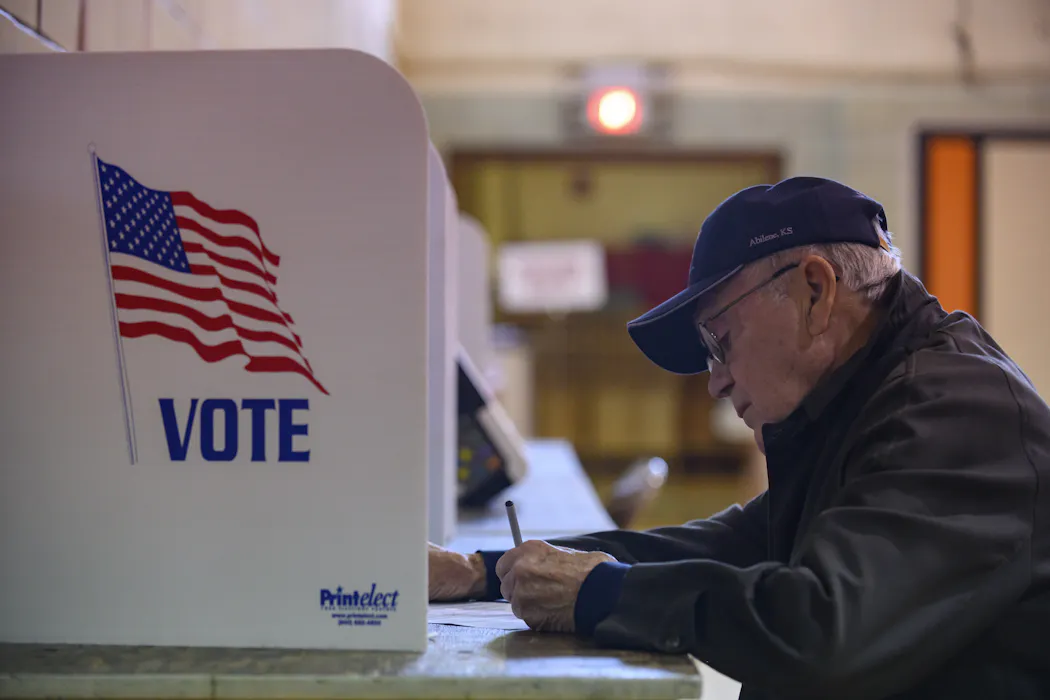
A study found that voting, like good nutrition and exercise, could extend your lifespan.Jeff Swensen/Getty Images
Most people know the basics of healthy living that become more important as you grow older: Eat plenty of vegetables, exercise regularly, sleep well, have a social life, limit your alcohol consumption and don’t smoke.
As an economist and social psychologist who study altruism and health, we wondered whether civic engagement might play a role as well.
In 2022, the American Medical Association, an organization representing doctors, noted that voting could potentially have health benefits. So we conducted a study that directly tested this idea: We examined whether older Americans – people who are 65 and up – who vote live longer than nonvoters.
Older adults vote at a higher rate than younger adults in the United States. In Wisconsin, the focus of our study, the voting rate of older adults is even higher.
We used data from the Wisconsin Longitudinal Study, a study which has followed a randomly selected sample of Wisconsin high school graduates since 1957. We compared the long-term health of older adults who voted in the 2008 presidential election to those who did not vote in that election. Using objectively verified voting records from Catalist, which tracks Americans’ voting behavior, along with official National Death Index records, we found that voters were 45% less likely to die within five years after the 2008 election, 37% less likely to die 10 years after the election, and 29% less likely to die 15 years later.
We also examined voting in the 2004 and 2012 presidential elections and found that the results were stronger for more recent elections – those held in 2008 and 2012 – compared to the earlier one held in 2004.
You may wonder whether this is just because healthier people are more likely to vote in the first place.
It’s easier to vote when you’re healthy than when you’re not, but this does not fully explain our results. Voters still had a lower risk of dying when we controlled for demographic factors such as gender, marital status and income, other forms of civic engagement such as volunteering, and a voter’s health status prior to voting.
We also found that those in poorer health to begin with benefited more from voting 15 years later than those who had been healthier before they voted.
Here’s another finding: How someone voted didn’t matter. When we compared what happened to older adults who cast their ballots in person to those who mailed their ballots, we found that both groups had about an equally lower risk of dying over the 15-year period.
It also did not matter whether a voter’s preferred candidate won. We found that although it can be stressful when the candidate you support loses, the people we studied experienced similar long-term health benefits of voting regardless of their political affiliation.
Voters had a lower risk of dying when the researchers controlled for demographic factors such as gender, marital status and income. Paul Hennessy/Anadolu via Getty Images
Voting is, arguably, also an altruistically motivated act. That’s because individual voters are aware that their one vote will not change the outcome of a national election.
What still isn’t known
If you are wondering why voting predicts lower mortality risk, well, so did we.
One possibility is that as with other civic engagement activities, including volunteering, voting may trigger positive biological responses that support well-being. Other researchers have found ample evidence showing that volunteering can boost the brain’s reward system, reduce stress and even slow some aspects of aging.
Although we didn’t test for these in the Wisconsin Longitudinal Study, they may help explain why people who vote tend to have better health outcomes than those who don’t.
Although the exact explanations aren’t known, studies consistently show a link between volunteering and a lower mortality risk, which suggests that participating in civic life – even something as simple as casting a ballot – may be good for your health, like going for a run or eating vegetables.
The authors do not work for, consult, own shares in or receive funding from any company or organization that would benefit from this article, and have disclosed no relevant affiliations beyond their academic appointment.
Old-school lumberjacks had to consume thousands of calories a day to keep themselves and their operations going. These are some of the staple foods they ate.