The exact number of Scotch brands is a mystery – estimated in the high hundreds, if not thousands – but one name consistently rises above the fray.

Food Republic – Restaurants, Reviews, Recipes, Cooking Tips









The exact number of Scotch brands is a mystery – estimated in the high hundreds, if not thousands – but one name consistently rises above the fray.
Food Republic – Restaurants, Reviews, Recipes, Cooking Tips
DAYS THE BUDGET IS LATE: 27
FREE KICKS: After days of headlines about exorbitant costs to get to the World Cup, Gov. Kathy Hochul and Mayor Zohran Mamdani on Monday unveiled a series of free watch parties in each borough.
The public events are a sign that the Democrats, who appeared together at Staten Island University Hospital Community Park, are trying to make the tournament affordable for fans who can’t afford to watch in person.
“Every fan should be able to watch the greatest tournament on earth without dipping into their savings,” said Mamdani, who attended the 2010 World Cup in South Africa.
Several of the events, dotted around the city, will have daily programming, even when matches aren’t being played.
Hochul has worried the high fares New Jersey Transit is charging to get fans to matches at MetLife Stadium will throw “cold water” on the tournament. She said that while MetLife will only fit 80,000 people, “this moment belongs to millions of New Yorkers.”
“If you can’t get to the World Cup, the World Cup is coming to you,” she said.
The announcement comes amid heightened security concerns because of several overlapping events, including a naval review President Donald Trump is likely to attend on July 4.
At the press conference, Mamdani used a question about security concerns to denounce this weekend’s attempted attack at the White House Correspondents Dinner, saying there’s “no room for this kind of political violence.”
“What we saw at the press correspondents dinner is one part of a very troubling reality across this country, which is how political violence has become part of our politics,” he said. “It is something that we are taking into consideration whenever we are planning anything in our city.”
The World Cup events took years of planning. Hochul has also announced other events upstate. And New Jersey is rolling out events in each of its 21 counties.
Mamdani teased further events in the city, including Department of Transportation “watch parties,” despite a moratorium on certain public events in parks that came at the request of the NYPD amid staffing concerns. — Ry Rivard

PIED-À-PUSH: Hochul adopted some populist rhetoric with a video released today pitching her pied-à-terre tax plan as one that impacts “billionaires and oligarchs.”
The language is striking for a governor who has opposed broader tax hikes like raising rates on income for rich New Yorkers and large corporations.
Yet Hochul is contending with sustained left-flank pressure to raise those taxes in the state budget, which is now nearly a month late.
The governor’s proposal, which would apply an annual surcharge on non-primary New York City residences worth $5 million and more, is expected to generate some $500 million. The money would help close a $5.4 billion city budget gap.
In her explainer video, Hochul asserts the surcharge would affect investors who “are not paying some of the same taxes as the people who live here year round.” It’s worth noting, though, that these owners are paying city property taxes.
Business leaders, including the Real Estate Board of New York and the Partnership for New York City, are concerned that the tax would hinder investment in the city. — Nick Reisman
SEE MY VEST: State Capitol security personnel have started wearing tactical vests — a move the State Police said was done as “a proactive safety measure.”
State Police spokesperson Beau Duffy told Playbook on Monday that the introduction of ballistic vest carriers, which are designed to hold armor plates, at the Capitol complex isn’t connected to a specific incident or threat.
The change comes as the state Capitol and surrounding state office buildings have tightened security in recent months, which includes a visible State Police presence at entrances. — Nick Reisman
PAY DELAY PERK: A new bill would let state legislators stop paying their personal utility bills whenever there’s a late budget.
The measure from Assemblymember Larinda Hooks would allow state workers and “elected officials” whose checks are delayed due to a delinquent spending plan to immediately stop paying their utility and internet bills. Under the legislation, they would not have to resume payments until two months after the budget is passed.
Practically every state employee has been paid since lawmakers missed the March 31 budget deadline — that’s why members have passed seven budget extenders.
The one exception? State legislators, who are statutorily barred from collecting checks until the oft-tardy spending plan is finalized.
“It’s clear who the main beneficiaries of this bill are,” Assembly Minority Leader Ed Ra said. “There hasn’t been a situation in recent memory where state employees had paychecks withheld as a result of a late budget.”
Hooks’ office did not return a request for comment.
Senate Finance Chair Tom O’Mara characterized the bill as “one of the most ridiculous ideas I’ve ever heard.”
“These legislators that are worried about not paying their utility bill while the budget’s late should be worried about lowering peoples’ utility bills,” O’Mara said. “Everything we do around here makes them more expensive.” — Bill Mahoney
DOH STEPS UP: As the Centers for Disease Control and Prevention scales back its testing for pathogens, the state Department of Health said today it’s stepping in to fill the gap. The state’s Wadsworth Center will take on testing paused by the CDC, a role it’s already been filling for 23 states that lack the resources to test pathogens.
The state lab announced that it’s now working with the CDC on testing for viruses such as influenza, pox and rabies. The Health Department noted that a pause in testing by the CDC has created a public health risk across the country, particularly for states that don’t have the necessary resources for robust testing. The CDC did not immediately respond to a request for comment.
“The New York State Department of Health’s Wadsworth Center stands at the forefront of innovation, protecting the health of New Yorkers and communities far beyond the State’s borders,” State Health Commissioner James McDonald said in a statement. “Under the leadership of Governor Hochul, New York State continues to lead in disease surveillance – work that is critical to responding effectively to public health threats.”
Read more here in POLITICO Pro from Katelyn Cordero.

BREAKING RANKS: A key member of the City Council Progressive Caucus has quietly resigned from the bloc, a departure that comes amid a wider rift between the chamber’s lefties and Council Speaker Julie Menin.
Council Member Nantasha Williams, who serves as the body’s deputy speaker and is part of Menin’s leadership team, stepped down from the Progressive Caucus last week, a spokesperson told Playbook. The spokesperson suggested serving on the caucus is incompatible with Williams’ leadership responsibilities, given she has “shifted to supporting priorities across the full Council alongside the speaker.”
In a statement, Williams confirmed she left “to focus on my broader leadership role in the Council.” Despite departing, she said she remains committed to the “values” of the caucus.
“I look forward to continuing to partner with colleagues to advance shared priorities for New Yorkers,” said Williams, who has served as deputy speaker since Menin tapped her for the post in January.
Council Members Sandy Nurse and Tiffany Cabán, the Progressive Caucus’ co-chairs, lauded Williams for her “years of service within our caucus.”
“Her decision to step back due to the new structural expectations that come alongside her role within Council leadership is not an easy one, but it is understandable,” they said. “We will continue to advocate for budget justice and the protection of civil liberties, which are our shared priorities. We hope to do so in continued partnership with our deputy speaker.”
Williams’ exit leaves the Progressive Caucus with 23 members, most of whom are aligned with Mamdani. That puts the caucus just shy of a majority in the 51-member Council.
Menin, a more moderate Democrat, has increasingly embraced her role as a foil to Mamdani, clashing with him over how to address the city’s budget deficit and other policy matters.
Given their alignment with Mamdani, Progressive Caucus members have also had more frequent clashes lately with Menin.
A recent example: Last week, Progressive Caucus leaders praised Mamdani for vetoing a bill that would permit the NYPD to set up buffer zones outside educational facilities during protests.
By contrast, Menin, a key supporter of the bill, condemned the veto and signaled she might try to whip votes to override Mamdani to force the legislation into law. Despite still being a Progressive Caucus member at the time, Williams voted for the school buffer zone bill when it first passed the Council in late March.
In an X post on Friday, Cabán, the caucus co-chair, encouraged her colleagues to vote against any override attempt by Menin.
“I trust that my colleagues will sustain this veto so that we can protect our civil liberties and work together to address the root causes of hate violence,” Cabán wrote. Menin would almost certainly need the support of a handful of Progressive Caucus members to pull off a successful override of the mayor’s veto of the protest-related bill. — Chris Sommerfeldt
SUCCESS HEADS TO SUNSHINE STATE: New York City’s largest charter network announced Monday that it will open five elementary schools in Miami next year, marking its first expansion outside of New York.
Success Academy will co-locate with five schools across Miami-Dade County, specifically Hialeah-Miami Lakes Senior High School, Homestead Senior High School, Miami Jackson Senior High School, North Miami Senior High School and Westland Hialeah Senior High School.
The schools are slated to open during the 2027-28 school year, serving 1,500 students in kindergarten through first grade, according to a Success spokesperson. They will add an additional grade each year.
“Success Academy is excited to bring our proven, high-quality educational model to Miami’s families,” Eva Moskowitz, Success founder and CEO, said in a statement. “We look forward to serving these communities, partnering with parents and delivering on the promise of an exceptional education for every child.” — Madina Touré
— ALL BETS ARE OFF: Attorney General Letitia James sued cryptocurrency exchanges that allow users to trade, joining the fight over federal and state regulations for prediction markets like Kalshi and Polymarket. (Gothamist)
— THAT’S NOT FAIR: The Montgomery County fair promoted a post by Republican congressional candidate Anthony Constantino, whose company has sponsored the fair, urging people to sign nominating petitions to get him on the ballot. (Times Union)
— ON SECOND THOUGHT: New York City’s public school system announced it was pulling controversial plans to open an AI-focused high school and to relocate three middle schools following community backlash. (POLITICO Pro)
Missed this morning’s New York Playbook? We forgive you. Read it here.
Politics

A bear hunts for salmon in Katmai National Park. (National Park Service photo)
As an economist who has spent more than three decades quantifying Alaska’s resource-based industries, I have seen how our state’s abundant wildlife supports jobs in rural Alaska, brings in new dollars from non-resident visitors and helps fund conservation.
A piece of legislation billed as a technical cleanup has hidden costs for Alaska’s wildlife economy. House Bill 321 cleared the House Resources Committee and is now headed to the House Finance Committee. The title reads “An Act relating to state refuges, sanctuaries, and fish and game critical habitat areas; relating to the hunting of brown bear.” The bill renames management areas and updates boundaries. Its most important change is a permanent statutory ban on brown bear hunting in prime habitat between the McNeil River Wildlife Sanctuary and Katmai National Park/Preserve, plus adjacent zones toward the Kamishak River and Cape Douglas.
As the bill reaches the Finance Committee, Alaskans need a clear look at its fiscal impact. The Department of Fish and Game’s official fiscal note shows only a one-time $45,300 General Fund cost for signage and boundary mapping, zero ongoing costs and no changes in revenue. That note is incomplete. It ignores the loss of hunting-license and tag revenue that will result from the permanent ban on brown-bear hunting in the McNeil-Katmai corridor.
Guided non-resident hunters already supply 30 percent of all hunting license and tag revenue statewide even though they represent just 3 percent of licenses issued. A conservative loss of 20-50 guided brown-bear hunts in the affected zone would mean $25,000-$62,000 less in direct Fish & Game Fund revenue each year, plus the broader loss in general-fund tax collections from reduced economic activity. The fiscal note says nothing about these opportunity costs.
The bill also raises larger questions about wildlife management. It favors concentrated bear-viewing operators while shifting costs onto guides, rural communities, resident hunters and the wider economy. It replaces flexible, science-based rules from the Board of Game and ADF&G with rigid statutory mandates.
Alaska’s wildlife economy is large. The most comprehensive statewide study, which uses 2011 data, showed spending on hunting and wildlife viewing reached $3.4 billion and supported $4.1 billion in total economic output, more than 27,000 jobs and $1.4 billion in labor income. More recent data on guided big-game hunting — much of it brown-bear-focused — shows the sector generated $91.8 million in statewide economic output in 2019, supported 1,890 jobs, and produced $40.8 million in labor income. Guided non-resident hunters and their companions spent $62.4 million directly, most of it flowing through rural Alaska businesses.
Brown bears are a key part of that economy. In 2019, guided hunters bought 1,414 brown/grizzly bear tags — 32 percent of all guided tags and 44 percent of $3.2 million guided tag revenue. Non-residents paid an average of $1,237 each in licenses and tags. A typical guided brown-bear hunt costs $10,000-$30,000 or more in package fees.
Bear viewing in Southcentral Alaska, centered on McNeil River, Katmai, and Lake Clark, generated an estimated $34.5 million in sales in 2017 (reported in 2019 dollars). That supported roughly 490 jobs and $17.3 million in labor income in the region. Viewing is already protected by existing rules, lotteries and federal overlays. Guided hunting, by contrast, spreads money across rural Alaska.
The brown-bear prohibition in the McNeil-Katmai corridor is the bill’s core economic problem. Alaska has about 30,000 brown bears — 98 percent of the U.S. total — and ADF&G manages for sustained yield. Harvest in the relevant game management units is modest and biologically sustainable. The bill cites no population decline or scientific need; it simply locks out hunting to favor viewing.
A conservative estimate shows the cost. If the ban eliminates 20-50 guided brown-bear hunts a year in the zone, direct spending drops by $500,000-$1.25 million annually. Using standard multipliers from the McDowell Group models, total economic output falls by $800,000-$2 million, supporting 15-40 fewer jobs and $300,000-$800,000 less in labor income every year. Lost license and tag revenue further reduces the self-funding for ADF&G conservation.
These losses are real. They mean paychecks for guides and support workers in places like King Salmon, Homer and remote lodges. They mean fewer new dollars entering the economy. Hunters show high willingness to pay through market prices; viewing access is rationed by lotteries. Without a cost-benefit analysis showing that viewing gains outweigh hunting losses, the bill allocates a public resource inefficiently.
HB 321 also replaces adaptive management with inflexible statutes. The Board of Game can adjust seasons and bag limits as populations and conditions change. A legislative ban is hard to reverse. The fiscal note is small — $45,300 one-time — but the private-sector costs are real and unmeasured.
This is classic concentrated benefits and diffuse costs. A small group of bear-viewing businesses gains statutory protection. The costs fall on guides, resident hunters, rural economies and taxpayers. Alaska’s strength is that we offer world-class hunting and viewing together. Restricting one use threatens the whole wildlife economy.
Alaska cannot treat sustainable hunting and wildlife viewing as mutually exclusive. Multiple-use management has worked for decades because it maximizes total welfare. HB 321 should have a full, independent economic impact study from ADF&G or the University of Alaska before the Finance Committee acts. Our wildlife resources are too important to rural jobs and conservation funding to move forward without it.
SUBSCRIBE: GET THE MORNING HEADLINES DELIVERED TO YOUR INBOX

President Donald Trump’s executive order on mail voting would shatter decades of U.S. Postal Service independence intended to shield it from partisan politics, postal experts and attorneys say.
Postal experts said Trump ordering the postmaster general to take any action — let alone on a matter as sensitive as elections — violates guardrails in federal law against presidential control of the mail. Multiple people with deep knowledge of Postal Service history said they couldn’t recall a similar order in the agency’s modern era.
“For the president to direct the postmaster general to do anything, including handling these ballots, is contrary to the statutes, contrary to law,” said James Campbell Jr., an attorney in the Washington, D.C., area who consults on postal law.
The order, signed March 31, attracted swift condemnation as an unconstitutional attempt by Trump to control state-run elections. If it stands, the directive would also represent a White House power grab over the Postal Service, which remains a key part of American life and business.
Trump’s order directs the postmaster general, who acts as the Postal Service’s CEO, to set out rules that would require states to notify the Postal Service if they intend to send ballots through the mail during federal elections. States that want to use the mail would be required to provide lists of mail voters to the Postal Service, which would be prohibited from delivering ballots to individuals not on a list.
A Board of Governors leads the Postal Service, and holds the power to hire and fire the postmaster general. No more than five of the nine governors may belong to the same political party.
While presidents nominate the governors and the Senate confirms them, they serve seven-year terms. The length, in theory, insulates them from political pressure.
S. David Fineman, a Philadelphia attorney nominated to the Board of Governors by President Bill Clinton who served as its chairman from 2003 to 2005, said he had never heard of the White House or a president directing the postmaster general to take certain actions. He called the executive order highly unusual.
“The postmaster general serves at the pleasure of the board,” Fineman said.
The board currently has only four members, all appointed by President Joe Biden, and five vacancies. Trump has sent four nominations to the U.S. Senate this year. The Senate Homeland Security and Governmental Affairs Committee has not scheduled confirmation hearings for the nominees.
Trump has expressed interest in having more control over the mail.
Last year, he floated the possibility of merging the Postal Service with the Commerce Department, a move that would require approval by Congress. The Washington Post reported in February 2025 that Trump was expected to try to fire the Board of Governors and take control of the Postal Service.
The Trump administration takes a dim view of independent agencies. Many allies of the president subscribe to the unitary executive theory, the idea that the U.S. Constitution grants the president full power over the entirety of the executive branch — meaning Congress cannot constitutionally create agencies that exist outside of White House control.
Trump has moved to assert authority over a number of independent and quasi-independent agencies since taking office, most notably the Federal Reserve. The Department of Justice is investigating cost overruns on a Federal Reserve construction project, widely seen as a pretext to target Jerome Powell, the Federal Reserve chairman whose interest rate policy has angered Trump.
The Postal Service is under tremendous financial pressure — potentially making it more vulnerable to proposals to bring it under White House control. Mail volume peaked in 2006 at 213 billion pieces that year. The Postal Service today handles 109 billion pieces annually.
The current postmaster general, David Steiner, told a U.S. House committee last month that the Postal Service will run out of cash within a year without changes to its prices and operations. The Postal Service is generally funded through stamps and other forms of user revenue, not by tax dollars.
Steiner emphasized the independent nature of the Postal Service throughout his prepared testimony. He has laid out a number of options to improve the Postal Service’s financial stability, including changes to pension funding and raising its borrowing limit from $15 billion, a level that’s remained unchanged since 1992.
“It is important to remember that we face these challenges as a self-financed, independent establishment of the Executive Branch,” Steiner wrote.
Congress approved sweeping legislation in 1970 reorganizing the U.S. Post Office Department into the U.S. Postal Service, an independent corporation. Before that, the postmaster general was a Cabinet-level position nominated by the president and confirmed by the Senate.
Trump’s order marks “a dramatic shift away from the intent of the 1970 legislation to insulate the Postal Service from interference,” Joseph M. Adelman, a history professor at Framingham State University in Massachusetts who has researched mail history, said.
The White House didn’t directly answer States Newsroom’s questions about Trump’s views on the independence of the Postal Service or the legal justification for the executive order.
“Election integrity has always been a top priority for President Trump, and the American people sent him back to the White House because they overwhelmingly supported his commonsense election integrity agenda,” White House spokesperson Abigail Jackson said in a statement.
“The President will do everything in his power to lawfully defend the safety and security of American elections and to ensure that only American citizens are voting in them.”
Jackson also called on Congress to pass the SAVE America Act, which would require voters to prove their citizenship when registering.
The Postal Service didn’t answer questions about how it plans to respond to the order. A USPS spokesperson said only that the Postal Service was reviewing it.
Steiner has indicated he’s awaiting a court decision on how to proceed.
“If a court says that’s not what the law means, we’ll follow that,” Steiner told The New York Times after the executive order was signed. “And so from our perspective, we don’t get involved in policy or law, we just follow the law.”
The order on mail ballots faces at least five lawsuits. The Democratic National Committee, top Democrats in Congress and Democratic state officials have all sued. The legal challenges emphasize the Postal Service’s independence in federal law.
The lawsuit filed by the DNC, top Democratic lawmakers and other Democratic campaign groups, asserts the Postal Service is structured to operate independently of partisan politics. The complaint calls the Postal Service “indispensable” to voting by mail, noting that it delivered more than 222 million pieces of ballot mail in 2024, including nearly 100 million general election ballots.
A dozen Republican state attorneys general filed motions in court this week seeking to defend the executive order from the Democratic legal challenges. The motions call the order an example of cooperative federalism to provide states with optional resources to help protect their elections.
The GOP officials argue the Democrats lack standing to challenge the Postal Service provisions of the order and that their objections are premature because the Postal Service hasn’t finalized any new rules on mail ballots.
The order “simply directs” the Postal Service “to initiate rulemaking—it does not regulate the States directly and it does not directly inhibit anyone’s voting rights,” a court filing by the state attorneys general says.
The states involved in the Republican-led defense of the order include Alabama, Florida, Indiana, Kansas, Louisiana, Missouri, Montana, Nebraska, Oklahoma, South Carolina, South Dakota and Texas.
Mail-in voting surged in 2020’s general election amid the COVID-19 pandemic, when 43% of voters cast their votes by mail. The percentage of voters mailing their ballots has fallen from that peak but remains above pre-pandemic levels. About 30% of voters cast mail ballots in 2024, according to data gathered by the U.S. Election Assistance Commission.
During the 2024 election, 584,463 mail ballots returned by voters were rejected by election officials — 1.2% of returned mail ballots. About 18% of those ballots were rejected because they didn’t arrive on time.
American Postal Workers Union President Jonathan Smith said in a statement that the Postal Service doesn’t block mailers from sending letters or refuse to deliver letters because of the identity of the sender. Postal workers take extraordinary measures to ensure ballots reach their destinations promptly and securely, he said.
“Postal workers take the sanctity of the mail seriously, and every process and policy of the Postal Service ensures that mail is accepted, processed, and delivered, no matter who sent it or where it is going,” Smith said.
On Monday, more than 100 U.S. House Democrats sent a letter to Trump demanding he refrain from future actions that undermine the Postal Service’s independence and calling on him to rescind the executive order. The letter says the order sets “a dangerous precedent for political interference” in postal service operations.
Senate Democrats followed up with a letter to Steiner and the USPS Board of Governors on Tuesday, urging the Postal Service to not implement the order. The letter, signed by 37 senators, including Minority Leader Chuck Schumer of New York, calls the Postal Service’s independence a “hallmark” of its operations.
“The Postal Service doesn’t care which politicians you may support,” Sen. Gary Peters, a Michigan Democrat, said on the Senate floor last week. “Its only priority is to deliver the mail to every community in the country.”
“The president is now trying to corrupt this mission,” Peters, the top Democrat on the Senate committee that oversees USPS, said. “If the president is successful in forcing the Postal Service to play a role in running elections, he will completely erode the trust of this storied institution.”
The post How Trump’s order on mail ballots threatens Postal Service independence appeared first on Chilkat Valley News.

These crispy-on-the-outside, soft-on-the-inside hush puppies are just as good as the ones at Long John Silver’s — and you can easily make them right at home.

Mashed – Fast Food, Celebrity Chefs, Grocery, Reviews

Alaska’s statewide commercial salmon harvest this year is expected to total 125.5 million fish, less than two thirds of the total landed by commercial harvesters in 2025, according to the annual forecast released last week by state biologists.
The anticipated 2026 total, detailed in Alaska Department of Fish and Game 2026 forecast and 2025 review, is lower than annual statewide harvests in all but four years since 2000, according to department records.
The lowered expectations for the statewide salmon harvest are driven mostly by anticipated declines in runs of pink salmon, also known as humpback salmon, according to the forecast.
Pink salmon are the most plentiful, smallest and cheapest of Alaska’s five salmon species. They have two-year life cycles, the shortest of all of Alaska’s salmon species. Although there are regional variations, the general pattern for the recent past is alternating big-run and smaller-run years, with 2025 as one of the big-run years.
The year-to-year difference has been significant, said Forrest Bowers, who heads the department’s commercial fishing division.
“We have been seeing a pronounced even-odd year difference in pink salmon returns, with much larger returns in odd-numbered years,” Bowers said by email.
In all, about 197.4 million salmon were harvested commercially last year, 120 million of which were pink salmon, the forecast said. This year, about 60 million pink salmon are expected to be harvested commercially, according to the forecast.
For Alaska’s other four salmon species, the forecast is for a lower total catches as well, with a combined reduction of 11% below the 2025 non-pink salmon total harvest, Bowers siad..
That is not considered a precise prediction. There are estimate ranges for different species and locations, which put the anticipated 2026 harvest in the general ballpark of last year’s harvest, except for pink salmon.

“When we consider forecast uncertainty and the distribution of harvests across the state, the forecast for non-pink salmon is fairly similar to the 2025 actual harvest,” Bowers said.
Sockeye salmon, also known as red salmon, is the second-most plentiful of Alaska’s five species, and the statewide harvest is dominated by Southwestern Alaska’s Bristol Bay, site of the world’s largest sockeye salmon runs.
That status will continue this year, according to the forest. Bristol Bay’s estimated 2026 harvest for this year is 33.5 million fish, a little over the average over the last 20 years — but smaller than in some recent years, when harvests in that region hit or approached records. Last year’s Bristol Bay sockeye harvest was about 41.2 million fish, a little more than three quarters of the statewide sockeye harvest.
This year, the statewide sockeye salmon harvest is forecasted to total 49.7 million fish, of which about two thirds are expected to come from Bristol Bay.
The forecasted chum salmon commercial harvest this year is 17.2 million fish, compared to 21.7 million last year. This year’s forecasted harvest of coho salmon, also known as silver salmon, is 2.4 million fish, compared to 2.7 million harvested last year. This year’s forecasted harvest of Chinook salmon, also known as king salmon, is 197,000 fish, compared to last year’s total harvest of 201,000 fish.
The department’s forecast details regional differences along with species differences.
In the Yukon and Kuskokwim river systems, salmon runs are expected to continue to be weak, as they have been for the past several years, according to the forecast. There is no commercial fishing anticipated on either of those river systems. The only commercial fishing in the Arctic-Yukon-Kuskokwim region is expected to be in Norton Sound and in the Kotzebue area, as was the case last year and in other recent years.
The newly released forecast is for commercial harvesting alone. It does not include subsistence or sports harvests. Reports detailing last year’s subsistence harvests are expected to be released in the future, the forecast said.

The post Biologists forecast a reduced Alaska commercial salmon harvest appeared first on Chilkat Valley News.

Riley Green and Sydney Sweeney shared a great country music moment. Continue reading…The Boot – Country Music News, Music Videos and Songs
Riley Green and Sydney Sweeney shared a great country music moment. Continue reading…Country Music News – Taste of Country
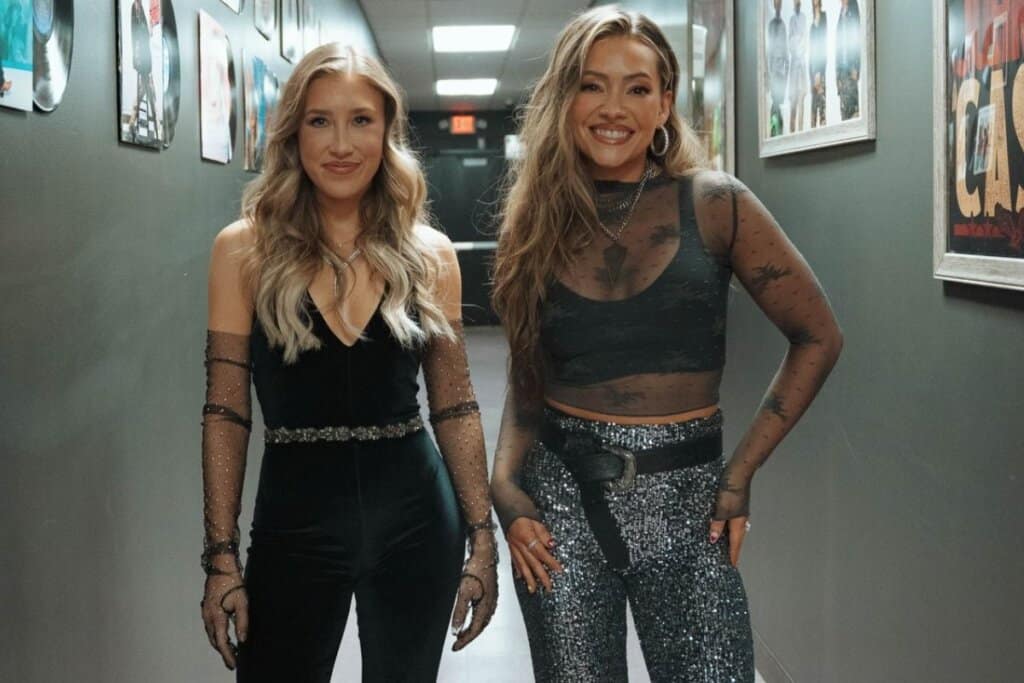
Maddie & Tae’s chapter as a duo has officially come to an end.
In December, the pair shocked fans when they announced plans to part ways, and this weekend marked their final tour stop together, closing out their run as a duo.
The two documented their last show on social media, sharing a video featuring emotional moments from the night, including a final sing-along to their chart-topping hit, “Die From A Broken Heart.”
“Surrounded by our family, friends, and all of you, we closed a chapter this weekend that we’ll forever be grateful for,” they wrote. “Thank you to everyone who traveled to be there with us. the emotions were high in the best possible way.”
They ended their message by reflecting on what’s ahead, writing, “Fifteen years of memories together… and now we get to cheer each other on in our new seasons of life. nothing but love & light ahead.”
Maddie & Tae first broke onto the country music scene in 2014 with “Girl In A Country Song,” a sharp, clever response to the rise of bro-country. Their 2015 debut album, Start Here, featured fan-favorite singles like “Fly” and “Shut Up and Fish.” In 2020, they scored their second No. 1 hit with the emotional ballad “Die From A Broken Heart.” Their most recent project, Love & Light, was released in May 2025.
When they initially announced their split, Maddie Marlow Font and Taylor Dye Kerr revealed the decision was completely amicable but “heartbreaking.” Kerr shared that she planned to step back from music to focus on her growing family, while Font revealed plans to move forward with a solo career. They also left the door open for future collaborations, hinting at the possibility of shows or projects down the road while emphasizing their friendship remains strong.

“We’re leaving this so open-ended because, you know, we might make another record one day,” Font told People. “We might go do some tour dates one day.”
“Even though we’re not gonna go on this journey as Maddie & Tae together, we’re still walking and doing life together outside of it,” she later added. “I’m really excited to just be best friends and nurture our friendship and not have to worry as much about the work—and still get to raise our babies together. None of that changes.”
Ahead of their final show, the duo reflected on the moment as “what a beautiful blessing this chapter has been.”
The post Maddie & Tae Close Final Chapter as Duo With Emotional Last Show appeared first on Country Now.
Country Now

Let the debate over the top prospects in the 2027 NFL Draft begin. As we put a bow on the 2026 NFL Draft, next year’s draft class is set to be loaded with talent at the top. Ohio State wide receiver Jeremiah Smith will be draft eligible, but he isn’t the only wide receiver who could be a top-10 pick next April. There are a pair of edge rushers who have top-10 promise as well. Of course, we can’t look over the quarterback talent in next year’s class, either. Texas’ Arch Manning is the biggest name of the group, but is he the top quarterback prospect? He’s just one of a handful of signal-callers I’m keeping my eye on as potential top-10 picks in the 2027 draft. So, let’s get into my way-too-early top 10 prospects for the 2027 NFL Draft. 10. Trinidad Chambliss, QB, Ole Miss I hope Trinidad Chambliss is able to duplicate what he did last year, specifically what he did in Ole Miss’ College Football Playoff run. He’s so dynamic as a player. He spent last season becoming a leader that I don’t think anyone anticipated he would become. He’s dynamic as a passer. If he had entered this year’s draft, I think there was a chance he would’ve been a first-round pick. But he’s going to be back at Ole Miss after winning his eligibility case. The knock against him will be his size as he’s listed at 6 feet tall. There have been other guys who have succeeded at that size, though, especially if they’ve got that ability to move. 9. CJ Carr, QB, Notre Dame CJ Carr is going into his second season as Notre Dame’s starting quarterback, so he’ll get some more experience this year. He closed his first season by helping the Fighting Irish go on a 10-game win streak after getting thrown into the fire early with games against Miami (Fla.) and Texas A&M. They lost those games, but they were pretty close. Carr had his struggles and threw some interceptions at times. However, he’s got the ability, stature and pedigree. He’s easily a guy who can play himself into becoming a top-10 pick. 8. Cam Coleman, WR, Texas Cam Coleman could have a monster season at Texas, and if the Longhorns are going to be the team some believe they can be, he’s going to need to do that. Texas wasn’t great at wide receiver a year ago, so maybe the 6-foot-3 Coleman can give the Longhorns a boost with his explosiveness. He can really go up there and get it. He was actually right there with Jeremiah Smith as the No. 1 wide receiver recruit out of high school a few years ago. But he was stuck with a bad quarterback situation at Auburn the past two years. Now, he gets to play with Arch Manning in Steve Sarkisian’s offense. Sarkisian knows how to isolate and get a guy like Coleman opportunities and touches. Coleman could have a monster year and be a top-10 pick. 7. Colin Simmons, edge rusher, Texas Colin Simmons is a hell of a player. He has 21 sacks already in just two years. He’s going to be a really good player again in 2026, and he’s clearly a guy who is going to be on the radar for a top-10 selection next year. 6. Dylan Stewart, edge rusher, South Carolina We’re staying at edge rusher here for No. 6. Remember, edge rusher, along with quarterback and wide receiver, is among the positions that are among the most valued in the draft. Dylan Stewart’s listed at 6-5 and 245 pounds as he enters his junior year. He was a freshman All-American in 2024 and backed that up with a huge year as a sophomore in 2025. I view him a bit more as a do-it-all edge player over Simmons. So, that’s why Stewart gets the edge. 5. Jordan Seaton, OT, LSU Jordan Seaton transferred from Colorado to LSU over the offseason. He was a five-star recruit out of high school and started for Coach Prime at Colorado for two seasons, protecting Shedeur Sanders when he was a freshman. Colorado never materialized from an offensive line perspective, but it wasn’t his fault. Now, he goes to LSU and I think he could have a big year for Lane Kiffin. If Seaton does, I think he could be a top-10 pick. 4. Arch Manning, QB, Texas Arch Manning reminds me of a poor man’s Andrew Luck. Maybe not in his production, but in his playing style. He can throw it downfield. He’s big. He’s faster and more mobile than you would anticipate. Now, I know he didn’t have a great year and that first start against Ohio State didn’t go the way he wanted. I don’t know if Manning was fully healthy early in the year, but Texas didn’t run the football as effectively as it needed to. The Longhorns certainly didn’t protect him well enough, either. But Manning can make the throws down the field and, guys, he’s a Manning. Let’s not overthink this. An organization is going to look at him and see him have a better year in 2026 after he turned the corner late last season. He had 20 total touchdowns to two turnovers in his last six games. So, Manning and Texas should be better in 2026. 3. Dante Moore, QB, Oregon I thought Dante Moore would’ve been the No. 2 overall pick in this year’s draft had he declared. However, he opted to remain at Oregon following a good year. He’s got good command, great stature, athleticism, and he throws it well. But he’s also smart, as former Oregon offensive coordinator Will Stein told me that Moore prepares like a pro. Oregon is going to be really good, and the Ducks might be my No. 1 overall team in my top 25 post-spring rankings, thanks to players like Moore. 2. Leonard Moore, CB, Notre Dame I just can’t put Leonard Moore any lower than this. He was a unanimous All-American as a sophomore last season and a freshman All-American a year before that. When Ohio State star wide receiver Jeremiah Smith was asked who was the toughest corner he’s faced, he said Moore. He’s got good length (6-2) and great ability in coverage. NFL teams will be all over Moore because of that. 1. Jeremiah Smith, WR, Ohio State Speaking of Smith, you all know he would be No. 1 on this list. Smith should be the No. 1 prospect on everyone’s board. The only reason he wouldn’t go No. 1 next year, though, is because of quarterback need at the top of the draft. Smith is 6-3 and 220 pounds, lighting up college football since the moment he stepped on the field in Columbus. He’s got over 2,500 yards and 29 total touchdowns in just 29 games. He’s an absolute monster. No wide receiver has gone in the top three of the NFL Draft since Calvin Johnson in 2007. Smith will be the first non-quarterback off the board. You can write that down.Latest Sports News from FOX Sports
