State fishery managers on Wednesday spotted several small schools of herring in deep waters of Sitka Sound north of Bieli Rock and east of Middle Island.
Alaska Department of Fish and Game personnel are posting reports from daily herring surveys as managers prepare to open the commercial sac roe herring seine fishery.
The guideline harvest level for the 2026 Sitka Sound sac roe herring fishery is 35,015 tons, which is 15% of the 233,433 tons of mature herring that managers expect to return to Sitka Sound this year.
The 15% harvest rate is new this year; the Alaska Board of Fisheries last year reduced the maximum harvest rate for the Sitka Sound sac roe herring fishery from 20% to 15%.
Aerial surveyors in a float plane on Wednesday searched for signs of herring in portions of Sitka Sound including Eastern Channel to Biorka Island and St. Lazaria Island to Eastern Bay.
No herring schools or spawn were observed Wednesday from the float plane, Fish and Game said today. Weather conditions were poor with scattered snow showers and strong winds.
Few herring predators were seen throughout the surveyed area. A small number of humpback whales were observed in Eastern Channel and small number of sea lions were found near Inner Point.
Predator numbers and locations observed are more typical for surveys conducted earlier in the season and showed no change relative to previous aerial surveys.
The next aerial survey was scheduled to take place today, and the next fishery update is expected on Friday, Fish and Game said.
Construction of the Cascade Point Ferry Terminal is being delayed beyond 2026 due to permitting issues raised by the U.S. Army Corps of Engineers, according to a notice published this week by the state.
Site preparation as the first stage of the project was scheduled to begin this summer and continue into 2027. However, the Corps of Engineers wants more complete information about the second stage of the project — the terminal and supporting infrastructure — before work begins, according to the notice issued Tuesday by the Alaska Department of Transportation and Public Facilities.
“This refined direction from the USACE and the Department’s commitment to honor the permit process necessitates delaying proposed construction until after 2026,” the notice states.
Sonny Mauricio, a DOT spokesperson, stated in an email on Thursday the length of the delay to the project’s timeline is unknown.
“A more specific timeline depends on completing the requested Stage 2 design details and the subsequent federal permitting and Tribal consultation process,” he wrote.
DOT submitted a project application to USACE for Stage 1 work and a preliminary for Stage 2 on Feb. 2, according to the notice. The USACE, after reviewing the application, mandated “all design information for Stage 2 also needs to be included in the permit application.”
“This new direction requires the completion of further Stage 2 details that are in design development for this spring and summer,” the notice states.
Stage 2 is currently at 35% design in the developmental process, according to a state DOT website for Cascade Point.
The proposed terminal about 30 miles north of the current Auke Bay Ferry Terminal is the subject of multiple controversies, including a $28.5 million agreement signed by the state last July for first-stage work. The Dunleavy administration’s motivations for signing the contract were questioned by officials and regional residents, since it occurred days after the ferry system’s oversight board said the state had not proven the project’s economic viability.
Ongoing opposition to the terminal is largely focused on the belief the primary motivation of the project is providing an ore shipping site for a nearby proposed gold mine. There are also concerns it will cause further hardships for Alaska Marine Highway System riders who have already been subject to various scheduling cancellations due to budget and maintenance issues.
The Cascade Point website states the project’s intent is “shortening ferry routes, reducing travel times, and lowering operating costs” for people in Juneau, Skagway and Haines. A DOT report issued last fall states the terminal will have offsetting impacts on the ferry system, but will be an asset to the mine as well as Goldbelt Inc.’s prospects as the property owner of the terminal site and a partner in the project.
A reference that appears to refer to Goldbelt as an Alaska Native corporation, as well as other possible partners, is included in the DOT notice issued this week that refers to following the direction set by the USACE.
“A highly important part of that process is the engagement and consultation with our Tribal partners,” the notice states. “The department will closely collaborate with Tribes and together will strengthen the protection of cultural resources. The USACE approves the start of the consultation process with the Tribes once they deem the permit application ready.”
Goldbelt did not immediately respond to a request for comment on Thursday afternoon.
A statement supporting the delay was issued Thursday by the Southeast Alaska Conservation Council
“We’ve been critical of the order of operations of this project — contracts awarded before public comments, plans to break ground before tribal consultation — so this update about the U.S. Army Corp of Engineers requiring Phase 2 details to be included in the permit application before they can move forward and the State of Alaska committing to conduct the environmental process as law requires feels like a necessary course correction, though intervention and correction shouldn’t have been required,” SEACC Executive Director Maggie Rabb said in the prepared statement.
The DOT notice states additional public meetings involving both stages of the proposed terminal will be scheduled. A 10-week public comment period that ended in January saw 92% of the 622 respondents opposing the terminal.
Few marketing campaigns have proven as disastrous as Pepsi’s 1992 scandal involving the number 349, which led to significant public backlash and legal fallout.
Last fall, the Trump administration instituted a $100,000 fee for any employers sponsoring H-1B visa applicants. That led to the Haines Borough School District losing its special education teacher, Stacey Spencer, earlier this year after her visa expired in December and the school district was unable to obtain alternate legal status that would have allowed her to remain.
Now, U.S. Senators Lisa Murkowski and Dan Sullivan are co-sponsoring legislation that would exempt public schools from the new H-1B visa fee.
Boron said waiving that fee would eliminate a huge barrier for school districts across the state. She said she hopes Murkowski and Sullivan’s efforts are successful.
“Haines would be able to consider international applicants again, and we would,” Boron said.
Serving as President Donald Trump’s press secretary is a demanding and high-stress endeavor, which is why Karoline Leavitt is strict about staying active.
Health Digest – Health News, Wellness, Expert Insights
Snow falls on the Alaska State Capitol on Monday, March 16, 2026, in Juneau, Alaska. (James Brooks photo/Alaska Beacon)
At the Alaska Beacon, we’re constantly trying to figure out where we should put our attention. There’s always more news than there are people to report it.
Every Thursday, the Alaska Legislature publishes its committee schedule for the coming week. Public notices alert us to meetings and events. The governor’s office occasionally lets us know ahead of time that something’s coming down the pike, too.
Here’s what we know about for the coming week. If you know of something that’s coming up that you should think we should pay attention to, email us at info@alaskabeacon.com.
We can’t cover everything on this list, but we’re interested in them and we think you should know about them in case you’re interested in them, too.
This list is ripped from our notebooks, and it is likely to change over the course of the week. We’ll update it when we can.
Are you trying to keep track of when to testify on a bill? The Legislature has a website for that.
Monday, March 23
House/Senate floor sessions in the morning
Look for conference committee to pop up on Monday or Tuesday
8 a.m. – House Education continues hearing a bill to increase per student funding by $630 next year; a bill to increase funding for students attending residential schools; and a bill to offer CPR training in schools
1 p.m. – House Judiciary considers several governor appointees to the Commission on Judicial Conduct, Violent Crimes Compensation Board, and Alaska Police Standards Council
1:30 p.m. – Senate Judiciary Committee hears a bill that would raise the age of consent from 16 to 18 years old
6 p.m. – Holi Festival hosted by Spice Bollywood Dancers on Franklin Street downhill from the Capitol
Look for conference committee to pop up on Monday or Tuesday
7:30 a.m. – Senate Finance Subcommittee hears a presentation from the Office of Children’s Services on their proposed budget for next year
8 a.m. – Will the state’s new sick-leave law be weakened to benefit fish processors? House Community and Regional Affairs is hearing a bill.
9 a.m. – Electronic pull tabs resemble slot machines and they’re in use at tribal gaming halls — will the state authorize them in other places? Senate Finance looks at SB 170.
12 p.m. – Lunch and learn presentation on 65 years of ISER, the Institute for Social & Economic Research at the University of Alaska Anchorage
12:30 p.m. – Alaska Police Standards Council meeting
1 p.m. – House Transportation takes up a bill to regulate self-driving vehicles
1:30 p.m. – Senate Transportation looks at a bill that would make it easier to import classic cars into the state
3:15 p.m. – House Health and Social Services hears a bill to update criminal law related to sexual assault by a health care worker
Wednesday, March 25
House/Senate floor sessions in the morning
8 a.m. – House Education Committee hears a presentation on a state-run career guidance program and a bill to expand career and technical education grants
9 a.m. – Regulatory Commission of Alaska regular meeting
9 a.m. – Senate Finance takes up a bill that would reduce the annual transfer from the Permanent Fund to the state treasury, and it looks at the big tax bill that came out of Senate Resources
9:30 a.m. – Alaska Corp. for Affordable Housing meets to approve $15 million for a project in Wasilla
10 a.m. – AHFC may approve borrowing almost $150 million for housing projects statewide, during a regular meeting
12 p.m. – Lunch and earn about a “forensic training academy”
1 p.m. – House Judiciary Committee considers the governor’s appointees to the Commission for Human Rights
1 p.m. – Should Alaska lower the limit for drunken driving? House Judiciary takes up a bill that would halve it.
1 p.m. – The governor’s big gas pipeline subsidy bill gets its first hearing in House Resources
Thursday, March 26
8 a.m. – Public records bill in House Community and Regional Affairs
9 a.m. – House Finance Committee considers a bill to expand funding for Regional Education Attendance Areas to include Mt. Edgecumbe High School and rural teacher housing
3:15 p.m. – House State Affairs hears a presentation on broadband in Alaska
3:30 p.m. – House Health and Social Services Committee hears a presentation on the Alaska Citizens Review Panel, and Office of Children’s Services director Kim Guay speaks.
6 p.m. – What can Anchorage do about rising natural gas prices? A presentation by Alaska Common Ground
Friday, March 27
House/Senate floor sessions in the morning
8 a.m. – House Education considers governor’s appointees to the Professional Teaching Practices Commission; a bill to increase education funding, and a bill to increase funds for special education
9 a.m. Senate Health Committee hears a presentation on the Division of Public Assistance
House/Senate floor sessions in the morning
12 p.m. – Lunch and learn about state energy data
1 p.m. – House Judiciary looks at changing the way the Legislature handles Ethics Act complaints
1:30 p.m. – The controversial nurse licensure compact bill gets a hearing in Senate Labor and Commerce
3:30 p.m. Senate Education hears a bill that would require school districts to report academic progress to the Legislature, including financial data for each school; and a bill to cap local contributions to school districts.
Saturday, March 28
12 p.m. – “No Kings” rally at Juneau’s Overstreet Park (the whale statue)
3:15 p.m. – House State Affairs takes public testimony on two different bills that would eliminate Daylight Saving Time in different ways
Despite this brand’s decades-old, family-owned roots, our taster found its cream cheese bland and gummy – not the qualities you want in a dairy product.
One day was madness, the other was mundane. Split across Thursday and Friday, the opening round of this year’s NCAA Men’s Basketball Tournament became an exercise in polarity. The former dripped with excitement in the form of Ohio State-TCU, Wisconsin-High Point, VCU-North Carolina and an instant classic between Siena and Duke in which the event’s No. 1 overall seed was nearly felled. The latter brought an onslaught of predictability as every single betting favorite advanced to the Round of 32 in the chalkiest of slates. Now we move onto the weekend. Here are my takeaways from the opening round of the NCAA Men’s Basketball Tournament: 1. St. John’s sends a message to the selection committee [NCAA Men’s Tourney: 68 Names To Know] By and large, there wasn’t much for the masses to complain about when this year’s men’s NCAA Tournament bracket was revealed earlier this month. The four No. 1 seeds had separated themselves enough during the regular season to quiet any debate about who deserved to land on the top line. The bubble was so weak and barren that nobody on the outside looking in could really have a legitimate gripe. Every team and every seed felt comfortably within the expected margin for error — except what happened to St. John’s. Winners of both the Big East regular season and tournament titles for the second consecutive season, the Red Storm (28-6 overall) were inexplicably handed a No. 5 seed and shipped across the country to play first- and second-round matchups in San Diego. Head coach Rick Pitino voiced his displeasure in a pregame news conference on Thursday afternoon. “We’re a 5-seed because the Big East is not regarded the way they used to be when I was at Louisville,” Pitino said. “So that’s the problem.” There’s no question that the Big East largely endured a down season, evidenced by only three teams reaching the NCAA Tournament in St. John’s, UConn and Villanova. While Seton Hall (21-12, 10-10) permeated most bubble conversations down the stretch, other perennial league powers like Creighton and Marquette finished below .500 in conference play. When eighth-seeded Villanova lost its opening-round game by double digits to Utah State on Friday afternoon, the league’s reputation took yet another hit. But punishing a Red Storm team that doled out a 20-point thumping of UConn in the Big East Tournament last weekend simply because the rest of the league is soft never made much sense. Especially considering how favorably the committee treated Duke (1-seed) and Virginia (3-seed) in what was nothing more than a modest season in the ACC. Two things can be true simultaneously: Sure, the Big East struggled this year, but St. John’s still performed well enough to receive a higher seed in the NCAA Tournament. Though Pitino downplayed the idea that his team would harbor any kind of grudge when it took the floor against No. 12 Northern Iowa, the instant domination seemed to speak for itself. St. John’s opened the game on a 13-0 run and led by 19 points at halftime, smashing the Panthers on the glass and burying them with a barrage of seven makes from beyond the arc. When the game finally and mercifully ended late on Friday evening, the Red Storm had cruised to an emphatic 79-53 victory that set up a meeting with fourth-seeded Kansas on Sunday. Just imagine what Pitino’s team could have done to an even lesser opponent if the committee seeded St. John’s properly. 2. An injury to Iowa State star Joshua Jefferson could radically change the Midwest Region [MEN’S BRACKET: NCAA Tournament Bracket, Leaders & Stats] Everything about the potential outcome in the Midwest Region, where Michigan holds the 1-seed, quaked and quivered when Iowa State forward Joshua Jefferson suffered an injury fewer than three minutes into his team’s opening-round game against No. 15 Tennessee State on Friday afternoon. Jefferson soared toward the hoop for an attempted layup with 17:23 remaining in the first half when he landed awkwardly beneath the basket, his left ankle rolling quite significantly. He slapped the floor in frustration and rocked back and forth in pain before the Cyclones’ trainer arrived at his side. Eventually, Jefferson was helped off the floor and into the locker room without putting any weight on his injured leg. Television cameras later showed Jefferson on crunches in the tunnel. He wore a boot in the locker room after the game. “He has a sprained left ankle,” Iowa State head coach T.J. Otzelberger said in his postgame news conference. “We had an X-ray and the X-ray was negative. So we’ll continue to reevaluate over the next day or two and just see where things are when we get to Sunday.” Though Iowa State pounded Tennessee State, 108-74, the Cyclones will need to adapt their game plan significantly if the injury to Jefferson proves significant enough to sideline him in the Round of 32 against No. 7 Kentucky on Sunday. Jefferson, a senior, is second on the team in scoring (16.9 points per game), first in rebounding (7.6 per game), second in assists (4.9 per game), second in steals (1.7 per game) and tied for first in blocks (0.9 per game). He is second in this season’s Player of the Year rankings on KenPom behind power forward Cameron Boozer of Duke.Losing a player of Jefferson’s ilk for any prolonged period of time would drastically lower the Cyclones’ ceiling in a season when they’ve established themselves as one of the best teams in the country. Otzelberger’s group entered the Big Dance having notched victories over fellow NCAA Tournament teams St. John’s, Purdue, Iowa, UCF, Kansas, Houston and Texas Tech. They lost the Big 12 Tournament title game to then-No. 2 Arizona by just two points, pushing an elite 1-seed to the brink.The short-term benefactor in this situation could be Kentucky, which needed a 40-foot shot at the end of regulation to force overtime against No. 10 Santa Clara on Friday before ultimately prevailing. Beyond that, No. 3 Virginia and top-seeded Michigan loom as the other heavyweights in this quadrant. How much time Jefferson might miss and how impactful he’ll be after a potential return are now the defining storylines in the Midwest Region. 3. New head coaches make an immediate splash in Round 1 In all likelihood, the heartrate for Duke head coach Jon Scheyer still hadn’t returned to normal levels during his postgame interview after an incredible scare. His Blue Devils, the No. 1 overall seed in the NCAA Tournament, narrowly escaped what would have been just the third 16-over-1 upset in the event’s history, erasing a double-digit deficit to fend off Siena. Scheyer promptly acknowledged what everyone who watched the game could plainly see. “G-Mac,” Scheyer said in reference to Saints’ head coach Gerry McNamara, “he outcoached me. They were more ready to play. And the readiness and toughness by our guys just to weather that storm in the second half, I’m proud of them. It’s great to get this win. I think there’s a lot that we can learn for moving forward.” Though the Saints ultimately deflated in an eventual 71-65 loss to Duke, the nature of Siena’s performance was emblematic of a theme that personified the opening round: A flurry of first-year coaches guiding their teams to the Big Dance and then either pushing the powers that be to the brink or defeating them outright. Never has program building and roster reconstruction happened faster than it is right now — thanks to the transfer portal, an influx of talent from abroad and a new wave of forward-thinking coaches whose schemes are built on modern analytics. No. 12 High Point, under the direction of first-year coach Flynn Clayman, scored the biggest upset of the opening day by toppling No. 5 Wisconsin and burying 15 shots from beyond the arc. No. 11 VCU, led by first-year coach Phil Martelli Jr., the son of former Saint Joseph’s head coach Phil Martelli, roared back from a 19-point deficit to stun No. 6 North Carolina in overtime, riding a starting lineup that included three transfers and one true freshman. No. 11 Texas, navigating its first season under head coach Sean Miller, buried a last-second shot to beat fellow No. 11 seed NC State in the First Four before toppling No. 6 BYU in the opening round, matching its deepest NCAA Tournament run since getting to the Elite Eight in 2008. No. 10 Texas A&M, which made the bold decision to hire then-41-year-old Bucky McMillan last April, only a few years removed from when he was still coaching high school basketball, smothered No. 7 Saint Mary’s in a convincing double-digit win. All of those results speak to how quickly a program’s trajectory can change in the modern era. The age when athletic directors were willing to wait three, four and five years for new coaches to settle in is almost certainly gone. 4. This version of Texas can make a deep run [NCAA ODDS: Latest Men’s March Madness Odds, Favorites] From now until the trend no longer holds true, one particular stat will continue to make the rounds in college basketball circles as fans across the country fill out their brackets. The most updated version looks like this: Twenty-two of the last 23 national champions have finished the season ranked among the top 25 nationally in both offensive and defensive efficiency. The lone outlier? A UConn team from 2014 that, improbably, won the whole thing as a 7-seed behind star guard Shabazz Napier. Some of the more interesting groups to consider in a tournament setting are the ones who navigated their entire pre-March Madness season with wildly lopsided metrics. Which brings us to 11-seed Texas, a team that arrived at the SEC Tournament with an offense ranked 16th nationally and a defense that checked in 119th, according to Torvik. Not exactly the balanced recipe that, in the 21st century, tends to produce national champions. But if you fast-forward a few weeks, the circumstances surrounding the Longhorns suddenly seem quite different. Back-to-back wins over fellow No. 11 seed NC State in the First Four and No. 6 BYU in the Round of 64 have painted head coach Sean Miller’s team in a far different light. Suddenly, Texas’ defense, which held the Wolfpack to 66 points and the Cougars to 71 points, now ranks 13th nationally since the NCAA Tournament began. “I think the last couple of games, from a defensive perspective, is about as good as we’ve done all year,” Miller said in his postgame news conference after defeating BYU on Thursday night. “When you connect the defense with the offense that we’ve played, you have a team that’s certainly dangerous. That’s what I would call us right now.” Miller is absolutely correct. His teams have always played high-level offense across prior coaching stints at Xavier (twice) and Arizona, with this year’s Texas squad following right along. The Longhorns have four players averaging at least 13 points per game entering Saturday’s matchup with No. 3 Gonzaga, and they draw more free throws than all but two teams in the country: Dayton and New Orleans. If the defense holds firm, Texas can hang with just about anyone. 4½. What’s next? Here are a few storylines to watch over the weekend as we move into the Round of 32: No. 5 Vanderbilt vs. No. 4 Nebraska (Saturday) — Whichever team emerges victorious on Saturday will be operating in rarified air. The Cornhuskers had never won an NCAA Tournament game prior to hammering No. 13 Troy in the opening round. The Commodores have not reached the Sweet 16 since 2007 and would be seeking the first Elite Eight appearance in school history. No. 10 Texas A&M vs. No. 2 Houston (Saturday) — This is a fascinating contrast in styles when it comes to pace. The Aggies employ a hectic, up-tempo brand of basketball under McMillan that operates at a rate of 70.2 possessions per 40 minutes, which ranks 39th nationally. The Cougars are far more methodical and deliberate under head coach Kelvin Sampson, playing an average of 63.4 possessions per 40 minutes, which ranks among the 15 slowest teams in the country. No. 9 Utah State vs. No. 1 Arizona (Sunday) — Analytically speaking, Utah State has an excellent résumé for a mid-major program. The Aggies rank 27th nationally in offensive efficiency, 43rd in defensive efficiency and 31st in Wins Above Bubble. But prior to Friday’s win over Villanova, they had only played two games against teams in this year’s NCAA Tournament: a win over VCU and a loss to South Florida. Now, Arizona presents what is by far the toughest challenge of the season for a team that — at least on paper — should acquit itself reasonably well. No. 5 Texas Tech vs. No. 4 Alabama (Sunday) — A fun game between two high-flying offenses projects as a battle of the supporting casts now that both teams are operating without key contributors. Texas Tech lost first-team All-American power forward JT Toppin (21.8 points, 10.8 rebounds per game) to a torn ACL on Feb. 17. Alabama entered the NCAA Tournament without guard Aden Holloway (16.8 points per game) following his arrest earlier this week on a felony drug charge.Latest Sports News from FOX Sports
Who knew that a household staple could double as garden armor? It’s the unexpected twist every gardener needs. Continue reading…The Boot – Country Music News, Music Videos and Songs
We have tragic news to report from the world of television:
Nicholas Brendon — the gifted actor best known for his work on Buffy the Vampire Slayer — has passed away.
He was just 54 years old.
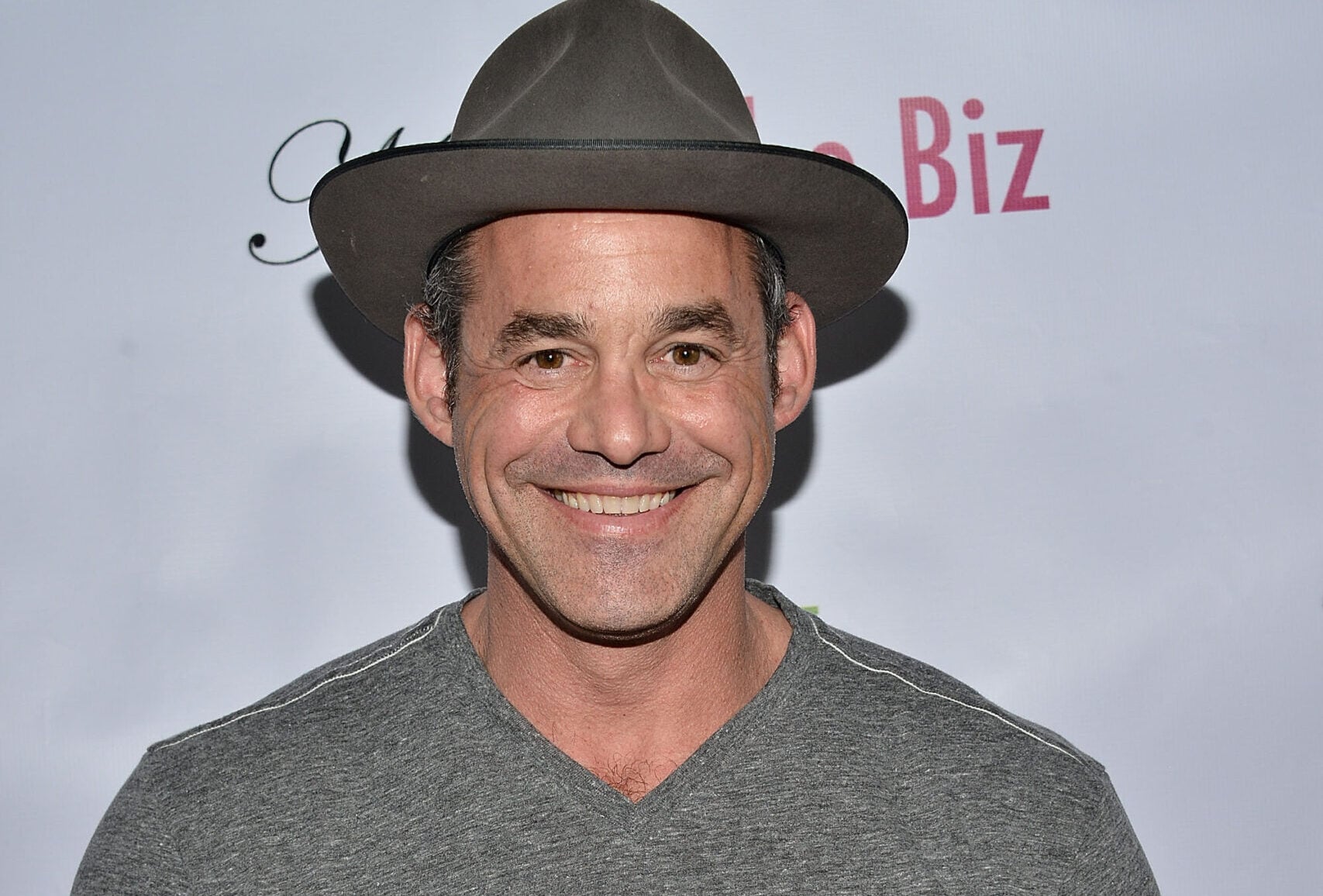
Nicholas Brendon attends the “Ms. In The Biz” book launch party co-hosted by FilmBreak and presented by Dog & Pony on February 9, 2015 in West Hollywood, California. (Photo by Araya Diaz/Getty Images for Ms. In The Biz)
News of Brendon’s death comes courtesy of a post on his official Instagram page:
“We are heartbroken to share the passing of our brother and son, Nicholas Brendon. He passed in his sleep of natural causes,” his family wrote.
“Most people know Nicky for his work as an actor and for the characters he brought to life over the years. In recent years Nicky has found his passion in painting and art,” the post continued.
“Nicky loved to share his enthusiastic talent with his family, friends and fans. He was passionate, sensitive and endlessly driven to create.”
His family also acknowledged that Brendon had experienced his share of adversity over the years, while making clear that he remained hopeful.
Nicholas Brendon poses for his mugshot after being arrested on domestic violence charges on October 11, 2017 in Palm Springs, California. (Photo by Palm Springs Police Department via Getty Images)
“Those who truly knew him understood that his art was one of the purest reflections of who he was,” the statement continued.
“While it’s no secret that Nicholas had struggles in the past, he was on medications and treatment to manage his diagnosis and he was optimistic about the future at the time of his passing.”
The Brendons concluded their message with a request for privacy as they grieve:
“Our family asks for privacy during this time as we grieve his loss and celebrate the life of a man who lived with intensity, imagination and heart. Thank you to everyone who has shown love and support,” they wrote.
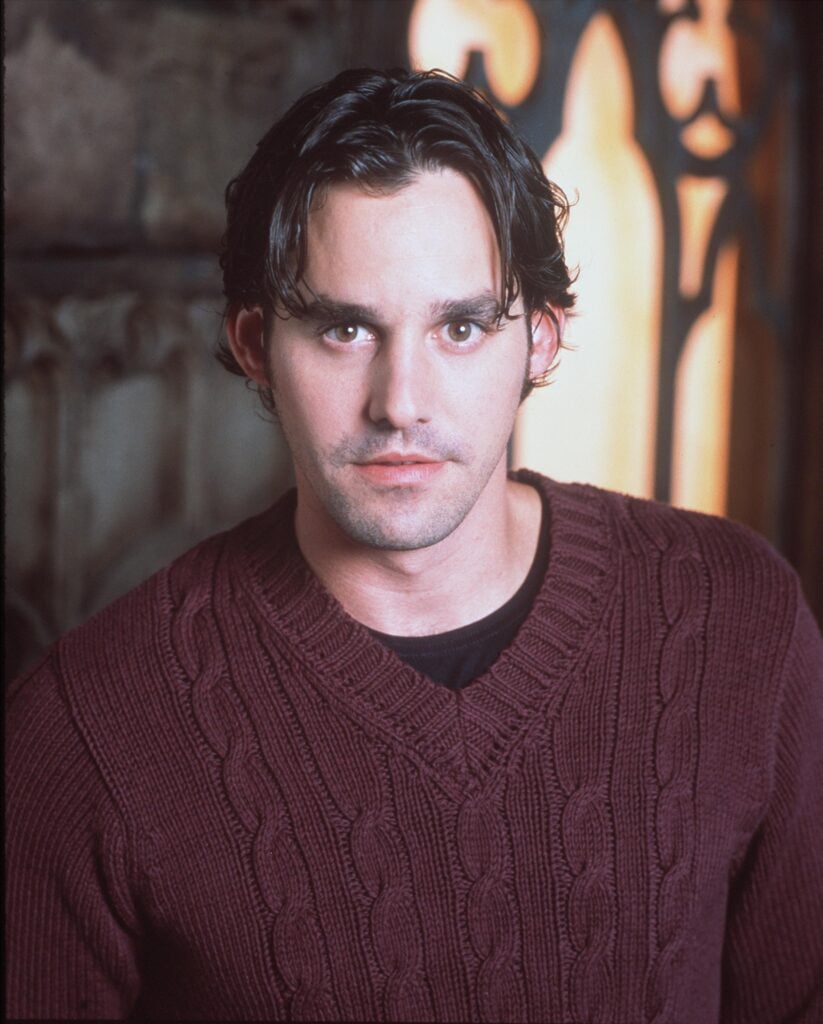
Nicholas Brendon as Xander Harris stars in 20th Century Fox’s “Buffy The Vampire Slayer Year 5.” (Photo by Online USA)
Born in Los Angeles in 1971, Brendon began to pursue acting at a young age.
While still in his teens, he rose to fame as Xander Harris on the acclaimed supernatural dramedy Buffy the Vampire Slayer, which aired seven seasons from 1997 to 2003.
He later appeared on Criminal Minds and remained active in the entertainment world for decades.
His passing marks the loss of a performer who helped define an era of television — and whose impact extended far beyond a single role.
Brendon battled substance abuse and experienced numerous brushes with the law over the course of his career. His cause of death is unknown at this time.
Our thoughts go out to Nicholas’ loved ones during this incredibly difficult time.