DAIKIN PARK (Houston) – Once again, it did not come easily or stylishly for Team USA on Friday night, as evidenced by the subdued celebration on the field in the aftermath of its victory against its neighbors to the north. It seemed more like a sigh of relief than a scene of jubilation. But coming off a shocking pool-play loss to Italy that put its tournament hopes at risk, the dream team survived again, holding off Canada in the quarterfinals to set up a matchup of the juggernauts between Team USA and the Dominican Republic in Sunday’s semifinals. Here are my takeaways: 1. Team USA Has Major Pitching Advantage Moving Forward Yes, Team USA has assembled a lineup packed with superstars, but the biggest difference for the club in this tournament compared to past iterations is the arm talent — particularly in the rotation. Even with Tarik Skubal no longer available, the U.S. had a back-to-back All-Star in Logan Webb to start on Friday and will have a back-to-back All-Star and Cy Young Award winner in Paul Skenes ready for Sunday’s much-anticipated matchup against the Dominican Republic. Webb did his job against the Canadians, holding them scoreless for 4.2 innings with five strikeouts. In two starts in the WBC, Webb allowed just one run in 8.2 innings. Once he left, though… 2. Canada Made Things Interesting vs. USA Bullpen After falling behind 5-0, Canada didn’t go down without a fight. The inning after Webb’s departure, Tyler Black got Canada on the board with an RBI single off Brad Keller in the sixth. USA manager Mark DeRosa then turned to lefty Gabe Speier to get the platoon matchup on Bo Naylor, but it didn’t matter as the Canada catcher crushed an inside slider 404 feet out to right field to bring Canada within two runs. It would soon get even dicier for the U.S. bullpen. David Bednar entered in the seventh and got a couple ground balls to start the inning, but they both resulted in infield singles. After a passed ball by Cal Raleigh, Canada suddenly had the tying runs in scoring position. The Yankees reliever buckled down from there, though, getting Josh Naylor to pop out before striking out Tyler O’Neill and Owen Caissie, Canada’s hottest hitter entering the game, to extinguish the threat. In the ninth, Mason Miller shut the door. 3. Canada Gifted Jerseys, USA Gifted Runs Before the game, Hockey Canada sent a congratulatory video message to the country’s baseball players for getting through to the quarterfinals for the first time and gifted the team Canadian hockey jerseys, which the players proudly wore pregame at Daikin Park. Three innings into the game, Canada’s defense was also in the giving spirit. After plating a run on an RBI groundout in the first inning, Team USA didn’t hit a ball out of the infield in the third yet still managed to tack on two more runs to give Webb some breathing room. The damage came with two outs and the bases loaded, when Alex Bregman pulled a grounder that third baseman Abraham Toro secured on a dive. The throw to first, however, was airmailed, as two runs came home. That ended the day for Michael Soroka. Reliever Micah Ashman entered and prevented the inning from unraveling by striking out Roman Anthony. On a night in which Canada managed to hold USA’s biggest boppers in check, it was the bottom of the lineup delivering crucial insurance. The No. 8 and 9 hitters in USA’s lineup, Brice Turang and Pete Crow-Armstrong, came through with RBI singles in the sixth. At the time, it seemed like they were just padding USA’s lead. Given how the ensuing innings went, those hits instead ended up the difference. 4. The Juggernaut Semifinal Matchup is Upon Us The Dominican Republic has bulldozed its way through the tournament with elation and bat flips and brute force. Team USA, despite fielding a roster capable of doing the same, has not. And if it plays the way it has to this point, the offense awaiting them in Miami will be salivating. But as the lineup attempts to play to its capabilities, the biggest hope for the Americans is on the bump. The Dominican Republic used its best arm while run-ruling Korea, 10-0, in a game in which starter Cristopher Sánchez fired five scoreless innings. The U.S., meanwhile, will have reigning National Cy Young Award winner Paul Skenes ready to go.Latest Sports News from FOX Sports
A snow-covered statue of William Henry Seward stands in front of the Alaska State Capitol on Wednesday, March 4, 2026. (James Brooks photo/Alaska Beacon)
The Alaska Department of Revenue is predicting that the Iran war will cause high oil prices for most of 2026, it said in a revised forecast published Friday.
Oil is no longer the No. 1 source of general-purpose state revenue in Alaska, but the higher wartime prices are expected to bring hundreds of millions of extra dollars to the state treasury.
Last fall, the department’s forecasters predicted $6 billion in state revenue for fiscal year 2026, which ends June 30.
Now, they’re predicting $6.5 billion, an increase almost entirely caused by the Iran war.
Much of that money has already been earmarked for spending.
Since last spring, when state legislators and Gov. Mike Dunleavy enacted the state’s fiscal year 2026 budget, the governor’s office and legislators have proposed more than $530 million in budget amendments — for disaster relief, road construction, prisons and more.
On Thursday, the Alaska House postponed a vote on some of those amendments because many lawmakers said they wanted to see the new forecast before deciding whether or not to spend from savings to pay for those items.
On Friday, some legislators said they still support spending from savings because the forecast depends so heavily on the vagaries of war. Others said they felt their caution was vindicated.
“It’s all a gamble on the price of oil actually landing where the Department of Revenue is forecasting it could be in the future,” said Speaker of the House Bryce Edgmon, I-Dillingham.
It takes 30 votes in the state House and 15 votes in the state Senate to spend from the Constitutional Budget Reserve, the state’s principal savings account.
The House is led by a 21-person multipartisan coalition that has doubts about the forecast and wants to spend from savings to pay for more than $373 million in budget amendments, a plan already accepted by the Senate.
But because it has only 21 votes, the coalition needs the support of at least nine members of the 19-person, all-Republican House minority.
On Thursday, and again Friday, members of the minority were unwilling to offer that support.
In a series of interviews, they said they felt confident the forecast will hold, and if it doesn’t, they can approve a savings draw later.
“Having a need to see this revenue forecast was very important to us before we made any decisions,” said Rep. Justin Ruffridge, R-Soldotna. “It was about ‘how do you spend money wisely?’ And I think we’re always going to be proponents of spending money wisely. Spending money wisely is not taking money out of savings when you don’t need to.”
Alaska doesn’t have a statewide income tax or sales tax. An annual transfer from the Alaska Permanent Fund accounts for about 60% of the state’s general-purpose revenue. Oil accounts for about 25%, but that proportion can fluctuate with the price of oil.
While the new forecast doesn’t specifically predict the length of the Iran war, state forecasters appear to doubt President Donald Trump’s claims of an imminent end to the fighting.
Last fall, the department predicted that the average price of a barrel of North Slope crude oil would be $65.48 for the 12 months ending June 30.
In February, the average price of a barrel of North Slope crude was $69.48. So far this month, it’s $88.71. On Thursday, the daily price topped $105 per barrel.
The new forecast expects prices to average $91.09 per barrel through June 30, the end of fiscal year 2026.
“The price forecast for FY 2027 is $75.00 per barrel, which assumes that prices will begin FY 2027 over $80.00 per barrel and decline throughout the fiscal year,” forecasters wrote.
They went on to explain that the forecast is especially volatile and unpredictable this time around.
“While the price forecast is $75.00 per barrel, there is approximately a 10% chance that oil prices could average $130.00 or higher, and a 10% chance they could average $45.00 or lower. This range reflects the genuine uncertainty present in today’s market,” they wrote.
Even as they debate supplemental spending in the current fiscal year, legislators are also at work on writing the budget for the next fiscal year.
Last fall, the Department of Revenue predicted the state would have $6.2 billion in general-purpose revenue during FY27. Now, the forecast is above $6.7 billion.
The next two months of the legislative session will decide how that money gets spent.
Miss J Alexander is on top of this red carpet.
Just over three years after suffering a stroke, the America’s Next Top Model alum made a rare appearance at the Bowtie Bar at the Renaissance Times… E! Online (US) – Top Stories
It seems the high has ended for one member of the Euphoria family.
Indeed, the HBO series’ composer Labrinth shared his raw opinion about the show, as well as his record label Columbia Records, in… E! Online (US) – Top Stories
If you’ve been scrolling wellness trends lately, you may have seen mouth taping pitched as the secret to a better night’s sleep. And with Sleep Awareness Week shining a spotlight on healthy… E! Online (US) – Top Stories
Arlington, Texas — When a track runs for 2.73 miles, drivers will find something that they wish could change. Maybe a little bump here, a little different curbing there, not enough runoff in another spot. Those things are relatively minor, kind of like small issues with a warning track or pitching mound. For a 2.73-mile INDYCAR course that features four different racing surfaces — old asphalt, new asphalt, concrete and some painted concrete — drivers enjoyed their first day of practice on the new course that winds the streets around the Dallas Cowboys and Texas Rangers stadiums. They will compete for 70 laps Sunday in the inaugural Grand Prix of Arlington (12:30 p.m. ET, FOX). [Grand Prix of Arlington: Everything to Know] Cowboys owner Jerry Jones was among those who cut the ribbon to open the track on Thursday night. And then the drivers determined the next day that the track is bigger and better than many, if not all, of their other street circuits. “That is instantly my most favorite street circuit ever,” Scott McLaughlin said in a television interview after stepping out of his car. McLaughlin did have reason to be happy. He topped the speed charts after the first day of practice on the 14-turn course that includes a 0.9-mile straightaway for a historic weekend that will also include a tweak to the qualifying format (more on that later). “It’s so technical in spots, and then there’s spots where it’s really tough to brake into,” McLaughlin said in a post-practice news conference. “You’ve got to maximize high-speed corners, high-speed entries. “It’s a blast to drive.” Most of the drivers scouted the track Thursday and they gave feedback to INDYCAR. The curbing in one of the turns was reduced by about 12 feet after the apex. There was a concern that, if a car shortcut the course (possibly to avoid an accident), it would hit that curb and get airborne. Instead, INDYCAR will rule that area with timing lines and review if a car shortcuts the course without a legitimate reason, which could result in a penalty. Those types of changes are typical for a new circuit. Drivers do have some concerns about runoff area in a couple of the turns. The entry to pit road is after a turn, so drivers won’t see it until just before getting there. The cars were bottoming out, meaning the car floors were scraping the surface of the street because of bumps or raised areas of surfaces after a crack. But as McLaughlin noted, it was an easy fix to raise the height of the car. “Even the detail of how much work they put into grinding spots [to make them smooth] — we’ve never seen to that level before,” said six-time series champion Scott Dixon. “So it’s really, really nice to see.” Right behind McLaughlin on the speed chart was four-time series champion Alex Palou, who has won the last two points races on new circuits. “It’s insane,” Palou said in his post-practice news conference, using the term with a positive connotation. “It’s super fun to drive. It’s just a lot more fun than I thought just how the car feels. There’s so many different corners. “There’s corners that you can attack so much, and you feel like a superhero. There’s other corners where you need to back off because the grip is very different. [It’s] a lot more bumpy than I thought, which makes it super challenging, but super fun.” Palou said the different surfaces present a fun challenge. “It’s just tough on how we set up the car because you don’t want to set it up too aggressive one way or the other because it just keeps on changing so much,” Palou said. “You need different stuff in different sectors.” Drivers will face a new challenge in qualifying Saturday. The format for the final session of the fastest six drivers vying for the pole has changed. At most street and road courses, they get six minutes and can run as many laps as they want in a session where all six cars are on track. They will now be on the track one car at a time but get only one lap. The idea is to give those six fast cars more exposure. But it will also force some strategy, as the car that goes out first (the sixth-fastest among the finalists) could potentially go faster because the tires (if they use the same set) would have more grip when being hot and the car could go faster with fluids up to temperature. “It’ll be interesting,” Will Power, the series all-time leader in poles won (71) told me and other reporters. “I hope I get that chance to try that out. That looks cool. … On a long track like this, you could do it and get tire temp. When you get some of these shorter laps [at other tracks], that might be difficult.” It will make the final session easier to follow, albeit a final session that lasts an additional 15-20 minutes. “It’s going to be great for the fans,” Pato O’Ward told me and other reporters. “If I was a fan, that’s what I would want to watch.”Latest Sports News from FOX Sports
There’s more to consider than just the dress when planning your wedding guest look. Shapewear is a key player in feeling your most confident.
But knowing this hack and finding a flattering and… E! Online (US) – Top Stories
U.S. Rep. Nick Begich III, R-Alaska, speaks to a joint session of the Alaska Legislature on Tuesday, March 10, 2026. (James Brooks photo/Alaska Beacon)
After his address to the Alaska Legislature on Tuesday, Rep. Nick Begich III, R-Alaska, sat down for an interview with the Alaska Beacon.
This transcript has been lightly edited for clarity to remove “ums,” “ahs,” and other disfluencies, including the reporter’s cellphone alarm going off in the middle of the interview.
A: You know, I haven’t seen a lot of movement, unfortunately. From the other side of the aisle on this issue, there’s been conversations regarding what’s happening inside DHS as a lever point for the Democrats to try to make changes that they think need to be made in that organization.
We have to remember that DHS includes the Coast Guard, it includes the TSA. It includes CISA. It includes a lot of components of our homeland security infrastructure beyond just Customs and Border Patrol.
So holding up DHS funding does not directly impact the funding for that part of the Department of Homeland Security. At the end of the day, we need to make sure people are getting paid. We need to make sure that these organizations, these groups, are funded, and that’s my priority — to find a way through that.
A lot of those conversations really are happening at the Senate, because the House has already passed funding for the DHS appropriations bills twice, and so we’re waiting for the Senate to reach an agreement with the administration.
Q: Is there any chance of a partial thing that could get Coast Guard, TSA or some other aspects funded?
A: There’s always an opportunity for something like that. I’d certainly be supportive of seeing even a partial opening of those resources. But at this point it appears to be at an impasse.
Q: The other big thing at DHS recently was the ouster of the secretary. What do you think about that changeup?
A: I think it’s broadly supported. There was recognition that change was necessary.
Q: Do you support it?
A: I do support Sen. Markwayne Mullen. He is an accomplished senator. He’s done a great job. He did a great job in the house. In fact, the first time I met Sen. Mullen was in Don Young’s office, and they were working together on getting a hearing for some of his constituents in the House Natural Resources Committee. And he was very amicable. He has a great relationship with Alaska. I think he’ll be a solid selection to lead the Department of Homeland Security.
Q: In your speech today, you talked about immigration enforcement in the context of drug trafficking here in Alaska and other places. We’ve also seen children and legal residents caught up in the immigration crackdown. Do you think Immigration and Customs Enforcement is doing a good job at this point?
A: I think Immigration and Customs Enforcement needs to ensure that it’s prioritizing deportation actions. We know that there have been quite literally hundreds of thousands of criminals that have been arrested and deported at this point by Immigration and Customs Enforcement. That’s where we should be prioritizing our efforts.
There’s been a lot of self deportations as well, over 2 millionreported self-deportations. That’s going to continue, because when folks leave the country, getting back in is going to be a lot more challenging than it has been during the previous administration.
So I think net, the migration out among people who are not in the country legally, is actually good for us as a nation. We’re seeing this in towns that have large illegal alien populations. Rents are coming down. The hospitals are opening up. The schools have less pressure. So there’s less pressure put on those residents, especially residents at the lower end of the income curve, they’re able to afford living again.
So I think it’s a net benefit.
I think we need to be careful in the way in which we prioritize those actions, but I support the direction. And look, the voters in the previous election cycle made it clear that this was a top priority, and how we go about doing that matters, but it’s a top priority.
A: I don’t have any updates on that specific case. I’m familiar with it at a high level. To my knowledge, the family has not reached out to our office requesting support, but we recognize that every case is different, has its own unique set of circumstances, and sometimes those circumstances, there can be extenuating circumstances that make a particular specific case unique. And I recognize that there are specific circumstances in this case that make it a little less clear-cut than others.
Q: Switching gears to the gas pipeline — you talked about that a lot in your speech. There was one thing that you said a couple different times: Gas from the pipeline would lower energy costs here. Have you seen figures showing the consumer price of gas from the pipeline? I’m wondering what that idea is based on.
A: I have seen figures, and here’s what I want to communicate about this: Right now, we’re looking at importing gas for the first time in the history of Southcentral Alaska. We’ll be importing gas. The gas that’s imported is more expensive than the gas that we’re producing right now. And what an in-state gas line, Phase 1, will do is put a cap on our gas prices. So that will be the new ceiling for gas in-state. And that’s good, because we don’t want to be subject to the swings of gas production.
Q: That ceiling is higher than the import price, though, right?
A: Well, so as soon as that in-state gas line is completed, then the export facility goes into place, and once the export facility goes into place, the gas prices will be lower then than they are today for the consumer, so we will actually see a net decrease and a significant decrease in the cost of electricity for folks who are on the Railbelt in Alaska and the price of home heating.
Q: What are you seeing that makes you think that it’ll go to a second phase? Because I think the worry is that under the worst-case scenario, the state puts in a lot of equity on that first phase, the second phase never comes about, and we’re stuck with a pipeline that is producing very expensive gas, and we’ve spent billions, hundreds of millions.
A: In conversations that I’ve had with investors in the Lower 48 and with folks who are interested in investing who reside outside the United States, I’ve received significant assurances that, once the gas line is constructed, the financing of an export facility will be far easier. And I think most of the investment community, based on my conversations, has assigned the greatest amount of risk to Phase 1.
Q: Why is that?
A: I think it’s because of the perception of permitting challenges in the United States that don’t exist in other jurisdictions around the world.
Q: The idea being that it’s tougher to build an 800-mile-long pipeline than it is to build liquefaction and decarbonization facilities?
A: Liquefaction facilities are boilerplate. They’re very straightforward. The plans exist. They’re known quantities in terms of the budget and time required to implement one. They’ve been built all over the world, and so there’s very little variance that an investor can expect from that particular investment.
I think there’s a greater degree of uncertainty centered on the perception of permitting issues in the United States. And so thankfully in our case — and we’ve communicated this, and continue to communicate — we have all the permits that we need, and we have proven that we can not only build but also operate a long-haul pipeline in the state over a long period of time.
We have a strong track record for the trans-Alaska oil pipeline, and the gas line is a lot less complex than operating, maintaining the trans-Alaska oil pipeline.
So I believe we have a strong case to be made. If we weren’t being successful at making that case, we wouldn’t see all of these entities coming to the table signing intent agreements with Glenfarne around purchasing supply.
Q: How likely is it — or have you seen any signs of movement on a federal loan for the project, a federal grant for the project?
A: I’m encouraged about the federal loan program. We’ve had many conversations behind the scenes to support the advancement of that loan guarantee between Glenfarne and the Department of Energy, the funds are available. The program exists. I think we’re getting closer and closer every day to getting that commitment.
Q: Do you have any sense on when there’ll be a decision on the first phase of the pipeline? Because I’ve seen that timeline kind of slip from the end of last year to February and now to some indeterminate date.
A: Yes, so to reach the final investment decision, it’s always required three key components. One is making sure you have customers. Two, making sure that you have producers willing to sell. Three, making sure you have a pool of investors that you believe when you press the button, they’re ready to invest.
We certainly have the producers ready to sell. We certainly have the commitments needed. And I think there might only be just a few more commitments on the edge before we hit that magical threshold that we’ve heard about 16 million tons per year of committed natural gas for sale.
Once those two things click in, the rest is really an exercise in understanding the financial structure of the total deal. And Juneau has a lot to do with that. This was something that I discussed in my remarks today, thinking about ways that we can support a large investment into Alaska. It’s critical that we think through these issues in a really constructive way. The goal of Alaska shouldn’t necessarily be to squeeze every single last drop of value out of the gas line.
Q: Why not?
A: Because the exercise of doing that itself can kill the ability to get the project off the ground, and then you get nothing. And so it’s important to do our best, but it’s also important that we provide a set of rules and a tax structure that’s attractive to get that investment into the state. We’re not talking about a small number here. We’re talking about $40-50-60 billion — it’s going to be a big number, and for us to attract that level of investment in Alaska, it’s got to look good to an investor. And so my edification to the Legislature today was: study the project, model the project, make sure that it’s good and right for Alaska. But at the end of the day, we need to have an environment here where we’re speaking with one voice, and that’s attractive to investors who have other choices around the world. They can choose to deploy their capital in any number of places. We need them to decide to deploy their capital here.
Q: When I heard your remarks, I immediately thought of Sen. Giessel’s bill. Was that your intention to be speaking about that?
A: It was not my direct intention. No, I think it’s always worth having the conversation about the tax structure, about the incentive structure, though that’s an ongoing discussion that happens at the state legislature in Alaska. I think it’s important that when we have those conversations, they’re done in a way that is going to encourage, rather than discourage, industry from coming in and saying, ‘Yes, this is a good place for us to invest in.’
And we have to remember, it’s not just the investors in a gas line, it’s also producers. We have some big activity on the horizon on Alaska’s North Slope, significant lease sale opportunities later this month. And we want that investment climate to be positive for producers as well, because it creates a lot of jobs. It creates an opportunity to unlock revenue streams that we don’t currently have coming into the state with the 50-50 split that moves to 70-30 on new NPRA and 1002 area leases. So there’s a lot of reasons, not just the gas line, that we want to make sure that we have clarity, simplicity and stability in our tax code.
Q: Talking about the new leases — we didn’t see any interest in Cook Inlet. That’s not a big surprise. That’s been the pattern for a long time. The NPRA one on the 18th is going to be really interesting. What do you think is going to happen on that?
A: I’m encouraged, but I hate to make predictions before the big game. But there’s been a lot of interest. I can tell you that interest from people throughout industry, people who have never been operating in Alaska, and we’ll see what happens. But I think what’s really appealing, not only have we reversed some of the previous regulatory structures that were going to inhibit future development of that area, but we’re issuing a large enough land package that a company can look at this and say, I can invest here, not just for one project, but for an entire corporate platform, where they can come to Alaska and say, ‘This is something I can see us investing in for 20, 30, 40 years.’
Q: Are you thinking of Santos or Oil Search, that kind of approach to it, like what they’ve done on the North Slope?
A: Or even what has happened before when ARCO was here. BP came in later. I mean, these are huge platform components of an entire energy company. I think with the lands package magnitude that’s being advanced right now, it raises Alaska to that level where large players in the energy space can look at Alaska and honestly say this could be somewhere they could invest for decades.
Q: The 70-30 split won’t apply to these leases, right? It’ll just be the ones after the switchover date. Or does it apply?
A: It applies to these leases, and once they’re leased for the first roughly nine years, we’re at a 50-50 split following that, it’s 70-30 for as long as the lease exists. And this is really interesting, because most of these projects will take a while to spin up, right?
Q: We’ve seen that with Willow, where it’s taken 20 years.
A: That’s right. So nearly all of the revenue that will be generated from this set of lease sales, which runs over 10 years, will be at that 70-30 threshold. The initial lease payment will be at the 50-50 but once production starts, essentially we’re going to be at the 70-30 for the life of these fields.
Q: To switch subjects again — the big thing right now is the Iran war. You’ve talked about it, talked about your support with it. Are you satisfied with how the war is being fought at this point to accomplish the goals that you’ve laid out?
A: I am. I’ve been impressed with the precision of our war fighters. I’ve been impressed with —
Q: Despite the bombing of the school?
A: Well, that’s still under investigation, and I don’t think that we have gotten root cause, full root cause analysis on that.
Note: Hours after this interview, a preliminary investigation concluded that the United States did destroy the school, killing students and teachers.
Q: But it was an American Tomahawk that destroyed that?
A: My understanding is that is still under investigation, and I’m still waiting for final information on that. But nevertheless, we have decimated their navy. We have destroyed their offensive capabilities with respect to ballistic missiles. We have severely degraded their nuclear program. And I think the message is abundantly clear, the United States is not going to tolerate a nuclear Iran, not today, not ever.
We’re not going to tolerate an Iran that seeks a nuclear weapon. We are not going to tolerate an Iran that chants “Death to America” in their official places of legislative business.
This is not something that the United States can take lightly. And when we think about the tens of thousands of people that the regime murdered, protesters murdered in the streets, this is a regime that is, quite frankly, very evil.
It’s not just us that they’re a danger to. They’re a danger to citizens in the region. They’re a danger to their own citizens. And at the end of the day, the United States has a responsibility to America. We have a responsibility to our allies.
I receive confidential, classified intelligence briefings, as do other members of Congress. And I walked into the first Iran briefing thinking that this was the right decision. I left that briefing knowing that it was.
Q: The President has talked about the ultimate goal being unconditional surrender. Is that your understanding as well, and what does that look like to you?
A: We need leadership in Iran that is ready to abandon their nuclear ambitions. To me, that’s what success looks like when we achieve that agreement. That is a mission objective that has been checked off the list. We’ve been trying to do this for decades. We’ve been trying to back Iran off the plate with respect to their nuclear ambitions for quite some time. They have negotiated with us in bad faith. They have used stall tactics, lies, deception, to continue to pursue their nuclear ambitions. And we have to remember this is a theocratic regime that is hell-bent on the destruction of the United States, among others, and because that ideology is held at the level of religious fanaticism, it’s very difficult to negotiate in a productive way with these people. So we need leadership in Iran that we can trust is going to abandon these ambitions.
Q: One of the side effects of the war has been the spike in fuel prices recently. Do you think there’s something Congress should do on that, and if so, what is it?
A: Unfortunately, the Strategic Petroleum Reserve was drained significantly under the previous administration prior to the midterms. We did not have a true energy emergency at that time, but we have the potential to have one now. I think that use of the SBR should be considered. But what we’ve also seen is oil prices spike to around $120 a barrel and back off down to the high $80s. And that has happened just in the last 12 hours or so. We’re seeing that the Strait of Hormuz is opening back up already, and if that continues, I believe that we will have more normalized prices at the pump as a result of oil dropping into a $70 to $90 range. We’ll see what the capabilities of the Iranians are and their commitment to attempting to disrupt oil flows actually is over the next week. But if we use the missile launches from Iran in the region as a proxy for their capabilities, they’ve been severely degraded. And so I would expect that we’ll see the strait continue to normalize over the coming weeks, and that should result in more stability at the pump.
Q: So not necessarily any congressional action needed immediately on this?
A: Not necessarily. We’ll have to watch and see whether oil prices sustainably rise over $100 a barrel. I think once we get into the $120 to $150 range, that gets a little more concerning, of course. But as long as we can keep those prices under $90 a barrel, the end consumer is not going to see a significant long term structural price increase in gas. It will be temporary.
Q: In your speech, you had talked about workforce development as part of your call to action. Was there legislation or a specific bill or a specific act you were thinking of?
A: Well, this is where the state legislature really has the opportunity to excel. At the federal level, we’re obviously very supportive of vo-tech programs. We want to see people have pathways for careers that aren’t necessarily a traditional four-year university track, and we need the university and their partners to ensure that they are doing everything they can do to prepare the Alaskan workforce for this opportunity around the corner.
I want to see as many Alaskans get jobs as possible in this pro-development environment, whether that’s directly on the gas line or in new mines that are spinning up or additional activity in traditional oil development on the slope. We want to make sure the next generation of Alaskans is prepared. I think the university is doing a great job. I think AVTEC is doing a great job, but we want to make sure that they have the resources from the state prioritized so that they can continue to prepare our workforce for what’s to come.
Anyone who wants a job should be able to get one when the gas line turns on.
A: It was not a reference to any particular or specific legislative action. This is just encouraging everyone to make sure we have a workforce that’s ready for what’s to come.
Q: Is there anything else we haven’t covered that you think I should know about or you think I should pay attention to?
A: I think one of the things that that I’m particularly proud of is that we’ve been able to move legislation through the House, through the Senate, to the President’s desk on behalf of Alaska in a time when we have the slimmest majority in U.S. House history and have had the longest government shutdown in history, and that’s due in no small part to my team in Washington, my team in Alaska, and our commitment to bipartisanship.
We’re looking for ways to move the ball down the field for the state of Alaska, and the best way to do that is to find bipartisan areas of agreement where bills can move. And I believe we’ve done that, and we’ve done it very well in the first year, plus, I would expect there will continue to be strong opportunities to advance bipartisan, common sense legislation for Alaska, and we are going to continue to pursue it.
Q: The tax-free dividend thing. Do you see that as part of — manufacturing runs, grinding out the yards, whatever sports analogy you want to use — or do you see that as more of a home run hit? How big a lift is that?
A: It’s going to be a lift. OK. It’s going to be a lift. But the nice thing is that it only applies to Alaska right now, because other states don’t have direct payments from their sovereign wealth funds, where sovereign wealth funds exist in other states. You have to have these bills in existence in order for them to have an opportunity to pass. And sometimes a must-pass piece of legislation will show up, and you’ll have an opportunity to attach a priority for your district. In our case, Alaska, we wanted to make sure that we had this in the clip ready to go.
When that opportunity arrives, sometimes it happens faster than you think it will.
Sometimes it takes a while, but you have to have the legislative text ready to go for the moment that arrives, and that’s what we’re doing on that bill. And I’ve always thought how strange it is that we receive a payment from the state of Alaska and then turn around and take a portion of that payment and give it to the federal government.
They already take a cut of the corporate income taxes for corporations that operate here, they take a cut of any of the federal revenues that are generated on federal lands, and quite frankly, quite higher than was ever anticipated. We were supposed to get 90% of federal royalties and revenues for oil and gas and minerals, and instead, we’ve gotten 50-50 since statehood, until my bill that just passed in the budget reconciliation process.
So there’s always an opportunity. I think the federal government owes us, and if we can get that over the line, I think it’ll be a big win for Alaskans.











 Miss J Alexander is on top of this red carpet.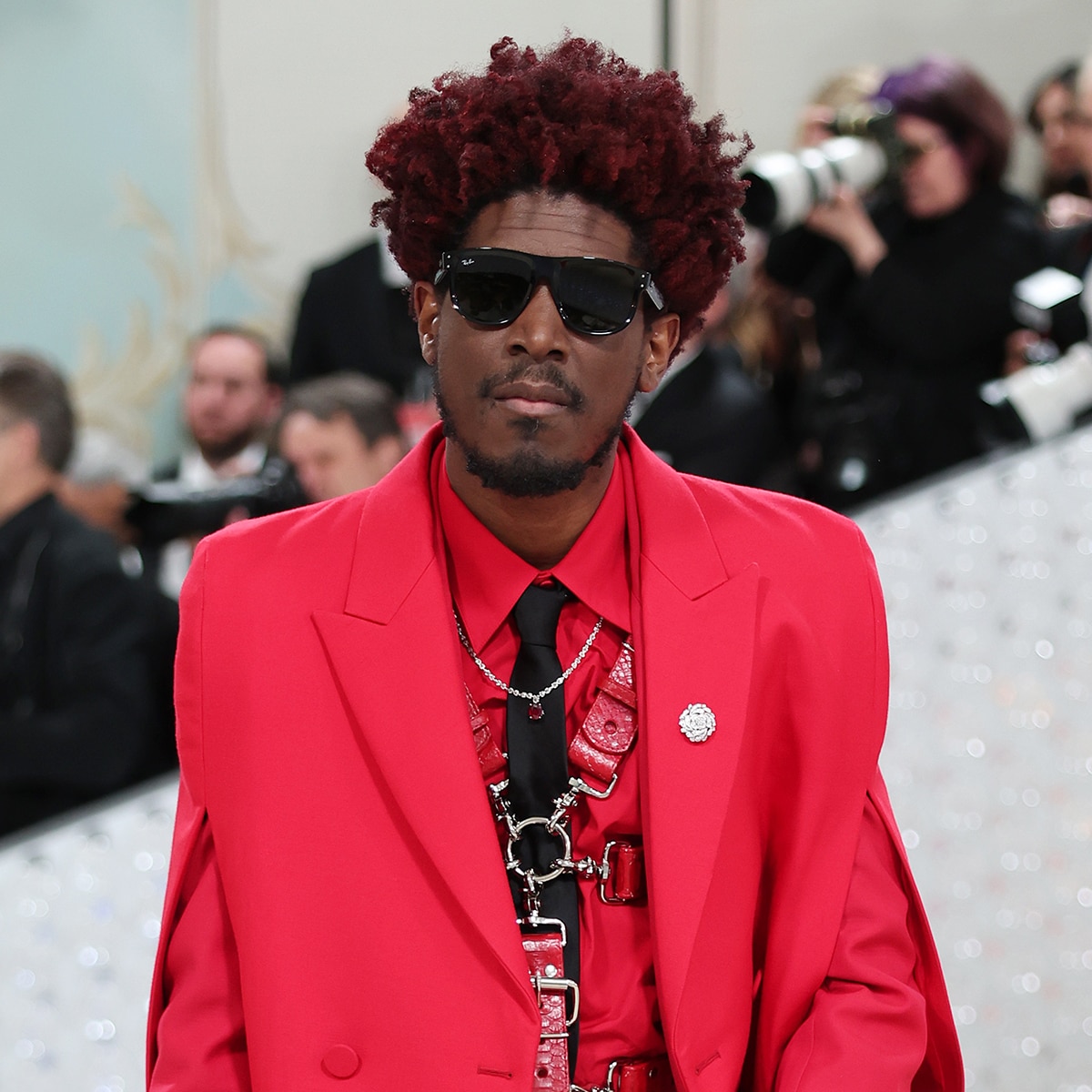
 It seems the high has ended for one member of the Euphoria family.


 If you’ve been scrolling wellness trends lately, you may have seen mouth taping pitched as the secret to a better night’s sleep. And with Sleep Awareness Week shining a spotlight on healthy…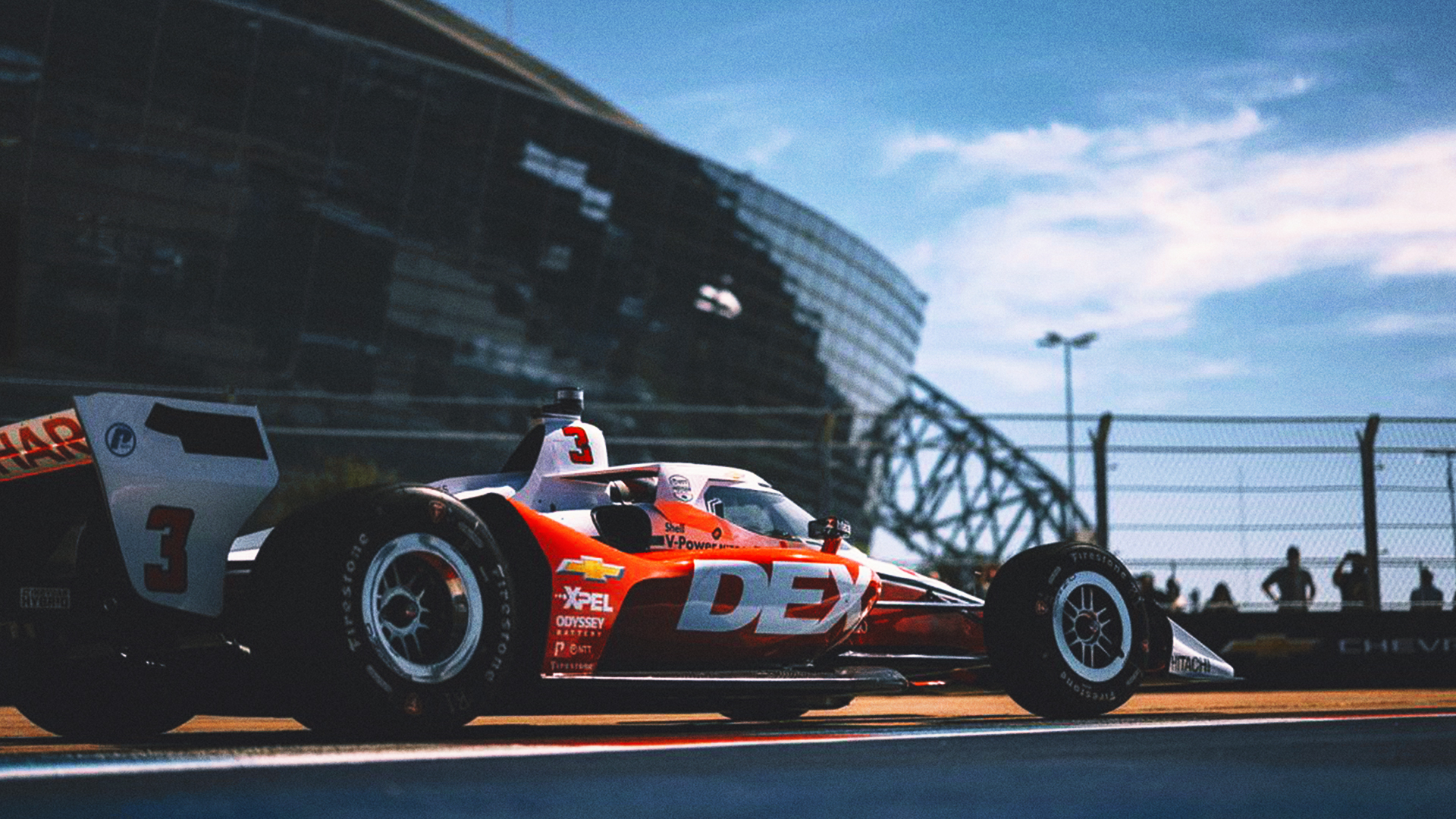



 There’s more to consider than just the dress when planning your wedding guest look. Shapewear is a key player in feeling your most confident.