The festival features a lineup heavy on country music veterans. Continue reading…Country Music News – Taste of Country









The festival features a lineup heavy on country music veterans. Continue reading…Country Music News – Taste of Country

Anthony Bourdain’s openness and curiosity about food extended to who he ate it with. When asked if he would ever dine with Donald Trump, he said this.

Mashed – Fast Food, Celebrity Chefs, Grocery, Reviews

We still love to hate this woman. Continue reading…The Boot – Country Music News, Music Videos and Songs
We still love to hate this woman. Continue reading…Country Music News – Taste of Country

Sleetmute, Alaska, students play soccer during recess last spring. In the coldest months, when temperatures fall well below zero, the kids can’t have recess because the gym is closed. (Emily Schwing/KYUK)
Two inches of raw sewage. Persistent chemical leaks. Pipes insulated with asbestos. A bat infestation. Black mold. “It kind of blows my mind some of the things I found in public schools,” says Emily Schwing, a KYUK reporter and ProPublica Local Reporting Network partner. Recently, we published her investigation of dangerous conditions in deteriorating public schools in Alaska’s rural villages. Schwing, who reported this story while also participating in the University of Southern California, Annenberg Center for Health Journalism’s National Fellowship, spoke to dozens of sources, including local resident Taylor Hayden, who showed her concrete footings that had been reduced to rubble in one village school.
ProPublica has previously reported on how restrictive funding policies in Idaho have contributed to similarly dangerous school conditions.
In Alaska, a unique set of circumstances means the responsibility for school repairs in many rural villages rests exclusively on the state Legislature. Yet over the past 25 years, state officials have largely ignored hundreds of requests by rural school districts to fix the problems that have left public schools across Alaska crumbling, even though the state owns these buildings. As rural school districts wait for funding, the buildings continue to deteriorate, posing public health and safety risks to students, teachers and staff. The impact is felt most by Alaska Natives.
For Schwing, the “record scratch” moment came when she realized some school districts were spending their own money, in one case $200,000, in a desperate effort to rank higher up the funding priority list, even going as far as hiring a lobbyist. Other districts told her they couldn’t do so without cutting teaching positions.
“Why are public school districts paying a lobbyist to convince lawmakers to invest in public schools, and even more so, to invest in infrastructure that the state owns?” she thought.
I called up Schwing to talk about the process of reporting this investigation and how different going to school can be for students across Alaska. Our conversation has been condensed and edited.
I travel a lot to rural communities in Alaska, just by virtue of the things that I cover. And usually when you are traveling to villages, you stay in the school. I have always been surprised by the things that I’ve experienced there. On the Chukchi coast, there’s a school where you can’t see out the windows anymore because they’re so pitted from the wind. There was a school that I was in last year during a sled dog race that I was covering where I could smell the bathrooms from down the hall. That’s not normal. So I was keeping a list of things that were strange for public schools.
Then Taylor Hayden called me and told me what’s going on at the Sleetmute school. So I went out there. He showed me [the conditions] in the wood shop. And then we went under the building and I thought: “Oh my God. This is crazy.” It took off from there.
I want to tell you about these two little kids I met, Edward and Loretta [in Sleetmute]. They’re in fourth grade. I’m in their school, and they’re giving me a tour: “This is our library, and this is our piano in the kindergarten room, and this is my favorite book.” They’re showing me their artwork. Never once did these kids say, “This is where the moldy part of our school is.” It made me sad to think that they think that this is normal for their school, but it also made me so proud of them for just being fourth-grade kids.
You can throw out numbers and statistics and do an investigation into these state records, but until you’re in the building, I don’t think the reality of how awful things are hits you. The kids are doing their homework at the lunch tables, or the high school kids are doing some really cool science projects, but they’re sitting in a school where if the wood shop collapses, it also takes the water system, the heat system, the HVAC, like all of the critical infrastructure, the electricity that keeps that school usable.
I have visited over 45 villages off the road system in Alaska at this point in my career, and the school is the center of these communities. It’s the largest building. They’re one of two buildings with a guarantee that there will be running water. They’re places where people get together, where people socialize. They have pickup basketball nights and fundraisers.
Public schools in rural Alaska also serve an emergency management function that is often overlooked. If there is some sort of natural disaster — a flood, a giant storm, a severe drop in temperature — or if there’s some sort of other piece of critical infrastructure that’s having problems — the water plant burns down or the electricity goes out or the heating fuel doesn’t get delivered — people will go seek shelter in the school. Wildland firefighters and the National Guard will be based out of these buildings if they’re responding to a disaster.
But in order for it to be an effective emergency management tool, you have to have it safe and operational. There are so many more functions that the public school serves than just school.
There’s so much conversation around operational funding, to pay for textbooks and teacher salaries. Currently in our Legislature, it’s all the lawmakers can talk about.
The people who are offering testimony to lawmakers from urban areas are all about funding curriculum and keeping teachers. Then you hear public testimony from people in rural communities who can’t even get that far, because there are pots and pans on the floor to catch the leaks from the roof, or there’s a bucket of oil next to them in their classroom and there’s one in the hall. There’s a very clear boundary between what rural constituents are experiencing and what urban constituents are experiencing with respect to education.
It’s very easy to forget the hundreds of villages that exist in Alaska off the road system, because they are so small. That’s where the real problem lies — when you don’t notice, then you have a roof that leaks for 20 years, and then it turns into a real public health and safety crisis.
There are over 50 villages on the Yukon-Kuskokwim Delta that KYUK serves. It’s the predominant dialect spoken on the delta, and there are a lot of elders who speak Yup’ik as their first language. The vast majority of KYUK’s audience is Yup’ik.
The other thing that you’ll notice in this story is the vast majority of the population that is served by rural public schools are Indigenous. So the largest impact from a lack of investment in school infrastructure is on Alaska Natives. So I think it’s really important to the most affected people that we would deliver a story like this in their Indigenous and often first language.
This story was originally published by ProPublica.
Reading Time: 3 minutes
Dayton Webber is a professional cornhole player and a quadruple amputee.
He has also been arrested for murder.
In fact, he was arrested as a fugitive from justice, but is facing first-degree murder charges in his home state.
Police did not offer an explanation for how the alleged homicide took place. But video evidence may clear that up.
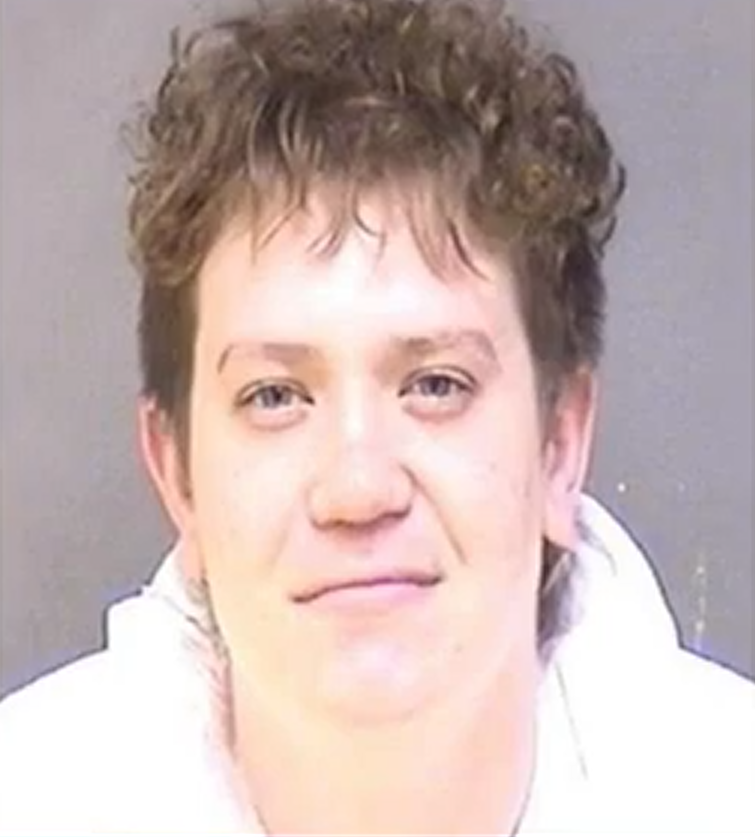
27-year-old Dayton James Webber is a professional cornhole player — and a champion at it.
He is also accused of killing a passenger in his car. The victim’s name is Bradrick Michael Wells.
According to the Charles County Sheriff’s Office, he and the man were in an argument on Sunday in Webber’s hometown of La Plata, Maryland.
(That is about 30 miles south of DC.)
The alleged murder took place in front of witnesses. And that doesn’t seem to be the most shocking part.

The witnesses were riding in the back seat of the vehicle.
Allegedly, the two 27-year-olds were in an argument during a drive when Webber pulled out a gun and shot Wells to death.
He then pulled over, the witnesses report, and asked them “to help pull the victim out of the car.”
Webber is a quadruple amputee, having lost all four limbs in an effort to save his life when he was only 10 months old.
The witnesses declined and (wisely) decided to simply leave. At this point, Webber allegedly “fled with the victim still in the car.”
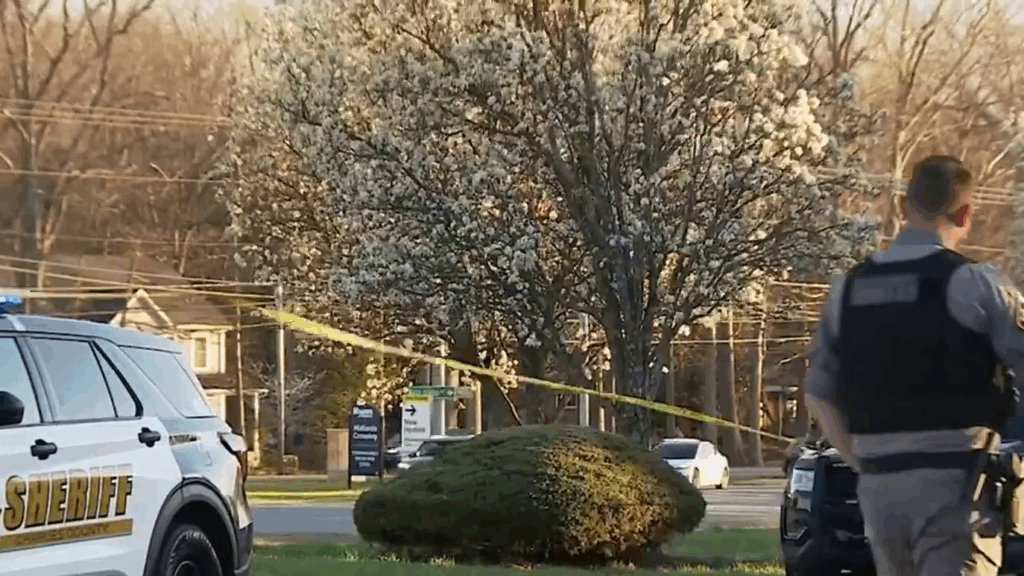
Nearly two hours later and about 14 miles away from the scene of the murder, a Charlotte Hall, Maryland resident reported “a body in a yard.”
Responders determined that the body was Wells, confirming that he was deceased.
Webber, on the other hand, was much farther away — over 100 miles away, in Charlottesville, Virginia.
Apparently, an officer with Virginia’s Albermarle County Police Department spotted Webber’s vehicle at a gas station.
Police then used the dystopian horror of omnipresent surveillance to locate Webber. Simply because a tool does something useful at times does not mean that it is not a blight upon our society.
As it turned out, Webber was at a local hospital “seeking treatment for a medical issue.”
It is unclear if the medical issue was related to the shooting death of Wells or to the disposal of his remains.
On Monday, March 23, authorities booked him in Albemarle-Charlottesville Regional Jail, charging him as a fugitive from justice.
Webber is awaiting extradition to Maryland, where he awaits a first-degree murder charge, a second-degree murder charge, and “other related charges.”
Webber’s next scheduled court date is said to be “some time in April.”
Naturally, many wondered how Webber had allegedly committed this crime. Notably, he doesn’t even use arm prosthetics when playing cornhole.
Police did not offer the public an explanation.
However, a YouTube channel that appears to belong to Webber shows his interests, including gaming — and a fondness for multiple types of guns.
As you can see in the videos (such as what we’ve included here, but also many more), he seems to have no trouble loading, aiming, and firing guns without the use of prosthetics.
This is not necessarily the inspiring example of how capable disabled folks can be that the disabled community would like to showcase. But this is, at least, a memorable example.
Dayton Webber, Pro Cornhole Player & Quadruple Amputee, Arrested in Shocking Murder was originally published on The Hollywood Gossip.
The Hollywood Gossip

There’s a major change coming to Season 2. Continue reading…The Boot – Country Music News, Music Videos and Songs
There’s a major change coming to Season 2. Continue reading…Country Music News – Taste of Country

Reading Time: 3 minutes
As you’ve likely heard by now, Joseph Duggar has been arrested amid allegations that he molested a 9-year-old girl.
Days after his arrest, Joseph’s wife, Kendra Caldwell, was also taken into custody.
Unlike Joe, Kendra was granted bail, but this might only be the start of her legal nightmare.
Kendra was charged with child endangerment and false imprisonment, but the particulars of her alleged crimes were not made public.
Now, a source close to the situation is speaking out and confirming that Kendra’s charges are not directly related to Joseph’s molestation arrest.
But they’re serious charges, nonetheless. In fact, Kendra could wind up serving eight years in prison if she’s convicted.
The insider alleges that while police were searching Joe and Kendra’s home, they discovered that the doors to their children’s bedrooms had locks on the outside.
From this, the investigators concluded that Joe and Kendra were in the habit of locking their children in their rooms.

“I can tell you the arrest was a result of a home inspection, and the door locks being on the exterior of the doors,” the source tells People, adding:
“She’s not suspected or accused of participating in his alleged crime.”
If you’ve been paying attention to the Duggar family for any length of time, then you’re probably aware that they hold some very controversial views with regard to child rearing
In fact, many of the punishments used by Jim Bob and Michelle Duggar have been described as child abuse.

It seems that Joe and Kendra allegedly followed in his parents’ footsteps with regard to harsh punishments, and now, they find themselves facing legal consequences.
(In addition to his lewd and lascivious behavior – molestation of a victim less than 12 years old, and lewd and lascivious behavior conducted by a person 18 years or older charges, Joseph is also facing child endangerment and false imprisonment charges.)
It’s unclear, at this time, when Kendra will be due back in court.
Joseph is still awaiting extradition to Bay County, Florida, where his alleged crimes took place.
Bay County Sheriff’s Office Criminal Investigator Chase Norris wrote an affidavit alleging that Joseph confessed to his crimes in a conversation with the alleged victim’s father.
Norris says that after he learned of the confession, he “requested the detective and victim’s father call [Joseph],” who “admitted his actions” and said “he touched the victim over her clothing” (per People).
Between them, Joseph and Kendra are facing a total of 16 charges.
According to the Florida penal code, Joseph’s crime carries “a split sentence that is a term of at least 25 years’ imprisonment and not exceeding life imprisonment, followed by probation or community control for the remainder of the person’s natural life.”
We will have further updates on this developing story as new information becomes available.
Kendra Caldwell Facing 8 Years in Prison Following Police ‘Home Inspection’: … was originally published on The Hollywood Gossip.
The Hollywood Gossip
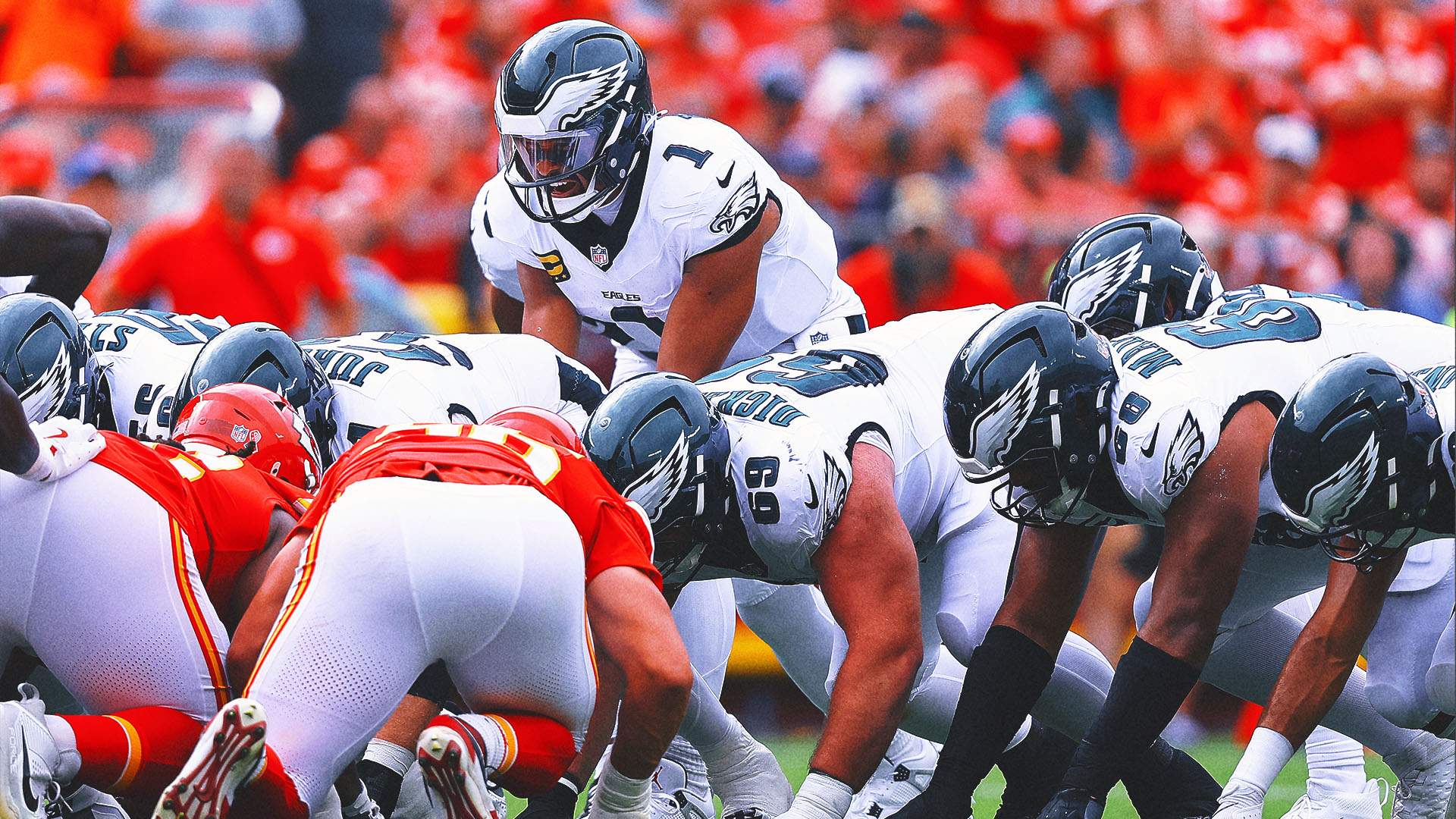
The tush push will live on for at least another season. Following another year of debate over the legality of the tush push, a proposal on whether to ban the play will not be voted on at the NFL’s league meetings in Arizona next week. However, the competition committee will push forward five other proposed rule changes for the 2026 NFL season next Tuesday. “There is less talk about it in the football community,” said Rich McKay, the chair of the competition committee. A proposal to ban the tush push was voted on last May, with the NFL owners voting 22-10 in favor of banning the play. But all proposed rule changes need at least 24 votes in order to be approved. The tush push faced scrutiny during the Philadelphia Eagles’ run to a Super Bowl title in 2024, with the play being one of the most successful plays in the NFL that season. Philadelphia continued to use the tush push in 2025, and there was speculation that the play would be removed from the game this offseason. In the Eagles’ Week 2 win over the Kansas City Chiefs this past year, there were multiple instances where it appeared players on Philadelphia’s offensive line were offside. FOX Sports NFL rules analyst Dean Blandino questioned the legality of the play during that game, but later said he thought it was “50-50” that the play would get banned. As for the other proposed rule changes, the NFL is preparing for the possibility of replacement officials in the 2026 season, proposing a rule change for one season that would allow the replay center in New York to correct any “clear and obvious” mistakes by on-field officials in case of a work stoppage. There are also a few proposed changes that would slightly tweak the kick-off rule and allow the replay center to eject players for flagrant acts on plays that were not penalized on the field. Here’s more about a few of the proposed rule changes being put forth by the competition committee at next week’s league meetings. Replacement ref contingencies The biggest proposal regards the contingency if there is a work stoppage with the officials and the league once again uses replacement officials as it did to start the 2012 season. The current collective bargaining agreement with the NFL and the NFL Referees Association expires on May 31. The NFL used replacement officials for the first three weeks of the 2012 season with several mistakes and bad calls being made. The tipping point came at the end of a Monday night game in Week 3 between Green Bay and Seattle when the Seahawks won the game on a disputed TD catch known as the “Fail Mary.” The league later said the touchdown should have been negated for offensive pass interference. The outrage reached the White House with President Barack Obama calling for the lockout to end, which it did a few days later, prompting an apology to fans from Commissioner Roger Goodell. Under the proposal from the competition committee, the replay center in New York would be able to advise the on-field officials on any missed roughing the passer or intentional grounding penalty, as well as any act that would have led to an ejection had a penalty been called. The replay center can also intervene to overturn calls that were made on several penalties, including illegal contact, face masks, roughing the passer, horse-collar tackles and intentional grounding. The replay center could also assist to overturn pass interference calls when there is clear evidence that there was “advertent tangling of feet when both players were playing the ball or neither player was playing the ball.” In the final two minutes of either half or for all of overtime, the replay center would be allowed to overturn or throw a flag on any unnecessary roughness or unsportsmanlike conduct for throwing a punch, forearm or kick; as well as leaping or leverage penalties on kicks. The replay center can also correct wrong calls based on running into or roughing the kicker. The DK Metcalf rule The committee also proposed allowing the officiating center in New York to eject players for committing a flagrant or non-football act on the field, even if it wasn’t called for a penalty. Under the old rules, the replay center could only intervene in those cases when the on-field officials had called a penalty. This proposal comes after Pittsburgh receiver DK Metcalf wasn’t ejected from a game at Detroit last season when he got into an altercation with a heckling fan. Because the on-field officials didn’t see the play when Metcalf swiped at the fan and throw a flag, the replay center was unable to eject Metcalf. The league did suspend him for two games, but he was able to remain in the game at the time. Kickoff changes The committee also proposed several minor tweaks to the new kickoff rule that is entering its third season, including allowing teams to declare an onside kick at any point in the game. The original rule in 2024 limited onside kicks to the fourth quarter when a team is trailing. The change last year allowed a trailing team to declare an onside kick at any point and now a team can declare an onside kick no matter the score. The committee also proposed a small change to how the receiving team lines up to receive kickoffs and made changes to the touchback on kicks that start from the 50 instead of the 35 following a personal foul penalty. Under the rule last year, the kicking team was incentivized to kick out of bounds from the 50 to give the receiving team the ball on the 25 instead of the 35 for a touchback. Under the new proposal, touchbacks on kicks from the 50 will be spotted at the 20. Off-field changes There were also a few proposals to change bylaws for off-field rules. The committee also proposed giving the league the latitude to alter the date of the roster cutdown day, which is currently the Tuesday following the final exhibition games, to accommodate an international game in Week 1. The Los Angeles Rams and San Francisco 49ers are set to open the regular season in Australia and this gives the league the option to alter those dates based on when the teams travel to Australia. The committee also proposed making the Saturday and Sunday of Labor Day weekend as business days, allowing for the 24-hour waiver period for players to go into effect on those days instead of waiting until Monday. The committee also proposed allowing players who began training camp on the physically unable to perform list and were kept on the PUP list after roster cutdown day to be allowed to open their 21-day practice window after Week 2 of the regular season. The players still can’t be put on the active roster until after missing four games but they now are able to practice sooner. The owners also could vote on two proposals made last week by teams, including one by Cleveland to allow draft picks to be traded five years into the future instead of three and one by Pittsburgh to allow teams to have up to five video or phone calls with potential free agents during the negotiating window before the start of the league year. That was allowed on a trial basis this year and the Steelers are proposing that the rule to be permanent. The Associated Press contributed to this report.Latest Sports News from FOX Sports