When you’re feeling sick, all you want is to recover – and to support the healing process, you should probably avoid crunchy foods. Here’s why.

Food Republic – Restaurants, Reviews, Recipes, Cooking Tips









When you’re feeling sick, all you want is to recover – and to support the healing process, you should probably avoid crunchy foods. Here’s why.
Food Republic – Restaurants, Reviews, Recipes, Cooking Tips

There are seven ‘Scream’ movies — and a bunch more that were never finished. Continue reading…The Boot – Country Music News, Music Videos and Songs
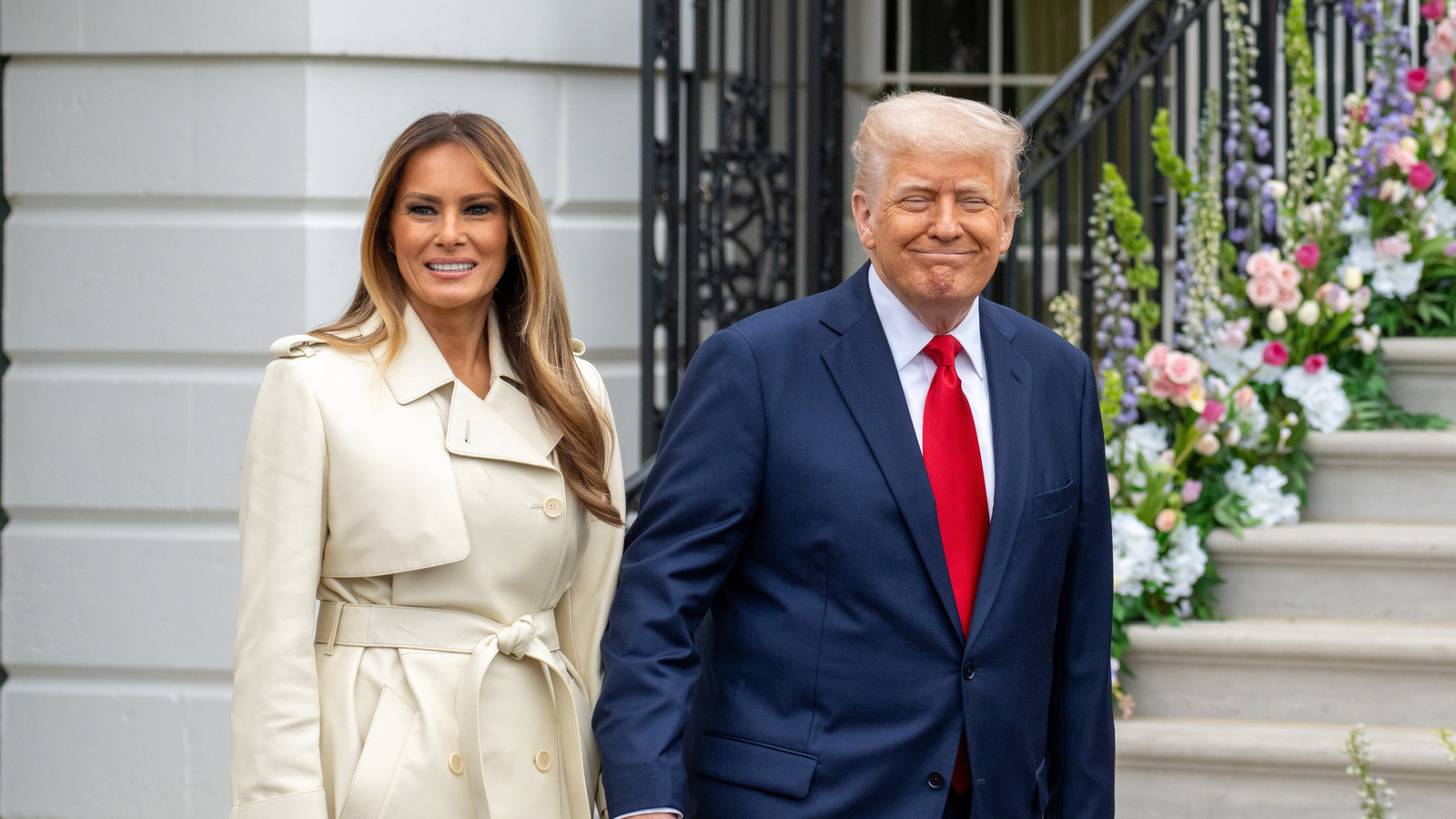
President Donald Trump and his wife, First Lady Melania Trump, have an age-gap relationship. Here’s what science says that could mean for his life expectancy.
Health Digest – Health News, Wellness, Expert Insights
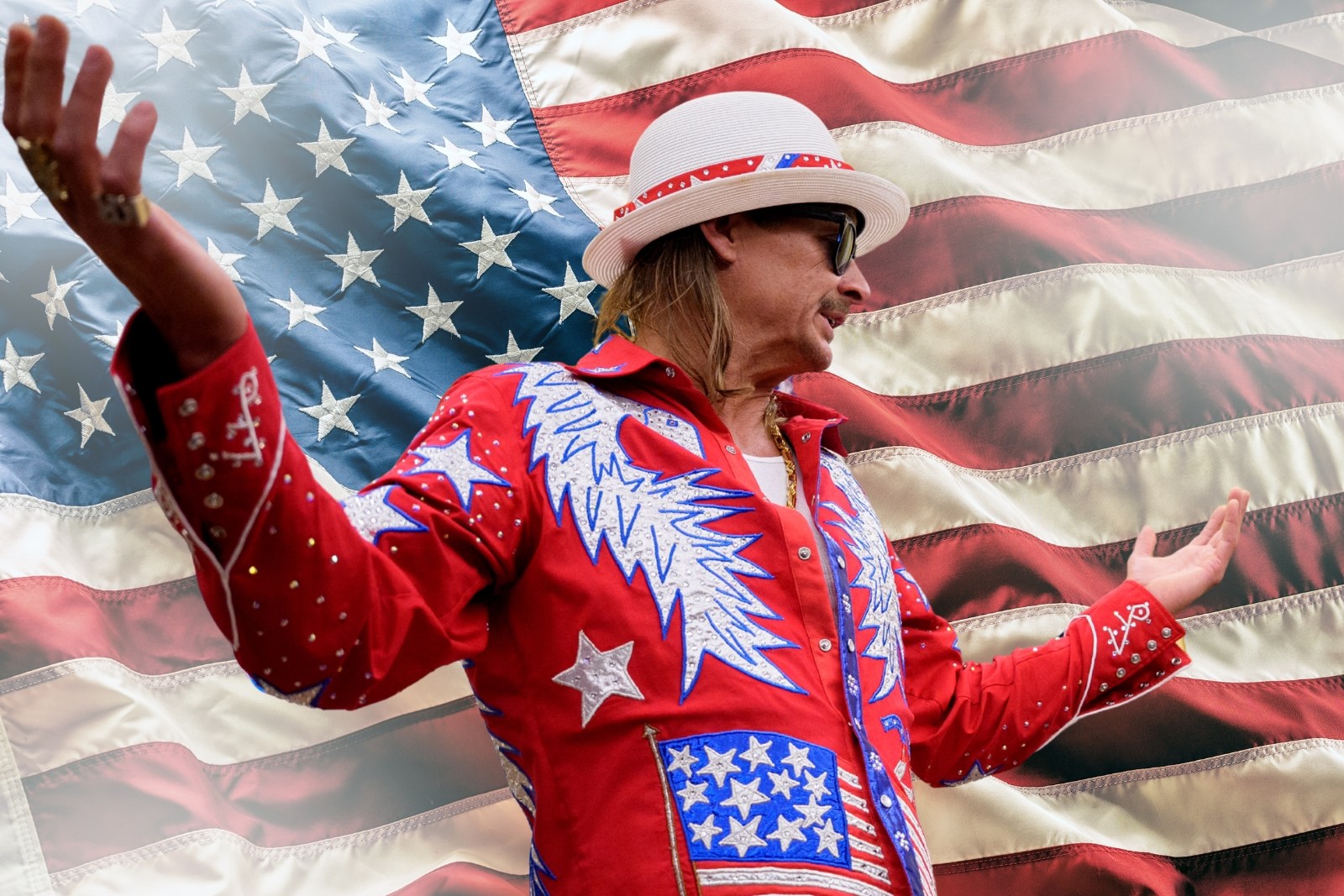
Kid Rock’s latest tour is stirring up conversation, especially with those eye-popping ticket prices. Who knew front row could cost more than a weekend getaway? Continue reading…Country Music News – Taste of Country
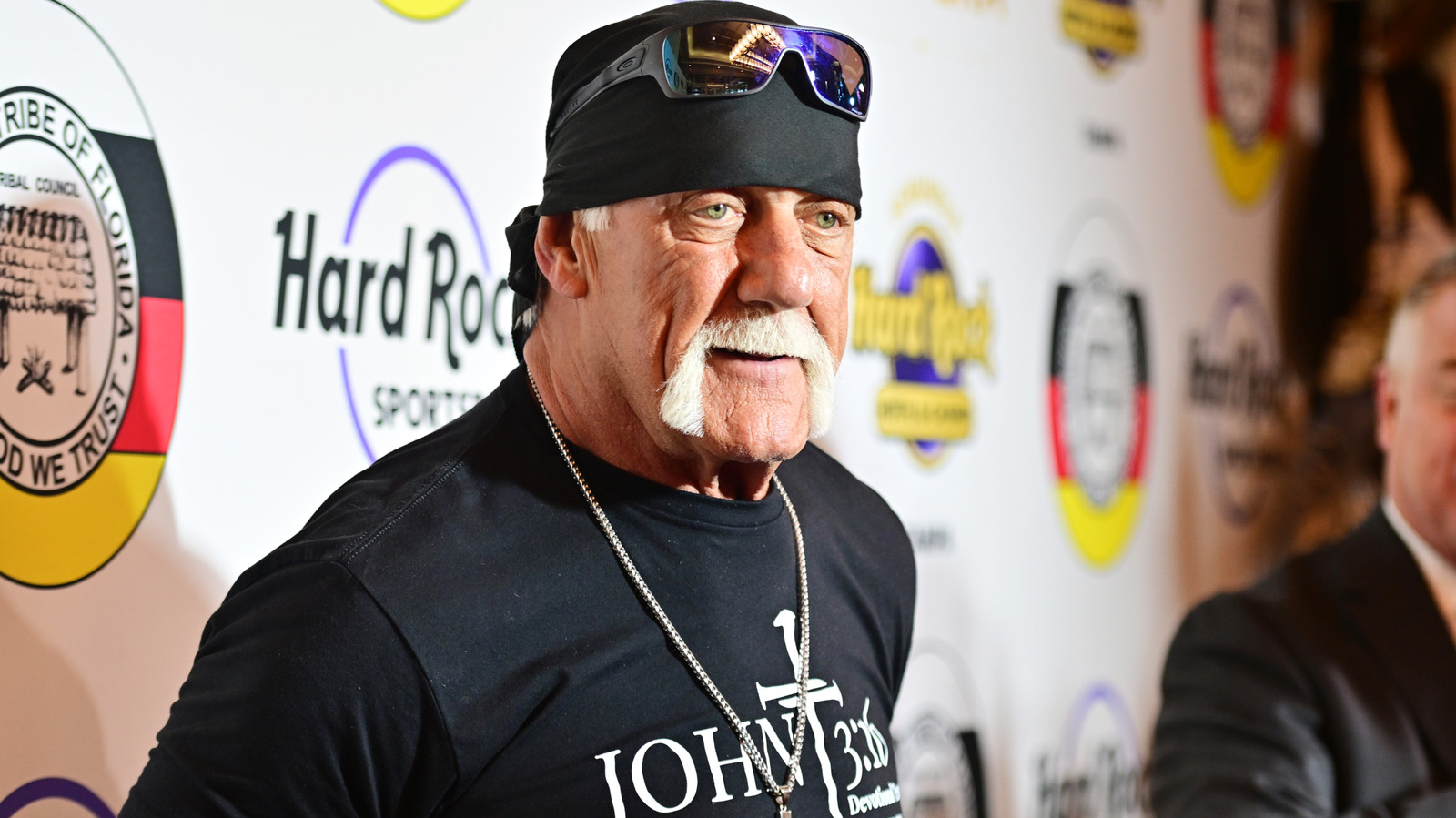
In 1995, Hulk Hogan launched a restaurant concept called Hulk Hogan’s Pastamania! – but whatever became of the wrestler’s foray into the world of food?
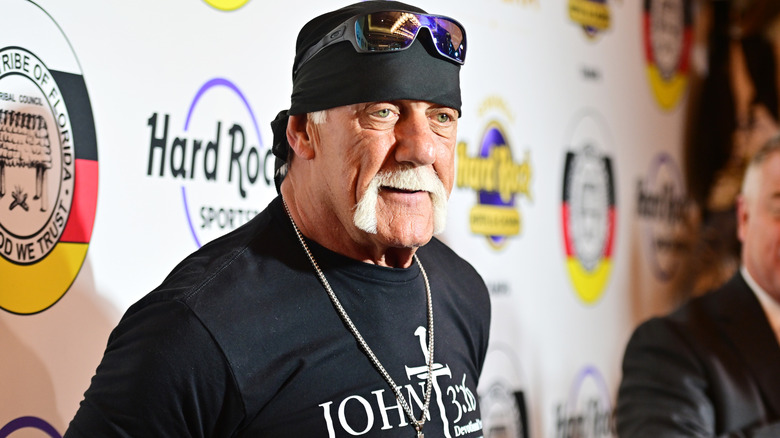
Food Republic – Restaurants, Reviews, Recipes, Cooking Tips
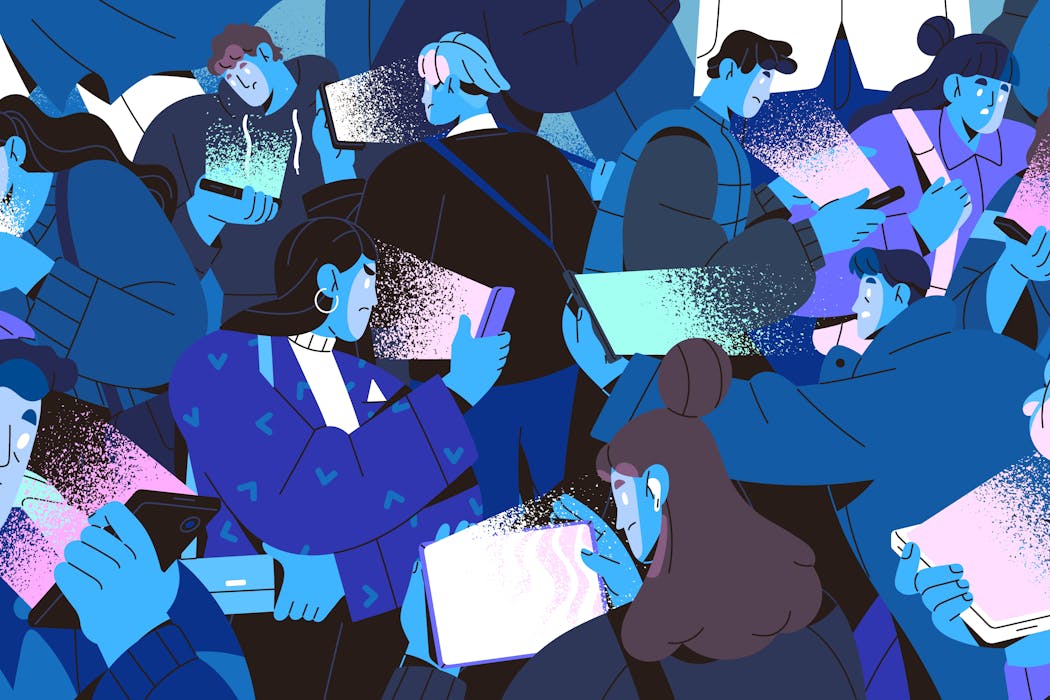
When a coupon suddenly appears on your phone as you approach a store, you might find it convenient and even helpful. But the same AI systems that know where you are and try to influence your purchases can be used to infer what you fear, what you trust and which stories you are likely to believe. AI-fueled marketing algorithms are becoming increasingly good at influencing human behavior.
That raises concern about what various governments might do with these tools to influence citizens’ views about warfare. A clear-eyed look at how administrations are exploiting these systems may help people and their nations navigate an uncertain future.
I am a security researcher who studies ways to explore and characterize the risk technology poses to individuals and society. The rise of AI-mediated influence has raised questions about the erosion of people’s capacity to exercise free will and, by extension, society’s ability to distinguish a just war from an unjust war.
The integration of AI with location-based services is pushing the marketing frontier. Location-based services use geographic data from indoor sensors, cellphone towers and satellites to promote goods and services that are tailored to your location, a capability called geofencing.
When marketing firms couple massive amounts of data about individuals’ behaviors – including information that people voluntarily or unknowingly share through mobile device applications – the firms can group, or segment, potential customers based on what they like, what they do and what they say.
Once an AI-powered marketing system knows where a user is and can make an informed guess about that person’s likes and dislikes, it can design targeted coupons and advertisements to influence the behavior of each person in a group, and possibly the group as a whole. This combination of AI with geofencing and segmentation makes hyperpersonalized marketing content possible at an unprecedented scale.
What might this advance have to do with warfare? The use of psychology to win battles or obviate the need for war is as old as armed conflict itself. Sun Tzu, the Chinese military general and philosopher who died in 496 B.C., wrote: “Therefore the skillful leader subdues the enemy’s troops without any fighting; he captures their cities without laying siege to them; he overthrows their kingdom without lengthy operations in the field.”
From Sun Tzu’s era until today, skilled practitioners of military strategy have sought to reduce the risk in fighting through reflexive control: getting opponents to willingly perform actions that are best for the strategist’s empire or nation.
Today’s strategists increasingly rely on paid social media advertisements, influencers, AI-generated content and even fake social media accounts to sway popular opinion toward their goals. This power, and controversy surrounding it, has been implicated in recent national elections, domestic unrest and negotiations to end the conflict in Ukraine.
Unlike propaganda during the Cold War between the U.S. and the Soviet Union, modern influencers don’t rely on a single message broadcast to the masses. Strategists test and deploy thousands of narrative variations simultaneously, monitor how different groups respond and refine their approach in near-real time. The purveyors don’t need to convince everyone. They just need to nudge enough people at the right moment to change election outcomes, pressure domestic policies or even trigger ethnic violence.
As online influence becomes more automated and personalized, it is harder to determine where persuasion ends and coercion begins. If groups of people, or even a nation’s citizenry, can be guided toward certain beliefs or behaviors without overt force, democratic societies face a new problem: how to distinguish traditional attempts at influence from manipulation – especially during conflict.
Recent studies show that Americans trust local news sources more than national ones, although trust in both local and national news media has declined across all age groups in the U.S. Ironically, this trust deficit is being exploited by unscrupulous media in various ways, such as AI-generated, pink-slime news – online news stories that only appear to be from authentic local news outlets. The stories are often technically accurate but presented with veiled political bias.
AI-driven propaganda directly challenges how people typically evaluate claims that their nation has been wronged – that it is the “good guy” standing up for what is right. Just war theory assumes that citizens can reasonably consent to war. Legitimate political authority requires an informed public that can decide violence is both necessary and proportional to the offense. However, when influence operations sway people’s views without them being aware of it, these systems threaten to undermine the moral preconditions that make war just.
The question citizens have to answer is how they will allow their information environments to evolve. Do they assume that deception is ubiquitous and therefore governments must control information and even preempt the truth by weaponizing AI-driven narratives? Or should the public accept the risk of AI-generated influence as a regrettable but necessary part of openness, pluralism and the belief that truth emerges through transparent debate and not under tight controls?
The same systems that decide which coupon reaches your phone are starting to shape which narratives reach you, your community and a nation’s entire population during a crisis. Recognizing this connection is the first step toward deciding how much influence people are willing to accept from such algorithms and the propagandists who control them.

Justin Pelletier is affiliated with the United States Army Reserve. The views expressed are those of the author and do not reflect the official policy or position of the U.S. Army, Department of War, or the U.S. Government.
Politics + Society – The Conversation
The U.S. Department of Homeland Security is reportedly issuing administrative subpoenas to identify anonymous social media accounts that criticize U.S. Immigration and Customs Enforcement. Google, Meta and Reddit have complied with at least some of those requests, according to The New York Times.
These subpoenas appear alongside other recent steps by the Trump administration aimed at clamping down on its critics.
In Minneapolis and Chicago, ICE agents told protesters their faces were being recorded and identified using facial recognition technology. Tom Homan, the White House border czar, has also spoken publicly about creating a database of people arrested during protests against immigration enforcement operations.
One way to understand these government moves is by focusing on law enforcement and compliance. Some people may wonder about what legal authority DHS is using to demand identities and compile lists, how many accounts are involved, and whether prosecutions will follow. Those questions matter.
But they are not the most important ones.
To me, a professor of public service and vice chair of the National Communication Association’s Communication and Law Division, the more revealing question is why the government wants the names of critics in the first place, and what that choice signals about how dissent is being understood.

The DHS subpoenas that target social media accounts may be perfectly legal.
Administrative subpoenas are authorized by statute and do not require a judge’s approval before issuance. The government’s use of facial recognition technology has survived constitutional challenge in certain investigative contexts. A president’s executive memoranda routinely set enforcement priorities.
But constitutionality does not turn on whether a tool exists. It turns on how that tool is used.
Power can be lawful in the abstract and antidemocratic in its application. The fundamental question in a democracy isn’t whether the government possesses investigative authority. Instead, the question to ask is what happens when that authority begins to focus on critics of a particular policy.
National Security Presidential Memorandum-7, issued in September 2025, makes the stakes even more stark. It directs agencies to prioritize efforts to counter what it calls “domestic terrorism” and organized political violence. It emphasizes threat assessment and intelligence sharing across departments. It frames certain forms of political conflict in security terms.
When protest and online criticism are characterized using a national security vocabulary, they begin to look less like disagreement and more like destabilization. And once dissent is understood as a potential threat, the gathering of names and data can feel ordinary rather than exceptional.
The First Amendment draws its strongest protections around speech that challenges the state. Criticism of immigration enforcement concerns federal authority, borders and human rights. It is core political speech.
Viewpoint discrimination is among the borders the Supreme Court has guarded most carefully. A viewpoint-neutral law is one that applies to everyone, regardless of opinion. Racists have the same right to speech as do Catholic nuns.
Government may regulate conduct, and it may punish true threats and incitement. It may even enforce neutral laws that incidentally restrict speech.
What government may not do is single out one side of a political debate because officials disapprove of its perspective.
If opposition to immigration enforcement triggers subpoenas by the government to businesses to provide the identity of dissenters, that is a problem for the Constitution. The government would need to demonstrate a compelling and viewpoint-neutral justification for the requests. Broad appeals to public safety are rarely sufficient when the speech at issue lies at the center of public debate.
In the 1958 case NAACP v. Alabama, the Supreme Court refused to allow the state to compel disclosure of civil rights membership lists because exposure invited retaliation. In McIntyre v. Ohio Elections Commission, in 1995, the court protected anonymous pamphleteering.
The reasoning in both cases was grounded in experience rather than theory. People speak differently when they believe their names may be recorded and stored by the state.
The risk in the present moment to the kind of dissent democracy needs and the Constitution protects may not lie in mass arrests. It may lie in narrowing – a narrowing of who feels safe criticizing federal policy. A narrowing of how sharply people speak. A narrowing of what feels worth the risk.
The First Amendment guards the right to express unpopular views. Chilling speech does not require prosecution. It requires uncertainty and asymmetry – a power imbalance. A person who believes online criticism could land them in a federal database may decide silence is the rational choice.
Supporters of the subpoenas will point to genuine safety concerns. Sharing agents’ locations can create real danger. True threats and incitement fall outside constitutional protection. Under the Supreme Court’s Brandenburg standard, advocacy loses protection when it is directed at and likely to produce imminent lawless action.
The Constitution leaves room to address such genuine danger. The harder question is what happens when tools designed for protecting against tangible harm migrate into ordinary political conflict.
American history offers reminders of how this unfolds. During the Red Scare, loyalty investigations reached into universities and civic organizations. After the Sept. 11 terrorist attacks, surveillance authorities expanded under the Patriot Act. Early provisions allowed the government to seek library borrowing records. Even limited use or constraints on how government could apply its powers for obtaining information may have chilled inquiry. The harm did not depend on mass prosecutions. It depended on normalization.
It is easy to identify the harms that speech can cause. Hate speech can silence its targets. Dishonest rhetoric from public officials can erode trust in institutions. Marketing campaigns can deceive elderly citizens into surrendering their savings. We can see those injuries. We can name their harm. We can point to the damage.
The benefits of free speech are harder to make tangible.
It is difficult to measure what is lost when an opinion is never voiced. It is impossible to catalog the arguments that never quite form because a speaker calculates the risk and decides silence is safer. There is no headline announcing that a citizen chose not to post, not to protest, not to dissent.
Yet the Supreme Court has long understood that the value of free speech lies precisely in that unseen space.
In New York Times v. Sullivan in 1964, the court wrote that “the theory of our Constitution is that debate on public issues should be uninhibited, robust, and wide-open.” That theory assumes something demanding. It assumes that criticism of government will be sharp, uncomfortable and, at times, unfair. It assumes that the cure for bad speech is more speech, not surveillance.
When the government begins collecting the names of its critics, even through tools that are lawful in isolation, the question is not simply whether a statute permits it. The question is whether the conditions for uninhibited and robust debate are quietly narrowing.
Free speech rarely disappears in a dramatic moment. It erodes at the margins. It shrinks in the spaces where people decide the risk feels too high.
And by the time someone tries to measure what has been lost, the silence may already feel normal.

Stephanie A. (Sam) Martin does not work for, consult, own shares in or receive funding from any company or organization that would benefit from this article, and has disclosed no relevant affiliations beyond their academic appointment.
Politics + Society – The Conversation

Lee Brice is back in the spotlight, not just for his music but for a hilarious twist on a viral meme. Continue reading…The Boot – Country Music News, Music Videos and Songs
Lee Brice is back in the spotlight, not just for his music but for a hilarious twist on a viral meme. Continue reading…Country Music News – Taste of Country
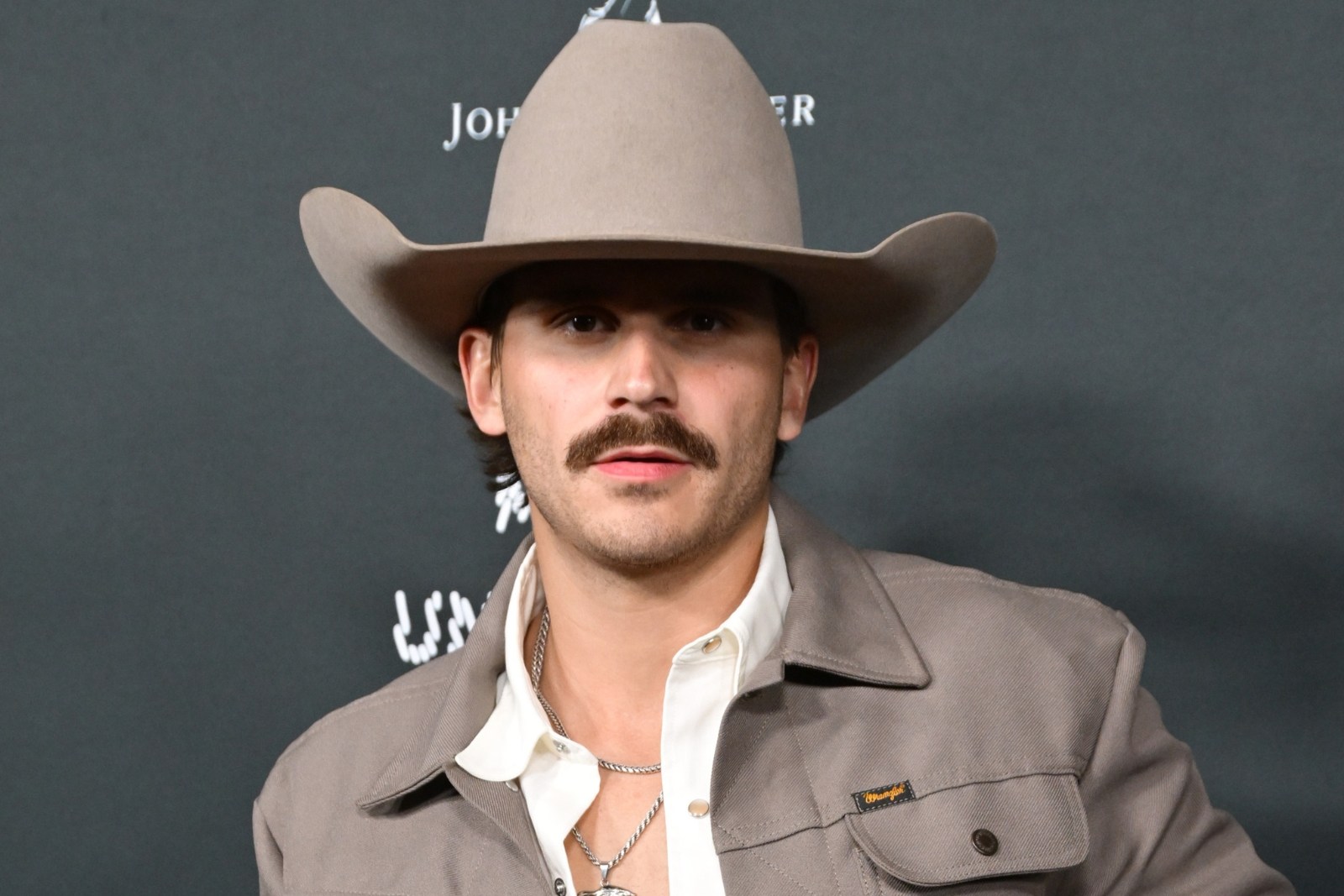
Tucker Wetmore’s songwriting journey is anything but ordinary. Continue reading…The Boot – Country Music News, Music Videos and Songs