Tim McGraw is gearing up for a summer headlining tour, and he’s bringing some very exciting friends along for the ride. Continue reading…The Boot – Country Music News, Music Videos and Songs
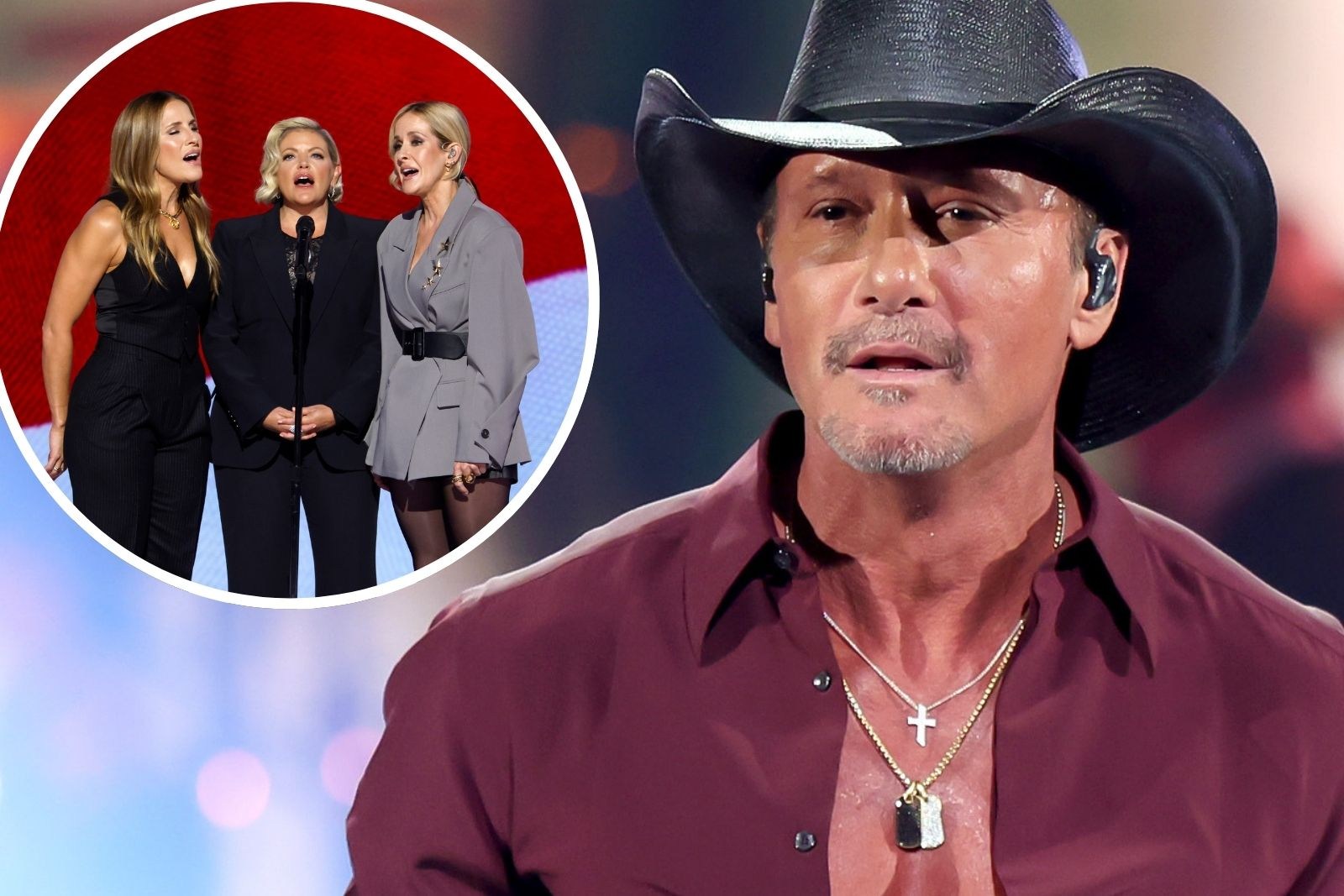








Tim McGraw is gearing up for a summer headlining tour, and he’s bringing some very exciting friends along for the ride. Continue reading…The Boot – Country Music News, Music Videos and Songs
Tim McGraw is gearing up for a summer headlining tour, and he’s bringing some very exciting friends along for the ride. Continue reading…Country Music News – Taste of Country

Bailey Zimmerman is gearing up for a tour that he says will be unlike anything he’s done before. He hints at what fans can expect during a new conversation with award-winning radio host and media personality Bobby Bones.
The rising country star appears on the latest episode of Bobby Bones Presents: The BobbyCast, now streaming on Netflix, where the two dive into his whirlwind rise in country music, the lessons he’s learned along the way, and what’s next as he prepares to hit the road again.
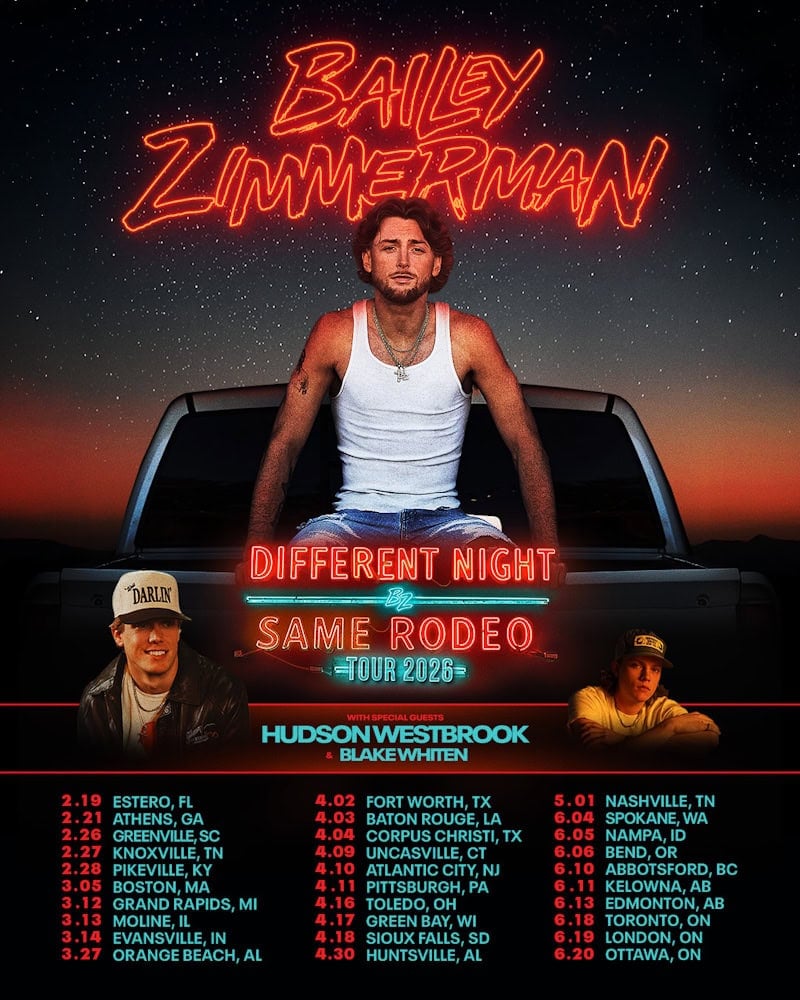
Beginning February 19, Zimmerman will launch his Different Night Same Rodeo 2026 tour. The trek I set to begin in Estero, FL and continue with stops across Tennessee, Kentucky, Alabama, Ohio, Wisconsin, and more before wrapping up with a stretch of dates in Canada. Fans have seen the “Backup Plan” singer light up the stage before, but as he shared with Bones, this next tour is shaping up to be something on a whole different level.
“Oh man, my team’s about to kill me this year…I want them to go home going, ‘that is the sickest show I’ve ever seen.’ And so, yeah, dude, it’s been like everything I’ve dreamed of.”
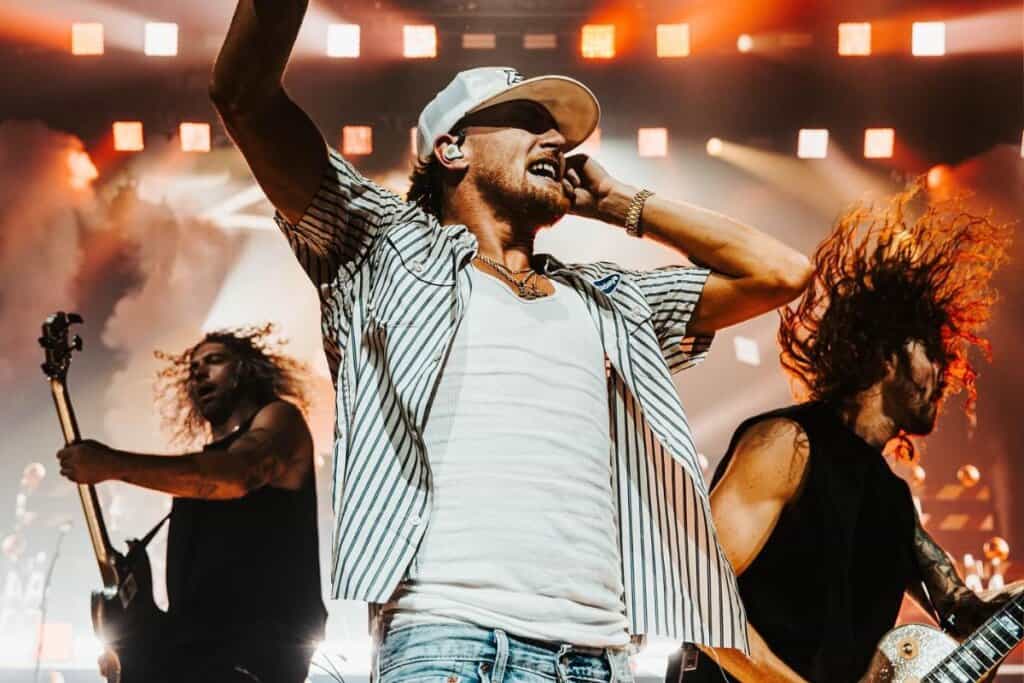
Zimmerman also admitted that no matter how many shows he’s played, the nerves still hit just as hard before every tour. This proves how important it is to him to give fans the absolute best experience he can each time he steps on stage.
Offering a look into that mindset, he shares, “I’ve been nervous about every single tour though. I don’t think that’ll ever go away, really. I always want to really deliver for my fans. And I also have that thing where I’m like, am I delivering enough? Am I doing enough? Am I like, is the show big enough? Is there enough pyro? Is there enough this, is there enough? Can I do more?”
Along with speaking on the upcoming tour, fans tuning into the episode will hear Zimmerman discuss how quickly his life changed and the pressure that has come with the many highs he has experienced up to this point in his career. He asks Bones to close his eyes and envision how it all unfolded through his perspective.
“You’re in your bed and your eyes are closed and you posted this video last night, but you’re just some random kid in some small town of 800 people in your mom’s trailer. And you wake up and your phone, now open your eyes. We’re awake and your phone is blowing up and it’s almost buzzing off the table and you grab it and your TikTok says 800 and something thousand notifications and your song’s gone viral,” Zimmerman states.
“So then all of a sudden you’re just like, you quit your job day, go figure out how to record the song. Fast forward, you keep doing videos, you keep doing that. You ask your mom for 1500 bucks, you go to the studio, you record the song, you put the song out and it streams like millions, like first five days, 10 days.”
He then brings Bones to the next big chapter, moving to Nashville, signing a record deal for the first time and getting to share the stage with one of the biggest acts in the genre.
“Then all of a sudden Morgan Wallen calls you and he’s like, ‘Hey, dude, you want to go on a stadium tour for two years?’ And I’m like, ‘Yeah.’ And then I go do that. And then I go do my own tours that sell out and I put out songs and then my first album, ‘Religiously. The Album.’ breaks records. Imagine all that happening that’s happened to you. And that’s exactly how it feels. And it is crazy, bro.”
In between all the exciting things that have happened to Zimmerman in recent years, he also calls attention to a deeply personal time when his mother was in the hospital, and he was unsure if she would make it out alive. Once she miraculously recovered, he made it his mission to give her a better place to live, which ultimately led him to surprise her with a brand-new house for Christmas.
As he continues to chase bigger stages and push his creative limits, Zimmerman remains grounded in his gratitude. He explains that every step of his journey has taught him to be appreciative for everything he’s accomplished and for the people who are there to support him rather than to sweat the small things.
The interview with Bailey Zimmerman follows a big moment for Bones, who made his debut on the streaming service last week with an episode featuring Kenny Chesney. “Bobby Bones Presents: The BobbyCast” is one of more than 15 of iHeartMedia’s top original podcasts to join Netflix.
New episodes drop every Tuesday and Thursday on the streaming service, with audio versions also available on iHeartRadio and all major podcast platforms.
The post Bailey Zimmerman Tells Bobby Bones His 2026 Headline Tour Will Be His ‘Sickest’ Shows Yet appeared first on Country Now.
Country Now

If Brussels sprouts need more excitement, heat is the answer. This guide explores spicy sauces, cooking techniques, and flavor combinations that transform them.

Food Republic – Restaurants, Reviews, Recipes, Cooking Tips

No team in NFL history has qualified for the Super Bowl more often than the New England Patriots — Sunday’s tilt against the Seattle Seahawks will mark their 12th appearance in the big game. It’s only been seven years since New England last played in the Super Bowl, but the current roster doesn’t feature a single player from the 2018 team. Even executive vice president and de facto general manager Eliot Wolf, who joined the organization in 2020, is only in his second year in his current post. Teams aren’t supposed to be able to finish outside the playoffs three years in a row, launch a roster rebuild around a rookie quarterback, change coaches in consecutive seasons and then go 14-3 en route to the Super Bowl. But this is the Patriot Way. With that, we rank the 12 biggest acquisitions the Pats made to qualify for Super Bowl LX. RELATED: Ranking the Seahawks’ 12 Most Important Moves to Reach Super Bowl LX 12. Drafting left tackle Will Campbell No. 4 overall (April 2025) Though he has struggled a bit in the playoffs, Campbell (and fellow rookie Jared Wilson) have helped solidify a Patriots offensive line that, frankly, doesn’t get enough credit for New England being the only team in the NFL this season to finish among the league’s top five in both passing (31) and rushing (22) touchdowns. The 6-foot-6, 319-pound Campbell has enough quickness off the snap to force edge rushers wide, and he’s quite strong, showing the iron-grip and hand placement to control opponents when he’s able to latch on. Viewed by some as a better fit at guard in the NFL than the left tackle role he starred at for three years at LSU, Campbell’s quickness, power and timing on combo blocks have already made him a standout run blocker — a rarity for a rookie offensive tackle. 11. Signing right tackle Morgan Moses to a three-year $24M deal (March 2025) With all due respect to the aforementioned youth movement the Patriots have employed on the left side of their offensive line, Moses has been the club’s best blocker all season long, allowing a career-low two sacks in 20 combined regular and post-season starts. Moses isn’t the most aesthetically-pleasing blocker, but he’s absolutely massive at a listed 6-foot-6 and 320 pounds with 35 3/8-inch arms, forcing edge rushers to take a wide path to affect the quarterback and consistently generating movement in the running game. The soon-to-be-35-year-old Moses is one of the NFL’s true ironmen (and annually among the league’s most underrated blockers), starting a combined 175 games for four different teams (Commanders, Ravens, Jets) over his 12-year career. For a team that spent big dollars in free agency, Moses’ base salary this season of just $2.3 million was among its greatest bargains — though his cap hit notably jumps to $10.4 million next year. 10. Signing cornerback Carlton Davis III to a three-year $54M deal (March 2025) The club’s best positional group is its cornerbacks, thanks in part to Davis playing some of the best football of his career over the past few months. A quality starter since being drafted in the second round by the Buccaneers in 2018, Davis appeared in every regular-season game in 2025 for the first time in his career. He didn’t record an interception, but he had two of them (and nearly a third) in the Pats’ divisional-round victory over the Texans. The 6-foot-1, 206-pound Davis hasn’t allowed a touchdown reception since Week 10. The combination of Davis, Christian Gonzalez (more on him later) and nickel cornerback Marcus Jones is right there with the Seahawks’ Devon Witherspoon, Tariq Woolen and Josh Jobe as one of the elite secondary trios in the NFL. 9. Signing edge rusher K’Lavon Chaisson to a one-year, $3M deal (March 2025) Chaisson has proven to be quite the bargain as a pass rusher, delivering a career-high 18 quarterback hits, 10 tackles for loss, 7.5 sacks and two of the three forced fumbles of his six-year NFL career in 2025. Scouts were always enamored with Chaisson’s burst and bend off the edge, which is why the Jacksonville Jaguars invested the No. 20 overall pick on him in 2020. The Jaguars (and Raiders in 2024) tried to make Chaisson more of a well-rounded defender, but his superpower remains his ability to wreak havoc as a pass rusher — a specialty the Patriots have embraced. Whether lining up out of the two- or three-point stance, Chaisson greases the corner like Crisco, gliding past (or under) the reach of would-be blockers and quickly closing on quarterbacks. The 6-foot-3, 245-pound Chaisson can be pushed around in the running game, and he still misses more tackles than he should, but his ability to close out games as a designated pass-rusher made him a savvy addition to a defense often tasked with holding late leads. 8. Drafting running back TreVeyon Henderson 38th overall on (April 2025) Speaking of value, in a 2025 draft that saw two running backs get selected in the first round, the Patriots stole Henderson on Day 2 and celebrated as he led all rookie running backs with nine touchdowns scored in 2025. Veterans or rookies, no other running back in the NFL scored more on fewer attempts than Henderson’s 180, making him one the league’s most efficient and explosive backs. He has showed off his 4.43 speed throughout the season, his big-play ability serving as a perfect complement to the bigger, burlier Rhamondre Stevenson (seven rushing touchdowns) and Maye (five). Henderson had 50 more rushing attempts this year than Stevenson, keeping the 227-pound veteran fresh and motivated. The statistics back up this claim. Stevenson’s 4.6 yards per carry were his highest since 2022, and he scored a career-high nine total touchdowns. Perhaps best of all, his fumbles — a real problem last year — were cut more than half, dropping from a league-high seven (among running backs) to three in 2025. 7. Signing edge rusher Harold Landry III to a three-year, $43.5M deal (March 2025) With 50.5 sacks generated in six healthy seasons in Tennessee, no one knew better than Mike Vrabel what Landry would provide both on and off the field. It sounds cliché, but coaches love to bring in “glue guys” who can help establish a culture in their first year at the helm, and Landry has provided that leadership. The 6-foot-2, 252-pound Landry led the Patriots in QB hits (19) and sacks (8.5) and tied with Chaisson for a team-high 10 tackles for loss. A 4.64-second 40-yard dash time recorded prior to the 2018 draft has earned Landry a reputation as a speed rusher — and he is very effective off the edge. However, he also shows terrific vision, lateral agility and core strength, generating many of his sacks by countering back inside on stunts or essentially playing the role of a “spy” on opposing quarterbacks, showing a real knack for tracking them down in critical moments. 6. Signing wide receiver Stefon Diggs to a three-year, $69M deal (March 2025) Like the aforementioned Landry, Diggs has evolved over his NFL career, going from one of the NFL’s most feared deep threats to a reliable possession receiver who quietly ranks as one of the league’s best at winning contested passes. Fellow pass-catchers Hunter Henry (seven) and Kayshon Boutte (six) may have caught more touchdowns than Diggs (four) this season for the Patriots, but he’s led the team in every other significant receiving category — his 51 first-down receptions are 25 more than the next receiver. Quarterback Drake Maye and offensive coordinator Josh McDaniel (more on them later) do a terrific job of utilizing the 6-foot, 191-pound veteran’s savvy route-running and late adjustments to the ball. Aside from the 2016 season — Diggs’ second in the NFL — he aligned out of the slot more times this season than at any other point in his career. While he’s understandably lost some of his downfield speed, Diggs still has the suddenness to shake his own shadow, altering his gait to get defenders off balance, showing late hands, excellent body control and underrated toughness to become Maye’s most trusted target in just one year of playing together. 5. Signing defensive tackle Milton Williams to a 4-year, $104M deal (March 2025) From a statistical perspective, the 29 tackles, 8.0 for loss and 3.5 sacks Williams provided the Patriots this season might seem like he underperformed expectations, especially since he was given a Patriots-record $63 million guaranteed. While the price was undeniably high, the 6-foot-3, 290-pounder has played up and down the line of scrimmage and been wreaking havoc wherever he’s positioned. Williams has terrific initial quickness, often beating even the Patriots’ fellow edge rushers off the ball. This burst allows him to penetrate gaps and ruin plays before they even have a chance to begin. Better yet, he’s just as quick laterally as he his upfield, showing the agility and balance to string runs wide and surprise ballcarriers with his closing speed. New England boasts a formidable front with run-pluggers Corey Durden and Khyiris Tonga also key additions this offseason. But make no mistake, the difference-maker has been Williams. 4. Drafting cornerback Christian Gonzalez No. 17 overall (April 2023) As previously mentioned, the Patriots boast one of the elite cornerback rooms in the league — and Gonzalez is its unquestioned leader. At 6-foot-1, 205 pounds, Gonzalez offers a rare combination of size, speed and fluidity to blanket wideouts, surrendering just one touchdown all year long – and just three total in 34 career NFL starts. He didn’t always play up to his size at the collegiate level, perhaps contributing to his surprising slide to the Patriots at No. 17 overall in 2023. His physicality and reliability as an open-field tackler have improved since the jump to the NFL, however, and the two-time Pro Bowler now ranks among the best all-around cornerbacks in the NFL. Frankly, the only thing keeping Gonzalez from becoming one of the league’s elite defenders at any position is durability. He missed all but five games of his rookie season due to a dislocated right shoulder and torn labrum, and he’s missed starts each of the past two years due to hamstring strains and a concussion. 3. Re-hiring offensive coordinator Josh McDaniels (January 2025) With three Super Bowl wins with the Patriots as offensive coordinator and three more as their quarterbacks coach, McDaniels is the most successful assistant coach in NFL history — making him an obvious fit to return to Foxborough once Mike Vrabel was hired last winter. And don’t fall into the trap of thinking that all of McDaniels’ success came with Tom Brady taking the snaps. Mac Jones earned a Pro Bowl nod as a rookie with McDaniels calling the plays, while the massive improvement shown by Drake Maye in just his second NFL season is the latest evidence that McDaniels is one of the true offensive masterminds in the league. McDaniels hasn’t been able to parlay this brilliance into success as an NFL head coach — he’s compiled a 20-33 record over short stints with the Broncos and the Raiders — but at just 49-years old, he might just prove the third time is the charm if given another opportunity. Like Seattle’s Klint Kubiak, McDaniels was selected as one of five finalists for the NFL’s Assistant Coach of the Year for this season. 2. Drafting quarterback Drake Maye No. 3 overall (April 2024) Maye’s leap from quality starter as a rookie to MVP finalist in just his second year was one of the most exciting developments in the league. By now, many know Maye’s most obvious statistics. He more than doubled his touchdown tosses (31 from 15) while dropping his interceptions (8 from 10). I’m more impressed by the fact that he led the NFL in competition percentage (72%) and yards per attempt (8.9) at the same time. Simply put, Maye was more accurate on more difficult throws than any quarterback in the NFL, powering his league-best 113.5 passer rating. And while Maye’s proficiency as a passer is obviously most important, he’s a talented runner, something the Broncos found out all too well in the AFC Championship game. Maye, in fact, rushed for 38 first downs, tied (with Jaxson Dart) for second among quarterbacks behind Jalen Hurts and Trevor Lawrence’s 40 on the season. Best of all, the 6-foot-4, 230-pounder is just 23-years old with at least one more year before he’s extension-eligible, giving New England a nice window to supplement its roster elsewhere. 1. Hiring head coach Mike Vrabel (January 2025) In hindsight, this looks like something out of a Hollywood script. Though he was initially drafted by the Pittsburgh Steelers, few epitomized Patriot Way more than Vrabel, who played eight of his 14 NFL seasons for New England, lining up at both outside and inside linebacker and even catching touchdown passes in two of his three Super Bowl victories. Following a stellar playing career, Vrabel compiled a 54-45 overall record as the head coach in Tennessee, helping the Titans to three consecutive postseason berths from 2019 to 2021, including an AFC Championship Game appearance. But after the Titans sank to last place in the AFC South in 2023, Vrabel was fired and spent the 2024 campaign as a coaching and personnel consultant with the Cleveland Browns before Kraft wisely brought him back to Foxborough. The turnaround Vrabel has inspired — from 4-13 a year ago to 14-3 and AFC champions in just one season — is among the great coaching jobs I’ve seen in over a quarter-century of NFL analysis.Latest Sports News from FOX Sports
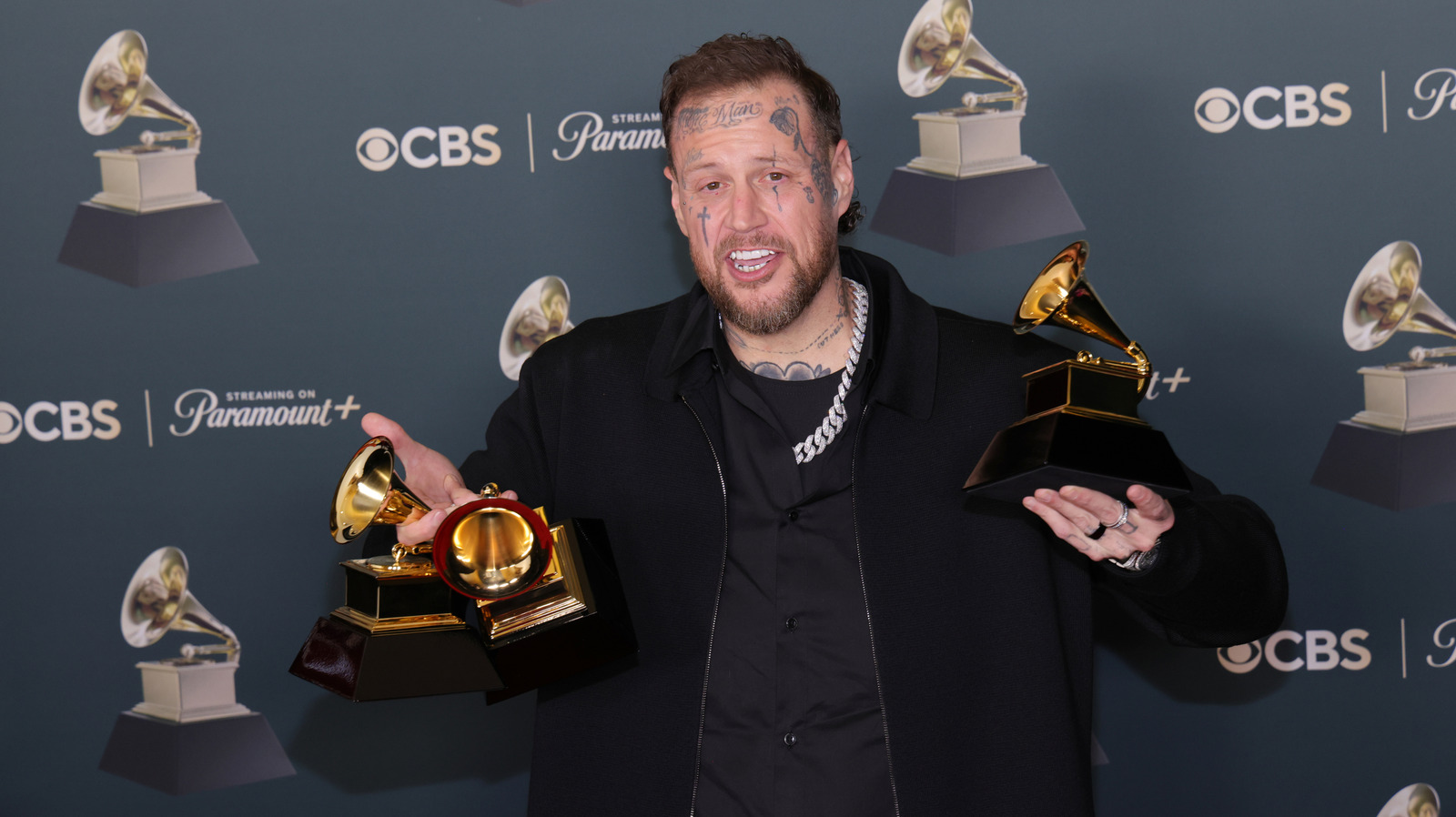
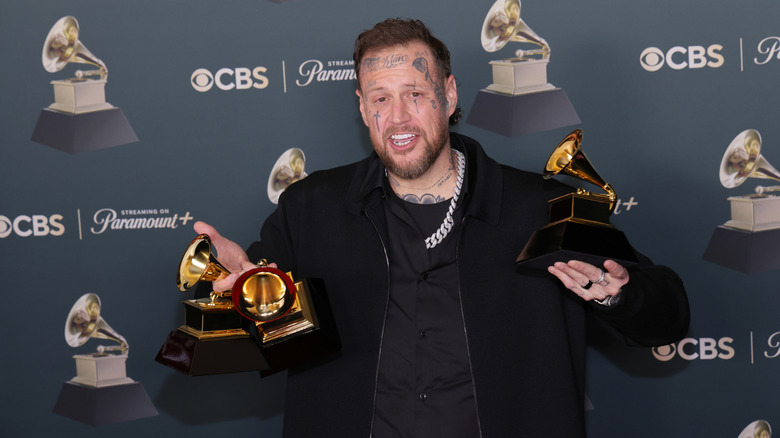
Jelly Roll’s 300-pound weight loss had people talking during the Grammys. Sadly, however, the commentary proves only one thing: we’re all missing the point.
Health Digest – Health News, Wellness, Expert Insights
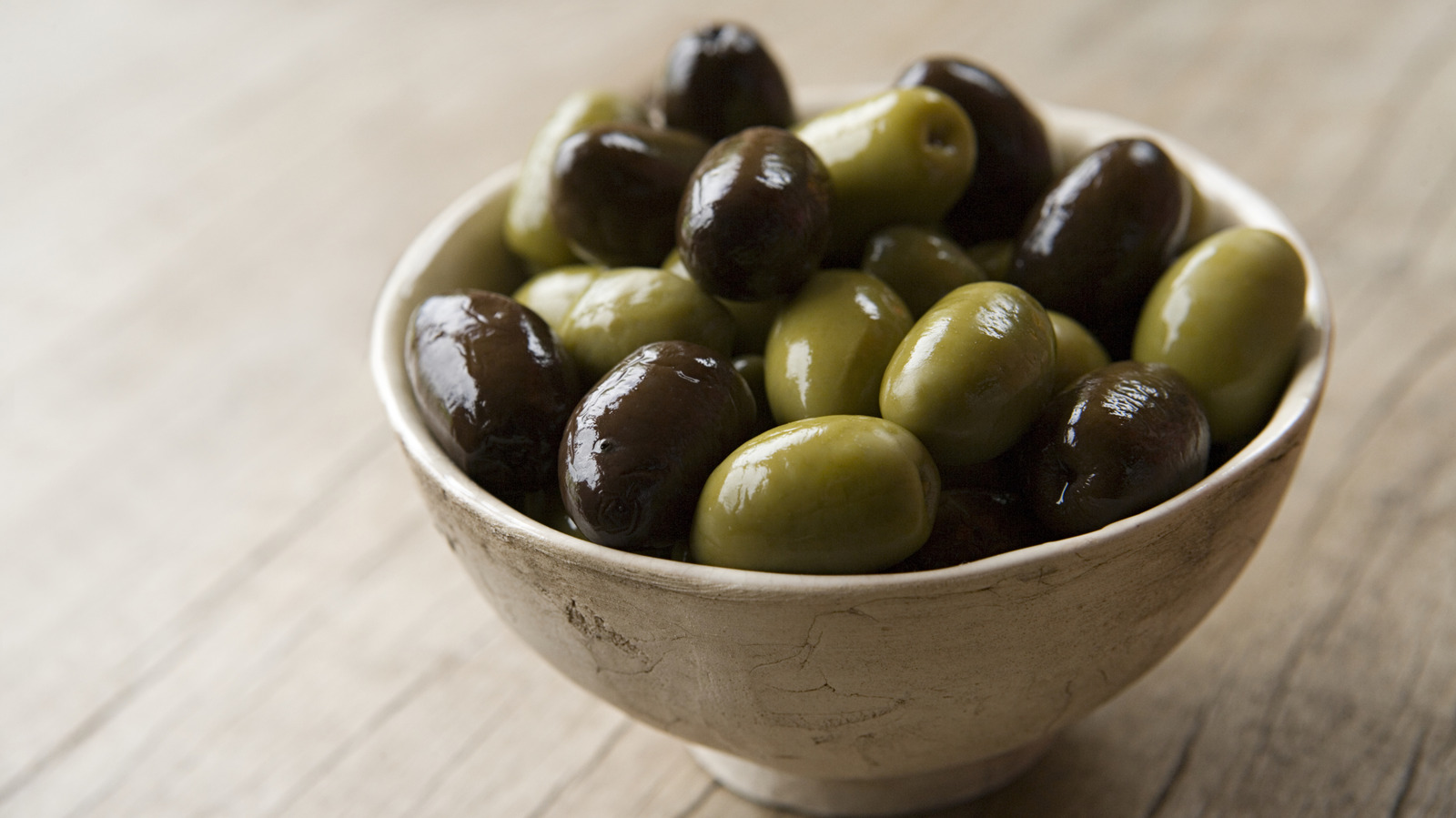
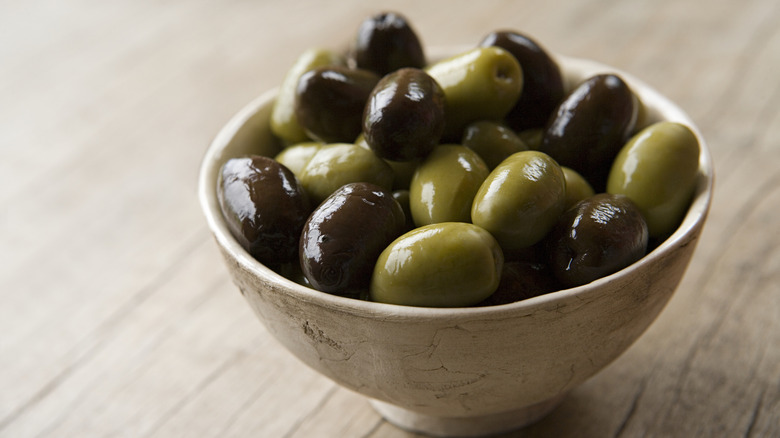
Aldi is full of fun little products that customers love to love. In fact, these particular jarred olives have caused shoppers across the internet to rave.
Food Republic – Restaurants, Reviews, Recipes, Cooking Tips
![<a href="https://theboot.com/ixp/204/p/chris-stapleton-whiskey-ad-super-bowl/" target="_blank">Check Out Chris Stapleton’s Super Bowl Ad Before It Airs [WATCH]</a>](https://townsquare.media/site/204/files/2026/02/attachment-untitled-design-2026-02-03t055328-729.jpg?format=natural)
Big moments ahead as Chris Stapleton blends music with spirits during the Super Bowl’s most-watched minutes. Continue reading…The Boot – Country Music News, Music Videos and Songs
Big moments ahead as Chris Stapleton blends music with spirits during the Super Bowl’s most-watched minutes. Continue reading…Country Music News – Taste of Country
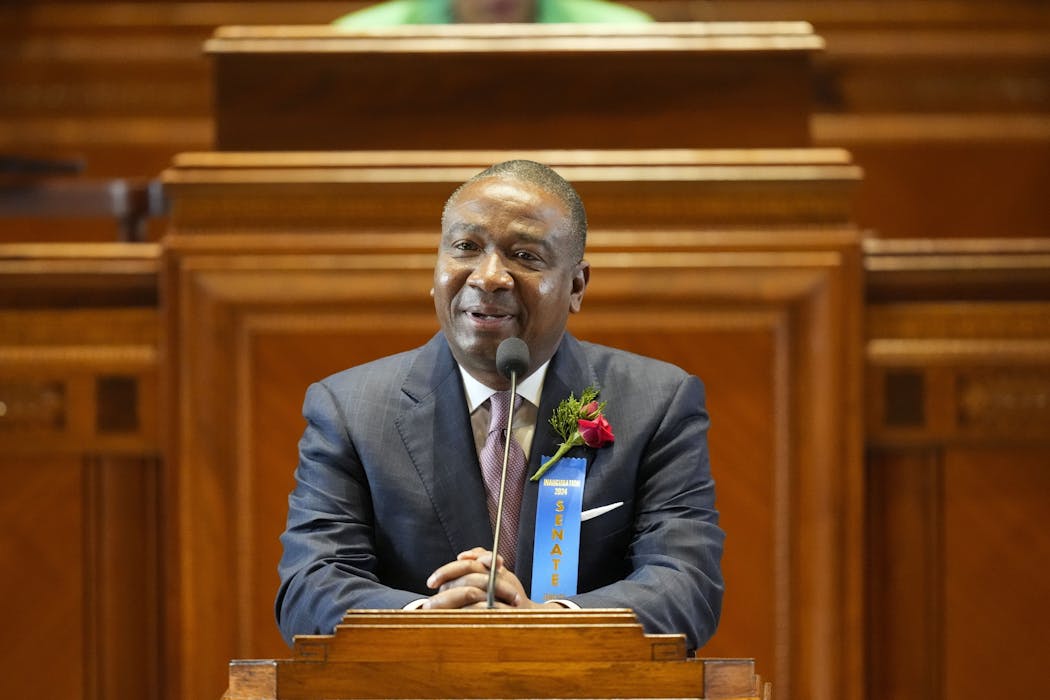
Back in 2013, the Supreme Court tossed out a key provision of the Voting Rights Act regarding federal oversight of elections. It appears poised to abolish another pillar of the law.
In a case known as Louisiana v. Callais, the court appears ready to rule against Louisiana and its Black voters. In doing so, the court may well abolish Section 2 of the Voting Rights Act, a provision that prohibits any discriminatory voting practice or election rule that results in less opportunity for political clout for minority groups.
The dismantling of Section 2 would open the floodgates for widespread vote dilution by allowing primarily Southern state legislatures to redraw political districts, weakening the voting power of racial minorities.
The case was brought by a group of Louisiana citizens who declared that the federal mandate under Section 2 to draw a second majority-Black district violated the equal protection clause of the 14th Amendment and thus served as an unconstitutional act of racial gerrymandering.
There would be considerable historical irony if the court decides to use the 14th Amendment to provide the legal cover for reversing a generation of Black political progress in the South. Initially designed to enshrine federal civil rights protections for freed people facing a battery of discriminatory “Black Codes” in the postbellum South, the 14th Amendment’s equal protection clause has been the foundation of the nation’s modern rights-based legal order, ensuring that all U.S. citizens are treated fairly and preventing the government from engaging in explicit discrimination.
The cornerstone of the nation’s “second founding,” the Reconstruction-era amendments to the Constitution, including the 14th Amendment, created the first cohort of Black elected officials.
I am a historian who studies race and memory during the Civil War era. As I highlight in my new book “Requiem for Reconstruction,” the struggle over the nation’s second founding not only highlights how generational political progress can be reversed but also provides a lens into the specific historical origins of racial gerrymandering in the United States.
Without understanding this history – and the forces that unraveled Reconstruction’s initial promise of greater racial justice – we cannot fully comprehend the roots of those forces that are reshaping our contemporary political landscape in a way that I believe subverts the true intentions of the Constitution.
Political gerrymandering, or shaping political boundaries to benefit a particular party, has been considered constitutional since the nation’s 18th-century founding, but racial gerrymandering is a practice with roots in the post-Civil War era.
Expanding beyond the practice of redrawing district lines after each decennial census, late 19th-century Democratic state legislatures built on the earlier cartographic practice to create a litany of so-called Black districts across the postbellum South.
The nation’s first wave of racial gerrymandering emerged as a response to the political gains Southern Black voters made during the administration of President Ulysses S. Grant in the 1870s. Georgia, Alabama, Florida, Mississippi, North Carolina and Louisiana all elected Black congressmen during that decade. During the 42nd Congress, which met from 1871 to 1873, South Carolina sent Black men to the House from three of its four districts.
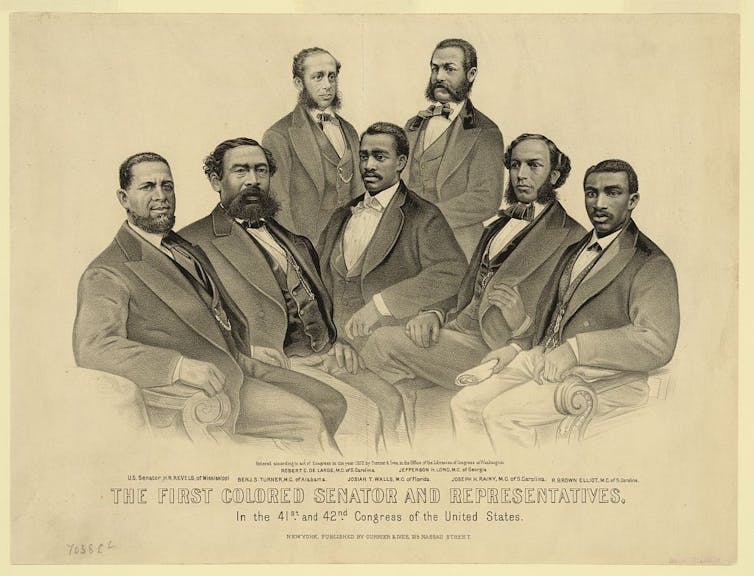
Initially, the white Democrats who ruled the South responded to the rise of Black political power by crafting racist narratives that insinuated that the emergence of Black voters and Black officeholders was a corruption of the proper political order. These attacks often provided a larger cultural pretext for the campaigns of extralegal political violence that terrorized Black voters in the South, assassinated political leaders, and marred the integrity of several of the region’s major elections.
Following these pogroms during the 1870s, southern legislatures began seeking legal remedies to make permanent the counterrevolution of “Redemption,” which sought to undo Reconstruction’s advancement of political equality. A generation before the Jim Crow legal order of segregation and discrimination was established, southern political leaders began to disfranchise Black voters through racial gerrymandering.
These newly created Black districts gained notoriety for their cartographic absurdity. In Mississippi, a shoestring-shaped district was created to snake and swerve alongside the state’s famous river. North Carolina created the “Black Second” to concentrate its African American voters to a single district. Alabama’s “Black Fourth” did similar work, leaving African American voters only one possible district in which they could affect the outcome in the state’s central Black Belt.
South Carolina’s “Black Seventh” was perhaps the most notorious of these acts of Reconstruction-era gerrymandering. The district “sliced through county lines and ducked around Charleston back alleys” – anticipating the current trend of sophisticated, computer-targeted political redistricting.
Possessing 30,000 more voters than the next largest congressional district in the state, South Carolina’s Seventh District radically transformed the state’s political landscape by making it impossible for its Black-majority to exercise any influence on national politics, except for the single racially gerrymandered district.
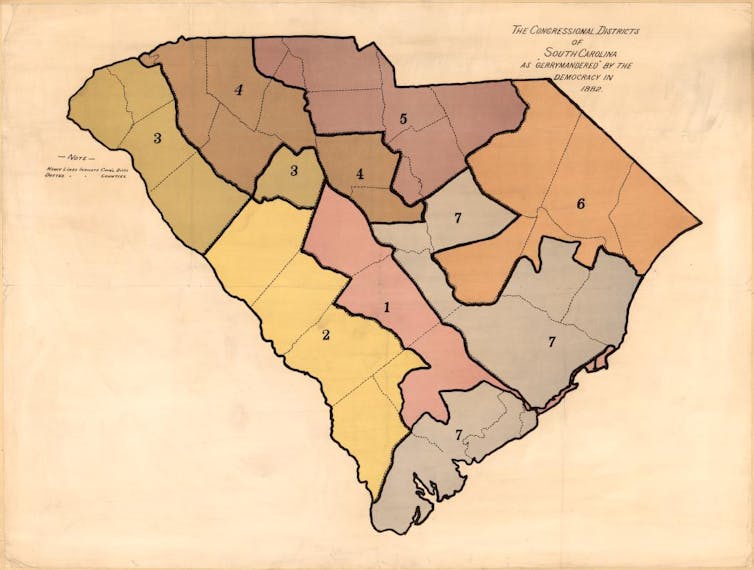
Although federal courts during the late 19th century remained painfully silent on the constitutionality of these antidemocratic measures, contemporary observers saw these redistricting efforts as more than a simple act of seeking partisan advantage.
“It was the high-water mark of political ingenuity coupled with rascality, and the merits of its appellation,” observed one Black congressman who represented South Carolina’s 7th District.
The political gains of the Civil Rights Movement of the 1950s and 1960s, sometimes called the “Second Reconstruction,” were made tangible by the 1965 Voting Rights Act. The law revived the postbellum 15th Amendment, which prevented states from creating voting restrictions based on race. That amendment had been made a dead letter by Jim Crow state legislatures and an acquiescent Supreme Court.
In contrast to the post-Civil War struggle, the Second Reconstruction had the firm support of the federal courts. The Supreme Court affirmed the principal of “one person, one vote” in its 1962 Baker v. Carr and 1964 Reynolds v. Sims decisions – upending the Solid South’s landscape of political districts that had long been marked by sparsely populated Democratic districts controlled by rural elites.
The Voting Rights Act gave the federal government oversight over any changes in voting policy that might affect historically marginalized groups. Since passage of the 1965 law and its subsequent revisions, racial gerrymandering has largely served the purpose of creating districts that preserve and amplify the political representation of historically marginalized groups.
This generational work may soon be undone by the current Supreme Court. The court, which heard oral arguments in the Louisiana case in October 2025, will release its decision by the end of June 2026.

Robert D. Bland does not work for, consult, own shares in or receive funding from any company or organization that would benefit from this article, and has disclosed no relevant affiliations beyond their academic appointment.
Politics + Society – The Conversation