He also shared a few more details about Sunday’s alternate halftime broadcast. Continue reading…The Boot – Country Music News, Music Videos and Songs









He also shared a few more details about Sunday’s alternate halftime broadcast. Continue reading…The Boot – Country Music News, Music Videos and Songs
He also shared a few more details about Sunday’s alternate halftime broadcast. Continue reading…Country Music News – Taste of Country

Chicago-style popcorn is a beloved tradition in the Windy City thanks to its unexpected balance of flavors and textures that may surprise you.

Mashed – Fast Food, Celebrity Chefs, Grocery, Reviews

Few ideas are as central to the nation’s identity as that of the American Dream.
With the 250th birthday of the United States coming up in July 2026, it’s worth stepping back to examine a concept essential to the nation’s self-image.
The term “American Dream” was actually coined in the 1930s by historian James Truslow Adams. Ever since the establishment of the Colonies, however, America has been viewed as a land where individual and collective hopes and aspirations can be realized.
From the idea of America as a shining “city on a hill” to the Declaration of Independence’s guarantee of “life, liberty, and the pursuit of happiness,” the nation has been premised on high aspirations. The concept of the American Dream has epitomized these hopes, and it continues to be present throughout our cultural landscape.
As a social scientist, I set out to explore what Americans thought about the American Dream in today’s society. I interviewed scores of people, from an elderly man sleeping on the street to a billionaire entrepreneur.
I wanted to know exactly how they defined the American Dream – and whether it has become harder to achieve today than in the past.
From pickup trucks and lawn tractor ads to the labeling of undocumented immigrant children as Dreamers, references to the American Dream in contemporary life are ubiquitous. Washington, D.C., is now home to a brand-new, US$500 million museum, the Milken Center for Advancing the American Dream, devoted to celebrating the idea and its history.
It turns out that for most people I interviewed, the American Dream consists of three basic ideas.
The first is what might be called an economic bargain: If you work hard and play by the rules, you should expect to have a financially secure life. This includes owning a home, being able to afford raising kids and retiring in comfort.
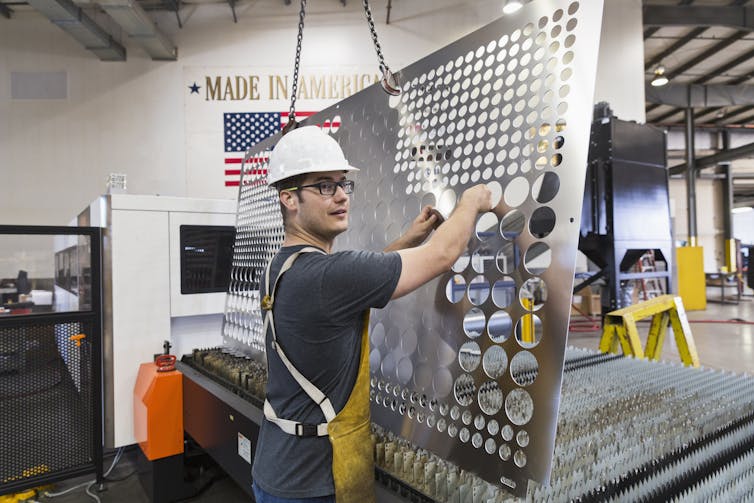
Second, the American Dream is centered on hope and optimism. It is about personal progress and the belief that the nation’s best days lie ahead. It’s the idea that each generation should do better than the previous one, and that upward economic mobility is essential for bringing this about.
The third and final idea people expressed was having the freedom to pursue their hopes to reach their full potential. For many, this is the epitome of the American Dream.
At its best, the U.S. is seen as allowing individuals the freedom to live the life they want. Liberty and rugged individualism have been hallmarks of America since its beginnings, so it should come as no surprise that they are also central to the American Dream.
Given this, has the American Dream become more or less difficult to achieve over time? Unfortunately, for a growing number of Americans, it appears to be more difficult.
First, the goal of leading an economically secure life in exchange for hard work has become more elusive. Data from the Census Bureau indicates that median wages for full-time male workers have essentially flatlined since 1973. The economy has been producing more low-wage and part-time jobs. Many of these lack benefits, such as health insurance.
Less-skilled workers, such as truck drivers and postal clerks, have actually lost ground in terms of income. At the same time, housing, medical care, child care and higher education costs have dramatically increased over the past 40 years.
What about upward mobility and the hope for each generation to do better economically than the previous one? There is some evidence that one reason the middle class is shrinking is that more people have entered upper-income tiers.
Still, younger generations will actually earn, on average, less as adults than their parents did. This is the first time in U.S. history that this is the case. The formerly taken-for-granted idea of generational progress and moving forward appears to have stalled.
Upward economic mobility for lower-income workers has also slowed over the past 50 years, making it harder to climb the ladder of opportunity.
Finally, what about personal freedom? Survey data indicates that greater numbers of Americans feel they have less control over their lives and futures than in the past.
For more than 20 years, Gallup has asked the question, “In this country, are you satisfied or dissatisfied with your freedom to choose what you do with your life?” The percentage of Americans reporting being satisfied has dropped notably over the past two decades. In 2007 it was 87%, but by 2024 it had fallen to 72%. For women, the number was even lower, declining from 85% in 2007 to 66% in 2024.
By comparison, the average for the wealthiest countries in the Gallup survey was 86%. Consequently, on all three counts it appears that the American Dream is becoming harder to achieve.
These trends are important for making sense of the polarization and general negativity found in America today. Too many Americans feel that they’ve been left behind and that the American Dream has become a distant reality.
For these Americans, the words of the late comedian and social commentator George Carlin ring true: “It’s called the American Dream because you have to be asleep to believe it.”
Yet the American Dream is a powerful metaphor and aspiration that continues to inspire many in this country. Among those I interviewed, there was a strong consensus that it represents the very best of what America has to offer.
There is no other country that has quite the equivalent of the American Dream. As the nation enters its next 250 years, working toward reestablishing the concept as a reality for millions of people who have fallen behind may be vital to maintaining the essence of the American promise.

Mark Robert Rank does not work for, consult, own shares in or receive funding from any company or organization that would benefit from this article, and has disclosed no relevant affiliations beyond their academic appointment.
Politics + Society – The Conversation
Many Americans report frustration with the two-party system, in which the Democratic and Republican candidates are seen as the only viable options for elective office.
But an alarming trend in many state legislative elections is lowering the bar even further, to something more like a one-party system. In dozens of states, an increasing number of state legislative seats are going completely uncontested by one of the two major parties.
State legislatures play a crucial role in American governance. As congressional gridlock has intensified over recent decades, state governments have increasingly picked up the slack on policymaking.
Yet in many states, competition over who serves in these legislatures has deteriorated significantly.
The result is a genuine crisis for political representation, policy innovation and candidate recruitment.
In many cases, one of the only two viable parties can’t field enough candidates for the state legislature to mount a credible challenge to the other, more dominant party.
While uncontested seats for Congress remain relatively rare – approximately 3% to 4% of U.S. House districts in recent cycles were uncontested – the phenomenon has become endemic in state legislatures. In recent election cycles, between 30% and 50% of lower-chamber state legislative seats nationwide went uncontested by one of the two major parties.
Even more astounding is the lack of competition in individual states, some of which see far less competition than others. Some states, like Michigan and Minnesota, regularly field candidates for both parties in nearly all their state legislative races.
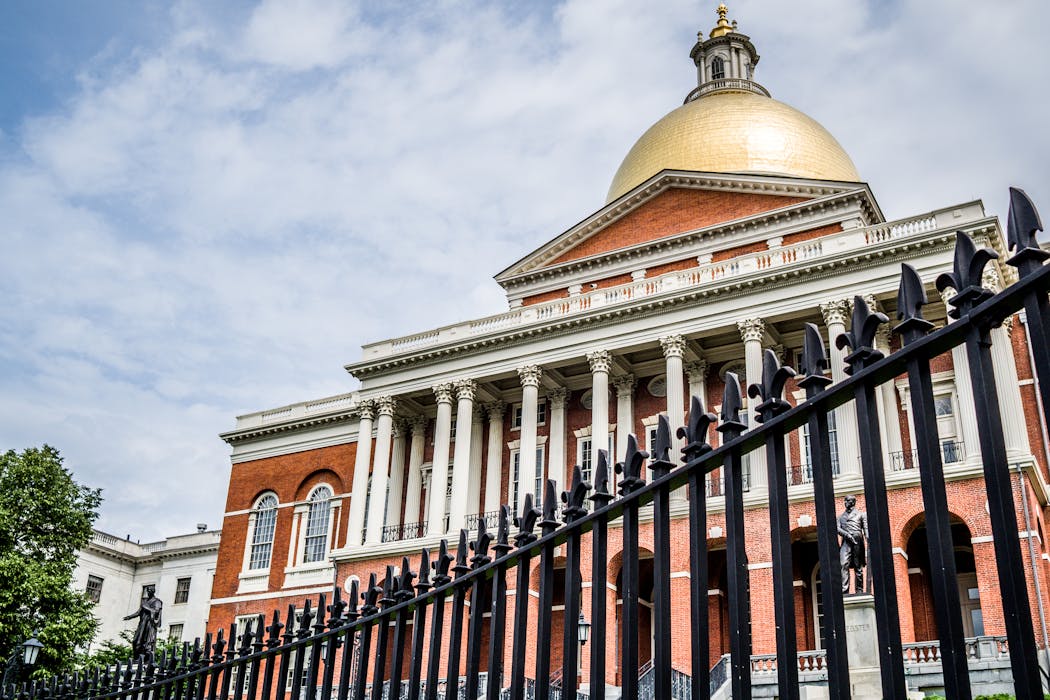
Massachusetts is a different story: In their lower legislative chamber, more than half the races have gone uncontested by one of the two major parties in every election since at least 2010. In the 2024 elections, four out of every five seats went uncontested in races for the Massachusetts House. In Mississippi, out of the 174 seats in the state Legislature, only 25 of them – 14% – had actual contests with both parties participating.
In practice, this means that for many state legislative chambers each election cycle, the party that will control the majority in the next legislative session – a major prerequisite for governing and passing legislation – is literally a foregone conclusion. In these chambers, one party or the other has fielded candidates for less than half of the legislative seats.
In other words, it’s mathematically impossible for that party to win a majority, even if its candidates win every seat they compete in.
In the 2022 cycle, for example, simple majorities were guaranteed for either the Democrats or Republicans in 22 chambers across 16 states. In some of these cases, one party was guaranteed a veto-proof majority – meaning that party had enough lawmakers to override a governor’s veto if necessary – before a single vote had even been counted in the election.
Several factors contribute to the prevalence of uncontested races, including the individual decision-making processes of potential candidates.
Running for office requires substantial investments of time and money, as well as major sacrifices of privacy and, in many cases, public and personal reputation. Even many individuals who are interested in serving decide that the cost isn’t worth it, especially when winning isn’t a guarantee.
The calculus is even more straightforward in heavily partisan districts, where the other party’s presidential candidate may have won by 40 or 50 percentage points in a previous election. Here, even well-qualified candidates face near-certain defeat. It’s easy to see why would-be candidates might reasonably decide to opt out.
Structural explanations for this lack of competition are more complex. For example, gerrymandering – the practice of drawing district boundaries to favor one party – is frequently cited as the main culprit.
But while gerrymandering does occur and merits concern, the evidence suggests it is not the principal driver of uncontested seats. Many states with independent redistricting commissions, such as Idaho, have experienced high rates of non-contestation despite having drawn competitive districts. Meanwhile, many states where legislatures control redistricting, such as Minnesota and Florida, maintain robust competition.
The phenomenon is also not correlated with whether a state is red, blue or somewhere in between, indicating that partisan control of redistricting alone cannot explain the trend.
Two complementary factors are more likely important. First, geographic partisan sorting – the concentration of politically like-minded people in communities – has accelerated over the past three decades. Democrats have consolidated in urban centers while losing ground in rural areas, particularly in the South and Midwest. This residential sorting creates naturally uncompetitive districts regardless of how boundaries are drawn.
Second, state and local party organizations have experienced significant decline in power and influence, particularly in states where one party holds an overwhelming advantage. These organizations historically served as recruitment and support networks for candidates challenging incumbent officeholders.
Without robust local party infrastructure, even qualified potential candidates in minority parties lack the resources and institutional backing necessary to mount viable campaigns.

Regardless of underlying causes, the consequences of uncontested races extend beyond the immediate lack of choice on the ballot.
When one party faces no meaningful electoral threat, research shows that policy innovation and responsiveness suffers. Dominant parties lack incentives to develop proposals that address the concerns of all constituents, or to engage seriously with opposition ideas.
More fundamentally, the prevalence of uncontested races raises questions about democratic legitimacy. Elections serve not merely as mechanisms for selecting officeholders, but as opportunities for citizens to evaluate governance and hold officials accountable. When voters face no choice – when a candidate wins by default and not by persuasion – the basic requirements of democratic representation go unmet.
Reversing this trend requires overcoming significant practical obstacles.
Recruiting qualified candidates to run for office is famously difficult; recruiting them for seemingly unwinnable seats is nearly impossible. And convincing national party organizations, interest groups and donors to invest resources in what they see as “hopeless” races is equally challenging.
But the consequences are too significant to ignore, and go beyond democracy or policy considerations.
State legislatures serve as the primary training ground for candidates who later seek higher office. When parties and their candidate talent decline to compete in entire states, they forfeit not only immediate electoral contests, but also the opportunity to cultivate future leaders at the federal level.
Competition cannot be superficially manufactured, and both the causes of and solutions to its recent decline are complex. Both, however, must be reckoned with. Without real competition, elections risk going from true exercises in popular sovereignty to a mere administrative formality.

Charlie Hunt does not work for, consult, own shares in or receive funding from any company or organization that would benefit from this article, and has disclosed no relevant affiliations beyond their academic appointment.
Politics + Society – The Conversation

He ended up performing while sitting on a stool. Continue reading…The Boot – Country Music News, Music Videos and Songs

When casting John F. Kennedy Jr. for an FX limited series, producers had their work cut out for them. But why was it so hard to locate an actor with chest hair?

Health Digest – Health News, Wellness, Expert Insights

The outer layers of a parmesan wheel are packed with flavor, and you can actually turn those leftover rinds into a quick snack by popping them in the microwave

Food Republic – Restaurants, Reviews, Recipes, Cooking Tips

Pesto traditionally packs a punch that’s not ideal for dips. However, Giada De Laurentiis’ take includes a nutritious ingredient that will lighten the flavor.

Mashed – Fast Food, Celebrity Chefs, Grocery, Reviews

No one likes flooding the kitchen with heat while cooking dinner, especially when the weather is warmer. Instead, use these tips to keep things cool.

Food Republic – Restaurants, Reviews, Recipes, Cooking Tips