The 2026 Academy Award nominations were announced Thursday morning.
And while many expected One Battle After Another to lead the pack after winning big at the Golden Globes, instead, Sinners has scored the most nominations with 16.
Not only is Ryan Coogler’s genre-defying vampire epic the most-nominated film of the year, but it now holds the record for most nominations of all time, beating out 1950’s All About Eve, 1997’s Titanic, and 2016’s La La Land, which each had 14 noms.
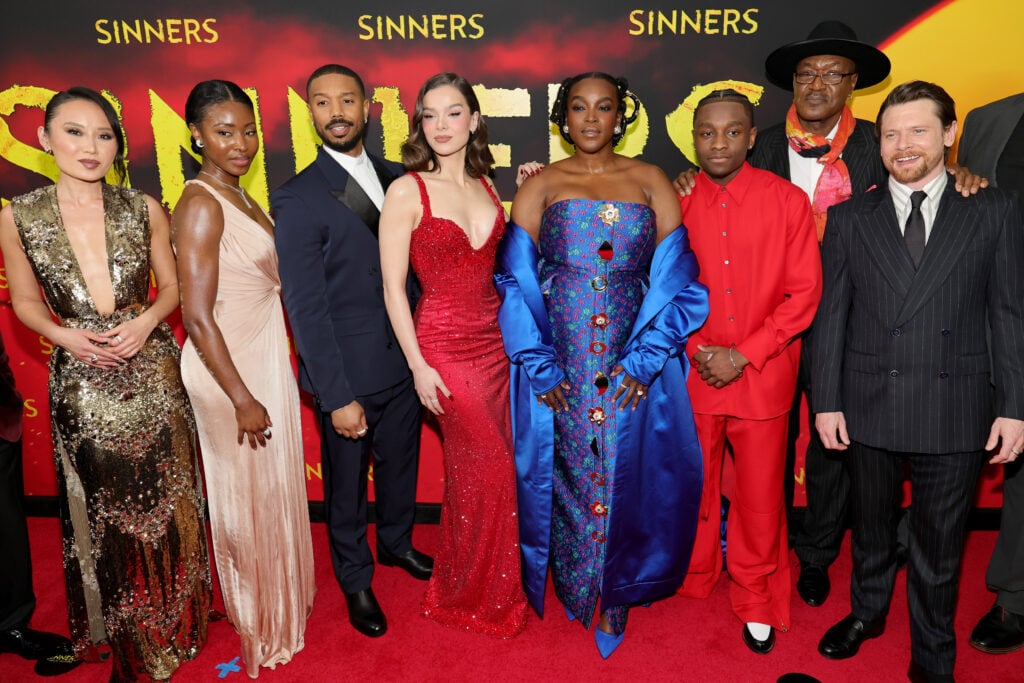
Li Jun Li, Jayme Lawson, Michael B. Jordan, Hailee Steinfeld, Wunmi Mosaku, Miles Caton, Delroy Lindo and Jack O’Connell attend the Warner Bros Pictures “Sinners” New York Premiere at AMC Lincoln Square Theater on April 03, 2025 in New York City. (Photo by Dia Dipasupil/Getty Images)
In second place comes OBAA with 13 nods.
Many prognosticators believe that Paul Thomas Anderson’s film about the toll of political activism is still the most likely Best Picture winner.
One Battle took home top prizes at most of the critics’ award shows, and the shooting death of Renee Good and subsequent ICE protests in Minneapolis have lent a topical quality to the film that might resonate with voters.
Other films that stand to win big on Oscar night include Marty Supreme, Hamnet, and Frankenstein, which are all represented in multiple major categories.
Check out the full list of nominees below:
Best Picture
Bugonia F1 Frankenstein Hamnet Marty Supreme One Battle After Another The Secret Agent Sentimental Value Sinners Train Dreams
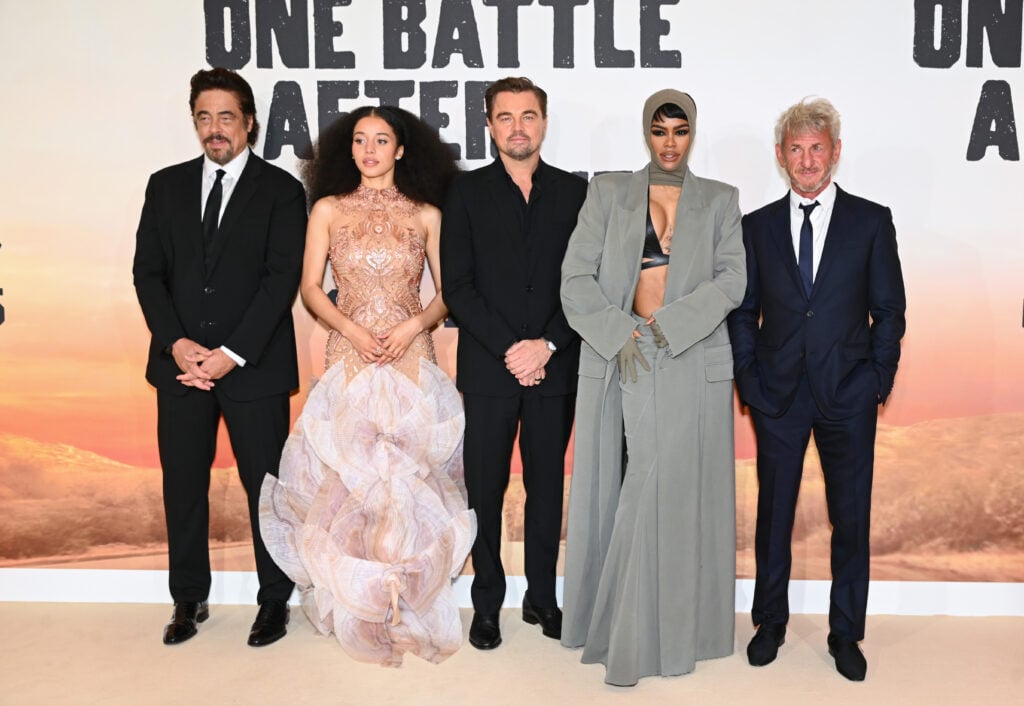
Benicio del Toro, Chase Infiniti, Leonardo DiCaprio, Teyana Taylor and Sean Penn attend the “One Battle After Another” Premiere at Odeon Luxe Leicester Square on September 16, 2025 in London, England. (Photo by Joe Maher/Getty Images)
Best Actor
Timothée Chalamet – Marty Supreme Leonardo DiCaprio – One Battle After Another Ethan Hawke – Blue Moon Michael B. Jordan – Sinners Wagner Moura – The Secret Agent
Best Actress
Jessie Buckley – Hamnet Rose Byrne – If I Had Legs I’d Kick You Kate Hudson – Song Sung Blue Renate Reinsve – Sentimental Value Emma Stone – Bugonia
Best Supporting Actor
Benicio del Toro – One Battle After Another Jacob Elordi – Frankenstein Delroy Lindo – Sinners Sean Penn – One Battle After Another Stellan Skarsgård – Sentimental Value
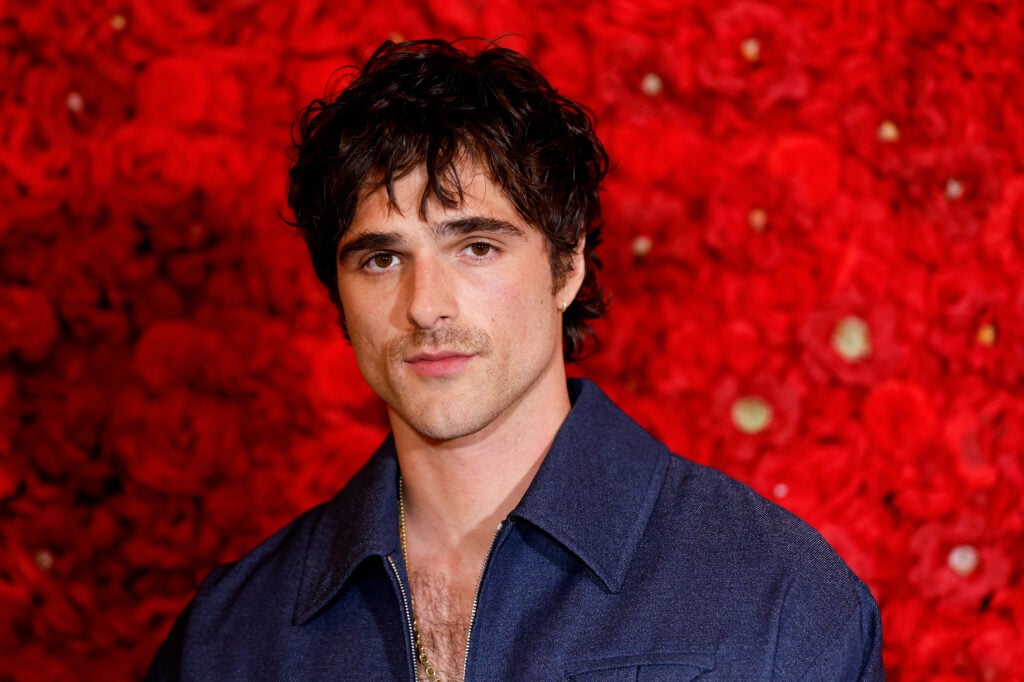
Jacob Elordi attends the Australian premiere of “The Narrow Road To The Deep North” at Hoyts Entertainment Quarter on April 07, 2025 in Sydney, Australia. (Photo by Brendon Thorne/Getty Images)
Best Supporting Actress
Elle Fanning – Sentimental Value Inga Ibsdotter Lilleaas – Sentimental Value Amy Madigan – Weapons Wunmi Mosaku – Sinners Teyana Taylor – One Battle After Another
Best Director
Chloé Zhao – Hamnet Josh Safdie – Marty Supreme Paul Thomas Anderson – One Battle After Another Joachim Trier – Sentimental Value Ryan Coogler – Sinners
Best Original Screenplay
Blue Moon It Was Just an Accident Marty Supreme Sentimental Value Sinners
Best Adapted Screenplay
Bugonia Frankenstein Hamnet One Battle After Another Train Dreams
Director/Producer Chloe Zhao, winner of Best Picture for “Nomadland,” poses in the press room at the Oscars on Sunday, April 25, 2021, at Union Station in Los Angeles. (Photo by Chris Pizzello-Pool/Getty Images)
Best Animated Feature Film
Arco Elio KPop Demon Hunters Little Amélie or the Character of Rain Zootopia 2
Best Casting
Hamnet Marty Supreme One Battle After Another The Secret Agent Sinners
Best Cinematography
Frankenstein Marty Supreme One Battle After Another Sinners Train Dreams
Best Production Design
Frankenstein Hamnet Marty Supreme One Battle After Another Sinners
Best Editing
F1 Marty Supreme One Battle After Another Sentimental Value Sinners
The Academy Awards will air at 7 pm on ABC on Sunday, March 15, 2026, with Conan O’Brien returning as host.
New Edition’s fifth LP, Heart Break, is set to be reissued on vinyl. The release will come in two formats, in standard black vinyl and a “colorless” vinyl.
Heart Break marked the Boston R&B group’s return to a quintet after Bobby Brown left the group. For Heart Break, Johnny Gill was added as a fifth member.
The album features seminal production from Jimmy Jam and Terry Lewis, and produced a number of highlights like “Not My Kind of Girl,” “Boys to Men,” “Can You Stand The Rain,” and “If It Isn’t Love.” The album is certified double platinum by the RIAA.
The album was also a critical smash, in addition to all of the commercial accolades it earned. AllMusic editor Craig Lytle said the record was an “outstanding album overall,” and that it displayed “New Edition’s growth and maturity due in part to the production work of Jimmy Jam and Terry Lewis, and the addition of group newcomer Johnny Gill.”
Click to load video
Washington Post critic Joe Brown said that, “New Edition has grown up visibly and audibly, and it doesn’t hurt that they’ve taken on D.C.’s own Johnny Gill as front man. The lyrics on Heart Break exemplify the changes – as usual, Jam-Terry Lewis spent some time hanging out with the group, then tailored the tunes with an autobiographical slant.”
Jimmy Jam spoke about the album on its 25th anniversary with Rap Rehab. He explained how production for the album fused elements of classic R&B with more mainstream hip-hop. Jam said: “We used a lot of different drum machines. I think that was the first time we used an SP-1200. It was a very popular drum machine with New York hip-hop producers and we wanted some of that East Coast presence on the record. So, a lot of the sonic choices we made were along those lines. Hip-hop was a huge influence at that point in time. We wanted to meld hip-hop into some of the smooth R&B sounds. And they were the perfect group to do it.”
The murderer pled guilty instead of facing trial, so there’s still a great deal that we don’t know about that fateful night in 2022.
Now, new crime scene photos have been released by the Idaho State Police, and in addition to providing new information, they’ve created a surprising controversy.
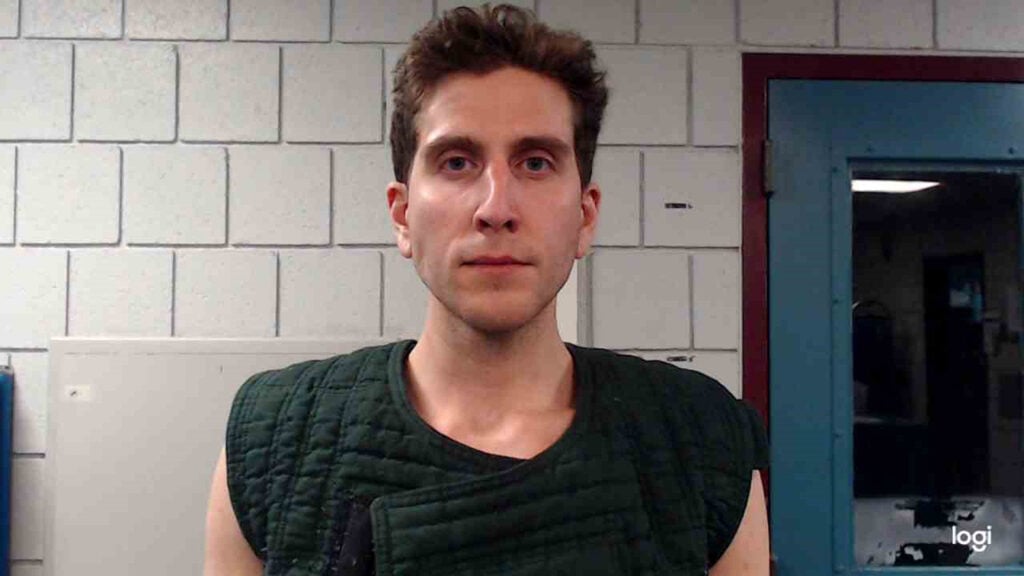
In this handout provided by Monroe County Correctional Facility, 28-year-old Bryan Christopher Kohberger is seen in a booking photo after he was arrested on December 30, 2022 in Pennsylvania. (Photo by Monroe County Correctional Facility via Getty Images)
The photos, which can be viewed in the video below, depict a gory, blood-spattered scene in which multiple life-or-death struggles took place.
We see blood spilled on walls, beds, and floors. And in one of the most chilling images, a bloody handprint can be seen on a nightstand.
Needless to say, these photos are deeply disturbing.
And one of the victim’s families is criticizing police not only for releasing the photos but for failing to properly warn those who are most closely connected to these horrifying crimes.
“We got a call at 11:04am that photos would be released this afternoon,” relatives of Kaylee Goncalves wrote in a Facebook post.
“By the time the call ended (12 minutes later) the photos had already been released (likely they had been available before the call we just didn’t know it yet). That’s the ‘heads up’ we received.”
The Goncalves family went on to honor Kaylee’s memory while lashing out at those who have exploited her in death:
“Kaylee Jade, I am so sorry that this has happened to you. I am so sorry that people who never even knew you, now post about you, suggesting things about your life that are so untrue. We will never quit fighting for you,” they wrote.
“The best thing about all of this is that you are in Heaven and you have no idea of the hate and ugliness. I love you, Kaylee Jade.”
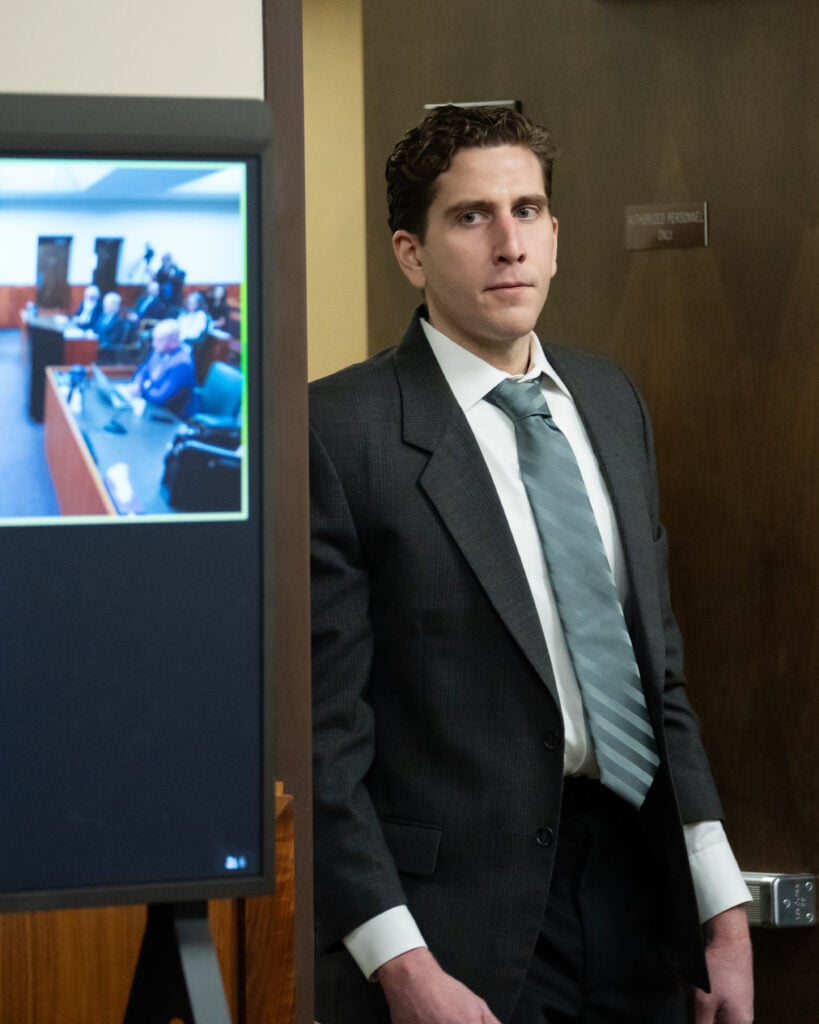
Bryan Kohberger, accused of murder, arrives for a hearing on cameras in the courtroom in Latah County District Court on September 13, 2023 in Moscow, Idaho. (Photo by Ted S. Warren-Pool/Getty Images)
Kohberger murdered four University of Idaho students: Madison Mogen, Kaylee Goncalves, Xana Kernodle, and Ethan Chapin, all of them in their early twenties.
One roommate, Dylan Mortensen, survived and is credited with helping investigators apprehend Kohberger.
She told police that on the night of the murders, she was awakened by a “commotion” and saw a masked man in the hallway of her home.
“And that’s when I saw this guy,” she said.
“He was not insanely tall, but he was wearing all black and this mask that was covering his forehead and his mouth. And then I locked the door. I didn’t know what to do.”
Neither Mortensen nor the families of the other victims have publicly responded to the release of the photos.
But no, Kailyn Lowry insists, she isn’t just repeating her mom’s pattern of putting men first.
Looking at her history of personal choices, that sounds pretty difficult to dispute.
But Kail’s still going to try.
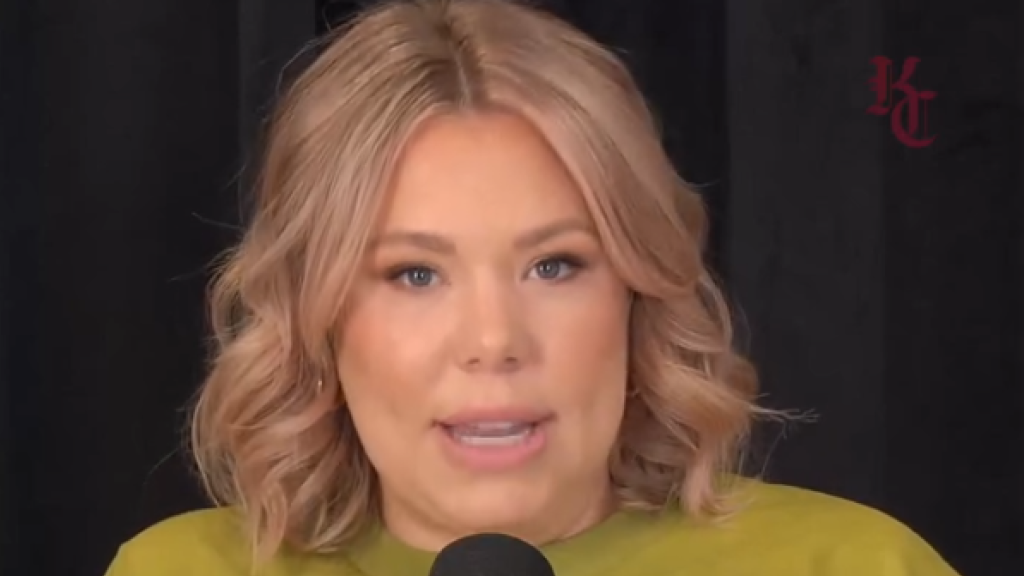
A tearful Kailyn Lowry speaks on her podcast abut how she wants better for her children than what she feels as an adult. (Image Credit: YouTube)
‘Some people will argue that I’m the same as my mom’
As we previously reported, Kailyn acknowledged that moving her new boyfriend, Ike, into her home so soon after ending her engagement to Elijah was unusual.
In fact, she admitted that it was “selfish” of her. Not only for the speed with which she moved him in, but for breaking one of her dating rules: he has a kid (just as she has seven of her own).
However, she followed up the chat with Part 2 on her Patreon — refuting all of the people observing that she’s repeating her mother’s toxic behavior.
“Some people will argue that I’m the same as my mom but with money,” Kail acknowledged. “I’ve heard that several times.”
She disagreed, commenting: “I’m thinking back to my childhood and the men my mom had me around.”
In June of 2025, Kailyn Lowry sat down for a special episode of her podcast. (Image Credit: YouTube)
According to Kailyn, the men who were with Suzi for a long time (or married her) weren’t the ones who “hurt her.”
She explained: “It was the men in between that she also had me around that were the dangerous ones.”
Waxing introspective, Kail commented: “So, I think in some ways that’s my justification [for having a lot of long-term relationships].”
(We have to note that not all long-term relationships are non-violent, as she herself has experienced)
But Kailyn insisted that she is not like Suzi. That she does not put her boyfriends before any of her seven children.
On her Karma & Chaos podcast, Kailyn Lowry discussed her deadbeat dad in what are likely his final days. (Image Credit: Apple Podcasts)
‘If I’m not happy as a woman first, I cannot be a good mom’
“The assumption is I don’t think about my kids,” Kailyn characterized her critics’ arguments.
“Contrary to that,” she argued, “I would say I did think about what kind of person he is before I brought him into the rest of my kids’ lives.”
Kail pointed out: “I didn’t just meet [him]. It’s not like I met him on Tinder.”
She clarified: “I’m not saying there are unsafe people on Tinder, but I didn’t just meet him for the first time and introduce him to my kids.”
Kailyn detailed: “I’ve known him since pretty much high school, not in-depth obviously.” She then claimed that friends performed a background check on him before she moved him into her house.
Kail cries during one of her final MTV appearances. (Image Credit: MTV)
“I don’t think I expected to have a full-blown relationship but I think after the first time we hung out I think both of us just knew what it was,” Kail reflected.
“We’ve been in toxic environments in the past,” she noted, “and acknowledged where we’ve been toxic in the past and acknowledged we both want the same things moving forward.”
Kailyn then understated: “We don’t waste time. We’re ready to be committed and faithful to somebody and I felt we were both on the same page with that.”
She claimed: “You cannot deny chemistry and attraction when it’s there.”
Kail then explained why her seven children benefit from her controversial choices: “If I’m not happy as a woman first, I cannot be a good mom.” (Oh, girl)
We’re up close here with Kailyn Lowry on an episode of Teen Mom. (Image Credit: MTV)
‘They have all made me miserable’
“And I’m not saying I’m relying on men for happiness,” Kailyn claimed.
“Because if we are being honest and you look at my track record,” she acknowledged, “they have all made me miserable.”
But Ike, we’re sure, will continue to be different … until he isn’t.
Kail has wisely been no-contact with Suzi for over a decade. (Good for her!)
If she were to ask her today, would Suzi say that she put men men first over her daughter?
On some level, Kailyn seems to be interweaving both parents’ bad habits into her own life, but just differently enough that it feels meaningfully different (to her).
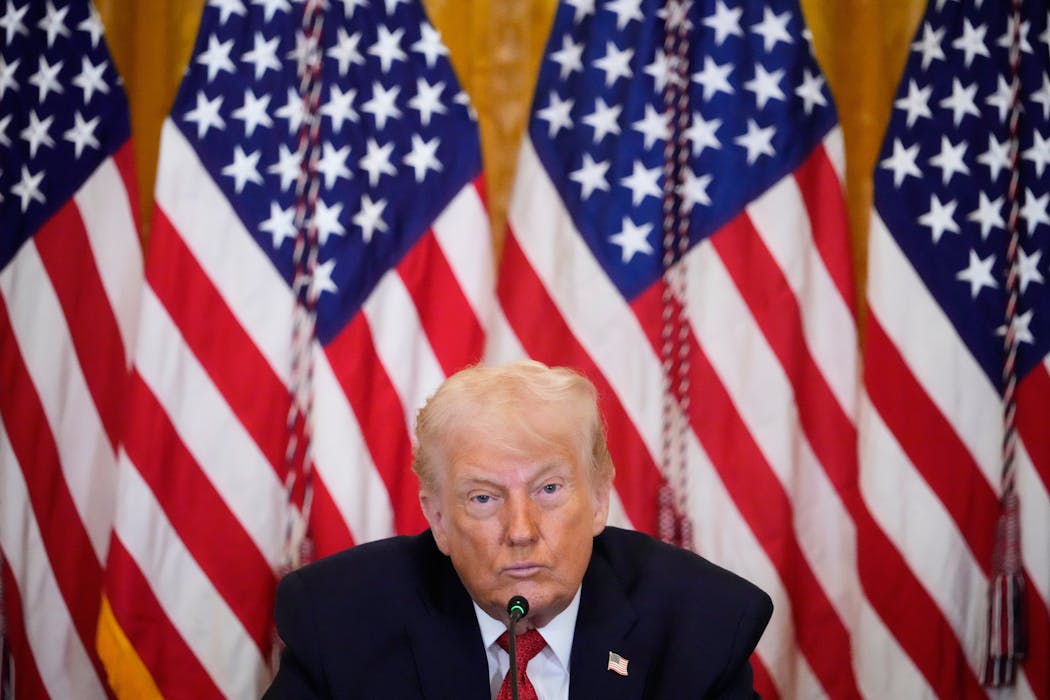
President Trump’s mass firing of career ambassadors was unprecedented.AP Photo/Alex Brandon
Just before Christmas, President Donald Trump fired more than two dozen career ambassadors. The action was unprecedented, providing a clear signal that when it comes to diplomacy, Trump values loyalty above all else.
All ambassadors face a persistent tension in their roles – having to represent the viewpoints of the president while also winning the trust of leaders in the countries where they serve. Presidents, unsurprisingly, often favor loyalists, in whom they have greater confidence.
Trump has pursued this to an exceptional degree, making more purely political picks than normal. Of the nearly 70 ambassadors he has appointed to date during this term, fewer than 10% have been career professionals with experience in the Foreign Service.
But as I have argued in my book “Delegated Diplomacy,” there is value in working through diplomats who disagree with you.
A diplomat who unfailingly follows the Washington line contributes little to a bilateral relationship, becoming nothing more than an expensive substitute for a secure phone line. A skilled ambassador knows when to soften a message, recognizes when pushing too hard will backfire, and sees the value in compromise.
At times, this diplomatic approach may sacrifice short-run gains available through more aggressive means. But in precisely those moments when leverage is most necessary, an ambassador who’s established trust can push harder and gain more as a result.
Presidents have felt this way themselves. In 1952, President Harry Truman wrote, “The State Department is clannish and snooty and sometimes I feel like firing the whole bunch.” Two decades later, President Richard M. Nixon told Henry Kissinger, his national security adviser and soon-to-be secretary of state, that he intended “to ruin the Foreign Service. I mean ruin it.”
Neither of those presidents followed through. With his mass firing of career diplomats, Trump has come closer. His administration has made it clear that loyalty will dominate its diplomatic personnel policy, with the State Department itself asserting the “president’s right to ensure he has individuals in these countries who advance the America First agenda.”
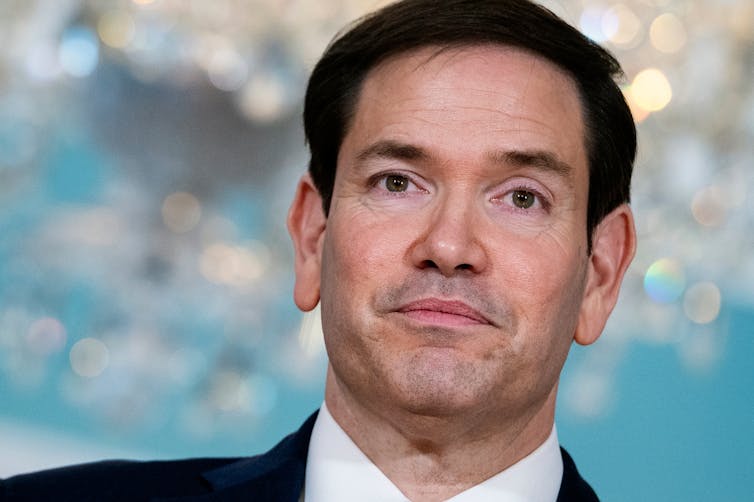
Secretary of State Marco Rubio has helped purge hundreds of career Foreign Service officers at home and abroad, seeking to align his department with ‘America First’ principles. AP Photo/Cliff Owen
Not only has Trump weighted the diplomatic corps with political appointees, but he’s often bypassed even his own ambassadors in favor of working informally through members of his inner circle.
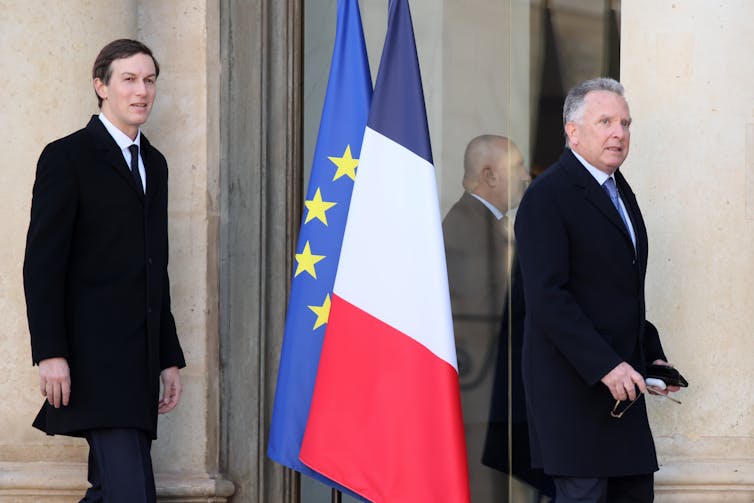
The administration’s most delicate tasks, such as dealing with the wars in Gaza and Ukraine, have often been delegated to Steve Witkoff, a real estate developer whose primary qualification appears to be his close friendship with the president, and Jared Kushner, Trump’s son-in-law.
Close personal ties
A preference to work diplomatically through intimates is understandable. Close personal knowledge of the president can provide credibility and weight to an envoy’s word. There is ample precedent for such selections, such as John F. Kennedy’s reliance in 1962 on his brother Robert as his crucial intermediary during the Cuban missile crisis, in which the U.S. ultimately convinced the Soviet Union to remove nuclear weapons from Cuba.
Such ties are likely to be all the more important in the current administration, where the president maintains such an openness to unconventional foreign policy choices. Career ambassadors who know no more about the president’s intentions than whatever the world can read in his latest Truth Social posts may not be able to do their jobs effectively, whether they ultimately keep them or not.
Career vs. political
American ambassadors receive their posts through two tracks. Historically, a minority of ambassadors have been political appointees selected by the president, often as the result of close ties to him. These ambassadors routinely leave their positions when a new administration takes office.
Trump has relied on close allies to carry out key missions, including son-in-law Jared Kushner, left, and his friend Steven Witkoff. AP Photo/Thomas Padilla
The majority of ambassadors – including those who were recently fired – are career Foreign Service officers, most of whom have spent decades working their way up through the ranks of the diplomatic corps under presidents of both parties. Selected internally by the State Department – but subject to White House sign-off – these ambassadors serve on a nonpartisan basis and nearly always complete their tours of duty, informally set at three years, regardless of presidential turnover.
Diplomats have value to the president precisely because they have cultivated relationships, trust and expertise overseas through a willingness to understand and sympathize with foreign audiences. But this also means that they may rarely be in lockstep with the president’s view of the world. Hence, the friction ambassadors face in their in-between role.
Loss of experience
It is one thing to fire ambassadors who have impeded the president’s agenda in some way; it is quite another to clear them out preemptively as Trump did in December. Ultimately, the loss of the expertise and relationships accrued by career diplomats will likely bite.
Professional diplomats are trained and acculturated to set aside their own views. As former Under Secretary of State Stuart Eizenstat once observed, Foreign Service officers “bend over backward to follow every U.S. president’s leadership, even when they disagree with specific policies.”
This is precisely why previous administrations have not fulfilled their fantasies of dismantling the Foreign Service. Truman, despite his contempt, conceded that “it requires a tremendous amount of education to accomplish the purposes for which the State Department is set up.” During Kissinger’s time as secretary of state, the Nixon administration ended up selecting an uncommonly high number of careerists for key positions.
This has not been Trump’s approach. It’s unlikely that will change. He demands loyalty throughout his administration, but diplomats have given him particular reason to think they might flout his wishes. In 2017, a thousand U.S. diplomats signed on to a message arguing that the administration’s travel ban would be counterproductive. A similar number joined a message this year protesting the administration’s closure of the United States Agency for International Development, or USAID.
Clearly, some officers will dissent so vigorously as to be unwilling to advance certain policies. They can be expected to resign, as many of their colleagues have done already.
But the career diplomats who remain will speak with a louder voice on the international stage precisely because the world believes they are not lapdogs.
David Lindsey does not work for, consult, own shares in or receive funding from any company or organization that would benefit from this article, and has disclosed no relevant affiliations beyond their academic appointment.
The question the First Amendment keeps asking, across wars and panics and moral crusades, is whether a democracy can tolerate the possibility of persuasion.
There’s a certain school of thought that says no. Persuasion is too perilous.
I call this way of thinking “swallow-a-fly logic.” I’m referring, of course, to the popular children’s song where a woman ingests a fly and then keeps devouring bigger animals to fix it, until she dies from eating a horse.
It leads to the “old lady who swallowed a fly” theory of obedience: If we let someone with a message we don’t like speak out, people might be persuaded. If people become persuaded, they might stop supporting the war, the president, the government, itself. If support evaporates, enlistment drops or compliance weakens as the state loses leverage. If enlistment drops, the government might fall. And if there is no government, then who cares about the First Amendment?
By this way of thinking, free speech is dangerous because the public is too influence-able, and influence is too unpredictable, and security is too precious.
The constitutional tradition of free speech, when it is working at its best, says yes anyway, go ahead and speak. The alternative is a politics in which the state survives by making dissenters illegitimate as citizens.
But when national security is invoked, the rules for speech appear to change. Dissent is treated less as persuasion to be debated and more like a virus to be contained before it harms public morale. That containment logic, either overt or covert, has repeatedly reappeared whenever protest has become politically inconvenient and unpalatable to those in power. It’s the kind of thinking that led to Jimmy Kimmel’s suspension from “Jimmy Kimmel Live!” after poking fun at President Donald Trump.
A terror memo. A protest. A killing.
National Security Presidential Memorandum 7, issued by the Trump administration in September 2025, relies on logic from the lady and the fly. It frames “domestic terrorism” and “organized political violence” as national security crises. It tells federal agencies to work together to investigate and stop suspected threats, a framework that enlarges the set of things the state can plausibly treat as suspect, including the freedoms of association and belief.
The language in the memorandum affirms legitimate counterterrorism work while leaving room to treat political dissent as out of bounds. But the First Amendment protects protest speech.
Still, if the language of the Trump memo is somewhat abstract, Minneapolis has provided a brutally concrete example.
When an ICE agent shot and killed Good, a 37-year-old U.S. citizen, federal officials characterized the encounter as an act of self-defense by an agent afraid of being run down by Good in her car.
The incident was captured on video that widely circulated and intensified public scrutiny. According to Good’s wife, the couple were protesters who confronted heavily armed agents determined to scare them away. No one tried to run anyone over, she said.
Soon after Renée Good was killed by an ICE officer, DHS Sec. Kristi Noem claimed that Good had committed “domestic terrorism.”
Turning victims into suspects
The state has two choices when a death occurs that’s politically dangerous to the government.
It can investigate the killing with transparency and center the victim’s rights alongside public accountability as organizing principles. Or it can treat the killing as an opportunity to put the victim on trial in the court of public legitimacy.
The second choice avoids holding government accountable, shifts conversation toward the target’s supposed behavior and character, and expands the blame to include the people who loved and stood with the dead.
When this happens, the government does not have to win in court. It only has to keep the stigma circulating by asserting that a particular speaker undermines respect for elected officials. Indeed, that’s one of the reasons Trump offered for Good’s shooting by the ICE officer: “At a very minimum, that woman was very, very disrespectful to law enforcement,” he told reporters.
The United States has been here before. Around World War I, the U.S. Supreme Court issued several free speech decisions in cases mostly remembered as disputes over protest and draft resistance. But their underlying engine was the swallow-a-fly theory. Opposing the war might ruin the nation, so political dissidents had to be stopped, and the court affirmed the government’s right to silence strident speakers.
The Cold War era sharpened the same approach but made it about identity. The Smith Act, passed in 1940, curbed speech that advocated the violent overthrow of the government. In practice, Smith Act cases treated any type of communist sympathy as illegal, presumptively falling outside democratic tolerance.
The government did not have to prove a threat was real and required response. Instead, it had to show that certain ideas were too dangerous to be part of open conversation.
Finally, in Brandenburg v. Ohio from 1969, the Supreme Court went in the opposite direction, affirming free speech rights even for those advocating vile ideas.
The justices overturned the conviction of a Ku Klux Klan leader and held that the government cannot punish advocacy just because it is extreme, hateful or possibly perilous. Only speech “directed at inciting or producing imminent lawless action and is likely to incite or produce such action” may be quelched, the court wrote. The danger has to be real, and it has to be happening right now. Otherwise, citizens are free to say what they will.
New ways to chill speech
So, if the Supreme Court has settled the issue, why does it feel alive again now?
Contemporary crackdowns rarely present themselves as crackdowns. They present themselves as “coordination,” “threat assessment,” “financial disruption,” “extremism prevention” and, increasingly, as necessary defenses against “domestic terrorism.”
The Trump administration’s September 2025 national security memorandum is exactly the kind of framework that makes these routes attractive, because it invites the state to treat political conflict not as disagreement but as a security threat – something to be managed by the tools and instincts of national security.
Seen in this light, the resignations of federal government attorneys in Minneapolis are not just a bureaucratic drama. They are a window into the government’s underlying theory of the case. Investigate victims and their associates instead of scrutinizing the state’s use of force. Frame the victim’s death as the inevitable consequence of being their type. As Trump said of Good: She was a “professional agitator.”
Minneapolis is not just a tragedy. It is a test of whether the country still backs the central promise of modern free speech doctrine. Government may not suppress speech and association simply because it fears what the public might come to believe.
Stephanie A. (Sam) Martin does not work for, consult, own shares in or receive funding from any company or organization that would benefit from this article, and has disclosed no relevant affiliations beyond their academic appointment.
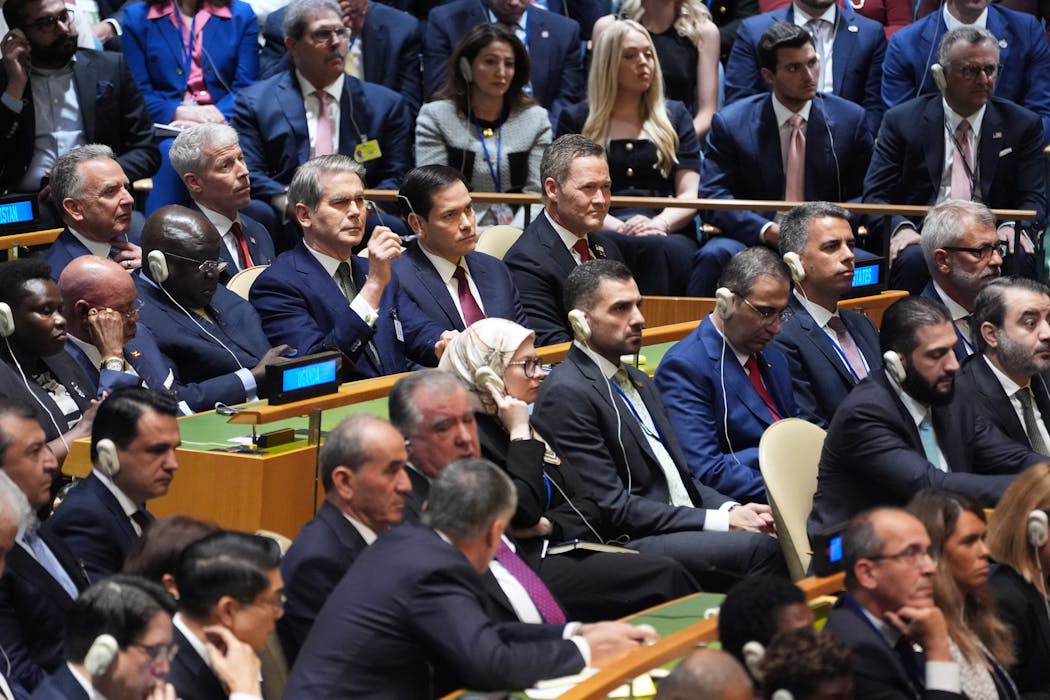
Secretary of State Marco Rubio, center, and U.S. Ambassador to the United Nations Mike Waltz listen as President Donald Trump speaks to the U.N. General Assembly on Sept. 23, 2025, in New York.AP Photo/Evan Vucci
Coming on the heels of the U.S. attack on Venezuela – considered a violation of international law – the White House claims, without specific justification, that these organizations and initiatives “operate contrary to U.S. national interests, security, economic prosperity or sovereignty.”
Some experts say many of these organizations are niche and peripheral initiatives. They say the groups receive little money from the U.S., anyway.
Additionally, most of the U.N. entities on the administration’s list are part of the U.N.’s main body, the Secretariat, which gets its funding primarily from membership dues that are required by legal obligations. In fact, the U.S. can’t technically withdraw from these groups without leaving the U.N. completely. It can, however, select not to participate in meetings of these bodies or finance them through additional funds.
Moreover, with the White House already defunding the foreign assistance that supported many of these organizations and the U.N. system, regardless of congressional appropriations, this stated withdrawal is unlikely to alter much for these organizations in the short term.
The loss is likely greater to America.
Foreign policy experts assert that leaving empty the U.S. seat at the table will result in an increasingly isolated America and enable its adversaries, such as China, to fill the void.
As a democracy and peacebuilding scholar, and from my years working at the U.N., I know U.S. withdrawal from these organizations also risks undercutting lasting peace and human rights accountability, especially for women and children terrorized by violence and conflict.
Women and children die first
Peace and human rights-related groups loom large on the list of organizations the U.S. has withdrawn from.
The list includes key U.N. bodies that seek to hold states accountable for rape and use of child soldiers in conflict, among other crimes.
Established in 2005 to help countries avoid a return to conflict, the Peacebuilding Commission claims among its successes formerly war-torn but now stable countries such as Sierra Leone and Liberia, which had Africa’s first democratically elected female leader. These bodies prioritize women and youth engagement in building peace.
A U.S. soldier shouts to evacuees to hurry as they board a helicopter at the West African peacekeeping force ECOMOG compound in Monrovia, Liberia on April 12, 1996. AP Photo/Christophe Simon, Pool
Also on the list is the United Nations group focused on gender equality and women’s empowerment, known as UN Women. Established in 2010, the agency promotes women’s rights and helps women and girls prosper. UN Women has helped improve laws and policies for women in 83 countries and leads major efforts, including the Spotlight Initiative that aims to end violence against women and girls in more than 25 countries.
More than half of UN Women’s current budget of over US$2 billion for 2026 through 2029 goes to empowering women in war-affected societies and tackling violence against women and girls.
The U.S. served multiple times on the UN Women executive board, which steers the direction of the organization, including between 2023 and 2025. It does this, in part, by approving its strategy, plans and budget.
With such an adversarial approach, the absence of the Trump administration seeking to spoil human rights protections might be advantageous for these groups in the short term.
But the lack of U.S. financial and political support may weaken these organizations in the long term, eroding their legitimacy and even opening the door for other countries to further undermine their efforts. That might endanger the already politically sensitive challenge of promoting accountability for serious violations of women’s and children’s rights.
‘Adapt, shrink or die’
The specter of the U.S. further abandoning peace and human rights efforts remains.
U.S. Secretary of State Marco Rubio, center, listens to President Donald Trump during the World Economic Forum in Davos, Switzerland, on Jan. 21, 2026. AP Photo/Evan Vucci
But the U.S. has recently been disrupting long-standing, U.N.-mediated agreements on human rights concerns, including for children.
In 2025, it voted against 38 resolutions in the General Assembly’s human rights committee alone. For example, for the Rights of the Child resolution, the U.S. took the unusual and divisive step of calling for a general vote, even though text had been previously agreed upon. Despite the U.S. “no” vote, the resolution passed, with over 170 states voting in favor.
Most tellingly, the Trump administration’s new Board of Peace – ostensibly for Gaza – appears designed to displace the U.N. itself without reference to the core principles, including human rights, on which the U.N. Charter stands.
From May 2023 until July 1, 2025, the author served in the Bureau for Democracy, Human Rights, and Governance at the United States Agency for International Development (U.S.A.I.D.).
At age 40, Usha Vance is considered to be of advanced maternal age. But what does this mean when it comes to safely carrying a baby to term and giving birth?
Health Digest – Health News, Wellness, Expert Insights