Mourners packed the Shabad of Bondi Synagogue today for the funeral of British-born Rabbi Eli Schlanger.The Latest News from the UK and Around the World | Sky News










Mourners packed the Shabad of Bondi Synagogue today for the funeral of British-born Rabbi Eli Schlanger.The Latest News from the UK and Around the World | Sky News

You’ve doubtless heard of the National Grid, the network of pylons and electricity infrastructure ensuring the country is supplied with power. You’re probably aware that there is a similar national network of gas pipelines sending methane into millions of our boilers.The Latest News from the UK and Around the World | Sky News

The UK has already recorded its sunniest year ever, with two weeks of 2025 still to go.The Latest News from the UK and Around the World | Sky News
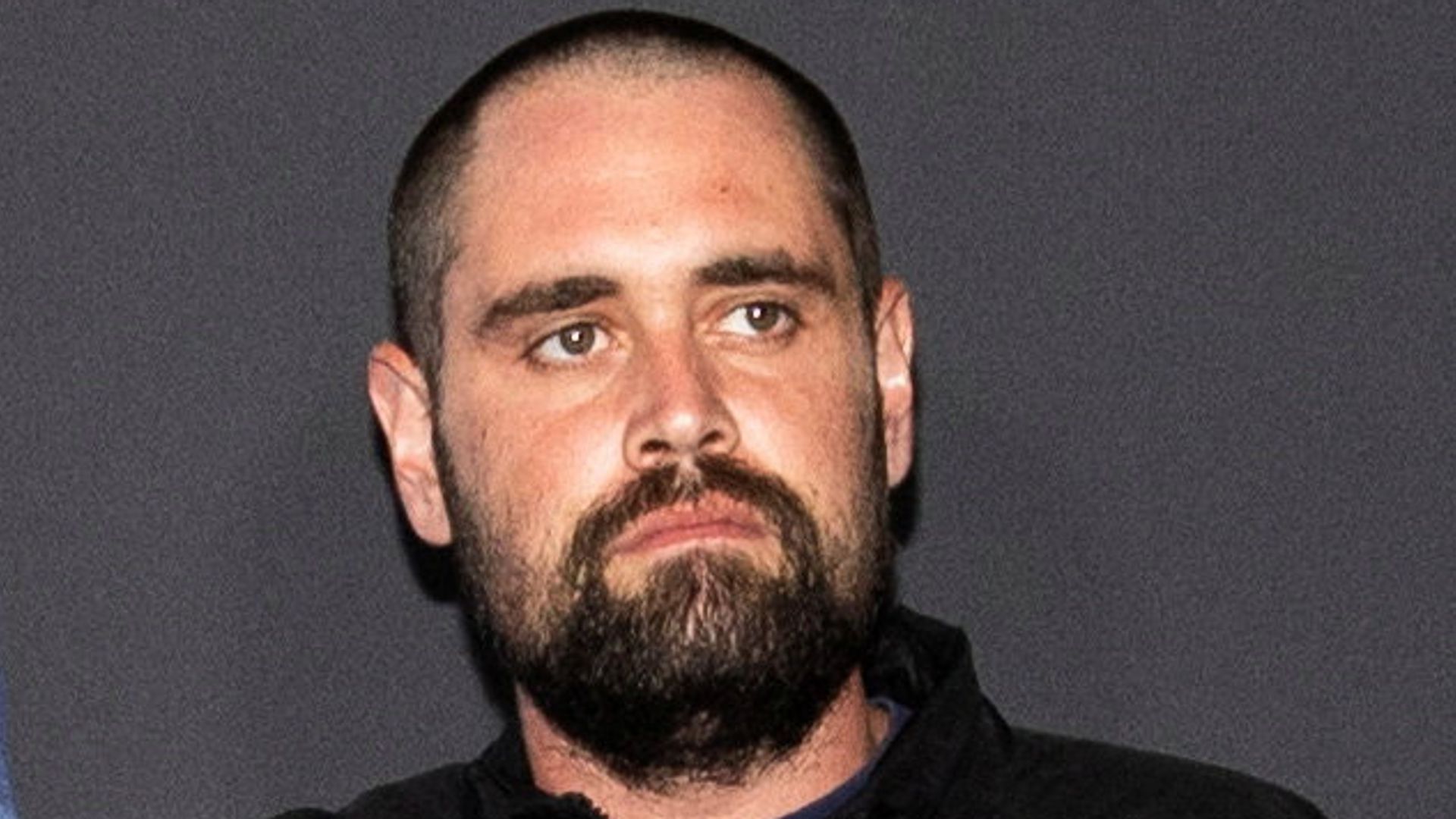
Rob Reiner’s son Nick has been charged with murdering his parents and could face the death penalty.The Latest News from the UK and Around the World | Sky News

Britain loves chocolate.The Latest News from the UK and Around the World | Sky News
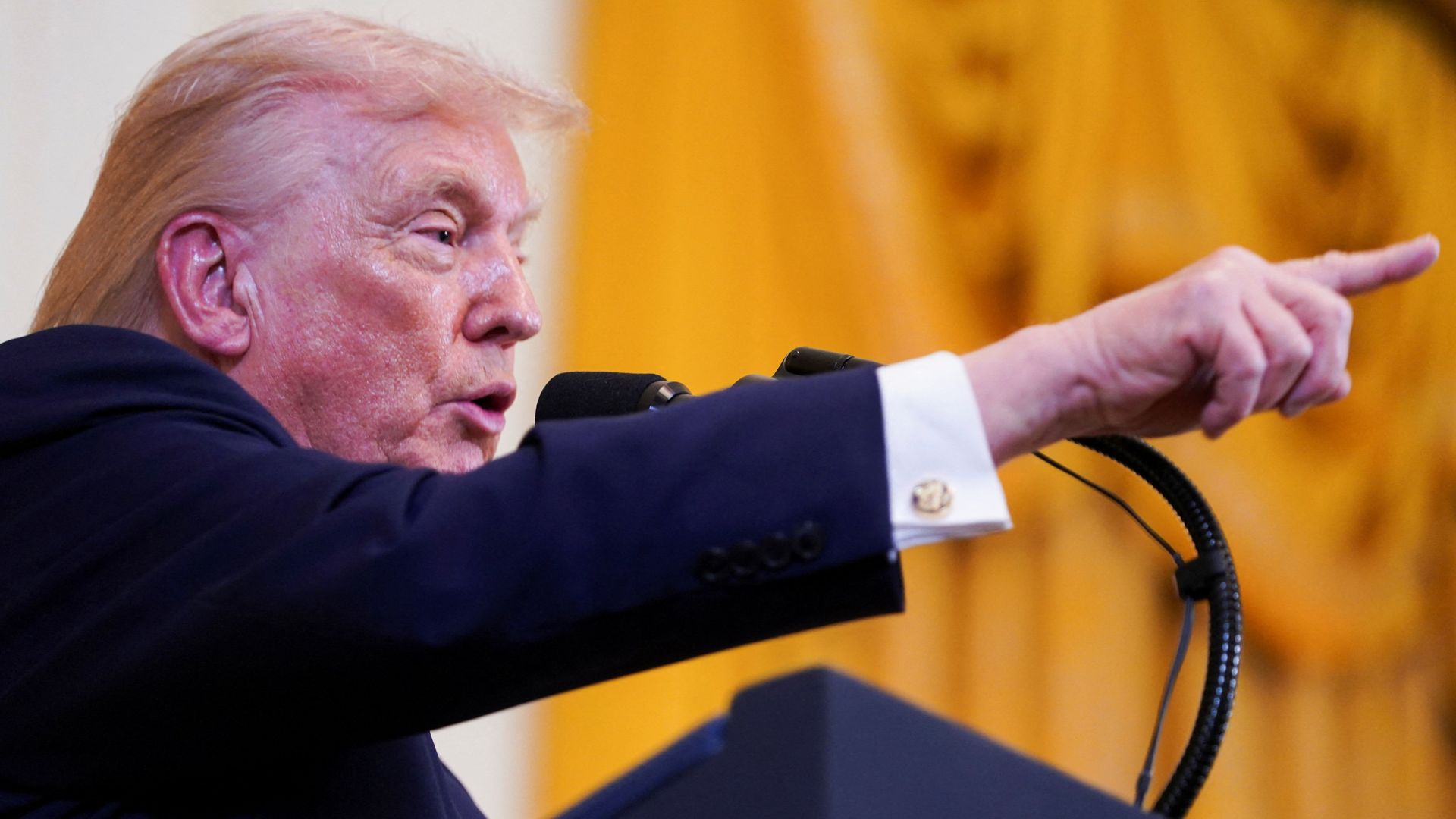
Donald Trump has said the quiet stuff out loud. His Tuesday evening social media post on Venezuela feels like an offload, a dump of thoughts. But it is nonetheless very revealing.The Latest News from the UK and Around the World | Sky News

A South African man, with eyes darkened by sleepless nights, tells us his older brother was lured into fighting for Russia on the frontline in Ukraine’s raging Donbas region.The Latest News from the UK and Around the World | Sky News

A nine-year-old girl found dead in Weston-super-Mare has been named on the day police revealed a teenager had been charged with her murder.The Latest News from the UK and Around the World | Sky News
By: Jennifer Shutt States Newsroom

WASHINGTON — U.S. House Speaker Mike Johnson said Tuesday he will not allow a floor vote this week on a bipartisan amendment supported by moderate Republicans that would extend the Affordable Care Act enhanced tax credits.
Johnson was confident that blocking the amendment would not lead centrist GOP lawmakers to oppose the Republican health care bill scheduled to get a vote Wednesday.
“There’s about a dozen members in the conference that are in these swing districts who are fighting hard to make sure they reduce costs for all of their constituents. And many of them did want to vote on this Obamacare, COVID-era subsidy the Democrats created,” Johnson said. “We looked for a way to try to allow for that pressure release valve and it just was not to be.”
The enhanced ACA tax credits are set to expire at the end of the year, sharply increasing the cost of health insurance for the roughly 22 million Americans who purchase plans through the exchange and benefit from the subsidies.
The House Republican health care bill wouldn’t extend those tax credits, frustrating GOP lawmakers in that chamber who are most at risk of losing their reelection bids during the November midterm elections.
Johnson said he expects that GOP bill will pass, though he didn’t address its prospects in the Senate, where bipartisanship is needed for nearly all bills to advance under that chamber’s 60-vote legislative filibuster.
New York Republican Rep. Mike Lawler said in a speech on the House floor that GOP leaders’ decision to let the enhanced ACA tax credits expire was “idiotic and shameful,” especially after changes were added to address fraud and reduce costs.
“So we have been forced to sign onto two discharge petitions,” he said. “And yet my Democratic colleagues will not join us, but for those that were at the negotiation table.”
Lawler then criticized House Minority Leader Hakeem Jeffries, of New York, for not encouraging Democrats to sign onto the bipartisan discharge petitions, noting that would likely get the 218 signatures needed to force a floor vote. He argued that’s because Jeffries “doesn’t actually want to solve the problem, he wants the issue.”
“This place is disgraceful,” Lawler said. “Everybody wants the upper hand. Everybody wants the political advantage. They don’t actually want to do the damn work. This problem could be solved today if everybody who says they care about extending this signs the discharge.”
When the House returns from its two-week holiday break next year, Johnson said, leaders may try to use the complex reconciliation process they used to enact the “one big, beautiful bill” to address health care.
“What we anticipate going into the first quarter of next year is, possibly in a reconciliation package or in regular order a stand-alone, ideas just like this,” Johnson said after being asked a question about Health Savings Accounts. “We have a long list of things that we know will reduce premiums, increase access and quality of care.”
President Donald Trump said Monday he wants Republicans to use the reconciliation process or to eliminate the Senate’s legislative filibuster to address health care and other policy priorities.
“Republicans should knock out the filibuster and we should approve a lot of things,” Trump said.
Senate Majority Leader John Thune, R-S.D., has said repeatedly he doesn’t intend to change or scrap the filibuster.
Trump also reiterated during the Oval Office event he would like to see Congress send direct payments to Americans to help them buy health insurance or afford health care.
“I want all money going to the people and let the people buy their own health care. It’ll be unbelievable,” Trump said. “They’ll do a great job. They’ll get much better health care at a much lower cost.”
The Senate voted last week on two health care bills, one from Republicans and one from Democrats, but neither received the support needed to move toward a final passage vote.
Republicans’ bill would have provided direct payments to some people enrolled in either bronze or catastrophic ACA marketplace plans with up to $1,500 in payments annually for 2026 and 2027.
Democrats’ legislation would have extended the enhanced ACA marketplace tax credits for three years.
A bipartisan group of senators is trying to find solutions that bridge the political divide, though they are unlikely to achieve consensus on the details before the end of this week.
A poll released Monday by the West Health-Gallup Center on Healthcare in America shows that cost is the “most urgent” health issue facing the country, followed by access and then obesity.
Just 57% of those polled said they were satisfied with how much they pay for their own health care and only 16% were satisfied with the total cost of health care.
Nearly two-thirds of those in the survey said they believe it’s the federal government’s responsibility “to make sure all Americans have healthcare coverage,” while 33% said it’s not.
By: Corinne Smith, Alaska Beacon

The Federal Bureau of Investigations’ office in Anchorage issued an alert warning Alaskans of scams impersonating law enforcement or government officials demanding payment. Alaskans lost an estimated $1.3 million due to this type of government impersonation scam in 2024 — more than five times the previous year’s losses.
Officials say Alaskans should not respond to calls claiming they have missed jury duty or have warrants out for their arrest. Officials say anyone targeted by such calls should not provide personal information or payment to the caller, but they should report scams to the agency.
“This scam isn’t new, but we are certainly seeing an uptick in this type of scam here in Alaska,” said Chloe Martin, a public affairs officer with the FBI Anchorage office.
In 2024, the bureau reported 6,670 fraud complaints from Alaskans, with over $26.2 million in losses.
Scammers are calling residents and identifying themselves as an FBI official, a member of state or local law enforcement, or a government official. The scammer then claims the victim has missed jury duty or that a warrant has been issued for their arrest and demands payment from the victim, Martin said.
Sometimes scammers will call using personalized information to appear official. “So when they look at their caller ID, it might actually look like it’s a caller from a legitimate law enforcement agency,” she said.
Martin said scammers use urgency, intimidation and fear to demand immediate payment in the form of cryptocurrency like Bitcoin, prepaid gift cards or wire transfers.
Martin urged Alaskans to pause, not give personal information or make payments and report the fraud to their bank and to the FBI’s Internet Crime Complaint Center, a reporting hub for cyber-crime.
“If reported immediately, it’s actually not outside the realm of possibility to recover funds, so timely reporting is key,” she said. She added that victims should contact their bank to freeze funds if they have responded to a scam.
Last year, the FBI recorded a more than five fold increase in losses from these scams, from nearly $250,000 lost in 2023 to more than $1.3 million in 2024.
Austin McDaniel, a spokesperson for the Alaska Department of Public Safety said it is common for scammers to impersonate Alaska State Troopers.
“These scammers will go through and find the name of an Alaska law enforcement officer at that agency and call, pretending to be an actual state trooper, so that they’re sophisticated,” he said.
“This happens across the state. This targets every age demographic, and it’s something that we see a lot of,” he said. “I have personally received these types of scam calls demanding that I pay some type of exorbitant fee because I missed jury service. And thankfully, I know that’s definitely a scam, but not everyone does.”
McDaniel said it’s difficult to track, investigate and prosecute scammers because some of them are calling internationally, and are difficult to trace. He urged Alaskans to be cautious and not to make payments.
“Law enforcement, the government, a utility, a bank, is never going to call you and demand money with a gift card or with Bitcoin,” he said. “If you get some type of suspicion that something’s wrong, it probably is.”
Earlier this month, the Federal Emergency Management Agency issued an alert warning Alaskans of scammers posing as government officials, insurance agents or aid workers targeting residents impacted by Typhoon Halong receiving disaster assistance.
Officials urged residents to contact FEMA to verify if a call is legitimate.
McDaniel and Martin said their departments could not confirm cases of scammers specifically targeting residents impacted by the Western Alaska storm at this time, but McDaniel emphasized his department sees scammers victimize those who may already be more vulnerable.
“We see it happen with missing persons,” McDaniel said. “Someone will call and try to defraud family members of missing people. Usually any type of situation where there’s some type of tragedy or emotional response to something, scammers will attempt to go through and exploit that.”
According to FBI data, Alaska ranked No. 1 in the nation in the number of internet crime complaints reported, at a rate of 914.7 complaints per 100,000 residents. Scammers target older residents because they can be more susceptible to scams The bureau estimates Alaskans in the age group of 60 or older lost more than $8.1 million to scams in 2024.
Cryptocurrency scams are growing nationwide, as they are difficult to trace. In 2024, the FBI estimates 45% of Alaskans’ losses, approximately $11.7 million, were related to cryptocurrency related scams.
Such scams have become a means to cheat investors, also known as “pig butchering,” according to the bureau. Scammers target victims, develop a relationship, and introduce a fraudulent investment opportunity in cryptocurrency. Victims are coached to invest more and more money into the fraudulent investment, only to then be unable to withdraw their funds.
Internet-based scams and fraud can range from emergency calls and extortion to identity theft and phishing or spoofing, where scammers identify as a trusted source and aim to gain login details or personal information to steal money or data. The FBI reports that complaints increased nationally by 33% in 2024, with $16.6 billion in losses.