Categories
Entertainment

Rob Reiner, Wife’s Official Cause of Death Revealed Days After Murders

Reading Time: 3 minutes

We have an update on the heinous murder of Rob Reiner and his wife, Michele.

As you very likely know by now, the famous director and his long-time spouse were found dead in their Brentwood, California home this past Sunday afternoon.

The couple’s son, Nick Reiner, has been charged with double murder in the first degree appeared on Wednesday in court for the first time… looking disheveled and confused.

Thanks to the Los Angeles County Medical Examiner’s Office, meanwhile, we can now officially report that the Reiners died via multiple sharp force injuries.

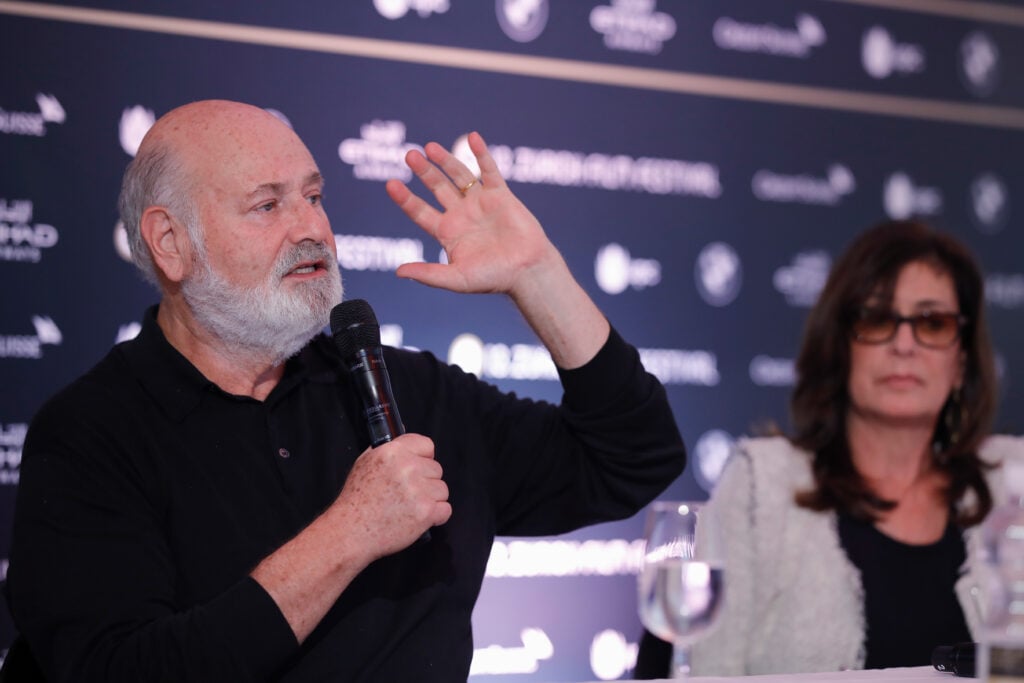
Rob Reiner and his wife Michele Reiner speak during the ‘Shock and Awe’ press conference during the 13th Zurich Film Festival on September 30, 2017 in Zurich, Switzerland. (Photo by Andreas Rentz/Getty Images)

The manner of death was ruled a homicide.

Previously, the this same office said Rob and Michele were stabbed to death in their Los Angeles residence during the early morning hours of Sunday, December 14.

Nick Reiner was then arrested near the University of Southern California several hours after his parents’ bodies were found, authorities have confirmed.

Nick — who is being represented by lawyer Alan Jackson and who is said to have “personally used a dangerous and deadly weapon, a knife” in the killings — has not yet entered a plea.

According to various outlets, he got into a heated exchange with his father at a party just one day before the crime was committed.

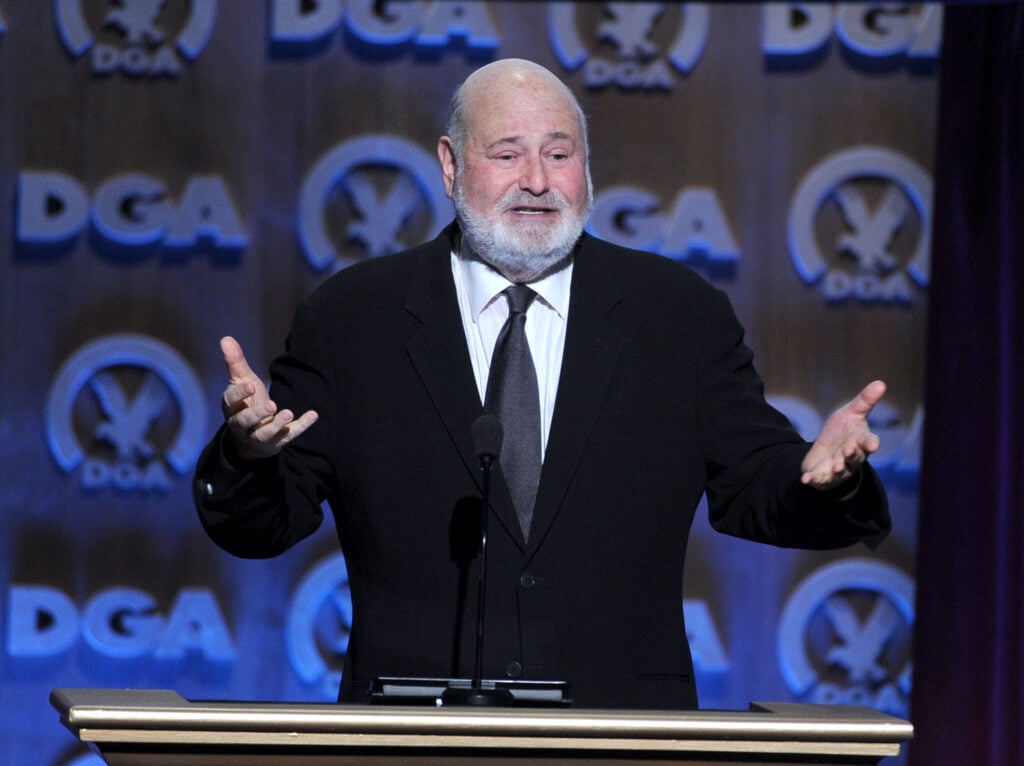
Rob Reiner in January 2014.
Rob Reiner speaks onstage at the 66th Annual Directors Guild Of America Awards held at the Hyatt Regency Century Plaza on January 25, 2014. (Photo Credit: Alberto E. Rodriguez/Getty Images for DGA)

In the wake of this unimaginable tragedy, Rob and Michele’s loved ones — which includes children Jake Reiner, 34, and Romy Reiner, 27 — said a few hours ago:

“Words cannot even begin to describe the unimaginable pain we are experiencing every moment of the day.

“The horrific and devastating loss of our parents, Rob and Michele Reiner, is something that no one should ever experience. They weren’t just our parents; they were our best friends.

“We are grateful for the outpouring of condolences, kindness, and support we have received not only from family and friends but people from all walks of life.

“We now ask for respect and privacy, for speculation to be tempered with compassion and humanity, and for our parents to be remembered for the incredible lives they lived and the love they gave.”

Rob Reiner (center) and wife Michele Singer (L) and son Nick Reiner (R) attend Teen Vogue's Back-to-School Saturday kick-off event at The Grove on August 9, 2013 in Los Angeles, California.
Rob Reiner (center) and wife Michele Singer (L) and son Nick Reiner (R) attend Teen Vogue’s Back-to-School Saturday kick-off event at The Grove on August 9, 2013 in Los Angeles, California. (Photo by Michael Buckner/Getty Images for Teen Vogue)

Rob Reiner was a director, producer and actor known for helming many iconic projects, including his directorial debut, This Is Spinal Tap (1984), along with Stand by Me (1986), The Princess Bride (1987), When Harry Met Sally… (1989), Misery (1990) and A Few Good Men (1992).

In 2015, Rob and his son collaborated on the film Being Charlie, which the latter co-wrote and stated was inspired by his own real-life experiences with drug addiction.

May Rob and Michele Reiner rest in peace.

Rob Reiner, Wife’s Official Cause of Death Revealed Days After Murders was originally published on The Hollywood Gossip.

​The Hollywood Gossip

Categories
Politics

Ramaswamy calls on conservatives to reject Groypers

Ohio gubernatorial hopeful and former GOP presidential candidate Vivek Ramaswamy urged conservatives to reject “Groyper transgressions,” becoming the latest Republican to weigh in on the ongoing debate in the party over antisemitism.

“If, like Mr. Fuentes, you believe that Hitler was “really f-ing cool,” or if you publicly call Usha Vance a “jeet,” then you have no place in the conservative movement, period,” Ramaswamy wrote in a New York Times op-ed published Wednesday, referring to a derogatory ethnic slur against South Asians.

In the quote, Ramaswamy was referencing Nick Fuentes and Vice President JD Vance’s wife Usha Vance, the daughter of Indian immigrant parents.

Ramaswamy shared that he has been the target of racial slurs and attacks on social media, despite “older Republicans” doubting the rising prevalence white supremacy in right-leaning online circles.

As the number of “Groypers,” or followers and fans of Fuentes, appears to grow, Ramaswmy said, there is a “real reluctance” from his fellow Republicans to condemn the “new identity politics on the right.”

“It should be acceptable on the right to criticize U.S. aid to Israel or immigrant visas, but it is downright unacceptable to spew poison toward Jews, Indians or any other ethnic group,” said Ramaswamy, the son of Indian immigrants.

The Republican Party has been embroiled in an intra-party struggle over whether the party should welcome groups associated with Fuentes, a debate that burst into the open after Tucker Carlson interviewed Fuentes on his podcast. Carlson, during his friendly October interview with Fuentes, said GOP backers of Israel have been “seized by this brain virus.” Fuentes said that “organized Jewry” is a major barrier to unifying America.

While President Donald Trump defended Carlson’s decision to interview Fuentes, House Speaker Mike Johnson called it a “big mistake.” The president of the conservative think tank Heritage Foundation, Kevin Roberts, also initially defended Carlson’s interview, arguing the real enemy was “the vile ideas of the left.” But after immense backlash — including from Sen. Mitch McConnell (R-Ky.) and multiple employees quitting — Roberts walked back his comments and condemned Fuentes’ rhetoric.

In his op-ed, Ramaswamy said that condemning the antisemitism brewing within a faction of the GOP does not need to equate to censorship but “moral clarity instead of indulgence.”

“The point isn’t to clutch pearls, but to prevent the gradual legitimization of this un-American animus,” he said. “This online edgelording reminds me of toddlers testing their parents’ limits: The job of a real Republican leader is to set firm boundaries for young followers, as a good father does for a transgressive son.”

​Politics

Categories
Politics

Poll: The affordability crisis is disrupting politics in 1 country after another

The affordability crisis that upended global politics last year continues to ripple across some of the world’s biggest democracies — punishing incumbents and undermining longstanding political alliances.

New international POLITICO polling shows the voter frustration with persistent financial strain remains a deeply potent force today. In five major economies, The POLITICO Poll found ongoing cost-of-living pressures continue to reverberate through politics:

  • In the United States, where Donald Trump returned to power on a campaign of economic populism, nearly two-thirds of voters — 65 percent — say the cost of living in the country has gotten worse over the last year. 
  • In the United Kingdom, where voters ousted the Conservative Party in 2024 after 14 years of rule, 77 percent say the cost of living has worsened. 
  • In France, where President Emmanuel Macron is grappling with historically low favorability ratings, almost half of all adults — 45 percent — say their country is falling behind comparable economies. 
  • In Germany, after prolonged infighting over the economy, former Chancellor Olaf Scholz’s governing coalition collapsed last year. There, 78 percent of respondents say the cost of living has gotten worse over the last year. 
  • And in Canada, a post-pandemic affordability crisis helped fuel a public backlash against then-Prime Minister Justin Trudeau’s government ahead of his resignation earlier this year. The POLITICO Poll found that 60 percent of adults in the country say the cost of living is the worst they can remember it being. 

The results, from POLITICO and Public First’s first-ever joint international poll, illustrate the uphill battle many leaders face in trying to contain the intertwined economic and political unrest. Five years after the coronavirus pandemic upended the global economy — and as the world contends with competing conflicts and AI rapidly becoming a defining force — meaningful shares of respondents across the U.S., Canada, and Europe’s biggest economies of Germany, the United Kingdom and France view the cost of living as among the biggest issues facing the world right now.

But as leaders seek to address the affordability concerns, many say that their leaders could be doing a lot more to help on the cost of living, but are choosing not to.

That has left incumbent governments grappling with how to manage the rising economic dread — and control the resulting political backlash. It has also created an opportunity for opposition parties on economic messaging.

“For incumbents it’s very difficult to run on these platforms,” said Javier Carbonell, a policy analyst at the European Policy Centre. “Today, center-left and center-right parties are seen as incumbents, and as the ones who are to put the blame.”

Voters are pessimistic about the cost of living

There is a pervasive sense in the five countries that their economies are deteriorating.

In France, 82 percent of adults say the cost of living in the country has worsened over the last year, as do 78 percent of respondents in Germany; 77 percent of adults in the United Kingdom and 79 percent in Canada say the same.

A majority of people in all five countries go even further, saying the cost of living crisis has never been worse.

In a further sign of the trouble facing leaders, the poll results suggest many view affordability as a systemic problem more than a personal one. Majorities across the countries, for example, say the issue of affordability is the high cost of goods, not that they are not paid too little.

In the U.K., roughly two-thirds of adults say the country’s economy has deteriorated — greater than the 46 percent who say their own financial situation has worsened over the last year. That same pattern holds for France, Canada and Germany, suggesting the public holds broad concerns about the economy and affordability that go beyond their individual lives.

While the European Union’s economy is set to grow by 1.4 percent in 2025, the economy in Germany has weakened over the past two years, and is expected to stagnate this year. In France, a series of government policies aimed at addressing cost-of-living concerns have contributed to an exploding national debt, which currently stands at nearly $4 trillion USD.

In the United Kingdom, the results come against a backdrop of sluggish economic growth, with incumbent Prime Minister Keir Starmer struggling to convince voters that his center-left Labour Party can drive down the cost of living.

And in Canada, the country’s deep-seated anxiety is born out by federal inflation data. Statistics Canada reported this week that the consumer price index ticked up 2.2 percent in November compared to the same month in 2024 — nearly a bullseye on the central bank’s 2 percent target.

Negative economic views are shaping politics

Voters’ economic concerns are roiling politics.

In 2024, Trump ran a campaign on economic concerns without having to oversee the economy himself. That dynamic has shifted in recent months, with voters beginning to sour on his handling of the economy, underscoring the difficulty of convincing voters of economic progress amid stubborn cost-of-living concerns.

That feeling of falling behind was particularly acute among European respondents in the POLITICO Poll, with nearly half of adults in Germany, France and the United Kingdom saying that their country is “generally falling behind other comparable economies.”

That pessimism has pushed many people out of the political process, Carbonell said, “because there’s no expectation that things are going to change.” For others, it’s fueling a search for political alternatives.

“There is this increasing demand for a very anti-system politics,” he said.

In Germany, Chancellor Friedrich Merz made revamping the economy a central campaign promise. But since taking office, he has been preoccupied with geopolitical issues, including the ongoing trade war and the Russia-Ukraine war.

That has become a successful line of attack for Merz’s critics — among them the far-right Alternative for Germany (AfD) party, now polling in first place. The party has accused Merz — whose approval ratings are at an all-time low — of not paying enough attention to the needs of the people in his own country, nicknaming him the “foreign policy chancellor.”

In France, the government is looking to roll back some of the policies it rolled out in response to cost-of-living concerns, but doing so could prove particularly unpopular with a population laser-focused on high costs. It could also fuel anti-establishment parties on the right and left, which have made the issue a central weapon against France’s crumbling political center.

David Coletto, a longtime pollster in Canada and CEO of the firm Abacus Data, has for years tracked affordability concerns — and found widespread concern among most survey respondents.

“This is not a marginal concern or a background anxiety,” he wrote of results from POLITICO’s November poll. “It is a dominant lived experience that continues to shape how Canadians interpret government performance, leadership, and competing policy priorities, alongside concern about Donald Trump, trade, and global instability.”

Affordability messaging will be a central message in upcoming elections

Affordability will be a central feature of elections across the globe next year — with some of that messaging already underway. In the U.S., Democratic candidates from New York to Georgia focused much of their 2025 campaigns on lowering the costs of living, and both parties are planning to center the issue in the midterms.

“For now, the cost of living remains a warning light rather than a red light for the Carney government,” Coletto wrote. “But the intensity of feeling, combined with seasonal pressures and fragile household finances, means the issue is unlikely to fade quietly into the background.”

Starmer’s government — languishing in the polls and facing local elections in 2026 — has pivoted in recent weeks to a more explicit focus on affordability.

The U.K. government has also floated freezing train fares, lowering energy bills, and boosting the minimum wage in an attempt to solve the affordability crisis, but a record-high level of taxation confirmed at a government-wide budget last month risks blunting its economic message.

In Germany, the issue of affordability may gain new momentum when voters in five federal states head to the polls to elect new state parliaments next year. In Berlin, the far-left Left Party, for example, plans to take a playbook from the affordability-centered campaign of New York’s Zohran Mamdani as a model for the state elections in September.

With local elections also taking place across France next year, and a presidential election in 2027, these issues are likely to continue to take center stage, especially in the larger cities where pricing pressures have been particularly acute.

In Paris, the outgoing center-left administration has been praised for making the city greener and more pedestrian-friendly, but far more needs to be done on affordability, said David Belliard, a member of the outgoing administration and the Green Party’s candidate for mayor.

“We’ve spent a lot of time fighting against the end of the world,” Belliard said, “but maybe not enough helping people make it to the end of the month.”

POLITICO’s Matt Honeycombe-Foster contributed to this report from the United Kingdom, Victor Goury-Laffont contributed to this report from France, Nette Nöstlinger contributed to this report from Germany and Nick Taylor-Vaisey contributed to this report from Canada. 

​Politics

Categories
Politics

Pramila Jayapal pushes Medicare for All polling

Rep. Pramila Jayapal (D-Wash.) wants Medicare for All back in the health care debate.

The former Congressional Progressive Caucus chair plans to present polling to her House Democratic colleagues next month as she argues for the electoral merits of Medicare for All — even in battleground districts the party must win to flip the House next fall. The research, paid for by Jayapal’s leadership PAC and shared first with POLITICO, found one in five Republicans support a “government-provided system,” as do most independents. Democrats back Medicare for All by 90 percent.

Two-thirds of voters said the federal government does “too little” to help people afford health care. Just 18 percent said the government does “too much.”

Jayapal’s Medicare for All push comes as Democrats have been largely unified on their health care messaging, pushing Republicans on the back foot about extending expiring Obamacare subsidies. Injecting Medicare for All back into the debate could also reopen a long-running intraparty fight that moderate Democrats aren’t keen to have.

In an interview, Jayapal described swing district voters’ openness to Medicare for All and a desire for “fundamental change” as a “significant shift” in recent years. She cited the rising costs of health care for making the current system less appealing to swing voters who “don’t feel like they can afford health care right now” and “don’t feel like they have a choice right now.”

“Whatever tropes they may have had about Medicare for all, those don’t really exist today in the public’s mind,” Jayapal said, arguing Democrats should now “put forward a very united and universal, comprehensive vision for health care in this country.”

Democrats are hoping to make health care a central midterm messaging — tying this fall’s federal government shutdown to a debate within the GOP over extending the Affordable Care Act subsidies. Jayapal hopes to nudge her party into not only pushing back on President Donald Trump’s cuts to Medicare, Medicaid and the ACA, but also “be ready with a proactive vision” for voters, she said.

Jayapal will undoubtedly face pushback from moderate Democrats over championing an issue that’s long divided the party. Medicare for All defined much of the ideological battle of the 2020 presidential primary, serving as the progressives’ flagship policy. After Joe Biden, who didn’t back it citing the price tag, won the primary, the policy largely fell out of the conversation.

Over the last five years, Medicare for All has remained popular among Democrats — and Jayapal argues her latest research shows that it’s increasingly intriguing to independents and Republicans, who are feeling the pinch of rising health care costs. Jayapal said she’ll pitch her polling to Republican members, too, though she declined to name them.

“There’s going to be some internal resistance [to Medicare for All] but it needs to be informed by polling, and in our survey, a majority of voters are in favor of it,” said David Walker, a pollster at GQR Research who conducted the survey. “We didn’t gild the lily [in the survey], we didn’t say it’d all be free.”

The poll described Medicare for All to participants as a “system [that] would still use the same doctors and hospitals as today, but take the profit motive out of health care by using a government-administered insurance system, like Medicare or Medicaid,” acknowledging “taxes will increase for many Americans,” but added, “those could be offset by not having to pay for health insurance premiums, co-pays or out-of-pocket costs.” The poll found 54 percent of voters nationally and 56 percent in battleground districts back Medicare for All.

Jaypal acknowledged confusion around the meaning of Medicare for All, and suggested adding “improved” to the slogan, as a nod to Americans’ frustrations with the existing Medicare program.

Jayapal said she intentionally used a polling firm that works closely with the Democratic Congressional Campaign Committee because “we wanted to make it clear this isn’t some fringe poll.” GQR surveyed 1,000 likely 2026 voters from Nov. 5 to Nov. 13, oversampling voters in battleground House seats. The margin of error is 3.1 percentage points.

​Politics

Categories
Health

Patrick Mahomes’ Season-Ending Injury, Explained

Chiefs quarterback Patrick Mahomes has endured a season-ending injury. Here’s what happened to him and how this common football injury is treated.

​Health Digest – Health News, Wellness, Expert Insights

Categories
Entertainment

These Are The Best Grocery Store Chains For Spiral Ham, According To Customers

A spiral ham makes a delicious addition to any dinner table – both during the holidays and beyond – with these stores offering the best of the best.

​Mashed – Fast Food, Celebrity Chefs, Grocery, Reviews

Categories
Entertainment

The Absolute Best Way To Use Every Kind Of Tortilla Chip

There are several types of tortilla chips, but the PepsiCo Foods U.S. research chef and culinary innovation lead says these are the best ways to use every kind.

​Mashed – Fast Food, Celebrity Chefs, Grocery, Reviews

Categories
Entertainment

When To Shop For Christmas Dinner To Avoid The Crowds

Shopping for your holiday dinner last minute is not a good idea, but it may be hard to completely escape the Christmas crush. Avoid the crowds with these tips.

​Mashed – Fast Food, Celebrity Chefs, Grocery, Reviews

Categories
Entertainment

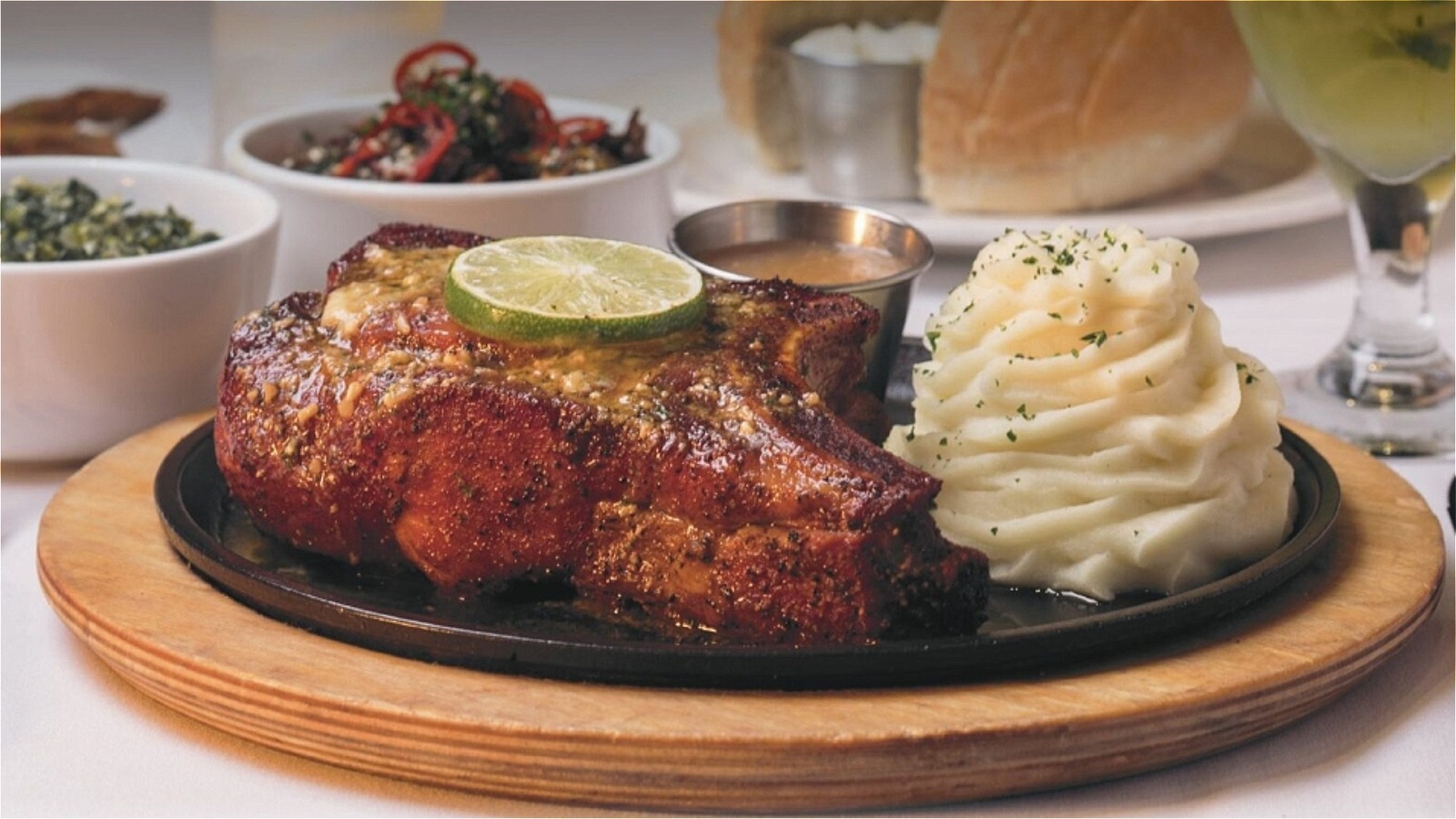
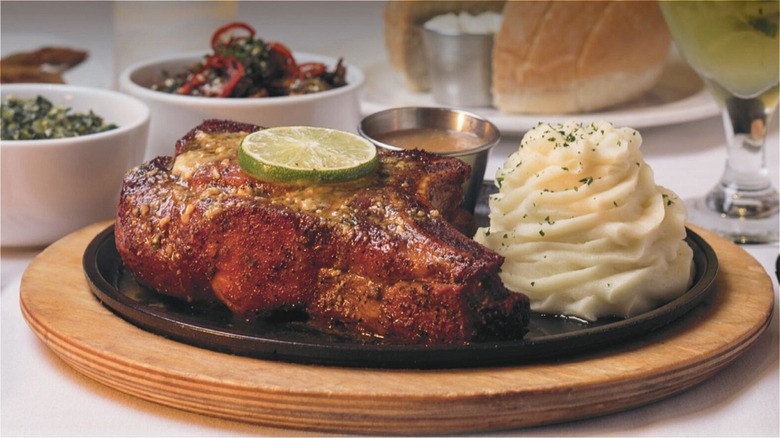
Forget The Steak — Customers Rave About The Pork Chops At This Steakhouse Chain

You probably don’t go to most steakhouses with the intention of ordering pork chops, but you may want to make an exception at this Houston establishment.

​Mashed – Fast Food, Celebrity Chefs, Grocery, Reviews

Categories
Entertainment

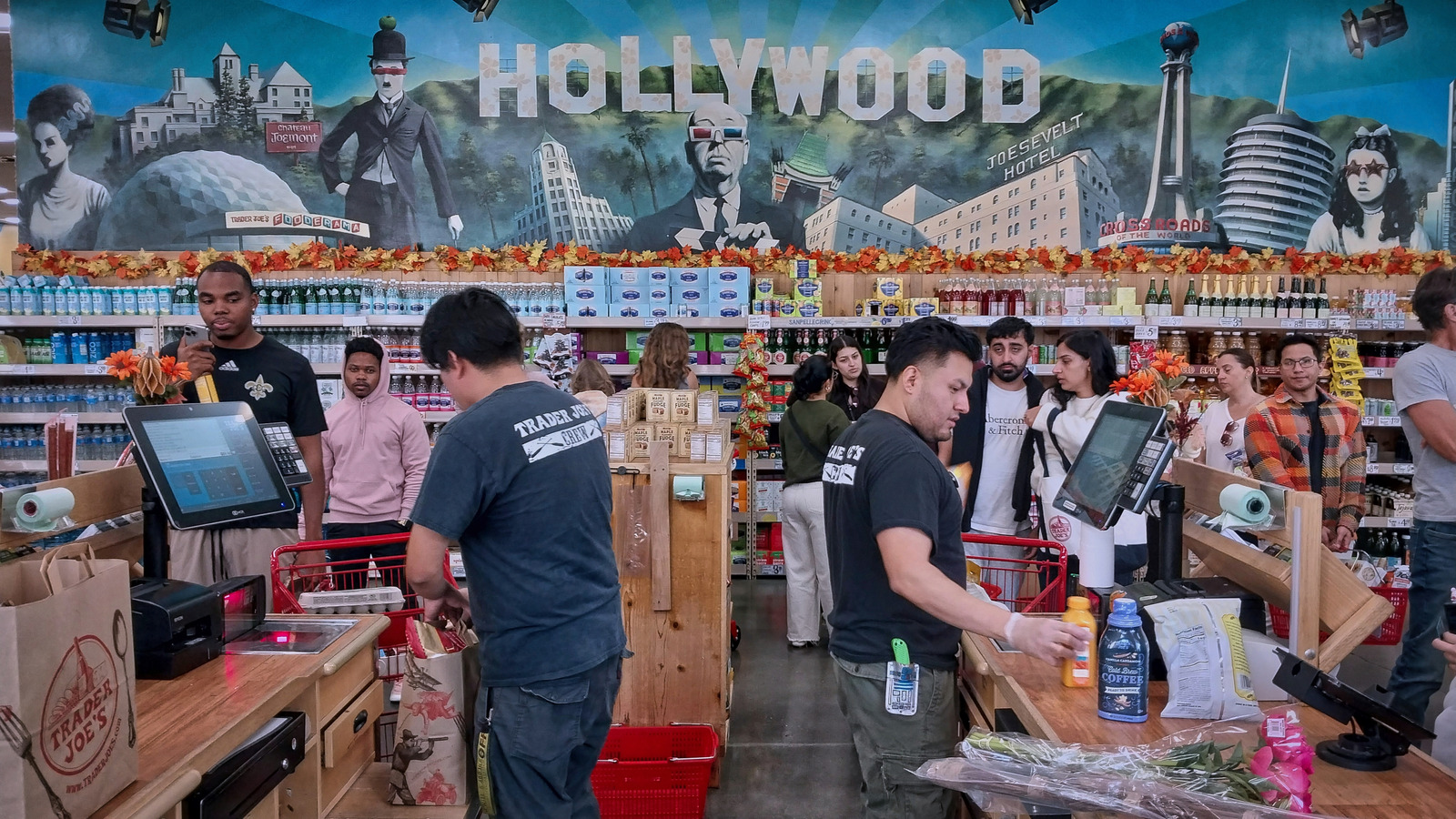
What Customers Don’t Like About Shopping At Trader Joe’s

No grocery chain is perfect, not even our quirky, beloved Trader Joe’s. Despite its famed store-brand items, these grievances really get under shoppers’ skin.

​Mashed – Fast Food, Celebrity Chefs, Grocery, Reviews