Temperatures early next week are expected to be above average in the UK for the time of year, forecasters have said.The Latest News from the UK and Around the World | Sky News










Temperatures early next week are expected to be above average in the UK for the time of year, forecasters have said.The Latest News from the UK and Around the World | Sky News

In the shadow of the headquarters of Russia’s FSB security service, formerly the home of the Soviet-era KGB, people came to lay flowers this week.The Latest News from the UK and Around the World | Sky News
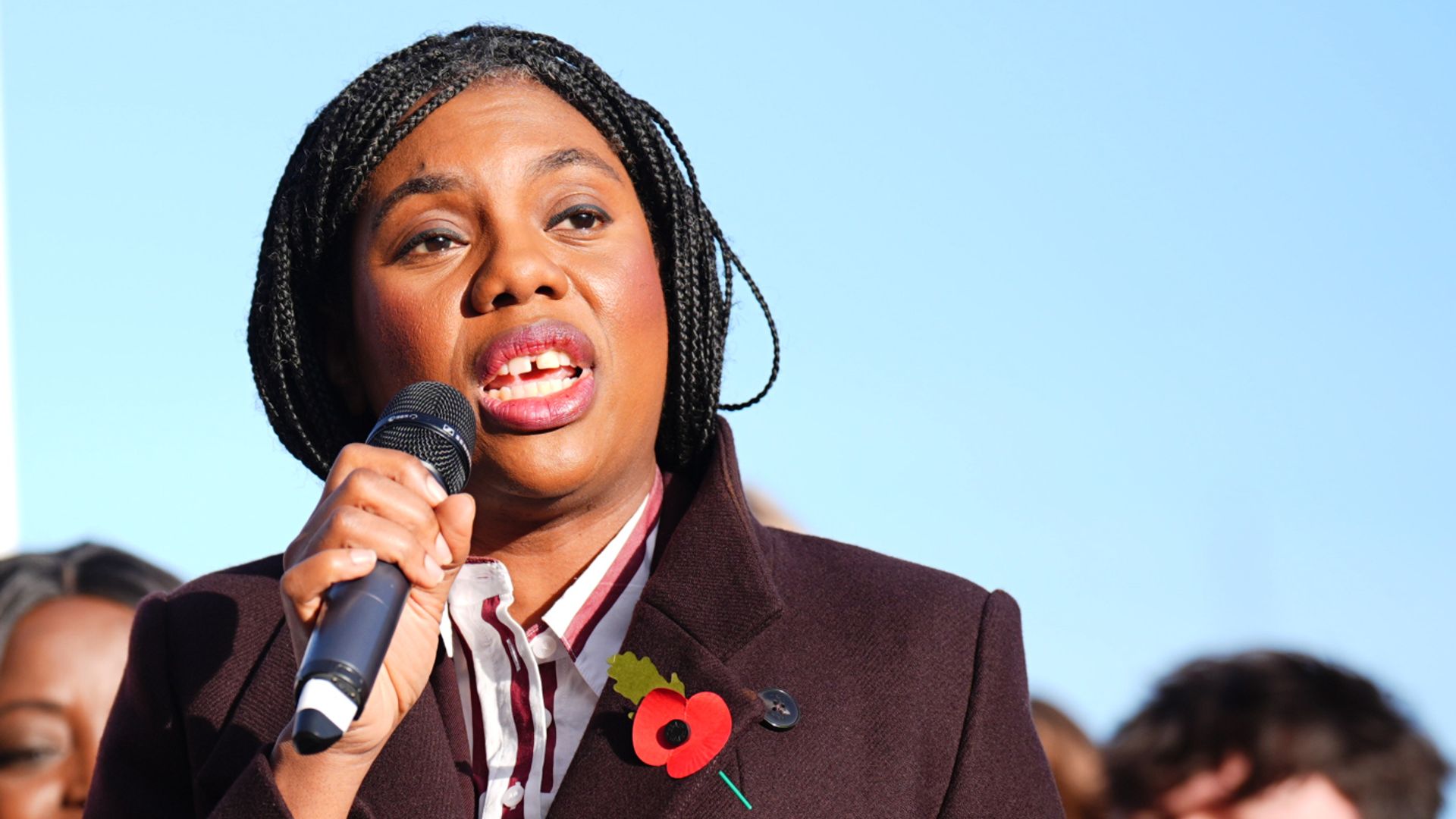
Conservative leader Kemi Badenoch has said she is “rebuilding” the party as she marks her first year in the job.The Latest News from the UK and Around the World | Sky News

The US military has carried out a fresh strike on what it claims are drug smugglers in the Caribbean Sea – as tensions with Venezuela remain high.The Latest News from the UK and Around the World | Sky News

A total of 28 people have died following Hurricane Melissa’s rampage across Jamaica, the government has confirmed.The Latest News from the UK and Around the World | Sky News
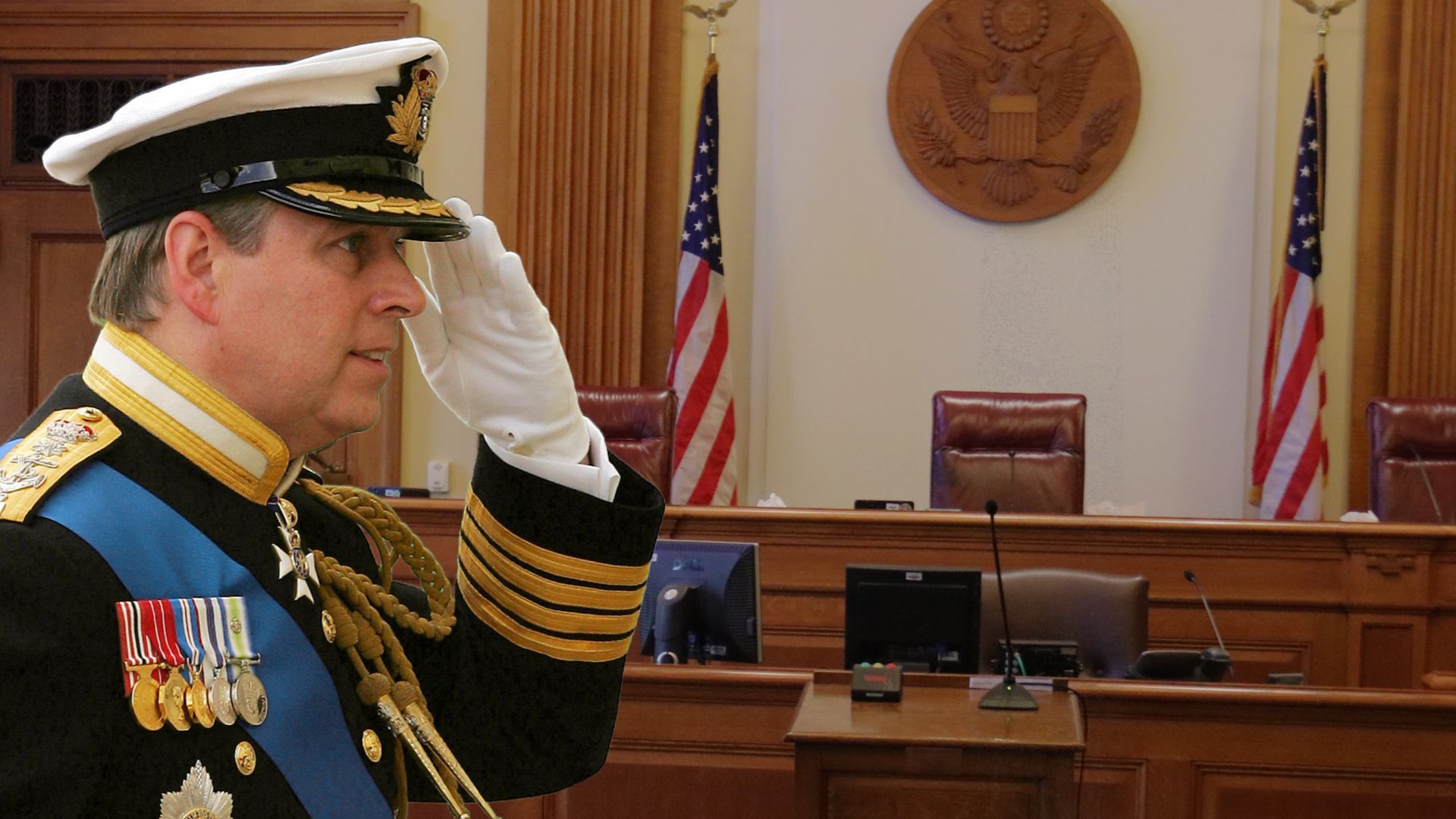
Andrew Mountbatten Windsor could be stripped of his honorary rank of vice admiral, the Defence Secretary has said.The Latest News from the UK and Around the World | Sky News
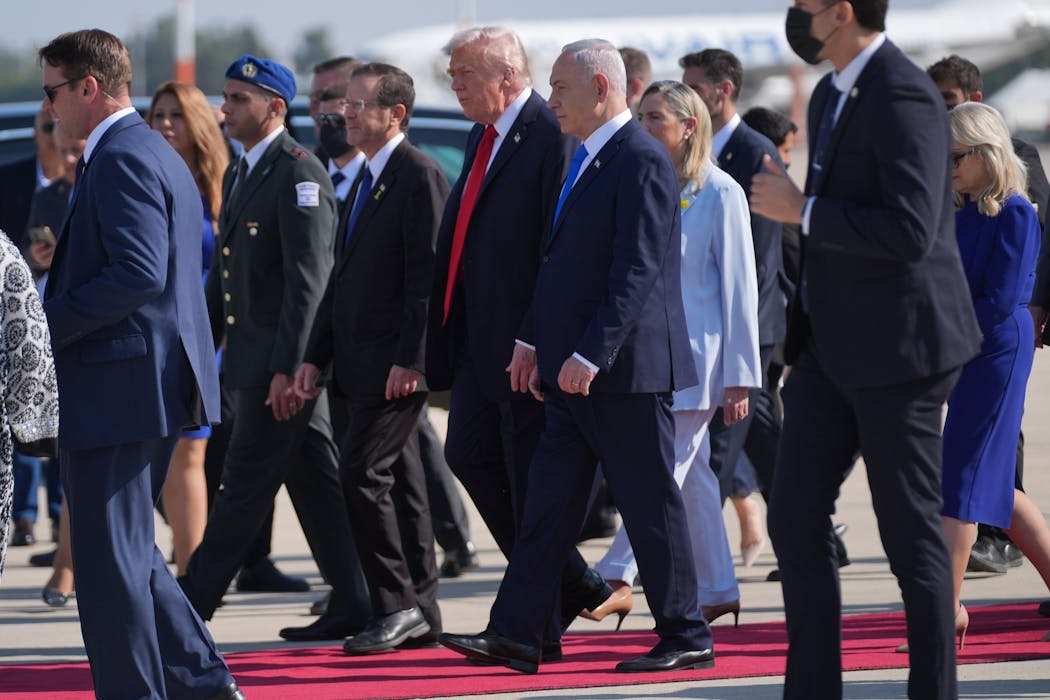
After two years of devastating war between Israel and the Palestinian Hamas forces in the Gaza Strip, President Donald Trump declared an end to the war on Oct. 14, 2025. The peace plan includes a Hamas commitment to return all hostages and a withdrawal of Israeli forces.
In late October, both sides said they remained committed to peace, despite Israeli retaliation for the death of an Israeli soldier that killed 104 people, and despite the fact that the remains of 11 deceased hostages remain in Gaza.
Those setbacks aside, the new peace push is the most serious attempt so far to end the escalation of conflict that followed the Oct. 7, 2023, attack by Palestinian militants on Israelis.
But what are the circumstances and actions that helped Trump advance such an agreement, the likes of which eluded former President Joe Biden? And what enabled Trump, working with a few close advisers and with mediators like Qatar and Egypt, to overcome the reluctance of Israel and Hamas?
The answer may have much to do with how Trump countered a phenomenon that political scientists call “spoiling.”
“Spoiling” in peace negotiations is defined by political scientist Stephen Stedman as actions employed by “leaders and parties who believe that peace emerging from negotiations threatens their power, worldview, and interests, and use violence to undermine attempts to achieve it.”
In regard to the Middle East, critics have long accused Israeli Prime Minister Benjamin Netanyahu of playing this spoiler card throughout the war.
Netanyahu was seen by many observers to be not interested in reaching a peace agreement because of risks to the political survival of his governing coalition. And it’s evident in attempts to postpone the investigation of the colossal failure of Israel to defend its citizens on Oct. 7, 2023.
For two years, Netanyahu engaged in this kind of spoiling by, for example, staging high-level assassinations of Hamas leaders at a timing detrimental for any negotiation’s success.
Yet, Netanyahu also employed a more sophisticated method of spoiling, one that political science scholar Ehud Eiran and I are exploring in our research.
We argue that leaders can spoil negotiations not just by resorting to violent means, or by posing hard-line positions within the negotiation room. Additionally, spoilers can work in broad daylight and make the diplomacy less likely to succeed through a careful use of rhetoric and media. This decreases their own constituencies’ and the enemy’s likelihood of accepting This decreases the likelihood of their own constituencies or the enemy accepting a compromise. It’s what we call “public spoiling.”
Netanyahu used these public spoiling tactics again and again during ceasefire negotiations.
In early May 2024, for example, when ceasefire negotiations were getting into high gear and indications mounted that Hamas may accept the deal on the table, a statement from Netanyahu attributed to “a senior diplomatic source” – known in the Israeli media to mean the prime minister himself – stated that “the IDF will enter Rafah and destroy the Hamas battalions remaining there, whether there is a temporary truce for releasing the hostages or not,” referring to the Israel Defense Forces.

Such declarations signaled to Hamas that Israel did not intend to keep its side of a deal. And it led the Palestinian militant organization to harden its position and further insist on a formal end of the war before all hostages were released.
In September 2024, Netanyahu used the Israeli military in another spoiler tactic after pressure mounted on him to yield to protesters’ calls for a ceasefire
After Hamas operatives murdered six Israeli hostages as soldiers approached their hiding place, the Israeli public erupted in protests against its government, blaming it for sending soldiers instead of negotiating. High-level officers in the prime minister’s office then stole a document from Israeli intelligence, allegedly written by Hamas leader Yahya Sinwar, forged some of it, and leaked it to the German newspaper Bild.
Netanyahu then cited the document in a speech, claiming Sinwar designed his policy to use public pressure on Netanyahu. In short, he used this false publication, leaked allegedly by his own people, to suggest that the protesters were doing Hamas’ bidding. The protests subsequently decreased dramatically, and the pressure on Netanyahu to compromise subsided.
This pattern continued into the Trump administration.
U.S. decision-makers, from the president to negotiators in the Biden and Trump administrations, were no doubt aware of these practices. So why did they allow them to continue?
The answer is complicated. What has become clear, I believe, is that at the heart of the problem stands a single phrase: “no daylight.” It’s an oft-cited position of U.S. politicians to mean that, publicly at least, Israel and the United States act as if they are in complete agreement or alignment, with no policy differences between them.
Though a longtime ally of Israel, the U.S. used to be more forceful with Israel when the latter was deemed by Washington to have crossed the line or threatened important American interests in the region. That was evident when the U.S. imposed a ceasefire in the 1973 Arab-Israeli War despite Israeli opposition. It was also clear when the U.S. prevented an Israeli response to missiles that Iraq launched at it during the Gulf War in 1991.
But in the past few decades, a perception has taken hold in U.S. foreign policy circles that pressure on Israel’s government should only be done in private and that it should never include strong public rebuke.

Thus, even when, in June 2024, the Biden administration knew full well that Netanyahu was thwarting efforts to reach a ceasefire, former Secretary of State Antony Blinken came out with a statement blaming Hamas. And when Netanyahu breached a ceasefire in March 2025 and ordered the military to return to fighting, the Trump administration blamed Hamas.
Netanyahu, with his knowledge of U.S. politics, was well aware that Washington would be unlikely to publicly blame Israel. And he took full advantage of this fact to promote his spoiling of the ceasefire negotiations in broad daylight.
So what changed in October 2025 that allowed Trump to overcome Netanyahu’s actions as a spoiler and secure a ceasefire?
In short, Trump simply decided to play the same game. He publicly announced that the deal existed and left Netanyahu no choice but to sign it to preserve the perception that there is “no daylight” between Israel and the U.S. As a former Netanyahu aide suggested, “Trump is unpredictable and will not fall in line with the Israeli position.”
Trump’s announcement of the deal, before many of the details were agreed upon, enabled the ceasefire agreement, Israel’s partial withdrawal from Gaza and Hamas’ release of the Israeli hostages.
The road to an actual end of the war, not to mention Trump’s lofty declarations of a historic peace, is still in the far distance. But the ceasefire, if it holds, is a critical step, in my view, to end this terrible chapter of the Israeli-Palestinian conflict.

Boaz Atzili is related to two Israeli citizens who were held hostage by Hamas following the Oct. 7, 2023, attack.
Politics + Society – The Conversation
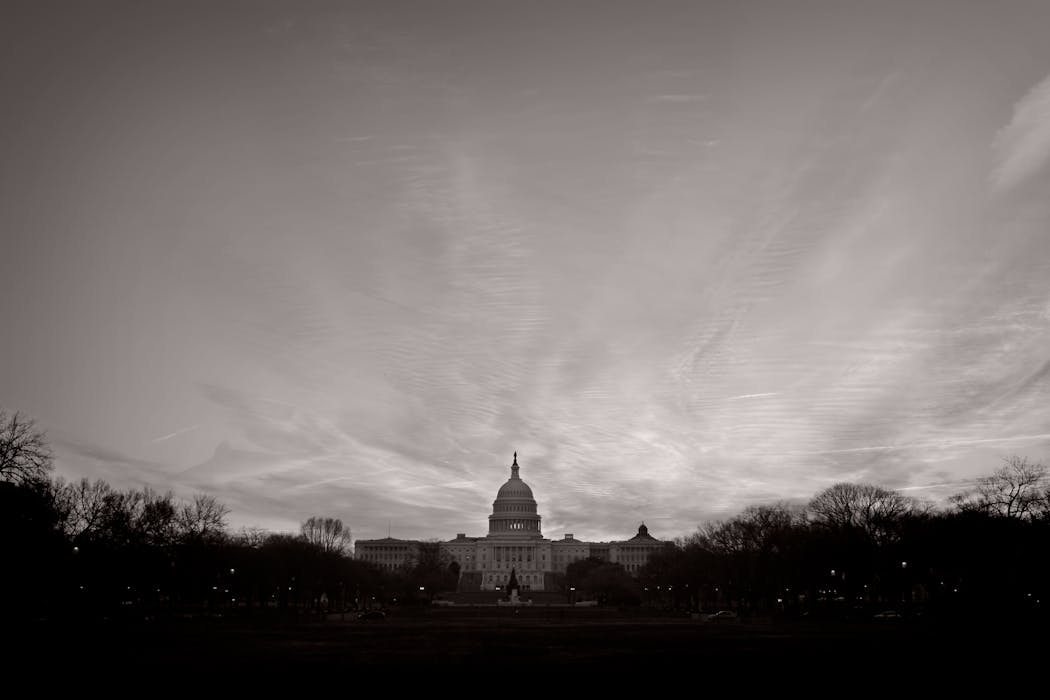
Many Americans will be voting on Election Day – or have already cast votes – in races for statewide office, local positions and on ballot initiatives with major implications for democracy.
Congress is not on the ballot this November, but it will be in the 2026 midterms. A year from now, Americans in every state and district will get to vote for whom they want representing their interests in Washington.
But right now, Congress isn’t giving the American people much to go on.
As the shutdown of the federal government passes the one-month mark, the U.S. House of Representatives has been in recess for over 40 days. That’s the longest it’s ever stayed out of town outside of its typical summer recesses or the weeks leading up to their own elections.
Notably, the shutdown does not mean that Congress can’t meet. In fact, it must meet to end the shutdown legislatively. The Senate, for example, has taken votes recently on judicial nominations, a major defense authorization bill and a resolution on tariff policy.
Senators have also continued to hold bipartisan behind-the-scenes negotiations to end the shutdown impasse.
But with dwindling SNAP benefits, skyrocketing health care premiums and other major shutdown impacts beginning to set in, the House has all but abdicated its position as “The People’s Chamber.”
In addition to not meeting for any votes, Speaker of the House Mike Johnson has refused to swear in Democratic U.S. Rep.-elect Adelita Grijalva of Arizona. Despite Johnson’s assurances, the shutdown does not prevent the House from meeting in a brief session to swear in Grijalva as a member for Arizona’s 7th District, which has been without representation since March.
Along with Casey Burgat and SoRelle Wyckoff Gaynor, I am co-author of a textbook, “Congress Explained: Representation and Lawmaking in the First Branch.” In that book, it was important to us to highlight Congress’ clear role as the preeminent lawmaking body in the federal government.
But throughout the shutdown battle, Congress – particularly the House of Representatives – has been unwilling to assert itself as an equal branch of government. Beyond policymaking, Congress has been content to hand over many of its core constitutional powers to the executive branch. As a Congress expert who loves the institution and profoundly respects its constitutionally mandated role, I have found this renunciation of responsibility difficult to watch.
And yet, Congress’ path to irrelevance as a body of government did not begin during the shutdown, or even in January 2025.
It is the result of decades of erosion that created a political culture in which Congress, the first branch of government listed in the Constitution, is relegated to second-class status.

The 18th-century framers of the Constitution viewed Congress as the foundation of republican governance, deliberately placing it first in Article 1 to underscore its primacy. Congress was assigned the pivotal tasks of lawmaking and budgeting because controlling government finances was seen as essential to limiting executive power and preventing abuses that the framers associated with monarchy.
Alternatively, a weak legislature and an imperial executive were precisely what many of the founders feared. With legislative authority in the hands of Congress, power would at least be decentralized among a wide variety of elected leaders from different parts of the country, each of whom would jealously guard their own local interests.
But Trump’s first 100 days turned the founders’ original vision on its head, leaving the “first branch” to play second fiddle.
Like most recent presidents, Trump came in with his party in control of the presidency, the House and the Senate. Yet despite the lawmaking power that this governing trifecta can bring, the Republican majorities in Congress have mostly been irrelevant to Trump’s agenda.
Instead, Congress has relied on Trump and the executive branch to make changes to federal policy and in many cases to reshape the federal government completely.
Trump has signed more than 210 executive orders, a pace faster than any president since Franklin D. Roosevelt. The Republican Congress has shown little interest in pushing back on any of them. Trump has also aggressively reorganized, defunded or simply deleted entire agencies, such as the U.S. Agency for International Development and the Consumer Financial Protection Bureau.
These actions have been carried out even though Congress has a clear constitutional authority over the executive branch’s budget. And during the shutdown, Congress has shown little to no interest in reasserting its “power of the purse,” content instead to let the president decide which individuals and agencies receive funding, regardless of what Congress has prescribed.
There’s no one culprit but instead a collection of factors that have provided the ineffectual Congress of today.
One overriding factor is a process that has unfolded over the past 50 or more years called political nationalization. American politics have become increasingly centered on national issues, parties and figures rather than more local concerns or individuals.
This shift has elevated the importance of the president as the symbolic and practical leader of a national party agenda. Simultaneously, it weakens the role of individual members of Congress, who are now more likely to toe the party line than represent local interests.

As a result, voters focus more on presidential elections and less on congressional ones, granting the president greater influence and diminishing Congress’ independent authority.
The more Congress polarizes among its members on a party-line basis, the less the public is likely to trust the legitimacy of its opposition to a president. Instead, congressional pushback − sometimes as extreme as impeachment − can thus be written off not as principled or substantive but as partisan or politically motivated to a greater extent than ever before.
Congress has also been complicit in giving away its own power. Especially when dealing with a polarized Congress, presidents increasingly steer the ship in budget negotiations, which can lead to more local priorities – the ones Congress is supposed to represent – being ignored.
But rather than Congress staking out positions for itself, as it often did through the turn of the 21st century, political science research has shown that presidential positions on domestic policy increasingly dictate – and polarize – Congress’ own positions on policy that hasn’t traditionally been divisive, such as funding support for NASA. Congress’ positions on procedural issues, such as raising the debt ceiling or eliminating the filibuster, also increasingly depend not on bedrock principles but on who occupies the White House.
In the realm of foreign policy, Congress has all but abandoned its constitutional power to declare war, settling instead for “authorizations” of military force that the president wants to assert. These give the commander in chief wide latitude over war powers, and both Democratic and Republican presidents have been happy to retain that power. They have used these congressional approvals to engage in extended conflicts such as the Gulf War in the early 1990s and the wars in Iraq and Afghanistan a decade later.
Americans lose a lot when Congress hands over such drastic power to the executive branch.
When individual members of Congress from across the country take a back seat, their districts’ distinctly local problems are less likely to be addressed with the power and resources that Congress can bring to an issue. Important local perspectives on national issues fail to be represented in Congress.
Even members of the same political party represent districts with vastly different economies, demographics and geography. Members are supposed to keep this in mind when legislating on these issues, but presidential control over the process makes that difficult or even impossible.
Maybe more importantly, a weak Congress paired with what historian Arthur Schlesinger called the “Imperial Presidency” is a recipe for an unaccountable president, running wild without the constitutionally provided oversight and checks on power that the founders provided to the people through their representation by the first branch of government.
This is an updated version of a story that first published on May 15, 2025.

Charlie Hunt does not work for, consult, own shares in or receive funding from any company or organization that would benefit from this article, and has disclosed no relevant affiliations beyond their academic appointment.
Politics + Society – The Conversation
Reading Time: 3 minutes
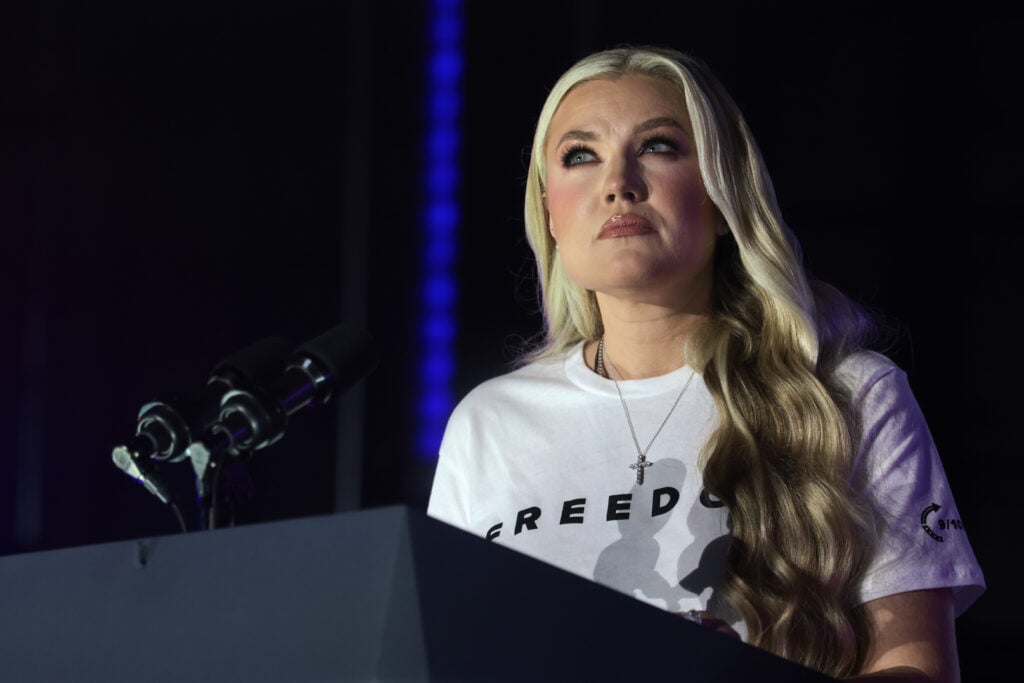
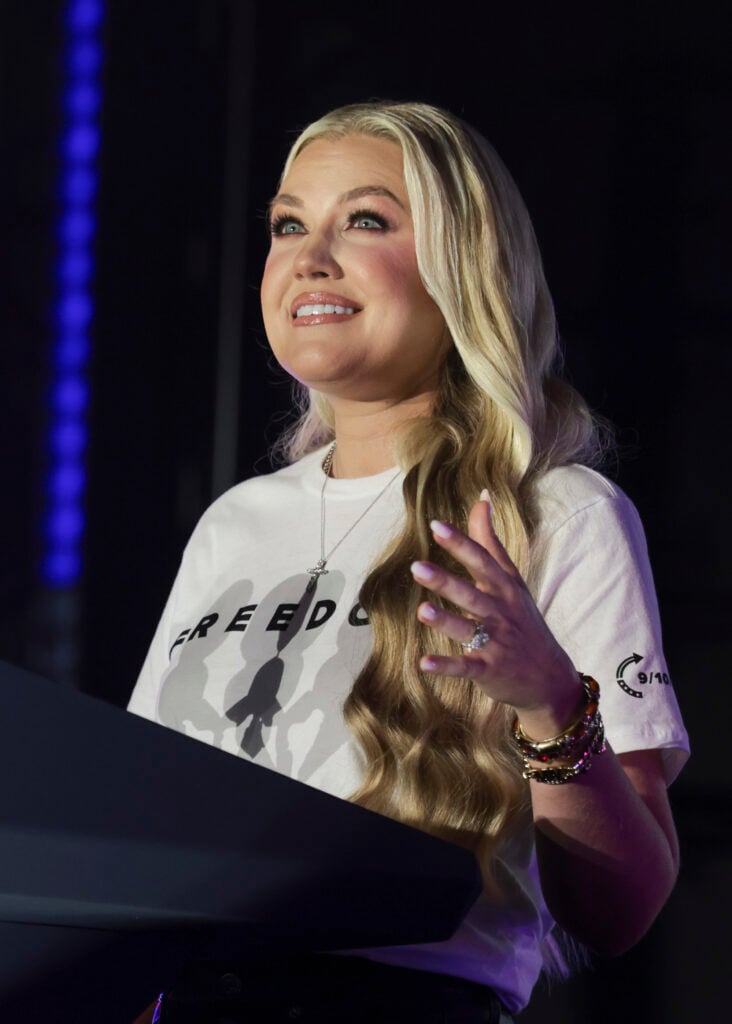
On Thursday night, Erika Kirk addressed a crowd of students at the University of Mississippi.
Before bringing Vice President J.D. Vance onto the stage, the Turning Point USA CEO opened up about her feelings seven weeks after the murder of her husband, Charlie Kirk.
“You guys have no idea how helpful it is to have all of you in my life … you make me feel even more connected to my husband,” Erika told the crowd at one point, adding:
“He didn’t leave us empty-handed. He built a machine. And all of you are a part of that.”
After a speech of nearly an hour, Kirk introduced Vance. And her comments about the vice president have received a fair amount of criticism.
“When our team asked my dear friend, Vice President JD Vance, to speak today, I really prayed on it because, obviously, it’s a very emotional, emotional day,” Kirk said.
“But I could just hear Charlie in my heart. I could just hear him say, ‘Go reclaim that territory, babe.’ The battle’s already won. God’s love conquers. And that’s why I’m here today.’”
Kirk went on to say that while no one could “replace” her husband, she saw important “similarities” between Charlie and Vance.
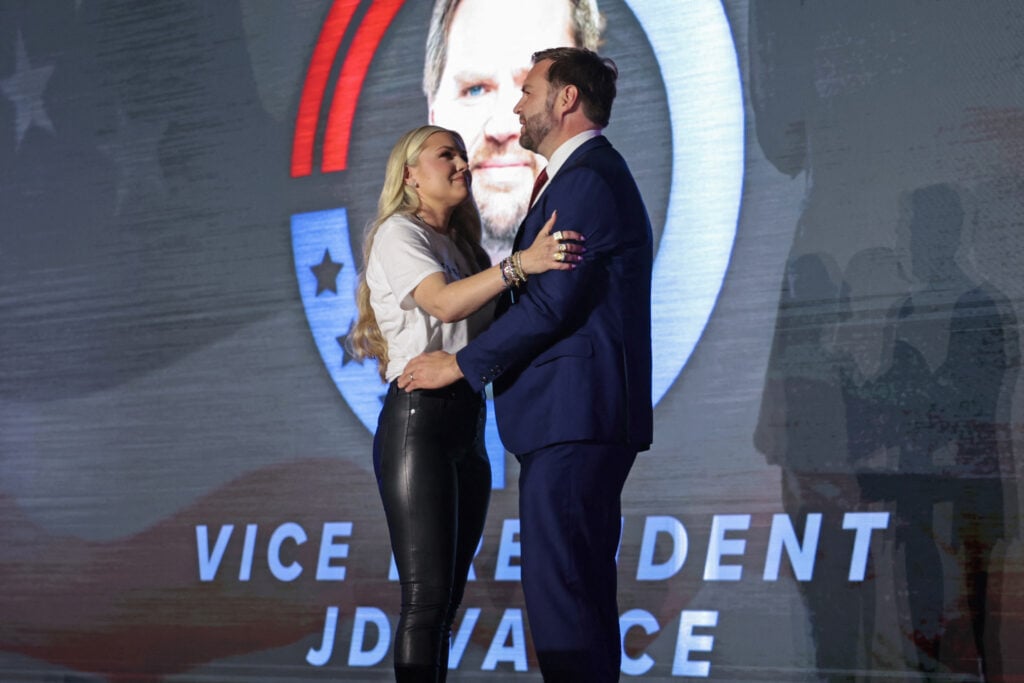
For his part, Vance praised Kirk for his political ability, noting that the podcast host urged the Trump administration not to strike nuclear sites in Iran.
Trump did so, but Vance claims that Charlie was pleased when the plan worked out.
“I really believe that one of the reasons why the president of the United States knocked out the Iranian nuclear facilities, but never got the United States into a protracted military conflict and never lost a single American in a Middle Eastern conflict is because we had the wisdom and the good sense to recognize that the American people are done with American troops dying in unnecessary foreign conflicts … but Charlie Kirk reminded me of that,” Vance said.
The crowd responded with chants of “48,” a clear endorsement of Vance as Donald Trump’s successor in the White House.
There was a wide variety of criticism of the Kirk-Vance event, with some arguing that it’s inappropriate for Erika to compare her late husband to another man, and others complaining about the continued politicization of Charlie Kirk’s death from those who seek to gain office.
“Publicly simping over another man one month after husband’s murder. The American values MAGA wants to preserve,” wrote one X user.
“This is sick… it’s been barely a month since Charlie passed,” another tweeted, alongside a photo of Kirk and Vance embracing on stage.
“Starting with ‘no one can ever replace my husband… but JD Vance’ is a very deliberate choice,” a third chimed in.
“No one will ever replace her husband, though she seems to be giving it a solid try,” a fourth remarked.
Neither Vance nor Kirk has publicly responded to the criticism of their onstage interaction.
Erika Kirk Criticized For Comparing J.D. Vance to Charlie Kirk Just Weeks After … was originally published on The Hollywood Gossip.
The Hollywood Gossip
Reading Time: 4 minutes
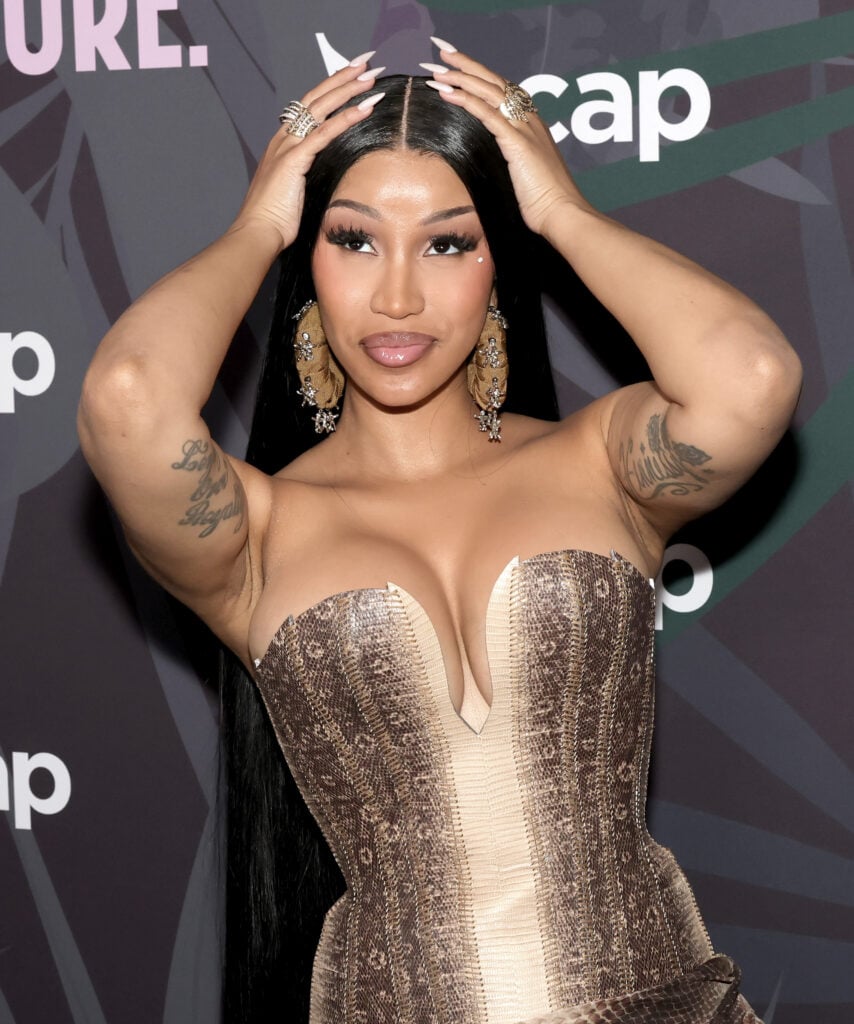
Cardi B has something to confess.
The pregnant rapper is opening up about personal hygiene after a considerable lapse.
Usually, the mess is confined to Cardi’s personal life and her epic celebrity feuds.
But, after months without washing, it’s her hair that’s currently in a sorry state. Cardi’s sharing her plans to fix things up.
During a recent Instagram livestream, Cardi B opened up about her hair hygiene.
She revealed to fans and followers that she has not washed her hair in months.
Specifically, Cardi shared that she has not “washed my s–t” in around two or three months.
She has plans, however, to oil her scalp and then to wash and braid her hair in the coming days.
As for her hair’s current state, Cardi doesn’t paint a positive picture.
Cardi B hops on instagram live and states that she hasn’t washed her hair in 3 months causing her to have roach and mosquito eggs all throughout her head. I expect nothing less from a dirty bitch from the Bronx. It’s so on brand for her. pic.twitter.com/U0fjBI55pH
— On BS (@skinlooklikesoy) October 29, 2025
“I probably got all types of roach eggs, mosquito eggs, everything in this,” Cardi suggested.
Just for the record, mosquito larvae develop and thrive in standing water, such as a puddle or birdbath, not on the human scalp.
We are less familiar with roach eggs, but we looked it up. Roaches lay eggs within a protective sac and may leave them in crevices around a household.
Even if Cardi’s home has roaches, which is possible but feels unlikely, they would not seek her hair as a nesting ground.
However, the statement was likely a reference to how her scalp feels at present. In the livestream, as you can see, she was wearing a wig cap.
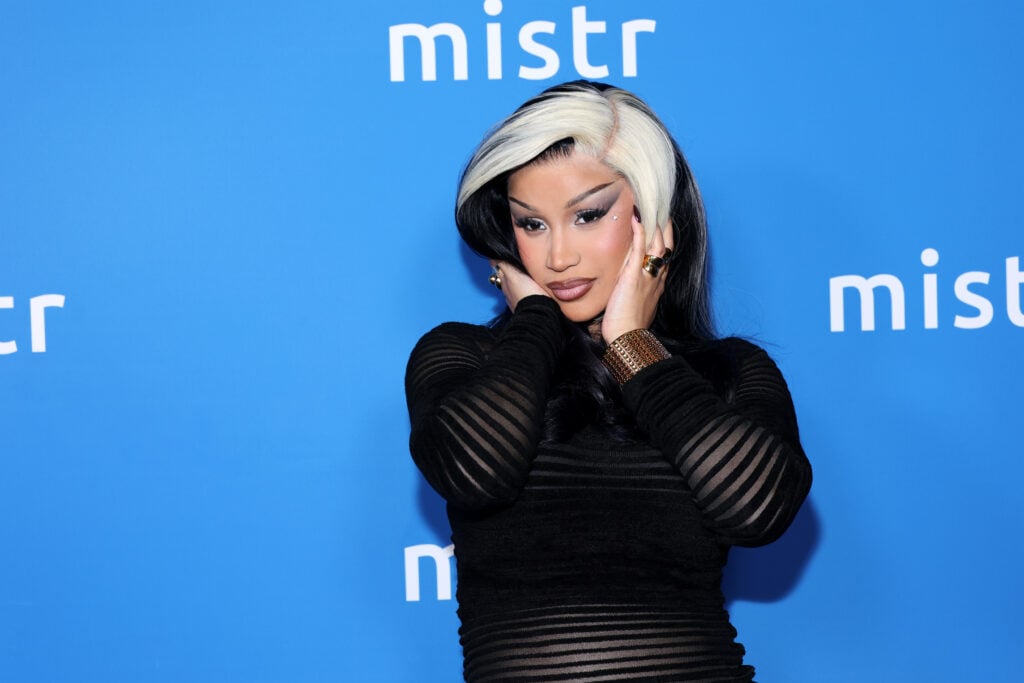
Many people of color, and especially Black women, find that their hair seems to be singled out due to our culture’s white supremacist beauty standards.
Cardi B, who has lineage from both Trinidad and the Dominican Republic, is very well aware. And she has spoken about the politics of her hair before.
“I been posting pics of my hair journey for years and being mixed don’t mean your hair is always long and curly, that wasn’t my case,” she emphasized back in 2021.
“I want women of color with tighter curl patterns to know that you don’t have ‘bad hair,’” she affirmed.
Cardi correctly continued: “There’s no such thing as bad hair, and ‘good’ hair don’t mean a certain texture. All hair is good.”
Like many celebrities, Cardi often appears in public while wearing a wig.
This past summer, her wigs made headlines because she was the defendant in a lawsuit.
(In fact, we strongly recommend that you watch comedian Josh Johnson’s stand-up about her trial — particularly when it comes to her interactions with opposing counsel)
Simply put, Cardi did not merely wear a wig to her trial. She wore different wigs each day, ranging from a black pixie cut to a curled blonde hairstyle.
The rapper changed her hair like she changed her outfits. She even cracked jokes about it to reporters after the fact.

Mental health, poverty, natural disasters, and more can cause people to go without basic hygiene upkeep in part or all of their body for unthinkable periods of time.
In some cases, the consequences can be dire and long-term.
However, Cardi B has the determination and the means to remedy what is probably a pretty unpleasant scalp situation. We’re sure that she’ll manage a full recovery.
As we mentioned, Cardi was at the center of a lawsuit just a couple of months ago. She has also been under stress due to the chaos of her personal life. Oh, and she’s pregnant.
Any of these factors could make someone struggle to address a key part of their daily upkeep, including hair and scalp hygiene. Removing the stigma from lapses like these can help people to more easily recover from them.
Cardi B Confesses Major Hygiene Lapse, Shares Plans to Fix It was originally published on The Hollywood Gossip.
The Hollywood Gossip