Denmark is regularly ranked as one of the happiest countries in the world – with a cosy international reputation as the home of hygge and Lego, the idealistic fictional prime minister Birgitte Nyborg in Borgen and the woolly jumpers of TV detective Sarah Lund. The Latest News from the UK and Around the World | Sky News
The King is leading the nation in a two-minute silence during a Remembrance Sunday service at the Cenotaph.The Latest News from the UK and Around the World | Sky News
In response, Arizona Attorney General Kris Mayes filed a lawsuit on Oct. 21 alleging that Johnson has denied the state its representation in Congress.
No one disputes that Grijalva is the next member of the House of Representatives for the 7th District of Arizona. And the House hasn’t conducted business since Sept. 19, when Johnson gaveled it out of session.
So why does it matter whether Grijalva is sworn in now or later?
But as a law scholar who analyzes government institutions, I recognize that the speaker historically has had power to determine when the oath is administered. And courts have been reluctant to weigh in the speaker’s use of that power.
Congress put the speaker of the House in charge of administering the oath to incoming House members and first specified its text in 1789. The Oath Act required members of Congress to “solemnly swear or affirm” support of the Constitution.
Historically, the speaker administered the oath to new House members state by state. This meant that each state’s newly elected representatives stood alone in front of Congress. However, in 1929, House Speaker Nicolas Longworth changed tradition so that all new members were sworn in at the same time.
Representative-elect Adelita Grijalva, D-Ariz., speaks at the Capitol in Washington on Oct. 15, 2025. AP Photo/J. Scott Applewhite
Longworth did so after Oscar DePriest – the first African American to serve in Congress in the 20th century – won an election in Illinois to replace Rep. Martin B. Madden, who had died of a heart attack. Longworth acted in response to speculation that Southern Democrats would attempt to prevent a Black lawmaker from joining the House. Rather than swearing in members state by state, Longworth swore in all members at once so DePriest was not stopped from taking the oath of office.
Since that time, the speaker has administered the oath of office to all newly elected members of the House as a collective unit.
Here’s how this has worked over the past few decades:
After the House elects a speaker, the member with the longest continuous service in the House – called the dean of the House – administers the oath to the speaker. Then the speaker administers the oath to the rest of the members all together as a mark of a new Congress.
The idea is that despite partisan differences, every legislator commits in front of the others to uphold the Constitution.
But occasionally, either because of illness, a special election or other circumstances, a newly elected member of Congress can’t take the oath with everyone else. When that happens, that person is sworn in at a later date.
On Sept. 9, 2025, for example, Democrat James Walkinshaw won a special election to succeed the late Gerry Connolly, who died in office while representing Virginia’s 11th congressional district. Johnson swore Walkinshaw in the next day.
While the speaker has the responsibility for administering the oath, the House may adopt a resolution to designate a judge or House member selected by the speaker to do the job for him.
In 1999, for example, Speaker Dennis Hastert designated retired California Judge Ellen Sickles James to administer the oath to Rep.-elect George Miller.
Regardless of who swears into office a member of Congress who could not attend the collective ceremony, the administration of the oath has traditionally occurred on days in which the House is session. But it does not have to be that way.
The law is ambiguous on when the oath is administered.
And House speakers have not always acted swiftly. In spring 2021, for instance, Speaker of the House Nancy Pelosi waited 25 days before administering the oath to Republican Rep.-elect Julia Letlow. That’s because the House did not have a session scheduled immediately following Letlow’s election.
Johnson has referred to this particular delay as the “Pelosi precedent,” setting a standard practice of the speaker waiting to administer the oath until Congress is in session.
Rep.-elect Adelita Grijalva greets supporters on Nov. 1, 2025, in Tucson, Ariz. Rebecca Noble/Getty Images
While Grijalva waits, she does not have access to the resources typically provided to members of the House to help them perform their jobs, including an operating budget for her offices or even the ability to log in to key databases.
Grijalva, Arizona Attorney General Mayes and congressional Democrats accuse the speaker of playing politics. But history and the law suggest that may be Johnson’s prerogative until the government reopens.
Jennifer Selin does not work for, consult, own shares in or receive funding from any company or organization that would benefit from this article, and has disclosed no relevant affiliations beyond their academic appointment.
The headlines documenting President Donald Trump’s plan to send federal troops to San Francisco followed a familiar arc. “Trump claims ‘unquestioned power’ in vow to send troops to San Francisco,” The Guardian reported on Oct. 20, 2025. The next day, the San Francisco Chronicle blared: “S.F. threatens to sue if Trump brings in National Guard.” Then, on Oct. 23, “Trump reverses his decision to send troops to San Francisco,” as ABC News put it, after Trump posted that conversations with the city’s mayor and tech moguls had swayed him.
This barrage of information may seem like overcommunication from a hyperactive administration. But it is much more than that.
Scholars have found that the constant, often conflicting and at times false information coming out of the White House and shared via social media posts and the conventional news media causes members of the public to see truth and fact as relative and makes them more likely to dismiss those who disagree with them as untruthful. This leaves doubt about what’s real and what isn’t.
This citizen paralysis creates what philosopher Hannah Arendt described in “The Origins of Totalitarianism” as a general public “for whom the distinction between fact and fiction … no longer exist.” When lies are truth and truth is derided as lies, Arendt wrote, ordinary people lose their bearings and can be manipulated for totalitarian objectives.
I am a longtime journalist and now scholar of journalism and race, trained to see the methods and aims behind political leaders’ press operations. And as I show in my forthcoming book, the Trump administration’s rhetorical strategies echo the playbooks of authoritarian and white supremacist organizations such as the Third Reich and some factions of the modern alt-right movement. They are intended to narrow the scope of who belongs as an American.
This strategy was laid out by Steve Bannon, an influential Trump supporter and strategist in his first administration, during a 2019 PBS “Frontline” interview, when he described the media as “the opposition party.”
“They’re dumb and they’re lazy, they can only focus on one thing at a time,” he said. “All we have to do is flood the zone. … Bang, bang, bang. These guys will never – will never be able to recover. But we’ve got to start with muzzle velocity.”
Steve Bannon outlined the strategy of overwhelming people with announcements at what he termed muzzle velocity in a 2019 interview with “Frontline.”
Emergency workers help people after a car drove into a large group of counterprotesters in the aftermath of a white nationalist rally in Charlottesville, Va., on Aug. 12, 2017, killing one and injuring 19. AP Photo/Steve Helber
With the focus on Trump’s comments and what he might have really meant, the news media ultimately missedcovering at the time the long-term threat posed by these white supremacist and other extremist groups.
Echoing a playbook from the past
Scholars have identified the fascist roots of these “post-truth” strategies: strongmen leaders uninterested in establishing leadership through honesty and transparency.
A recent scholarly analysis of Trump’s leadership concludes that the second-term president is overwhelming the public into “organized despair” by pitting races against each other while targeting minority groups as scapegoats, a tactic that hearkens back to 1930s Germany.
Researchers of Nazi propaganda identified key tactics in the German press such as name-calling and lumping together groups seen as opposition – communists, liberals and Jews – until public understanding of those groups blur into phrases like “enemies of Germany.” The messaging was constant and immersive, carried in local and national newspapers, radio, film and posters.
A key part of Trump’s rhetorical strategy is using race without directly referring to it. For example, Trump has described cities with large nonwhite populations such as Washington, D.C., and Chicago as “out of control” or “dirty,” contrary to actual crime statistics. He’s also questioned Kamala Harris’ racial identity, suggesting she “happened to turn Black.” And referring to Black football players who had been protesting systemic racism by kneeling during the national anthem, Trump said, “Get that son of a bitch off the field right now,” which many observers interpreted as racist because he was insulting people of color for the act of protesting racism.
This racial coding has been used by white supremacist groups to mask their true intent. They also use less overt labels such as “alt-right” or “pro-white” as a “rhetorical bridge” to the mainstream public.
In the case of the NFL protesters, the plausible deniability became an actual denial. Trump perfected this move when, during a 2020 debate with Joe Biden, he said, “Proud Boys – stand back and stand by,” referencing another group accused of thinly veiled racism.
Drowning in headlines
I believe that the endgame for this strategy is authoritarian power that greatly narrows the scope of who truly belongs and has rights in this country as an American.
But the media-consuming public can use the tools they have to encourage news outlets to better inform the public by identifying the media saturation strategy and reporting on why leaders are using it.
Otherwise, if news consumers let the headline overload do what it’s intended to do, and become overwhelmed and paralyzed, they become pawns in what I consider a ploy to make America less egalitarian and less democratic.
Angie Chuang is affiliated with the Association for Education in Journalism and Mass Communication and the Boulder Faculty Assembly.
In communities across Pennsylvania, local officials are deciding how to spend over US$2 billion dollars from the state’s opioid settlement agreements.
For many, the task is proving promising yet challenging – and raises questions about how to best navigate complex local needs.
Pennsylvania will receive the money over 18 years from lawsuits filed by state attorneys general against opioid manufacturers and distributors. About 70% of these funds will be distributed to county governments, with the remaining funds going to the state legislature and the groups that leveraged the lawsuits.
The amount provided to each county is proportional to the opioid-related harms experienced by the county. Each county government is responsible for developing its own funding strategy for substance use programs, which can focus on things such as prevention, treatment, recovery or harm reduction.
Our research team at Penn State interviewed 72 county officials, health professionals and service providers across six counties in Pennsylvania to understand their early experiences with these funds.
We summarized our findings in a recent article for the peer-reviewed Substance Abuse Treatment, Prevention, and Policy journal. We found that stakeholders view the settlement funds not simply as extra money but as an opportunity to heal – and to test how well local communities can make their own choices about spending.
‘Bags of money’ but limited guidance
Pennsylvania’s distribution strategy was designed to give local governments flexibility. A document called Exhibit E lists the ways that counties can spend the settlement money.
This collaborative document was written as part of the settlement to outline shared guidelines that apply to all the states receiving funds. It lists everything from the types of approved substance use treatments to what qualifies as prevention. In practice, Exhibit E provides diverse opportunities for spending but has also created widespread uncertainty among recipients about which strategies to prioritize.
Some interviewees felt overwhelmed by the logistics of their funding decisions. They understood that the general purpose of the money is to support communities harmed by opioid overprescription. But they lacked clarity on how much time they had to spend it, what the reporting requirements are, and what counts as an eligible activity. For example, some wanted to use the funds to pay administrators for new prevention programs, but administration isn’t included in Exhibit E.
As one local elected official in southeastern Pennsylvania put it, “There’s been a whole lot of stuff that we don’t know – more than we do know. And now we’re running with bags of money through the community and (we’re) not sure how we can spend it, or if we can spend it.”
Many county officials worried about spending the funds too slowly, or on activities that could end up being ineligible or ineffective. Service providers sometimes didn’t know who in their county had the authority to decide where the money went. While they may have wanted to provide recommendations or input, they were unsure how.
A chance to experiment and innovate
Even amid confusion, most of the people we interviewed saw the settlement funding as a unique opportunity.
Exhibit E’s broad guidelines allow for experimentation, and many expressed interest in supporting local needs and implementing projects that they had wanted for a long time. This included things like expanding peer recovery support programs or establishing family support services.
“The guidelines are so varied that it gives those local communities opportunities to look at the menu and find out from community members, ‘How can we help resolve this problem together?’” one local drug and alcohol department employee told us. “It’s a collaborative that really helps the community as a whole get well as a whole. I am a real believer in ‘It takes a village.’”
Several participants emphasized that the flexibility in Exhibit E creates room to revise plans as needs evolve or change. Counties can change their funding priorities each year to adapt.
Several counties have already started issuing small grants to grassroots organizations, recognizing that those closest to people harmed by the opioid crisis often know best what kinds of interventions might work.
One county employee involved in distributing funds in her county shared that her team was “willing to try anything, really, within the bounds.”
“And if it doesn’t work, we can back off,” she added. “But I feel like you don’t know until you try it.”
A moral responsibility to get it right
Although our study focused on policy implementation, participants often framed their responsibilities in moral terms.
Many said they felt a strong obligation to use the funds wisely, given the scale of loss their communities have endured. The Pennsylvania Department of Health reported 4,719 overdose deaths in the state in 2023, and 83% were opioid-related. That number dropped to 3,336 in 2024, mirroring national trends.
One elected official described the funds as “the only hope we can provide families that have lost loved ones to this crisis,” emphasizing that he felt a “real obligation” to make the funds count.
Others echoed that careful, transparent decision-making is part of a broader recovery effort. Beyond abiding by funding guidelines, they felt it was also important to be honest and transparent to community members.
“We don’t want to come out with ‘Pennsylvania wasted its money, or (this) county wasted its money,’” said an addictions researcher.
Still others cautioned that the settlement funds alone cannot repair the full scope of harms caused by the opioid crisis, warning against viewing the settlements as a cure-all.
“There’s not really a monetary value that you can put on these things,” a person who works in the substance use sector told us. “I’m glad that this money’s available, but ultimately for me … it’s a little too late. You know? All my friends are already dead.”
Glenn Sterner receives funding from the Pennsylvania Opioid Misuse and Addiction Abatement Trust, Pennsylvania Department of Drug and Alcohol Programs, Pennsylvania Department of Health, Independence Blue Cross Foundation, Montgomery County Government in Pennsylvania, the Substance Abuse and Mental Health Services Administration, National Institute of Justice, and National Science Foundation.
Brian King, Halie Kampman, Kristina P. Brant, and Maya Weinberg do not work for, consult, own shares in or receive funding from any company or organization that would benefit from this article, and have disclosed no relevant affiliations beyond their academic appointment.
When most people think about immigration enforcement, they picture border crossings and airport checkpoints. But the new front line may be your social media feed.
U.S. Immigration and Customs Enforcement has published a request for information for private-sector contractors to launch a round-the-clock social media monitoring program. The request states that private contractors will be paid to comb through “Facebook, Google+, LinkedIn, Pinterest, Tumblr, Instagram, VK, Flickr, Myspace, X (formerly Twitter), TikTok, Reddit, WhatsApp, YouTube, etc.,” turning public posts into enforcement leads that feed directly into ICE’s databases.
The request for information reads like something out of a cyber thriller: dozens of analysts working in shifts, strict deadlines measured in minutes, a tiered system of prioritizing high-risk individuals, and the latest software keeping constant watch.
I am a researcher who studies the intersection of data governance, digital technologies and the U.S. federal government. I believe that the ICE request for information also signals a concerning if logical next step in a longer trend, one that moves the U.S. border from the physical world into the digital.
The Customs and Border Protection agency also searches social media posts on the devices of some travelers at ports of entry, and the U.S. State Department reviews social media posts when foreigners seek visas to enter the United States.
ICE and other federal law enforcement agencies already search social media.
What would change isn’t only the scale of monitoring but its structure. Instead of government agents gathering evidence case by case, ICE is building a public-private surveillance loop that transforms everyday online activity into potential evidence.
Private contractors would be tasked with scraping publicly available data to collecting messages, including posts and other media and data. The contractors would be able to correlate those findings with data in commercial datasets from brokers such as LexisNexis Accurint and Thomson Reuters CLEAR along with government-owned databases. Analysts would be required to produce dossiers for ICE field offices within tight deadlines – sometimes just 30 minutes for a high-priority case.
ICE frames the project as modernization: a way to identify a target’s location by identifying aliases and detecting patterns that traditional methods might miss. Planning documents say contractors cannot create fake profiles and must store all analysis on ICE servers.
ICE is purchasing an AI tool that correlates people’s locations with their social media posts.
Lessons from abroad
The United States isn’t alone in government monitoring of social media. In the United Kingdom, a new police unit tasked with scanning online discussions about immigration and civil unrest has drawn criticism for blurring the line between public safety and political policing.
Around-the-clock surveillance doesn’t just gather information – it also changes behavior.
Research found that visits to Wikipedia articles on terrorism dropped sharply immediately after revelations about the National Security Agency’s global surveillance in June 2013.
For immigrants and activists, the stakes are higher. A post about a protest or a joke can be reinterpreted as “intelligence.” Knowing that federal contractors may be watching in real time encourages self-censorship and discourages civic participation. In this environment, the digital self, an identity composed of biometric markers, algorithmic classifications, risk scores and digital traces, becomes a risk that follows you across platforms and databases.
What’s new and why it matters now
What is genuinely new is the privatization of interpretation. ICE isn’t just collecting more data, it is outsourcing judgment to private contractors. Private analysts, aided by artificial intelligence, are likely to decide what online behavior signals danger and what doesn’t. That decision-making happens rapidly and across large numbers of people, for the most part beyond public oversight.
ICE’s request for information is likely to evolve into a full procurement contract within months, and recent litigation from the League of Women Voters and the Electronic Privacy Information Center against the Department of Homeland Security suggests that the oversight is likely to lag far behind the technology. ICE’s plan to maintain permanent watch floors, open indoor spaces equipped with video and computer monitors, that are staffed 24 hours a day, 365 days a year signals that this likely isn’t a temporary experiment and instead is a new operational norm.
What accountability looks like
Transparency starts with public disclosure of the algorithms and scoring systems ICE uses. Advocacy groups such as the American Civil Liberties Union argue that law enforcement agencies should meet the same warrant standards online that they do in physical spaces. The Brennan Center for Justice and the ACLU argue that there should be independent oversight of surveillance systems for accuracy and bias. And several U.S. senators have introduced legislation to limit bulk purchases from data brokers.
Without checks like these, I believe that the boundary between border control and everyday life is likely to keep dissolving. As the digital border expands, it risks ensnaring anyone whose online presence becomes legible to the system.
Nicole M. Bennett is affiliated with the Center for Refugee Studies at Indiana University.
Last month, the sports world was stunned by news that former New York Jets quarterback Mark Sanchez had been stabbedafter traveling to Indianapolis to cover a Colts game for FS1.
Now, the QB turned broadcaster has been fired by Fox Sports as a result of his legal woes.
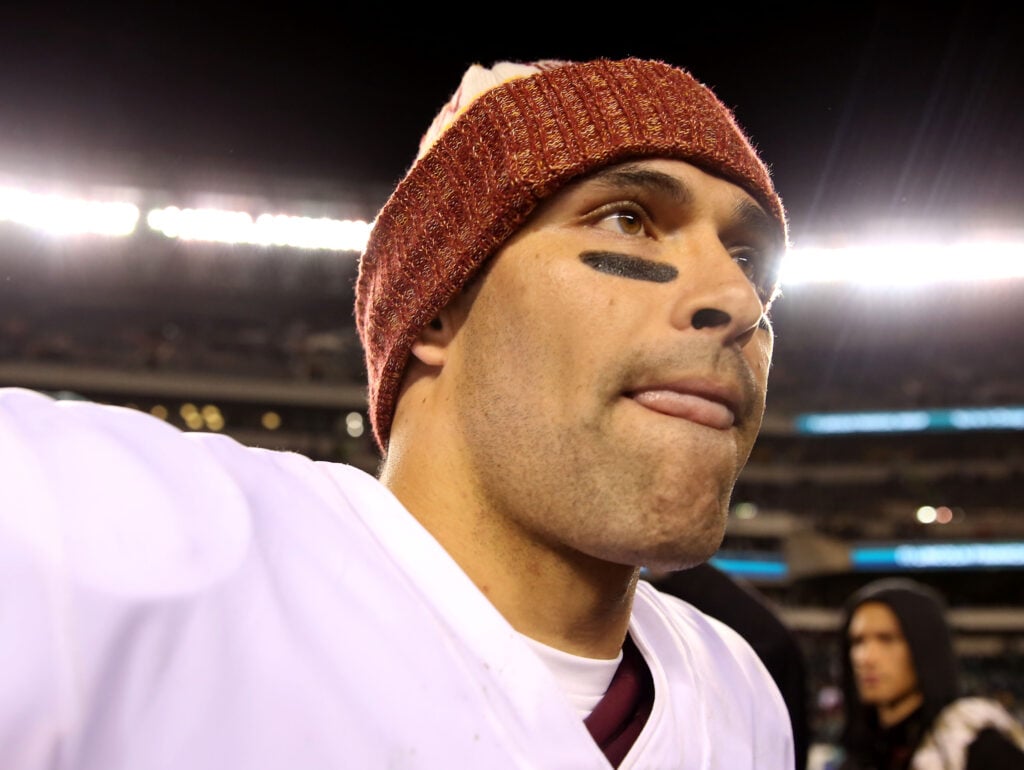
Mark Sanchez #6 of the Washington Redskins walks off the field after the loss to the of the Philadelphia Eagles at Lincoln Financial Field on December 03, 2018 in Philadelphia, Pennsylvania. (Photo by Elsa/Getty Images)
“We can confirm that Mark Sanchez is no longer with the network. There will be no further comment at this time,” a Fox Sports spokesperson said Friday, per ESPN.
The network reports that Fox has hired Super Bowl-winning quarterback Drew Brees (not to kick Sanchez when he’s down, but that’s quite a step up in terms of football expertise).
Sanchez received an outpouring of support when it was first reported that he had been hospitalized.
The tone abruptly changed when it began to look as though an intoxicated Sanchez had assaulted a 69-year-old delivery driver.
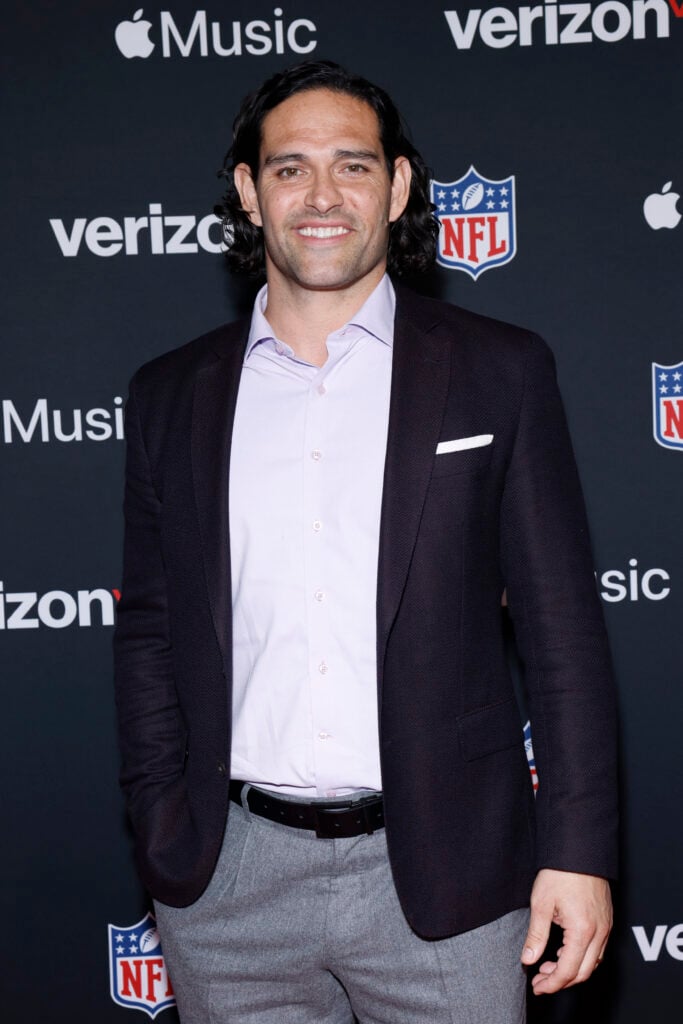
Mark Sanchez attends Verizonâs âRun the Playlist Liveâ at Super Bowl LVIII on February 10, 2024 in Las Vegas, Nevada. (Photo by Jeff Schear/Getty Images for Verizon)
Sanchez was transported directly from the hospital to a nearby jail, where he was charged with felony assault after details of the incident emerged.
Police now believe that the 69-year-old delivery driver who stabbed Sanchez was acting in self-defense.
According to a report from the New York Post, the narrative police pieced together based on witness statements goes something like this:
Sanchez was in Indianapolis as part of the Fox broadcast team for Sunday’s Colts vs. Las Vegas Raiders game.
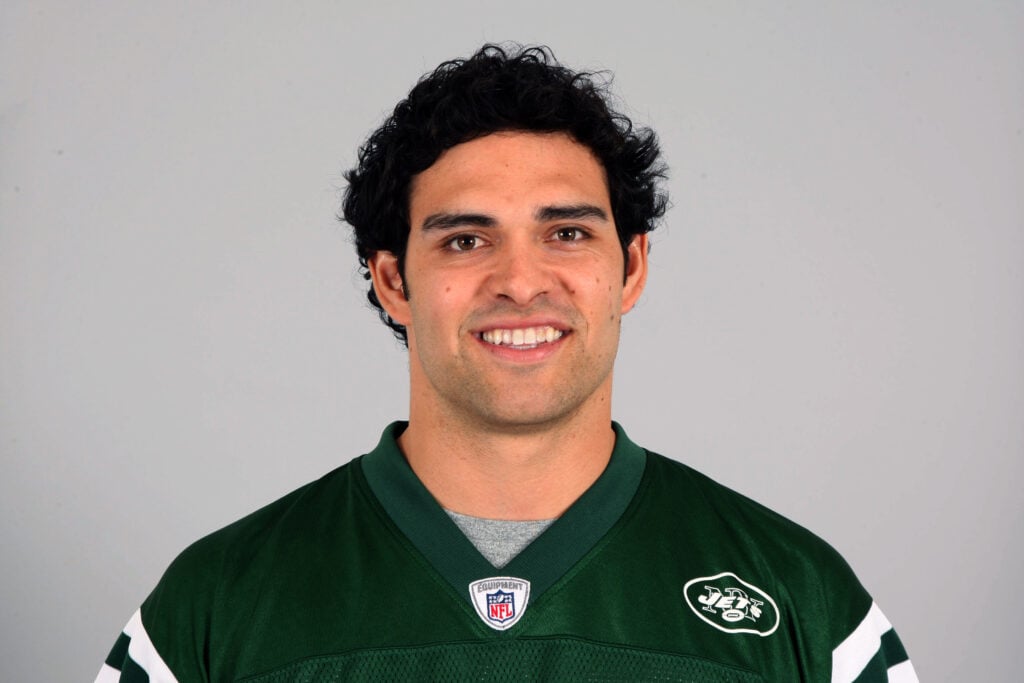
In this handout image provided by the NFL, Mark Sanchez of the New York Jets poses for his NFL headshot circa 2011 in Florham Park, New Jersey. (Photo by NFL via Getty Images)
The 38-year-old was allegedly “running sprints” in an empty hotel parking lot after midnight on Friday night when he became enraged at the delivery driver whose car was blocking his path.
The allegedly intoxicated Sanchez shouted at the driver, who says he had removed his hearing aids and did not hear the verbal abuse.
The driver, whose identity has not been made public, told police that he thought, “This guy is trying to kill me,” before taking out his knife and stabbing Sanchez once.
Sanchez had not yet publicly responded to the news that he’s been let go by Fox.
We will have further updates on this developing story as new information becomes available.
Most people are aware of the clear smear campaign that sprang up out of nowhere in 2024. But the damage is done.
There are still people who disparage Lively after that relatively brief blitz of negative publicity.
She’s totaled up the lingering effect — and says that it has cost $161 million.
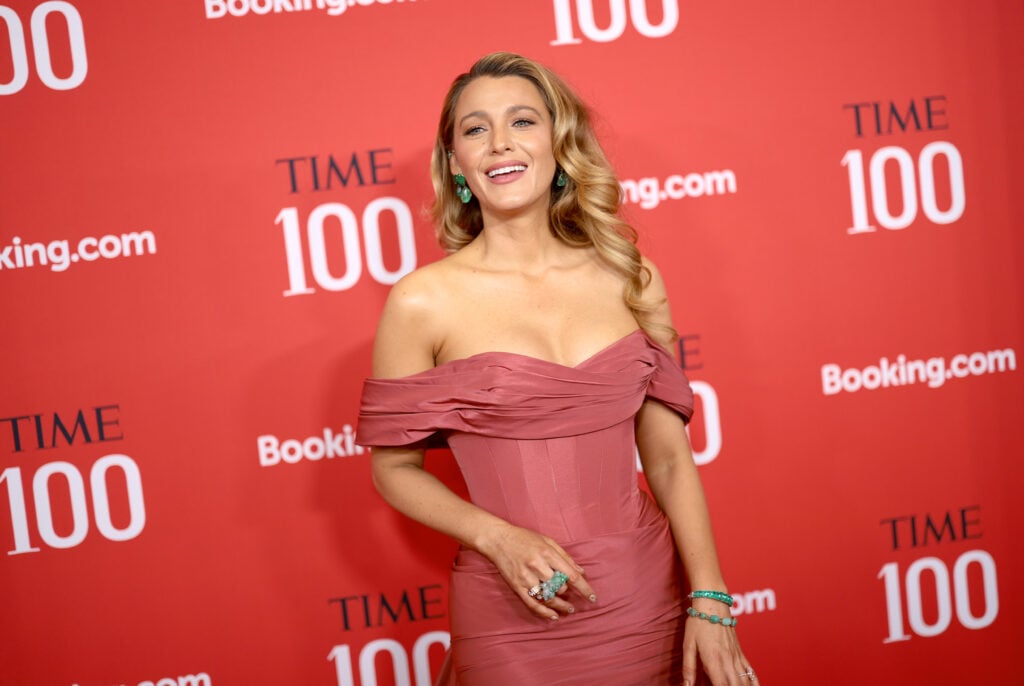
Actress Blake Lively attends the 2025 TIME100 Gala at Jazz at Lincoln Center on April 24, 2025. (Photo Credit: Dimitrios Kambouris/Getty Images for TIME)
Blake Lively’s team has done the math on what Justin Baldoni allegedly owes her
Smear campaigns harm reputations. That is their design.
Lively’s attorneys have totaled up the costs of a smear campaign dragging down her public image amidst the launch of It Ends With Us.
The projected losses include $56.2 million in past and future earnings from acting, producing, speaking engagements, and endorsements.
Then there is $49 million in losses form Blake Brown, her haircare line. That goes hand-in-hand with Lively’s Betty Buzz/Betty Booze beverage company, from which she claims a $22 million loss.
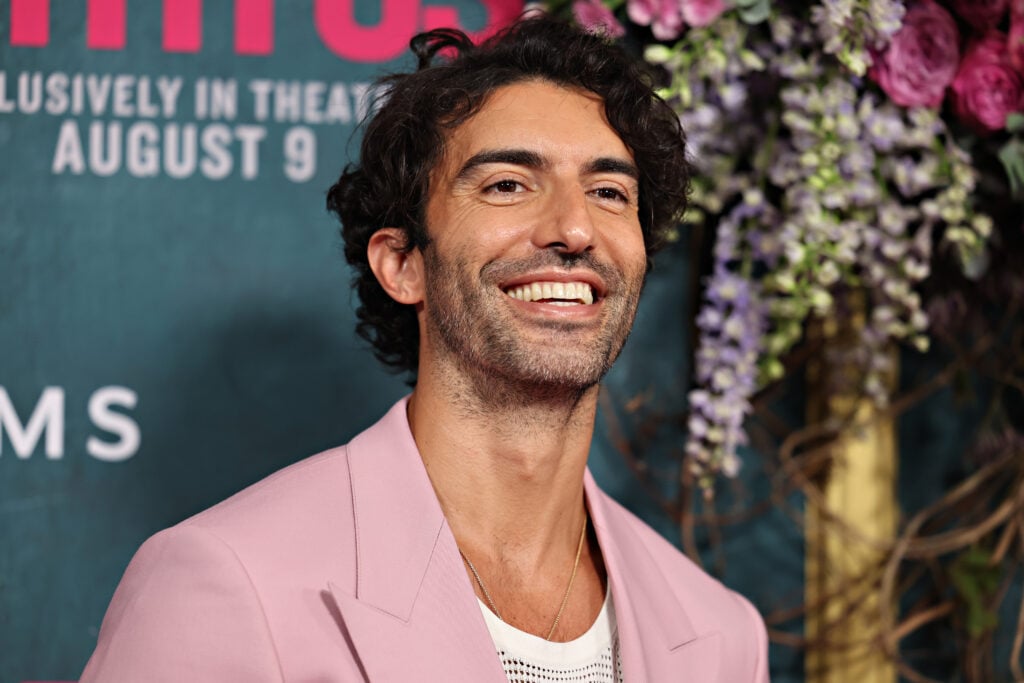
Producer Justin Baldoni attends the “It Ends With Us” New York Premiere at AMC Lincoln Square Theater on August 06, 2024 in New York City. attends the “It Ends With Us” New York Premiere at AMC Lincoln Square Theater on August 06, 2024. (Photo Credit: Cindy Ord/Getty Images)
Lively’s attorneys say that Lively has also suffered at least $34 million in reputational harm.
That totals up to about $161.2 million. However, that is not the end of it.
Her legal team is seeking at least three times that quantity in punitive damages.
Simply put, punitive damages are supposed to penalize the alleged wrongdoer. Other damages for losses are just supposed to help a victim break even.
In this case, Lively’s team is arguing that Baldoni deliberately sabotaged her public image through this smear campaign. So she wants him to pay up, both to make up for lost funds and as a consequence for allegedly doing this to her in the first place.
Actress Blake Lively attends the 2024 LACMA Art+Film Gala, Presented By Gucci at Los Angeles County Museum of Art on November 02, 2024. (Photo Credit: Matt Winkelmeyer/Getty Images for LACMA)
Team Baldoni has known these figures since this summer
If you’re wondering where these numbers originated, they hail from a disclosure that the defense received in July.
That followed Blake Lively’s lawsuit against Justin Baldoni back in December 2024.
She has accused the director who was also her co-star on It Ends With Us of sexual harassment and generally unprofessional behavior during the making of the film.
Lively is not the only actress to have filed a complaint during production.
She accuses Baldoni of launching this smear campaign against her in order to preemptively silence anything that she had to say.
Director Justin Baldoni attends Nights of the Jack friends and family nights at King Gillette Ranch on October 08, 2022. (Photo Credit: Andrew Toth/Getty Images for Nights Of The Jack)
For some, this strategy appears to have worked.
On social media, some argued that Lively’s complaint about Baldoni only came after the negative publicity erupted out of nowhere, primarily upon the internet’s favorite disinformation engine: TikTok.
That’s not quite true — as she had filed a complaint during filming, while she did not officially report him in a courtroom capacity until months after the film’s release, when the smear campaign damage had been done.
It is important to mention that Baldoni has denied the allegations against him.
The pursuit of these damages is only one prong in the ongoing legal war between Baldoni and Lively.
Actress Blake Lively attends the New York special screening of “Another Simple Favor” at the Jazz at Lincoln Center in New York on April 27, 2025. (Photo Credit: CHARLY TRIBALLEAU/AFP via Getty Images)
This ugly legal war is eating up their lives
Ultimately, the clash between Blake Lively and Justin Baldoni appears to be a defining moment for one of them.
Even if Baldoni is innocent of all allegations and ends up being vindicated in court, there are millions of people who had never heard of him until a little over a year ago.
That means that, for a lot of people, their first impression of him is a man who filed a massive lawsuit against an actress who accused him of misconduct. Some argue that, no matter the truth of the matter, this was a public image mistake.
Ultimately, we won’t know who will — or will not — receive vindication in court until next year.
Lawyers for Sean “Diddy” Combs blamed his crimes on his substance abuse issues, and they claimed in court that their client was clean and sober.
But it turns out that Diddy might not be the teetotaler that he claims to be, as prison guards reportedly caught him drinking homemade alcohol this week.
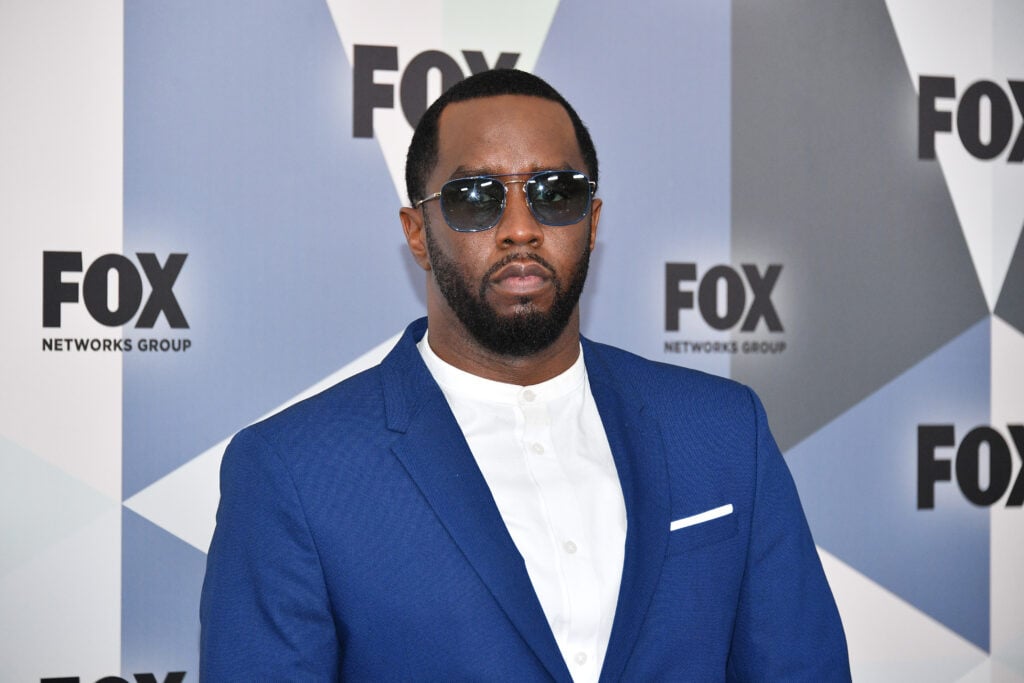
Sean “Diddy” Combs attends the 2018 Fox Network Upfront at Wollman Rink, Central Park on May 14, 2018 in New York City. (Photo by Dia Dipasupil/Getty Images)
Could Diddy wind up serving additional time
Now that he’s been busted for guzzling toilet wine, Diddy might well be forced to serve a bigger chunk of his sentence.
Okay, so it wasn’t actually toilet wine, but a rudimentary booze made of Fanta, sugar, and apples, which takes about two weeks to ferment (according to TMZ).
Probably not as good as the Courvoisier and Dom Perignon, Puff liked to sip in his previous life, but we’re sure it gets the job done.
At the end of the day, it’ll be up to the Board of Prisons if they want to punish Diddy with additional time — but either way, he’s not off to a good start.
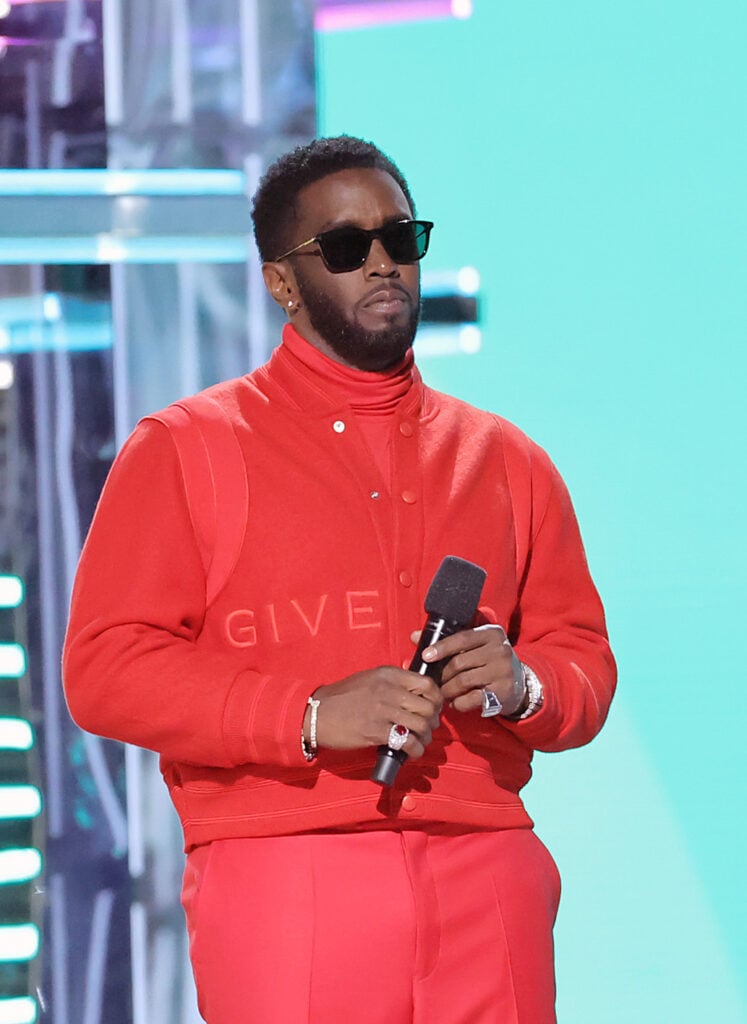
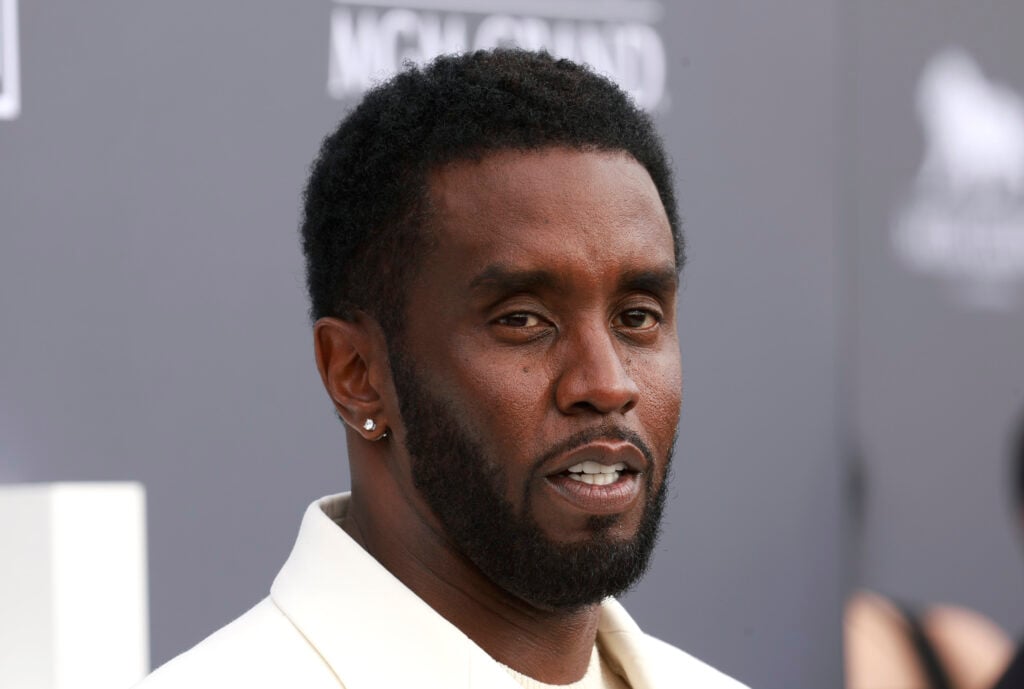
Host Sean ‘Diddy’ Combs speaks onstage during the 2022 Billboard Music Awards at MGM Grand Garden Arena on May 15, 2022 in Las Vegas, Nevada. (Photo by Amy Sussman/Getty Images for MRC)
Diddy gives new meaning to ‘Bad Boy for life’
It seems insane that a man in his late fifties with a family waiting on the outside would so recklessly flout the rules so soon into his sentence.
It’s even crazier when you consider that Diddy narrowly avoided a life sentence, and he tearfully told the world that his repugnant behavior was all because of booze and drugs.
“The old me died in jail, and a new version of me was reborn. Prison will change you or kill you — I choose to live,” the disgraced mogul famously said in court.
Prison life is notoriously miserable, but like everything else in the world, it’s much easier if you’re filthy rich.
Even after his legal fees and professional fall from grace, Diddy still has the sort of cash where he can easily purchase protection for himself.
Sean “Diddy” Combs attends the 2022 Billboard Music Awards at MGM Grand Garden Arena on May 15, 2022 in Las Vegas, Nevada. (Photo by Frazer Harrison/Getty Images)
And it’s not as though Diddy is lacking for celebrity company behind bars.
Diddy has already been spotted chatting up former NBA player Sebastian Telfair, who’s doing three months for violating the terms of his supervised release after being convicted in a healthcare fraud case.
In other words, Diddy has pretty decent conditions for his relatively light sentence — so why would he risk it all for a few sips of homemade hooch?
On Thursday, the sports world was shocked to learn that Dallas Cowboys defensive end Marshawn Kneeland had passed away at the age of 24.
No official cause of death has been given, but it looks as though Kneeland took his own life, a narrative that’s become tragically common among NFL stars.
There’s still a great deal that we don’t know about the situation, but numerous friends, fans, and colleagues of Kneeland’s have already expressed their condolences publicly.
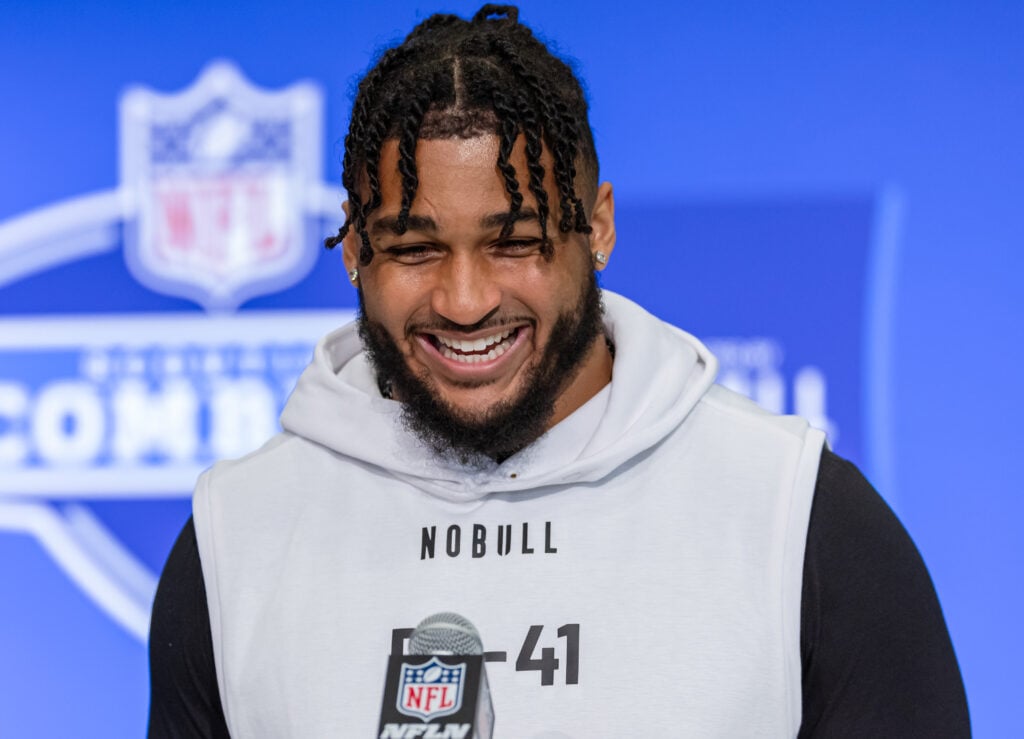
Marshawn Kneeland #DL41 of the Western Michigan Broncos speaks to the media during the 2024 NFL Draft Combine at Lucas Oil Stadium on February 28, 2024 in Indianapolis, Indiana. (Photo by Michael Hickey/Getty Images)
Cowboys QB opens up about loss of Marshawn Kneeland
The long list of mourners includes Kneeland’s Dallas Cowboys teammates, like Dak Prescott, who shared his thoughts on the tragedy during a field dedication ceremony at his alma mater, Haughton High School in Louisiana
“Tragic loss,” Prescott said, adding:
“I hurt. Heavy, heavy heart today. I hurt for Marshawn, I hurt for his family, I hurt for his girlfriend. I hurt for every single one of my teammates. It’s just a pain that you don’t wish upon anybody. You wish none of us had to go through this.”
Prescott did not confirm any details about Kneeland’s cause of death, but he did encourage his audience to look after one another and be protective of their mental health.
He called Thursday a “triggering day for many reasons.”
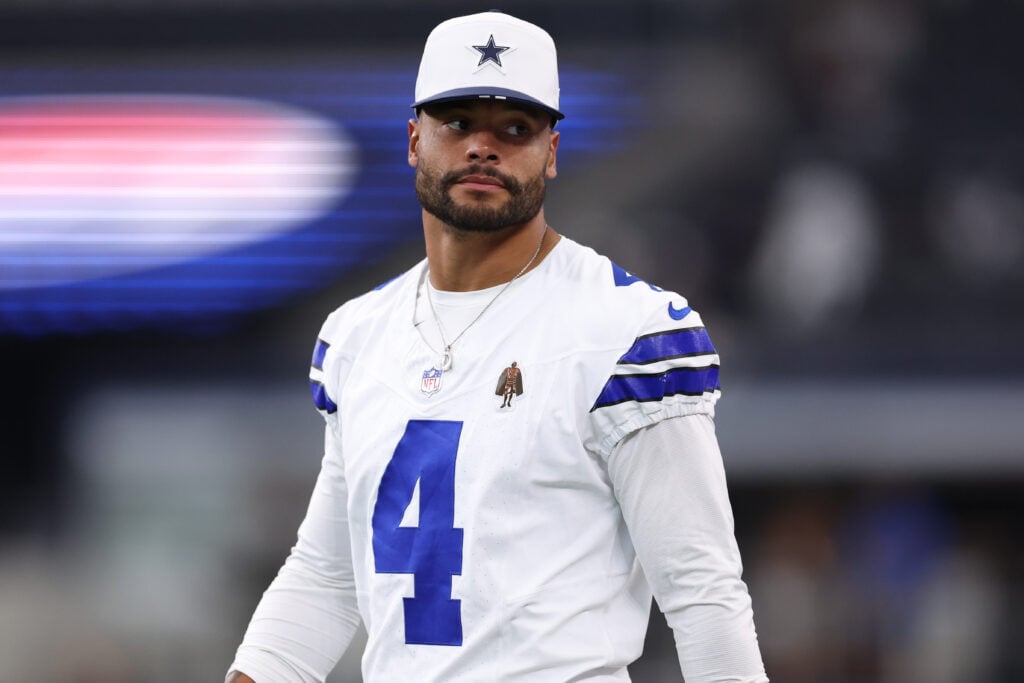
Dak Prescott #4 of the Dallas Cowboys looks on prior to the NFL Preseason 2025 game against the Atlanta Falcons at AT&T Stadium on August 22, 2025 in Arlington, Texas. (Photo by Sam Hodde/Getty Images)
“Hug and love on those that you do, Prescott said (via People magazine).
Circumstances of Kneeland’s death remain mysterious
Kneeland’s death was confirmed on Thursday morning, via a statement from the Cowboys organization:
“It is with extreme sadness that the Dallas Cowboys share that Marshawn Kneeland tragically passed away this morning,” the team said.
“Marshawn was a beloved teammate and member of our organization. Our thoughts and prayers regarding Marshawn are with his girlfriend Catalina and his family.”
Police responded to a welfare call at Marshawn Kneeland’s residence on Wednesday night but were unable to contact anyone inside the home.
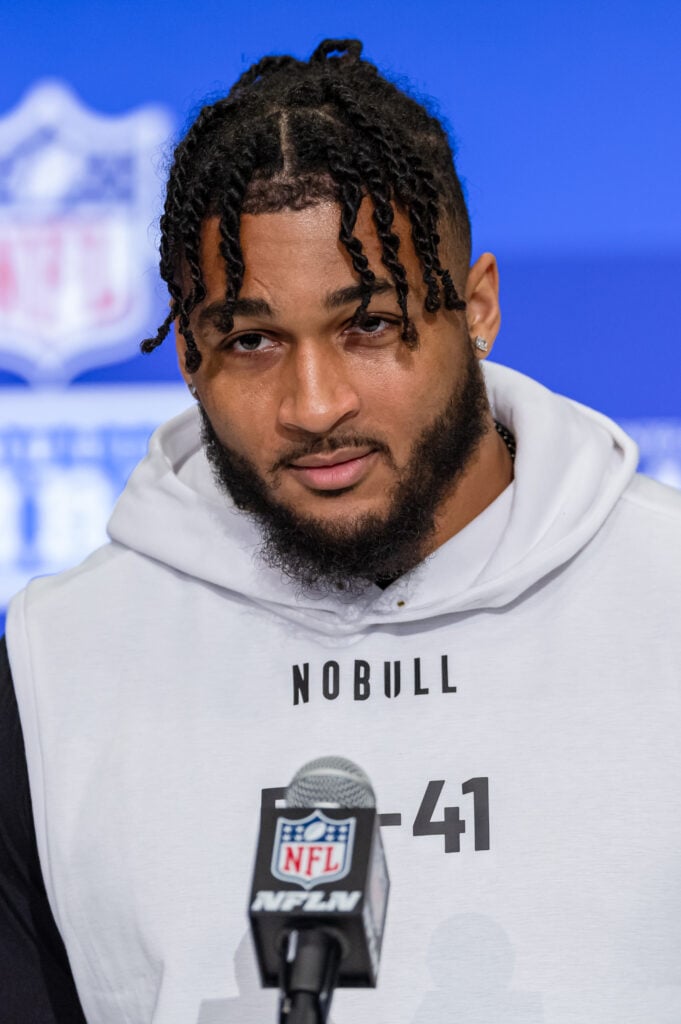
Marshawn Kneeland #DL41 of the Western Michigan Broncos speaks to the media during the 2024 NFL Draft Combine at Lucas Oil Stadium on February 28, 2024 in Indianapolis, Indiana. (Photo by Michael Hickey/Getty Images)
According to 911 audio obtained by TMZ, Kneeland’s girlfriend told police that “he is armed and has a history of mental illness” and that she was worried he would “end it all.”
At one point in the call, a 911 operator says that members of Kneeland’s family received “a group text saying goodbye”
She added that Kneeland’s loved ones were “concerned about his welfare.”
Police in Frisco, Texas say that Kneeland was involved in a pursuit around 10:39 PM on Wednesday night.
He evaded troopers after an attempt to pull him over for a traffic violation and proceeded to crash his car and flee on foot.
Kneeland’s body was reportedly found inside a portable toilet at around 1:30 am.
Our thoughts go out to Marshawn Kneeland’s loved ones during this enormously difficult time. We will have further updates on this developing story as new information becomes available.