By: Grace Dumas, News of the North

Update:
Following an emergency declaration by the City and Borough of Juneau and the Central Council of Tlingit and Haida, Governor Mike Dunleavy declared a state disaster, unlocking emergency and operational support as Juneau prepares for an incoming atmospheric river.
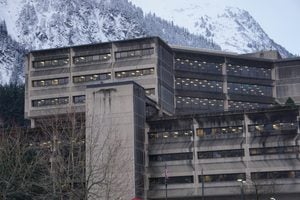
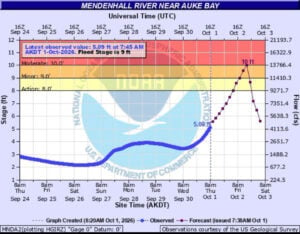
Officials say funding and staffing are urgently needed to reduce roof snow loads, clear drainage systems, access hydrants, and monitor avalanche risks, particularly at schools and other public facilities. The National Weather Service is forecasting up to two inches of rain on Friday alone and rapidly warming temperatures later this week, which will increase the risk of avalanches and landslides.
State Emergency Operations Center staff and partner agencies have already begun mobilizing resources to assist Juneau.
City Manager Katie Koester says the winter storm impacts are unprecedented, noting the community is exhausted and winter is far from over. The Juneau Assembly is scheduled to consider ratifying the disaster declaration at a special meeting this evening, with public participation available both in person and online.
Original Story:
Juneau has declared a local emergency to bring in additional help to clear snow from public facility roofs as the prolonged heavy snowfall followed by rain is raising concerns about roof loads and public safety.
“Our city crews have been busy doing snow removal and now hauling away snow. Our personnel are getting tired, and we’re getting low on personnel. So what’s coming up next, especially with the rain, is shoveling our public facility roofs.” Said Mayor Beth Weldon, “That’s the city roofs, and also the tribal roofs. The state is already sending public facility crews to help out with that, but in order to do that, we needed to have an emergency declaration.”
The emergency declaration, issued this evening, was made jointly by the City and Borough of Juneau and the Central Council of Tlingit and Haida.
The declaration allows the state to deploy public facilities crews to assist with clearing snow from city and tribally owned buildings, digging out fire hydrants and conducting avalanche monitoring as needed.
Weldon stated that the additional resources will be used only for public infrastructure and not for private properties.
“These crews are coming in to help with the government, that’s what they do with an emergency, so they will not be helping with individual private roofs or private driveways.”
The emergency declaration also makes it possible to request help from the Alaska National Guard.
“At this time, we’re not sure if the National Guard will be coming or not. It will depend on what these public facility crews can do. So there’s potential that they will come, but at this time, we’re not sure if they will come or not.” Weldon Said. “Between our crews and the public facility crews, if we can get the roofs shoveled off, especially now with the rain, then we don’t need the National Guard. If we do need the National Guard, especially shoveling out hydrants, then they will bring those in also. We’re not 100% sure what that looks like yet. This is hot off the press.”
Weldon said the city had not previously declared an emergency because conditions were manageable, “We just want to make sure that the public is aware why we’re declaring one now, now that it’s raining and the snow is getting a little heavier, we’re getting concerned with our roofs, although right now, structurally, we are fine.”
The emergency declaration does not change how the city is handling street plowing. Weldon said city crews will continue working on roads, but snow berms left by plows on private property will remain the responsibility of property owners.
“I’m not saying that the city crews at some time can’t help a little bit with the berms that unfortunately end up being on private property, We’re very aware that berms are very hard to shovel, but we don’t have the manpower right now to take away the berms.”
Juneau has been dealing with record-breaking snowfall in recent weeks, taxing local resources and prompting repeated closures of schools and city facilities.